Author: it@arcticportal.org

  • Cod quota rise for Iceland

    Cod quota rise for Iceland

    Fish caught in a net

    The Marine Research Institute has released its annual report which suggests Iceland should receive a 10 per cent rise in its cod quota.

    The report, the State of Marine Stocks in Icelandic Waters 2012/2013 and Prospects for the Quota Year 2013/2014, published figures that indicate the North Atlantic nation should be allocated a significant increase in the amount of cod it is permitted to catch.

    Based on the assessment, there should be a 10 percent increase in the total amount of cod the country is permitted to catch in the next fishing year, rising to 215,000 tons. According to the MRI’s figures, the spawning stock and reference stock of cod has increased rapidly over recent years.

    In March this year, ICES evaluated the haddock harvest control rule to be “precautionary” and conform with the MSY. The Icelandic government adopted the rule in April which, based on the harvest control rule, would see the country stick to the MRI’s recommendation of a total allowable catch of 38,000 tons of haddock during the 2013/2014 fishing year.

    The MRI report states that many of the country’s commercial stocks remain in balance and are only exploited moderately. Due to this, changes in quota recommendations and stock sizes are usually affected by changes in recruitment patterns.

    Source

    Ice News

  • AES call for posters

    AES call for posters

    Arctic Energy Summit

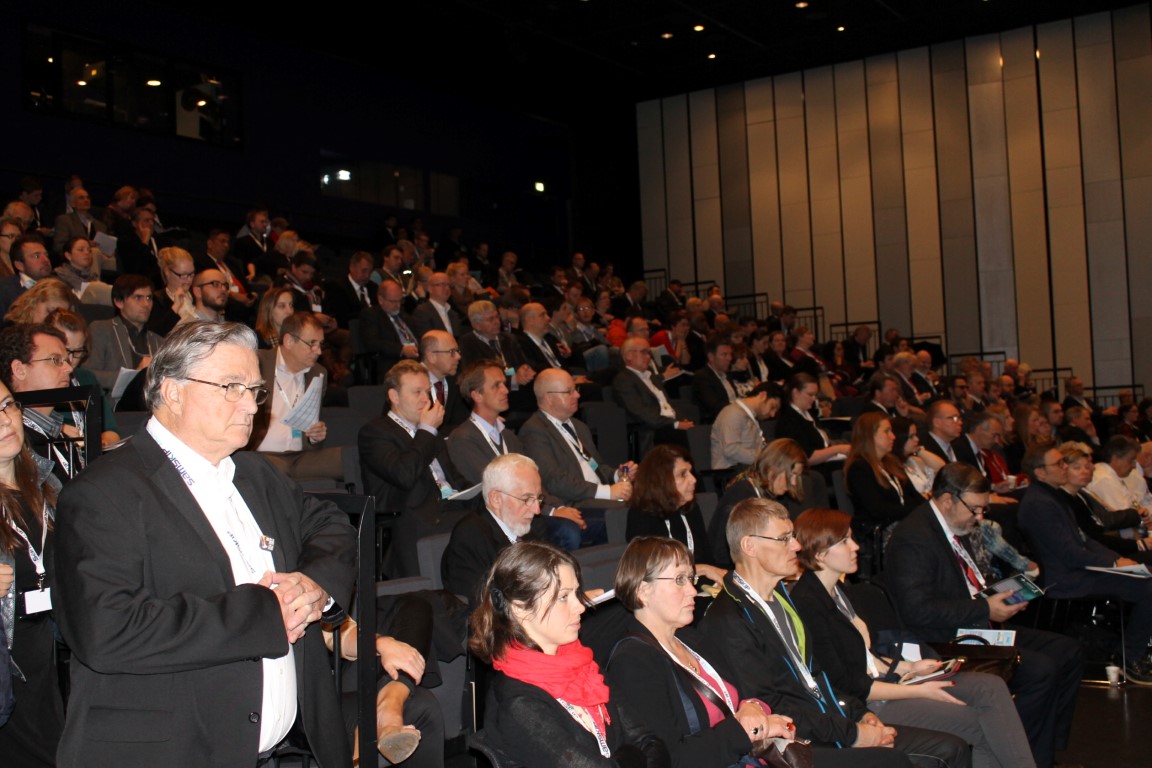
    Arctic Energy Summit that will take place in Akureyri, northern Iceland 8 – 10 of October 2013 has now opened the call for posters.

    In order to encourage knowledge sharing and information exchange between conference participants on their ongoing projects or emerging technology, AES calls for conference posters.

    The 2013 Arctic Energy Summit is also an excellent platform to showcase of the energy – related products, projects or programs to the leading policy makers and professionals working in the field of arctic energy.

    The 2013 Arctic energy Summit is a multidisciplinary event expected to draw several hundred industry officials, scientists, academics, policy makers, energy professionals and community leaders together to collaborate and share leading approaches on Arctic energy issues.

    Click here for more information about the Conference.

    Source

    Arctic Energy Summit

  • AES early registration is now open

    AES early registration is now open

    Arctic Energy Summit

    The early registration for Arctic Energy Summit is now open and available on the website.

    The Conference will take place in Akureyri, Iceland. Located in North Iceland and just 60 kilometers below the Arctic Circle, Akureryri is the largest city in Iceland outside of the Reykjavík capital area with a population of 18,000 people.

    It is the center of trade and services in northern Iceland and is filled with culture.

    The town is notable for having the northernmost botanical garderns, swimming facilities, an 18-hole golf course and great hiking trails. There are many natural wonders including waterfalls, volcanic areas and canyons.

    The 2013 Arctic Energy Summit is a multi-disciplinary event expected to draw several hundred industry officials, scientists, academics, policy makers, energy professionals and community leaders together to collaborate and share leading approaches on Arctic energy issues.

    The 2013 Summit will address energy extraction, production and transmission in the Arctic as it relates to three thematic areas and key questions.

    Source:

    Arctic Energy Summit

  • MobilityDK is now open for applications

    MobilityDK is now open for applications

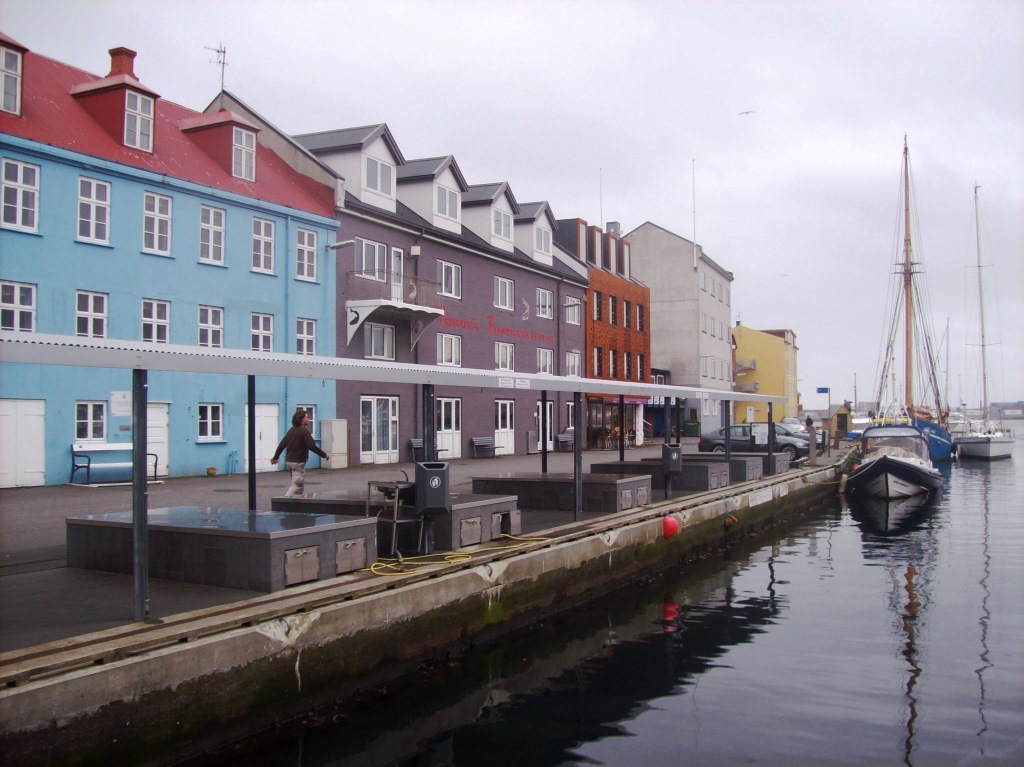
    Spring in Faroe Islands

    UArctic is launching a MobilityDK pilot model, which provides travel support for student, teacher, and researcher mobility activities.

    MobilityDK is a part of the UArctic Danish Mobility Project, the goal of which is to support mobility for the Kingdom of Denmark’s Arctic education activities, and mobility from the Kingdom of Denmark to Arctic educational activities in different areas of the Arctic through the UArctic network.

    Financial grants are being offered in two separate categories. Teaching and research staff as well as students mobility provides financial support from and to Danish, Greenlandic and Faroese members of UArctic.

    The goal of the mobility is to support broad institutional networking within UArctic, contributing to the development of mobility agreements, joint research projects, joint education programs, and activities of Thematic Networks.

    Furthermore, the staff mobility is to promote initiation of new Thematic Networks with engagement from Danish, Greenlandic and Faroese institutions.

    The goal of the mobility is to support broad institutional networking within UArctic, contributing to the development of mobility agreements, joint research projects, joint education programs, and activities of Thematic Networks. Furthermore, the staff mobility is to promote initiation of new Thematic Networks with engagement from Danish, Greenlandic and Faroese institutions.

    The deadline for applications is August 15th 2013 and all decisions will be made by August 30th.

    MobilityDK is a pilot program to provide with financial support for mobility of students, teachers and researchers within the Kingdom of Denmark.

    The model is supported by the Danish Agency for Science, Technology and Innovation.

    For more information and to apply, please visit University of the Arctic.

    Source

    UArctic

  • PAGE21 General Assembly decided

    PAGE21 General Assembly decided

    Abisko scientific research station

    The PAGE21 General Assembly date and venue has been decided. The 2nd PAGE21 General Assembly will take place 23 – 24 September 2013 at the Abisko Scientific Research Station in Sweden. In addition to the General Assembly, a joint Media Event with the FP7 project INTERACTwill be organized on 25 September 2013.

    A WP4 workshop as well as a Young Researcher workshop for PAGE21 and ADAPT PhD students and Post Doctorates are planned on 21 and 22 September respectively.

    PAGE21 Project aims to understand and quantify the vulnerability of permafrost environments to a changing global climate, and to investigate the feedback mechanisms associated with increasing greenhouse gas emissions from permafrost zones.

    This research will make use of a unique set of Arctic permafrost investigations performed at stations that span the full range of Arctic bioclimatic zones. The project will bring together the best European permafrost researchers and eminent scientists from Canada, Russia, the USA, and Japan.

    The PAGE21 is a Large-scale integrating collaborative project under the ENV call topic “Vulnerability of Arctic permafrost to climate change and implications for global GHG emissions and future climate” (ENV.2011.1.1.3-1) coordinated by Professor Hans-Wolfgang Hubberten from AWI.

    Click here to read more about the project.

    Source

    PAGE21

  • Ocean Law Center opens in Tromso

    Ocean Law Center opens in Tromso

    University of Tromsø

    After having participated in a competition between the three law faculties in Norway, the Faculty of Law at the University of Tromsø was proclaimed as the winner, and during the next six years the university will receive a total of 36 million NOK from the Kristian Gerhard Jebsen foundation.

    With additional funding from the University of Tromsø and the Norwegian Research Council, a total amount of 130 million NOK is planned to be used to establish the world’s largest Ocean Law Centre in Tromsø.

    “In our view, our ocean law centre will be the largest of its kind in the world today. China may have something of equal size, but unfortunately, if so, we do not know much about it,” says professor Tore Henriksen. As Principal Investigator, he will be in charge of establishing the centre during the next years. Through different subprojects, organized as work packages, the aim are to build knowledge, do research, and enhance international cooperation within the field of ocean law. Rector Jarle Aarbakke compared the process leading to the establishment of the centre with the Champions League, indicating the competition the University and the Faculty of Law met when submitting their application. According to the Norwegian newspaper Dagens Næringsliv, the leader of the foundation, Kåre Rommetveit, stated that the applications were evaluated by three independent international experts and that Tromsø clearly stood out in comparison to the other applicants.

    The changes in the Arctic, such as the loss of ice, mean that there are several judicial problems to be addressed. Fishing, shipping, oil and ocean floor activities all include possible future problems not yet investigated. “Many socially important questions remain unanswered. As for the environmental, political and economic issue, there is still insufficient legal clarification,” Henriksen concludes.

    The centre will be situated as part of the Faculty of Law at the University of Tromsø. During the project period, the university expects to build unique expertise as well as award several new PhD degrees within the field of ocean law.

    Source

    University of the Arctic

  • Northern Sea Route almost passable

    Northern Sea Route almost passable

    Northern Sea Route - Map Arctic Portal

    As reported by The Northern Sea Route Administration, this year´s sailing season through the Arctic shortcut will probably be busiest in the history. The first vessels are to hit the route in the end of this month.

    The Northern Sea Route Administration has so far received 89 applications to use the Northern Sea Route (NSR). 54 vessels have so far been given permission to sail along the route, the administration’s web site reads. All the vessels will not sail the whole route between Europe and Russia, some of them will only be working on the western part of the route from Dudinka to Murmansk.

    The total cargo transported on the NSR last year was 1 261 545 tons – a 53 percent increase from 2011, when 820 789 tons was shipped on the route. According to conservative estimates the amount will grow to 1, 5 million tons in 2013.

    The Northern Sea Route is a shipping lane officially defined by Russian legislation from the Atlantic Ocean to the Pacific Ocean specifically running along the Russian Arctic coast from Murmansk on the Barents Sea, along Siberia, to the Bering Strait and Far East.

    The entire route lies in Arctic waters and parts are free of ice for only two months per year. Before the beginning of the 20th century it was called the Northeast Passage, and is still sometimes referred to by that name.

    Source: Barents Observer

  • Asia Arctic website now launched

    Asia Arctic website now launched

    Asia on the map

    The Asia – Arctic website has been now released.

    The website is an outcome of the cooperation between the Norwegian Research Council, the Fridtjof Nansen Institute and the Norwegian Institute for Defense Studies.

    Cooperation between listed organizations was established in order to create platform for research program that investigates Asian countries ‘policies and interest in the Arctic.

    The AsiArctic.no provides with valuable information about the research and publications as well as information on upcoming events.

    The aim of this platform is to become the go – to place for knowledge and information on Asian Arctic interests and policies.

    The official launch of the website will take place in Kiruna during the seminar ´´ Asian – Arctic aspirations´´.

    The key note speaker will be Torgeir Larsen, State Secretary in the Norwegian Ministry of Foreign Affairs. Representatives from the Asian region and AsiArctic scholars will provide comments for discussion.

    The seminar is scheduled for Tuesday, 13th of June at the Fridtjof Nansen Institute. For more information and to register for the event, please click here.

    Source

    The Asia – Arctic Programme

  • First China-Nordic Arctic Symposium

    First China-Nordic Arctic Symposium

    A view from the Chinese research vessel Xuelong in Iceland.

    The first China-Nordic Arctic Cooperation Symposium will start tomorrow in Shanghai. The Polar Research Institute of China hosts the symposium in cooperation with the Icelandic Center for Research.

    Participants will be Chinese and Nordic institutions. The theme of the conference is “China-Nordic Cooperation for Sustainable Development in the Arctic: Human Activity and Environmental Change”.

    Three sessions are scheduled and open to participants:

    • Session I: Arctic Shipping and Resource Exploration
    • Session II: Arctic Policies and Governance
    • Session III: Climate Change and the Arctic in the Anthropocene

    The symposium will be a significant step towards the establishment of the China-Nordic Arctic Research Center, located at PRIC in Shanghai.

    Following the symposium in Shanghai on 4-6 June, there will be an organized excursion for the participants on 7 June.

    Further information is given by Mr. Egill Thor Nielsson, Visiting Scholar at PRIC.

    Sources

    Polar Research Institute of China

    RANNIS

  • Research network on peoples issues

    Research network on peoples issues

    The last shaman of Wrangler Island

    UN-Habitat is currently establishing a global network with professionals and universities engaging in field projects/research related to indigenous peoples in order to look for entry points for collaboration.

    UN-Habitat Housing and Slum Upgrading Branch works at the global level with issues related to indigenous peoples’ housing, indigenous peoples’ migration to urban areas and indigenous building knowledge.

    Universities, partners and professionals working on indigenous issues are encouraged to have an active contact with each other and share ideas, project information, research findings and news related to indigenous peoples’ housing conditions, urbanization and indigenous building methods. For this purpose we have created a LinkedIn group “Urban Indigenous Issues”.

    The network would like to encourage your university staff and students to join the discussion group here.

    The “Urban Indigenous Issues” network is part of the Global Housing Strategy Network (GHS).

    If you have not done this already, you are invited to register in the Urban Gateway and join the Global Housing Strategy here

    For more information about the Global Housing Strategy please read the framework document.

    Source

    UN Habitat