Author: it@arcticportal.org

  • Rio 20 coming up

    Rio 20 coming up

    Rio 20 banner

    The United Nations Conference on Sustainable Development, also known as Rio 2012 or Rio+20, will start next week.

    The conference is a 20-year follow-up to the historic 1992 United Nations Conference on Environment and Development (UNCED).

    Like its precessor, the conference is held in Rio de Janeiro in Brazil.

    The conference will be one of the highlights of the year, and Arctic Portal has written a new feature about the summit.

    Click here to read more.

  • Ideas for the world or few words on this year´s biggest event on sustainable development – Rio+20

    Ideas for the world or few words on this year´s biggest event on sustainable development – Rio+20

    (Photo: Arctic Portal)

    “Sustainable development is development that meets the needs of the present without compromising the ability of future generations to meet their own needs”

    World Commission on Environment and Development

    Brundtland Report 1987

    Sustainable development is recognized as the pattern of economic growth in which the use of natural resources meets population´s needs in environmentally friendly way. Initially, the term was used by the Brundtland Commission in 1987. Since then it has become the most commonly used definition to describe the economic growth.

    The history of United Nations involvement in the world´s sustainable development goes back to 1972 when industrialized and developing nations gathered in Stockholm to discuss and find global solutions to such a problems as housing, food and water security, healthy and productive environment.

    In 1980, the International Union for the Conservation of Natural Resources did publish the World Conservation Strategy, which provided the precursory concept of sustainable development. The Strategy adopted a collective approach which stated that the conservation of nature cannot be achieved without an elimination of poverty and misery of millions of people. The idea stressed the interdependence of conservation and development and acknowledged that unless the fertility and productivity of the planet are safeguarded, the human population´s future is at risk.
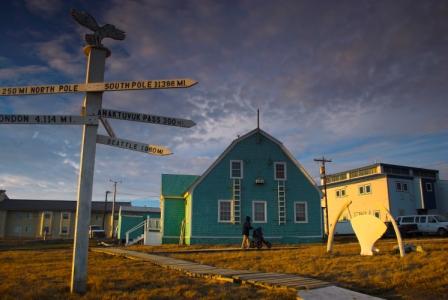
    (Photo: Getty Images)

    Few years later, the World Commission on Environment and Development was created and presented as an independent body of United Nations General Assembly. It implemented the Global Agenda for Change, in which the social, economic, cultural and environmental global issues were wove together and the attempt of providing solutions to those problems was made.

    In June 1992, the first UN Conference on Environment and Development was held in Rio de Janeiro. The Event created the Agenda for Environment and Development which is now called Agenda 21 and included Rio Declaration on Sustainable Development and the Statement of Forest Principles. Agenda 21 has been monitored by established in 1993 Commission on Sustainable Development.

    A decade after the Rio Declaration, the World Summit on Sustainable Development took place. It aimed to renew the global commitment with regards to sustainable development by creating the Johannesburg Plan of Implementation that would suggest changes to global unsustainable patterns, bring up ideas for poverty reduction, protection and management of natural resources. What is more, Johannesburg Plan of Implementation established the institutional framework for sustainable development at the international level. On 24th December 2009 the UN General Assembly agreed to hold the United Nations Conference on Sustainable Development in 2012.

    Exactly twenty years after the adoption of Agenda 21, representatives of governments, private sectors, NGOs and other stakeholders, gather in Brazil to focus on poverty reduction and advancement of social equity and environmental protection.
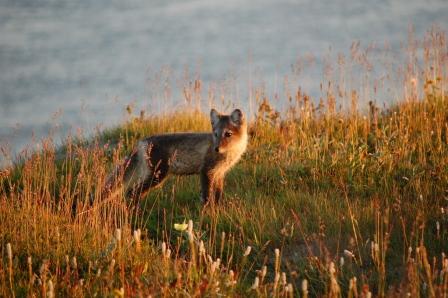
    Curious Polar Fox

    Since 1992 a lot of progress has been made mainly on elaboration of regional, national and local sustainable development strategies, the adoption of binding agreement on Climate Change, the implementation of the Convention on Biological Diversity and associated international and regional action plans. What is more, the ratification of the Aarhus Convention on environmental democracy, by forty four states in the UNECE region.

    The one could argue, that today´s global crisis (of democracy, world´s economics and finance), biodiversity loss, climate change and food security issue were sustained on unprecedented rate despite of all the efforts.

    Nevertheless, states – parties to the Convention, combines efforts to emphasize a holistic, equitable and far – sighted approach to decision making processes at all levels. The joined initiative during the gathering in Brazil, will present not only strong economic performance but intergenerational and intragenerational equity. The ideas for the meeting rest on integration and balanced consideration of social, economic and environmental goals and objectives in both public and private sectors of decision making process.

    This year´s event touches two major themes: green economy in the context of sustainable development poverty eradication and the institutional framework for sustainable development. Further, those were divided into seven thematic sessions, including problems of the world´s unemployment, development of cites as hubs for modern ideas, food water and energy security, major problems of oceans ´ecosystems plus the strategies for prevention and recovery after the natural disasters.

    The UNCSD, Rio +20, is without a doubt an intergovernmental and interdisciplinary process driven by the UN member states with the full involvement of the UN bodies and Major Groups. Member states led the meetings before the event in order to discuss the objective and themes of the Conference, so it could be convent at the highest possible level. The preparatory work of the states – parties to the UN is fully transparent and can be accessed by the public on the UNCSD website.
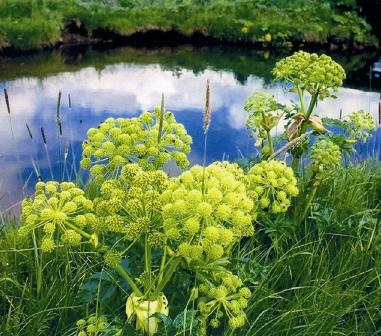
    (Photo: Arctic Portal by Halldór Jóhannsson, Icelandic Clay Area)

    Close to 500 side events take place during Rio +20. Those are mainly organized by governments ‘representatives, organizations from the United Nations system and other various international and intergovernmental organizations. Sustainable Development Dialogue days will take its place at the Summit.

    It has been long understood that the sustainable development is not possible to be achieved by the governments without democratic involvement of citizens. Their active participation is organized in Major Groups, where all sectors of society and all types of people, including consumers, workers and trade unions, business and industry´s representatives, farmers, students and researchers, educators and indigenous peoples, come together to contribute their local ideas.

    United Nations Conference on Sustainable Development significantly creates the opportunity for the world´s leaders to bring up the paradigm of sustainable lifestyles and establish the usable framework for future generations. The event is also an important symbol as it celebrates 20th anniversary of Agenda 21.

    More importantly, Rio +20 is a chance for the states – parties to the Convention, to declare the fulfillment of commitments made with regards to sustainable development policies. The Conference program in its vision highlights the critical involvement of various stakeholders to strengthen the rights of environment, the rights of nature.

    Source: Rio +20, United Nations Conference on Sustainable Development
  • Iceland supports China in Council efforts

    Iceland supports China in Council efforts

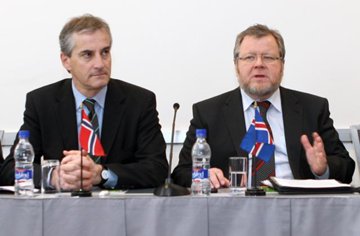
    Össur Skarphéðinsson and Jonas Gahr Störe

    Iceland supports China in its effort to become a permanent observer in the Arctic Council. Norway opposes.

    China currently has an ad-hoc observer status along with the European Union, Italy, Japan and South Korea. They all have to send request to observe each meeting, but they are usually granted.

    China, EU, Italy and South Korea were all denied a permanent observer status in 2009.

    Permanent observers receive invitations for most Arctic Council meetings and they have an easier way to participate in Council-related projects.

    Iceland is now trying to smooth the stiff relations between China and Norway. Össur Skarphéðinsson, the foreign minister of Iceland, has spoken to both the premier of China, Wen Jiabao, and his colleague from Norway, foreign minister Jonas Gahr Støre, about the issue.

    Össur hopes for a better understanding between the nations.

    He states that the Arctic Council is in the process of creating obligations for states to fulfill if they wish to receive the permanent observer status.

    Sources

    Fréttablaðið

  • Big ideas in Faroe Islands

    Big ideas in Faroe Islands

    Faroe Islands

    The Faroe Islands are certainly small, but their force is growing. They have big ideas for the future, contrasting the few number of 50.000 inhabitants, both regarding oil and shipping.

    Next week a Chinese delegation will visit the islands with the view of cooperation regarding a large hub-port. Minister Johan Dahl confirmed this and says that they will also speak about the potential oil and gas exploring in their EEZ.

    “I want to talk to them about a potential hub-port,” Dahl confirmed. Iceland has also looked at the possibility of a hub-port and other locations are also under consideration for Arctic shipping.

    Next week the drill Cosl Pioneer will make shore in the Faroes. He will drill down to 5km, the deepest ever in the history of the islands.

    Oil companies have explored the area and remain hopeful that the black gold can make the Faroese nation one of the wealthiest ones in the world. At least per capital.

    Three companies are behind the project, Statoil has 50% of the rights, ExxonMobil from the USA has 49% and Atlantic Petrolium from the Faroes has 1%.

    The area is called Brugdan 2 and south-west of the Faroe Islands.

    Source

    Oljan

  • Arctic Portal confirmed member of UArctic

    Arctic Portal confirmed member of UArctic

     Arctic Portal and the University of the Arctic

    Arctic Portal has been formally accepted as a member of the University of the Arctic. This was confirmed today at the 15th UArctic Council meeting in Tromsö, Norway.

    Arctic Portal is proud to receive this honor, joining several established institutions and universities all over the world in the prestige UArctic member list.

    UArctic and Arctic Portal have worked together on numerous issues for a long time and it is warmly welcomed to strengthen our bond even further.

    UArctic is “a cooperative network of universities, colleges, and other organizations committed to higher education and research in the North. Our members share resources,facilities, and expertise to build post-secondary education programs that are relevant and accessible to northern students. Our overall goal is to create a strong, sustainable circumpolar region by empowering northerners and northern communities through education and shared knowledge.”

    Arctic Portal

    University of the Arctic

  • Hot water surrounded by ice

    Hot water surrounded by ice

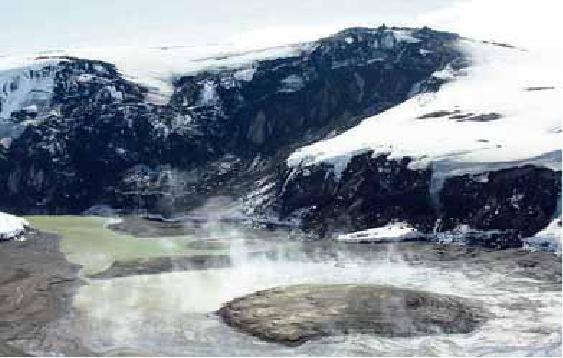
    Hot water surrounded by ice.

    Great melt will occur this year in Europe’s largest glacier, Vatnajökull in Iceland. This is the result of an expedition by Icelandic scientist recently.

    Magnús Túmi Guðmundsson, professor in geography at the University of Iceland, says that the western part of the glacier will melt rapidly. This is due to the volcanic activity in Grímsvötn last year.

    Elevation of land near the glacier was also measured a total of 3cm per year because of the glacier shrinking.

    The consequences are for example raised levels in glacier lagoons and glacier rivers.

    A lagoon which formed after the eruption was researched, which includes a river which was measured 45°Celcius. The lagoon is therefore hot. A few hundred meters was at 25-40° Celsius. Like average bathwater to some.

    “The eastern part of the lagoon is also pretty hot, considering it is surrounded by icebergs.

    Magnús also notes that ash will continue to blow this summer, especially during the dry season. “People in Reykjavík can often still see ash on their cars, that’s ash form Eyjafjallajökull and Grímsvötn. This will take years to stop.”

    Source

    Morgunbladid

  • May ice edge below average

    May ice edge below average

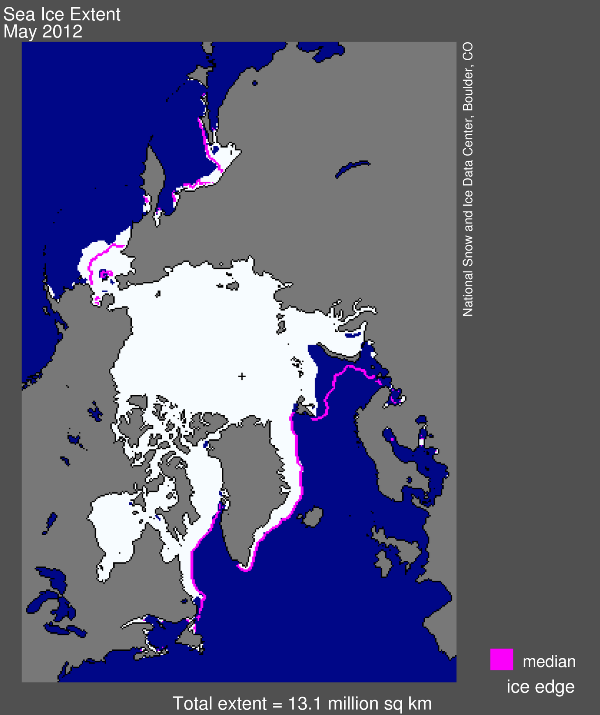
    Sea ice extent in May 2012

    The Arctic sea ice melting season is in full force and the ice edge in May was below average. The ice edge reached near average in late April but the melt happened rapidly in May.

    The Arctic Ocean was fully frozen in May as can be seen on the picture on the right, from the National Snow and Ice Data Center.

    The Arctic sea ice extent for May 2012 averaged 13.13 million square kilometers (5.07 million square miles). This was 480,000 square kilometers (185,000 square miles) below the 1979 to 2000 average extent.

    Ice cover remained extensive in the Bering Sea, continuing the pattern observed this past winter and spring. The anomalously heavy ice conditions were countered by unusually low extents in the Barents and Kara Seas, resulting in Arctic-wide ice conditions that remained below normal. By the end of the month, open water areas had begun to form along some parts of Arctic Ocean coast.

    For May, the Arctic as a whole lost 1.62 million square kilometers (625,000 square miles) of ice, which was 180,000 square kilometers (69,500 square miles) more than the 1979 to 2000 average.

    Air temperatures for May were higher than usual over the central Arctic Ocean and the Canadian Archipelago. Over the Bering Sea, Hudson Bay, and parts of the East Greenland and Norwegian seas, temperatures were slightly below average.

    Source

    NSIDC

  • Postdoctoral Researcher wanted at Oulu

    Postdoctoral Researcher wanted at Oulu

    Oulu Finland

    The Department of Geography at the University of Oulu in Finland is looking for a Postdoctoral Researcher/Senior Research Fellow for the next five years.

    The five-year period begins 1st September 2012 or upon agreement and the applications are open until the 2nd of July.

    The research profile of the successful candidate should complement the focus of the Physical Geography Research Group (PGRG) at the Department of Geography. The PGRG focuses on analysing geomorphological, biogeographical and hydrological phenomena in high-latitude and high-altitude environments, namely in boreal, sub-Arctic, Arctic and mountainous landscapes.

    The key research subjects are geomorphological processes (including permafrost), geodiversity, biodiversity, species distribution modelling and tree line ecotone under global change. Methodologically, the main focuses are geoinformatics, spatial analysis and statistical modelling.

    Studies are often based on comprehensive field data sets. The PGRG includes one professor, one to three postdoctoral researchers, three to five doctoral students, research assistant(s) and over ten Master students.

    The required qualifications for the successful candidate include a doctoral degree and high quality scientific competence, teaching experience in Physical Geography as well as evidence of international collaboration in the field in question, and success in acquiring supplementary (extramural) funding.

    For further information contact Professor Jan Hjort, Department of Geography, tel. +358-29-448-1704, jan.hjort(at)oulu.

    See more here.

    Source

    Uni. of Oulu

  • Programing to save the world

    Programing to save the world

    Team Hermes won the Imagine Cup in 2011.

    Students from all over the world are competing to change the world, with computer games. The Microsoft Imagine Cup finals will be held later this summer in Australia where students tackle the theme “Imagine a world where technology helps solve the toughest problems.”

    Imagine Cup is a student technology competition with three types of competition, software design, Game design for Xbox or Windows computers and Game design for phones. Every year, student competitors present creative technology solutions that address real-world challenges, and many of those solutions are in use today.

    The finals will be held in July in Sydney.

    The final projects are of different types, one team chose to make a video game about green energy and energy use. Roberts Quest is about a squirrel who embarks on a mission to clean up his city by gaining renewable energy sources. The team Radiant from Iceland made the game.

    The teams in the finals are from all over the world, for example from China, Brazil, Ukraine, Belgium, Iceland, Korea, France, Côte d’Ivoire, Dominican Republic, USA, Canada and Indonesia.

    A team from Microsoft’s 2011 Imagine Cup developed a process using a Windows Phone application to diagnose malaria.

    “It´s our world’s future innovators and technology leaders, our planet looks to you to lead the way in solving some of our greatest challenges. Lead with your mind and also with your heart, as both are required to make a difference,” says Jon Perera, Microsoft, General Manager, Academic Programs.

    Source

    Imagine Cup

    Morgunblaðið

  • Clinton to assure US interest in the Arctic

    Clinton to assure US interest in the Arctic

    Hillary Clinton

    Secretary of State Hillary Clinton will assert U.S. interest in the Arctic this weekend. She is visiting Tromsö in Norway where she will empathize US´s interests in the Arctic.

    According to Reuters, a senior Oslo-based diplomat said of Clinton: “Her aim is to emphasize that the U.S. is keeping its eye on the Arctic and remains very keen. Big firms are investing big money and she wants to say ‘I can do more than one thing at a time, the world is not just Pakistan, Afghanistan and Iraq’.”

    Recently Clinton said that as the Arctic warmed: “It is more important that we put our navigational rights on a treaty footing and have a larger voice in the interpretation and development of the rules. You will see China, India, Brazil, you-name-it — all vying for navigational rights and routes through the Arctic.”

    Although the United States now recognizes the UNCLOS, which defines the rights and responsibilities of nations in their use of the world’s oceans, as a codification of customary international law, it has not ratified it.

    Clinton has previously said she wants the US to do so, but it remains in doubt as of yet.

    The outcomes of the trip to Tromsö will not be of significant political interest, but Clinton will meet “different key persons on Arctic research.”

    Sources

    Reuters

    ABS

    Nordlys