Author: it@arcticportal.org

  • Future trajectories for the Arctic investments

    Future trajectories for the Arctic investments

    Earth Globe

    Future trajectories for the Arctic investments – highlights from the new Lloyds´ report: “Arctic opening: opportunity and risk in the High North”

    The Arctic is comprised of a large ocean area and land areas of eight states: Canada, Denmark (Greenland), Norway, Russia, USA (Alaska), Finland, Sweden and Iceland. The Arctic’s most pronounced feature, at least until very recently, has been the large ice-covered ocean. However, significant changes are taking place in the Arctic Region, both on land and especially on the maritime areas.

    The 2004 Arctic Climate Impact Assessment listed the range of impacts that are occurring in a warming Arctic due to the human-influenced climatic change. The report concluded that the air temperature has risen at twice the rate as in the rest of the world in the past few decades and there is increasing evidence of widespread melting of glaciers, permafrost and sea ice.

    The Arctic Region has been under ongoing transformation. Unprecedented and disruptive changes seem to occur more rapidly than anywhere else in the world. Increasing average temperatures cause the rise of the sea level and changes to seasonal length.

    Scientists and researchers from various international and national institutions have tried to predict the date when the Arctic Ocean will become free of sea ice during summers. As suggested by IPCC report, this might occur by the end of 21st century.

    In April 2012 Lloyds, which is the leading insurance market specialist, conducting business in over 200 countries and territories worldwide, presented the report on risks and opportunities in the High North, where the issue of sustainable development was strongly highlighted.

    Over the last decade, Northern Sea Route (NSR) has already started to see the increase of summer cruise traffic, mostly by Russian – owned vessels. However the other activities, from international tourism to scientific research, also present the potential increase in the coming years.

    As the new Lloyds´ Arctic report states, the infrastructure to support investments in Northern Region is very limited. That could cause a great risk to the Arctic unspoiled environment with a complex and very fragile ecosystems. It is suggested that in terms of accidences occurrence, such as an oil spills or blowouts, the consequences for the delicate environment could be more profound than in other world´s regions.

    As estimated by Lloyds, the future investment in the NSR development could go up to 10 million dollars. Growing interest in four key sectors including mineral resource, fisheries, logistics (especially Arctic shipping) and tourism will prove to be significant dimensions in economic development. As predicted by the authors of the report, the epicenter for those investments will reach the area of Barents Sea, northern Russia, Norway, Alaska and eastern Iceland.

    winter

    Already, summer shipping season along the NSR is marked by a new development. In the summer of 2011, the Russian-owned Vladimir Tikhonov was noted as the first supertanker to sail through the NSR with loaded cargo exceeding 120,000 tones of gas condensate. In the same time Japanese – owned Sanko Odyssey, with the load of cargo exceeding 66,000 tons of iron ore concentrate, did complete a voyage from northern Russia to Jingtang in China.

    Summer 2012 is very likely to bring the opportunity for the Korean built and Norwegian – owned tanker, Ribera del Duero Knutsen, to become the first LNG carrier to transit the Northern Sea Route from northern part of Norway to Japan.

    Those indicators show significant interest from the Asian states in the Arctic Region. In May 2012 governments of South Korea and Norway came together to discuss the possibility of future partnership and mutual interest in developing high class infrastructure, including coastguards, search and rescue and hydrographic services for the future traffic increase.

    As the potential oil and gas resources around the Norwegian coast are more predictable, the government expects the Snohvit gas field and the Goliat oil field to attract investments which might reach 9.2bn$.

    As the sailing season extends, shipping companies will face the reduced cost of marine operations as distances between ports in Western Europe and Japan, eastern Russia and north – eastern China or Korea Peninsula, are almost 40 % shorter through the NSR than traditional passage over the Indian Ocean, Red Sea and the Suez Canal.

    Commercial development in the Arctic will truly touch oil and gas reserves around Russian and Norwegian Arctic coast. It is estimated that there is a potential of 845 million m3 hydrocarbon resources in the North Sea, 780 million m3 in the Norwegian Sea and almost 950 million m3 in the Barents Sea around Russian North and Svalbard.

    However, there are still commercial rationales and risks involved in the decision making process as of the geological uncertainties in the Arctic Region. Proven reserves would secure the companies´ financial plans and allow the sooner exploitation.

    Expectation to keep the price of oil in the 80$ – 120$ range requires lowering the cost of production which leads to infrastructure development. It is however expected that other Arctic developments, such as offshore Greenland, with the high production cost, would require major investment in order to stay profitable. To date, Cairn Energy is the only company undertaking exploration in the Greenland Sea. The registered investment of over 1bn $ has not brought a major success. Greenland´s state – owned company, Nunaoil has shown the interest in the investment worth over 10bn$ in West Disko and in the Baffin Bay. Both plans are due in 2040.
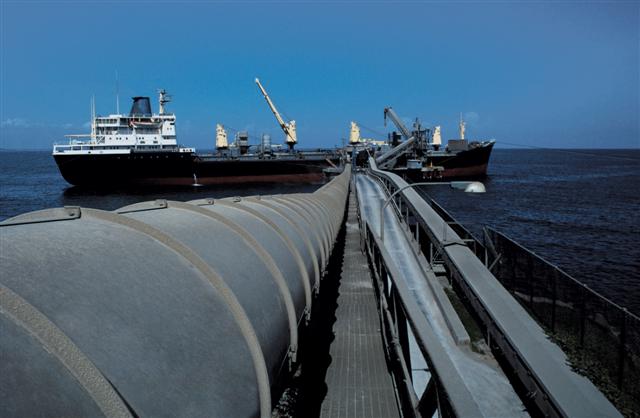
    oil pipeline in the sea

    International Energy Agency predicts that the total investments in the oil and gas sector would reach 20,000bn$ between 2012 and 2038. Russia´s great contribution of overall investment, going up to 50bn$ has been made by the Shtokman, far largest potential offshore Arctic project. In oil, TNK-BP plans to spend up to 10bn$ on developing onshore Arctic oilfields in the Yamal – Nenets Autonomous Area, with exports to Asia from 2015 – 2016.

    Canada and United States also renewed their interests in the Arctic. Shell, ConocoPhillips, Statoil, Repsol and Eni won exploration leases for the Beaufort and Chukchi Seas in 2008, paying out a total of 2.66bn$.

    There are many reasons for shipping and drilling companies to put their interests in the Arctic. Northern hemisphere has been much less geologically explored than other regions in the world. It logically gives a chance to discover the world class deposits. However the challenges and drawbacks are almost as many as opportunities. Remoteness, lack of infrastructure and difficult weather conditions which can disturb the production schedules are current logistical bottlenecks.

    Source: Arctic Opening: Opportunity and Risk in the High North
  • Flying barbeque helps reindeer herders

    Flying barbeque helps reindeer herders

    Minicopter, Flying barbeque

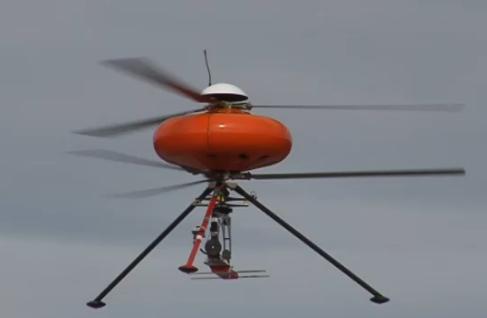
    Reindeer herders in Lapland are using new technology to find lost livestock, a flying barbeque. It may seem strange but when looking at the picture, one can understand the name.

    The flying barbeque is actually a minicopter, a flying object with an attached camera. The machine is designed in France and can fly as high as 150 meters.

    It can survey the landscape in hunt for the reindeer for up to 10 kilometers. Many reindeers have radio transmitters around their necks and if the herders lose their reindeers to predators, they can be found via the transmitter.

    The remote control steers well and testing has been good. “All our experiences up to now have been positive,” said project director Jari Nykänen of Eastern Lapland technical college.

    “The neck transmitter has been found further away than when searches are conducted at ground level,” he says but lost reindeers can be very costly for the reindeer herders.

    Every year herders lose up to 20,000 reindeer to predators. On average, just a fifth of these are found.

    “Even one lost reindeer that isn’t found represents a loss of several thousand euros,” said Heikki Härmä of Kallioluoma Reindeer Owners Association.

    Despite the losses, few businessmen currently operate small ‘minicopters’. The sector is expected to explode over the next few years. The devices are especially suited to aerial filming.

    Other parties are also interested in the object; both filmmakers and the police have shown an interest.

    Sources

    Yle

  • Putin urges Shtokman decision

    Putin urges Shtokman decision

    Oil tanker

    Russian president Vladimir Putin urges oil companies to make their final decision on the Shtkoman gas project. The Shtokman area is one of the riches gas wells in the world.

    Putin met with Statoil´s CEO, Helge Lund, on Friday, but Gazprom (owned by the Russian government) is the leading player in the field. Statoil (owned by the Norwegian government) holds a 24 percent share of the Shtokman Development AG, the joint venture responsible for the project. Gazprom holds 51 percent, while Total (from France) holds 25 percent.

    This ownership could change in the nearest future.

    “You have a very good and big project with Gazprom” Putin said to Lund. “The huge production assets of Shtokman have global significance and we have to make active progress,” Putin said, according to the Barents Observer.

    Statoil could exit from the project and discussions with Gazprom are taking place. Speculations surrounding Shell to take over from Statoil have emerged.

    Reports say that Gazprom wants to get rid of Statoil, due to conflicting views on the project development model.

    Statoil has officially supported Gazprom’s intention to skip the project’s pipeline part and instead develop Shtokman as a 100 percent LNG project.

    Statoil has long stressed that project development costs need to be reduced and that tax breaks must be introduced. The development costs for the project’s first phase have reportedly grown to about $30 billion, up from the originally planned $20 billion.

    Statoil has invested around $1.5 billion in the Shtkoman project, which it could lose if pulling out.

    Source

    Barents Observer

  • Statoil biggest in 2011

    Statoil biggest in 2011

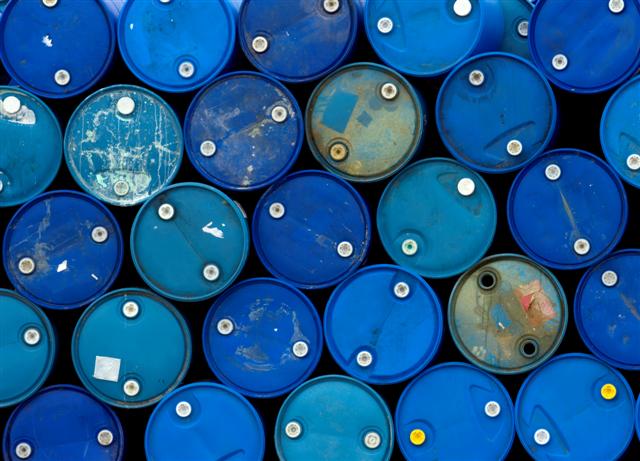
    Oil Barrels

    The most value of resources in 2011 in the oil and gas industry was found by Norwegian company Statoil.

    In 2011 Statoil discovered six so called high class drilling sites, each giving more than 250 million barrels of oil.

    According to Rystad Energy, this is the biggest founds last year over all oil companies in the world. The value of the resources is thought to be around 5 billion dollars.

    The research also found that Norway was the biggest production oil company in 2011.

    One of the discoveries was outside of Tanzania, an enormous well almost as big as the highly productive Snow White area, north of Norway.

    Statoil´s vice president, Tim Dodson, says that three things explain the success. Firstly, how quickly the company can move in search for new areas when the competition is this big, secondly the ability to drill a selection of boreholes in highly productive areas, meaning they take high risks, and lastly the positioning of the company which has high stakes in rich areas such as Norway and the gulf of Mexico.

    Dodson said the company spends three billion dollars each year in research. “That means we must have high success to justify the expenditure,” sais Dodson.

    Source

    Tekniske Ukeblad

  • Framing China and Australia in the Antarctic

    Framing China and Australia in the Antarctic

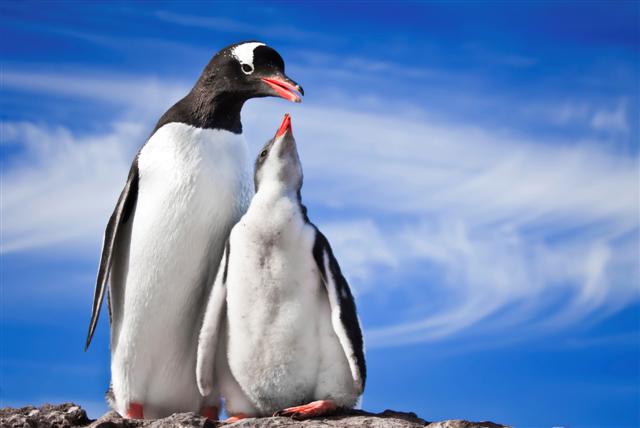
    Penguins in Antarctica

    Framing of the Antarctic is different between states. In a new interview with Anne-Mary Brady, we look at the framing theory, identifying two prominent Antarctic players, Australia and China.

    Australia claims 42% of Antarctic territory, while China has three bases in Antarctica (two of them on the Australian claim) and is rapidly expanding its operations there.

    Official framing is an important tool by which Antarctic players can boost the legitimacy of their right to engage in Antarctica. State’s utilise official frames when there is a perceived legitimacy deficit that must be addressed and as part of an ongoing process of legitimation of their interests, according to Brady.

    Here is the interview:

    Sources

    IPY Interview

  • Concerns about Arctic methane release

    Concerns about Arctic methane release

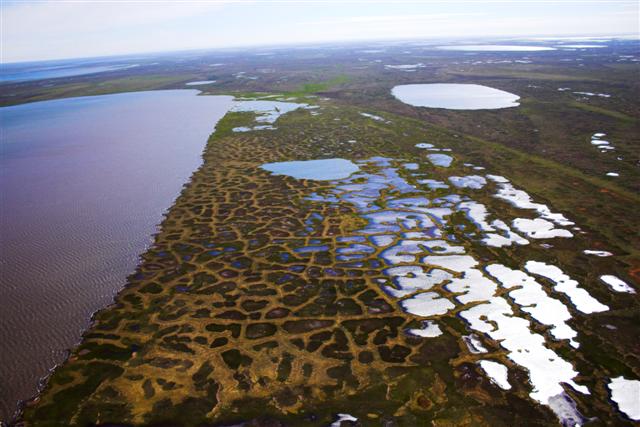
    Permafrost in the Arctic

    New concerns have emerged about methane release i Arctic. A new study, where aerial and ground-based surveys were used to identify sources of methane release, discovered around 150.00 sources.

    The methane seeps found are in Alaska and Greenland in lakes along the margins of ice cover.

    Samples showed that some of these are releasing the ancient methane, perhaps from natural gas or coal deposits underneath the lakes, whereas others are emitting much younger gas, presumably formed through decay of plant material in the lakes.

    “We observed most of these cryosphere-cap seeps in lakes along the boundaries of permafrost thaw and in moraines and fjords of retreating glaciers,” the report, led by Katey Walter Anthony from the University of Alaska at Fairbanks (UAF), said.

    Emphasizing the point that warming in the Arctic is releasing this long-stored carbon.

    “If this relationship holds true for other regions where sedimentary basins are at present capped by permafrost, glaciers and ice sheets, such as northern West Siberia, rich in natural gas and partially underlain by thin permafrost predicted to degrade substantially by 2100, a very strong increase in methane carbon cycling will result, with potential implications for climate warming feedbacks.”

    The region stores vast quantities of the gas in different places – in and under permafrost on land, on and under the sea bed, and – as evidenced by the latest research – in geological reservoirs.

    “The Arctic is the fastest warming region on the planet, and has many methane sources that will increase as the temperature rises,” commented Prof Euan Nisbet from Royal Holloway, University of London, who is also involved in Arctic methane research.

    “This is yet another serious concern: the warming will feed the warming.”

    Source

    BBC

  • Arctic Shipping an Evolution , not a Revolution

    Arctic Shipping an Evolution , not a Revolution

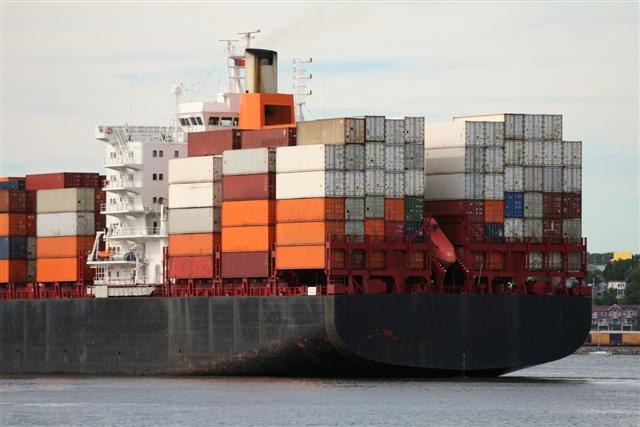
    Cargo Container ship

    What is the future of shipping in the Arctic? Many are following the developments in the Arctic closely, not only the nature and its ways, but the legal regime and environment as well.

    Amongst those are the shipping companies who could utilize the Arctic Shipping routes. Arctic Portal met up with a CEO of a shipping company in Norway, the Tschudi shipping company.

    Tschudi Shipping Company is a privately controlled Norwegian shipowning company operating within the international maritime industry. The company focuses on active ownership and management of vessels and shipping related projects and companies.

  • Architecture in Antarctica

    Architecture in Antarctica

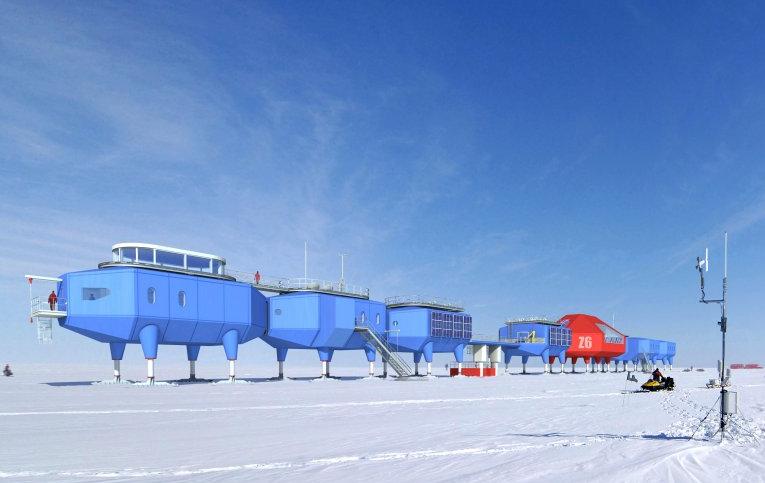
    Halley station in Antarctica

    It was down to faith. That is the reason Hugh Broughton, architect, started designing buildings for the extreme conditions in Antarctica.

    Blistering wind and temperatures below 0 every day of the year calls for unique designs. BUt there are more concerns. Moving ice and long distances do not make the designing any easier.

    In a fascinating interview with the Arctic Portal, Hugh described the design of infrastructure in the South Pole. He gave us an insight to the British Station, Halley, he designed.

    He has also looked at other projects in Antarctica and even considers the designs usable in other locations.

  • Yacht sail and research this summer

    Yacht sail and research this summer

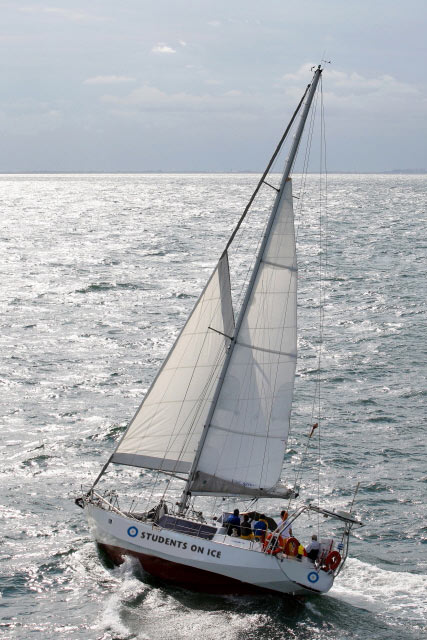
    The Arctic Tern

    Researchers have a unique opportunity to travel around the Arctic this summer. The Association of Polar Early Career Scientists invites researchers to join WWF and the Students on Ice Foundation on a summer expedition to the high latitudes of Greenland and the Canadian Arctic.

    The mean of travel is the expedition sailboat Arctic Tern, which will sail between communities whilst researchers can do their research on land, the sea or in the communities themselves.

    The Arctic Tern is a 50 ft. expedition sailing yacht with a retractable keel to meet the risks of sailing in ice-bound areas which also enables it to sail onto a beach.

    The journey will include experiences polar sailors. It was acquired by Students on Ice in September 2009 to serve as a platform for education, science research, film and media.

    Research areas will include ecosystem productivity, sea ice, flora and fauna, permafrost, ocean currents and cultural adaptations. Application deadline is May 21st and only seven places are available.

    Sources

    APECS

  • Key findings of the ASTI program

    Key findings of the ASTI program

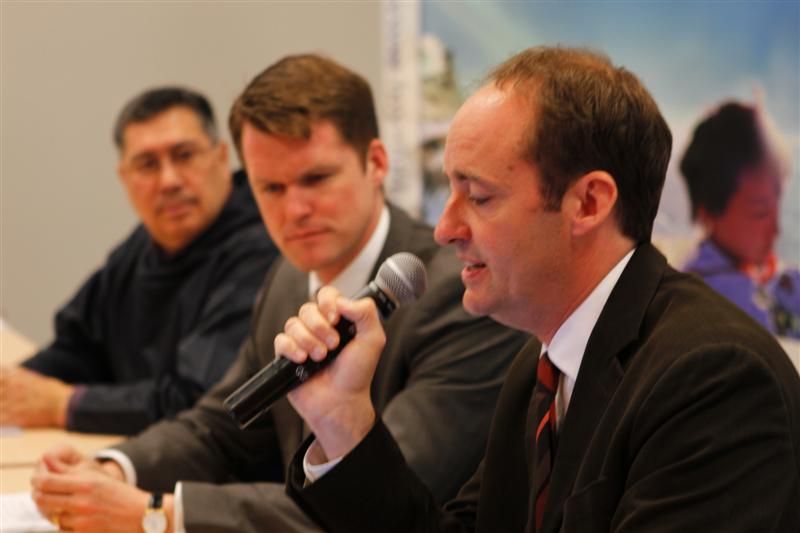
    Mike Gill at the IPY 2012 conference in Montreal.

    The Arctic Species Trend Index is the latest headline indicator by the Circumpolar Biodiversity Monitoring Program. Arctic Portal talked to the chair if CBMP, Mike Gill, about ASTI and the latest key findings just released.

    ASTI tracks trends in over 300 Arctic vertebrate species and they are presented in the reports, available on the ASTI website.

    Mike presented the key findings report in Montreal at the IPY 2012 conference.

    Click the video below to see the interview.

    Sources

    IPY Interview