Author: it@arcticportal.org

  • Nansen´s scholarship now available

    Nansen´s scholarship now available

    University of Akureyri

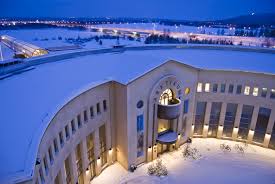
    Nansen Visiting Professorship in Arctic Studies at the University of Akureyri is now open for applications.

    The Ministers of Foreign Affairs of Iceland and Norway signed a Memorandum of Understanding in Akureyri in September 2011 for the purpose of strengthening cooperation between Iceland and Norway in the field of Arctic scientific research, including the establishment of Nansen Professorship in Arctic studies at the University of Akureyri, named after the Norwegian polar scientist, Fridtjof Nansen.

    The post of visiting professorship in Arctic studies at the University of Akureyri is available for application. It is awarded for twelve months period to a leading scientist – each year to candidates from different fields of studies – working with issues that bear on legal, economic, social and natural circumstances in the Arctic. Application deadline is the 1st of July 2013.

    For more information and to apply for the professorship, please visit the webpage of University of Akureyri.

    Source

    University of Akureyri

  • Finland´s visit to Iceland starts today

    Finland´s visit to Iceland starts today

    Icelandic nature

    Today, 28th of May 2013, the President of Finland, Sauli Niinistö will pay an official visit to Iceland, together with his wife and various Arctic experts.

    During his visit in Iceland, President Niinistö will attend a conference on the Arctic that will be held at the University of Iceland.

    The President will also officially visit Reykjavik University and learn about IT (information technology) and innovation in high tech industries at a special introductory meeting.

    The Finnish president will also visit the geothermal area in Svartsengi and learn about the use and utilization of green energy there as everywhere in Iceland.

    The Finnish President will depart on May 29th after two days visit.

    Source

    News of Iceland

  • Breaking ice scares Russian researchers

    Breaking ice scares Russian researchers

    Search and rescue in the arctic

    Yesterday, 27th of May 2013, Russian government approved the plans to evacuate sixteen people and large amount of materials from the floating research station ´´North Pole – 40´´ that has been drifting close to the North Pole.

    The nuclear powered research icebreaker ´´Yamal´´ is now preparing to leave the Arctic waters on the rescue mission. The vessel is planned to leave Murmansk at the end of this week and it will reach its home station about two weeks later.

    The cost of this action is estimated to reach close to 1.6 million Euros.

    The Arctic ice has now broken up in pieces and makes it impossible for the crew to be rescued by plane or helicopter. The ice ridging on the floe does not allow building an airstrip for any plane. The floe has drifted out of reach for helicopters.

    Russian government claims that the ´´North Pole – 40´´ research icebreaker will continue its work in the Arctic even after it has been removed from the ice floe.

    An abandoned Polar station on Severnaya Zemlya is now being prepared to host Arctic researchers and their equipment.

    Russian drifting station ´´North Pole – 40´´ has been an important contributor to exploration of the Arctic. It carries out the program of complex year – round research fields of oceanology, ice studies, meteorology, aerology, geophysics, hydro-chemistry and marine biology.

    The “North Pole – 40” is organized by Russian Arctic and Antarctic Research Institute.

    Source: Barents Observer

  • UArctic plans future students portal

    UArctic plans future students portal

    arctic landscape during summer

    UArctic’s GoNorth program hosted a special workshop for members’ marketing and recruitment staff in conjunction with the Finnish International Educators Days, held in Levi May 20-23, 2013.

    The expert-led workshop sessions were designed to help staff at member institutions better promote themselves to potential students through the UArctic network and promoting the North as a destination of study.

    The direct outcome of the workshop is planning of a new UArctic student-focussed website, being developed through the ‘Global Access to Higher Education in the North’ project, funded by the Norwegian Ministry of Foreign Affairs.

    The project is a collaboration between the GoNorth Office at the University of Tromso, the UArctic International Secretariat at the University of Lapland, and the Northern (Arctic) Federal University.

    UArctic is a decentralized organization, bringing together higher educational institutions from all over the High North.

    Source

    University of the Arctic

  • Arctic Seminar: Iceland & the Arctic

    Arctic Seminar: Iceland & the Arctic

    Polar bear on ice

    Tomorrow, 24th of May 2013 at the University of Iceland, Icelandic – Arctic scholars will gather again to give presentations about most up to date Arctic related issues. The seminar will start at 12.00. It will take place in the University´s building – Lögbergi 101.

    Auður Ingólfsdóttir will give an opening speech about legal regimes for the Arctic waters and governance of Arctic fishing resources.

    Margaret Cela, who has recently been appointed as the Project Manager for The Center for Arctic Policy Studies, will talk about the position of small states in the Arctic Region.

    The seminar will bring together representatives from Iceland´s capital region and northern part of the country. Embla Eir Oddsdóttir, who has recently been appointed as a director of new Icelandic – Arctic Cooperation Network with the headquarters in Akureyri, will present the organization´s main goals.

    The meeting in organized by the Center for Arctic Policy Studies (CAPS), which is a forum for interdisciplinary collaboration in the field of Arctic research with emphasis on the role and policies of states and institutions, non – state and corporate actors, and broader aspects of governance, culture and society in the High North.

    CAPS organizes conferences, seminars and lectures on Arctic issues as well as supporting learning in this important field of study.

    The center also publishes books and papers and introduces new research activities in the interdisciplinary field of Arctic studies.

    CAPS hosts post-doctoral research and participates in various research projects with both Icelandic and foreign academics.

    CAPS also carries out service projects for the private and public sectors with an aim to increase collaboration between these sectors and the academic community. Through its knowledge production the center seeks to inform and impact societal, cultural and environmental development as well as transnational communication in the High North.

    The Centre for Arctic Policy Studies (CAPS) is run under the auspices of the Institute of International Affairs (IIA) at the University of Iceland along with The Centre for Small State Studies (CSSS).

    Source

    CAPS

  • New tool to map the Arctic now available

    New tool to map the Arctic now available

    The new WWF web tool map

    Few days ago WWF launched ArkGIS (Arctic Geographical Information System) – a free, interactive mapping platform that combines and integrates existing data about the environment and human activity in the Arctic.

    By releasing a new web tool mapping both nature and activities, WWF hopes to be able to make relevant information universally available – in a very visible manner.

    The web-platform allows any user to download pre-made maps and videos, as well as developing customized maps on their own, using an interactive map service.

    ArkGIS is a project initiated and managed by WWF, but it brings together data from a host of information providers, including several Arctic Council working groups, the Institute of Marine Research, and the Norwegian Coastal Administration. Map layers to date include 368 identified areas of heightened ecological significance, and Arctic ship traffic, ice coverage, and bathymetry.

    Please click here to view the ArkGIS. Click here to connect to the Arctic Portal Mapping System.

    Source

    WWF Norway

  • Finland, EU and the Arctic now released

    Finland, EU and the Arctic now released

    Arctic Centre’s researcher Roza Laptander tells about Nenents’ situation in the Russian Arctic

    Europe Information of the Ministry of Foreign Affairs, Finland, published on Thursday 16th May 2013 the book Arctic Calls – Finland, the European Union and the Arctic Region.

    The book is written by Head of Science Communications Markku Heikkilä and Science Communicator Marjo Laukkanen, both from the Arctic Centre of the University of Lapland in Rovaniemi, Finland.

    The Arctic is undergoing dramatic changes, while international interest in the world´s northernmost regions is growing rapidly.

    This book helps us to see and understand the background to this trend. Through personal experiences, diverse illustrations and numerous interviews, it puts a human face on the Arctic region.

    The book is available in Finnish, Swedish, English and North Sami. The electronic versions are available on the Europe Information and Arctic Centre.

    Source

    Arctic Center

  • Climate Change in Northern Territories

    Climate Change in Northern Territories

    Mountain landscape in the arctic

    The Conference: “Climate Change in Northern Territories will take place in Akureyri, northern Iceland 22nd – 23rd of August 2013.

    The registration to the ESPON/ENECON and NRF event is now available. Early registration fee will be available until the 10th of July 2013.

    Bookings for accommodation are done through the registration form and information on the hotels can be found on the registration web page. Please note that accommodation can only be guaranteed through registration until the 10th of July. After this conference guests might have to make reservations on their own.

    In questions regarding travel and accommodation please contact Akureyri Travel at aktravel@aktravel.is or call +354 4600 600.

    Practical information on registration and travelling in Iceland can be found here.

    Click here to download the program of the conference “Climate Change in Northern Territories”.

    Source

    NRF

  • CAFF presents Biodiversity Assessment

    CAFF presents Biodiversity Assessment

    the Arctic Council ministerial

    Today, 14th of May 2013, Ministers gathered in northern Sweden welcomed the Arctic Biodiversity Assessment, prepared by CAFF (Conservation of Arctic Flora and Fauna) one´s of the Arctic Council six working groups.

    The Arctic Biodiversity Assessment is expected to be the best available science informed source on traditional ecological knowledge and status and trends of Arctic biodiversity. It also contains policy recommendations for biodiversity conservation.

    Tomorrow, on 15 May 2013 the Arctic Council will hold its biennial Ministerial Meeting in Kiruna in the north of Sweden. Approximately 300 people – ministers, delegates from the eight Arctic states (Canada, Denmark, Finland, Iceland, Norway, Russia, Sweden, and the United States), representatives of indigenous peoples, scientists and observers – will gather in to mark the end of the two-year Swedish chairmanship and the beginning of the Canadian chairmanship of the Arctic Council.

    The Arctic Council is a high level intergovernmental forum to provide a means for promoting cooperation, coordination and interaction among the Arctic States, with the involvement of the Arctic issues, in particular issues of sustainable development and environmental protection in the Arctic. The scientific work of the Arctic Council is carried out in six expert working groups.

    Source

    CAFF

  • Future Directions in Antarctic Science

    Future Directions in Antarctic Science

    Penguins

    IASC´s southern hemisphere partner, the Scientific Committee on Antarctic Research (SCAR), is embarking on a unique and exciting project to identify the most important and compelling questions in Antarctic and Southern Ocean science over the next two decades.

    A collective, community-based vision of the 100 highest priority scientific questions will be developed to assist in strategic planning; influence future directions in Antarctic research; highlight opportunities for collaborations and synergies; identify future critical infrastructure, logistical, and technological needs; and inform international decisions about investments in the Antarctic scientific enterprise.

    For this project to be successful organizers need the opinions and insights on what are or will be THE scientific questions that once answered, will measurably improve our understanding of Antarctica and the Southern Ocean and its connections to the Earth and climate systems and beyond.

    Outputs will include a high-profile, summary paper published in a leading journal and various other documents and products that will be widely disseminated to the community. Public responses will be the “raw material’ to identify the most compelling and timely questions for Antarctic and Southern Ocean science in the future.

    This project will only be successful if the communities and individuals choose to participate!

    Please encourage your colleagues to submit questions as well. The first round solicitation will close on 15 June 2013.

    For more detailed information and to submit your questions, please visit SCAR Website.

    Source

    Scientific Committee on Antarctic Research