Author: it@arcticportal.org

  • Arctic Portal – Special Events on the Portal

    Arctic Portal – Special Events on the Portal

    Web casting

    Web-casting is becoming an important venue for communicating special events to the wider audience. The Arctic Portal has facilitated numerous virtual events over the past months which are now available on the Portal for viewing.

    These include: numerous events in co-operation with ICR and the Saami Council; Breaking the Ice conference in Akureyri; APECS workshop in Stockholm and now most recently the Arctic Energy Summit. Upcoming is web-casting the major IPY event in Oslo 2010.

    ICR has recently signed an agreement in Russia which grants access to mapping data throughout the Russian north. The Arctic Portal interactive mapping tool will be used for the presentation and interpretation.

    The first map, covering the district of Yamal, is already up on the Portal. Further data covering Northern Norway and Finland, which has been identified and adapted, is to be included soon.

    The Northern Forum has provided the Arctic Portal very valuable mapping data, especially from its Russian partners, which is currently being adapted for us in the Mapping Portal. Co-operation is being established directly with the Russian partners, through the initiative of the Northern Forum.

  • System of Individual Transferable Quotas

    System of Individual Transferable Quotas

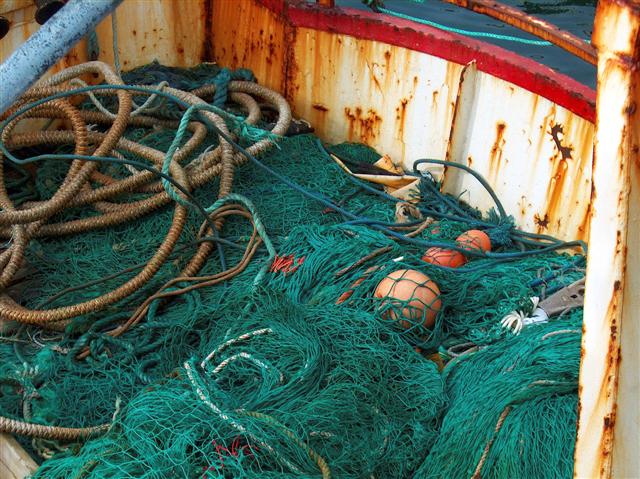
    Fisherman on a shipVarious characteristics of Icelandic economy seem to confirm the fact, that an affluent society, where the GDP per capita in 2007 was $66,240.30, is heavily dependent on the fisheries. According to recent analysis, export of fish products in foreign trade, account for around 75% of all marine goods export in Iceland and 50% of the foreign exchange income from marine goods in general.

    Following these statistics, it was found out that the total, direct and indirect fisheries’ contribution is estimated to be within the borders of 40% – 45% of GDP and might differ around 5% by looking at different sources. Using other words, without the fishery based economy, Icelandic GDP would be estimated as 60% of the current one. However, not only the state’s economy is strongly based on fisheries.

    The analysis must take into account, that the fisheries determine the major of citizens personal, individual income and income distribution, and what is more, in some part of Iceland as for instance West Fiords, around Husavik or Ólafsfjordur and many others, they are virtually the only basis for any economic activity. More than 40 different kinds of species in Iceland are harvested for the commercial purpose and the total annual catch in recent years, up to 2008, has fluctuated around 1.5 up to 2.2 million metric tons.

    It would be worth to mention, that according to the statistics from 2008, the most significant species for Icelandic fisheries are cod, which accounts for about 30% of total catch, beside that one, very valuable are also haddock, redfish and pollock which percentage in total catch can be generally estimated for around 15 % of a total catch.

    According to the latest news, there has been certain tendency regarding development of property rights in fisheries. Some of the European countries as Denmark, including Faroe Islands, United Kingdom or Ireland, performed the National Quota Management, some of them as Netherlands, New Zealand and Iceland, implemented the ITQs system. It has to be mentioned, that Iceland, where the private property has been generally believed to be fundamental to motivate the economy efficiency and productivity on land, took a leading role in this development and as one of the first countries to introduce individual vessel quotas and individual transferable quotas in major offshore fisheries.

    fish caught in a netHistorical data show that in Iceland, vessel catch quotas were implemented in 1975 in the herring fishery, in 1979 these were made transferable, and in the 1980s started to be used in all fisheries within exclusive economic zone and Icelandic vessels operating outside of this area, creating the current ITQ system.

    Addressing this discussion, it seems to be necessarily to analyze the conventional property rights in Iceland from the legal point of view. Icelandic property rights are neither fixed nor absolute and recognized as sort of privilege which allows to exclude others form some benefits. This concept places the one who holds the rights in certain position in respect to the others who are obligated to follow those rules.

    On the other hand, the legal theory states that property right is an aggregate and collection of rights. In this bundle we have to include the authority to control something and to dispose it to the others. The concept behind the implementation of ITQs system lays in the theory that it is a right to fish which is a subject of the concept, not the ownership of marine natural resources itself. It shows to be obvious that no one can posses the rights to the fish unless it has been caught. The natural marine resources are the common property of Icelandic nation.

    Current ITQs system has been based on the general provisions of the property rights. It was implemented by the Icelandic Fisheries Management Act of 1990 and changed through next two decades. The last alteration of this document took place in 2006 and provides with the essential features of current ITQ system. Though there might be notice disjunction between the art.1 and art. 4 of the FMA where the first states: “The exploitable marine stocks of the Icelandic fishing banks are the common property of the Icelandic nation.´ while the other seems to negate this statement: “No one may pursue commercial fishing in Icelandic waters without having a general fishing permit.”

    This allows to come to the conclusion, that the Icelandic fisheries management system is the closed shop system. Regarding ITQs, this feature puts an emphasis on their exclusive nature. It seems to occur as self evident, that one licensee cannot exclude all others from fishing. Analyzing the document, it can be said that the parties which enjoy a fishing license, in the same time enjoy the exclusive right to run commercial or professional fisheries in Icelandic waters. According to the FMA, current quota system represents shares in total allowable catch. TAC is set annually by the Minister of Fisheries and based on the recommendation from the Marine Research Institute which on the other hand relies on the information from the fishermen and researchers. All commercial fishing activities are subject to these quotas. Currently there are 15 species which are subject to TAC and in the same time to ITQs system. The quota share is multiplied by the TAC to give the quantity which each vessel is concerned during the fishing year in question. This is referred to as the vessels´ catch quota. Permanent quota shares and annual catch quotas are divisible and transferable to other fishing vessels. The allocation of quotas is subject to a fishing fee. Individual enterprises may not control more than the equivalent of 12% of the value of the total quotas allocated for all species, and 12% to 35% for individual species.

    The dispute arises when the one starts to think about the transferability of both, TAC and ITQ. The rule says that both of them can be transferred without any restrictions, though the Ministry of Fisheries must agree to distribute them fairly among the geographical regions. After it is done, according to the FMA we can point out the option, where the holder of an ITQ can, wholly of partly transfer its share to another licensed vessel. New regulations implemented in 1990 made it very common to sell the share by private holders, because the extreme amount of money was offered by the big enterprises.

    ships fishing gearIcelandic ITQs system has or could have, great impact on economic efficiency and what fallows, the maximization of wealth not only among the quota holders but also other citizens who, indirectly benefit from fisheries industry. By implementing ITQs system in Iceland, the interest in the fisheries, coming from big national corporations, was noticed. Those companies, larger entitles different from the Icelandic government, began to actually achieve economy of scale, what means that they were able to give out the product on the lower cost, what means the lower price, because of the progressing massive production and fish processing.

    While the ITQs system is being implemented, decision making process starts to depend on the market and current economic situation, rather than being done by non market focused entitles in bureaucratic way, what means faster and more efficient for economy ways. Iceland seems to be very good example for such an observations but similarity might be noticed also in New Zealand, where actually the government’s fishery policy became more efficient when the private sector started to provide with services as opposed to the public ones.

    Icelandic ITQ system, shares some of the features with its utopist idea of its impact on economic efficiency. However, there are particular aspects of this dimension, which differ from the theoretical ideal and subtract from its economic efficiency. In the Icelandic ITQ system, which is strongly associated with fishing vessels, only those who actually own vessels with a valid fishing license, can own quotas. What is more, the total holdings of quotas cannot exceed the fishing capacity of the vessel in question. This regulation severely restricts the set of potential holders of ITQs and clearly subtracts from the ability of the quota market to generate the most economically beneficial allocation of those.

    The Fisheries Management Act of 1990 implemented a clause setting a limit on the quota holdings of any single vessel, what stated that no vessel can have a larger TAC share than it could catch within the fishing year. Art.13 of FMA states the maximum fishing quota share for fishing vessels owned by individual parties, whether natural or legal persons, or owned by connected parties. Nevertheless, it came to the point that eleven largest firms in Iceland hold about 33% of the demersal quotas and about 32% of all ITQs. Fifty biggest harvesting companies, in 1997 (the last available data) held more than 60% in all ITQs in the beginning of that fishing year.

    Icelandic ITQs system increases the economic efficiency by lowering the cost of harvesting, cost of production and price of the out coming product. It allows cheaper labor power and decrease the time spent on the sea by the single fisherman. After actual implementation of ITQs, the human’s migration from small villages in the far north or north – east, down to bigger agglomerations, where the large companies are operating, was noticed. Versions of the ITQs fisheries management have been occurring in Icelandic fisheries since early 1980s and its performance should be considered objectively. The evidence on the economic benefits of the ITQ system is becoming clearer and the TAC for some species will be increased in the near future. The regional impact of the ITQs system shall be taken into account.

    Source: Center of the Icelandic Ministry of Fisheries and Agriculture

  • Arctic Portal – New Websites

    Arctic Portal – New Websites

     Arctic Portal news

    In the past months some important partners have joined the Arctic Portal, establishing their web presence through the Portal. These include the European Commission through the PAGE21 project, the Biodiversity in Arctic Waters website Vistey, new websites for both CAFF and PAME, workgroups of the Arctic Council, the Arctic Yearbook and the European Arctic Information Center Preparatory Action.

    Many other projects and groups are in the process of creating a presence on the portal including IPY projects, as well as the Teachers within IPY, and last but not least the Northern Forum.

    In the process of enabling partners to utilize fully the opportunities of the Portal staff from ICR in Norway, Yukon First Nations in Canada, IASC Secretariat in Sweden and APECS office in Norway have been to Akureyri for training and sharing of knowledge.

    This has proved highly valuable for better co-operation and has in both cases helped speed up the setup face and helped the Partner increase the value of their website. Similar training sessions have taken place with the co-ordinators of APECS at their meeting in Stockholm and by using virtual tools.

  • Permafrost

    Permafrost

    permafrost 5 20111202 1431496109Permafrost covers a large area of the Arctic and a total of 25% of the earth surface. But what is it and why is it in the focal point of contemporary climate change research.

    What is Permafrost?

    Permafrost is defined as ground (soil or rock included ice or organic material) that remains at or below 0°C for at least two consecutive years. Therefore, the ground is permanently frozen, hence the name Permafrost.

    Most of the permafrost that exists today was formed during cold glacial periods. It has persisted through interglacial periodsthe last 10,000 years. Relatively shallow permafrost (30 to 70 meters) was formed during the last 6,000 years and some during the Little Ice Age (from 400 to 150 years ago). In continental interiors, permafrost temperatures at the boundaries between continuous and discontinuous permafrost areas are generally about -5°C, corresponding roughly with the -8°C mean annual air temperature.

    Permafrost in mid- and low- latitude mountains is warm and its distribution is closely related to characteristics of the land surface, slope gradient and orientation, vegetation patterns, and snow cover.

    Subsea permafrost occurs close to 0°C over large areas of the Arctic continental shelf, where it was formed during the last glacial period on the exposed shelf landscapes.

    Permafrost is geographically continuous beneath the ice-free regions of the Antarctic continent and occurs beneath areas in which the ice sheet is frozen to its bed.

    permafrost 8 20111202 1163743225

    Why is it important?

    Climate scientists have predicted that global warming will warm the earth of at least two degrees Celsius by the year 2100. Some say the figure could rise to 5 degrees. This will have significant effects on permafrost regions.

    Climate change will lead to the earths warming, therefore melting large permafrost areas. The projections are that permafrost will though not disappear completely. A projected decline in the extent of permafrost will have a major impact on the Earth ecosystem, affecting global climate through the mobilization of carbon and nitrogen stored in permafrost.

    The largest permafrost areas are in Siberia, where the thickest permafrost can also be found. In Central Siberia the soil can be frozen to a depth of over 1500 meters. Permafrost is also common in Alaska and Canada. Click the map on the right to expand it and see the main permafrost areas.

    On the southern fringes of permafrost areas, where the permafrost is already relatively warm, it could disappear completely. Further north, much more soil could melt – perhaps up to 80 centimeters deep instead of 50 centimeters, as it is today.

    In all these areas fauna and flora have to adjust. Where the soil was previously dry, it could become wet. Conversely, areas with many lakes can suddenly dry up, because of the thawing permafrost. The thawing can become so severe, that the permafrost becomes permeable and the lake water will seep into the underlying ground.

    But humans could ultimately be effected as well, and in fact already have. In Siberia, railway lines have subsided and therefore are ruined. Many areas, in Siberia especially, could be affected since many things are built on permafrost. When the ground thaws, the foundation can fall, like the case with the railway lines. Same applies to some airport runways, roads and households, both in Siberia, Alaska and Canada.

    Thawing permafrost can further make Oil pipelines unstable both in Russia, Alaska and Canada. The Trans-Alaskan pipeline system is in some places built on permafrost. If it would fall it could cause a major disaster. Houses have also fallen because of permafrost thaw, like the picture at the top shows.

    Another aspect of the permafrost thaw is the methane buried under it. The effects of such greenhouse gas releaseare still unknown and further research on this is both needed and due. General consensus is that the permafrost thaw will lead to an increase in greenhouse gas emissions.

    PAGE21

    As noted, further research is necessary. Currently, numerous prestige institutions are working together within the “PAGE21 – Changing Permafrost in the Arctic and its Global Effects in the 21st Century” project to better understand the feedbacks of the Arctic permafrost carbon and nitrogen pools to global climate change..

    PAGE21 will aim to understand and quantify the vulnerability of permafrost environments to a changing global climate, and to investigate the feedback mechanisms associated with increasing greenhouse gas emissions from permafrost zones.

    This research will make use of a unique set of Arctic permafrost investigations performed at stations that span the full range of Arctic bioclimatic zones. The project will bring together the best European permafrost researchers and eminent scientists from Canada, Russia, the USA, and Japan.

    The four year project, coordinated by Dr. Hans-Wolfgang Hubberten at the Alfred Wegener Institute in Germany, will contribute directly to the existing permafrost monitoring frameworks to further research into permafrost and climate change and works in close connection with members of the IPCC 5th Assessment Working Group.

    Sources:

    International Permafrost Association

    Alfred Wegener Institution

    PAGE21 website

    Images:

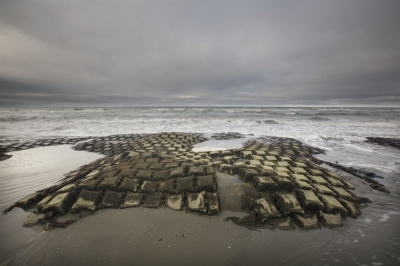
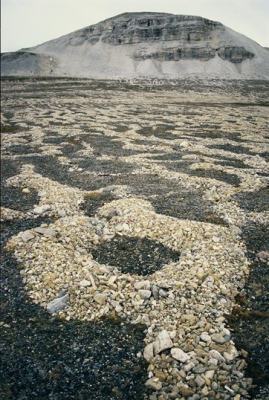
    Permafrost soil stone formations, Kongsfjord (Peter Prokosch – Grida.no)

    Sinking seawall in Shishmaref in N. Alaska (Photo: Lawrence Hislop – Grida.no)

  • Drilling into Hell

    Drilling into Hell

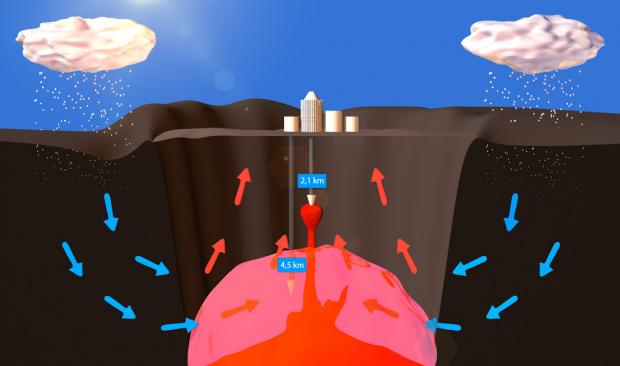
    A simplified diagram of the Krafla Caldera, a collapsed depression in the terrain. IDDP-1 was originally designed to drill to a depth of 4.5 kilometres, down to the pink area where water becomes supercritical, neither water nor steam. Instead the drilling was halted at around two kilometres down because drillers hit a pocket of magma, liquid rock. (Figure: Per Byhring, forskning.no). Click to enlarge.

    The main geothermal power station in Iceland is starting to draw heat from hell. In the North of Iceland, the Crater Hell, or Víti to the natives, portrays running water near glowing magma.

    The geothermal area in the north was always a feasible option for the Icelanders to utilize the vast energy resources, lying deep in the midst of the melting hot lava. But for a long time many doubted whether Krafla would ever actually enter operation, when large-scale volcanic eruptions started only two kilometres away from the station, posing a serious threat to its existence. Work continued, however, and the station went on stream early in 1977.

    The crater erupted in 1724 and the eruption lasted for 5 years. The last eruption was a small one which lasted for nine years, between 1975 and 1984.

    The area will erupt again, but Icelandic scientists have drilled a two-kilometer deep well into the crater to judge opportunities for utilizing this deep geo-energy.

    “This is the hottest production well in the world, with a temperature of 450° C and a pressure of 140 bars, in other words about 140 times that of normal air pressure at sea level,” says Guðmundur Ómar Friðleifsson, who heads the project, to Science Nordic.

    The Icelanders are trying a novel and bold technology before the next eruption occurs. They are drilling as close to the magma chamber as they can. Here they will extract from five to ten times the energy they currently get from the drill holes that serve the power plant.

    In the vicinity of the magma, ground water is so hot and compressed that it is no longer a mixture of water and steam, but rather a superheated dry steam. This superheated steam can liberate more energy than normal steam driving the turbines that convert it into electricity.

    Following a failed attempt at drilling deep further from the volcano, IDDP decided to drill right at Krafla, but not without making thorough preparations. Drilling of the well dubbed IDDP-1 started in March 2009. Iceland was then in the midst of its worst ever economic crisis but work continued nevertheless.

    Initially everything went according to plan. Then the troubles started. The drill string got stuck and was twisted off. New holes had to be drilled next to the old one. Delays ran into weeks.

    Nor could the engineers drill the first and widest well down to 2,400 metres as planned. They decided to call it quits at a depth of 1,958 metres. This proved fortunate because soon all their problems were clear – as glass.

    The last rock they’d reached was solidified natural glass, obsidian. The engineers had drilled right into a pocket of melted rock – into magma. Geologists calculated the thickness of this pocket at 50 metres or more in order to have remained in a molten state inside the cooler rock ever since the magma chamber formed in the 1970s and ’80s.

    The obsidian created a 20-metre glass stopper in the bottom of drill hole IDDP-1. The engineers pumped cold water into the hole and the rock heated it up for months. This allowed them to appraise the heat flow.

    “We are still measuring the heat conduction from the well,” says Friðleifsson, who has managed IDDP since the beginning of 2000.

    Even though IDDP-1 is the hottest production well on the planet and the water is superheated, it has less pressure and heat than the scientists and engineers behind the IDDP originally hoped to reach beneath Krafla.

    “The well IDDP-1 will produce from 25 to 35 megawatts. This is about half of what the entire rest of the Krafla power plant currently generates. Landsvirkjun is now planning to use steam from this well in power production by year’s end,” says Friðleifsson.

    Sources

    Science Nordic

    Landsvirkjun

  • Logo

    Logo

    Right click to save.

    Arctic Portal blue


    Arctic Portal box


    Arctic Portal box white


    Arctic Portal horizontal blue


    Arctic Portal white


    Transparent PNG


    Arctic Portal box transparent


    Arctic Portal horizontal transparent


    Please contact Arctic Portal for more logos at info@arcticportal.org.

  • Staff

    Management

    {slider title=”Halldor Johannsson – executive director of the Arctic Portal.org and Chairman of the Arctic Foundation and ArcData ltd.” open=”false”}

    Has long and vast Arctic and International experience in consulting, cooperation, communication, IT system development, data interpretation and management, outreach, policy, planning, tourism and project management.
    Member of and leading participant in multiple Icelandic and international committees, projects and initiatives of highest relevance.
    Attended, presented and chaired at numerous local and international meetings, seminars and conferences of relevance.

    halldor@arcticportal.org

    {/sliders}

    Communication & Outreach

    {slider title=”Fanney Ingvadóttir – Communication and Outreach manager.” open=”false”}

    Leading communication and outreach tasks including news, social media, educational tools, interface design and outreach material design.
    Background: Languages, psychology, communication and graphical design, working at Arctic Portal since its initiation

    fanney@arcticportal.org

    {/sliders}

    Project Management – Technical Specialists

    {slider title=”Anseok Joo – Chief Programmer, IT specialist and consultant.” open=”false”}

    Leading new IT developments including web portals, database administration, GIS applications, networking and support.
    Background: MSc computer science, BA mathematics

    anseok@arcticportal.org

    {slider title=”Ævar Karl Karlsson – Programmer and consultant, CMS expert.”}

    Leading web programming and web administration.
    Background: BSc Computer Science

    aevar@arcticportal.org

    {/sliders}

    Arctic Portal.org needs your support to continue its successful journey! – Help us make Arctic Portal.org even better!

  • About Us

    About Us

    Arctic Portal logo blue

    Arctic Portal.org, The Arctic and Northern Gateway, is actively involved in informing, consulting, supporting, and engaging, at a local level, regionally, and internationally with over 35 years of experience.

    AP is supporting cooperation, communication and outreach, stakeholder engagement and information and data sharing in environmental and social science, education, and business for intelligent sustainable development in the Arctic and the North based on responsible, knowledge-based policymaking – for the benefit of all!

    Arctic Portal participates in multiple projects of importance and provides access to news, data, information and organizations across the Arctic and the North, facilitating information sharing and cooperation between public and private parties, carrying out Arctic and Northern-related outreach and communication.

    AP provides consulting and web presence to numerous institutions and projects of Arctic and Northern importance and maintaining highly active social media outreach channels.

    Organizer of multiple international events and active participation in international organizations, networks and projects of highest Arctic, Northern and Global importance.

    Developer and host of the Arctic Data Interface, the central database for the Arctic, designing a methodology, producing and facilitating an interoperable and scalable interfacing technology for our customers on demand.

    The Arctic Portal.org is based in Akureyri, Iceland, operated by the Arctic Foundation, a registered non-profitable organization under an international board of advisory directors.

    The principal functions of the Arctic Portal are:

    1. The Gateway to Arctic and Northern information includes features such as: news from around the Arctic; information on the Arctic Council and other Arctic stakeholders; topic related portals; document and project database; virtual library; up-coming events; collection of relevant links; multimedia material including web casts, virtual conferences and videos; interactive mapping portal; webcams and weather in the Arctic; acronyms interpretation.
    2. Communication and outreach, user engagement, support and hosting – providing consultation, technical and content support and web hosting to numerous Arctic organizations.
    3. Arctic Data Interface – the Central Database for the Arctic – developing the central database for the Arctic and designing a methodology, producing and facilitating an interoperable and scalable interfacing technology that allows retrieval and interfacing of observational metadata and consequently interpretation and data accessing tools for our customers on demand.
    4. Active participation in international organizations and partner in projects of high Arctic and Northern importance and relevance including: Northern Forum – The Arctic Business Directory; International Permafrost association – IPA; Sustaining Arctic Observation Networks – SAON; the Arctic Data Committee – ADC; China-Nordic Arctic Research Centre; China-Iceland Arctic Science Observatory; Global Terrestrial Network of Permafrost – GTN-P; University of the Arctic; Arctic Renewable Energy Atlas – AREA; PAGE21, EDU-Arctic, RoPON – Registry of Polar Observing Networks, and many more. Co-Leading the cooperation and now leading the Outreach and Science Communication for the China-Iceland Arctic Observatory www.karholl.is including the development of its Guest Centre.
    5. Organizing events, workshops and conferences includes: at The Arctic Circle; Arctic Energy Summit co-hosts 2013 and 2015 and upcoming 2024; the EU in the Arctic – stakeholders consultations for the EU Arctic Information Centre in 2013 and 2014, and organizing and speaking at the EU Arctic dialogue seminars for the EEAS 2017 and 2018; as well as project and stakeholder meetings such as of the projects PAGE21 and APPLICATE. Conferences organised by the Arctic Portal include the Aurora Physics conference ISAP23 held in October 2023. Upcoming conferences co-organized by the Arctic Portal include the CNARC Symposium held in October 2024, and the Arctic Energy Forum held in October 2024 and the International Green Energy Conference held in October 2025.
    6. Speaking and Chairing at events, including: Korea Arctic Week; China-Nordic Research Centre Science Seminars and business roundtables; ACI Shipping Conferences; UIC Business Tour; EEAS seminars; SAON Ministerial Side event; Northern Forum Governors and RCC meetings; Arctic Energy Summit and many more.


    The infrastructure of the Arctic Portal

    The Arctic Portal.org has qualified, experienced, well educated international staff.

    AP provides a selection of CMS and data management solutions. AP has a strong IT team and responds to problems within 24 hours, providing web accessibility according to the WAI guidelines and a step by step tutorial as well as helpdesk services, when problems/ malfunctions possibly arise. We host our material on an IBM server facilitated with state-of-the-art backup facilities. AP has all latest databases and database tools, knowledge of maintaining and state-of-the-art mapping and presentation software.

    AP is one of the most-established organizations in carrying out Arctic-related outreach and communication. It is strongly involved in organizing and providing communication on Arctic issues. We provide services and support to many leading 60 international organisations, institutions and projects of high Arctic relevance including: IASC, PAG, APECS, SAON, ADC, ICR, Northern Forum, ICARP, CNARC, AMATII, AREA, PPS, EDU-Arctic, IPA, Arctic-Iceland, Arctic Yearbook, Laera Institute, Jean Malaurie Institute and many more.

    AP is active in policy advising and stakeholder engagement at local, regional and international levels.

    Additionally, AP has experience in collecting and visualizing complex scientific data and information and developed the first standardized global data sets for Permafrost Temperature and Active Layer thawing depths. The Data Management system for permafrost developed by AP is seen as a case for integrating Essential Climate Variables (ECVs) from In situ terrestrial Networks into Earth System Models. The project received the ICSU data management of the year award in Sept. 2016.

    The AP is participating in international cooperation on data management, metadata and search and actively developing tools and service protocols with the aim of providing dedicated data and data-interpretation customer services.

    Co-Leading the project initiation and the outreach and science communication for the China-Iceland Arctic Observatory – www.karholl.is

    The Arctic Portal is seeking a suitable partners, sponsors and investors to support our expansion based on our knowledge, information and tools, excellent project portfolio and network of partners!

    For further information please contact:

    Halldór Jóhannson
    Executive Director
    halldor@arcticportal.org
    +354 4612800 / +354 8992828

    Overview introduction

    Arctic Portal.org needs your support to continue its successful journey! – Help us make Arctic Portal.org even better – DONATE NOW!

  • Arctic Council

    Arctic Council

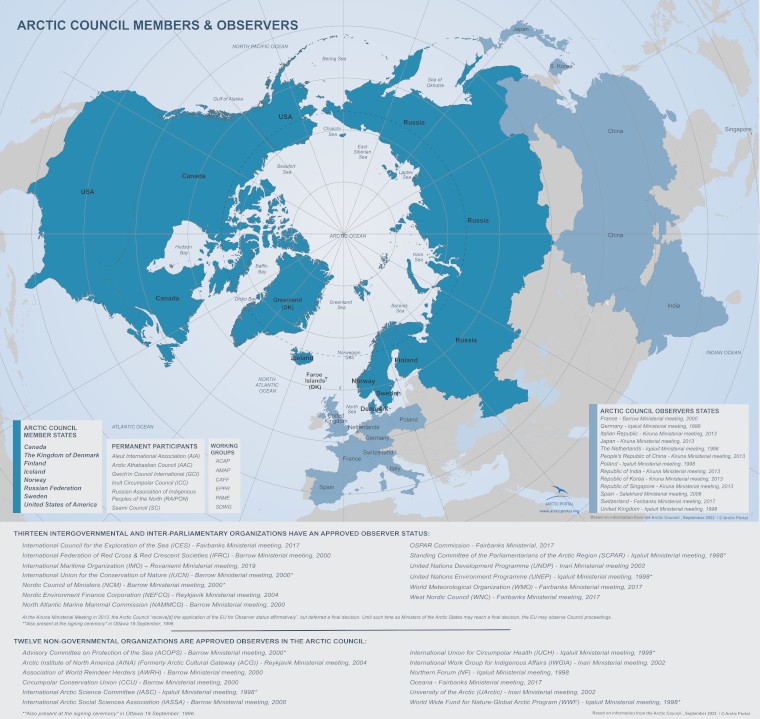
    Arctic Council Member and Observer States

    For many centuries, the Arctic was remote and pristine region left outside of scientific exploration as well as world politics. It was not before after second world war with technical advancement and ever increasing need for resources and space that world’s eyes turned to the Arctic.

    But instead of becoming a new scientific playground furthering our understanding on world’s ecology, the Arctic became militarized region of both the east and the west for four long decades or until the emergence of the perestroika in the Soviet Union which gradually brought the cold war enemies closer and eventually to the same table in 1989.

    The first purely Arctic oriented meeting of the eight Arctic countries – Canada, Denmark, Finland, Iceland, Norway, Sweden, Russia and the U.S. – took place in Rovaniemi, Finland in September 1989. The topic of the meeting was the fragile Arctic environment and a potential for joint effort in tackling the very delicate but urgent issue.

    After intensive cooperation for the next two years, the Arctic Environmental Protection Strategy was initiated in 1991. The AEPS concentrated on cooperation in scientific research and sharing of data on effects of pollution as well as assessing the potential environmental impacts of development activities in the Arctic through its four specific measures, namely Arctic Monitoring and Assessment Programme, Protection of the Marine Environment in the Arctic, Emergency Prevention, Preparedness and Response in the Arctic and Conservation of Arctic Flora and Fauna.

    The cooperation around the AEPS was quite untraditional for many reasons. First, it was one of the first venues where the cold war parties cooperated together to reach a common goal and secondly it became one of the very few inter-governmental institutions including indigenous peoples of the region in the work from the beginning.

    It became, however, soon clear that the Arctic issues and the change happening in the Arctic environment would have such an immense impact globally that it was decided that the AEPS would step aside and new inter-governmental high level forum would be created to deal Arctic environmental issues.

    In 1996, the Arctic Council, with membership of all eight Arctic states and permanent participation of regional indigenous peoples associations, was established to promote cooperation, coordination and interaction in issues of sustainable development and environmental protection.

    The Arctic Council consists of eight Arctic states; Canada, Denmark, Finland, Iceland, Norway, Sweden, Russia and the U.S and six permanent participants; Aleut International Association, Arctic Athabaskan Council (AAC), Gwich’in Council International (GCI), Inuit Circumpolar Council (ICC), Russian Arctic Indigenous Peoples of the North (RAIPON) and Saami Council. The Arctic Council is governed by Senior Arctic Official (SAO) meetings, which are held twice a year and biennial Ministerial meetings. The chairship of the Council rotates between the eights states, each state holding the position for two years at a time.

    Since the end of the cold war the Arctic has been changing in ever increasing speed. Not only does the international community face immense environmental challenges that will influence every part of the world, but also will the Arctic states face territorial claims, issues concerning maritime transportation and infrastructure, natural resource exploitation and a whole new political setting.

    The Arctic is becoming a lively international region rich of natural resources and high economic potential. The fact is, however, that there is lacking a common political agenda for the future in the Arctic and a legal framework for the emerging maritime activities. Infrastructure on the Arctic coastline is not ready to welcome the incipient economical activities and the participation procedure of the indigenous peoples in developing the area has not yet been fully established. Most of these activities must be undertaken jointly by all the Arctic nations for them to have real impact. The shortage of the Arctic Council mandate to deal with issues other than environment has led to a situation where decisions are made in isolation creating thus incomplete and fragmented framework for the Arctic region.

    This situation has been understood in the Arctic states and in every established national Arctic Policy the need for stronger Arctic Council is recognized. In the next few years then, the states have a challenge of reforming the Arctic Council to better correspond to the contemporary challenges. The mandate must be broadened to cover issues other than environment as well and the restructured Council must be presented with a higher level image to equal other international actors in the Arctic region.

    For more information please visit the Arctic Council website.

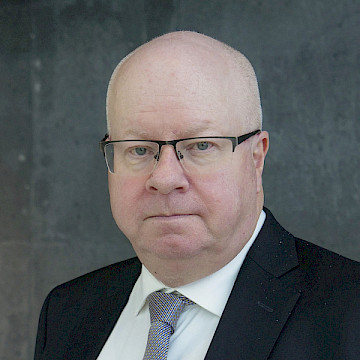
    Kenneth Høegh

    Kenneth Høegh Chair of the senior Arctic Official

    Kingdom of Denmark’s Chairship, 2025-2027

    As Chair, the Kingdom of Denmark will work diligently to keep the Arctic Council vibrant and resilient, first and foremost for the Indigenous Peoples and inhabitants of the Arctic so that the Arctic remains a region of stability and constructive cooperation. An overall ambition is to have an inclusive Chairship and to bring the work of the Arctic Council close to the Peoples and citizens living in the region who must have an impact on the activities in the region, particularly on how sustainable development is interpreted and advanced. Recognizing that Indigenous Knowledge and perspectives are essential to understanding and managing changes in the Arctic, strong integration of Indigenous Knowledge alongside scientific insights in the work of the Arctic Council is a priority.

    Priorities

    • Indigenous Peoples and Communities of the Arctic
    • Sustainable Economic Development and Energy Transition Solutions
    • Oceans
    • Climate change in the Arctic
    • Biodiversity

    Indigenous Peoples and Communities of the Arctic

    Interest in Arctic sustainable development, regardless of the interpretation of the concept, has been a major area for growth in the Council’s activities. The Chairship will continue to focus on the human dimension of the Arctic Council with a particular focus on strengthening the participation of Indigenous Peoples and the inclusion of Indigenous Knowledge.

    Sustainable Economic Development and Energy Transition Solutions

    People living in the Arctic have a natural and particular interest in activities occurring in the Arctic and how sustainable economic development is advanced in a balanced manner with respect for different Arctic ways of life. The Chairship will dedicate efforts and attention towards sustainable economic development, with a goal of ensuring that initiatives in this field are being led by the Peoples of the Arctic for the benefit of all Arctic inhabitants with a particular focus on Indigenous Peoples.

    Oceans

    The Arctic is predominantly covered by oceans. The Arctic seas are of immense importance for the people in the Arctic and in particular Indigenous Peoples and their communities who depend on the health of the sea for their livelihoods and way of life. Ongoing warming and the reduction of sea ice call upon us to step up monitoring developments and to identify the drivers of change thereby enhancing predictability and effective management of the changing marine environment.

    Climate Change in the Arctic

    Climate change in the Arctic is happening at an unprecedented rate with the estimated average temperature increase now three times higher than the global average. As a result, the Arctic inhabitants are among the first to experience the profound impacts of climate change firsthand. Climate change significantly impacts Indigenous Peoples and their communities in the Arctic, affecting their environment, livelihoods, cultural practices, and overall well-being. Our youth will inherit the state of our planet. This places a crucial responsibility on all generations past and present. Arctic climate change affects all spheres of work being undertaken by the Arctic Council with huge cross-cutting consequences for Arctic biodiversity, ecosystems and societies. The Chairship will highlight climate change trends and address the impacts of climate change on sustainable development in the Arctic.

    Biodiversity

    Biodiversity has been a key priority for the Arctic Council since its establishment. The Chairship will continue this commitment in line with the Arctic Council Strategic Plan 2021-2030’s 2nd goal: We will emphasize collaboration across the Arctic Region to monitor and assess the status and trends regarding Arctic biodiversity and ecosystems enabling us to continue to detect and predict changes and provide the best available scientific data and Indigenous Knowledge for governance.

    Einar Gunnarsson

    Morten Høglund Chair of the senior Arctic Official

    Norway Chairship, 2023-2025

    The overall objective for Norway’s Chairship of the Arctic Council will be to promote stability and constructive cooperation in the Arctic. Norway will focus on the core issues the Council deals with, including impacts of climate change, sustainable development, and efforts to enhance the well-being of people living in the region. Through four priority topics: the oceans; climate and environment, sustainable economic development; and people in the North, Norway will continue to pursue the long-term approach taken by the Council in its important efforts to ensure a vibrant and sustainable Arctic region. Arctic youth and Arctic Indigenous Peoples are cross-cutting priorities of the Norwegian Chairship.

    For more than 25 years the Arctic Council has played a central role in Arctic cooperation. The Working Groups produce crucial knowledge on the state of the Arctic, including climate change, which feeds into national and international management regimes.

    Priorities

    The four thematic priorities of Norway’s Chairship reflect long-term Norwegian priorities for the Arctic and for Norway’s Arctic policy, which are founded on knowledge and the principles of responsible and sustainable management.

    The Oceans

    A combination of increasing activity, rapid climate change and loss of sea ice is putting growing pressure on the Arctic marine environment. To promote healthy and productive oceans and enhance sustainability of Arctic Ocean industries, Norway will continue to focus on integrated ocean management.

    We will continue the efforts to support and strengthen international ocean research collaboration and increase joint action to combat marine litter. The coastal areas play a vital role in maintaining dynamic local communities in the north. Strengthening cooperation on emergency preparedness and safe shipping in the Arctic is therefore a priority for Norway.

    Clmate and Environment

    Climate change is particularly rapid in the Arctic. Changes in the Arctic have impacts at a global level. Climate change is by far the most serious threat to Arctic biodiversity. During the Norwegian Chairship, we will focus on the impacts of climate change in the Arctic, the need to adapt the management regime to climate change, and the environmental problems associated with expanding human activity. A shared, robust knowledge base is vital to dealing with these challenges.

    Sustainable Economic Development

    The rich natural resources of the Arctic are already playing a role in economic development and supporting dynamic communities in the Arctic. At the same time, the region has considerable potential for economic development in connection with the green transition. During its Chairship, Norway will highlight sustainable economic development as an essential basis for social development in the Arctic. The green transition, the blue economy, sustainable shipping, and Arctic food systems will be special thematic priorities.

    People in the North

    Global climate change is altering the framework for livelihoods, settlement patterns and living conditions for people living in the Arctic, often in new and different ways. Through its Chairship of the Arctic Council Norway will seek to develop resilient, diverse, and inclusive Arctic communities that are attractive places to live in, for everyone.

    To this end, Norway will seek to strengthen Arctic health cooperation, including cooperation on enhanced medical preparedness in the region. Norway will also work to enhance Arctic cooperation in the cultural field.
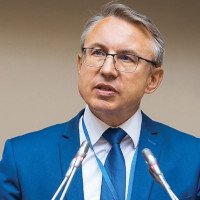
     

    Nikolay Korchunov

    Nikolay Korchunov SAO Chair

    Russia Chairship, 2021-2023

    Responsible Governance for a Sustainable Arctic

    A cross-cutting priority of the Russian Chairmanship in the Arctic Council will be “Responsible Governance for Sustainable Arctic” through promoting collective approaches to the sustainable development of the Arctic, environmentally, socially and economically balanced, enhancing synergy and cooperation and coordination with other regional structures, as well as implementation of the Council’s Strategic Plan, while respecting the rule of law.

    The Comprehensive Program of the Russian Chairmanship Involves Multi-laterial Cooperation in the Following Priority Areas:

    1. People of the Arctic, including Indigenous Peoples

    The sustainable development of the Arctic is largely determined by the quality of human capital. The Russian Chairmanship’s main focus will be given to enhancing sustainability, resilience and viability of the Arctic communities, climate change adaptation measures, improving the well-being, health, education, quality of life of the Arctic inhabitants, as well as ensuring sustainable socio-economic development in the region. Promotion of scientific, educational and cultural exchanges, tourism and contacts between peoples and regions will also be high on its agenda. Special attention – to the preservation of linguistic and cultural heritage of Indigenous peoples of the Arctic, to the youth cooperation across the borders.

    2. Environment protection, including Climate Change

    Taking into account the rapid climate change in the Arctic, most notably accompanied by degradation of permafrost and the icy gas hydrides emissions, the Russian Chairmanship will continue supporting efforts to mitigate the negative effects of climate change, increase adaptation of life activities and ensuring resilience to its consequences, preservation and restoration of the environment, sustainable use of natural resources, maintaining the health of the Arctic ecosystems, including marine environment, preserving biodiversity, in particular, the Arctic migratory birds. In the context of further development of the region it is important to take into account not only the vulnerability of the Arctic to climate change, but also its long-term contribution – due to its natural, energy and transport resources and solutions – in facilitating the transition to a low-emission economy and, accordingly, to the implementation of the goals of the Paris Agreement. Equally topical task is to promote the introduction of advanced sustainable innovative technologies into the transport sector, industry, infrastructure and energy, including the use of renewable energy sources to improve the standards of living of the Arctic inhabitants.

    3. Socio-Economic Development

    A key condition for the well-being and prosperity of the Arctic is its sustainable economic development. The Russian Chairmanship will be further promoting constructive economic cooperation in the region, developing of reliable energy infrastructure, sustainable transport routes, including shipping, telecommunication systems, food production sector, improving the conditions for sustainable investment flows, encouraging innovations and entrepreneurship, business financing.

    4. Strengthening of the Arctic Council

    The Russian Chairmanship will continue supporting the establishment of the Arctic Council as the leading format for international Arctic cooperation, improving its work, increasing the effectiveness of its Working and Expert groups, the Secretariat, as well as developing mechanisms for financing the Council’s activities, including its projects and programs, implementing decisions and recommendations, as well as encouraging the dialogue and interaction with the Observers to provide their meaningful and balanced engagement in the Council’s activities. It intends to further intensify collaboration of the Arctic Council with the Arctic Economic Council, the Arctic Coast Guard Forum, the University of the Arctic. Among the priorities of the Russian Chairmanship – promoting international scientific cooperation, in particular, exploring the possibility to conduct an Arctic Council scientific expedition to the Arctic Ocean.


    Einar Gunnarsson

    Einar Gunnarsson SAO Chair

    Iceland Chairship, 2019-2021

    The theme of the Arctic Council Chairmanship program for 2019-2021 reflects Iceland’s commitment to the principle of sustainable development and refers to the necessity of close cooperation between the states and peoples of the region and beyond. With sustainable development as an overarching theme, Iceland will highlight four priorities: The Arctic Marine Environment, Climate and Green Energy Solutions, People and Communities of the Arctic, and a Stronger Arctic Council.

    The Arctic marine environment

    During its Chairmanship, Iceland will highlight plastic pollution in the Arctic marine environment, drawing on the findings of the first desktop study on marine litter in the Arctic. The Arctic Council will work on the development of a Regional Action Plan to reduce marine litter, including micro-plastics, along with other efforts to monitor and limit its impacts.

    Innovative methods to improve the utilization of living marine resources may have considerable potential for driving sustainable economic growth in coastal communities. Iceland is leading the development of a project on the Blue Bioeconomy in the Arctic, exploring opportunities to increase the value of marine products.

    Iceland will continue to promote safe and sustainable shipping in the Arctic. With increasing marine traffic and activities, it is essential to maintain close and effective cooperation among the Arctic States on search and rescue, as well as emergency prevention, preparedness and response. Circumpolar meteorological and oceanographic cooperation also serves to improve safety at sea and should be developed further, in collaboration with the World Meteorological Organization.

    Climate and green energy solutions

    on gender equality in the Arctic and strengthen a network of experts and stakeholders in the field.

    Stronger Arctic Council

    Iceland’s Chairmanship will strive to enhance the constructive cooperation that has always been a key strength of the Arctic Council. Close consultations between the Member States and the Permanent Participants must continue, and further opportunities for mutually beneficial collaboration with Observers should be explored.

    Iceland wishes to strengthen cooperation between the Arctic Council and the Arctic Economic Council, on the basis of a new Memorandum of Understanding, with the shared objective of promoting responsible economic development.
     

    Aleksi Härkönen SAO Chair

    Aleksi Härkönen SAO Chair

    René Söderman Senior Arctic Official

    René Söderman Senior Arctic Official

    Finland Chairship, 2017-2019

    Finland builds the 2017–2019 Chairmanship of the Arctic Council on strong Arctic traditions and expertise.

    Finland wants to highlight two recent milestones which have major relevance to the Arctic.

    The international community adopted a universal, legally binding climate agreement in Paris in 2015. Global warming is still expected to continue for decades with considerable impact on the Arctic. It is necessary to continue working to mitigate climate change and strengthen resilience and adaptation, and to raise awareness of Arctic issues in global climate talks.

    The goals of the 2030 Agenda for Sustainable Development, adopted by the United Nations in 2015, are global in scope and apply also in the Arctic. Sustainable development is at the core of the Arctic Council mandate. Accordingly, Finland proposes to explore how the Agenda 2030 framework can be used in Arctic cooperation for the benefit of humans and nature.

    The Arctic is developing into an important hub of the twenty-first century. The economic potential of the region should be harnessed in a way that brings prosperity to, and guarantees the livelihood and social progress of, Arctic inhabitants and communities. Sustainable economic development is the key to resilient communities.

    Finland strives to increase the cooperation between the Arctic Council and the Arctic Economic Council to support the goal of facilitating business-to-business activities and responsible economic development. Common areas of interest include capacity building, risk management, connectivity, cold-climate technologies and services, maritime transport, energy, bioeconomy, tourism, housing and mining.

    In 2017 Finland celebrates the 100 anniversary of its independence. Among the planned Arctic events are the international Rovaniemi Arctic Spirit conference and a scientific expedition in Arctic waters on board a Finnish icebreaker.

    Environmental protection lies at the core of Arctic cooperation. The Arctic region is often equated with a clean environment and plentiful natural resources. Healthy ecosystems and human well-being in the Arctic require effective environmental protection measures. Finland invites the Arctic Council to further focus on biodiversity conservation and pollution prevention, as well as mitigation and adaptation to climate change.

    The Arctic Council and its Working Groups have produced a wealth of top-quality assessments on the state of the Arctic environment, along with recommendations for action. Finland encourages Member States to put the recommendations into practice and to communicate the results also in global forums. Finland proposes intensified exchange of information on best practices and emerging technologies to promote sustainable and responsible development in the Arctic.

    Further information
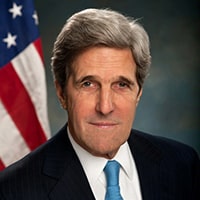
     

    U.S. Secretary of State John Kerry, Chair of the Arctic Council

    U.S. Secretary of State John Kerry, Chair of the Arctic Council (photo: www.arcticcouncil.org)

    Ambassador David Balton, Chair of the Senior Arctic Officials

    Ambassador David Balton, Chair of the Senior Arctic Officials

    U.S. Chairship, 2015-2017

    During the Arctic Council Ministerial Meeting held in Iqaluit, (Nunavut, Canada) on 24 April 2015, the U.S. has taken over the Arctic Council Chairmanship, previously hold by Canada.

    The U.S. chairmanship theme, One Arctic: Shared Opportunities, Challenges, and Responsibilities, reflects the U.S. commitment to a well-managed Arctic, marked by international cooperation. In partnership with the other Arctic States and Permanent Participants, the United States is proud to initiate wide-ranging work to protect the marine environment, conserve Arctic biodiversity, improve conditions in Arctic communities and address the rapidly changing climate in the Arctic.
    U.S. Secretary of State John Kerry is the current chair of Arctic Council.
    The program of the U.S. focus on four priorities:

    Arctic Ocean: With the increase in human and maritime activity in the Arctic, Arctic Council members are working together to promote Arctic Ocean safety, security and stewardship, including by exercising Arctic State agreements on search and rescue cooperation and oil pollution preparedness and response.

    Arctic Communities: A rapidly warming Arctic is threatening Arctic communities through coastal erosion, thawing permafrost and changing ecosystems. The Arctic Council’s work on energy and water security seeks to improve economic and living conditions in the region by pursuing innovative technologies to mitigate the significant challenges faced by remote Arctic communities.

    Arctic Climate: The impacts of climate change in the Arctic, a region where people, animals and plants have thrived for thousands of years, threaten communities and their ways of life, as well as the ecosystems upon which these communities depend. The Arctic Council is addressing the impacts of climate change in the Arctic by targeting short-lived climate pollutants through reductions in black carbon and methane emissions.

    Arctic Awareness: The Arctic is a socially vibrant and biologically diverse region that requires resources for sustainable development and environmental protection. By raising awareness of the Arctic and its role in the global ocean and climate systems, the Arctic Council seeks to educate and inform the public worldwide that the Arctic should matter to everyone.

    Download the U.S. Chairship Highlights
    Canada flag

    Denmark flag

    Finland flag

    Iceland flag

    Norway flag

    Russia flag

    Sweden flag

    USA flag

    Out of a total of 4 million inhabitants of the Arctic, approximately 500,000 belong to indigenous peoples. Indigenous peoples’ organizations have been granted Permanent Participants status in the Arctic Council. The Permanent Participants have full consultation rights in connection with the Council’s negotiations and decisions. The Permanent Participants represent a unique feature of the Arctic Council, and they make valuable contributions to its activities in all areas. The following organizations are Permanent Participants of the Arctic Council:

    The Council’s activities are conducted in six working groups. The working groups are composed of representatives at expert level from sectoral ministries, government agencies and researchers. Their work covers a broad field of subjects. The working groups are:

    Arctic Contaminants Action Program (ACAP)
    The goal of ACAP is to reduce emissions of pollutants into the environment in order to reduce the identified pollution risks. ACAP also encourages national actions for Arctic State governments to take remedial and preventive actions relating to contaminants and other releases of pollutants. ACAP acts as a strengthening and supporting mechanism to encourage national actions to reduce emissions and other releases of pollutants.

    Arctic Monitoring and Assessment Programme (AMAP)

    AMAP’s current objective is “providing reliable and sufficient information on the status of, and threats to, the Arctic environment, and providing scientific advice on actions to be taken in order to support Arctic governments in their efforts to take remedial and preventive actions relating to contaminants”. AMAP is responsible for measuring the levels, and assessing the effects of anthropogenic pollutants in all compartments of the Arctic environment, including humans; documenting trends of pollution; documenting sources and pathways of pollutants; examining the impact of pollution on Arctic flora and fauna, especially those used by indigenous people; reporting on the state of the Arctic environment; and giving advice to Ministers on priority actions needed to improve the Arctic condition.

    Conservation of Arctic Flora and Fauna (CAFF)

    The biodiversity working group of the Arctic Council, and its mandate is to address the conservation of Arctic biodiversity, and to communicate its findings to the governments and residents of the Arctic, helping to promote practices which ensure the sustainability of the Arctic’s living resources. CAFF’s projects provide data for informed decision making in resolving the challenges which are now arising in trying to both conserve the natural environment and permit regional growth. This work is based upon cooperation between all Arctic countries, indigenous organizations, international conventions, and organizations.

    Emergency Prevention, Preparedness and Response (EPPR)

    The goal of the EPPR Working Group is to contribute to the protection of the Arctic environment from the threat or impact that may result from an accidental release of pollutants or radionuclide’s. In addition, the Working Group considers issues related to response to the consequences of natural disasters. EPPR works with Arctic Council Working Groups and other organizations to ensure that the emergencies are appropriately addressed in Council products and work. EPPR also maintains liaison with the oil industry and other relevant organizations with the aim of enhancing oil spill prevention and preparedness in the Arctic.

    Protection of the Arctic Marine Environment (PAME)

    The PAME Working Group’s activities are directed towards protection of the Arctic marine environment. Increased economic activity and significant changes due to climatic processes are resulting in increased use, opportunities and threats to the Arctic marine and coastal environments. These predicted changes require more integrated approaches to address both existing and emerging challenges of the Arctic marine and coastal environments. PAME’s mandate is to address policy and non-emergency pollution prevention and control measures related to the protection of the Arctic marine environment from both land and sea-based activities. These include coordinated action programmes and guidelines complementing existing legal arrangements.

    Sustainable Development Working Group (SDWG)

    The goal of SDWG is threefold. To propose and adopt steps to be taken by the Arctic States to advance sustainable development in the Arctic, including opportunities to protect and enhance the environment and the economies, culture and health of Indigenous Peoples and Arctic communities, as well as to improve the environmental, economic and social conditions of Arctic communities as a whole. The SDWG has major areas of activity which include: Arctic Human Health, Arctic Socio-Economic Issues, Adaptation to Climate Change, Energy and Arctic Communities, Management of Natural Resources, Arctic Cultures and Languages.

    Observer status in the Arctic Council is open to non-arctic states, inter-governmental and inter-parliamentary organizations, global and regional and non-governmental organizations.

    Thirteen non-arctic countries have been admitted as Permanent Observer States to the Arctic Council:

    Thirteen Intergovernmental and Inter-Parliamentary Organizations have been given observer status:

    Thirteen Non-government organizations are observers in the Arctic Council:

  • New drill for permafrost in Svalbard

    New drill for permafrost in Svalbard

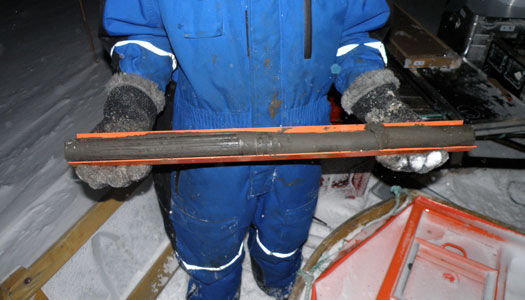
    Permafrost core

    The PAGE21 project, a new EU 7th framework collaborative research project which Arctic Portal proudly is a part of, will expand knowledge of permafrost in the Arctic. Drilling starts next week in Adventdalen, Svalbard.

    A total of 18 institutions from 11 countries are involved and UNIS is in charge of the field campaign in Adventdalen outside Longyearbyen that starts next week.

    The five main research field sites are Zackenberg in North Eastern Greenland, Abisko in Northern Sweden, Adventdalen and Ny-Ålesund in Svalbard, and Samoylov Island and Kytalyk in Russia. The individual key field research sites are collecting field data on the permafrost, such as determining its temperature, its amount of ice, the origin of the ice, and the distribution of permafrost landforms in the study areas.

    A new specially designed hydraulic drill rig has been bought for drilling. UNtil now the drilling has been hand made, down to only 2 meters. The new drill is able to collect cores from the permafrost in both sediments and bedrock down to potentially 50 m depth.

    The drill in testing in Svalbard

    The drilling that starts next week will collect up to 110m of permafrost cores from ice-wedge polygons, pingos and solifluction sheets in Adventdalen.

    The PAGE21 project combines field measurements of permafrost processes, pools, and fluxes, with remote sensing data and global climate models at local, regional and, for the first time, pan-Arctic scales.

    The output from this research will help to advance our understanding of permafrost processes at multiple scales, resulting in improvements in global numerical permafrost modelling and the ensuing future climate projections.

    Source: UNIS