Author: it@arcticportal.org

  • Bright future for new solar panels

    Solar energy panels

    Norwegian scientists have found a new, cheap and environmental friendly way to use solar power. The new substance is metal hybrides that Research Fellow Trygve Mongstad has found to be very effective.

    “These metallic hydrides are chemical compounds consisting of a metal bound with hydrogen,” Mongstad explains. He works at the Institute for Energy Technology (IFE) at Kjeller, Norway.

    The new solar panels can be described as little discs of glass that have a thin coating of vaporized magnesium-nickel hydride.

    These metal hybrides are the same ones that were once used in hydrogen fuel-cell cars.

    “Here at IFE’s solar energy department we are experimenting with exciting new uses for the characteristics of metal hydrides,” he says and adds that he has hopes that metal hydrides can be put to the same use in solar cells as is crystalline silicon, the dominant bulk material for solar cells.

    One of the best things is that the new cells are even cheaper than the existing ones. “Solar cells are cheaper than ever but still not affordable enough for solar energy to compete on a large-scale with, for instance, coal-fired power plants,” he says.

    He adds that although the solar industry is going through a hard time it is still the way of the future.

    Solar cells are all about the efficiency, todays panels have the efficiency of 10-20 percent, depending on the technology. The efficiency goes up to 43% on the new panels according to Mongstad.

    The raw materials are readily available and consist of cheap metals and hydrogen. These materials are environmentally friendly and in this context non-toxic. As the thickness is just one-hundredth of that of silicon cells, they require less energy to manufacture.

    Sources

    Science Nordic

  • One month for Rovaniemi abstracts

    One month for Rovaniemi abstracts

    Rovaniemi, Finland

    The 5th Polar Law Symposium will start in Rovaniemi, Finland, on 6th of September. The two day event will bring together internationally renowned scholars from all over the world where the Arctic will be the main focus.

    There are several themes for the symposium, as seen below. Previous symposia have proven to be extremely successful in promoting both scholarship and understanding of polar issues.

    Their outcomes were beneficial to scholars, students and academicians, government agencies, policy makers, jurists and various stakeholders alike.

    The symposium invites researchers, faculty members, young scholars, jurists, post-graduate research students, policy makers, stakeholders and others interested to submit abstracts within the scope of the below mentioned theme.

    The abstract should contain no more than 200 words and should be sent to Kamrul Hossain by 31. March 2012.

    The theme for the symposium is quite open. It covers a wide variety of topics relating to the Arctic and the Antarctic.


    • Human rights issues, such as autonomy and self-government vs self-determination, the rights of indigenous peoples to land and natural resources and cultural rights and cultural heritage, indigenous traditional knowledge.
    • Local and national governance issues.
    • Environmental law, climate change,security and environment implications of climate change, protected areas and species.
    • Regulatory, governance and management agreements and arrangements for marine environments, marine mammals, fisheries conservation and other biological/mineral/oil resources.
    • Law of the sea, the retreating sea ice, continental shelf claims.
    • Territorial claims and border disputes on both land and at sea.
    • Peace and security, dispute settlement.
    • Jurisdictional and other issues re the exploration, exploitation and shipping of oil, gas and minerals, bioprospecting.
    • Trade law, potential shipping lines through the northwest and northeast passages, maritime law and transportation law.
    • The roles and actual involvement of international organizations in the Polar regions, such as the Arctic Council, the European Union, the International Whaling Commission, the Nordic Council, the North Atlantic Treaty Organization, and the United Nations, as well as NGOs.

    These include:

    • Human rights issues, such as autonomy and self-government vs self-determination, the rights of indigenous peoples to land and natural resources and cultural rights and cultural heritage, indigenous traditional knowledge.
    • Local and national governance issues.
    • Environmental law, climate change,security and environment implications of climate change, protected areas and species.
    • Regulatory, governance and management agreements and arrangements for marine environments, marine mammals, fisheries conservation and other biological/mineral/oil resources.
    • Law of the sea, the retreating sea ice, continental shelf claims.
    • Territorial claims and border disputes on both land and at sea.
    • Peace and security, dispute settlement.
    • Jurisdictional and other issues re the exploration, exploitation and shipping of oil, gas and minerals, bioprospecting.
    • Trade law, potential shipping lines through the northwest and northeast passages, maritime law and transportation law.
    • The roles and actual involvement of international organizations in the Polar regions, such as the Arctic Council, the European Union, the International Whaling Commission, the Nordic Council, the North Atlantic Treaty Organization, and the United Nations, as well as NGOs.
  • Oil service station in Iceland?

    Oil service station in Iceland?

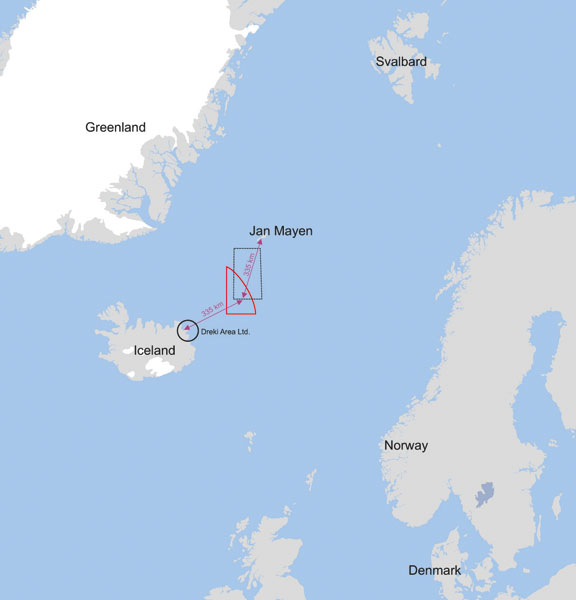
    Map of the Dreki area

    Norwegian company Sagex Petrolium has requested information about servicing for oil entities in the eastern part of Iceland. Looking to the Dreki area, oil processing could be feasible in the area in the near future.

    The request was sent to Norwegian authorities. The area is just south of Jan Mayen, but the most promising oil area is around 260km from the islands.

    The distance to the nearest harbour in Iceland is 400km. The advantage is that Iceland has infrastructure in place and a good airport and deep fjords, convenient for sailing.

    Jan Mayen is not feasible since the infrastructure is small and the airport primative. It would mean a lot of money and nature röskun for the area.

    Although oil is thought to be in the area, it is not clear if it is in workable state.

    The municipality of Þórshöfn, Langanesbyggð, is already working on possible oil servicing areas in the eastern part of Iceland, in conjunction with the town of Vopnafjörður.

    Sources

    Stöð 2 TV Channel

  • New study confirms oil formations in Dreki

    New study confirms oil formations in Dreki

    Dreki area map

    Results from a new study show that oil can most certainly be found in the Dreki area. Two companies, TGS and Volcanic Basin Petroleum Research (VBPR) collected samples that confirmed this.

    High hopes have remained for a long time that oil could be found in the Dreki area. The map shows where it is; both Iceland and Norway have the rights for resources in the area.

    The two companies collected over 200kg of samples from a 1000m high rig underwater. The samples were taken from 12 areas.

    According to Icelander Kristinn Einarsson from the National Energy Authority in Iceland, says that this confirms that oil formation is a fact and this is the best result yet that oil can indeed be found in the area.

    “The samples are taken from rocks from the Jurassic period, 200-150 million year old rock formations,” Kristinn told RÚV.

    Prior to last summer no rocks older than 50 million years had been drilled or sampled in this area. Advanced geochemical analyses of the recovered sediments suggest active seepage of Jurassic oil and a working hydrocarbon system.

    A comprehensive project report is available for immediate delivery. The report is highly relevant for the current Icelandic Licensing Round but also for deep water exploration along the European and Greenlandic continental margins. For the report, see the energy authority website.

    Bidding for the search will open in April.

    Sources

    RÚV (Icelandic National Television)

    National Energy Authority in Iceland

  • King Penguins recovered fully

    King Penguins in Antarctica

    The King Penguin has recovered from near extinction some 80 years ago. They are over 500.000 in Antarctica, again. It was in 1919 one of the first wildlife campaign started.

    It was triggered when only around 4000 animals were left after gruesome slaughtering. The ban of hunting them and reduced fishing in the area allowed them to recover.

    New Zealand blubber merchant Joseph Hatch made his fortune by boiling 3 million penguins to extract oil for lamps. This was around 100 years ago.

    The penguins were caught at Macquarie Island, a remote island between Antarctica and New Zealand.

    DNA analysts report that the genetic diversity of the population is close to pre slaughter levels.

    “It is remarkable that a nearly extinct population has recovered levels of past genetic diversity in only 80 years,” says Tim Heupink of Griffith University in Nathan, Australia.

    Heaupink studied 17 king penguins which he caught alive. He took flesh from their feet and released. He then compared their DNA to bones found in a former colony of Penguins around 1000 year old.

    It brings hope that properly protected, other beleaguered populations of birds and mammals can swiftly regain not just their numbers but also their genetic diversity – which is vital to long-term survival.

    Sources

    New Scientist

  • Same quota for Minke whales in Norway

    Same quota for Minke whales in Norway

    Arctic Portal news

    The Norwegian Ministry of Fisheries and Coastal Affairs has renewed the quota of Minke whales in Norwegian waters. The quota of 1286 animals is the same as last year.

    The quota is set based on models developed by the Scientific Committee of the International Whaling Commission (IWC).

    “With this we have decided on a quota that fulfills the necessity of sustainable development of the harvesting of the whale stocks,” Lisbeth Berg-Hansen, the Minister of Fisheries and Coastal Affairs said.

    Berg-Hansen also stressed that Norway must facilitate for continued stability and favorable conditions for the whaling industry.

    Sources

    BarentsObserver

    Ministry of Fisheries in Norway

  • Nordic Council meets in Reykjavík

    Nordic Council meets in Reykjavík

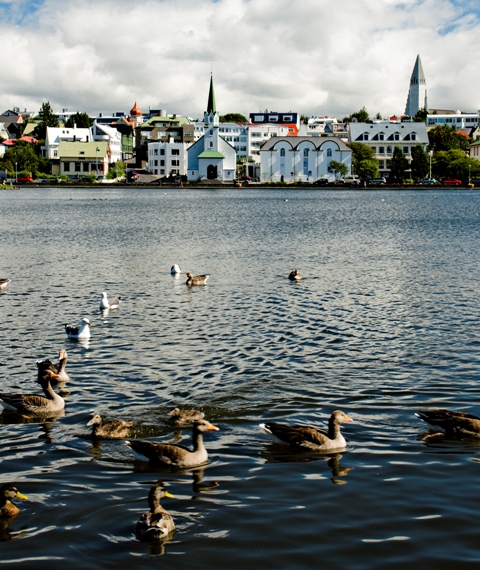
    Lake in Reykjavík

    The first Nordic Council theme session of the year will be held in Reykjavík Iceland in March. The Arctic will be in the forefront of the session.

    On March 23rd a plenary debate is scheduled which will highlight Arctic issues from an environmental-, equality- and welfare perspective.

    It will be broadcasted live online.

    The many and complex political challenges faced in the Arctic is also one of three main themes for the Finnish Presidency of the Nordic Council in 2012.

    Promoting a form of development that guarantees the living standards of the Arctic people is one of the key issues of the presidency, according to the Norden website.

    “A balance has to be struck between the rights and needs of the people and protection of the fragile natural environment, particularly because global interest in exploiting Arctic natural resources is growing, as is interest in opening up Arctic transport routes. A variety of national, regional and global bodies are involved in Arctic issues,” it states.

    The Nordic Council will have its meeting in Reykjavík two days prior to the theme session.

    Source: Norden

  • What is Permafrost?

    Permafrost covers a large area of the Arctic and a total of 25% of the earth surface. But what is it and why is it in the focal point of contemporary climate change research.

    What is Permafrost?

    Permafrost is defined as ground (soil or rock and included ice or organic material) that remains at or below 0°C for at least two consecutive years. Therefore, the ground is permanently frozen, hence the name Permafrost.

    Most of the permafrost that exists today was formed during cold glacial periods. It has persisted through interglacial periods the last 10,000 years. Relatively shallow permafrost (30 to 70 meters) was formed during the last 6,000 years and some during the Little Ice Age (from 400 to 150 years ago). In continental interiors, permafrost temperatures at the boundaries between continuous and discontinuous permafrost areas are generally about -5°C, corresponding roughly with the -8°C mean annual air temperature.

    Permafrost in mid- and low- latitude mountains is warm and its distribution is closely related to characteristics of the land surface, slope gradient and orientation, vegetation patterns, and snow cover.

    Subsea permafrost occurs close to 0°C over large areas of the Arctic continental shelf, where it was formed during the last glacial period on the exposed shelf landscapes.

    Permafrost is geographically continuous beneath the ice-free regions of the Antarctic continent and occurs beneath areas in which the ice sheet is frozen to its bed.

    Why is it important?

    Climate scientists have predicted that global warming will warm the earth of at least two degrees Celsius by the year 2100. Some say the figure could rise to 5 degrees. This will have significant effects on permafrost regions.

    Climate change will lead to the earths warming, therefore melting large permafrost areas. The projections are that permafrost will though not disappear completely. A projected decline in the extent of permafrost will have a major impact on the Earth ecosystem, affecting global climate through the mobilization of carbon and nitrogen stored in permafrost.

    The largest permafrost areas are in Siberia, where the thickest permafrost can also be found. In Central Siberia the soil can be frozen to a depth of over 1500 meters. Permafrost is also common in Alaska and Canada. Click the map on the right to expand it and see the main permafrost areas.

    On the southern fringes of permafrost areas, where the permafrost is already relatively warm, it could disappear completely. Further north, much more soil could melt – perhaps up to 80 centimeters deep instead of 50 centimeters, as it is today.
    In all these areas fauna and flora have to adjust. Where the soil was previously dry, it could become wet. Conversely, areas with many lakes can suddenly dry up, because of the thawing permafrost. The thawing can become so severe, that the permafrost becomes permeable and the lake water will seep into the underlying ground.

    But humans could ultimately be effected as well, and in fact already have. In Siberia, railway lines have subsided and therefore are ruined. Many areas, in Siberia especially, could be affected since many things are built on permafrost. When the ground thaws, the foundation can fall, like the case with the railway lines. Same applies to some airport runways, roads and households, both in Siberia, Alaska and Canada.

    Thawing permafrost can further make Oil pipelines unstable both in Russia, Alaska and Canada. The Trans-Alaskan pipeline system is in some places built on permafrost. If it would fall it could cause a major disaster. Houses have also fallen because of permafrost thaw, like the picture at the top shows.

    Another aspect of the permafrost thaw is the methane buried under it. The effects of such greenhouse gas release are still unknown and further research on this is both needed and due. General consensus is that the permafrost thaw will lead to an increase in greenhouse gas emissions.

    PAGE21

    As noted, further research is necessary. Currently, numerous prestige institutions are working together within the “PAGE21 – Changing Permafrost in the Arctic and its Global Effects in the 21st Century” project to better understand the feedbacks of the Arctic permafrost carbon and nitrogen pools to global climate change.

    PAGE21 will aim to understand and quantify the vulnerability of permafrost environments to a changing global climate, and to investigate the feedback mechanisms associated with increasing greenhouse gas emissions from permafrost zones.
    This research will make use of a unique set of Arctic permafrost investigations performed at stations that span the full range of Arctic bioclimatic zones. The project will bring together the best European permafrost researchers and eminent scientists from Canada, Russia, the USA, and Japan.

    The four year project, coordinated by Dr. Hans-Wolfgang Hubberten at the Alfred Wegener Institute in Germany, will contribute directly to the existing permafrost monitoring frameworks to further research into permafrost and climate change and works in close connection with members of the IPCC 5th Assessment Working Group.

    Sources:International Permafrost Association I Alfred Wegener Institution I PAGE21 website

  • Great melt – But not in the Himalayas

    A melting glacier in the Himalayas.

    A new study led by a research team from the University of Colorado Boulder shows that glaciers and ice caps in the world, outside Greenland and Antarctica, are shedding roughly 150 billion tons of ice annually.

    This is the first comprehensive satellite study of the contribution of the world’s melting glaciers and ice caps to global sea level rise. The result indicates they are adding roughly 0.4 millimeters annually according to physics Professor John Wahr who led the study. Melting sea ice contributes to global rise in sea levels, which could lead to significant threats in the future.

    The team used satellite images to conduct the study and the annual shed between the years 2003-2010 was enormous. The total does not count the mass from individual glacier and ice caps on the fringes of the Greenland and Antarctic ice sheets — roughly an additional 80 billion tons.

    Launched in 2002, two GRACE satellites whip around Earth in tandem 16 times a day at an altitude of about 300 miles, sensing subtle variations in Earth’s mass and gravitational pull. Separated by roughly 135 miles, the satellites measure changes in Earth’s gravity field caused by regional changes in the planet’s mass, including ice sheets, oceans and water stored in the soil and in underground aquifers.

    One unexpected study result from GRACE was that the estimated ice loss from high Asia Mountains — including ranges like the Himalaya, the Pamir and the Tien Shan — was only about 4 billion tons of ice annually. Some previous ground-based estimates of ice loss in the high Asia Mountains have ranged up to 50 billion tons annually, Wahr said.

    A leading glacier expert in Iceland, confirms that the melt in the Himalayas is not as great as many have thought. He says that it is a misunderstanding that millions of people will be without water if the glaciers melt. Even if they melt, it would continue to snow in the Himalayas and it would be sufficient for the water supply.

    He also concluded that the total loss in the Himalayas was not sufficient, as the cap near the top in the Himalayas was getting thicker, while the outsides were shrinking.

    Tómas also point out that the great gap in between studies of the Himalayas shows that the measurements are not as accurate as many think. A study from a few years back showed great melt in the Himalayas, much greater then this study.

    Source: Colorado Boulder

  • From Pole to Pole with the Arctic Tern

    Bird marked with tracker

    Carsten Egevang, a researcher at the Greenland Institute of Natural Resources, has compiled a video which shows the travelling of the Arctic Tern.

    The video talks about the migratory odyssey of the Arctic tern. These terns fly from the Arctic to the Antarctic and back every year.

    During its lifetime, the tiny bird flies the equivalent of three round trips between the Earth and the Moon.

    The birds were marked and then visited a year later to compile the information. It took some time to spot the birds again!

    This amazing story has been put together in this video:

    http://www.youtube.com/watch?v=bte7MCSBZvo