Author: it@arcticportal.org

  • Announcement of opportunity – SCAR Antarctic Science Fellowships 2011 – 2012 and COMNAP Antarctic Research Fellowship

    Announcement of opportunity – SCAR Antarctic Science Fellowships 2011 – 2012 and COMNAP Antarctic Research Fellowship

    SCAR

    Two leading Antarctic organisations announce today opportunities for early career researchers. The Scientific Committee on Antarctic Research (SCAR) and the Council of Managers of National Antarctic Programmes (COMNAP) are working together to attract talented researchers, engineers and other professionals to strengthen international capacity and cooperation.

    The Fellowships are worth up to $US 15,000 each and up to five (4 SCAR and 1 COMNAP Fellowships) are on offer for 2011.

    For the SCAR fellowships, the awardee should:

    1. Be PhD students or within 5 years of having completed a PhD on the day of the deadline for applications
    2. be from any country
    3. want to visit a SCAR member country’s research facilities or Antarctic base
    4. work in ANY field of SCAR’s Antarctic scientific interest, including Antarctic Climate change, Life Sciences, Geo Sciences, Physical Sciences.

    Further details of both the SCAR and COMNAP fellowships

    The deadline for applications is 15 May 2011.

  • Rapid Changes for Arctic Flora and Fauna

    Rapid Changes for Arctic Flora and Fauna

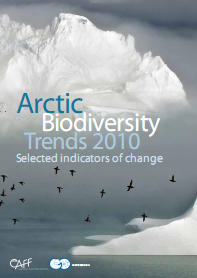
    Arctic Biodiversity Trends 2010Unique Arctic habitats for flora and fauna, including sea ice, tundra, lakes, and peatlands have been disappearing over recent decades, and some characteristic Arctic species have shown a decline. The changes in Arctic Biodiversity have global repercussions and are further creating challenges for people living in the Arctic.

    The above statements are examples on the key findings describing changes in Arctic biodiversity that is presented in ‘The Arctic Biodiversity Trends – 2010: Selected Indicators of Change’, a new report synthesizing scientific findings on the status and trends for selected biodiversity in the Arctic issued by the Conservation of Arctic Flora and Fauna (CAFF) Working Group under the Arctic Council.
    A constant issue noted as critical is the need for Arctic wide monitoring programmes. CAFFs Circumpolar Biodiversity Monitoring Programme (CBMP – www.cbmp.is) has developed the first arctic wide marine ecosystem monitoring programme which has been endorsed by the Arctic Council. This plan is now starting to be implemented will help short the gap between the collection and analysis of data to its availability to decision makers.

    Arctic Biodiversity – affected by multiple stressors
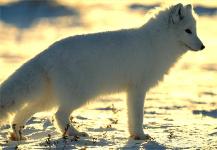
    Arctic FoxThe Arctic Biodiversity Trends 2010 Report, produced by some of the world’s leading experts of Arctic ecosystems and biodiversity, was the Arctic Council’s contribution to the United Nations International Year of Biodiversity in 2010.

    In 2008, the United Nations Environment Program passed a resolution expressing ‘extreme concern’ over the impacts of climate change on Arctic indigenous peoples, other communities, and biodiversity. It highlighted the potentially significant consequences of changes in the Arctic. The Arctic Biodiversity Trends – 2010: Selected Indicators of Change report indicates that some of those anticipated impacts on Arctic biodiversity are already occurring.

    The report is based on twenty-two indicators and provides a snapshot of the trends being observed in Arctic biodiversity today. The polar bear is one of the most well-known species impacted by changes in the Arctic, but it is not the only one. The indicators show that the Arctic has changed dramatically during recent decades and that unique Arctic habitats for flora and fauna are disappearing. Furthermore, some species of importance to Arctic people or species of global attention are declining.

    The report presents a broad spectrum of changes in the Arctic ecosystems and biodiversity.

    • Polar bears are highly specialized for and dependent on sea ice for their habitat. Therefore they are particularly sensitive and vulnerable to the documented significant reductions in sea ice cover in parts of the Arctic and to the thinning of multi-year ice in the polar basin. Status and trends for many populations are not available, but research on some populations demonstrates that they have decreased over the past several decades, and population and habitat modelling have projected substantial future declines in the distribution and abundance of polar bears.
    • The vegetation comprising tundra ecosystems – various species of grasses, sedges, mosses, and lichens – are, in some places, being replaced by species typical of more southern locations, such as evergreen shrubs.
    • Trees are beginning to encroach on the tundra at its southern margin and some models project that by 2100 the tree line will have advanced north by as much as 500 km, resulting in a loss of 51% of tundra habitat.
    • In recent years, on average, the southern limit of permafrost in northern peatlands has retreated by 39 km and by as much as 200 km in some parts of Arctic. Peatlands are significant for the floristic diversity of the Arctic because their species comprise 20–30% of the Arctic and sub-Arctic flora. Moreover, many bird species with conservation priority are strongly associated with tundra and mire habitats.
    • Cold water coral reefs, coral gardens, and sponge aggregations provide a habitat for a variety of fish and invertebrates and thus represent biodiversity hotspots in the Arctic seas. These habitats are vulnerable to fisheries and other human activities such as oil and gas exploration.
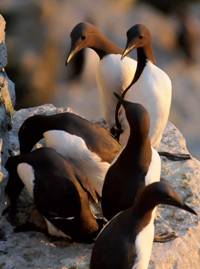
    svartfuglDepending on the magnitude of these and other changes, certain ecosystems may no longer be considered ‘Arctic’. The result may be that many of the species thriving in the Arctic today are not able to survive there in the future.

    A key finding in the Report is that climate change is emerging as the most far-reaching and significant stressor on Arctic biodiversity, though contaminants, habitat change, industrial development, and unsustainable harvest levels continue to have impacts.

    The importance of Arctic ecosystems for biodiversity is immense and therefore a more thorough examination of the state of affairs is needed. Thus, leading Arctic scientists are currently engaged in making a full and comprehensive Arctic Biodiversity Assessment, which is will be completed in 2013.

    A primary challenge is to shorten the gap between when data is collected to when it has been processed and presented to decision makers to allow for a quicker response time. CAFF has recognized this challenge and in recent years worked towards developing a solution.

    This approach has focused on not just developing traditional assessments but also addressing the creation of a framework to allow for the collection, processing and analysis of data on a continuous basis – the CBMP. The aim being through the ABA not to produce a traditional one off static assessment but rather to create a baseline of current knowledge and at the same time developing the engine which will feed data into this baseline allowing it to become a dynamic living tool. One which is sustainable and can produce regular and more flexible assessments and analyses.

    Practical information

    Further information and a press kit can be found at www.caff.is.
    Further information can be found by email: tom@caff.is or contacting Tom Barry at +354 861 9824.

  • The 6th NRF Open Assembly to be held in Hveragerði, Iceland

    Northern Research Forum

    The 6th Northern Research Forum (NRF) Open Assembly which was originally planned to be held in Oslo and Kirkenes in the autumn of 2011 has been moved to Iceland. The move of congress venues was prompted by unforeseen financial challenges, according to the NRF Secretariat.

    The venue of the 6th Open Assembly is a small town in the south of Iceland located 45 km to the east of Reykjavík, the capital of Iceland. The town of Hveragerði is well known for its geothermal park, which is centrally located in the town.

    The NRF secretariat says that all preparations are well underway and the Open Assembly will be held on the 4th – 6th of September.

    For further information, please visit the NRF Webpage

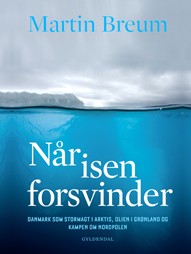
  • When the ice disappears – Denmark as a major Arctic power

    When the ice disappears – Denmark as a major Arctic power

    nar_isen_forsvinder

    “For the first time in human history a new sea opens before our feet and long time dreams of the old king of Denmark, Christian IV, comes true, long after his passage, where sailing through the north to China is possible”. This is mentioned in a book that Denmarks largest publishing house, Gyldendal, has recently published, “‘When the ice disappears – Denmark as a major Arctic power, the oil in Greenland and the fight over the North Pole”.

    The book is its first on Denmark’s modern involvement in the Arctic. It is a critical, investigative book by a journalist, who has followed the Arctic for some time. Interviewees for the book include Greenland premier Mr. Kuupik Kleist and former Danish minister of Foreign Affairs, Mr. Per Stig Møller. The book is aimed at the general public, and covers such topics as why Denmark took the lead in the process leading to the Ilulissat-declaration of 2008. It investigates the political reasoning behind Denmark’s expected claim to the seabed in the Arctic Ocean up past the North Pole, and it goes deep into the discussion in Greenland for and against oil. It finally examines Denmark’s approach to security in the high north and revisits some key historical pointers: The Norwegian claim to parts of East Greenland in 1931, the German Nazi endeavors in East Greenland during the Second World War and other threats to Danish sovereignty over Greenland.

    The author, Martin Breum, graduated from the Danish School of Journalism in 1982 and has since then been reporting from political conflicts from all over the world. In the later years a new focus on climate change has caught his interest. The book is in Danish only

    Further information and graphics

  • E-Trip to Alaska to Discuss Issues Facing the Arctic

    National Ocean Council

    The US Arctic Research Commission (USARC) and Alaska Center for Climate Assessment and Policy at the University of Alaska-Fairbanks will host an interactive “Webinar” to discuss issues concerning the Arctic tonight April 19 at 1800 GMT.

    The Webinar will focus on initial efforts to develop a national strategic action plan for the U.S. — called for by President Obama in his July 2010 National Ocean Policy—to address changing conditions in the Arctic.

    To register to the webinar and to get additional information, please read the US National Ocean Council news item HERE

  • The Arctic Fox Mission arrives at the North Pole

    The Arctic Fox Mission arrives at the North Pole

    Arctic Fox team on the North Pole

    The Arctic Fox Mission reached the North Pole today. The group is now at the top of the world, where all time zones converge and all lines of longitude meet.

    According to the Arctic Fox Mission website, the weather was good when they arrived at the North Pole or as the state on their blog “It was another beautiful day with a bright blue sky that made the snow sparkle like diamonds in the sun“. When the explores reached the North Pole, the team celebrated with hugs, handshakes, laughter, tears, and plenty of photos to document the occasion.

    After celebrating their achievement and internalizing the moment, the team set up camp and prepared for a continuation of the festivities. A green dining tent was converted into a special salon for the first-ever official North Pole Poetry Slam in honour of the Arctic Fox Mission team leader and acclaimed poet Mr. Nubo Huang. Each team member shared a special poem (or two, or three…) and together the team celebrated friendship, poetry, family, adventure, and the Arctic, whose 24 hour sun was circling overhead.

    The group encountered some problems finding the exact North Pole and described it as a challenge:

    Strange as it may sound finding the exact North Pole can be a challenge, even with a GPS. Sometimes it is possible to look for 5 or 10 minutes within a 20 square foot area! There is no sign or post marking the spot (it would drift away in a few minutes) and all the while that a person is looking for 90.00.000 N to appear on their GPS the ice beneath them is in constant motion. Thus, it is like searching for a precise location while on a moving treadmill. It makes it all the more special when the GPS flashes that special number 90.00.000. The North Pole“.

    The Arctic Portal congratulates the Arctic explorers with this great milestone and wishes the group a safe journey back home.

  • Chinese Icebreaker to reach Iceland over the Arctic

    Chinese Icebreaker to reach Iceland over the Arctic

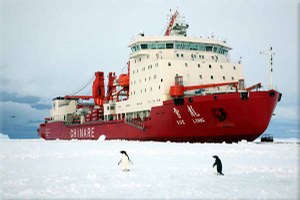
    Snow Dragon

    The Chinese government plan to send an icebreaker over the Arctic to ship in Iceland this summer. The ship will sail the North -East Passage to Iceland and the North-West Passage back. This would be the first time a ship would go through the Arctic from the Pacific Ocean to Iceland and back again in one summer.

    The first idea of the expedition was discussed at visit from Chinese officials to the Icelandic president last autumn. Mr. Ólafur Ragnar Grímsson, president of Iceland mentioned to the Chinese officials that the expedition could ship in Iceland. According to the director of the Norwegian Polar Institute, the Chinese officials had accepted the offer from President Grímsson and will send the Icebreaker “Snow Dragon” to sail over the Arctic and ship in Iceland.

    China’s “Snow Dragon” (Xue Long) is the largest non-nuclear icebreaker in the world. The Ice breaker will sail from the Sea of Japan and the Pacific Ocean, through the Bering Strait. The route through the Arctic will be the North-East passage, along the coast of Russia and Norway, before reaching Iceland.

    The Ice Breaker will sail back through the Arctic after a quick stop in Iceland. On the way back, the vessel will sail through the North-West Passage, along the coast of the Canadian Arctic archipelago and the Alaskan Arctic shore.

    The Chinese expedition could therefore be historical, since no one have sailed through both of the Arctic Passages and reaching the two large oceans, the Pacific and the Atlantic, in the same summer.

  • VLT in the Circle

    VLT in the Circle

    the circle reindeer

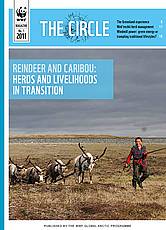
    A coverage about the Virtual Learning Tools (VLT) is in the latest issue of the Circle, which is a magazine produced by the WWF Global Arctic Programme. An interview is in the issue with Philip Burgess from the International Centre of Reindeer Husbandry (ICR). Philip is one of the instructor and organizer of the Masters program that is taught at the VLT, “Adaptation to Globalization in the Arctic: The Case of Reindeer Husbandry”.

    In the article, he mentions the pros of participating in an online course such as the one taught at the VLT environment “The flexibility of the online environment allows students to follow the course according to their own schedules (and time zones!) through a weekly live lecture which is also archived for later viewing”.

    The rapid technology is creating a smaller world, as Philip states in the article: “On a recent occasion, I was sitting I Toronto, Canada while a professor was delivering a lecture in Tromsø, Norway. Students were participating from Russia, Norway, Finland, Sweden, the UK, the US and Canada. But we were all together in a shared digital room (although perhaps it should be called a digital lavvu, or chum)”.

    The Circle is published four times a year. Each issue focuses on one specific Arctic-related subject, the topic in the newest edition being ocean acidification. The latest issue has a focus on reindeer herding and caribou, entitled Reindeer and Caribou: Herds and Livelihood in Transition. This edition focuses on a number of themes that are current in the world of reindeer and caribou. Articles cover global warming, wild reindeer in Siberia, oil and gas impacts on Nenets reindeer husbandry and the impact of wind power development on reindeer herding districts in Sweden.

    Latest Issue of the Circle – Reindeer and Caribou: Herds and Livelihood in Transition

    Virtual Learning Tools

  • Iceland to join WTO complain on EU trade ban on seal products

    Iceland to join WTO complain on EU trade ban on seal products

    althingishusIceland has decided to support Canada and Norway in the case against the EU trade ban on seal products. This was decided on a meeting on dispute settlement on the 25th of March. It was also decided on the meeting that Iceland will join the case as a third party member against the EU trade ban.
    Iceland is one of six countries where seal hunting is still practiced. The others are Canada, Norway and Russia, which are not EU members states; Greenland, which is a Danish region but has autonomy in its domestic affairs; and Namibia in southern Africa.

    This decision of Iceland is in harmony with previous statements of the country. The ban, which was adopted by the EU Council on 27th of July 2009 and came into effect on the 20th August 2010 was also opposed by the Icelandic government in April 2009, where the minister of Fisheries- and agriculture sent a letter to the EU Directorate-General for Maritime Affairs and Fisheries. Worries about impending legislation where mentioned along with other reasons opposing the trade ban. The Icelandic minister for fisheries had also declared his support about the case at the 15th North Atlantic Fisheries Ministers Conference, which was held in Canada in July 2010.

    Photo by: Bergvin Snær Nesmann AndréssonIceland´s opposition is also shown in the NAMMCO statement on EU import ban on seal products. There, the bans is seen as contrary to international principles for conservation and sustainable management. Along with Iceland, the Faroe Islands, Greenland, and Norway, as well as observer nations to NAMMCO, Canada, the Russian Federation and Japan, reiterated their serious concerns about the EU ban on the import of seal products into the European Union.
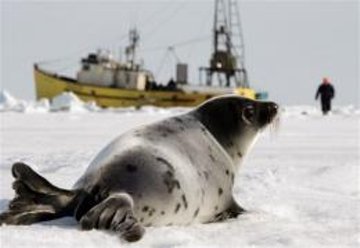
    In the NAMMCO statement it is mentioned that the trade ban ignores and undermines the internationally recognized principles on which conservation and management of marine resources in the North Atlantic are firmly based. It has serious and detrimental consequences for the economies of the many communities dependent on abundant seal stocks across the North Atlantic. Therefore the incorporation of the ban into European Union legislation is said to be a huge step backwards for sustainable development and international trade.

    It is further states that the nations cooperating through NAMMCO are committed to promoting the principle of sustainable development in all areas of cooperation in the region, including the sustainable use of seals. Such cooperation is based on mutual respect and recognition of the rights of all peoples to use their resources responsibly and sustainably for their economic development, including the right to benefit from international trade.

    seal1It is finalized in the NAMMCO statement that conservation and management of all living marine resources should be science-based and should take account of the marine ecosystems and the interrelation between species, stocks and habitats in which fishing and hunting activities occur.
    Canada appealed to the European Union the trade ban on seal products to the World Trade Organization. Canadian Fisheries Minister, Gail Shea, has stated that she does not believe the government’s fight for seal hunters will damage other industries that employ more people. Fisheries minister has mentioned that other Canadian industries might be damaged if the country does not take a stand on what she insists is a matter of principle and needs to be ruled on facts, not emotions. A decision from the WTO could take a year or more.
    The EU trade ban on seal products has affected Canada’s Inuit community. Despite the fact that the Inuit are exempt from the ban, they no longer have a market for sealskins; a by-product of their subsistence hunt.

    A documentary has been made that brings together commentary from Inuit hunters, community leaders and an emotional testimonial from local people.

    Seal Ban: The Inuit Impact – Documentary

    Sources:

    The Icelandic Ministry of Fisheries and Agriculture

    NAMMCO

    Eye on the Arctic