Author: it@arcticportal.org

  • Finnish professor: ILO Convention may well be ratified in Finland

    Finnish professor: ILO Convention may well be ratified in Finland

    Arctic Centre

    Research professor of the Northern Institute for Environmental and Minority Law (Arctic Centre/University of Lapland) Timo Koivurova cautions’ those who think that the ILO-Convention No. 169 will never be ratified in Finland.

    “Many have mistakenly interpreted the announcement by the Finnish Minister of Justice that the ILO 169 will not be ratified to mean that it will never be ratified in Finland. This is, of course, a misunderstanding. It will again be for the next Government of Finland to think this through” States Timo Koivurova in an interview to the Barents Observer.

    It has been previously reported that Finland’s Minister of Justice, Tuija Brax, told media that the skeleton law, prepared for a long time by the Ministry of Justic, broke worn because of the Centre Party’s opposition. Professor Koivurova argues that there are also many other misunderstandings related to the ILO 169 ratification in both Finland and Sweden.

    Timo Koivurova

    “Many experts – also in ILO – are puzzled over why the ILO 169 is read in Finland and Sweden as if it was a detailed Act of law, when, in effect, it is an international convention envisaged to be of universal application (even if it has been ratified only by 22 countries worldwide). Any international convention, including ILO 169, contains flexibility as to how it is implemented to match with the realities of different countries and regions. ILO Convention says this explicitly in its Article 34”

    Professor Koivurova also sees that the Norwegian model of implementing the ILO 169 shows that the ILO Convention can be interpreted flexibly.

    “What we in Finland and Sweden can learn from Norway is that the ILO 169 was not interpreted only to protect the rights of Saami, but the State transferred most of its lands and waters in Finnmark to all the population groups living there, Kvens, Norwegians and Saami” says Timo Koivurova.

    Another important thing according to the Professor is to realize is that the northern region benefited from this: decision-making powers and land ownership were really transferred from Oslo to Finnmark.

    See also Finland will not ratify Convention on Sami rights

    Source: Barents Observer

  • The Second Northern Dimension Parliamentary Forum

    The Second Northern Dimension Parliamentary Forum

    Northern dimension Norway

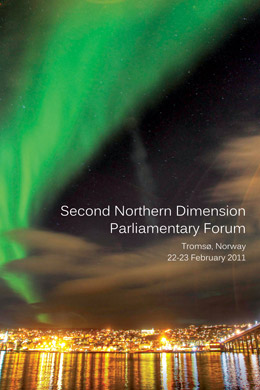
    Politicians from the Nordic and Baltic region as well as the Arctic and Barents area meet with representatives from the Russian Duma and the European Parliament for the second Northern Dimension Parliamentary Forum on February 22-23.

    The Forum will take place in Tromsø, Norway and is hosted by the Norwegian Parliament.

    The Forum will include members from the European Parliament, the national parliaments of Russia, Iceland and Norway, representatives for indigenous peoples as well as representatives of regional parliamentary bodies representing all national parliaments in the Northern Dimension region, including Canada and the United States of America.

    The first Northern Dimension Parliamentary Forum was organized by the European Parliament in February 2009. The Forum determined that the next forum would be held in Norway in 2011. It was emphasized that the Forum shall not take the shape of a new institution, but rather be a recurrent gathering of representatives of the different parliamentary bodies in the North. The Forum has been instituted to improve cooperation and development in Northern Europe and the Arctic.

    The primary focus of the Forum should be reports on the implementation of the partnerships within the Northern Dimension (the Northern Dimension Environmental Partnership, Northern Dimension Partnership on Culture, the Northern Dimension Partnership in Public Health and Social Well-being, Northern Dimension Partnership on Transport and Logistics). The Forum aims at coordinating the policies of the parliamentary bodies within the Northern Dimension region.

    Source: Norden

  • Polar bear visits the dentist

    Polar bear visits the dentist

    Polar bear has his teeth removed

    It took dentists four hours to fix the toothache of Mr. Walker the polar bear at the Highland Wildlife Park in Kingussie, Scotland. Walker the polar bear had to undergo a dental treatment for a troublesome tooth.

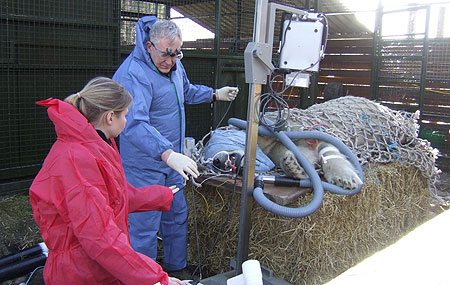
    The 241 kg (531 lbs) polar bear was treated after staff at the wildlife park noticed that his jaw was swollen and had to undergo a dental treatment for a troublesome tooth. The 2 year old polar bear was at first given a course of antibiotics but the swelling did not heal and a team of vets was called in to help. Four vets worked together to tranquilize Walker before removing the affected tooth. After the procedure, they left the enclosure to allow the polar bear to come around from the anaesthetic.

    Spokesperson for the zoo, said that it was necessary to remove the affected tooth after Walker did not respond to antibiotics. Vets did an X-ray to see if root canal treatment would work, but the results showed that removing the tooth would be the only option.

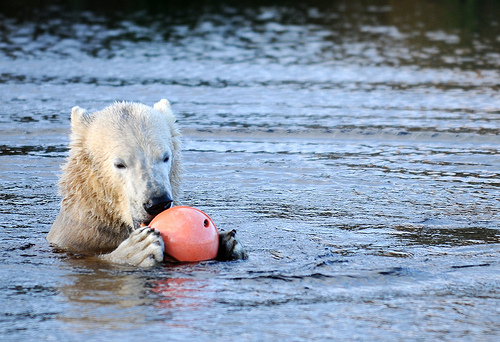
    Walker the polar bear

    The operation is usually a standard procedure but operating on a polar bear is not a typical day for vets and the size of the polar bear meant that he could not be transferred anywhere for treatment. Walker’s huge size meant that 10 people were needed to lift him on to the operating table which was made from bales of hay for the polar bear to lie on during the procedure. The extraction took about four hours and the keepers made a swift exit before the bear awoke.

    Keepers at the wildlife park say that Walker has recovered well and is now up and about and eating normally. Vets reckon the infection could have started by Walker breaking the tip off a tooth, but they don’t know how or when.

    Walker celebrated his 2nd birthday on the 7th of December last year with a special birthday cake, full of his favourite food, which are not thought to be the cause of his ill tooth. He arrived at the Highland Wildlife Park at the start of the November 2010 and has now settled in and shares an enclosure with 28-year-old female polar bear Mercedes. The pair’s relationship got off to a tense start but Mercedes now appears to have accepted the new arrival in spite of his dental problems.

    Video from the Walker and Mercedes in Scotland from MaCmillan Media

    Sources:
    Highland Wildlife Park
    Mirror

  • CAFF signs Memorandum of Understanding with APECS

    CAFF signs Memorandum of Understanding with APECS

    Memorandum of Understanding signed between CAFF and APECS

    The Arctic Council recognizes in the Tromso declaration that education, outreach, scientific research and capacity building are major tools via which to address challenges in the Arctic.

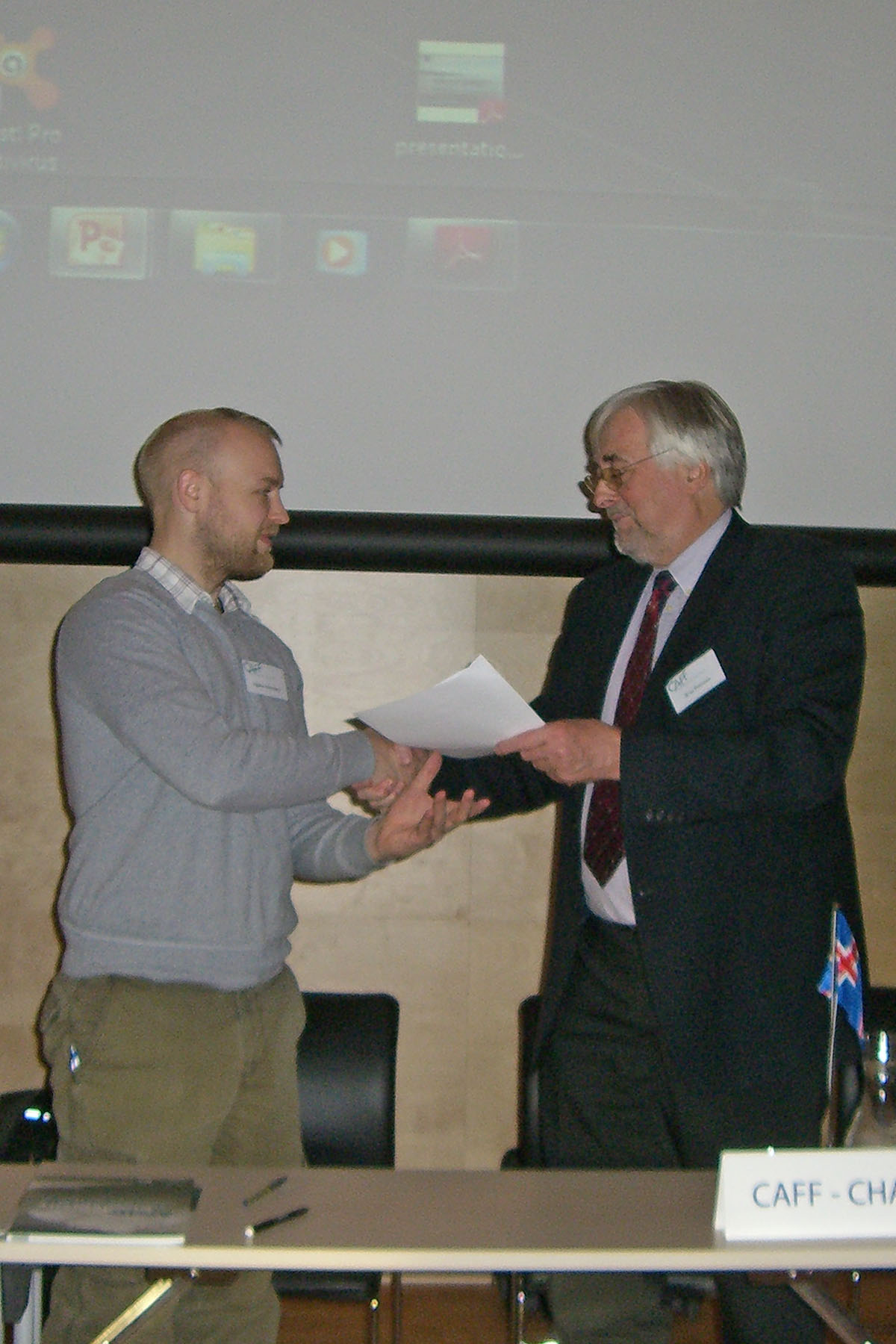
    And on the third of February, during the XIII CAFF Biennial meeting in Akureyri Iceland, a Memorandum of Understanding was signed to strengthen cooperation between the Conservation of Arctic Flora and Fauna (CAFF) working group of the Arctic Council and the Association of Early Polar Career Scientists  (APECS). The memorandum was signed by Aevar Petersen CAFF Chair and Sigmar Arnarsson on behalf of APECS Chair Allen Pope.

    The objectives and activities of both APECS and CAFF complement one another in that CAFF as a Working Group of the Arctic Council provides a vehicle for knowledge and action in the Arctic region while APECS seeks opportunities for early career researchers to learn from and become engaged in international science and policy projects and programmes. Both parties will benefit from the participation of APECS members in CAFF policy and expert meetings on Arctic biodiversity. APECS members will gain valuable experience while also contributing scientific, innovative, and fresh perspectives to CAFF initiatives.

    The aim is to create a means via which early career scientists can have the opportunity to participate in and gain experience in the circumpolar initiatives undertaken by CAFF as it works towards a more comprehensive understanding of Arctic biodiversity and its status and trends.  Within CAFF activities, emphasis is placed upon regional cooperation that is based upon cooperation between all the Arctic countries and indigenous organizations as well as with international conventions and organizations. CAFF will at the same time benefit from the input of new ideas and participation by young scientists and help to attract and stimulate interest in Arctic biodiversity and help stimulate outreach/communication with the education sector.

    APECS will help to inform its members and partner organizations about the activities of CAFF and its associated partners to help broaden the understanding, representation, and input into CAFF activities through participation of APECS members in CAFF projects including policy and expert meetings. CAFF welcomes this new partnership and foresees a fruitful cooperation with APECS as a representative of the next generation of polar scientists.

  • Finland will not ratify Convention on Sami rights

    Finland will not ratify Convention on Sami rights

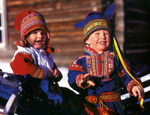
    Saami children

    Despite repeatedly critics from UN and EU, Finland has no intention to ratify ILO-Convention No. 169. Convention No.169 is a legally binding international instrument open to ratification, which deals specifically with the rights of indigenous and tribal peoples.

    Today, it has been ratified by 20 countries. Once it ratifies the Convention, a country has one year to align legislation, policies and programmes to the Convention before it becomes legally binding. Countries that have ratified the Convention are subject to supervision with regards to its implementation

    The Sami people lives in all four member countries in the Barents Region. Norway was one of the first countries to ratify the convention, accepting more power and influence in issues dealing with indigenous and Sami rights, like reindeer herding. In Finland, the debate on the ILO-Convention has been going on for decades. Minister of Justice, Tuija Brax, says to Alma Media newspapers that the skeleton law, prepared for a long time by the Ministry of Justice, broke down because of the Centre Party’s opposition. Finland has a majority coalition formed by four parties.

    UN has repeatedly criticized Finland for that it has not ratified ILO-Convention No. 169 related to the indigenous people’s rights. In the context of land rights, the UN special reporter James Anaya recommends strengthening the position of Sami languages, traditional livelihoods and reindeer herding Discussing EU’s Arctic Policy, the EU Parliament demanded in January that Finland and Sweden should approve the ILO-convention. Also, Finland’s Minister for Foreign Affairs Alexander Stubb said to YLE News in January that this situation is harmful for Finland’s foreign policy.

    Source: Barents Observer

  • The St. Matthew Island

    The St. Matthew Island

    St. Matthew Island feature comicComic short stories author Stuart McMillen from Brisbane, Australia brings to his attention the case of the St. Matthew Island, which is a remote island in the Bering Sea in Alaska. The story is about the prosperity of specie that was introduced to the island but in the end collapsed. View the McMillen story.

    The case of the St. Matthew Island

    During World War II, while trying to stock a remote island in the Bering Sea with an emergency food source, the U.S. Coast Guard set in motion a classic experiment in the boom and bust of a wildlife population. The island was St. Matthew, an unoccupied 32-mile long, four-mile wide sliver of tundra and cliffs in the Bering Sea, more than 200 miles from the nearest Alaska village. In 1944, the Coast Guard installed a loran (long range aids to navigation) station on St. Matthew to help captains of U.S. ships and aircraft pilots pinpoint their locations. The Coast Guard stationed 19 men on St. Matthew Island to operate the station. Those men—electrical technicians, cooks, medics, and others—made up the entire human population of the island.
    In August 1944, the Coast Guard released 29 reindeer on the island as a backup food source for the men. Barged over from Nunivak Island, the animals landed in an ungulate paradise: lichen mats four inches thick carpeted areas of the island, and the men of the Coast Guard station were the reindeer’s only potential predators.

    The men left before they had the chance to shoot a reindeer. With the end of World War II approaching, the Coast Guard pulled the men from the island. St. Matthew’s remaining residents were the seabirds that nest on its cliffs, McKay’s snow buntings and other ground-nesting birds, arctic foxes, a single species of vole, and 29 reindeer.
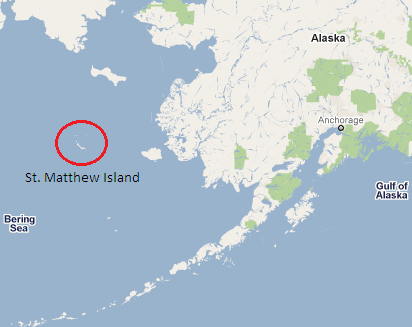
    St. Matthew Island on a World MapSt. Matthew then had the classic ingredients for a population explosion—a group of healthy large herbivores with a limited food supply and no creature above them in the food chain. That’s what Dave Klein saw when he visited the island in 1957. Klein was then a biologist working for U.S. Fish and Wildlife Service. He is now a professor emeritus with the University of Alaska Fairbanks’ Institute of Arctic Biology. The first time he hiked the length of St. Matthew Island in 1957, he and field assistant Jim Whisenhant counted 1,350 reindeer, most of which were fat and in excellent shape. Klein noticed that reindeer had trampled and overgrazed some lichen mats, foreshadowing a disaster to come.

    Klein did not get a chance to return to the island until the summer of 1963, when a Coast Guard cutter dropped him and three other scientists off on the island. As their boots hit the shore, they saw reindeer tracks, reindeer droppings, bent-over willows, and reindeer after reindeer.
    “We counted 6,000 of them,” Klein said. “They were really hammering the lichens.” The herd was then at a staggering density of 47 reindeer per square mile. Klein noted the animals’ body size decreased since his last visit, as had the ratio of yearling reindeer to adults. All signs pointed to a crash ahead.
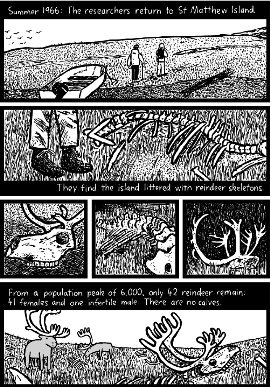
    St. Matthew Island feature comic storyOther work commitments and the difficulty of finding a ride to St. Matthew kept Klein from returning until the summer of 1966, but he heard a startling report from men on a Coast Guard cutter who had gone ashore to hunt reindeer in August 1965—the men had seen dozens of bleached reindeer skeletons scattered over the tundra.

    When Klein returned in the summer of 1966, he, another biologist and a botanist found the island covered with skeletons; they counted only 42 live reindeer, no fawns, 41 females and one male with abnormal antlers that probably wasn’t able to reproduce. During a few months, the reindeer population of St. Matthew had dropped by 99 percent. By piecing together clues found amid the bones, Klein figured that thousands of reindeer starved during the winter following his last visit, when he counted 6,000 animals on the island. Weather records from St. Paul and Nunivak islands for the winter of 1963-1964 showed an extreme winter in both cold and amount of snowfall.

    With no breeding population, the reindeer of St. Matthew Island died off by the 1980s. The unintended experiment in population dynamics and range ecology ended as it began—with winds howling over the green hills of a remote island in the Bering Sea, a place where arctic foxes are once again the largest mammals roaming the tundra.

    Sources:
    Alaska Science Forum
    Stuart McMillen – Recombinant Records
    Google Maps

  • Barents Sea Border deal to be Approved

    Barents Sea Border deal to be Approved

    Dmitri Medvedev

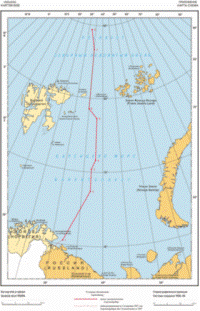
    For decades there was a boundary dispute between Norway and Russia, where Norway favored the Median Line and Russia favored a meridian based sector.

    A compromise treaty announced 27th of April 2010 settled the border in the approximate middle of these two stances. The border, which cuts across an area thought to be rich in oil and gas, has been contested for decades. That has left the 175,000 square kilometer big area in the Barents Sea unexploited since the 1970s due to the border dispute.

    Now, Dmitri Medvedev has sent the Treaty to the State Duma just two days after the Norwegian Parliament ratified the Barents Sea border deal. The presidential package of documents pertaining to the Maritime Delimitation in the Barents Sea and Arctic Oceans was Thursday sent over to the Russian Parliament. President Medvedev writes in the documents that the Treaty with Norway creates positive political and legal conditions for deepening cooperation in sectors as fishing and joint exploitation of transboundary petroleum deposits.

    Norway and Russia dispute, map

    The words from the Russian President are similar to the words from the Norwegian parliamentarians debating the deal last Tuesday, underlining the need to speed up the mapping of petroleum resources in the Barents Sea. Foreign Minister Jonas Gahr Støre is stated that the debate in the Norwegian Parliament on the delimitation deal confirms that there is a balanced agreement that will further strengthen the Norwegian-Russian cooperation. Støre signed the delimitation agreement with Russian Foreign Minister Sergei Lavrov in Murmansk last October. The Norwegian Parliament voted unanimously in favour of the maritime delimitation line with Russia.

    With the recommendations from President Medvedev, and earlier strong support from Prime Minister Vladimir Putin, it is believed that the State Duma will ratify the Treaty sometime soon. The date for debate is not yet announced, but President Medvedev writes in his notes to the State Duma that the ratification of the Treaty should in the accordance with arrangements reached at the highest level be synchronised in both countries parliaments.

    Russian Minster Vladimir Putin has said that the deal will strengthen the spirit of trust in the Arctic region, create additional opportunities for the development of joint economic projects, for a responsible and environmentally safe development of the natural riches of the Arctic.
    The agreement splits disputed area into two equally big parts and clarifies the maritime borders between Norway and Russia in the Barents Sea and Arctic Oceans.

    Source: Barents Observer

  • Arctic Shipping Data Library

    fishing boats in Norway

    Here is extensive data about Arctic Shipping. Below is a list of documents of high importance and easy access to the Arctic Portal Data Library gives an even broader dimension to search for shipping data.

    Important documents:

    Arctic Portal library

    The Arctic Portal Data Library

    The objective of the Arctic Portal Library is to maintain a comprehensive collection of Arctic relevant scientific and educational material. Click here for more data about Arctic Shipping.

  • Canadian Arctic not overfished, only underreport

    Canadian Arctic not overfished, only underreport

    small fishing boat

    As reported by the Arctic Portal, real time catches in the Canadian, Alaskan and Russian Arctic waters are considerably higher than reported to the United Nations Food and Agriculture Organization (FAO).

    However, under-reporting of Arctic fishing data to the FAO is no cause for alarm, according to Nunavut’s largest fisheries group. Jerry Ward, chief executive officer of the Baffin Fisheries Coalition, states that there is no overfishing in the Canadian Arctic.

    The problem is inadequate reporting

    Dirk Zeller, the lead author of the University of British Columbia report, said he also does not believe there is overfishing in Canada’s Arctic waters. The problem, Zeller said, is that Canada and other Arctic nations are not properly reporting their catch data to the United Nations even though they committed to do so more than 60 years ago. As the climate changes and Arctic sea ice shrinks, Zeller said it is important to have accurate fishing numbers in the region.

    The question arises, of course: Why does the Canadian government not report any catches to the international community?” Zeller said.

    Zeller and his colleagues with UBC’s Fisheries Centre, as well as the university’s department of ocean sciences, arrived at their own estimates by reconstructing catch data from sources such as governmental reports and anthropological records of fishing activities by indigenous populations. In addition to commercial fishing data, Zeller said Arctic nations should also be reporting catch data from small-scale fishing by people in northern communities. That way, Zeller said it would give a more accurate portrait of what’s coming out of Arctic waters — a portrait that he said could help protect Canada’s Arctic sovereignty claims.

    Source: CBC News

  • Arctic Oscillation brings record low January Ice extent

    Arctic Oscillation brings record low January Ice extent

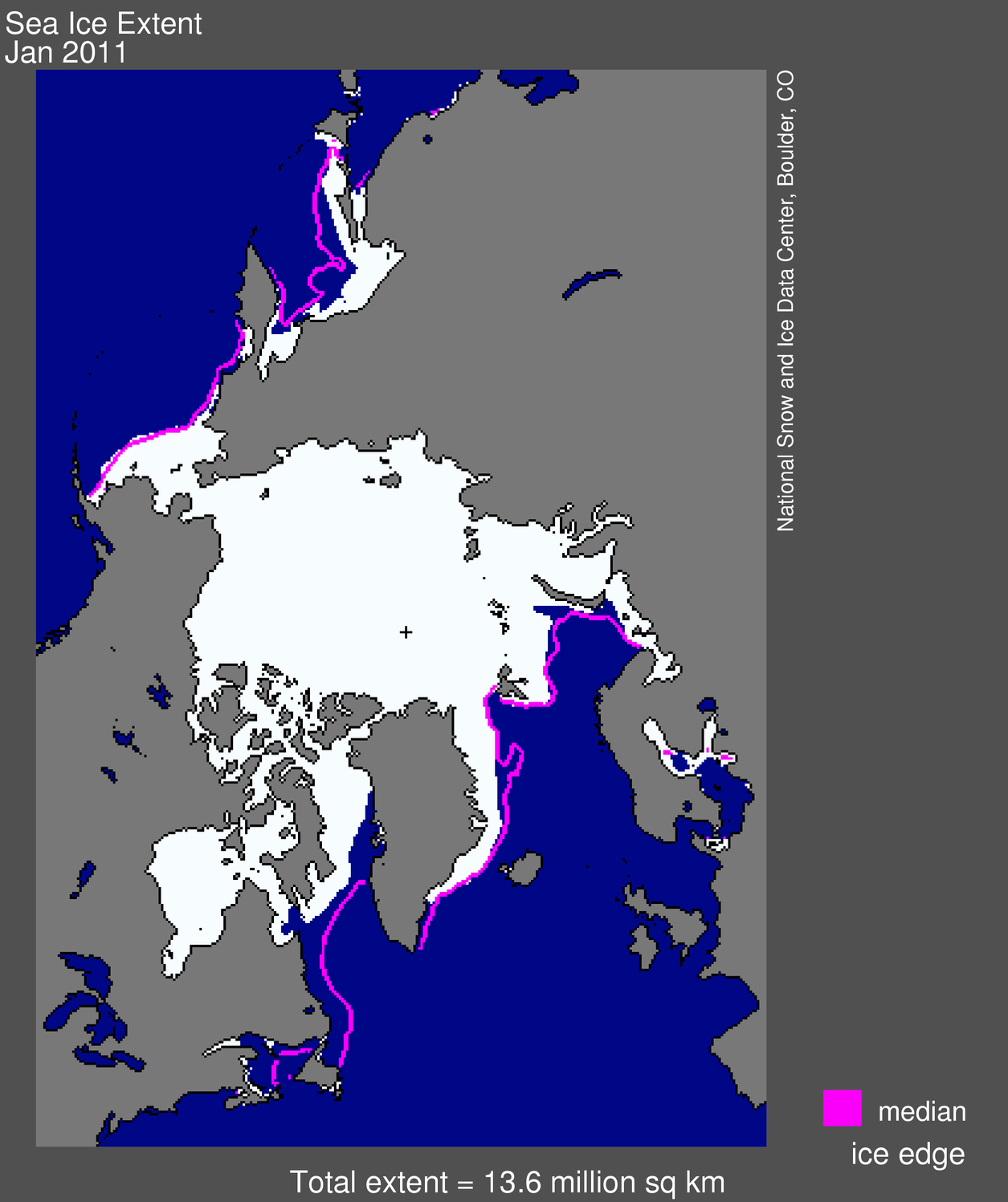
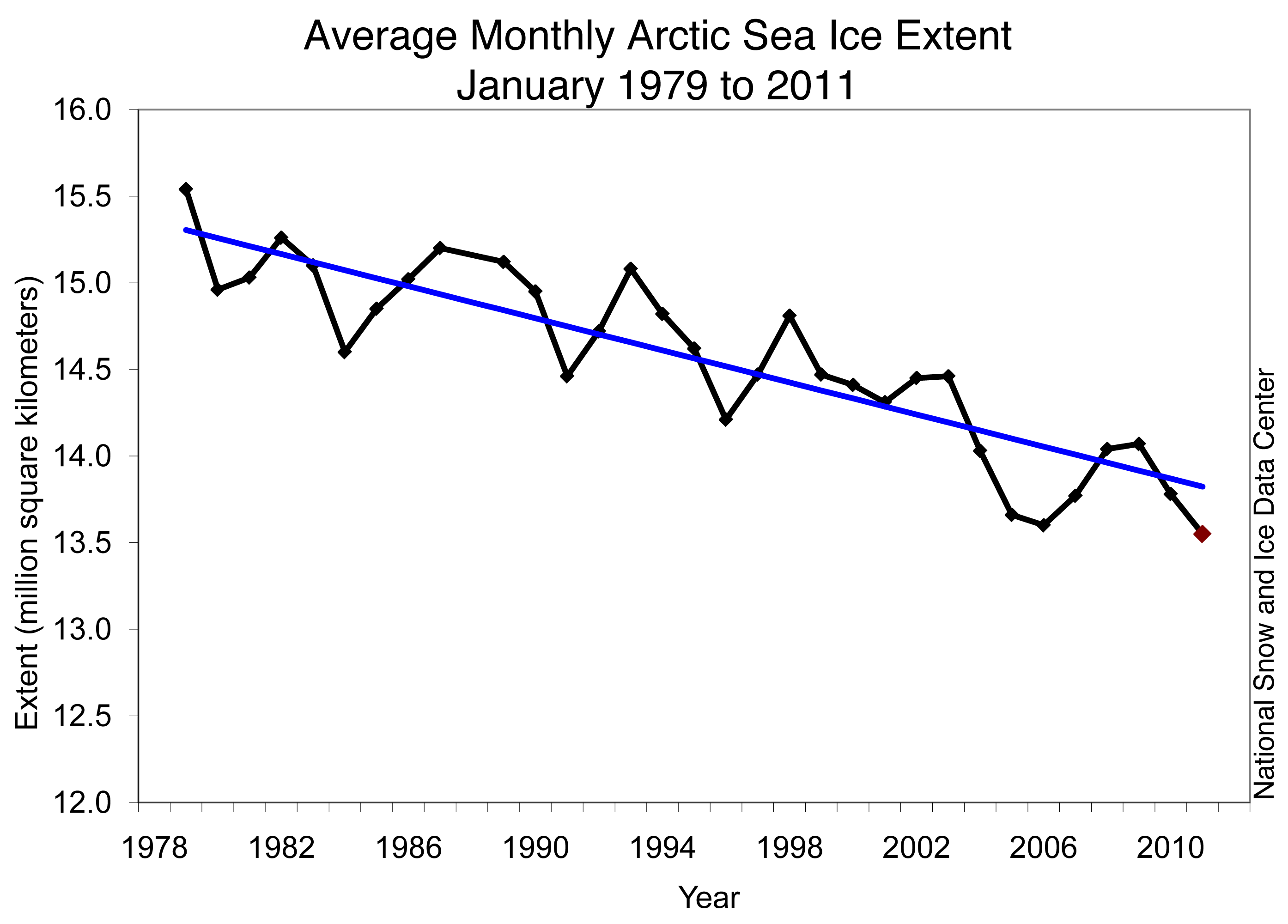
    seal huntersArctic sea ice extent for January 2011 was the lowest in the satellite record for that month due to slow regional ice growth compared to past years. This is reported at the National Snow and Ice Data Center. For example Hudson Bay did not completely freeze up until mid-January, about a month later than normal according to Canadian Ice Service analyses. Arctic sea ice extent averaged over January 2011 was 13.55 million square kilometers (5.23 million square miles). This was the lowest January ice extent recorded since satellite records began in 1979. It was 50,000 square kilometers (19,300 square miles) below the record low of 13.60 million square kilometers (5.25 million square miles), set in 2006, and 1.27 million square kilometers (490,000 square miles) below the 1979 to 2000 average.

    January 2011 sea ice extentAir temperatures over much of the Arctic were 2 to 6 degrees Celsius (4 to 11 degrees Fahrenheit) above normal in January. Over the eastern Canadian Arctic Archipelago, Baffin Bay/Davis Strait and Labrador Sea, temperatures were at least 6 degrees Celsius (11 degrees Fahrenheit) higher than average. Temperatures were near average over the western Canadian Arctic Archipelago and Scandinavia.

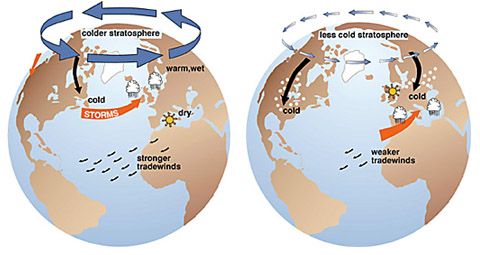
    Warm conditions in the Arctic and cold conditions in northern Europe and the U.S. are linked to the strong negative mode of the Arctic oscillation. Cold air is denser than warmer air, so it sits closer to the surface. Around the North Pole, this dense cold air causes a circular wind pattern called the polar vortex , which helps keep cold air trapped near the poles. When sea ice has not formed during autumn and winter, heat from the ocean escapes and warms the atmosphere. This may weaken the polar vortex and allow air to spill out of the Arctic and into mid-latitude regions in some years, bringing potentially cold winter weather to lower latitudes.

    sea ice average January annually 2011Some scientists have speculated that more frequent episodes of a negative Arctic Oscillation, and the stormy winters that result, are linked to the loss of sea ice in the Arctic. Dr. James Overland of NOAA Pacific Marine Environmental Laboratory (PMEL) recently noted a link between low sea ice and a weak polar vortex in 2005, 2008, and the past two winters, all years with very low September sea ice extent. Earlier work by Jennifer Francis of Rutgers University and colleagues also suggested a relationship between autumn sea ice levels and mid-latitude winter conditions. Judah Cohen, at Atmospheric and Environmental Research, Inc., and his colleagues propose another idea—a potential relationship between early snowfall in northern Siberia, a negative phase of the Arctic Oscillation, and more extreme winters elsewhere in the Northern Hemisphere. More research on these ideas may shed light on the connections and have the potential to improve seasonal weather forecasting.

    The Arctic Oscillation

    The Arctic Oscillation refers to opposing atmospheric pressure patterns in northern middle and high latitudes.

    Arctic_oscillationThe oscillation exhibits a “negative phase” with relatively high pressure over the polar region and low pressure at midlatitudes (about 45 degrees North), and a “positive phase” in which the pattern is reversed. In the positive phase, higher pressure at midlatitudes drives ocean storms farther north, and changes in the circulation pattern bring wetter weather to Alaska, Scotland and Scandinavia, as well as drier conditions to the western United States and the Mediterranean. In the positive phase, frigid winter air does not extend as far into the middle of North America as it would during the negative phase of the oscillation. This keeps much of the United States east of the Rocky Mountains warmer than normal, but leaves Greenland and Newfoundland colder than usual. Weather patterns in the negative phase are in general “opposite” to those of the positive phase, as illustrated below.

    Over most of the past century, the Arctic Oscillation alternated between its positive and negative phases. Starting in the 1970s, however, the oscillation has tended to stay in the positive phase, causing lower than normal arctic air pressure and higher than normal temperatures in much of the United States and northern Eurasia.

    Source: NSIDC