Author: it@arcticportal.org

  • Marine Governance

    Marine Boundaries

    Governance of Arctic shipping occurs through a mix of domestic and international legal instruments and “soft law” regional agreements. There is no comprehensive international legal regime for the Arctic and no multilateral political organisation with the power to regulate activities or make legally binding decisions.

    However, a cooperative mechanism, the Arctic Council, was created by the eight states in the region as a forum for discussion of all issues in the Arctic, in particular the protection of the environment, sustainable development and the affairs of native people.

    A number of international treaties apply in the Arctic, in particular the UNCLOS,[1] which provides rules concerning maritime boundaries, claims to an outer continental shelf, sovereign rights over resources and the protection of the marine environment.

    All the Arctic states are parties to the UNCLOS, except the United States. The International Maritime Organization has developed shipping rules with global application that also apply in the Arctic and a few regional “soft law” regional instruments also apply in the region.

    International Maritime Organization – IMO

    Internaitonal Maritime Organization - IMO

    The Convention establishing the International Maritime Organization (IMO) was adopted in Geneva in 1948 and IMO first met in 1959. The IMO is the most important institution in the field of international shipping law and its main task is to develop and maintain a comprehensive regulatory framework for shipping. IMO’s mandate includes establishing measures regarding safety, environmental concerns, legal matters, technical co-operation, maritime security and the efficiency of shipping.

    The work of IMO has led to massive body of international conventions, supported by hundreds of recommendations dealing with every angle of shipping. The international legal regime for the regulation of maritime shipping therefore contains a wide number of categories of standards.

    The conventions of IMO deal, in theory, with certain issues but can additionally, have legal effects on more than single set of standards. The main categories of substantive standards or requirements are; CDEM (construction, design, equipment and manning) standards, navigation standards, discharge and emission standards, contingency planning and preparedness standards and liability, compensation and insurance standards.

    The mandate of IMO is global and thus, most of its legally binding instruments have a global scope of application and apply in principle to the entire Arctic marine area. The IMO has, however, developed voluntary guidelines that apply in the Arctic waters and might become mandatory in the near future.

    The Arctic Council

    Arctic Council

    The Arctic Council has been successful in preparing assessments, developing a regional identity and setting the Arctic agenda but does not have powers to impose internationally binding rules. The Arctic Council Members have committed themselves to implementing the Arctic Environmental Protection Strategy (AEPS) in conformity with the LOS Convention.

    In 2000, the Arctic Council adopted the Action Plan to Eliminate Pollution in the Arctic (ACAP) and determined that the ACAP would be a basis for developing and implementing actions under the Council’s auspices with respect to pollution prevention and remediation.

    The most recent relevant output The Arctic Council regarding Trans-Arctic shipping is the Arctic Marine Shipping Assessment (AMSA) of PAME, which was released at the Arctic Council Ministerial Meeting in Tromsø, April 2009. The AMSA contains a considerable number of Recommendations categorized under the headings Enhancing Arctic Marine Safety, Protecting Arctic People and the Environment and Building the Arctic Marine Infrastructure. AMSA was approved by the Ministerial Meeting later that month means of the Tromsø Declaration of 29 April 2009.

    The Arctic Councils’ main Working Group concerned with shipping activities is the Emergency Prevention, Preparedness and Response Working Group (EPPR) Among its’ main products are; ArcticGuide (updated annually), Field Guide for Oil Spill Response in Arctic Waters (1998), Environmental Risk Analysis of Arctic Activities (1998), Circumpolar Map of Resources at Risk from Oil Spills in the Arctic (2002) and Shoreline Clean-up Assessment Technique (SCAT) Manual (2004).

    United Nations Convention on the Law of the Sea (adopted 10 December 1982, entered into force 16 November 1994) 21 ILM 1245

  • Shipping Impacts

    Oil spill

    The Arctic contains some of the last physically undisturbed areas on the planet, something that is becoming very rare in modern times. In recent decades, and especially during this millennium, the Arctic has also been undergoing extraordinary environmental changes. The Arctic is known as a storehouse of massive supplies of natural resources, which is increasing pressure on their extraction due to high commodity prices and a growing worldwide demand for them.

    Increasing regional and coastal marine transport to support the exploration and extraction of oil, gas and hard minerals, coupled with the increasing presence of the global marine tourism industry, can bring various users to the maritime Arctic. The potential impacts of these new marine uses can become significant. However, speculative they might seem, social, environmental, cultural and economic impacts will become a reality, and have, to a certain extent.

    Environmental impacts

    The environmental consequences of increased commercial shipping in the Arctic could become quite serious, not only from accidental oil spills, but also from increased pollution caused by operational discharges of oils and chemicals. Arctic ecosystems can be affected by pollution, noise, alien species, ships colliding with marine mammals, and general disturbance, including loss of feeding and breeding areas.

    Problems can be caused by ships involved in oil and gas exploration and exploitation, including tankers, as well as by general cargo vessels, naval vessels, fishing vessels, tourist cruise ships, and even scientific research vessels. Despite the seriousness of rare catastrophic oil spills, chronic low-level pollution over many years from all kinds of ships poses the greatest threat to the environment and may affect all ecosystems within a given area.

    Contaminants accumulate in the body fat of Arctic organisms because they have evolved to store food for use in their bodies when none is available in the frozen environment. These contaminants are then passed up through the food chain, even to human beings.

    Environmental protection measures

    Increased shipping activity in the Arctic raises the potential for increased numbers of shipping accidents with the detrimental human and environmental effects that might follow.

    Prevention of marine accidents and actions designed to strengthen the effectiveness of preventive measures, can be critical for Arctic marine shipping given the difficulties of responding once an incident has occurred. Preventive measures include ensuring that vessels operating in the Arctic meet appropriate design, construction and equipment standards; that vessel personnel have the specialized skills needed for operating in Arctic conditions.

    Emergency response is particularly challenging in the Arctic for a variety of reasons, including the remoteness and great distances that are often involved in responding. Additionally, the impacts of cold, ice and a harsh operating environment on response personnel and equipment; and the lack of coastal infrastructure and communications to support and sustain a response of any significant magnitude, is immense.

    International conventions relating to ship construction, crewing standards and other aspects of maritime safety apply in all ocean areas for vessels that are flagged in States that are parties to the conventions. However, these standards are not necessarily adequate for ships operating in the environmentally fragile, dangerous and remote polar waters.

    Polar Bear in Svalbard

    Impact of tourism

    Tourism has increased dramatically in the Arctic, because of increased awareness of its beauty and undisturbed nature and also because of a desire to see it before the ice melts and the animals disappear.

    However, excessive tourism could cause environmental damage both from the usual problems caused by an increasing number of vessels and because waste from garbage and sewage would have to be disposed of.

    More generally, if all the new single-year sea ice melts, navigation in the Arctic could remain hazardous for some time to come, as multi-year ice will linger and so will icebergs, in particular those calving off melting glaciers.

    This could result in more accidents, causing further problems, including pollution by leaking heavy fuel oil from cruise ships.

    Source:
    The AMSA report (2009)

  • Arctic fisheries catches 75 times higher than reports

    Arctic fisheries catches 75 times higher than reports

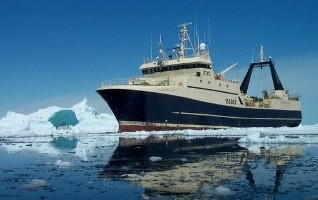
    Arctic Trawler

    According to University of British Columbia researchers, it is estimated that fisheries catches in the Arctic totaled 950,000 tons from 1950 to 2006, almost 75 times the amount reported to the United Nations Food and Agriculture Organization (FAO) during this period.

    The study, Led by Prof. Daniel Pauly, a research team from UBC’s Fisheries Centre and Dept. of Earth and Ocean Sciences reconstructed fisheries catch data from various sources – including limited governmental reports and anthropological records of indigenous population activities – for FAO’s Fisheries Statistical Area 18 , which covers arctic coastal areas in northern Siberia (Russia), Arctic Alaska (the U.S.) and the Canadian Arctic.

    It is reported in the study that the Arctic is one of the last and most extensive ocean wilderness areas in the world. The extent of the sea ice in the region has declined in recent years due to climate change, raising concerns over loss of biodiversity as well as the expansion of industrial fisheries into this area.

    Fishing Area

    “Ineffective reporting, due to governance issues and a lack of credible data on small-scale fisheries, has given us a false sense of comfort that the Arctic is still a pristine frontier when it comes to fisheries,” says lead author Dirk Zeller, a senior research fellow at UBC’s Fisheries Centre. “We now offer a more accurate baseline against which we can monitor changes in fish catches and to inform policy and conservation efforts.”

    Official FAO data on fish catches in Area 18 from 1950 to 2006 were based solely on statistics supplied by Russia and amounted to 12,700 tons. The UBC team performed a detailed analysis and found that it’s only the tip of iceberg. According to the study, Russia’s total catch was actually a staggering 770,000 tons from 1950 to 2006, or nearly 12,000 tons per year.

    The team shows that while the U.S. National Marine Fisheries Service’s Alaska branch currently reports zero catches to FAO for the Arctic area, the state agency, the Alaska Department of Fish and Game has collected commercial data and undertaken studies on 15 coastal communities in the Alaskan Arctic that rely on fisheries for subsistence. The estimated fish catch during this period in Alaska alone totaled 89,000 tons. While no catches were reported to FAO by Canada, the research team shows commercial and small-scale fisheries actually amounted to 94,000 tons in catches in the same time span.

    “Our work shows a lack of care by the Canadian, U.S. and Russian governments in trying to understand the food needs and fish catches of northern communities,” says Pauly, who leads the Sea Around Us Project at UBC.
    Trawler fishing

    Researchers from the Sea Around Us Project have previously shown a trend of fish stocks moving towards polar regions due to the effects of climate change. This, coupled with increased accessibility of the Arctic areas due to melting sea ice, will place immense pressure on the region for future large-scale fisheries.

    “This research confirms that there is already fishing pressure in this region,” says Pauly. “The question now is whether we should allow the further expansion of fisheries into the Arctic.”

    “Conservation efforts in the Arctic have so far focused on the exploitation of marine mammals – seals and polar bears are frankly easy on the eye and plain to see,” says Zeller. “None of them would survive, however, if we allow over-exploitation of fish in this delicate but so-far neglected ecosystem.”

    Source: UBC

  • AMSA Report

    AMSA Report

    Arctic Portal news

    The AMSA report (2009) is the leading source of information about Arctic shipping today. The Arctic Council decided in November 2004 at the ministerial meeting in Reykjavík that a comprehensive Arctic marine shipping assessment was necessary.

    The Protection of the Arctic Marine Environment (PAME) working group was in charge of creating the report with the assistance of more than 185 experts from a number of organizations.

    The AMSA report was approved at the ministerial meeting Tromsø meeting in 2009.

    This report is one of the key sources of information for the AP shipping portlet as well as a key document for anyone interested in Arctic shipping.

    Click HERE to read the report (PDF)

    The possibility of a Trans-Arctic shipping route has intrigued seafarers since the days of the first Arctic explorers, as it would shorten the distance between the Pacific Ocean and the Atlantic Ocean significantly and shorten trade routes.

    This possibility still intrigues various stakeholders and is an issue that has received significant media coverage. Although some people consider this option not the most dominant issue in Arctic shipping today, Trans-Arctic shipping will probably become a reality during the 21st Century due to decline in sea Ice.

    How and when this will happen is hard for scientists to predict. It is estimated that we will possibly see an ice-free arctic ocean for a short period annually as soon as 2015, but conditions that would make regular Trans-Arctic shipping a viable option are harder to predict. There are numerous factors that will have to be taken into account such as the lack of infrastructure; technological advances in ice strengthened cargo ships, pressure to develop alternative shipping lanes due to pressure on existing lanes such as the Panama and Suez canals will all play a role in the development of Trans-Arctic cargo shipping.

    Key Issues

    During the year 2004, about 6000 vessels navigated the Arctic, many making multiple voyages operating in their operations. Virtually all shipping in the region is destinational, conducted for community re-supply, resource oriented or connected to tourism. There has been a significant increase of cruise ships in the Arctic, were the majority is not specifically built for navigation in Arctic waters. These ships may have significant effect on wildlife, as the purpose of these voyages is to seek places of special interest such as wildlife refuges.

    There are a number of ways that a cruise ship can cause harm to delicate areas in the Arctic. It includes; noise, air and ocean pollution and inappropriate behavior of passengers ashore are the most prominent impacts. Sewage is also a major concern whereas an average cruise ship produces more than 95.000 liters of oily bilge a week, which can increase chances of accidental spillage or leaks.

    Additionally there is an increased security risk involved for passengers if a cruise liner would need immediate assistance. Search and rescue resources are limited in the Arctic with a tighter timeframe due to challenging surroundings.

    These are among the key issues that need to be addressed in connection to shipping activities within the Arctic.

  • Arctic current warmer than for 2,000 years

    Arctic current warmer than for 2,000 years

    arctic lake

    A North Atlantic current flowing into the Arctic Ocean is warmer than for at least 2,000 years in a sign that global warming is likely to bring ice-free seas around the North Pole in summers, a study showed.

    Scientists said that waters at the northern end of the Gulf Stream, between Greenland and the Norwegian archipelago of Svalbard, averaged 6 degrees Celsius (42.80F) in recent summers, warmer than at natural peaks during Roman or Medieval times.

    “The temperature is unprecedented in the past 2,000 years,” lead author Robert Spielhagen of the Academy of Sciences, Humanities and Literature in Mainz, Germany, told Reuters of the study in Friday’s edition of the journal Science.

    The summer water temperatures, reconstructed from the makeup of tiny organisms buried in sediments in the Fram strait, have risen from an average 5.2 degrees Celsius (41.36F) from 1890-2007 and about 3.4C (38.12F) in the previous 1,900 years. The findings were a new sign that human activities were stoking modern warming since temperatures are above past warm periods linked to swings in the sun’s output that enabled, for instance, the Vikings to farm in Greenland in Medieval times.

    “We found that modern Fram Strait water temperatures are well outside the natural bounds,” Thomas Marchitto, of the University of Colorado at Boulder, one of the authors, said in a statement. The Fram strait is the main carrier of ocean heat to the Arctic

    Source: Reuters / Alister Doyle

  • Future Central Arctic Shipping Route

    Central Arctic Shipping Route

    A shipping route through the central Arctic Ocean depends on significant reduction of ice thickness in that area.

    The so-called multi-year ice in the central Arctic Ocean has been changing drastically (up to 40% decrease) and disappearing completely in the last 50 years.

    If this development continues, ships with icebreaker abilities can navigate the central Arctic Ocean in nearest future.

    The image shows a possible new shipping route in the future. Of course much of the ice would have to melt for this to come to reality.

    The image also shows shy Iceland hopes to be utilized regarding Arctic Shipping, possibly with a hub-port to Europe and America.

  • Northeast Passage

    Northeast Passage shipping route

    The Northeast Passage is in reality a useful sea route. It runs from the northernmost parts of the North Sea across the icy waters of the Arctic Ocean north of Russia, east to the Chukchi Sea and Bering Straits where access to the North Pacific is reached.

    Several straits in the Passage can be classified as international.

    The Northern Sea Route (NSR) is an established commercial seaway that was used for domestic transportation and played an important economic role for the Soviet Union around World War II.

    The course of NSR was defined in a Russian regulation in 1990 and is in fact (rather than theoretically), the middle part of the Northeast Passage.

    To that extent, the Northern Sea Route can be equated with the Northeast Passage if this simple fact is known.

    As with the Northwest Passage, the Northeast Passage is limited for use because of extreme natural conditions based on the geographical location of the passage. However, if climate change continues to effectively bring warmer air to the area, condition of winds, ice and currents might result in more favourable sea route. But that does not resolve the legal issues and questions that rise if foreign ships use it as no specific universal agreement has been settled on that matter.

    In the summer of 2011 sea ice was at an all time low since measuring began. That resulted in extended shipping in the route. In August it took only eight days for the STI Heritage tanker to go from Murmansk in Russia to the Bering Sea. Russia is strengthening its fleet of icebreakers and will continue to use the route when it is possible, which is still only for a few months around the summertime.

  • Northwest Passage

    Northwest Passage shipping route

    The Northwest Passage is first and foremost considered to be continuous passage between islands and the continental mainland of Canada rather than an actual shipping route.

    The Passage represents a potentially attractive and valuable commercial shipping route if it were to become more accessible for navigation and at a longer period of the year. In reality, it is a series of passages trough straits of the Arctic Archipelago.

    It allows shipping from the North Atlantic Ocean, up Davis Strait between Canada and Greenland. The passage then continues trough the Arctic Archipelago, to the Beaufort Sea over to Chukchi Sea and the Bering Strait into the North Pacific. Because of the many islands of the Arctic Archipelago, the potential shipping routes are in fact several each way.

    However some straits are more feasible than others due to the formation of the land under water.

    As with the Arctic itself, the status of the Northwest Passage was given limited attention until the latter part of the 20th century. The reason for that, as with other ice-covered areas of the Arctic, is that no particular interest was shown to utilize the route for transport and the conditions were thought to be dangerous. The tables have certainly turned and the Northwest Passage is now seen as a revolutionary opening for large scale transportation by ships from the North Pacific to the North Atlantic Ocean.

  • Shipping Routes

    Arctic Shipping Routes

    Two sea routes have been defined to cross the Arctic, enabling ships to move between the Atlantic ocean and the Pacific ocean and thus have the possible status as international strait (or waters) giving right to transit passage.

    Both of them overlap significantly the jurisdiction of either Canada or Russia, which can create certain legal difficulties if or when Trans-Arctic shipping becomes a reality.

    If sea ice continues to retreat in the Arctic, a central Arctic shipping route can possibly become a reality.

    This would also reduce the distance that needs to be covered by marine vessels.

    On the menu to the left more information can be found on the Northwest Sea Route and the Northeast Sea Route, as well as the more distant possibility of the Central Arctic shipping route.

  • Trans-Arctic Shipping

    Trans-Arctic Shipping

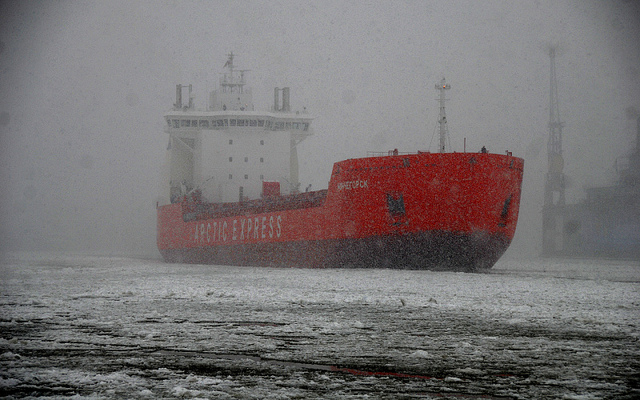
    Cargo Ship

    The Arctic is comprised of a large ocean area and land areas of eight states: Canada, Denmark (Greenland), Norway (Svalbard), Russia, USA (Alaska), Finland, Sweden and Iceland. The Arctic’s most pronounced feature, at least until very recently, has been the large ice-covered ocean. However, significant changes are taking place in the Arctic area, both on land and especially on the maritime areas.

    The 2004 Arctic Climate Impact Assessment listed the range of impacts that are occurring in a warming Arctic from human-influenced climatic change. The report concluded that the temperature has risen at twice the rate as in the rest of the world in the past few decades and there is increasing evidence of widespread melting of glaciers, permafrost and sea ice.

    The earth’s climate change, due primarily to increased emissions of carbon dioxide and other greenhouse gases, has been particularly intense in the Arctic. These changes have already reduced the extent and thickness of the sea ice in both the Arctic Ocean itself and the sea routes on each side.

    With its fleet of polar icebreakers, Russia has been able to use its Northern Sea Route for up to 6 months a year, although such use has thus far been limited to the support of exploration of its own resources and has not included international shipping. Such shipping, however, is bound to develop within the foreseeable future, particularly since the ice obstacle is not quite as severe on that side of the North Pole.

    Although Trans-Arctic shipping is commonly linked with favourable weather conditions, i.e. warmer climate, ice-free ocean and relatively calm weather, climate is not the only thing that encourages Trans-Arctic shipping.

    Other factors can make it even necessary for future development of the area and the world as a whole. However, those factors can change or even lose their weight in near future but as it stands they dominate the discourse on Trans-Arctic shipping.

    Why Trans Arctic Shipping?

    Currently the main driving force for shipping trough the Arctic Sea is transport of oil or gas from Arctic Russia. The discussion on Trans-Arctic shipping evolves, however, around the issues of global warming, Greenhouse Gas emission restrictions, changes in the geopolitical landscape, possible exploitation of fossil fuel fields in the Arctic and sustainable development in the Arctic. Although those factors do not possess predominant force to encourage Trans-Arctic shipping single-handedly, together they form a great pressure on the global society to prepare for new transportation routes.

    Preparations for ice fishing in Uummannaq, Greenland

    New technologies

    New technologies are important and sometimes essential for development in the Arctic. New ships with icebreaker abilities can shorten the transportation route from Yokohama (Japan) to Rotterdam from 11.212 nm (Suez Canal) to 7.825 nm which is roughly 30% shorter.

    This difference does however not have any relevance still, because the cost of these new ships are at average 150% on top of the cost of a normal new cargo ship.

    This means that it is unlikely that Trans-Arctic shipping can become lucrative, unless oil-price and charges for shipping canals rise and the building cost of Arctic-suitable ships drops.

    However, a significant reduction of sea-ice in the Arctic renders this formula obsolete so it is hard to point a finger on when Trans-Arctic shipping will emerge as a competitive commercial transport alternative.

    It is worth mentioning that technological advancement in the sector of extraction of non-renewable resources can also affect advancement in navigation. It would obviously not have any practical value to be able to pump oil from the seabed in -40°C if no ship would be able to transport the oil from the location.

    However, it is safe to say that this factor is largely dependant on the other factors but might become more important in the coming years. It should however be kept in mind that the race for resources in the Arctic really controls the development in this area.


    United Nations Framework Convention on Climate Change (adopted 9 May 1992, entered into force 24 March 1994) 31 ILM 849