Author: it@arcticportal.org

  • Sustainable Development Working Group meeting in Copenhagen

    Sustainable Development Working Group meeting in Copenhagen

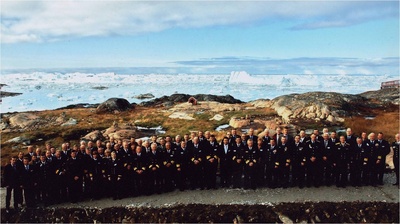
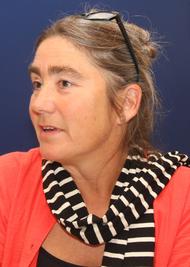
    The Arctic Council Sustainable Development Working Group has concluded it’s regular meeting in Copenhagen Denmark 10-11 Nov. The transaction being made between the Norwegian chairmanship between 2006-2009 and the Danish Chairmanship creates a perfect opportunity to give a general overview of the SDWG and cover some of the work that has been done under the Norwegian chairmanship. The Danish chairmanship will be led by Marianne Lykke Thomsen as head chair of the working group.

    Marianne Lykke Thomsen

    The Working Group on sustainable Development was established at the first Arctic council Ministerial meeting in september 1998 in Iqualuit, Nunavut, Canada. ” The objective of the SDWG is to protect and enhance the economies, culture and health of the inhabitants of the Arctic, in an environmentally sustainable manner. Currently the Sustainable Development Working Group is involved in projects in the areas of children and youth, health, telemedicine, resource management, cultural and ecological tourism, and living conditions in the Arctic.” It is clear that the SDWG has a very broad mandate as can be seen in both the Sustainable Development Terms of Reference (1998) as well as the Sustainable Development Framework Document (2000) that the SDWG has a very broad framework.

    Projects are not directly managed by the SDWG. Lead countries in each project report to the SDWG at regular meetings and other SDWG participants offer their comments. Each project has one or more lead countries as well as a project team of experts from participating Arctic states. The outcome of this work can bee seen by following the links below to current releases of the SDWG under the Norwegian chairmanship as well as a link to prior projects.

    Reports of SDWG Projects and Activities

  • Persistent Organic Pollutants – a Great Environmental and Human Health Risk in the Arctic

    Persistent Organic Pollutants – a Great Environmental and Human Health Risk in the Arctic

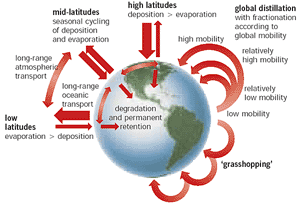
    Persistent organic pollutants migration

    Persistent Organic Pollutants (POPs) are chemical substances that persist in the environment, bioaccumulate through the food web, and pose a risk of causing adverse effects to human health and the environment. The POPs are known to spread out to regions where they have never been used or produced, through what is also called the grasshopper effect, having impact to the environment and human health all over the globe instead of having impact only regionally.

    muktuk gerrit vyn

    This is especially significant for the Arctic region, because many of the substances carry to the Arctic with the air and water currents or through the food chain. It has been demonstrated that for example Inuit in Northern Canada have elevated levels of certain POPs in their blood and fat tissues, which in turn can cause reproductive, neurological, and immune system dysfunctions. The main problem for the Inuit is the contamination of their traditional food to which many of the communities still rely on instead of the imported and expensive southern goods. Contamination levels of wildlife relate largely to the animals’ feeding habits, with predators having higher levels than plant or plankton eaters. This means that in communities where marine mammals or polar bears are one of the main traditional food resources, contamination levels can go up to what is considered way over all risk levels. What is even more problematic is the fact that Inuit have traditionally very low rate of cancer and have virtually no heart disease, which scientists believe to be a result of their fish and sea mammal diet. With lower levels of marine mammals or fish in their diet this might change and pose the Arctic communities to other risks that could perhaps have been avoided with a continued consumption of traditional food.

    In addition to the health issues, contamination poses also another kind of risk to the indigenous communities. When traditional food is no longer available, or at least not favorable, a rich part of their culture becomes threatened or can even disappear. This seems especially unfair, since most of the POPs come from south and are not and have never been used in the Arctic communities.

    Luckily, the international community has started to recognize this problem. Several aspects of the problem have been addressed by the international law and programs and soft law have been initiated to battle the pollution problem.

    International law on POPs

    Today, there exist three major international Conventions exclusively regulating hazardous substances like POPs and heavy metals and one convention concentrating on the marine pollution from ships. These conventions do not apply only in the Arctic, since transboundary pollution is a problem of the whole planet, but play a significant role in the Arctic context due to the “grasshopper effect”.

    United Nations

    The 1979 Convention on Long-range Transboundary Air Pollution is a framework convention establishing a cooperative monitoring and evaluating system for Europe (EMEP), which is the corner stone of the work around the convention.

    The main subjective legal material is introduced in eight protocols, which specify the measures the Parties must take under the convention. Some of the most significant protocols are the 1998 Protocol on POPs and the 1998 Protocol on Heavy Metals. The POPs protocol bans the production and use of some of the most hazardous substances, schedules the elimination and restricts the use of others. The Heavy Metal Protocol targets three particularly harmful metals: cadmium, lead and mercury, laying down stringent limit values for emissions from stationary sources and suggests best available techniques (BAT) for these sources.

    Stockholm convention on persistent organic pollutants

    The Stockholm Convention on Persistent Organic Pollutants, adopted in 2001, aims at reduction and gradual elimination of POPs altogether. Since there exists no scientific consensus on the causal link between POPs and hormonal abnormalities or risk of cancer is the Convention built on the precautionary principle, principle widely used in environmental law. The convention is governed by the Conference of the Parties, which convenes every two years. There are also several subsidiary bodies established under the Conference of the Parties that in conjunction with the Convention Secretariat take care of the every day administration of the Convention.

    Basel convention

    The 1989 Basel Convention on the Control of Transboundary Movements of Hazardous Wastes and their Disposal defines and regulates the management and disposal of hazardous wastes. The main objective of the Basel Convention is “environmentally sound management” the aim of which is to protect human health and the environment by minimizing hazardous waste production whenever possible.

    MARPOL International Convention for the Prevention of Pollution from Ships, 1973 as modified by the Protocol of 1978 (MARPOL) is also one of the corner stone conventions concerning POPs and heavy metals in the Arctic. The convention aims at preventing and minimizing pollution from ships – both accidental pollution and that from routine operations.

    Arctic Council has been active in researching and promoting the issue of POPs and heavy metal pollution in the Arctic. It initiated Regional Program of Action for the Protection of the Arctic Marine Environment from Land-based Activities (RPA) in 1998. It further established Arctic Council Action Plan to Eliminate Pollution of the Arctic, which in 2006 was given working group status under the name Arctic Contaminants Action Program (ACAP). ACAP aims at preventing adverse effects, reducing and ultimately eliminating pollution in the Arctic Environment. It implements projects under specific Project Steering Groups, which identify scopes of contaminant problems through development of comprehensive inventories; identify and select the best available techniques, and best environmental practices to address these problems and develop and implement model demonstration projects.

  • EU in the Arctic

    EU in the Arctic

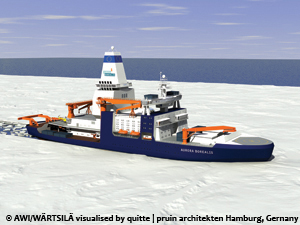
    EFS - Ericon Aurora Borealis

    Arctic has for a long time interested expeditioners and many journeys have been initiated throughout the past one and a half century. For a long time, very few expeditioners made it through the harsh conditions, but due to the climate change it has started to look like that trans-Arctic shipping is becoming a possibility both for researchers and transportation.

    Since the end of the cold war, there has been done immense amount of research in the Arctic and the Arctic Council has been created arounf the environmental sphere of the area. In recent years, the political situation also has again become an issue and quite a few new Arctic policies have been initiated both by Arctic and non-Arctic states.

    The European Union physical connection to the Arctic is through northern Finland and Northern Sweden, but politically it cooperates with various Arctic countries through the EEA or as a neighbour and business associate.

    Both the EU Commission and the Parliament have recently initiated an Arctic communication, where they aim at preventing and mitigating the negative impacts of climate change as well as supporting adaptation to inevitable changes. Further the commision will commit to implement already existing obligations, rather than propose new legal instruments for the area.

    Here following, the EU‘s role and activities in the Arctic will be discussed and links provided to the relevant sections in the EU web portal.

    Historical perspective to the European Union in the Arctic

    Northern Dimension

    The first real EU policy initiative in the peripheral north was the Northern Dimension, which is a cooperation program of European Union, the Russian Federation, Norway and Iceland to support sustainable development, stability, welfare and security in the northern parts of Europe. It was initiated in 1999 and covers various subjects, such as energy, transportation, the environment, nuclear safety, justice and home affairs, the fight against organised crime, health care, the promotion of trade and investment, cross-border cooperation, information technology and research. In addition to the EU and state partners the Council of the Baltic Sea States (CBSS), the Barents Euro-Arctic Council (BEAC), the Arctic Council (AC), the Nordic Council of Ministers (NCM) and various international financial institutions, such as the European Bank for Reconstruction and Development (EBRD), the European Investment Bank (EIB) and the Nordic Investment Bank (NIB) and NGOs, trade unions etc. participate as observers.

    The Northern Dimension ran from 1999 til 2006 until a new Northern Dimension policy was launched jointly by the leaders of the EU, Russia, Norway and Iceland at a meeting in Helsinki in November 2006. The new Northern Dimension provides a joint framework for addressing the challenges of Northern Europe, especially its fragile environment and the socio-economic problems facing its inhabitants. It will further reflect the EU/Russia Common Spaces as relevant for this region.

    ERICON AURORA BOREALIS (European Research Ice Breaker Consortium)

    Another EU initiative in the polar regions is the ERICON AURORA BOREALIS ice breaker initiative, which is a hypermodern research vessel designed to handle the cool summers and freezing winters of the polar oceans and to drill deep into the sea floor.

    The AURORA BOREALIS will be the most advanced research vessel in the world; a platform with state-of-the-art technology for polar science. With its all-season capability it will provide a tool for tackling major scientific challenges, which has not been possible before. It will be a real floating European university in polar sciences.

    The project was initiated in Alfred Wegener Institute for Marine and Polar Research (AWI) in the Helmholtz Association, Germany in 2004. Funded by the German government, it detailed the engineering work for the vessel’s construction and resulted in a complete technical design in mid-2009.

    The project started a new phase in March 2008s, when the ship’s development generating the strategic, legal, financial and organisational frameworks for the construction and running of AURORA BOREALIS was initiated. Apart from the necessary administrative structures for joint European ownership and operations of the vessel, a common scientific managing body has to be set up to handle large-scale, multi-year, mission specific research programmes. The final aim of the project is to reach an agreement with European countries and European Commission committing to the construction and operation of the vessel.


    Contemporary Developments

    Policy Issues in Arctic relevant sectors


    Scientific Issues

    European Science Foundation


    European Polar Board


    • EPB – news
    • European Polar Summit
    • Polar Alert
    • EuroPICS
    • EuroANDRILL
    • EPB Publications
  • Young Earth Scientists Congress 2009

    The first Young Earth Scientist conference will be conducted in Beijing China 25-28 October. The Arctic Portal will monitor this event closely and repost videos within this page. which will be recorded at the Congress roundtable sessions. The recordings should start appearing Monday the 26. October and keep coming until the end of the week.

    The conference will focus on global climate, environmental and geological challenges facing today’s society, and aims to establish an interdisciplinary global network of individuals committed to solving these challenges.

    The United Nations General Assembly has proclaimed January 2007 to December 2009 as the International Year of Planet Earth (IYPE). This supports UN sustainable development targets by promoting wise and sustainable use of Earth materials and encouraging better planning and management to reduce risks for the world’s inhabitants. Making Earth Science knowledge available for the society and promoting proper education and commitment to young generations of earth-system scientists are the two key focus points of IYPE.

    The Y.E.S. Committee aims to organize the First World Congress aimed at young (up to 35yrs) scientists and professionals working in the field of Earth sciences. The congress also will involve young political leaders, representatives of civil society and worldwide organizations. The Congress was first proposed by members of the Italian Geological Society and is strongly supported by the IYPE Committee-Italy, Italian Geological Survey, IYPE Corporation and IUGS.

    The recordings have been posted and can be seen here.

    Climate Change in the Polar Regions and its Global Impact

    • Dr. Liz Thomas, British Antarctic Survey, Association of Polar Early Career Scientists (APECS), U.K.
    • Mr. Ragnar Baldursson, Department of Natural Resources and Environment, Iceland
    • Dr. Dave Schneider, National Center for Atmospheric Research, U.S.A.
    • Dr. Hamish Pritchard, British Antarctic Survey, U.K.
    • Dr. Hughes Lantuit, International Permafrost Association, Alfred Wegener Institute for Polar and Marine Research, Germany
    • (no ppt available)Dr. Jianping Li, Deputy Director and Professor, National Key Laboratory of Atmospheric Sciences and Geophysical Fluid Dynamics, China

    Natural Resources and Energy Sustainability

    • Prof. Ochir Gerel, Mongolian University of Science & Technology, Mongolia
    • Dr. Ian Duncan, Bureau of Economic Geology, University of Texas, U.S.A.
    • Dr. Yutaek Seo, CSIRO Petroleum Resources, Australia
    • Dr. Gavin Mudd, Department of Civil Engineering, Monash University, Australia

    Natural Hazards

    • Dr. Yi Wang, Institute for Sustainability and Peace, United Nations University, Japan
    • Mr. Rudy Montero Mata, Risk Assessment Group Environmental Agency, Cuba
    • Mr. R. Krishna Kumar, National Geophysical Research Institute, India
    • Dr. Maria G. Honeycutt, Geological Society of America

    Industry-Academic Linkages

    • Dr. P. Patrick Leahy, American Geological Institute, U.S.A.
    • Dr. Bernard J. Pierson, Universiti Teknologi PETRONAS, Malaysia
    • Mr. Anthony L. Cortis, Shell Upstream International Exploration, China
    • Dr. Diane Doser, University of Texas, El Paso, U.S.A.

    Issues Facing Global Geoscience Education and Research

    • Dr. Jacques Varet, BGRM, French Geologic Survey, France
    • Dr. G. Randy Keller, University of Oklahoma, U.S.A.
    • Mr. Edmund Nickless, The Geological Society of London, U.K.
    • Dr. Robert Ridky, U.S. Geological Survey, U.S.A.
    • Ms. Sarah Gaines, UNESCO, France

    Transfer of Credentials / International Licensure

    • Mr. Andrew Waltho, Vice President, Australian Institute of Geoscientists, Australia
    • Mr. Oliver Bonham, Canadian Council of Professional Geoscientists, Canada
    • Dr. Manuel Regueiro, Geological Survey of Spain, Spain
    • Dr. Robert A. Stewart, LFR/Arcadis, U.S.A.
    • Mr. Stephen M. Testa, California State Mining and Geology Board, U.S.A.

    Women in the Geoscience Workforce

    • Prof. Ezzoura Errami, African Association of Women in Geoscience, Morocco
    • Prof. Ochir Gerel, Mongolian University of Science & Technology, Mongolia
    • Ms. Soumaya Ayadi, African Association of Women in Geoscience, Tunisia
    • Ms. Laurie Scheuing, Association for Women Geoscientists, U.S.A. (VIRTUAL SPEAKER)
    • Mrs. Juliette Tea-Yassi, African Association of Women in Geoscience-Cote d’Ivoire, Cote d’Ivoire
  • UNFCCC – 55 days to the 15th Conference of the Parties in Copenhagen, 7-18 December

    UNFCCC – 55 days to the 15th Conference of the Parties in Copenhagen, 7-18 December

    UNFCCC

    UNFCCC

    United Nations Framework Convention on Climate Change (UNFCCC) was originally initiated in the 1992 Rio Earth Summit. It is an international treaty on environmental law aiming at reducing the greenhouse gas concentrations in the atmosphere.

    The UNFCCC does not lay down any binding limits of reduction, but divides the signatories to the convention in to three categories each category agreeing to reduce their emissions of greenhouse gas a certain amount.

    First category of industrialized countries, so called Annex I countries, agree to reduce their emissions of greenhouse gasses to targets that are mainly set below their 1990 levels. These countries are Australia, Austria, Belarus, Belgium, Bulgaria, Canada, Croatia, Czech Republic, Denmark, Estonia, Finland, France, Germany, Greece, Hungary, Iceland, Ireland, Italy, Japan, Latvia, Liechtenstein, Lithuania, Luxembourg, Monaco, Netherlands, New Zealand, Norway, Poland, Portugal, Romania, Russia, Slovakia, Slovenia, Spain, Sweden, Switzerland, Turkey, Ukraine, UK and USA.

    Annex II countries, developed countries that are to pay for the costs of developing countries for their efforts to reduce greenhouse gasses, are Australia, Austria, Canada, Denmark, Finland, France, Germany, Greece, Iceland, Ireland, Italy, Japan, Luxembourg, Netherlands, New Zealand, Norway, Portugal, Spain, Sweden, Switzerland, UK, USA and the European Union.

    Finally, in the Annex III are developing countries and countries with economy in a transition.

    Today, the UNFCCC enjoys near-universal membership having 192 signatory members. The members meet annually in Conferences of the Parties (COP), in which they assess progress and negotiate binding rules on greenhouse gas emissions. One of the most significant COPs has been the COP-3 in 1997 in Kyoto, Japan, where the so called Kyoto Protocol, the legally binding protocol on emission reduction, was adopted.

    Kyoto Protocol

    The Japan Times - Kyoto protocol accepted

    The major feature of the Kyoto Protocol are the targets for 37 industrialized countries and the European Community for reducing greenhouse gas emissions .The target is an average of five per cent against 1990 levels between 2008-2012. In addition to the limits, the Kyoto Protocol introduces three mechanisms how the targets are to be met. Primarily, the countries must reduce their emissions through national measures, meaning that they have to take action to actually diminish their greenhouse gas pollution. But since the economies of most countries are highly dependent on industries that are high polluters, three other mechanisms were introduced to ease the reduction scheme.

    The first mechanism introduced in the Kyoto Protocol is the Emissions Trading. Emissions trading, as set out in Article 17 of the Kyoto Protocol, allows countries that have emission units to spare – emissions permitted them but not “used” – to sell this excess capacity to countries that are over their targets. This scheme is in use for example in the European Union and is one of the largest trading schemes in operation.

    Second mechanism provided by the Kyoto Protocol is the Clean Development Mechanism (CDM), defined in Article 12 of the Protocol. The CDM is a purchase system where saleable certified emission reduction (CER) credits can be earned by implementing an emission-reduction project in developing countries. This is a unique global environmental investment system and there exists now 1849 registered CDM project activities.

    Third mechanism is so called „joint implementation” ,defined in Article 6 of the Kyoto Protocol. The „joint implementation“ allows an Annex II country to earn emission reduction units (ERUs) from an emission-reduction or emission removal project in another Annex II country through a flexible and cost-efficient foreign investment and technology transfer system.

    The Kyoto Protocol entered into force on 16 February 2005 and has today been ratified by 184 countries.

    COP 15 – Copenhagen, 7-18 December

    cop 15

    The 15th Conference of the Parties to the UNFCCC (COP 15) and the 5th Meeting of the Parties (MOP 5) to the Kyoto Protocol will be held in 55 days, 7-18 December 2009, in Copenhagen, Denmark. The COP15 / MOP5 is of special significance because of the goals set forth in the Bali Road Map. In the Bali Road Map it was stated that in Copenhagen, a post-Kyoto Protocol action is to be negotiated. The fact is that the consequences of the climate change are getting increasingly apparent and in the Arctic alone it has been estimated that the sea ice will melt in ever accelerating rate the North pole being ice free over the summer time already as soon as in 2040.

    Ad Hoc Working Group on Kyoto Protocol (AWG-KP) has been preparing the COP 15 / MOP 5 and most participants seem to agree that a positive outcome for the global community can be reach in the COP Meeting. However, it is to be seen how the global recess has influenced the ability of the major industrialized countries to act upon their commitments and how far they are willing to go to further the legally binding commitments for the post-Kyoto era.

    For more information, please visit the UNFCCC homepage or the COP 15 homepage
  • North Atlantic Coast Guard Forum meeting in Iceland

    North Atlantic Coast Guard Forum meeting in Iceland

    The Annual meeting of the North Atlantic Coast Guard Forum is being held in Akureyri Iceland between 29.september- 2. October. At the same time and location a extensive exercise which simulates a cruise liner that runs ashore.

    Meeting:

    GreenlandThe North Atlantic Coast Guard Forum is a cooperation initiated by Iceland, Denmark, Finland, Norway and Sweden. Approximately 80 persons will attend the meeting. Members to the cooperation are now Russia, United States, Canada and 17 European countries. The main themes of the organizations are categorized into seven categorize which are Safety issues at sea, narcotics trafficking, illegal immigrants, monitoring fishing, search and rescue and cooperation on technology. This year’s chairmanship is in the hands of Iceland’s coastguard director Georgs Kr. Lárusson. The emphasis over the last couple of years been that increased cooperation is of high importance so response to emergencies can be swift and coordinated.

    Exercise:

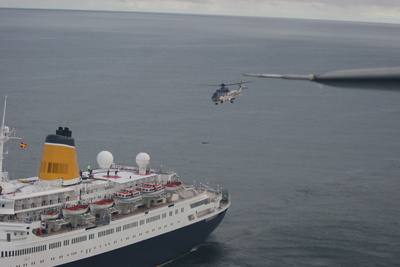
    cruise

    An extensive exercise was conducted in conjunction with the meeting that simulates a large cruise liner that runs ashore. This scenario is very relevant to the current state of affairs in the North Atlantic, Arctic Ocean and in actually Antarctica as cruise ships are rapidly reaching further into the North as sea ice declines. There have been considerable concerns that if anything would happen to these ships, engine break down or a breach in the hull due to sea ice could have drastic consequences. The rescue capacities needed to deal with a large cruise liner with 2-3000 people are immense and depending of the exact location of the incident the resources in form of rescue vessels, airplanes and helicopters possible nowhere near being enough.

    In 2008 it is estimated that 70 cruise liners traveled to Greenland with over 150.000 passengers. None of these vessels are ice strengthened and despite a decline in sea ice there is still plenty of it and does pose a threat. Furthermore concerns have been voiced that standard lifeboats found on all cruse liners may not be able to sustain life for long enough in Ice filed waters. There have been hopes that the IMO will address some of these issues in a polar shipping code.

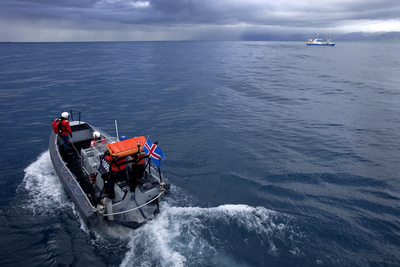
    Patrol boatThe exercise in Akureyri Iceland is very welcome and focuses on both the rescue and evacuation of people as well as pollution prevention. Participants include a Norwegian coast guard ship, Danish coast guard ship equipped with a helicopter, Icelandic Coastguard ship, airplane and a helicopter. Furthermore 3 local rescue ships and local rescue and environmental personnel are involved.

  • Oops! We couldn’t find this page for you

    Sorry, but the page you are looking for might have been removed, had its name changed, or is temporarily unavailable.

    We apologize for the inconvenience.

    We recommend that you try one of the following:

    • If you typed the page address in the Address bar, make sure that it is spelled correctly.
    • Maybe the page just got moved to a different location on the website.
    • Use our sitemap to find the content you are looking for
    • Click the Back button in your browser to try another link.
    • In the case of a broken link, please report it to the Arctic Portal IT department
  • Dinosaurs in the Arctic

    Dinosaurs in the Arctic

    T-RexIt may come as a surprise to many that dinosaurs are known to have lived in the high north. Paleontologists have over the years found remains in Canada’s and Alaska’s Arctic regions establishing that the region once had a Jurassic era. And possibly challenging existing theories claiming that dinosaurs died out due to a meteorite causing darkness witch led to the dinosaurs demise.

    Alaska’s North Slope was home to eight types of dinosaurs during the period they lived there, from 75 million to 70 million years ago, say paleontologists including UAF’s Roland Gangloff and Tony Fiorillo of The Dallas Museum of Natural History. Four of the dinosaurs ate plants, and four others ate the plant eaters and other creatures, Fiorillo wrote in a recent Scientific American article. The most common far-north dinosaur was the duck-billed Edmontosaurus, a plant-eating hadrosaur that weighed between 3,000 and 4,000 pounds.

    How could these cold-blooded creatures have survived on Alaska’s North Slope? As I type this in early February, it’s -20 F at the weather station closest to the fossil beds on the Colville River. By examining fossil pollen, leaves, and wood, scientists have found that northern Alaska was a much warmer place at the time of the dinosaurs, possibly with average annual temperatures well above freezing, Fiorillo wrote.

    dinosaursEven though northern Alaska was warmer then, it was still probably cold enough for occasional snow and was farther north than it is today, so the sun didn’t rise for weeks in midwinter. Today, the North Slope’s grizzly bears are tucked away in hillside dens, but it’s tough to picture a 35-foot hadrosaur hibernating, Fiorillo wrote. Dinosaurs may have dialed down their metabolism to require less food, and some researchers have suggested they might have migrated south during the deep dark of midwinter. To check the migration hypothesis, Fiorillo and Gangloff compared bone length and body masses of hadrosaurs to the north’s master of migration, the caribou. They decided that juvenile hadrosaurs were relatively much smaller than juvenile caribou, and that it was unlikely the hadrosaurs migrated.
    If dinosaurs remained on the North Slope during the winter, biologists expect their bodies would show some adaptations to darkness. Numerous scattered teeth of the meat-eating Troodon found in Alaska suggest it was a common dinosaur, and one of Troodon’s main characteristics was a set of very large eyes, possibly an adaptation to low light.

  • Northeast Passage Open for a Cargo Ships

    Northeast Passage Open for a Cargo Ships

    German Vessel Beluga Fraternity

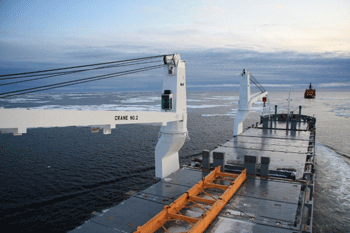
    Two German multipurpose heavy-lift vessels, Beluga Fraternity and Beluga Foresight, has managed to complete the first transit of the Northeast Passage by non-Russian commercial vessels.

    The carco vessels were assested by a nuclear-powered Russian Atomflot ice breaker “50 let Pobedy” through the East Siberian Sea and the Sannikov Strait into the Laptev Sea from were the vessels reached their Siberian destination of Novyy Port on Monday.

    The Northeast passage is ice-free only few weeks each summer and thus still unlikely that regular commercial shippin can take place in near future. The possibility of future shipping is, however, worth noticing since the Arctic Northeast passage will shorten the route between Asia and Europe approximately 5000km.

  • Polar Law Symposium: Russia’s Arctic Policy

    Polar Law Symposium: Russia’s Arctic Policy

    The 2nd Polar Law Symposium was held at the University of Akureyri the past weekend, September 10-12. This years Symposium was environment oriented having an indication of environment in all four themes. The themes this year were New Shipping Routes and Environmental Implications for the Polar Regions, Effective Environmental Governance, The Exploration and Exploitation of Resources and Human Rights and Polar Regions.

    Many distinguished speakers discussed the issues from different perspectives, but perhaps the most interesting or rather most anticipated information being shared at the Symposium was about the new Arctic policy of the Russian Federation by H.E. Victor Tatarintsev, Ambassador of the Russian Federation in Iceland.

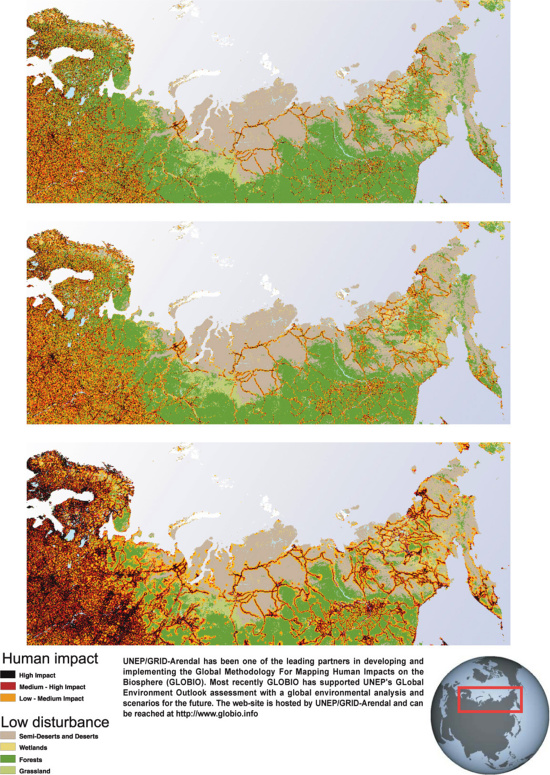
    human impact on the arcticDue to the new environmental developments in the Arctic and the international attention the area has gained in the past few years in international politics the Russian Federation has adapted a new Arctic Strategy to 2020 and beyond.

    The importance of the Arctic for the Russian Federation can not be undermined knowing the fact that it contains 1% of the Russian population and 18% of the territory, but produces 20% of the GDP and 20 % of Russia’s total export.

    According to H.E. Victor Tatarintsev the peace and international cooperation are the key issues in the Arctic in coming years. Russia will emphasize the cooperation through already existing framework, namely the Arctic Council and the Barents Euro-Arctic Council and does not aim at increasing its military presence in the area.

    The Arctic sea route will be of high importance for Russia as a strategic national transport route and reconstruction of the existing infrastructure on the Arctic coast-line will be one of the main tasks on national level. The sea route will not be important only because of the immense oil and gas production in the Russian north but also because of the development gap between the north and south, which must be cut down for the benefit of the people living in the area. New ports must be built to the remote areas to enable import of new technology and development and new kind of tourism in these areas must be made possible.

    Arctic Indigenous peoples play also a role in the new Russian Arctic Policy Russia committing itself to the existing international standards for the protection of indigenous livelihoods and will follow.

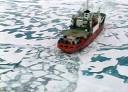
    Russian arctic shipDespite the fact that Russia is very committed to the existing cooperation regime and intends to obey the international law in all matters, H.E. Victor Tatarintsev reminded people not to simplify the situation too much. Certain unresolved legal and political issues remain in the Arctic and cooperation should be enhanced to abolish uncertainties around these issues. As an example he pointed out the Russian flag in the bottom of the Arctic sea incident, which according to him was purely scientific expedition and did not imply the political contention as it taken by the international community.

    As a conclusion, it can be said that the Russian Arctic policy aims to intensify the national development with the utmost goal of protecting legitimate aspirations of the Russian Federation while working within the international community.