Author: it@arcticportal.org

  • Arctic Council Indigenous Peoples Secretariat  – International Work Opportunity

    Arctic Council Indigenous Peoples Secretariat – International Work Opportunity

    Arctic Portal news

    International Work Opportunity, Copenhagen, Denmark

    The Arctic Council Indigenous Peoples Secretariat is looking for an Executive Secretary. The position requires an understanding of issues concerning Arctic Indigenous Peoples, the Environment, and Sustainable Development.

    Read more about the job at: www.arcticpeoples.org

    About the Arctic Council Indigenous Peoples’ Secretariat

    The Arctic Council Indigenous Peoples’ Secretariat is a support Secretariat for the International Indigenous Peoples’ Organisations that are Permanent Participants to the Arctic Council .

    IPS does not speak for the Permanent Participants. Instead, it creates opportunities for the Indigenous Peoples’ Organisations to speak for themselves, and helps provide them with necessary information and materials.

    IPS work includes:

    • Ensuring that Permanent Participants are sent documents and reports connected to the work of the Arctic Council and its working groups.
    • Helping Permanent Participants to present their views to the Arctic Council and its Working Groups.
    • Collecting and communicating information about the Arctic Council and its results to the Indigenous Peoples in the various parts of the Arctic.
    • Providing co-ordination for the Indigenous Peoples’ Organisations to meet with each other, and to participate in the Arctic Council Working Groups.
  • New CliC Newsletter – Ice and Climate News

    New CliC Newsletter – Ice and Climate News

    Climate and Cryosphere - CliC

    The new edition of the the Climate and Cryosphere (CliC) Newsletter is available for download here. This June issue consists of contributions on the Carbon and Permafrost (CAPER) Initiative, integration across cryospheric disciplines, workshop reports and project updates.

    CliC was initiated by the World Climate Research Programme ( WCRP ) in 2000. Its goal is to stimulate, support, and coordinate research that focuses on processes by which the cryosphere interacts with the rest of the climate system.

    The contents of the CliC newsletter are

    • Integration across cryosphere disciplines
    • New CliC SSG members
    • Norway/China collaborations
    • Brazil update
    • Water resources and cryosphere in mountains and N. Canada
    • CliC-related IPY activities in Russia
    • Progress in Chinese cryospheric research
    • The carbon permafrost initiative
    • Asia-CliC data workshop
    • Arctic surface-based sea-ice observations
    • IGOS partnership cryosphere theme: where are we now?
    • International NRB symposium and workshop
    • Early career scientists on polar marine research
    • SWIPA update: lake and river ice

    The CliC Newsletter – Ice and Climate News

  • Arctic Indigenous Languages

    Arctic Indigenous Languages

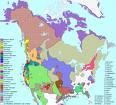
    In the Arctic, there exists over 40 different indigenous languages, which had survived for centuries or even thousands of years in small communities Language mapthroughout the northern hemisphere. Most of these languages can still be found, spoken by a small group or individual, but in many cases, they have come close to extinction. In some cases, the reason for the weakening of the language has been the decline of the amount of its speakers. In other cases, local and national policies and leadership have had an impact on the language spoken in a particular area. What is, however, common for almost all the Arctic indigenous languages is the fact that in the past 100 years they have gone through an immense change, first several decades to a negative direction and now for the past two decades to a more positive direction.

    From the late 19th century, the indigenous languages of the Arctic have been increasingly exposed to colonial powers. Especially in the second half of the 20th century, the indigenous peoples went trough an immense assimilation process organized by the state authorities. Indigenous children were in many cases educated in public schools, often in boarding schools, and their ties to Indi languages in North Americatheir own culture and language were weakened intentionally. Due to the assimilation process along with the decline of indigenous inhabitants, many of the languages were about to extinct when the international indigenous movement emerged in the beginning of the 1970’s. The dominant languages in the Arctic today are Russian, English and Scandinavian languages, all which have been introduced to the Arctic inhabitants by a colonial power. However, in the recent years the indigenous languages have gained stronger status within the Arctic states either as protected cultural heritage or as an official language.

    In the Scandinavia, the Saami languages are protected by law and have a status of an official language within the Saami homeland in both Finland and Norway. In Sweden, the Sami languages can be used in public affairs in the municipalities of Arjeplog, Gällivare, Jokkmokk and Kiruna.

    Inuit childIn Greenland, along with the establishment of the Greenland Self-Government in June this year, the Inuktitut became the only official language, Danish having being another official language in Greenland since 1950’s.

    In Nunavut, Canada, all three languages, Inuktitut, English and French became Nunavut’s official languages in July 1, this summer, when Canadian government enacted a new Inuit Language Protection Act.

    The situation in Russia is somewhat different. Under law, many of the indigenous languages are protected as a cultural heritage, but in reality their status varies enormously.

    Even though many positive steps have been taken to revive the valuable heritage of Arctic indigenous peoples, much is still undone to guarantee the indigenous languages’ survival and status within the eight Arctic states. With the strong involvement of indigenous youth and establishment of new technologies, it has become easier for Arctic inhabitants to hold on to their culture and language despite the long distances and educational opportunities sought outside the Arctic. In addition, the influence the strong international indigenous movement has had on national policies has made the legal status of the languages better and in many cases they have gained special protection within the state system.

  • The least sea ice in 800 years

    The least sea ice in 800 years

    Arctic Portal news

    New research, conducted by the Niels Bohr Institute at the University of Copenhagen and published in the scientific journal Climate Dynamics, maintains that the sea ice in the Arctic sea between Greenland and Svalbard has reached the smallest size it has been in 800 years.

    The research combined information about the climate found in ice cores from an ice cap on Svalbard and from the annual growth rings of trees in Finland. The data about the ice cover was gathered from the logbooks of whaling- and fishingships datign back to the 16th century as well as from records from harbours in Iceland, where the sea ice coverage has been recorded since the end of the 18th century. By combining these two sets of information the reserachers were able to track the sea ice all the way back to the 13th century.

    The sea ice has been at the minimum also before, first in the late 13th century and later in the mid 17th and mid 18th century. The researchers maintain, however, that these periods were in no case as persistent as the decline of the sea ice in the 20th century when the ice diminished 300 000 square km in ten years. The sea ice has been at its largest from the seventeenth to the nineteenth centuries, during a period called the Little Ice Age.


  • To Whale or not to Whale

    To Whale or not to Whale

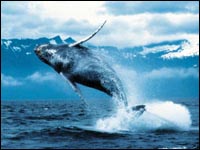
    Whale jumping in the seaThe issue of whaling is a complex matter that stands close to the hearts of many Arctic peoples and the world in whole. Public opinion varies significantly, whether whaling is cruel and barbarous or if they should be hunted and utilized in a sustainable manner, like other animals. Similar differences in views are prominent in the international community, which is locked in a bind on the matter. With the recently concluded 61st annual meeting of the international whaling commission (IWC) in Madeira, Portugal a solution seems to be no where in sight. Due to this a brief overview of the current situation as well as the history of whaling is in order.

    Brief Overview History of Whaling and the IWC:

    shore whaling

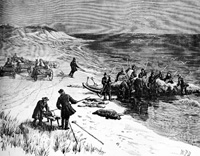
    Humans have been engaged in whaling since prehistoric times and to many costal cultures they have been a valuable source of nutrition, light and construction material. Cave drawings and ancient tools from whale bones have been found around the globe dating back thousands of years. It was not until commercial whaling begun that the stocks started to decline to the catastrophic state, which many whale stocks are today. Commercial whaling can said to have started around the late 16th century, first the Dutch, then the British, Americans and later on the Norwegians. Other nations followed suit later on and whale oil became the first of any animal or mineral oil to become commercially viable. Prior to the arrival of floating factory-ships western civilizations utilized only the blubber and the baleen of the whale and the rest was discarded. The arrival of new hunting methods and increased interest in the lucrative trade caused almost all whale stocks to decline to a fraction of their earlier state. This led to a collapse of the whaling industry and spurred international cooperation to manage the whale stocks.

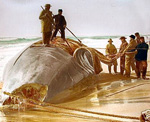
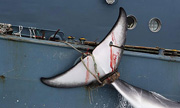
    The International Whaling Commission (IWC) was founded in 1946 to provide for the proper conservation of whale stocks and thus make possible the orderly development of the whaling industry.whale processing The IWC has since the late 1970s been dominated by countries largely opposed to commercial whaling. Since 1986 there has been a moratorium on whaling, functioning as an all out ban on commercial whaling with an exemption of indigenous subsistence whaling and whaling for scientific purposes. This decision was not based on advice from the Scientific Committee ( an advisory committee within the IWC) and has been disputed by pro whaling nations ever since.

    The IWC is based on voluntary participation and is not backed up by a treaty between its members and has substantial practical limitations on its authority. For instance, by formally objecting the moratorium the nations can exempt themselves from the ban. Therefore, Norway, Japan, Peru and the Soviet Union formally objected the moratorium when it was issued. Peru and Japan also objected, but later on subtracted their objection, Japan after the U.S threatened to reduce their fishing quota within U.S waters. Iceland did not object the moratorium in the beginning, but withdrew from the IWC in 1992 due to disputes concerning the moratorium. Iceland was allowed to rejoin IWC in 2002 with a reservation to the moratorium, though the reservation has not been recognized by many of the IWC nations.

    In the recent years, whaling has been conducted by three nations; Norway, Iceland and Japan. This whaling has not been considered to be in violation of the IWC on the grounds of their objection to the moratorium and also since it has been done in the name of research. These actions have however spurred the anger of both anti whaling nations and environmental organizations around the world. Pro whaling nations have in return accused the IWC on basing their decisions on “political and emotional” factors instead of scientific knowledge as it’s Scientific Committee has concluded since 1991 that quotas on some species of whale would be sustainable.

    Whaling today and the row within the IWC

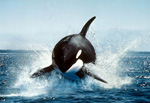
    Orca killer whaleUnder the chairmanship of William Hogarth, compromise talks began formally a year ago but have yielded little results so far, as nations have taken a strong stances and have not been willing to budge an inch making negotiations futile.

    The recently concluded 61st annual meeting of the International Whaling Commission (IWC) in Madeira, Portugal can be said to be yet another failure to reach an agreement that is acceptable to both factions. The debate is heated by emotion and different views seem often so far apart that it seems that a consensus will never be reached. The failure to reach common ground has endangered the future of the International Whaling Commission (IWC) as it has not been able to function properly due to skirmishes within the commission.Whale

    In an effort to mitigate differences and reach a conclusion, a number of key nations were invited to participate in a Committee to try to reach an agreement about the future of whaling and the IWC before the next annual meeting in 2010. The two most prominent matters put forward at the meeting was Greenland’s wish to include humpback whales in their annual quota. Their request has been denied two years in a row and decision on the matter was postponed at this years meeting, despite the quota being deemed sustainable by the Scientific Committee. Negotiations with Japan to reduce its Antarctic hunt, in return for the right to catch whales quasi-commercially in its costal waters have similarly run ashore and been postponed. Australia, which has taken the strongest stance against whaling recently threatened Japan legal actions if diplomatic efforts fail to halt its whale hunt.

    As the situation appears today, there seems to be only one solution to save the IWC as a venue for managing and protecting the worlds whale stocks, and that is to hand out a sustainable quota to whaling nations. Such an activity would ensure their continued participation and keep the control over quotas within the IWC This, however, will probably be problematic, as the dispute seems to have elevated, long ago, from being about sustainable catches to being a moral question. The question would therefore be if a whale’s existence has more value in itself than the existence of other animals utilized by man?

  • New technology to establish the electric car as a viable option in Iceland and possibly other regions of the Arctic is becoming a not so distant reality.

    New technology to establish the electric car as a viable option in Iceland and possibly other regions of the Arctic is becoming a not so distant reality.

    Driving a car is the most polluting act an average citizen commits and cars are the single most contributors to air pollution in the world. Partial shift to other energy sources could reduce CO2 emissions significantly.

    Smartcar

    Electric cars are not a new invention and have been around for years. The Smart car for example is known to most dwellers of urban centers and metropolies around Europe and the United States, and could be described as a funny little car that has limited usability to the average individual. Fuel cells or batteries have been the limiting factor in electric cars in the past. The duration of the batteries was low, they were heavy and not environmentally friendly in production. Over the last couple of years technical advancement have been significant, and further advancements are to be expected. As a indicator of the weight being put into further development U.S president Barack Obama recently allocated a billion $ to further development of batteries and supporting technologies to be used in such vehicles.

    Electric cars are becoming more and more competitive for various reasons. Environmental awareness has over the past decades been on the rise and governments are allocating more funding for research and development. Fluctuations in energy prizes, the notion of energy security and the possible future scarcity of fossil fuels further encourage development of new methods and facilitate the establishment of infrastructure needed for such vessels.

    In Iceland work has begun by a company called 2012 on the establishment of 10.000 charging stations and 150 speed-charging stations located around the country. The idea is that one could charge one’s car while shopping for groceries, going to the cinema, etc. An average car could be fully loaded in 3-4 hours in a regular charging station and in 10-15 minutes in a speed-charging station. The electric cars of today are able to manage between 100 km per charge to 470 km approximately.

    Admission to the charging system would be managed by subscription and the estimated cost would be between 5-10.000 Icelandic Kr per month. For comparison 50 liters/ 13 gallons of gasoline cost 8900 Kr in Iceland today. Electricity would thus be significantly cheaper than buying gasoline for the average user per month, given that this estimate is accurate. Users that drive more than average would be billed accordingly and users that drive less would be refunded credits to their energy account. Users that charge their cars at home and do not use their cars often would therefore be able to save significantly. Furthermore maintenance is expected to be less expansive since an average diesel engine has approximately 1000 moving parts while a similar electric motor has four. Despite for lower operating costs electric cars are as of yet significantly more expensive than their fossil-fuel counterparts but this can be expected to change as production of them increases.

    A wide range of cars are and have been developed using electricity as there only energy source.

    Electric motocross/dirt bikes have become a reality as well as the production of electric Skidoo’s/Snowmobiles can be expected to commence in a couple of years.

    the arctic

    Cars using alternative energy sources than fossil fuels are definitely on the rise and could be so especially in the Arctic. A common nominator to many areas of the Arctic is the abundance of hydro energy. Furthermore work is being done on creating electricity with wave or tidal power, solar power as well as by the use of windmills. Technological advancements over the past decades and the foreseeable future will enable us to create more electricity at a declining cost which are more environmentally friendly than previous methods.

    The Arctic regions are especially vulnerable to air pollution. Toxins from thousands of miles away can enter the Arctic ecosystems, creating health risks to local people, especially to the Inuit due to their traditional diet. Despite the marginal part of the Arctic’s pollution, originating from the Arctic it is highly important that the Arctic countries lead the way in finding more sustainable solutions.

  • IPY Polar Resource Book

    IPY Polar Resource Book

    Arctic Portal news

    To promote some of the good work carried out by the various IPY projects Educators and Scientists are offered the chance to submit material to a Polar Resource Book being created. This is an opportunity for individuals or groups who have adopted a new polar science activity or program for students or community during the IPY that were successful, and are interested in share these activities with a broader audience.

    In an attempt to ensure efforts catalyzed by IPY will press on inspiring educators, students, and emerging polar researchers into the next generation a group of young, international, polar researchers with a shared commitment to outreach and education created the Polar Resource Book. The Book is a response to continual requests from educators and scientists wishing to raise awareness about the importance of polar science during a time of rapid planet-wide climate change. The project has received support from a vide range of actors whom are a part of the IPY community, the World Meteorological Organization (WMO), as well as the University of the Arctic, the United National Environment Program (UNEP), and the organizing committee for the flagship IPY Science Conference to be held in Norway in June 2010.

    Two chapters in the book are open to submissions, chapters 2 and 4.

    Chapter 2: Polar Educational Activities and Teaching

    This section of the book includes practical learning activities for the classroom/learning environment accompanied by personal stories from youth, educators, and scientists who participated in or developed the associated projects. If you have an experience to share please fill out the attached ‘Chapter 2 I2S (intent to submit)’ form.

    Chapter 4: Education & Outreach Projects – Inspiring Ideas from Around the World This chapter is a collection of successful outreach initiatives submitted by educators, scientists, and graduate students. The purpose of this chapter is to demonstrate the breadth of outreach approaches and projects/programs/initiatives inspired by IPY and to encourage readers to become actively engaged in scientific outreach and polar education. We are interested in all polar outreach experiences regardless of their scale. If you have an experience to share please fill out the attached ‘Chapter 4 I2S (intent to submit)’ form.

    Details and Deadline for Intent to Submit:

    • Application forms can be downloaded here Chapter 2 and Chapter 4
    • The deadline for submitting your intent to contribute to Chapters 2 & 4  is July 20th, 2009.

    Further Deadlines for Successful Submissions:

    • All submissions will be reviewed and successful submissions will be notified byJuly 31st, 2009.
    • Full submissions will be due by August 31, 2009.
    • For further details and submissions, please contact Karen Edwards: karen.edwards@ualberta.ca
  • Nordic council of Ministers Arctic Co-operation Program funds the new joint UArctic and Arctic Portal project Arctic Virtual Learning Tools

    Nordic council of Ministers Arctic Co-operation Program funds the new joint UArctic and Arctic Portal project Arctic Virtual Learning Tools

    Arctic Portal news

    Nordic council of Ministers continues to support UArctic activities by granting 650 000DKK for this year for a new joint project led by Thule Institute, University of Oulu, Finland. New project Arctic Virtual Learning Tools joins UArctic and Arctic Portal into close co-operation where new UArctic educational material and virtual classroom will be distributed and shared through Arctic Portal.

    The new online material will consist of revised UArctic BCS core courses, on-line text books developed for new global change Master’s courses at Thematic Network on Global Change and print version on UArctic Atlas. Some of the materials will be also translated to Russian. Later as project goes on more material can be added.

    The Virtual Classroom will offer an option not only for easier access to higher education, but will lead a technological revolution in distance learning – a two-way communication between the teacher and the persons being taught with open discussions, capabilities for participants to ask questions and comment on the subject presented and the teacher to respond in real-time.

    The project partners include the APECS (Association of Polar Early Career Scientists), International Centre for Reindeer Husbandry and several representatives from Canada, USA, Iceland, Norway, Finland and Russia.

    The lead project partners are:

    • University of the Oulu, Thule Institute, Finland, Kirsi Latola, UArctic Thematic Networks
    • University of Lapland, Finland, Scott Forrest, Director of Special Projects, UArctic International Secretariat
    • Nordurslodagattin ses. – Arctic Portal, Iceland, Halldor Johannsson
    • University Centre of the Westfjords, Iceland, Peter Weiss

    More information: Kirsi Latola, Kirsi.latola@uarctic.org

  • From remote island to Self-Government – Greenland’s journey towards independence

    Inuit village

    Through the times, the island today called Greenland has hosted many different peoples over varying periods. It has been estimated that first peoples came to the remote North-Atlantic island around 2500 BC and that the ancestors of the contemporary Inuit populations came from Alaska, Siberia and Canada, the Arctic thus having one Inuit population over a vast area of northern hemisphere.

    First Norse settlers came to Greenland around the same time as Iceland was settled or around 1000 AD. These peoples vanished 400 -500 years later and it was not before early 18th century that the Norse settlers came again. This time the Danish established a colonial relationship with the island. This relationship has in part remained to this date.

    The Danish era

    Greenland

    Despite the colonial relationship with Denmark from the early 18th century, Greenland remained somewhat isolated until the beginning of the World War II. The Germans occupied Denmark in 1940 making new arraignments concerning Greenland possible. In 1941, an agreement with the US was signed placing Greenland under the protection of the US troops. Following this agreement, the US Air Force established an air base in Thule in 1951 and has remained there since.

    During the decolonization period following the World War II Greenland’s colonial status was abolished and the island was integrated into the Danish Kingdom in 1953.

    In 1 May 1979 following a referendum in Greenland, a Greenlandic Home Rule, an autonomous entity, was created granting Greenlanders own parliamentary organ as well as government. The Home Rule government gained jurisdiction in a series of important fields, such as internal administration, taxes, religious matters, fishing, hunting and agricultural affairs. Also social welfare, labour market affairs, education and cultural affairs, health service, housing and area protection were moved under internal administration of Greenlanders.

     Greenland had joined the ECC (today EU) originally as a part of Denmark in 1973, but opted out from the agreement in 1985 obtaining thus a status as an Oversees country and territory (OCT) with special arraignments regarding its unique circumstances within the ECC. The new agreement with the ECC included among other things fisheries agreement allowing ECC quota in Greenlandic waters in turn of compensation. Greenland gained also territorial allocation from the European Development Fund instead of getting support from the ECC budget.

    In 2005, Danish Parliament issued an Authorization Act, which granted Greenland a right to enter into international agreements in the areas that were under the jurisdiction of the Greenlandic Home Rule. This Act was a first step of what will become Self-Government on Sunday, 21 June 2009.

    The Greenlandic Self-Government

    In 2004 a Danish-Greenlandic Commission was established to evaluate whether the Greenlandic authorities could assume further powers and to make proposals how it could be done. The Commission concluded its work in April 2008 and a non-binding referendum on Greenland’s autonomy was held on 25 November 2008. 75% of the Greenlandic people voted in favor of further autonomy and it was decide that a Greenlandic Self-Government would be established in June 21, 2009.
    Greenland

    The Greenland Self-Government Agreement reaffirms in most parts the practice that has been established and evolved during the years of the Home Rule. Some new areas of administration are however established in the new agreement.

    Greenlandic will be the only official language in Greenland after June 21. To date, both Danish and Greenlandic have had an equal status in both education and administration.

    Further, when Danish Government bills cover matters that affect also Greenland, the Self-Government must be consulted before the bill is presented to the Danish Folketing. During the Home Rule, the law provided such an opportunity, but the consultation was not obligatory, as it will be under the Self-Government.

    Economies of Denmark and Greenland will be increasingly separated. As Greenland will become more independent economically, the government subsidies will be decreased. Moreover, new system of sharing revenue from mineral resource activities will be introduced.

    Under the Self-Government, Greenland will become a subject under international law in matters that are within its jurisdiction. This means that Greenland can enter into agreements and establish bilateral and multilateral relationships with other states. In addition, Greenlandic government, Landsstyre, will be taken increasingly into consideration in foreign policy matters under the central authorities of the Danish Realm.

    Other fields of responsibility are also moved under the authority of the Self-Government. Different areas of law and justice administration will become an internal matter of Greenland as well as security at sea, ship registration and maritime affairs. Weapon registration and licenses, upper secondary education and food and veterinary matters will also be covered by the Self-Government after June 21.

    Conclusion

    With the new Self-Government agreement, Greenland will take very important step towards becoming an independent state. However, the agreement allows Greenlandic people to decide themselves whether they will seek independency and when it should be done if ever. The agreement assures that the contemporary foundation of the society, built with Danish funding and assistance, will not be jeopardized, but Greenland will be given an opportunity to slowly mature and become the kind of society that Greenlanders themselves aspire.

    Main sources

    The Greenlandic-Danish Self-Government Commission’s Report on Self-Government in Greenland. April 2008.http://uk.nanoq.gl/sitecore/content/Websites/uk,-d-,nanoq/Emner/Government/~/media/46185A4413C54A3D89D3D16F1D38F0D3.ashx

    Draft Act on Self-Government. http://www.amblissabon.um.dk/NR/rdonlyres/EDC5978E-71C2-467E-974A-598A01EEA562/0/DraftActonGreenlandSelfGovernment.pdf

    Loukacheva, Natalia. The Arctic promise – Legal and Political Autonomy of Greenland and Nunavut. 2007. University of Toronto Press Incorporated. Toronto

    Lectures in Polar Law, University of Akureyri, Iceland. Academic year 2008-2009. see: http://english.unak.is/?d=5&m=page&f=viewPage&id=246


  • New networking mechanism established in Russian northern research

    New networking mechanism established in Russian northern research

    Arctic Portal news

    New networking mechanism, promoting cooperation between science, youth associations, non-profit organizations, business and authorities, has been established for the benefit of development of northern regions in Russia.

    The cooperation called “Center for Problems of the North, Arctic and Cross-border Cooperation”, “North-Centre”, was established by Karelian Research Center of the Russian Academy of Science and International Public Youth Movement “Association AWARD”. The project is intended to unite the efforts of science in the area.

    Igor Shevchuk will be heading the project. Mr. Shevchuk is the foreign relations officer of the Karelian Research Center of RAS. Other members include, Alexander Titov, President of the Karelian Research Center of RAS, Corresponding Member of RAS, Chairman, Elena Antoshko, Head of the International Public Youth Movement “Association AWARD and Alexander Yuriev, Executive Director of the Association “Council of Municipalities, Republic of Karelia”

    The Karelian Research center is establishing a web page for the project and it will be located at http://northcentre.krc.karelia.ru/