Author: it@arcticportal.org

  • Imaginaire du Nord calls for papers

    Imaginaire du Nord calls for papers

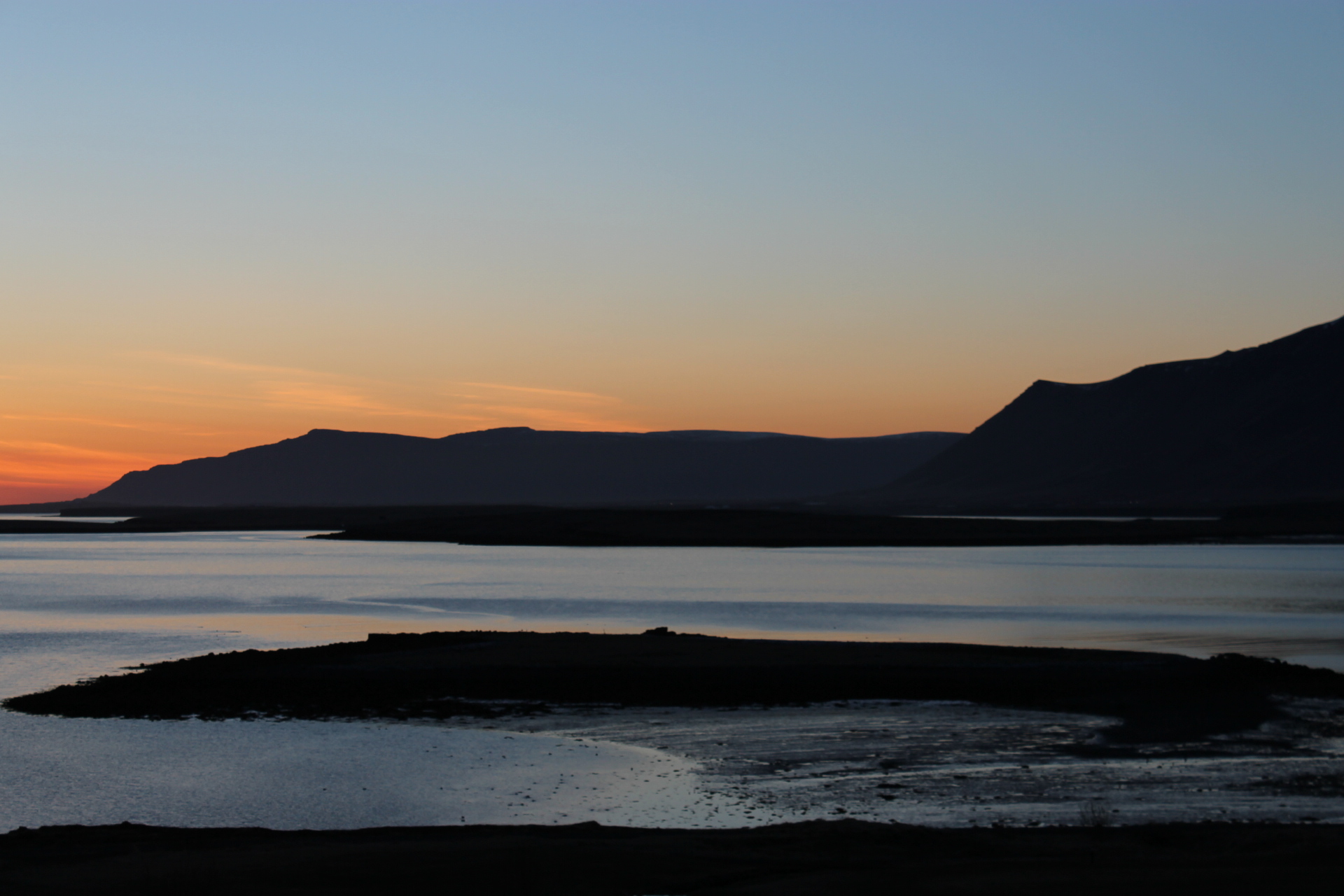
    Midnight sun in the Arctic

    The International Laboratory for the Multidisciplinary Comparative Study of Representations of the North, of the Université du Québec à Montréal, announces a call for papers for its 8th international conference, «Cold: Adaptation, Representations, Production, Effects», co-organized with the “Cultures, environments, Arctic, representations, climate” research centre of the Observatoire de Versailles Saint-Quentin (France), as part of a France-Québec cooperation project.

    The objective of this multidisciplinary conference is to think about the idea of “cold” in all of its multiple disciplinary variations—geographical, cultural, medical, biological, climatological, engineered, physical, linguistic and sociological.

    Defined by Étienne Lalou as “both a relative and subjective sensation,” cold is invisible.

    Its manifestations can only be appreciated in the effect it has on bodies and objects as well as through human adaptation (architecture, transportation, clothing, social and cultural practices), representation (literary, filmic, pictorial) and its technical or technological production (refrigeration and cooling, air conditioning, freezing, etc.)

    Proposals can be sent by e-mail at imaginairedunord@uqam.ca until August 31, 2013 at the latest.

    The conference will take place at Université de Versailles—Saint-Quentin-en-Yvelines (France), on December 12, 13 and 14, 2013.

    The event is co-organized by the “Cultures, environments, Arctic, representations, climate” research centre of the Observatoire de Versailles Saint-Quentin and the Laboratory for the Comparative Multidisciplinary Study of Representations of the North at the Université du Québec à Montréal, as part of a France-Québec cooperation project. Selected papers will be published.

    Source
    University of Québec

  • NORDNET 2013 to be held in Reykjavik

    NORDNET 2013 to be held in Reykjavik

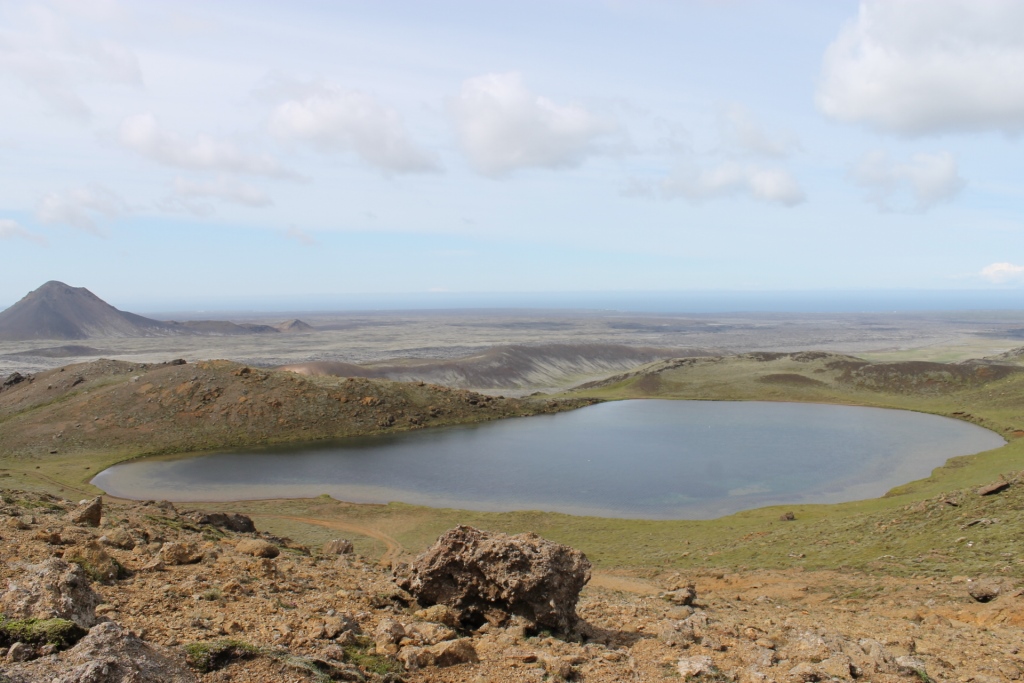
    Southern Iceland

    NORDNET 2013, Cool Projects and Arctic Opportunities, the unique project managment event will take place in Reykjavik, Iceland, 3 – 5th September 2013.

    NORDNET 2013 will gather researchers, engineers, and practitioners of project, portfolio and programme management interested in networking and knowledge sharing.

    The conference will concentrate on themes related to leadership, teamwork, strategy and execution of complex and challenging projects.

    The conference will explore how it is best to take on the task of managing the emerging project management challenges and opportunities in the Nordic territories and in the Arctic region in particular where major ecological changes could open up access for new shipping routes and energy resources.

    The conference programme will focus on new methodologies, technologies and practical applications developed in the specific areas of project, programme and portfolio management.

    The congress venue will be Harpa, the new Reykjavik Conference Center, recently awarded the prestigious World Architecture Award.

    Harpa is located by the old harbor in the heart of Reykjavik, overlooking the bay and mount Esja and is close to most of the congress hotels, art galleries, shopping areas and restaurants.

    Source

    NORDNET 2013

  • PAGE21 field season continues

    PAGE21 field season continues

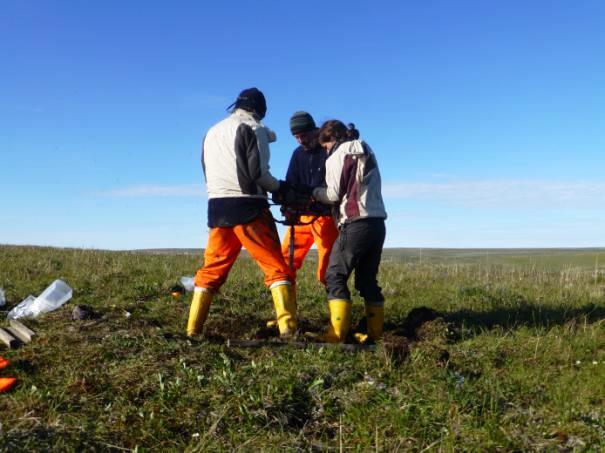
    The coring team working to get the core barrel out of the ground in Herschel Island

    PAGE21 young researchers have continued their season of permafrost investigation in remote areas, located in the northern hemisphere.

    Teams of scientists took off to Kytalyk and Herschel Island in the end of June. Researchers will come back to their home institutions at the beginning of September.

    While collecting data on permafrost temperature, CO2 and CH4 fluxes, delegates from all the research stations, explain the particularity of the research done at each site. What is more they describe adventures, dangers and exciting daily life in remote tundra locations.

    PAGE21 Blogs are available for the public and can be accessed here.

    PAGE21 project aims to understand and quantify the vulnerability of permafrost environments to a changing global climate, and to investigate the feedback mechanisms associated with increasing greenhouse gas emissions from permafrost zones.

    This research will make use of a unique set of Arctic permafrost investigations performed at stations that span the full range of Arctic bioclimatic zones.

    The project will bring together the best European permafrost researchers and eminent scientists from Canada, Russia, the USA, and Japan.

    Page21 on Facebook

    Page21 on Twitter

    Sources

    PAGE21

    PAGE21 Blogs

  • Internet for the Arctic might be available

    Internet for the Arctic might be available

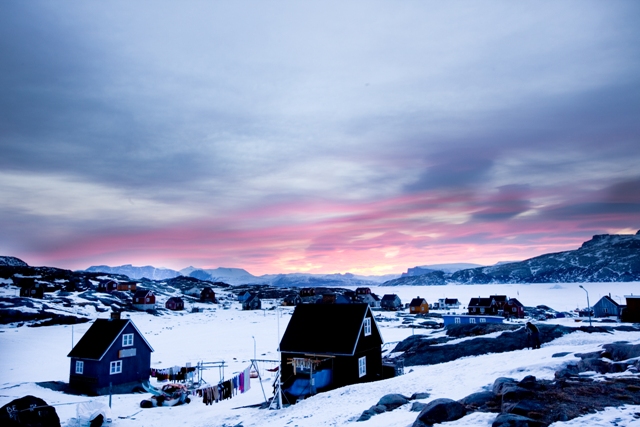
    Uummannaq-village in Greenland

    Norwegian Space Center stated last week that there might be a possibility to provide the high speed internet to the one of last places on Earth where it is still not available: the Arctic.

    Norwegian Space Center has teamed up with Telenor Satellite Broadcasting to assess the feasibility of a new satellite system covering northern areas outside the reach of current geostationary communications satellites.

    The appointed team was measuring the feasibility and cost of establishing broadband internet cover in the Arctic.

    The research shows that the cost of the activity might reach 4 billion NOK.

    The Arctic is one of the last places on Earth remaining without the high – speed internet. The reason for that is the location of satellites. Because they are set up close to equator, the signal does not have a chance to reach further than 70°N.

    Although the demand is not big it will grow, together with melting ice and growing potential for commerce and scientific research.

    Source

    NewsInEnglish.no

  • Elections for APECS Executive Committee

    Elections for APECS Executive Committee

    APECS

    Association of Early Career Scientists (APECS) encourages their members to apply for next elections to APECS Executive Committee that will be held in September 2013.

    APECS is now an internationally respected association and is recognized as one of the major legacies of the 4th International Polar Year.

    APECS members, particularly those of our past APECS Executive Committees and Councils have largely contributed to this through their excellent and hard work. To maintain this high level of success, and bring new vision and ideas to APECS, it is truly important for potential participants to be active in this election.

    To read more about the function of APECS Executive Committee, please access the organization´s website.

    Application deadline is 8th of September. All applications should be sent directly to Allan Pope allen.pope@nsidc.org

    For more information on how to apply, please visit APECS website.

    Source

    IceNews

  • Greenland´s ice cap melt rapid spread

    Greenland´s ice cap melt rapid spread

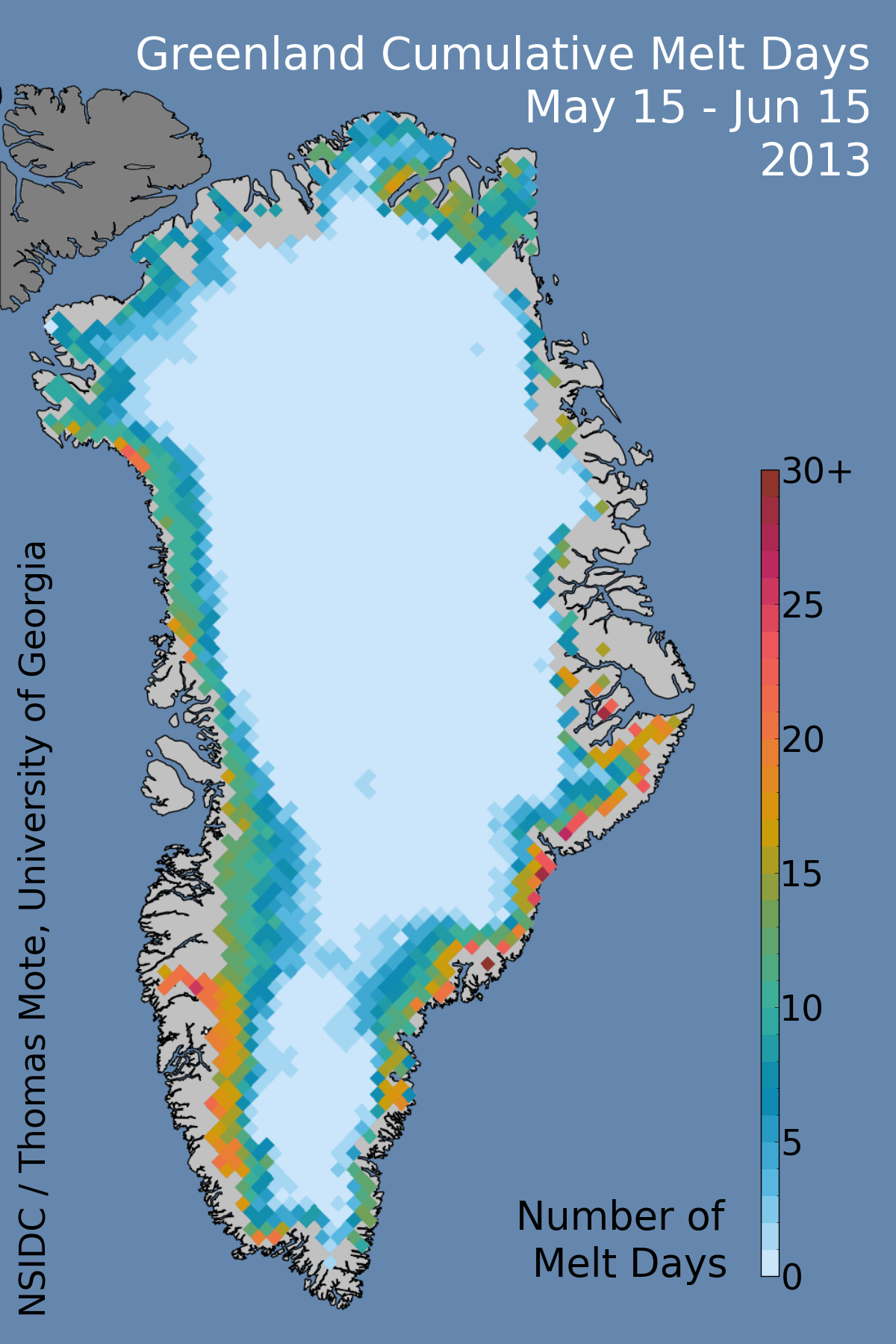
    Cumulative surface melt days for mid-May to mid-June in Greenland.

    Summer melt on Greenland ice sheet had slightly late start this summer but the surface has been now melting very quickly.

    In the last three months the melt has been spreading rapidly over the significant area, extending over more than 20% of the ice sheet in early June and reaching above 2000 meters elevation in some areas.

    The satellite used for the research reported small lakes that started to form on the ice sheet.

    After the annual re-calibration of the melt algorithm in mid March, very little melt was detected until May.

    A few southern coastal areas began melting in mid-May, followed by inland higher-elevation ice and all remaining coastal areas about June 3, when warmer conditions arrived.

    Surface melting reached the “Saddle” region of the ice sheet on June 11 and 13. Only the central eastern coast remains relatively melt free.

    Cool conditions in April and May shifted to warmer-than-average weather along both coasts in early June, which initiated more widespread melt on the ice sheet.

    The sea ice on both sides of Greenland remained at near-normal extent through the period.

    More information about this year´s melt of Greenlandic ice sheet is available at National Snow and Ice Data Center, University of Georgia.

    Source

    National Snow and Ice Data Center

  • New Secretary General for Norden

    New Secretary General for Norden

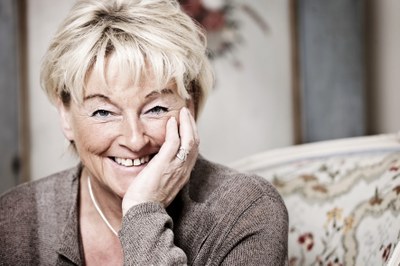
    Britt Bohlin, new Secretary General of the Nordic Council.

    Britt Bohlin, Governor of Jämtland, Sweden, will be the new Secretary General of the Nordic Council from the beginning of the new year. She will thus become the Council´s highest ranking official, working at the Secretariat in Copenhagen.

    As Secretary General of the Nordic Council, Britt Bohlin will help to put current and future issues on the Nordic parliamentary agenda. She will be the head of the staff at the Secretariat in Copenhagen and the expectation from the Nordic Council’s current President, Marit Nybakk, is that she will be very effective in her relationship with the Nordic governments’ co-operation in the Nordic Council of Ministers.

    “I expect that Britt Bohlin will lead the Nordic Council into a new era”, says Marit Nybakk and adds that she is confident that Britt Bohlin is the right person for the job.

    Before being appointed Governor of Jämtland County in 2008, Britt Bohlin was a Social Democrat MP for 20 years, first as defense and security politician, and then as the Social Democrat parliamentary group spokesperson for eight years. With a background in health care, she also has many years’ experience as a trade union leader in the Municipal Workers’ Union.

    “Britt Bohlin has a solid political background and has shown leadership with impressive results”, says Marit Nybakk, who was the one who banged the gavel on the table when the Nordic Council Presidium’s took the decision on the new Secretary General at the end of its recent meeting.

    As Governor in Jämtland Britt Bohlin has been deeply involved in the border issues between Norway and Sweden, and she claims to have experienced co-operation between the two countries as good and intense.

    “So I will now have the awe-inspiring and exciting opportunity to work with all the Nordic countries and with the parliaments who have been developing and strengthening our part of the world. I am honored, happy and humbled by the task”, says Britt Bohlin.

    Source

    NORDEN

  • Fascinating book now in English

    Fascinating book now in English

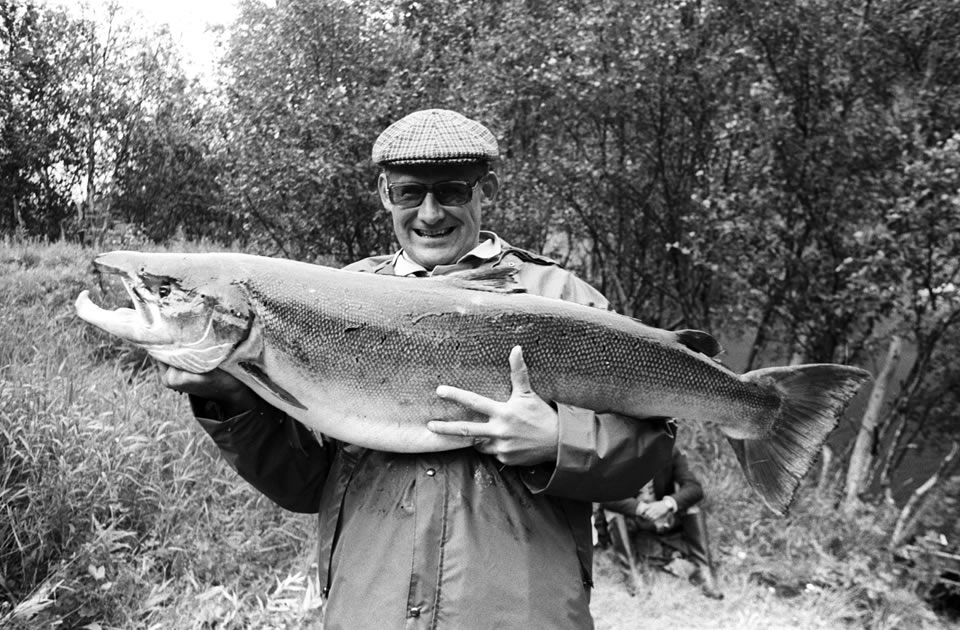
    Jan Ekman in Alta

    “Few of us anglers will ever get to fish the storied Alta, but this charming report helps fill that void. Seven Nights on the Alta is truly a story of love – of man and rivers, of the noble Atlantic salmon, and ultimately of untrammeled nature. I promise, once you begin you will read it through, and think again about saving the salmon, and all those other rivers that enhance our lives.”

    Paul Volcker

    There are many classic Atlantic salmon rivers each with its own unique history, but there is only one that can said to be ‘first among equals’ — the Alta River in northern Norway.

    The Alta’s primeval gorge setting, legendary monster salmon and exclusive status have given it has an almost mythical reputation around the world.

    Fishing the Alta is the stuff of dreams.This dream certainly came true for Jan Ekman in 1983 as described in his wonderful fishing diary book called Seven Nights on the Alta. Written in Swedish however, this book — like the Alta — has been out of the reach of most anglers — until now! At last an English version has been published.

    Jan was prompted to write the book due to what he believed was the imminent destruction of the river as a result of a hydro power project. It is based around a diary of seven nights of fishing the river in July 1983.

    This new English edition is richly illustrated by Jan’s own photographs and the book has a wonderful feel of ‘time gone past’. That said, many of the issues are still being debated, or have been replaced by even more pressing ones.

    Thankfully the doomsday prophesies in the book have been averted; as a matter of fact, the Alta has had some of its best years ever recently. That’s not to say that we can relax.

    It is only over the past few years that we have seen any form of improvement in stocks and the survival of the Atlantic salmon as a species is far from guaranteed. There is a lot of work still to be done, and for that reason I’m delighted and grateful that 100% of the proceeds from the sale of the book will go towards supporting NASF’s work throughout the North Atlantic.

    For more information on how to order a book, please read the publisher´s brochure.

    Source

    Seven Night on the Alta

  • Sámi Customary Rights conference

    Sámi Customary Rights conference

    Polar bear in the Arctic

    The conference Sámi Customary Rights in Modern Landscapes – Indigenous People and Nature Conservation will be held in Luleå, Sweden, 28-29 August 2013, with an optional excursion and workshop in Jokkmokk on the 30th of August.

    The conference aims to explore how culturally defined values, ideologies and policies have formed, and continue to form, the basis of Indigenous rights and management models of nature conservation areas in Sápmi.

    Comparisons with, or cases of, the situations of other Indigenous Peoples are welcome. The conference seeks to bring together different disciplines such as history, political science, law, cultural geography, sociology and anthropology.The purpose is to combine different scientific disciplines such a history, political sciences and law. Some specific issues include:

    • How the cultural imagination of nature and landscape among different Indigenous groups has influenced the establishment of nature conservation areas and the design of governance models for natural resources.
    • How the contemporary governance of protected areas has been influenced by the principles of equality and positive discrimination, affecting the possibilities to establish adaptive co-management arrangements of specific areas.
    • How the legal situation of the Sámi and other Indigenous Peoples has been recognized, especially concerning longstanding customary territorial rights.

    For more information see the conference website.

    Source

    Sámi Customary Rights in Modern Landscape

  • Polar Code seen in place by 2016

    Polar Code seen in place by 2016

    sailing in arctic waters

    International Maritime Organization announced that the Arctic shipping code will be released and in use before 2016.

    Arctic shipping code, regulating navigation in the high Arctic, where maritime traffic is expected to increase as the ice cap recedes, is due to be implemented in 2016 as confirmed by International Maritime Organization (IMO).

    Shipping along the Arctic northern sea route is set to grow more than 30 – fold over the next eight years and could account for a quarter of the cargo traffic between Europe and Asia by 2030.

    It is predicted for the code to be operational in 2015 and to be fully implemented in 2016. The code aims to ensure safe navigation in fragile ecological environment, where infrastructure is few and help in case of an accident is far away.

    The new code will govern all technical requirements covering design and operations. It will ensure the competence of seafarers.

    By implementing the international polar code, IMO makes sure that vessels will not be allowed to navigate in the Arctic waters unless seafarers on board are well trained.

    Opening of the Arctic waters caused by the global warming will increase the usage of high northern passages. Read more about the future of the Arctic shipping on Shipping Portlet – comprehensive gateway to Arctic shipping information on the internet.

    Source

    International Maritime Organization