Category: News & Press Releases

Arctic Portal News Portlet

  • UArctic Forum took place in Arkhangelsk

    UArctic Forum took place in Arkhangelsk

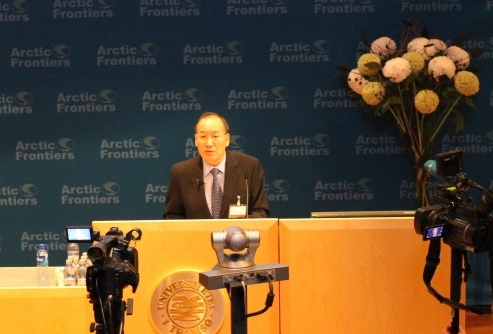
    Participants of UArctic Forum 2013

    26-30 June the 7th UArctic Rectors’ Forum took place in the Northern (Arctic) Federal University, Russia; Arkhangelsk hosted this Forum for the first time. Heads of universities, remarkable experts and students from eight countries discussed the development of the Arctic Region.

    The University of Arctic is a network of Arctic universities from different countries, not only northern ones. For example, there are Arctic universities in Japan and China. This proves the highest international interest to the Arctic and its resource potential.

    The Forum stressed such issues as logistics, development of infrastructure and transport system in high latitudes. The main task of the Forum was to discuss how the universities from different countries meet the “Arctic challenges”.

    The Forum was attended by 30 educational institutions involved in consortium of the University of Arctic. Representatives of foreign scientific foundations (such as NordForsk, program Fulbright etc.) contributed in the discussion about scientific cooperation and Arctic research.

    The participants shared views on international cooperation in the Arctic. They noted that northern territories have become an example of successful international cooperation for less stable regions. Russia gradually develops bilateral relations with traditional partners: Norway, Canada, and Finland. There are prospects for project development together with the USA, Denmark, Iceland, and Sweden. These prospects are connected to such issues as development of continental shelf, hydrography, and societal security.

    An important part of the Forum was devoted to environmental problems and climate change in the Arctic. For example, the effects of global warming make special requirements for certain types of work on the Arctic shelf and for hydro – meteorological support of navigation along the Northern Sea Route.

    Climate change will have both negative and positive impacts on the environment, economics and population of the Arctic region. Negative consequences of human activity change the environment, affect health and traditional way of life of local population. Positive effects of climate change also exist: heating costs reduce, and opportunities for agriculture, forestry navigation on the Northern Sea Route and extraction of mineral resources increase.

    There was a clear consensus among participants that universities should become regional research centers and formulate an Arctic agenda: initiate research and infrastructure projects in collaboration with business and government, train professional personnel for work in the Arctic. Joint research projects are also important since they give an opportunity to unite efforts of all UArctic member institutions.

    Source

    University of the Arctic

  • Nansen scholarship deadline extended

    Nansen scholarship deadline extended

    University of Akureyri

    Nansen Visiting Professorship in Arctic Studies extended application deadline to the 15th July.

    The University of Akureyri in Iceland is now seeking candidates for the 2nd appointment for the Nansen Visiting Professorship in Arctic Studies.

    The Ministers of Foreign Affairs of Iceland and Norway signed a Memorandum of Understanding in Akureyri in September 2011 for the purpose of strengthening cooperation between Iceland and Norway in the field of Arctic scientific research, including the establishment of a Nansen Professorship in Arctic studies at the University of Akureyri, named after the Norwegian polar scientist Fridtjof Nansen.

    The post of visiting professorship in Arctic studies at the University of Akureyri is available for application. It is awarded for a twelve months period to a leading scientist – each year to candidates from different fields of studies – working with issues that bear on legal, economic, social and natural circumstances in the Arctic.

    Application deadline has now been extended to the 15th of July 2013. For more information about the scholarship, click here.

    Source

    University of Akureyri

  • Knight’s Cross awarded to Dr.L. Heininen

    Knight’s Cross awarded to Dr.L. Heininen

    Lassi Heininen

    Professor Lassi Heininen was awarded Knight’s Cross of the Icelandic Order of the Falcon by Dr. Olafur Ragnar Grimsson, the President of the Republic of Iceland due to his contributions for Iceland and the Finnish-Icelandic relations.

    Dr. Heininen is Professor of Arctic Studies and Adjunct professor (Docent) of International Relations at the Faculty of Social Sciences, the University of Lapland (Finland), Visiting Professor at University of Akureyri (Iceland), and Adjunct Faculty at Frost Center for Canadian Studies, Trent University (Canada).

    He has been the chairman of the Steering Committee for the Northern Research Forum (NRF) – an innovative, joint Icelandic-Finnish activity to implement the interplay between science and politics – from the beginning in 1999.

    He is actively involved in speaking at international scientific conferences, and organizing international academic seminars, workshops and other gatherings, such as NRF’s Open Assemblies and the annual Calotte Academies.

    He is also the Editor of the Arctic Yearbook, and the leader of the University of the Arctic Thematic Network on Geopolitics and Security (studies).

    The Icelandic Order of the Falcon is to be “conferred on Icelandic or foreign individuals for achievements to the benefit of the Icelandic peoples, specific sections of the community or parts of the country, or to the benefit of important and worthy causes in Iceland or in the international arena”. The Order was established in 1921.

    Source

    University of the Arctic

  • PAGE21 field season has now begun

    PAGE21 field season has now begun

    Researchers from the University of Hamburg in Samoylov Island

    PAGE21 young researchers have just started their season of permafrost investigation in remote areas, located in the northern hemisphere. First groups took off to Kytalyk and Herschel Island earlier this month. Researchers will come back to their home institutions at the beginning of September.

    While collecting data on permafrost temperature, CO2 and CH4 fluxes, delegates from all the research stations, explain the particularity of the research done at each site. What is more they describe adventures, dangers and exciting daily life in remote tundra locations.

    PAGE21 Blogs are available for the public.

    PAGE21 project aims to understand and quantify the vulnerability of permafrost environments to a changing global climate, and to investigate the feedback mechanisms associated with increasing greenhouse gas emissions from permafrost zones. This research will make use of a unique set of Arctic permafrost investigations performed at stations that span the full range of Arctic bioclimatic zones. The project will bring together the best European permafrost researchers and eminent scientists from Canada, Russia, the USA, and Japan.

    The PAGE21 is a Large-scale integrating collaborative project under the ENV call topic “Vulnerability of Arctic permafrost to climate change and implications for global GHG emissions and future climate” (ENV.2011.1.1.3-1) coordinated by Professor Hans-Wolfgang Hubberten from AWI.

    Sources

    PAGE21

    PAGE21 Blogs

  • Award – winning CAFF film now available

    Award – winning CAFF film now available

    Bird flying over water

    The film “Status and Trends in Arctic Biodiversity” addresses current biodiversity issues in the Arctic, and ongoing pressures on its ecosystems. It highlights key issues that surfaced in the Arctic Biodiversity Assessment. The film is a collaborative work of the Conservation of Arctic Flora and Fauna (CAFF) working group and UNEP GRID-Arendal.

    Emphasis is placed on the new set of challenges and stressors brought about by climate change and the increase of industrial activities in the region. In view of these challenges, CAFF has set out to provide policymakers and conservation managers with the best available scientific knowledge informed by traditional knowledge on Arctic biodiversity.

    The film was approved by Arctic Council Senior Arctic Officials’ at their meeting in Haparanda in November 2012. Further the film was presented to the eight Arctic Ministers and six Indigenous Peoples representatives at the Ministerial Meeting in Kiruna 15 May 2013.

    “Status and Trends in Arctic Biodiversity” was also awarded first place in the documentary category at the Green Lens Environmental Film Festival which is an annual environmental film competition sponsored by the Northern Illinois University´s Institute for the Study of the Environment, Sustainability and Energy.

    The film is available for the public and can be viewed here.

    Sources

    CAFF

    Arctic Council

  • The Day of the Arctic to be held in Iceland

    The Day of the Arctic to be held in Iceland

    Icelandic landscape

    The Day of the Arctic will be held by the Icelandic – Arctic organizations on 14th of November 2013. The event will promote environmental, international research, political, legal and economic cooperation between Iceland and the Arctic nations.

    The event will also create the platform for the discussion about problems and prospects of current development of the Arctic Region.

    Alongside lectures and panel discussions, the Day of the Arctic will open a large scale platform for Arctic related commercial companies to present their northern operations.

    The Day of the Arctic will be organized jointly by the Icelandic – Arctic Cooperation Network,Stefansson Arctic Institute and RANNIS.

    Those to wish to contribute to the panel discussion or the poster session are requested to sumbit their abstracts until 12th of July 2013 to Embla Eir Oddsottir.

    More information about the event is available in Icelandic on the webpage. For any specific inquiries, please contact Thorsteinn Gunnarsson on e – mail or tel: 00354 515 5800.

    Source

    Icelandic Arctic Cooperation Network

  • Effective polar data management needed

    Effective polar data management needed

    Northern lights - Aurora Borealis

    Registration for International Forum on Polar Data Activities in Global Data Systems opens 1st of July. The event will take place in Tokyo´s National Museum of Nature and Science.

    To manage the considerable data legacy of the International Polar Year (IPY), National Antarctic Data Centres under SCAR initiated several dedicated data-services.

    To construct an effective framework for long-term stewardship, data must be made available promptly, and adequate technologies should be employed (e.g., a repository service, such as the Polar Information Commons (PIC)).

    In addition to activities conducted within the communities of SCAR and the International Arctic Science Committee (IASC), stronger links must be established in the post-IPY era with other crosscutting scientific data-management bodies under the umbrella of the International Council for science (ICSU), namely, the Committee on Data for Science and Technology and the World Data System (ICSU-WDS).

    To this end, SCAR’s Standing Committee on Antarctic Data Management (SCADM), the WDS Scientific Committee, and IASC are planning a Joint International Forum on “Polar Data Activities in Global Data Systems”.

    The Forum will address effective polar data management, including submission of metadata and data, sharing of data to facilitate new interdisciplinary science, and long-term preservation and stewardship of data at the international level.

    To ensure the IPY data legacy, presentations on the successes and challenges encountered during IPY will highlight not only the best practices but also the shortcomings. This event is open to all scientific disciplines, and interdisciplinary data management topics are especially encouraged.

    A significant outcome of the Forum will be the development of a new strategy and structure for the Arctic Data Network under the auspices of SAON, IASC, and the Arctic Council.

    Discussions involving the different communities will provide a strong foundation to forge interdisciplinary connections and explore new horizons for polar data management. In particular, an updated plan for polar data archives, including as the PIC cloud system, will be discussed.

    For more information on how to register for the event, submit an abstract and more, please access the even´s homepage.

    Source

    Polar Data Activities in Global Data Systems

  • Coastal tourism: questions and answers

    Coastal tourism: questions and answers

    Marine & Coastal Culture Tourism in Northern Territories

    Conference that focused on the fishing environment in northern territories took place in the University of Akureyri, 18 – 19 June 2013. The conference was organized by the Stefansson Arctic Institute in collaboration with the University of Akureyri Research Center, NORA, the Iclandic Tourism Research Center, Norwegian Seafood Center and the Icelandic Lighthouse Society.

    Marine and coastal culture tourism is growing in popularity in various ways. Some tourists want to learn about life in coastal villages, experience nature and tranquility as well as the wilderness. Others want to experience the excitement of driving charter boats, diving, surfing, go speed boating or hiring a boat and try their luck at fishing. Then there are those who want to sail from port to port and country to country on board gigantic cruise ships.

    How does this fit in with cultural heritage, everyday life, social development, self-sufficiency, fishing quotas and environmental policies of the Nordic nations? How can the Nordic nations collaborate in this area? Do these diverse aspects of tourism have collaborative opportunities? These challenges were discussed at the conference where further questions were pondered through group work and perhaps more answers and collaborative possibilities found.

    Source

    Stefansson Arctic Institute

  • Cod quota rise for Iceland

    Cod quota rise for Iceland

    Fish caught in a net

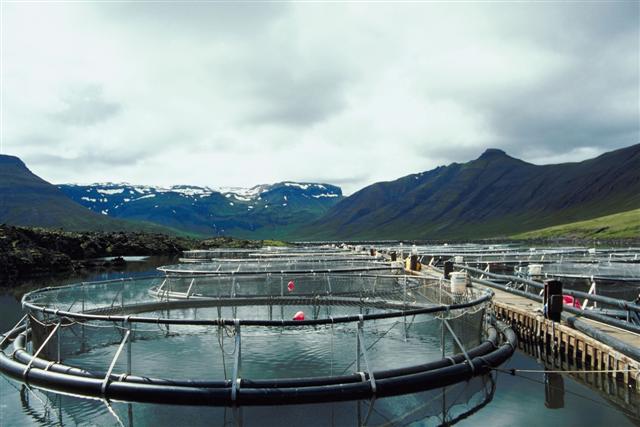
    The Marine Research Institute has released its annual report which suggests Iceland should receive a 10 per cent rise in its cod quota.

    The report, the State of Marine Stocks in Icelandic Waters 2012/2013 and Prospects for the Quota Year 2013/2014, published figures that indicate the North Atlantic nation should be allocated a significant increase in the amount of cod it is permitted to catch.

    Based on the assessment, there should be a 10 percent increase in the total amount of cod the country is permitted to catch in the next fishing year, rising to 215,000 tons. According to the MRI’s figures, the spawning stock and reference stock of cod has increased rapidly over recent years.

    In March this year, ICES evaluated the haddock harvest control rule to be “precautionary” and conform with the MSY. The Icelandic government adopted the rule in April which, based on the harvest control rule, would see the country stick to the MRI’s recommendation of a total allowable catch of 38,000 tons of haddock during the 2013/2014 fishing year.

    The MRI report states that many of the country’s commercial stocks remain in balance and are only exploited moderately. Due to this, changes in quota recommendations and stock sizes are usually affected by changes in recruitment patterns.

    Source

    Ice News

  • AES call for posters

    AES call for posters

    Arctic Energy Summit

    Arctic Energy Summit that will take place in Akureyri, northern Iceland 8 – 10 of October 2013 has now opened the call for posters.

    In order to encourage knowledge sharing and information exchange between conference participants on their ongoing projects or emerging technology, AES calls for conference posters.

    The 2013 Arctic Energy Summit is also an excellent platform to showcase of the energy – related products, projects or programs to the leading policy makers and professionals working in the field of arctic energy.

    The 2013 Arctic energy Summit is a multidisciplinary event expected to draw several hundred industry officials, scientists, academics, policy makers, energy professionals and community leaders together to collaborate and share leading approaches on Arctic energy issues.

    Click here for more information about the Conference.

    Source

    Arctic Energy Summit