Category: News & Press Releases

Arctic Portal News Portlet

  • In the Spirit of Rovaniemi Process

    In the Spirit of Rovaniemi Process

    Arktikum in Rovaniemi

    Call for Papers and Conference announcement – Conference ‘In the Spirit of Rovaniemi Process’ 2-4 December 2013, Rovaniemi, Finland

    The City of Rovaniemi and Arctic Centre of the University of Lapland would like to invite scholars and practitioners interested in presenting in the Conference: ”In the Spirit of Rovaniemi Process” to submit abstracts to one of the scientific sessions. In addition, the papers should address at least one of the three cross-cutting themes. PhD students are welcome to present a poster referring to one of the sessions and addressing cross-cutting themes.

    The deadline for posters and papers is 5th of May 2013. All participants interested in presenting at the conference shall send their abstracts (max. 250 words) to: rovaniemi.process@ulapland.fi .

    ”In the Spirit of Rovaniemi Process: Arctic Cities, Global Processes and Local Realities” is an international conference that will take place in Rovaniemi, northern Finland, 2 – 4 December 2013.

    The conference is organized jointly by the City of Rovaniemi and the Arctic Centre of the University of Lapland, Finland with the scientific lead Professor Timo Koivurova from the Arctic Centre from the University of Lapland.

    The goal of the conference is to present the latest research scientific knowledge about the global processes as they become local realities. Even if the Conference is scientific in orientation, it aims to bridge science and knowledge into action by bringing top scholars to share their research results, and to organize joint discussion with the leaders of the Arctic Cities. Conference includes special plenary panel on “Arctic Cities in the Spirit of Rovaniemi Process”.

    Click here, to read more about the event. Access the Conference website to register for the event or submit the abstract. 

    HMM

    Source

    In the Spirit of Rovaniemi Process

  • Shell puts Alaska plans on ice

    Shell puts Alaska plans on ice

    Oil tanker gets a refill

    Oil giant Shell has put its controversial plans to drill for oil in Alaska on ice, at least for this year. The company had multiple problems with the two drilling platforms to be used for exploration.

    Concerns over safety in the platforms have been raised and the plans critized. Shell pushed hard for permission to explore and in the end got its permission.

    Shell has now sent the two platforms to Asia to be repaired and improved and plans to drill in the Chukchi Sea and Beuforthaven in 2014.

    “We have made progress in Alaska, but this is a long term program that we intend to implement in a safe and thoughtful way,” said Shell president Marvin Odum.

    Shell drilled two test holes last year, according to the company went according to plan.

    “The drilling was perfectly safe, with no serious injuries or impact on the environment,” said in a statement.

    Source

    Offshore

  • More scholarships for High North Studies

    More scholarships for High North Studies

    Port Tromso - Northern Norway

    Students from the US, Canada and Russia have for five years been able to apply for scholarships for studies at seven universities and colleges in Northern Norway. In the program period for 2013-2016 also students from Japan and South Korea will have this opportunity.

    The goal of the Fellowship Programme for Studies in the High North is to contribute to increased academic collaboration and student mobility in the High North.

    The programme is open to the higher education institutions in northern Norway only: Finnmark University College, Harstad University College, Narvik University College, Nesna University College, Sami University College, University of Nordland, University of Tromsø and The University Centre at Svalbard (UNIS).

    These institutions will invite students at partner institutions in Canada, Japan, Russia, South Korea and the US to apply for High North Fellowships.

    The programme is mainly targeted at students at Master’s and Bachelor’s level but is also open to PhD students. Bachelor’s and Master’s students must take for-credit courses in Norway, while PhD students can come as research fellows.

    To learn more about the Program, please click here.

    Source

    Study in Norway

  • First China-Nordic Arctic Symposium

    First China-Nordic Arctic Symposium

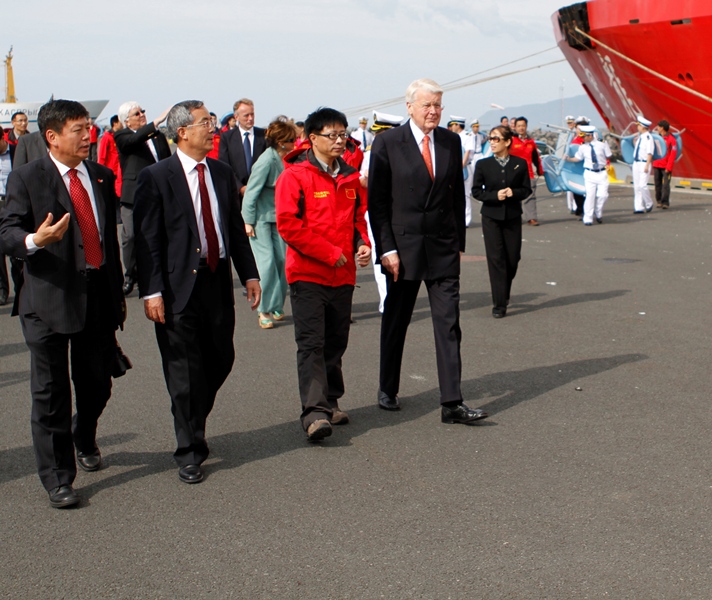
    The president of Iceland visiting Xue Long, the Snow Dragon, in Iceland

    The first China-Nordic Arctic Cooperation Symposium will be held in China this summer. The Polar Research Institute of China hosts the symposium in cooperation with the Icelandic Center for Research.

    Participants will be Chinese and Nordic institutions.

    The conference dates are 4th – 7th of June 2013 and the venue will be in Shanghai.

    The theme of the conference is “China-Nordic Cooperation for Sustainable Development in the Arctic: Human Activity and Environmental Change”.

    Call for abstracts for presentations have been opened. Proposals are welcomed from researchers affiliated With Nordic and Chinese universities, research institutes and/or think tanks. All presentations should focus on Arctic-related issues, Within one ofthe session topics:

    • Session I: Arctic Shipping and Resource Exploration
    • Session II: Research Cooperation on Climate Change
    • Session III.: Arctic Policies and Governance
    • Session IV: Anthropos andthe Arctic in the Anthropocene

    The symposium will be a significant step towards the establishment of the China-Nordic Arctic Research Center, located at PRIC in Shanghai. Following the symposium in Shanghai on 4-6 June, there Will be an organized excursion for the participants on 7 June.

    The deadline for the abstracts (250-400 words) is the 15th of March and should be send to Zhang Xia, Head of Strategic Studies Division at PRIC, Zhangxia@pric.gov.cn and Dr. Thorsteinn Gunnarsson, Head of Division at RANNIS, e-mail: thorsteinng@rannis.is. The abstracts should also follow a short CV.

    Further information is given by Mr. Egill Thor Nielsson, Visiting Scholar at PRIC: egillnielsson@gmail.com.

    Sources

    Rannís

    Polar Research Institute of China

  • Arctic Services formally launched

    Arctic Services formally launched

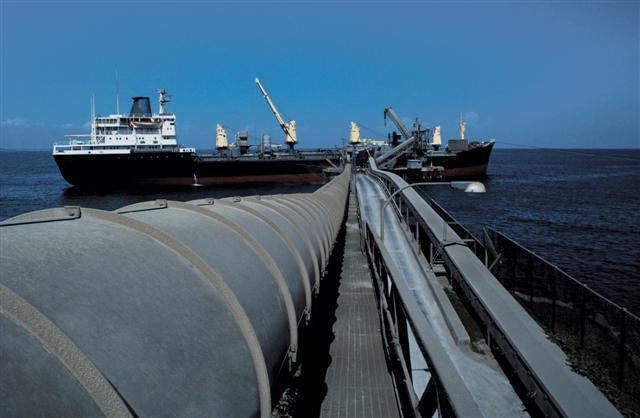
    Arctic Services area of interest

    The Arctic Services marketing initiative was launched in Akureyri, Iceland on Friday. It is a “cooperative platform between companies and institutions in the north of Iceland to promote the region´s infrastructure and service capabilities, in view of the growing mining and exploration activities in the arctic region and the increased demand for professional services at our latitude.”

    The main objective of Arctic Services is “to promote the high service level and infrastructure available for those involved in exploration, oil search and mining in the Arctic region.”

    Over 30 partners cooperate in the project. They range from the local port and hospital, aviation, banking, wholesalers, contractors, food suppliers, partners from the metal industry, shipping industry and consultancy on Arctic issues in Arctic Portal.

    The Minister for Industries and Innovation, Mr. Steingrímur J. Sigfússon, addressed the reception and launched the programme formally.

    He welcomed the initiative and promised support for the project.

    Click here to read a brochure about the project.

    Source

    Arctic Services website

  • Days of the Arctic in Russia

    Days of the Arctic in Russia

    Ship sailing in the Arctic Ocean

    The Days of the Arctic will be held by Arctic Federal Universities on 25th to 28th of February. The event will promote studies in the Arctic territories, strengthening the status of the university as a base platform for the discussion of problems and prospects of the Russian Arctic, its biodiversity, the history of exploration and development prospects, as well as drawing attention of local media to the Arctic theme.

    “Days of Arctic” will open a large scale exhibition “View of the Arctic”, where the rector of NArFU Elena Kudryashova and director of “National Park “Russian Arctic” R. Ershov will make welcome speeches.

    Unique photos which will be presented at the exhibition, were taken at one of the youngest and largest national park in Russia “Russian Arctic” and in the Federal Reserve “Franz Josef Land”. The photo exhibition will be held in the lobby of NArFU main building on February 25 at 2:00 P.M.

    Furthermore, in the framework of the event “Days of the Arctic” on 25-28 February the participants will be able to attend lectures given by the staff of “National Park “Russian Arctic” and to watch a movie “She, the Arctic” made by M. Menshikova.

    The final event of “Days of Arctic” on February 28 will be an international conference-webinar “Day of Arctic in the Presidential Library” on the platform of NArFU (Arkhangelsk) and the Presidential Library (St. Petersburg). The conference will be attended by the federal universities of Russia as well as the arctic universities of Finland, Norway, Sweden, Canada, Denmark, the United States and Iceland.

  • Polar Law studies open for application

    Polar Law studies open for application

    Students at the University of Akureyri

    The University of Akureyri has now opened an online application form for the 2013-2014 application round in the Polar Law Program.

    The University of Akureyri is offering the following studies in Polar Law:

    • a 120 ECTS Master Programme leading to a M.A. degree
    • a 90 ECTS Master Programme leading to a LL.M. degree
    • a 60 ECTS study at the master level leading to a graduate diploma

    All courses in Polar Law are taught in English.

    Application deadlines for degree seeking students (Polar law):

    1st of April (NON-EU/EEA RESIDENTS)

    5th June (EU/EEA RESIDENTS)

    More information can be found here.

    Source

    UNAK

  • Icelandic Coast Guard just on time

    Icelandic Coast Guard just on time

    Icelandic Coast Guard vessel

    Last night the Icelandic Coast Guard received an emergency call from the oak boat Þistilfjörður that was sailing through waters in the northern part of the country.

    Emergency call was answered by the rescue vessel Þór that had just left the shipyard in Akureyri – northern Iceland, and was just about to conduct a patrolling mission.

    After receiving the emergency call from the crew, the rescue vessel was quick to arrive together with the helicopter that was sent from the capital city of Iceland – Reykjavik.

    According to the Icelandic Coast Guard the weather conditions were very difficult for ship to operate. Beside the difficult weather conditions, the pumps did not work properly what caused the sea slowly flowing into the latter.

    Luckily, the motors did not switch off and after conducting the rescue operation, the boat could sail back to the shore with the Þór’s assistance and supervision.

    It was the first rescue operation of Þór, after the vessel arrived from Chile in late 2011.

    Source

    Mbl.is

  • Polar Law and Major Developments

    Polar Law and Major Developments

    Dr. Natalia Loukacheva, the first Fridtjof Nansen Professor of Arctic Studies

    Today, 12th of February the occasional Law Forum takes place at the University of Akureyri. The lecture: Polar Law and Major Developments, starts at 12.00 and will be given by Dr. Natalia Loukacheva, the first Fridtjof Nansen Professor of Arctic Studies.

    Recent Polar law developments have been sharpened by the magnitude of the changes occurring in both Polar Regions and across the globe. ´Polar law intersects with other areas and, arguably, its development is significantly influenced by global and many geo-political trends.´ This lecture aims to look at some of those changes, trends and developments and will draw on Polar law as an evolving area of study which is in the process of gaining increased recognition and significance at the academic level and in international forum.

    Dr. Natalia Loukacheva is the first Fridtjof Nansen Professor of Arctic Studies, University of Akureyri, (Iceland-Norway initiative). She is also a Research Associate at the Munk School of Global Affairs, University of Toronto, Adjunct Professor at Osgoode Hall Law School, LL.M. program on energy and infrastructure, York University, a Research Fellow with the Canadian Defence and Foreign Affairs Institute, a Visiting Professor of Polar Law, and Associate Scientist with Stefansson Arctic Institute. She was the first Director of the Polar Law Program and taught polar law at the University of Akureyri (2008-10). She holds a Dr. of Juridical Science (S.J.D.) from the Faculty of Law, University of Toronto (Canada) (2004) and a Dr. of Philosophy (law) from the Urals State Law Academy (Yekaterinburg, Russian Federation) (1999).

    Dr. Loukacheva specializes in international and comparative constitutional law, with research interest in the Arctic. She is the author of The Arctic Promise: Legal and Political Autonomy of Greenland and Nunavut (University of Toronto Press, Canada: 2007), the editor of the Polar Law Textbook (Nordic Council of Ministers (NCM), TemaNord 538, Denmark: 2010, the editor of the Polar Law Textbook II, ( NCM, TemaNord, 2013), special editor of the Yearbook of Polar Law, Vol. 2, 2010 (Martinus Nijhoff Publ., and guest editor of the Arctic Review on Law and Politics, No. 2, 2012 (Gyldendal Akademisk Publ.

    Since 2012 she also has served as an Associate editor of the Arctic Review on Law and Politics. She chairs an Int´l Thematic Network group on Legal Issues in the Arctic of the Northern Research Forum and Arctic Governance sub-group of the Arctic Law Thematic Network of the University of the Arctic.

    She is actively involved in numerous Arctic and Polar law related activities and projects, conducts legal and multi-disciplinary research, field-work, teaching, editing, reviewing, consulting and organizing various Arctic related events, and has been speaking/presenting and advocating on Arctic and Polar law related topics since 1996. She is the author of numerous publications on legal and political issues in the Arctic, Indigenous Peoples’ rights and governance in the North.

    The lecture is open for the public.

    Source

    University of Akureyri

  • Arctic Energy Summit in Akureyri 2013

    Arctic Energy Summit in Akureyri 2013

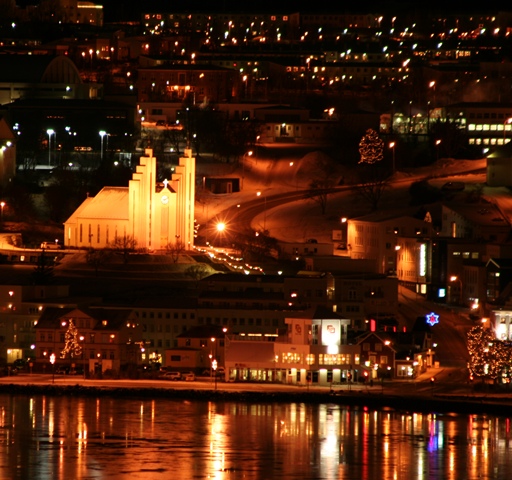
    The Church of Akureyri

    The Arctic is sometimes described as the last frontier in the development of energy resources. The Institute of the North’s Arctic Energy Summit will explore energy as a fundamental element of the sustainable development of the Arctic as a lasting frontier. Central to this concept is how  a focus on richness, resilience and responsibility will provide a pathway for sustainable energy development in the Arctic.

    The Arctic’s energy resources – from oil and gas development to renewable resources such as geothermal, wind, hydro and tidal energy – have received increased attention. There has been little corresponding appreciation for how Arctic communities use energy resources and benefit from production of and access to affordable, accessible energy.

    Building on the work done at the highly successful 2007 Arctic Energy Summit and Technology Conference, the 2013 Summit will address energy extraction, production and transmission in the Arctic as it relates to three thematic areas: richness, resilience and responsibility.

    The interactive conference format will include:

    • Keynote speeches
    • Workshops
    • Panel discussions
    • Paper presentations

    This interdisciplinary forum is for scholars, energy industry officials, scientists, academics, policy makers, energy professionals and community leaders who share an interest in—and concern for— sustainable development of the Arctic and its energy resources. To register, or for more

    We welcome submissions that directly address the conference theme, and add substantively to the discussion of one or more of the following questions:

    Richness
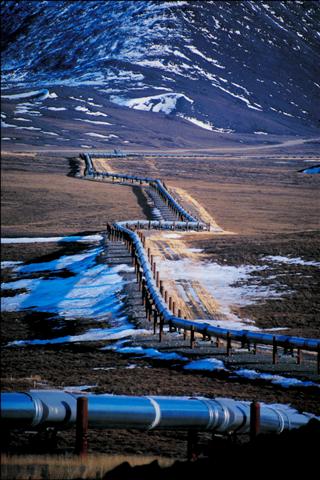
    hot water pipes

    The USGS estimates that more than a quarter of the world’s yet-to-be-discovered oil and gas is in the Arctic. At the same time, geothermal, wind, tidal and hydro resources have the potential to lower the cost of living for northern communities and significantly impact domestic markets.

    • What does this supply of resources mean for the prosperity of northern peoples?
    • What new energy resources are being explored for or developed in the Arctic?
    • How are northern communities enhancing their resource wealth with value-added activities?
    • What role do impact benefit agreements, sovereign wealth funds and other revenue distribution mechanisms play in enhancing national, state, community or tribal prosperity when energy projects are being developed?
    • How is resource wealth used to develop sustainable energy systems for local use?

    Resilience

    Adaptability is critical in the Arctic – peoples of the North have been managing change for millennia. Northern peoples and the environment must respond to rapid shifts in their natural and built environment. The companies doing business in the Arctic must also be innovative and responsive to changing political and environmental landscapes. New technology is guiding development of previously unreachable renewable and extractive energy resources and new shipping routes are ensuring that they can be moved to markets.

    • What strategies are necessary for building social and ecological resilience?
    • How do northern peoples maintain their rich cultures in times of immense economic and environmental change?
    • What risks to resilience does the Arctic face in a time of rapid change and development?
    • What resilience strategies developed for other remote areas can be adapted to the Arctic?
    • How can the built environment in northern communities contribute to community resilience?
    • How does new technology increase the lifespan of northern energy systems and extraction projects?
    • How do nations and communities build resilience in the face of fluctuating energy prices?
    • What technologies are making current resource development possible? What is needed to induce research and development of new technology?
    • How does public policy incentivize investment in the infrastructure and technology needed for further resource development?

    Responsibility

    There are many actors in the Arctic, and an even greater number of different perspectives about each stakeholder’s rights and responsibilities. Of particular significance is how roles shift relative to local, national and international decision-making levels. Geographic scale, too, plays a critical part in defining responsibility.

    • To what degree should Arctic energy resources be developed to meet a global demand?
    • How do we approach energy development that meets the needs of the world, the environment, the people and a company’s bottom line?
    • How does the world’s demand for energy resources influence public policy or create pressure to develop these resources in Arctic nations?
    • Whose responsibility is oil spill prevention and response and how do we incorporate local, private and public assets? How do recent Arctic Council Agreements impact energy development?
    • How can policy-making respond to different levels of concern and management capacity?
    • What does corporate social responsibility mean for the energy industry in the Arctic?
    • Which responsibilities are shared and what is the best way to reach agreement on those?

    TYPES OF SUBMISSIONS ACCEPTED

    Geothermal energy

    Abstracts may be submitted for any of the following:

    Paper Presentations
    Paper presentations will each be scheduled for a 15minutes presentation with 5 minutes for questions. Paper presentations can meet any one of the following formats:
    – Original Research: has not been presented or published prior to this conference.

    – Work in Progress: describe early research and novel skeleton ideas in the areas of the conference topics.

    – New Ideas: dedicated to new ideas in their early stage. Contributions might refer to PhD dissertation, testing new approaches, provocative and innovative ideas, out-of-the-box, and out-of-the-book thinking that is related to conference topics. A “New Idea”contribution must be comprehensive, focused, and very well supported.

    Accepted papers will receive further instructions for submission of full manuscripts and slide decks. Full submissions will be due on August 15th, 2013. At least one author of each paper presentation is required to register for the conference following acceptance of the paper.

    For more information contact Iris Matthews at aen@institutenorth.org.

    Panel proposals

    The organizers encourage scientists and industry leaders to contact them with their ideas to organize dedicated panels dealing with controversial and challenging topics and paradigms. Invited panel leaders must include in their abstracts: their background, panelist names, their affiliation, the topic of the panel, as well as short biographies of the proposed panelists.

    The conference organizers will work with closely with panel organizers on the final structure of all panels. For more information, or to discuss a preliminary idea for a panel discussion, contact Iris Matthews at aen@institutenorth.org.

    Workshop proposals
    The organizers also encourage those interested in hosting a workshop on issues complementary to the topics of this conference to contact them with their ideas. The proposed workshop format should be interactive in nature, and designed to engage participants in more deeply thinking and discussing a topic. Organizers encourage a format that includes presentation of an issue or challenge and encourages solution-oriented thinking. Workshop sessions will be given three hour blocks. Abstracts should include workshop organizers names, their affiliation, the topic of the workshop, motivation and rationale for the workshop, as well as short biographies of the proposed speakers and/or moderators for the workshop, as well as intended outcomes from the workshop session.

    The conference organizers will work with closely with workshop organizers on the final structure of all workshops. For more information, or to discuss a preliminary idea for a workshop proposal, contact Iris Matthews at aen@institutenorth.org.

    Poster Session
    Submissions are also being accepted for poster presentations. There will be a designated poster sessions where presenters will have the opportunity to present their posters. The poster session is a good fit for ongoing research projects, case studies and or other technical innovations, and applications, as well as other topics related to the conference themes. The project or theme to be presented should be outlined in the abstract submission. Posters should not be previously published or a previous poster.

    For more information contact Iris Matthews at aen@institutenorth.org.

    HOW TO SUBMIT AN ABSTRACT

    (Photo: GettyImages)

    Abstracts for paper presentations, session proposals, workshop proposals and poster sessions should be submitted to Iris Matthews via email at aen@institutenorth.org by April 15th , 2013.

    Submissions should be no more than 2 pages long and should be ANSI A (8.5 X 11 in.) or ISO A4 (210 X 297 mm) with margins of 1 in or 2.5 cm on all edges and font size not less than 10 pt. The abstract must be converted to Adobe PDF or Microsoft Word format and submitted as an attachment to email. The following information must be included in the abstract submission:

    • Name, mailing address, phone and e-mail of the first author/presenter;
    • Names and affiliations of the co-authors or co-presenters;
    • Complete contact information of the corresponding author if other than the first author;
    • Assignment of abstract category based on the topics that are provided: workshop proposal, session proposal, poster presentation or paper presentation: academic, work in progress or new idea.
    • Short Description: A short summary of the main idea of your proposal. No longer than one paragraph. This will appear in the conference program if the abstract is accepted.
    • Summary of proposal: A synopsis of the paper, panel, workshop or poster to be presented on.

    All submissions must be original, and not have been previously published or presented on. Conference registration is required of all who have an abstract accepted. Please contact iris Matthews at aen@institutenorth.org or 907-440-6418 with any questions.

    IMPORTANT DATES
    2013.04.15 Responses to Call for Papers Deadline
    2013.05.15 Notifications of Acceptance/Denial
    2013.06.30 Early Bird Registration Deadline
    2013.08.15 Final Papers/Presentations Due
    2013.10.08-10 Arctic Energy Summit

    To register, or for more information visit: www.institutenorth.org/arcticenergysummit