Category: News & Press Releases

Arctic Portal News Portlet

  • Mammal invasion in Russia?

    Mammal invasion in Russia?

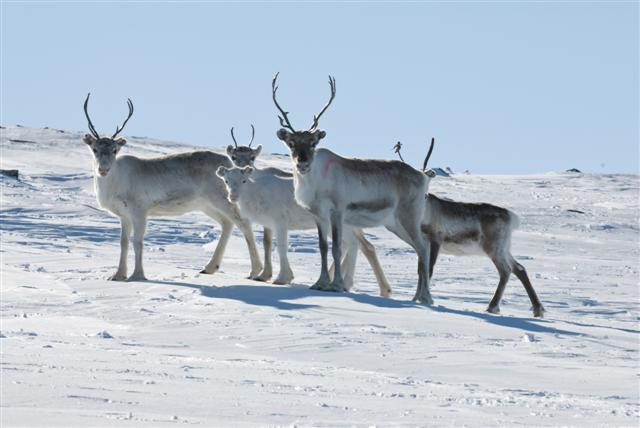
    Reindeers in the arctic

    By 2080, Russia might witness a vast mammalian invasion, as sub-arctic European animals flee global warming and adapt to a thawing tundra. This is the result of a newly published study in the journal PloS One.

    “North Western Russia will be some kind of hotspot of species richness,” said Christer Nilsson, an ecology professor, via Skype from Umeå University in Sweden to the website Mother Jones. “Species will be on the move and there will be new combinations of species.”

    Red and fallow deer, wild boar, the Eurasian badger, rabbits, mice and beaver will all be on the move as new tracts of habitable land open up.

    In a surprising twist, Professor Nilsson and his team found that most species in the Barents Region, which includes the northern half of Norway, Sweden, Finland and a big chunk of North Western Russian, will actually be favored by climate change.

    Forty-three out of the 61 animals studied will expand and shift their “ranges”—or habitats—mostly in a north-easterly direction, sometimes traveling hundreds of miles.

    But no one can predict how all the animals will interact in their new, climate-changed world, and far from helping animals, climate change might force new, and deadly, interactions: “Predators might be in contact with new prey,” Nilsson said.

    The report found something encouraging: No extinctions predicted in the area surveyed. “We couldn’t find any evidence that any species will disappear, given the climate change predictions we’ve used,” Nilsson said. Nevertheless, vulnerability of those already threatened may increase due to the introduction of new competing or predatory species.

    Sources
    Mother Jones

    Plosone

  • Greenland will not favor EU over China

    Greenland will not favor EU over China

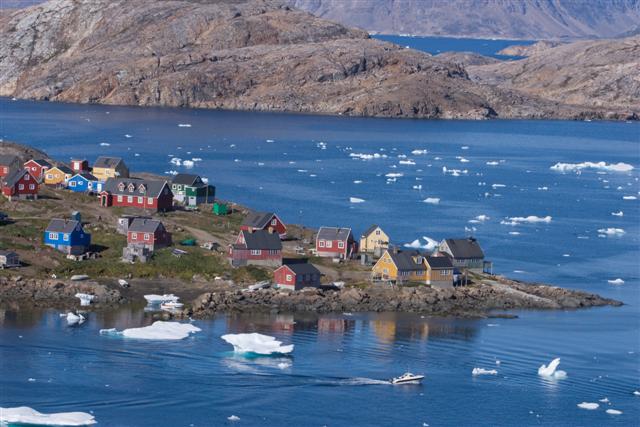
    town in Greenland

    The prime minister of Greenland says he will not favour the EU over China or other investors when granting access to highly prized rare earth minerals. Kuupik Kleist said it would not be fair “to protect others’ interests more than protecting, for instance, China’s”.

    The BBC reports and points out that Greenland is not in the EU, even though Denmark is.

    The EU, US and Japan are in dispute with China over its restrictions on exports of rare earths.

    China currently produces 97% of the world’s rare earths, vital in the manufacture of mobile phones and other high-tech products.

    The dispute has gone to the World Trade Organization (WTO). Last year China argued that its export restrictions were needed to protect the environment, conserve supplies and meet domestic demand.

    Currently Greenland’s rare earth resources are being intensively investigated. The European Commission estimates that those resources could total 9.16% of the global rare earth deposits.

    “All are welcome if they meet our conditions and our requirements to operate in Greenland,” Mr Kleist said.

    The EU sees “especially strong potential” in Greenland’s deposits of niobium, platinum, rare earths and tantalum, among the elements on an EU “critical raw materials” list.

    The share of European exploration companies operating in Greenland is only 15%. More than 50% are from Canada and Australia.

    Mr Kleist, speaking in the Danish capital Copenhagen, said Greenland needed to develop its resources, as it was too reliant on fishing and subsidies from Denmark.

    “I do not see thousands of Chinese workers in the country as a threat,” he said, quoted by Denmark’s Ritzau news agency. He vowed to resist EU pressure concerning Greenland’s policy on rare earths.

    Source

    BBC

  • New Arctic Council minister visits Iceland

    New Arctic Council minister visits Iceland

    Leona Aglukkaq and Össur at the meeting

    The Icelandic Minister for Foreign Affairs, Össur Skarphéðinsson met with Ms. Leona Aglukkaq, Canada’s health minister and newly appointed Minister of Arctic Affairs in Iceland yesterday.
    Following her visit to Reykjavík, Aglukkaq will travel to the other Nordic states to introduce Canada’s Chairmanship Programme for the Arctic Council.

    At their meeting the ministers discussed cooperation between the countries and the their policies within the Arctic Council as Canada will take on the chairmanship of the Arctic Council at the council’s ministerial meeting in Kiruna May 15.

    Leona Aglukkaq who will lead the chairmanship, said Canada’s overarching theme would be promoting projects that have practical implications for the inhabitants of the region, including economic growth and the development of natural resources in a sustainable manner, safer Arctic shipping, engagement with industry and the business community and cultural cooperation within the Circumpolar region.

    “Our main agenda is development of the people in the Arctic, sustainable and safe exploitation of resources and safe shipping in the Arctic,” she told Morgunblaðið.

    The Foreign Minister expressed his view that strong regional and political cooperation within the Arctic Council, aimed at constructive projects and agreements is one of the pillars of Iceland’s Arctic policy. The Minsters agreed on the importance of strengthening practical cooperation of the Arctic States on responses to environmental disasters, e.g. by supporting prevention and responses to shipping accidents and oil spill in the Arctic.

    The Foreign Minister also emphasized the importance of developing further ideas on economic cooperation with the possible establishment of Circumpolar Chamber of Commerce. The issue of permanent observers was discussed and the future development of the Arctic Council and its role in the global context.

    After her meeting with the Foreign Minister, Ms. Aglukkaq met Ms. Svandísi Svavarsdóttir, Minister for the Environment and Natural Resources and experts from institutes working with Arctic affairs in Iceland.

    Sources

    Ministry of Foreign Affairs

    Morgunblaðið

    The Arctic Council website

  • Joint Arctic defense strategy?

    Joint Arctic defense strategy?

    Satellite station in the arctic

    Two Arctic states might join military forces in the Arctic. Sweden and Finland have held talks about a joint weaponary and it is a central part of Sweden’s vision for Nordic Defence cooperation. Sweden is looking for a joint Nordic policy in foreign affairs, secutiry and defense strategy.

    Foreign Minister Carl Bildt and Defense Minister Karin Enstrom have written the proposal.

    “We want to create a more efficient use of resources, higher quality, better effects and an expanded variety of defence capabilities through cooperation”, the two ministers write, according to the BarentsObserver.

    “Joint ownership and use of military capacities and resources, so-called pooling and sharing, is a central part of the Swedish vision for Nordic defence cooperation”, they underline.

    The Finnish side positively responds to the Swedish proposal. Defence Minister Carl Haglund says to Yle that the possible conclusion of a treaty with Sweden is worth thorough examination, but believes that such an agreement can come only after “several years”.

    “Indeed, in practice this would mean that we should have some kind of defense agreement with Sweden, because we would be talking about crucial capabilities, for example in the navy or the air force,” Haglund says.

    At the same time, the Finns are reluctant to get Norway on board. Haglund underlines that “in any case, Nordic NATO member countries should not be included in this cooperation”.

    Sources

    BarentsObserver
    Dagens Nyheder
    Yle

  • Trapped whales now free

    Trapped whales now free

    Orca in arctic waters

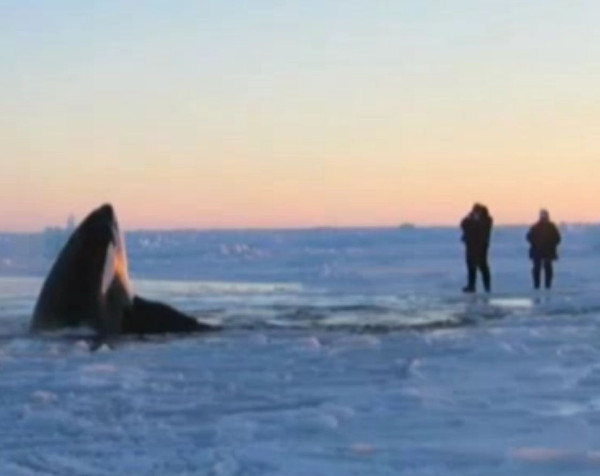
    The whales who were trapped in sea ice in Hudson Bay, Canada, are now free. The ice shifted away and the whales are free and safe after being trapped for two days.In our original story yesterday we reported that the town asked for an icebreaker to assist the whales. There was only a small patch of open water for the whales to breathe, and the gap was shrinking.

    Video of the whales can be seen here.

    A hunter spotted the whales and now the government is looking at its options. Peter Inukpuk, mayor of the small Inuit village, called on the Department of Fisheries and Oceans (DFO) to send out an icebreaker to help the whales.

    Source

    CBC News

  • Cold winter conditions in the Arctic

    Cold winter conditions in the Arctic

    Climate conditions have been negative

    States for 2012 was climate conditions in Scandinavia, Siberia, Alaska and Canada have been colder than average this winter.

    The National Snow and Ice Data Center reports that the Arctic sea ice extent for December 2012 was well below average, driven by anomalously low ice conditions in the Kara, Barents, and Labrador seas.

    NSIDC states that the winter has been dominated by the negative phase of the Arctic Oscillation, bringing the cold climate around the Arctic.

    The Arctic Oscillation is an Arctic climate index with positive and negative phases, which represents the state of atmospheric circulation over the Arctic. The positive phase brings lower-than-normal pressure over the polar region, steering ocean storms northward, bringing wetter weather to Scotland and Scandinavia, and drier conditions to areas such as Spain and the Middle East.

    Reports today also show that the average temperature for USA for 2012 was above average, showing different climate than in the Arctic, outside of Alaska.

    Sources

    NSIDC

    NOAA 1

    NOAA 2

  • Winter tourists spend more

    Winter tourists spend more

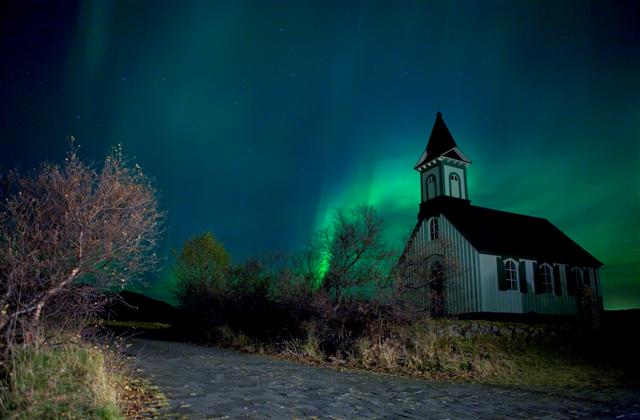
    Aurora Borealis seen from Iceland

    Winter tourists spend three times more money than summer tourists, a tour operator in Norway says. The Arctic countries all have active tourism and are constantly marketing winter tourism as an alternative for the summer period.

    “Hotels in Northern Norway now have a higher number of filled beds in winter time than in summer. That is because the region offers what few other destinations can; a mix of winter and ocean. Only the Barents region, Alaska and Iceland are competing for tourists looking for experiences like these”, says Morten Torp from Vinter Troms AS.

    Iceland has seen a big increase in winter tourism with specialized northern lights trips increasingly popular.

    In Norway, Espen Berelsen sees that tourist are willing to pay a higher premium for experiences out of the ordinary. An example Bertelsen often uses; “Who wouldn’t want to come home to their friends and family and tell about the great combination of beautiful sailings along the coast of Lofoten and skiing down the Lyngen Alps toward the clean Arctic fjords? People will pay a premium for an experience like that.”

    Alaska has also utilized its oil history for tourism as well as the ice road truckers. Alaska offers northern lights experiences like Iceland and Norway.

    Sources

    BarentsObserver

    Alaska Dispatch

  • Arctic brings cold weather to China

    Arctic brings cold weather to China

    A man works in a frozen river in Taiyuan, Shanxi province

    The year 2012 was unusually cold in China, which may be a result of the record loss of Arctic sea ice. “Observation and data analysis showed that Arctic sea ice loss may cause cold and snowy winters in parts of Asia,” Chen Yu, senior engineer of the National Climate Center in China states.

    The Arctic sea ice saw it record low extent on September 16th 2012.

    The China Daily reports and Chen explains that when sea ice melts in the Arctic, the water temperature increases. When that happens, the air becomes moister and is more likely to form cold fronts.

    According to the China Meteorological Administration, in December most of China suffered colder weather than usual. On Dec 24, frequent cold fronts led to temperatures in 21 monitoring stations hitting record lows.

    And the cold weather continued and the weather has been cold since late December.

    Kang Zhiming, weather forecaster of the National Meteorological Center, said weather models showed the temperature will not rise until late January.

    “The weather authorities will keep a close eye on any changes in the weather, especially before Spring Festival, in order to give timely information to transport and related departments, particularly in the event of extreme weather,” Kang said.

    China has a research station in Ny Alesund, on Svalbard, and among other projects is monitoring weather and sea ice from the station.

    Source

    China Daily

  • Arctic Science Summit Week deadline

    Arctic Science Summit Week deadline

     arctic researchers at work

    The Arctic Science Summit Week will be held in April in Poland. The call for participation and abstract submission is close.

    The deadline for abstract submission is the 16th of January and they can be sent through the conference website.

    The week will include disciplinary sessions on Atmosphere Processes and Global Climate Connections, Cryospheric Changes: Drivers and Consequences, Marine Processes and Variability, Terrestrial Ecosystem Responses to Environmental Stressors and Impact of Global Changes on Arctic Societies.

    It will also have cross-cutting sessions on Arctic People and Resources: Opportunities, Challenges and Risks, Applying Local and Traditional Knowledge to Better Understanding of the Changing Arctic, Arctic System Science for Regional and Global Sustainability and Changing North: Predictions and Scenarios.

    The ASSW is the annual gathering of international organizations engaged in supporting and facilitating Arctic research. Its purpose is to provide opportunities for international coordination, collaboration and cooperation in all fields of Arctic science and to combine science and management meetings.

    Source

    ASSW 2013

  • The Icelandic oil adventure has begun

    The Icelandic oil adventure has begun

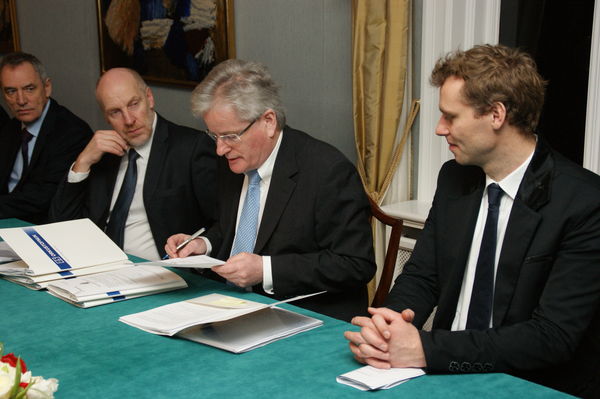
    Icelandic oil adventure signing

    “Today is the beginning of oil adventures in Iceland” was said on the day the National Energy Authority of Iceland signed the first licenses for exploration and production of hydrocarbons Icelandic waters, more specific in the Dreki Area.

    Two licenses were granted, to Faroe Petroleum Norge AS, Branch in Iceland, Iceland Petroleum ehf. and Petoro Iceland AS, on the one hand, and Valiant Petroleum ehf., Kolvetni ehf. and Petoro Iceland AS on the other.

    The Norwegian Parliament approved the decision on the participation by the Kingdom of Norway through the State-owned oil company Petoro AS in accordance with the agreement between Norway and Iceland from 1981.

    There is one license to Faroe Petroleum Norge AS as an operator with 67,5% share, Íslenskt Kolvetni with 7,5% share and Petoro Iceland with 25% share. The other license is to Valiant Petroleum ehf. as an operator with

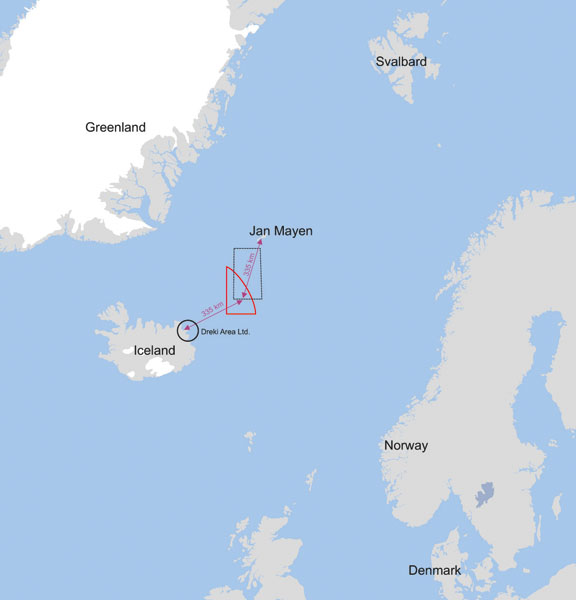
    The Dreki area map

    56,25 % share, Kolvetni ehf. with 18,75 % share og Petoro Iceland AS with 25 % share.

    The Norwegian Minister of Petroleum and Energy, Mr. Ola Borten Moe, was present at the signing of the licenses as the state oil company of Norway, Petoro, will participate in both licenses.

    “All leads to Iceland becoming an oil nation,” says chief of exploration Terje Hagevang, Norwegian working at the British company Valiant Petroleum. Hagevang researched the area for his master’s program and for a long time has been suggestion the Jan Mayen ridge is rich in oil reserves.

    This will be the first oil exploration in Icelandic waters. The Dreki-Area is shown on the map here on the right local communities in North-East of Iceland have already started on preparations to service the exploration.

    „This is very important, just like when the oil adventures began in Norway in 1695-1966. The adventure is here and it has a future for petroleum activities in Icelandic waters. This is the start of it, ” Hagevang said to Stöð 2 in

    Iceland.

    Hagevang has reported that the Jan Mayen ridge, which includes the Dreki-Area, is as rich in petroleum as the Norwegian sea. „New research has strengthened this belief. It shows that the area has everything to produce petroleum.”

    The first rig in the area is expected in 2017 or 2018, likely to be deployed in the Norwegian side at first.

    Steingrímur J. Sigfússon, minister of Industry and Innovation in Iceland, welcomed the Norwegian knowledge of oil exploration and said that this was a landmark for the country.

    The two licenses are valid from today through 4.1.2020.

    Blue: Valiant Petroleum ehf. and Kolvetni ehf.  Red: Faroe Petroleum Norge AS, Branch in Iceland and Iceland Petroleum ehf. Click to enlarge. Photo by NEA.

    The License for Valiant Petroleum ehf, Kolvetni ehf, Petoro Iceland AS

    Letter of Agreement
    The License for Faroe Petroleum Norge AS, Íslenskt Kolvetni ehf. Petoro Iceland AS.
    Letter of Agreement

    Sources

    NEA
    Stöð 2

    Map of potential oil and gas areas