Category: News & Press Releases

Arctic Portal News Portlet

  • Case Study: Phytoplankton causes overgrazing of kelp

    Sea urchin

    The delicate web of the Arctic biosphere is complex and one small change can have big affect.

    One of the main effects of the warmer sea surface temperatures was a suppression of phytoplankton productivity, which led to reductions in shrimp, crab, and populations of smelt fish, such as capelin.

    Other fish populations, particularly cod and pollock, increased at the same time.) The reduced numbers of smelt may have led to declines in the numbers of Steller’s sea lions and harbor seals, which were one of the main food items for killer whales.

    The declining numbers of sea lions and seals apparently led to increased predation on sea otters by killer whales, resulting in a drastic reduction in the population of Alaskan sea otters of more than 70%. These low sea otter numbers allowed sea urchins (a major part of the sea otter diet) to proliferate.

    Sea urchins feed on kelp, so the kelp forests in the Gulf of Alaska and the Bering Sea were overgrazed, which affected all of the organisms associated with the kelp, including seabirds like puffins and kittiwakes.

    Note: The Gulf of Alaska and Bering Sea fisheries are the largest in the United States, and some researchers also blame overfishing for the decline in marine mammal populations. Because of the climatic regime shift, it is difficult to conclusively determine the primary cause.

    One small change can have effects to the largest of creatures and those again can have affect on the smallest of creatures. This causes failure in harvesting of one species, but can have positive affect to another. Valuable commercial fish like Cod and Pollock lose their juvenile habitats due to increase in Sea urchins, but again, harvesting of Sea urchin roe might become a substitute economical activity.

    Source: NASA

  • UArctic to produce next generation of polar researchers

    UArctic to produce next generation of polar researchers

    Lars Kullerud and Yelena Kudryashova

    The University of the Arctic’s research Office will be the place to find the next generation’s polar researchers, famous polar researcher Artur Chilingarov has stated. The formal opening of the office was at the International Arctic Forum in Arkhangelsk.

    Chilingarov is the Russian President’s special aide on Arctic and Antarctic affairs is appointed scientific leader of the University of the Arctic’s first research office.

    UArctic President Lars Kullerud sees the establishment of a research office as a critical step in creating a collective capacity for UArctic members to coordinate northern research.

    “Our goal is to educate students from northern universities for future positions in the Arctic Council and other international institutions,” said UArctic President Lars Kullerud at the opening.

    UArctic is a cooperative network of universities, colleges, and other organizations committed to higher education and research in the North. UArctic has members more than 140 member institutions in all eight Arctic states.

    The members share resources, facilities, and expertise to build post-secondary education programs that are relevant and accessible to northern students.

    UArctic is a decentralized organization, with offices, programs and other functions hosted at member institutions in the Circumpolar North. The administration is located at the University of Lapland in Rovaniemi, Finland. But until now the network has not had its own office for research.

    The University of the Arctic and Arctic Portal work close together on numerous projects.

  • Rabies intrudes Svalbard

    Rabies intrudes Svalbard

    Svalbard

    Rabies has been found in a polar fox and two reindeer in Svalbard. The archipelago has never before seen the disease which can be deadly for humans if infected.

    The disease can be infected by bite or other means and therefore the Governor of Svalbard has urged the public to avoid contact with dead animals or any animals that are behaving abnormally.

    At present, seven people have been administrated post-exposure prophylaxis. No human cases of rabies have ever been diagnosed in the area. The hospital in Longyearbyen offers rabies vaccination to the population

    Svalbard has a population of 2.700 people of which 2.200 are in Longyearbyen and some 500 in the Russian settlement of Barentsburg.

  • No armed forces in the Arctic

    No armed forces in the Arctic

    Vladimir Putin and Ólafur Ragnar Grímsson

    Military presence in the Arctic should not be a reality, a senior Russian diplomat has claimed. At the The Arctic: Territory of Dialogue international forum, held in Arkhangelsk last week the issue was raised.

    “We do not see problems [in the Arctic] that could lead to the use of force, and we do not see the need to place military-political blocs there,” said Anton Vasilyev, ambassador-at-large on Arctic issues at the Russian Foreign Ministry., according to RIA Novosty.

    “We have an efficient international treaty framework to resolve any potential conflicts [in the region],” Vasilyev added.

    The idea of a “mini-NATO” in the Arctic region was a subject discussed at a summit of Northern European countries in London on January 19-20, 2011. The name refers to a proposed military bloc of Scandinavian countries, ex-Soviet Baltic republics and the United Kingdom, which many describe as the “response to Russian efforts in the north.”

    “So far this idea has not been followed by any practical development, but we are keeping an eye on the situation,” the Russian diplomat said.

  • AMSA Recommendations

    shipping_harbour

    The focus of the AMSA is marine safety and marine environmental protection, in accordance with the Arctic Council’s mandates of environmental protection and sustainable development. Based on the findings of the AMSA, recommendations were developed to provide a guide for future action by the Arctic Council, Arctic states and others. The AMSA recommendations are presented in three broad themes that are fundamental to understanding the AMSA:

    1. Enhancing Arctic Marine Safety

    One of the key issues that are prominent in Arctic shipping is the question if there is a need to develop mandatory regulations for ships operating in Arctic Ice-covered waters. Voluntary guidelines that touch upon the subject from the International Maritime Organization (IMO) and the International Association of Classification Societies (IACS) are however available.

    The AMSA report comes to the conclusion that such regulation drawn up in accordance to international customary law as reflected in United Nations Convention on the Law of the Sea (UNCLOS) would be an effective way to enhance marine safety and environmental protection in Arctic waters. Such guidelines would contribute to ensure the safety of seafarers in these challenging surroundings.

    shipping_kid

    2. Building Arctic Marine Infrastructure

    Support infrastructure in the Arctic region is lacking to ensure safety and environmental protection.

    Ice navigation training, navigational charts, communications systems, port services which are equipped to deal with ship generated waste, timely ice information and access to icebreakers when needed, are the most urgent issues in that field.

    Arctic Marine Traffic Systems also need to be improved with increased monitoring and tracking of marine activity.

    Preparedness and response plans because of oil spills and environmental disasters needs to be significantly strengthened in addition to search and rescue of seafarers.

    3. Protection of the environment and Arctic People

    Protecting Arctic People and the environment is one of the key issues identified in AMSA.

    It includes gathering information on indigenous marine use to assess the impacts from Arctic shipping activities and engage Arctic communities to ensure that mechanisms are in place enabling these communities to communicate and coordinate with the shipping industry.

    Cultural and ecological areas of great importance need to be protected of invasive species, monitoring and assessing impacts on marine mammals need to be conducted and reduction of air emission has to be a priority.

  • Sustainable Development in the Arctic

    Sealhunting in the arctic

    The most recognised explanation of sustainable development can be found in the introduction of the so called Brundtland Report of 1987, where it is defined as the idea, “[…] which implies meeting the needs of the present without compromising the ability of future generations to meet their own needs.”

    Sustainable development is not merely a way of implementing certain kind of usage of resources; it could rather be explained as a way of measures in terms of executing political ideas.

    The Arctic Council was founded upon the idea of sustainable development and the Ottawa declaration (the Arctic Councils founding document) clearly states it as the key component of the council’s ideology. It states:

    “Affirming our commitment to sustainable development in the Arctic region, including economic and social development, improved health conditions and cultural well-being; Affirming concurrently our commitment to the protection of the Arctic environment, including the health of Arctic ecosystems, maintenance of biodiversity in the Arctic region and conservation and sustainable use of natural resources.”

    Thus, as Arctic shipping effects various fields of economic, social and legal matters, sustainable development cannot be removed of that equation. Arctic shipping will have both positive and negative impacts on the Arctic. The idea is that no particular activity would be able to compromise other activities, so that e.g. subsistence hunting would not need to retreat from massive undertaking of exploitation of non-renewables.

    Industrial activities, as a matter of fact, sometimes interfere with customary activities of Arctic residents, in particular aboriginal residents, when these activities harm the environment or compete for land use.

    As many small activities might become more competitive against similar activities in other places of the world with Trans-Arctic shipping, that alone does indicate encouragement for it. This is why sustainable development is an important factor that needs to be taken into consideration in discussion on Trans-Arctic shipping.

  • Fossil Fuel Exploitation

    Fossil Fuel Exploitation

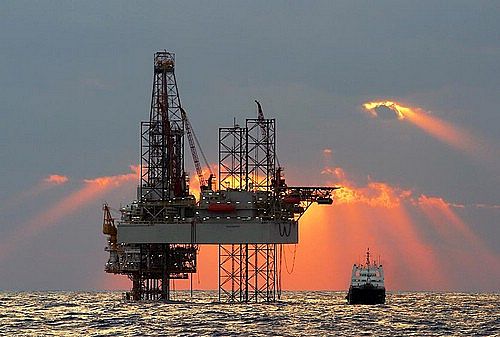
    Oil rig

    It is safe to say that the Arctic is one of the most fossil fuel laden areas in the world, even though massive exploitation has still not begun. In addition, other non-renewable resources are also immense; e.g. nickel, diamonds and gold.

    However, the exploitation of fossil fuels is more dependent on Arctic shipping and is likely to be one of the main driving forces for Trans-Arctic shipping to become a norm in the international trade industry.

    Some regions, which have experienced major prosperity, some of it quite recently, have literally been opened to massive exploitation in support of national policies for industrial development or energy security.

    Most of the regions in the Arctic have both onshore and offshore production and exploration of a variety of non-renewables. The Arctic holds a great share of the world’s oil, coal and gas reserves. At the present, the Arctic produces about 10 percent of the world’s oil and a quarter of its gas and for these critical commodities the region’s role is estimated to be greater in the future.

    Increased activity in the field of extraction of non-renewable resources is expected not only from climate change-related factors, such as increased access caused by receding sea ice, but also from changes such as improvements in offshore technology, oil-price development, and the political landscape in the Arctic. The International Energy Agency has estimated that the cost of petroleum extraction in the Arctic is about three times higher than in other petroleum provinces.

  • Geopolitical Landscape

    shipping mining

    The Arctic has in recent years, been subject to a manifold growth in its geo-strategic importance due to its rich natural resources of fossil fuel and military-political reasons. In addition to that, the Arctic faces tough challenges concerning global security and environmental issues.

    There are also international governmental organizations and major powers from outside the region which take an interest in the North. In addition, northern issues are finally being given a higher priority on the EU’s agenda and matters relating to the north have been an important concern of the United Nations for years.

    The Arctic regions represent stable political and institutional conditions, providing opportunity for permanent involvement for oil companies that elsewhere face diminishing access to oil provinces operated by national oil companies. There is a growing world wide, economic and political interest toward the northernmost regions of the globe, particularly due to the estimated fossils in the shelves of the northern seas and visions of new Trans-Arctic sea routes.

    Similarly, the new threat of piracy around the Suez Canal does not exactly deter multinational corporations from investments in utilizing energy resources or sea routes in the Arctic.

    At the beginning of the 21st century, the strategic importance of the North is becoming high on the agenda in geopolitics and world economics. Furthermore, due to a growing need for energy resources and even competition over them, rivalry and claims on northern sea areas and shelves have been developing.

    Further, significant geopolitical, socio-economic and environmental changes are occurring in the North with relevant consequences, such as risks to the environmental and human security and threats to local autonomy and sovereignty. These developments have given rise to a need for broader and deeper international cooperation both within the region and on a global level.

  • Climate Change Effects

    Boats in the ice, Uummannaq, Greenland

    Although most scientists agree on that the globe is becoming warmer, predictions on how rapidly Arctic ice will retreat often varies greatly amongst them.

    The schedule is however not as important as the results of this development and the possibility of the ice-free Arctic to become a lucrative shipping route. For oil and gas, climate change will challenge the petroleum sector in many ways.

    Offshore oil exploration and production is likely to benefit from less extensive and thinner sea ice, although equipment will likely be costlier as it will be required to withstand increased wave forces and ice movement. Within the region, a number of innovative political and legal arrangements have been developed, while certain devolution of power has also taken place.

    Due to the fact that climate change has influenced greatly the northernmost coastal regions of the globe, the Arctic has become one of the frontiers of climate change.

    Climate change is expected to increase marine access to the Arctic regions, especially with the possible opening of once completely closed passages such as the Northwest Passage and the Northeast Passage (Northern Sea Route). Increasing shipping activity in the Arctic raises questions of maritime law that will need to be resolved soon.

    These issues include accident and collision insurance, authority for regulation, enforcement and cleanup in management of natural resources and environment. These questions are important because sovereignty over Arctic waters is still not firmly settled among Polar nations, and increased ship access could raise many destabilizing international issues.

    The Arctic region is categorized by extreme weather conditions. The increase in temperature and melting sea ice will open new sea routes, but will increase the frequency of icebergs, which may damage sub-sea pipelines and offshore petroleum production facilities. Being the most unpredictable factor in this discussion, climate change really is a dominant force in allowing for exploitation of oil and gas in the Arctic on one hand and shipping on the other.

    This being said, more predictable factors are also important to establish massive expansion on exploitation of non-renewables, e.g. changes in technology, costs, and transportation availability.

    Greenhouse gas emissions restrictions

    If the global society can agree to take effective measures to reduce emissions of Greenhouse Gases, it would certainly lead to more energy efficient transport of goods. The shipping of goods from Asia to Europe is in fact relatively shorter trough the Arctic, than through the Suez-Canal or the Panama-Canal.

    Transportation itself can therefore be affected by climate change and similarly itself poses challenges in terms of environmental management and international institutions.

    Greenhouse gas emission restrictions can be the most determinative factor in encouraging Trans-Arctic shipping because it is subject to universal agreement[1] that has already been elaborated with the Kyoto Protocol.

    Further individual states might need, due to pressure from NGO’s and other environmentally friendly stakeholders, implement some measures to reduce emissions, yet, facing similar pressure to the contrary from other stakeholders.

    Although no legally binding agreement has been reached, it must be kept in mind that the issue is still under consideration of the global politics. Therefore, it might be thought of as a development waiting to happen rather than mere expectation.

    It should be added that such development does not necessarily mean that ships of various kind would be subject to such restrictions. If an industrial state would only need to restrict emissions of 5-10%, burdensome gas emissions would first be tackled in areas where new technology exists and is relatively cheap. On the other hand, Trans-Arctic shipping seems to need both new technologies and the impetus of governments for the shipping industry to use new shipping routes.

  • Iceland seeks Russian help

    Ólafur Ragnar Grímsson

    Iceland will seek cooperation with Russia to develop its geothermal energy projects. Vastly resources of geothermal resources in Iceland are being utilized but the next steps are somewhat unclear.

    Dr. Ólafur Ragnar Grímsson, president of Iceland, said this in Arkhangelsk yesterday at the second international forum The Arctic: Territory of Dialogue.

    “Even ten years ago no one in Iceland could imagine that we would need assistance while developing Arctic natural resources. But the time has come and we have needed such help from an economic and environmental point of view,” adding that Iceland also needed help from foreign companies to develop Arctic resources, including Russia.

    Russian Prime Minister Vladimir Putin, who met with Grímsson at the forum, said that Moscow had specific ideas on the issues of joint energy projects.

    President Grímsson also said that development of Russian-Iceland commercial navigation could be feasible, transport terminals (sea-ports and airports), and corridors like the Northern Sea Route, which could transform Russia’s ability to ship natural resources to the markets of Asia.

    “Our geographical position in North Atlantic gives us unique possibilities, and we would like to use them for a constructive dialogue with Russia,” Grímsson added.