Category: News & Press Releases

Arctic Portal News Portlet

  • Prince of Monaco urges action

    Prince Albert II of Monaco

    Signatories to the Kyoto protocol should continue greenhouse gas emission cuts after its first period expires in 2012, Prince Albert II of Monaco said in Arkhangelsk yesterday at the second international forum The Arctic: Territory of Dialogue.

    “The international community can not remain in its current passive condition and hold back from new obligations after the first round of the Kyoto commitments expires,” the prince said in his speech.

    The first period set out in the Kyoto protocol, during which levels of greenhouse gas emissions are to be cut by developed nations, ends in 2012. Developed and developing countries have not yet agreed on a further binding climate change regulation regime.

    The next session of the United Nations Framework Convention on Climate Change will be held at the end of 2011 in South Africa’s Durban.

  • Russia to explore Barents Sea Shelf

    Russia to explore Barents Sea Shelf

    Barents Sea

    Russia’s Natural Resources Minister Yury Trutnev confirmed this morning in Arkhangelsk at the second international forum The Arctic: Territory of Dialogue that Russia will begin geological exploration of the promising Barents Sea shelf located on the border with Norway in 2012.

    The exploration will begin at the Fedynsky Arch deposit, in the southern part of the Barents Sea. High hopes remain for the region where an estimated 10-12 billion metric tons of fuel equivalent are thought to be found.

    It was last year that Russia and Norway finally settled in the matter. “Forty-year-long talks have finished, we can now start working jointly. Norway has already begun seismic surveys in its part of the shelf. Russia plans to begin work in 2012. They will be funded from the federal budget,” Trutnev said this morning.

  • Current developments

    Current developments

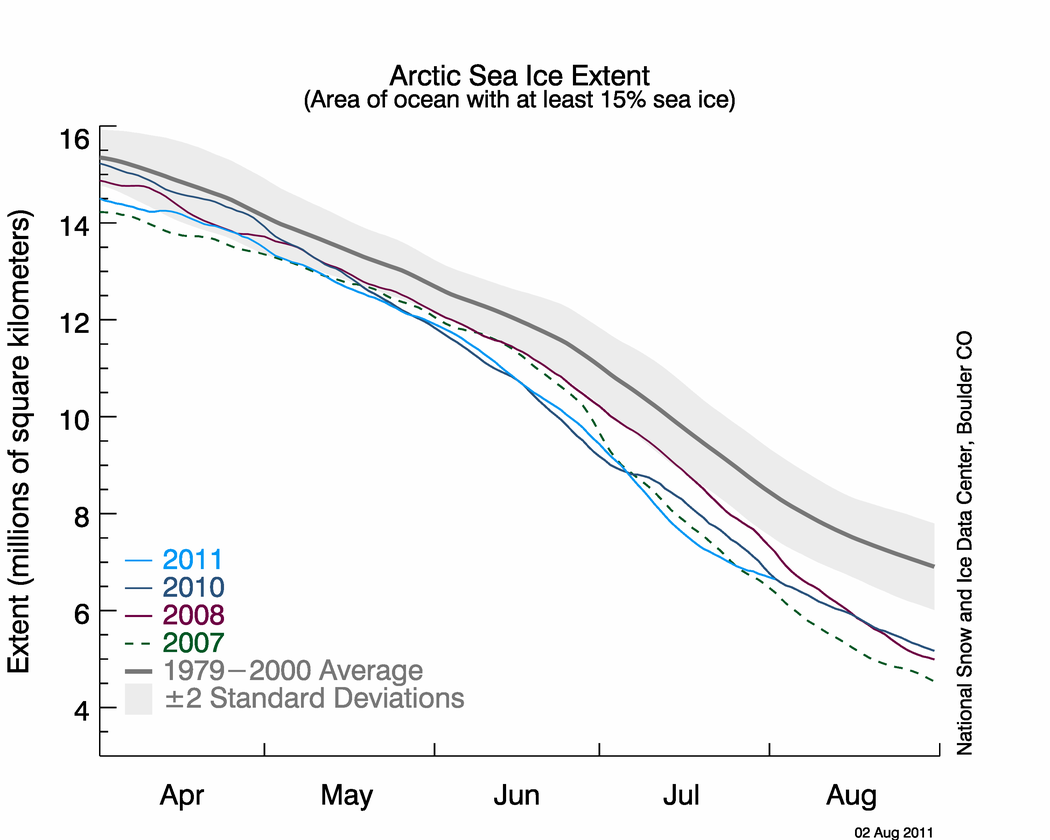
    arctic sea ice Extent 2011

    Reports have been coming in during the summer of 2011 that the summer melt-down has reached a new record low since the beginning of satellite data record ranging back to 1979 as well as other recorded data ranging back to the 50’s.

    The previous record low occurred in 2007. Sea ice coverage also remains below normal everywhere except the East Greenland Sea.

    The Northern Sea route is vastly free of ice. Russians are taking advantage of that, sending numerous vessles through the route, amongst them will be the largest ever tanker to go through the route.

    Average ice extent for July 2011 was 7.92 million square kilometers (3.06 million square miles). This is 210,000 square kilometers (81,000 square miles) below the previous record low for the month, set in July 2007, and 2.18 million square kilometers (842,000 square miles) below the average for 1979 to 2000.

    On July 31, 2011 Arctic sea ice extent was 6.79 million square kilometers (2.62 million square miles). This was slightly higher than the previous record low for the same day of the year, set in 2007.

    “Arctic Dipole anomaly “In a 2008 article titled, Recent radical shifts of atmospheric circulations and rapid changes in Arctic climate system Zhang et al. show that the extreme loss of Arctic sea ice since 2001 has been accompanied by a radical shift of the Arctic atmospheric circulation patterns, into a new mode they call the Arctic Rapid change Pattern. The new atmospheric circulation pattern has also been recognized by other researchers, who refer to it as the Arctic Dipole (Richter-Menge et al., 2009). “ Source: Dr Jeff Masters- Weather Underground

    NASA has compiled a video showing the retreat of sea ice in the summertime 2011. From spring to autumn, this is how the sea ice retreated.
    [http://www.youtube.com/watch?v=6Hv4S90UOBY]

  • Archangelsk the place to be

    Archangelsk the place to be

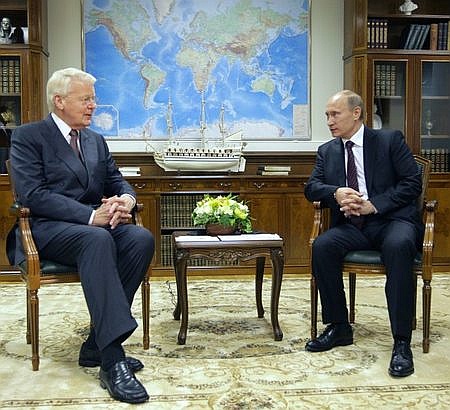
    Ólafur Ragnar Grímsson talking to Vladimir Putin

    Archangelsk in Russia is the place to be this week. Hosting the Arctic Forum, the city also sports the biggest fair of the year this week, the famous Margaritinskaya fair.

    The 2nd International Arctic Forum “The Arctic: Territory of Dialogue” will take place at the Northern Arctic Federal University. The Russian Geographical Society organized the event which sports people like Prime Minister Vladimir Putin, Prince Albert II of Monaco and President of Iceland Dr. Ólafur Ragnar Grímsson.

    Up to 400 people are specially invited to the Forum, including noted scientists, representatives of NGOs, policy makers and businessmen.

    Arctic Portal has a representative at the forum. Project manager Halldór Jóhannsson is in Archangelsk for this week.

    The forum’s focus this year is on creating Arctic transportation infrastructure as a foundation for the development of the Arctic. This primarily involves the development of commercial and research navigation, transportation terminals (sea ports and airports) and corridors (the Northern Sea Route), polar aviation, cargo and passenger trans-polar and cross-polar transportation. Steady development of this infrastructure is vital for the very existence of the Arctic region.

    Special attention will be devoted to the full spectrum of safety issue in this difficult-to-develop region. From a technological perspective, it is necessary to ensure the safety of sea and air traffic using satellite, radio-navigation and hydro-meteorological monitoring. In terms of international law, it is necessary to create multilateral mechanisms for emergency warning and response, including search and rescue missions.

    The forum will also focus on cooperative efforts to protect the Arctic environment, environmental safety, the rational use of natural resources in the Arctic and improving the living standards of its indigenous people.

  • Shtokman decision in December

    Shtokman decision in December

    Shoktoman

    A final investment decision for the megaproject in the Shtokman gas field is expected in December. The Shtokman field is located 550km offshore Russia in the Barents Sea.

    The estimated price tag of development will be presented in next month to the investors.

    It is believed to be one of the largest gas fields but the project has already been delayed. The partners in the Shtokman project – Norway’s Statoil, France’s Total and Russian gas export monopoly Gazprom – have delayed pipeline gas production from Shtokman until 2016 instead of the originally planned 2013.

    It is expected to require some $15 billion of investment in its first phase alone, according to the BarentsObserver.

    The field, which contains 3.9 trillion cubic metres of gas and 56 million tonnes of condensate, is 550 km offshore at a depth of 340 metres, was discovered by the Soviet Union in 1988 and its start-up has been repeatedly delayed due to problems with financing and the lack of transport infrastructure in place.

  • NRF open assembly videos online

    NRF open assembly videos online

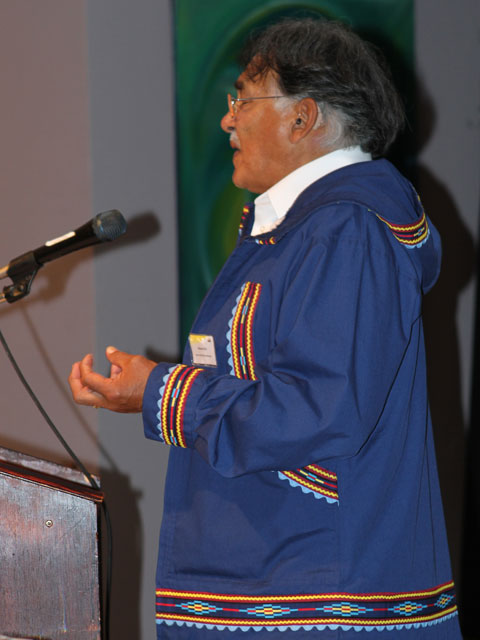
    Mayor Edward Itta from North Slope Borough

    The Northern Research forum hosted the 6th NRF Open Assembly in Hveragerði, Iceland, in September. Arctic Portal broadcasted live from the event.

    On our website you can now look at all the lectures from the event. In total 45 videos are now available.

    Here you can access the vidoes, organized by dates and then after each session. You can see videos of people like Professor Lonnie Thompson, Dr. Arthur Chilingarov and the president of Iceland, Ólafur Ragnar Grímsson.

    Many excellet presentations were at the assembly, from indigenous people like Mayor Edward Itta from North Slope Borough (pictured).

    You can find the program for the assembly here.

    Here you can also see Arctic Portal´s pictures from the assembly.

  • Gore tackles Climate change again

    Gore tackles Climate change again

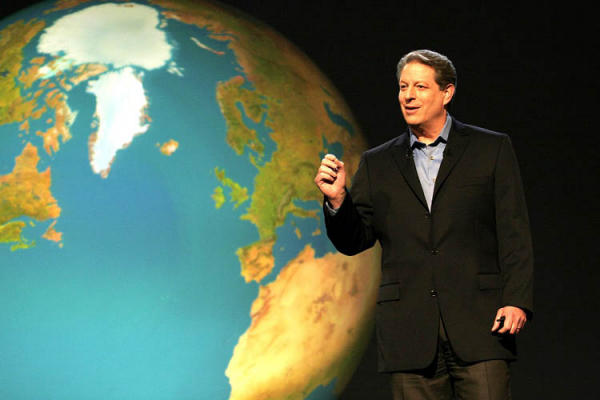
    Al Gore tackles climate change

    Al Gore, Nobel Laureate and former Vice President of the United States, has a new climate project which set sail this week.

    This week it hosted the 24 Hours of Reality where from New York in USA, New Delhi in India, Rio de Janeiro in Brazil to Húsavík Iceland, a movie about climate change was shown, with experts talking with civilians in each location, in their own language, explaining the issue.

    “The Climate Reality Project is bringing the facts about the climate crisis into the mainstream and engaging the public in conversation about how to solve it. We help citizens around the world discover the truth and take meaningful steps to bring about change,” Gore says on the projects website.

    Gore famously tackled climate change a few years ago with his project The Inconvenient Truth. He held over 2000 lectures worldwide about the issue and a movie was also produced.

  • Russia to improve infrastructure

    Russia to improve infrastructure

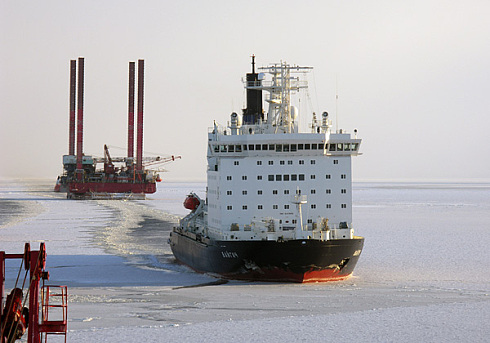
    Russian Icebreaker

    Russia’s infrastructure has been criticized when comes to oil issues in the Arctic. Now the Emergency minister Sergei Shoigu says that the country will respond to this and develop environmental protection infrastructure as soon as possible.

    “There [in the Arctic] we will need navigation safety projects and bases to deal with all kinds of tasks: from fuelling and navigation to communication systems and rescue. We must also set up centers to deal with – God forbid – oil spills,” Shoigu said at a news conference ahead of an international forum to discuss problems of the Arctic in Arkhangelsk next week. This year, the forum will focus on transport issues.

    The Russian emergencies minister said the next year’s forum should focus on environmental safety of hydrocarbon extraction and transportation in the Arctic.

    “In our opinion, safety issues during hydrocarbon extraction and transportation deserve to be the main topic of a separate forum. We will propose it for the next year, as we are convinced that this problem becomes a real threat when ignored,” the minister said.

  • Sea ice level not less than in 2007

    Sea ice level not less than in 2007

    Arctic Sea-Ice Extent 2011

    The NSIDC (the National Snow and Ice Data Center) has declined research from the University of Bremen, Germany, who declared earlier this summer that Arctic Sea Ice Level was at an all time low.

    The 2007 measures are still the lowest levels as of today.

    On September 10, Arctic sea ice extent was 4.34 million square kilometers (1.68 million square miles). This was 110,000 square kilometers (42,500 square miles) above the 2007 value on the same date.

    The record minimum Arctic sea ice extent, recorded in 2007, was 4.17 million square kilometers (1.61 million square miles).

    The NSIDC confirms this but states that todays measurments are likley to be the lowest of the year, the ice will begin to increase for the winter soon.

    But the NSIDC also says that “while the University of Bremen and other data may show slightly different numbers, all of the data agree that Arctic sea ice is continuing its long-term decline.”

  • Russian pipeline launched

    Russian pipeline launched

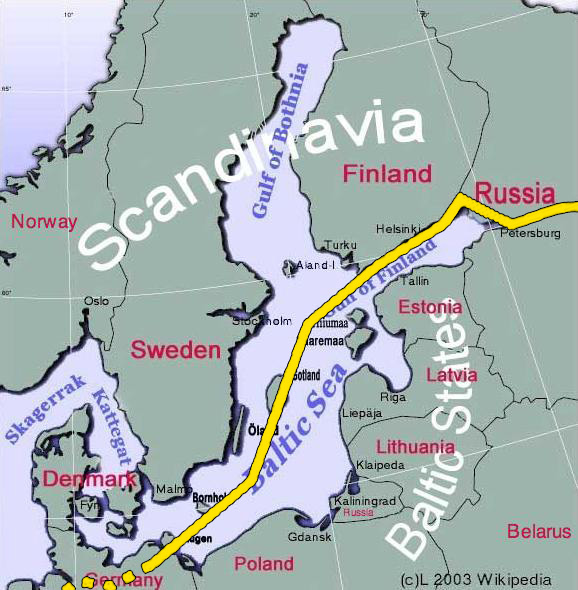
    North Stream Pipeline from Russia to Germany

    The North Stream Pipeline was officially opened by Russian Prime Minister Vladimir Putin this week. It will carry natural gas from Russia to Germany, via the Baltic Sea.

    Russia has been dependent on Ukrainian pipelines and the two have had disputes in the past. At one point the pipelines were shut down because of conflict between the countries.

    “Nord Stream has a special significance for meeting the growing gas demand of the European market. It will be the first direct link between the world’s largest natural gas reserves located in Russia and the European gas transmission system, said Gazprom head Alexey Miller told the companies website.

    Most of the natural gas to be supplied by Gazprom via Nord Stream will come from the Yuzhno-Russkoye oil and gas field — one of the largest fields in the world.

    Later, the Nord Stream will also be supplied with additional gas from fields on the Yamal Peninsula, in Ob-Taz bay as well as the Shtokman field.