Alaska Center for Energy and Power (ACEP) is seeking renewable energy science specialists for their post doctoral positions in Fairbanks, Alaska. The position is in cooperation with the University of Alaska.
ACEP is an applied research program currently working under a private sector business model within the University of Alaska, in partnership with Alaska Energy Authority, National Renewable Energy Laboratory and others partner institutions. It was established in January 2008 as a gateway for renewable energy related activities.
Through the years, the Center has been developing various research projects. They include diesel efficiency, energy economics, energy storage, geothermal, biomass, methane capture, alternative fuels, in-river hydro, tidal energy, and wind power. Please, click here for the full list of available projects.
The Alaska Center for Energy and Power aims to meet international and domestic demands for applied energy research in order to increase a possibility of lowering the cost of energy for state’s industries and private individuals what would equal an increase of economy development. ACEP focuses on world class energy resources as oil, gas and coal, which Alaska is wealthy of.
The Center strives to be agile, demands – driven and interdisciplinary within their field of expertise, in the middle of global opportunities associated with large, undeveloped areas in the northern hemisphere, rural villages and remote industrial sites. It also seeks to increase educational opportunities for both, young researchers and experienced professionals in order to ensure that the global research is conducted in relevant way on world class level.
ACEP, through the Institute of Northern Engineering (INE) at the University of Alaska Fairbanks (UAF), invites applications for a post-doctoral positions in data management, acquisition, and analysis related to hybrid power and energy systems to be filled immediately. Successful applicants will be expected to have a strong commitment to aid in the creative development of research programs to support development of next generation energy systems for rural Alaska and other islanded grid networks.
ACEP seeks qualified applied research faculty in our multi-disciplinary research organization who are interested in pursuing an exciting, fast paced position. Researchers will have experience in energy related fields and an interest in developing pragmatic solutions for fossil or renewable energy production in the unique Alaskan energy environment. Appointments will generally be made at the assistant research professor level, though higher ranks will be considered.
The Center is particularly interested in faculty that matches well with its growth areas, energy and natural resources, and climate and the environment. Research faculty positions in INE are grant funded, though ACEP will provide 3 months of salary support when warranted. Although an earned doctorate is not mandatory, it is highly recommended. Successful applicants will have a demonstrated success record in research, including publications and outreach.
ACEP is based at the University of Alaska Fairbanks, and the projects and research partners are located through out the state. The mission of ACEP is to meet state and local needs for applied energy research by working toward developing, refining, demonstrating, and ultimately helping commercialize marketable technologies. ACEP is a leader in Alaska-specific energy solutions and strives to exceed expectations by offering dynamic, timely projects responsive to public and private sector needs.
The Alaskan beauty which is considered to be one of the most amazing places on earth, offers the opportunities to interact with the wildlife, unique landscape and small communities.
For more information with regards to current projects and career opportunities, please visit the homepage of Alaska Center for Energy and Power, contact Gwen Holdmann at gwen.holdmann@alaska.edu.

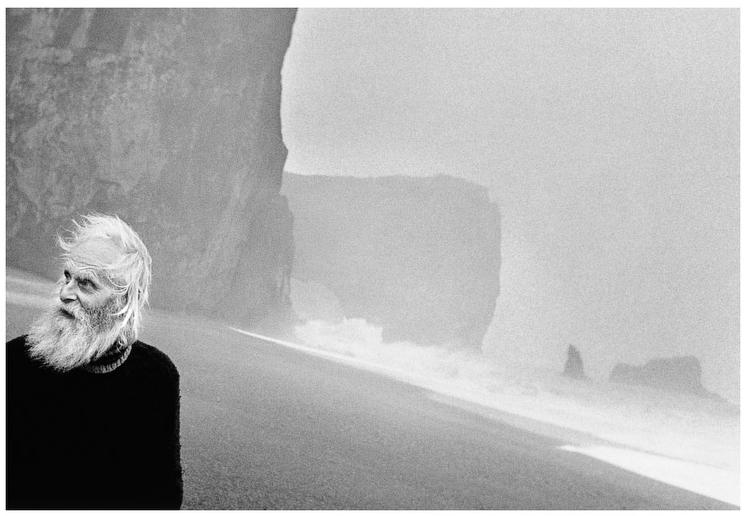
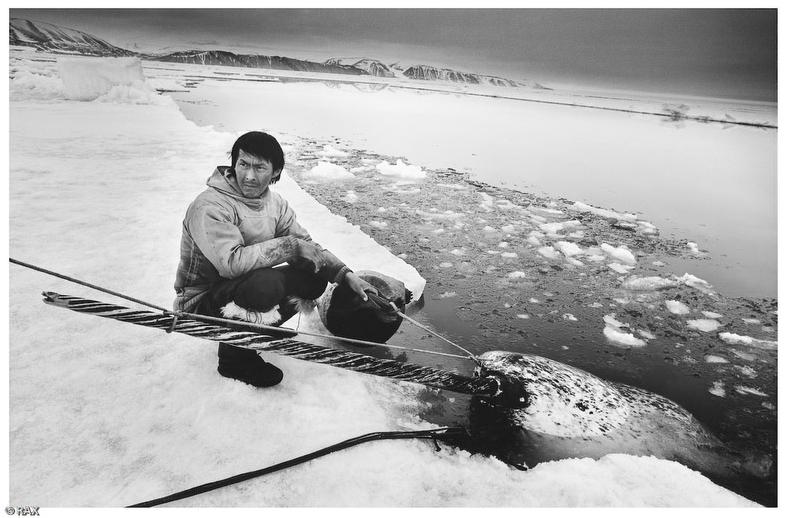 “The film succeeds the books. We travelled everywhere and met the people, but the weather was too good! I missed the storms I saw when some of the pictures were taken,” Rax told the Arctic Portal website.
 The University of the Arctic’s importance as an international actor was demonstrated in the role it played in the 2007-2008 International Polar Year, helping to coordinate the education and outreach activities resulting from the IPY’s international scientific research projects. The UArctic Rectors’ Forum first met in 2007, which provided a new opportunity for the leadership of the circumpolar region’s higher education institutions to address areas of common interest. To better serve its members, UArctic developed the GoNorth program to promote student recruitment to northern higher education institutions and the UArctic Catalogue as joint listing of course and program information from all members.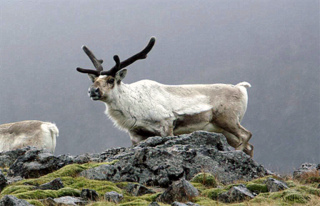
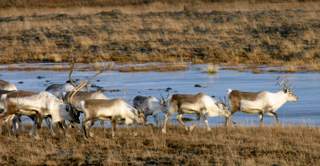 Humans are able to see light with wavelengths ranging from around 700 nanometres (nm), which corresponds to the colour red, right through all the colours of the rainbow in sequence to 400nm, which corresponds to violet. Professor Jeffery and his team tested the reindeer’s vision to see what wavelengths they could see and found that they can handle wavelengths down to around 350–320nm, which is termed ultraviolet, because it exceeds the extreme of the so-called visible spectrum of colours.
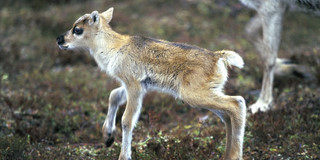 The research also raises the question of how reindeer protect their eyes from being damaged by UV, which is thought to be harmful to human vision.
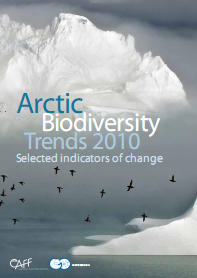
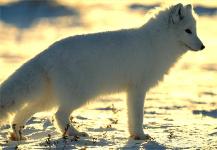 The Arctic Biodiversity Trends 2010 Report, produced by some of the world’s leading experts of Arctic ecosystems and biodiversity, was the Arctic Council’s contribution to the United Nations International Year of Biodiversity in 2010.
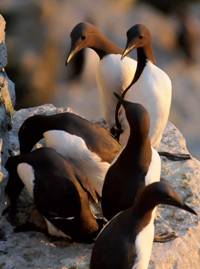 Depending on the magnitude of these and other changes, certain ecosystems may no longer be considered ‘Arctic’. The result may be that many of the species thriving in the Arctic today are not able to survive there in the future.