Category: YAR & Features

Young Arctic Researchers & Features

  • From remote island to Self-Government – Greenland’s journey towards independence

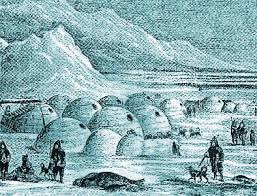
    Inuit village

    Through the times, the island today called Greenland has hosted many different peoples over varying periods. It has been estimated that first peoples came to the remote North-Atlantic island around 2500 BC and that the ancestors of the contemporary Inuit populations came from Alaska, Siberia and Canada, the Arctic thus having one Inuit population over a vast area of northern hemisphere.

    First Norse settlers came to Greenland around the same time as Iceland was settled or around 1000 AD. These peoples vanished 400 -500 years later and it was not before early 18th century that the Norse settlers came again. This time the Danish established a colonial relationship with the island. This relationship has in part remained to this date.

    The Danish era

    Greenland

    Despite the colonial relationship with Denmark from the early 18th century, Greenland remained somewhat isolated until the beginning of the World War II. The Germans occupied Denmark in 1940 making new arraignments concerning Greenland possible. In 1941, an agreement with the US was signed placing Greenland under the protection of the US troops. Following this agreement, the US Air Force established an air base in Thule in 1951 and has remained there since.

    During the decolonization period following the World War II Greenland’s colonial status was abolished and the island was integrated into the Danish Kingdom in 1953.

    In 1 May 1979 following a referendum in Greenland, a Greenlandic Home Rule, an autonomous entity, was created granting Greenlanders own parliamentary organ as well as government. The Home Rule government gained jurisdiction in a series of important fields, such as internal administration, taxes, religious matters, fishing, hunting and agricultural affairs. Also social welfare, labour market affairs, education and cultural affairs, health service, housing and area protection were moved under internal administration of Greenlanders.

     Greenland had joined the ECC (today EU) originally as a part of Denmark in 1973, but opted out from the agreement in 1985 obtaining thus a status as an Oversees country and territory (OCT) with special arraignments regarding its unique circumstances within the ECC. The new agreement with the ECC included among other things fisheries agreement allowing ECC quota in Greenlandic waters in turn of compensation. Greenland gained also territorial allocation from the European Development Fund instead of getting support from the ECC budget.

    In 2005, Danish Parliament issued an Authorization Act, which granted Greenland a right to enter into international agreements in the areas that were under the jurisdiction of the Greenlandic Home Rule. This Act was a first step of what will become Self-Government on Sunday, 21 June 2009.

    The Greenlandic Self-Government

    In 2004 a Danish-Greenlandic Commission was established to evaluate whether the Greenlandic authorities could assume further powers and to make proposals how it could be done. The Commission concluded its work in April 2008 and a non-binding referendum on Greenland’s autonomy was held on 25 November 2008. 75% of the Greenlandic people voted in favor of further autonomy and it was decide that a Greenlandic Self-Government would be established in June 21, 2009.
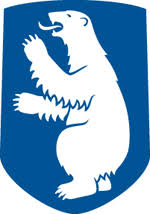
    Greenland

    The Greenland Self-Government Agreement reaffirms in most parts the practice that has been established and evolved during the years of the Home Rule. Some new areas of administration are however established in the new agreement.

    Greenlandic will be the only official language in Greenland after June 21. To date, both Danish and Greenlandic have had an equal status in both education and administration.

    Further, when Danish Government bills cover matters that affect also Greenland, the Self-Government must be consulted before the bill is presented to the Danish Folketing. During the Home Rule, the law provided such an opportunity, but the consultation was not obligatory, as it will be under the Self-Government.

    Economies of Denmark and Greenland will be increasingly separated. As Greenland will become more independent economically, the government subsidies will be decreased. Moreover, new system of sharing revenue from mineral resource activities will be introduced.

    Under the Self-Government, Greenland will become a subject under international law in matters that are within its jurisdiction. This means that Greenland can enter into agreements and establish bilateral and multilateral relationships with other states. In addition, Greenlandic government, Landsstyre, will be taken increasingly into consideration in foreign policy matters under the central authorities of the Danish Realm.

    Other fields of responsibility are also moved under the authority of the Self-Government. Different areas of law and justice administration will become an internal matter of Greenland as well as security at sea, ship registration and maritime affairs. Weapon registration and licenses, upper secondary education and food and veterinary matters will also be covered by the Self-Government after June 21.

    Conclusion

    With the new Self-Government agreement, Greenland will take very important step towards becoming an independent state. However, the agreement allows Greenlandic people to decide themselves whether they will seek independency and when it should be done if ever. The agreement assures that the contemporary foundation of the society, built with Danish funding and assistance, will not be jeopardized, but Greenland will be given an opportunity to slowly mature and become the kind of society that Greenlanders themselves aspire.

    Main sources

    The Greenlandic-Danish Self-Government Commission’s Report on Self-Government in Greenland. April 2008.http://uk.nanoq.gl/sitecore/content/Websites/uk,-d-,nanoq/Emner/Government/~/media/46185A4413C54A3D89D3D16F1D38F0D3.ashx

    Draft Act on Self-Government. http://www.amblissabon.um.dk/NR/rdonlyres/EDC5978E-71C2-467E-974A-598A01EEA562/0/DraftActonGreenlandSelfGovernment.pdf

    Loukacheva, Natalia. The Arctic promise – Legal and Political Autonomy of Greenland and Nunavut. 2007. University of Toronto Press Incorporated. Toronto

    Lectures in Polar Law, University of Akureyri, Iceland. Academic year 2008-2009. see: http://english.unak.is/?d=5&m=page&f=viewPage&id=246

  • The dire situation of the world’s fisheries in the Arctic and beyond

    The dire situation of the world’s fisheries in the Arctic and beyond

    Fishing ship

    Fishing within the North East Atlantic has been a significant economic resource as well as a practice that has become rooted in the culture of fishing nations utilizing the resource. In the Icelandic sagas, the fish was considered to be a gift from the gods and free for all who sought it (Jón Þ. Þór, 2006). This has however changed in Iceland as well as the world in whole.

    Technological advancements have multiplied the possible catch of each vessel and the world’s population growth has increased the demand for fish significantly. Legal issues in connection with maritime boundaries and rights to fisheries both in countries’ economic zones as well as international waters have mostly been settled under the UNCLOS. The realisation that stocks would have to be managed to yield a maximum return has lead to the establishment of fisheries management schemes the world over, both within countries’ Exclusive Economic Zones (EEZ) and multilateral cooperation’s in connection to the high seas and migratory stocks.

    Despite measures taken, the somewhat dire situation of the world’s fisheries has become increasingly apparent, which can mostly be contributed to overfishing and the effect global warming has on the worlds fish stocks (FAO 2009). These findings, call for evaluation and further examinations of both the regulatory framework in place as well as the existing management schemes and cooperation’s.

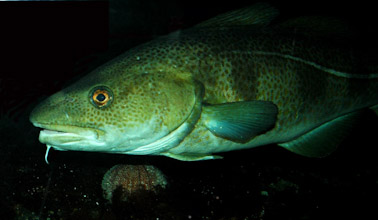
    Climate change and predicted fluctuations in fish stocks have been a constant through the earths history, the rapid change now and in the foreseeable future is however unprecedented (UNDP 2007). Climate change is increasing the world’s temperature and one of the consequences is the migration of fish stocks towards the two poles to cooler water’s. For stocks already residing in cooler waters this may have a severe affect and recent studies indicate that the Atlantic cod stock may be significantly challenged. The warming will lead to a loss of habitat by the Cod in its more southern range and reduce survival during early life and offset growth. This is estimated to result in a decline of the Atlantic Cod stock by as much as 50% by 2050, and cause it to migrate further North (Cheung et al 2009).

    Cod up close

    Fish and fisheries are extremely important to the Arctic region as its waters are often considered to be one of the richest fishing grounds in the world. Despite the drastic effects the significant fluctuations or collapse of the stock would have on the northern hemisphere its counterparts in the south would be considerably more vulnerable. Nations within Africa, who many of them are among the least developed nations in the world, generally have a less diversified economy and fewer means to deal with such change. In a global context fisheries are a significant part of the worlds nutritional intake, with at least 20% of the worlds annual consumption of dietary protein (Fao, 2007 (Allison et al 2009).

    Due to negative reports of the state of the fisheries globally, international and regional bodies are starting to react. One of the most commonly criticized fishery policies or organization is the European Union, which has recently addressed the issue of over fishing within its chambers. At the end of May 2009 European fisheries ministers concluded in a meeting to effectively scrap current rules that decide fishing quotas. Given this conclusion the European Union has decided to draw up a new common fisheries policy before 2012.

    It will be interesting to see if the new fishing policy will be adequate to deal with E.U problems in connection to fishing as 80% of E.U fishing grounds are estimated to be overfished (BBC News, 2009). Similarly it will be interesting to sea how regional bodies like the North East Atlantic Fisheries Committee (NEAFC) will be able to manage changes in migratory patterns of stocks.
    The position as it is portrayed by many of the leading specialist’s and organizations on a global scale will demand for close cooperation and some difficult decisions so world fishing can become sustainable within the changing environment at hand.

    Illegal and unregulated fishing also continues to be an important issue. It’s value has been estimated being between $4bn and $9bn. It also presents a further danger to species, which are already under threat of being overfished. Some interesting videos on the matter can be seen by following the links bellow:

    Sources

    • Allison, Edward H. Conway, Ashley S. Halls, Graham M. Pilling, John D. Reynolds, Neil L. Andrew & Nicholas K. Dulvy. (2009) Vulnerability of national economies to the impacts of climate change on Fisheries. Fish and Fisheries magazine
    • Cheung, William W.L. Lam, Vicky W.Y. Sarmiento, Jorge L. Kearney, Reg Watson & Pauly, Daniel (2009). Projecting global marine biodiversity impacts under climate change scenarios. Fish and Fisheries magazine
    • FAO (2007) The State of World Fisheries and Aquaculture
      2006. Food and Agriculture Organisation of the United
      Nations, Rome. Retrieved 18.02.09 from: http://www.fao.org/docrep/009/a0699e/A0699E00.HTM
    • FAO (2009) THE STATE OF WORLD FISHERIES AND AQUACULTURE
      2008. http://www.fao.org/docrep/009/a0699e/A0699E00.HTM
    • Jón Þ. Þór (2002) Sjósókn og Sjávarfang. Saga Sjávarútvegs á Íslandi. 1. Bindi Árbáta og skútuöld. Bókaútgáfan Hólar á Akureyri.
      UNDP (2007). Climate change threatens unprecedented human development reversals. http://content.undp.org/go/newsroom/2007/november/hdr-climatechange-20071127.en
  • Turmoil in Greenlandic politics

    Turmoil in Greenlandic politics

    Kuupik KleistThe left- wing party Inuit Ataqatigiit (Community of the people, IA) has won the Greenlands parliamentary elections with the support of 43.7% of voters. The ruling party for the last 30 years, the Social Democratic party (Siumut), received 26.5 % of the total vote. The democratic party(demokraatit) received 12.7% of the popular vote and the feeling of community(Atassut) came in fourth with 10.9%

    IA will hold 14 of 31 seats within the newly elected parliament and will still need the support within some of the smaller parties to form a coalition government and receive majority support within the parliament.

    IA leader Kuupik Kleist told supporters that “Greenland deserved this, we can lead this country forward, into a new era” in a celebration ceremony in Nuuk when the outcome of the election became apparent

    Political observers in Greenland believe that this shift can traced to a series of financial scandals involving leading members of the governing Social Democratic Siumut Party. The outcomes of the elections can be said to reveal that the people of Greenland say “no” to these practices and have lost faith in the Siumut party to lead the nation forward in these interesting times. Following the outcome of the elections out-going premier Hans Enoksen, party leader for the past eight years, has resigned as the leader of Siumut and will be replaced by Alega Hammond.

    Aleqa HammondIA will be the first party to govern in Greenland under the newly expanded home-rule agreement, which was approved by popular vote in November 2008. The newly approved home-rule agreement will give the Greenlandic government increased control over their natural resources and allow it to take greater charge of justice and legal affairs and will make the political development of Greenland all the more interesting.
    11.06 News update: Agreement reached for new coalition agreement.

    The new IA coalition partners are Demokraatit and KP, giving the IA coalition a majority of 19 seats in parliament, against the 12 opposition members made up of Siumut and Atassut MPs.

  • CAFF Flora Group and Arctic Lichen Distribution Map

    CAFF Flora Group and Arctic Lichen Distribution Map

    CAFF – Flora group

    arctic flowerTraditionally, conservation and research activities for arctic plants have not been well coordinated in terms of common direction, concerns, reporting, and information exchange. Governmental and non-governmental groups have been organized bilaterally. Therefore, plant conservation and research activities have not had a fully circumpolar perspective.

    During the next few decades the Arctic will be strongly affected by forces within and from outside the region, including the impacts of global climate change, resource development, changes in numbers of wildlife species, increases in permanent residents, and burgeoning tourism.

    The relatively simple and often fragile arctic ecosystems are dramatically altered through changes to the species composition of the vegetation, destruction of wetlands, and thawing of ice-rich permafrost, as well as through feedbacks of these effects to global hydrologic and atmospheric systems. To preserve plant diversity, conservation programs must be guided by the biological requirements of species and ecosystem components as biological diversity ensures a healthy biosphere.

    Traditionally, conservation and research activities for arctic plants have not been well coordinated in terms of common direction, concerns, reporting, and information exchange. Except for two CAFF action items, Panarctic Flora Project (PAF) and Circumpolar Arctic Vegetation Mapping Project (CAVM), governmental and non-governmental groups are often organized bilaterally. Therefore, plant conservation and research activities have not had a fully circumpolar perspective.

    Arctic Lichen Data Map

    Arctic LichenWith the creation of the CAFF Flora Group (CFG) within the Conservation of Arctic Flora and Fauna (CAFF) of the Arctic Council, it is ensured that scientists, conservationists, and managers interested in arctic flora and vegetation have a forum to promote, facilitate, and coordinate conservation, management, and research activities of mutual concern. Conservation of rare and endemic arctic plants is one of the roles of Caff Flora Group. Adequate knowledge of all plants present in the Arctic and their distribution within the Arctic is a prerequisite for satisfactory preservation of arctic diversity.

    As part of this task, a list of all lichens (1610) and lichenicolous fungi (250) recorded in the Arctic is presented in the Arctic Lichen Distribution Map on the Arctic Portal. For this purpose the Arctic has been divided into 28 regions with separate lists for every region. The highest lichen diversity is found in West Greenland, 851 species. Well investigated arctic regions of considerable size generally contain about 5-600 species of lichens. 133 species of lichens appear endemic to the Arctic according to present knowledge. That means they are not found anywhere outside the Arctic. 15 species of lichens have been recorded in all of the 28 arctic regions.

    To view the Arctic Lichen Distribution Map, please click here.

  • The Story of Stuff

    The Story of Stuff

    The Story of Stuff

    The documentary “The Story of Stuff” is short documentary video which is a description of modern day consumption, with a special emphasis on the US. The video is 20 minutes long and goes over the Story of Stuff, from resource extraction, production, distribution, consumption and disposal. Consumption and waste is a major topic in the video, which raises concern about our consumption driven economy.

    The video has been a big hit in and about 6 million peoples have watched the documentary on it´s webpage and about a million more on YouTube. In the US around 7000 schools and congregations have ordered the video on DVD and hundreds of teachers have contacted the author, Annie Leonard. Since The Story of Stuff was launched online on December 4, 2007, the site has been visited by people in over 224 countries and territories around the world, and the website has received thousands of requests for the film to be translated. An international site has been launched been, which includes translated versions of the films with subtitles, as well as the contact information for the organizations around the world that did the translations.

    Annie Leonard is a former Greenpeace worker and criticisms have been made about the video, claiming it to be one-sided feature and anti-capitalistic. On the whole, the video has started some debates about environmental issues of all sorts of nature. Open Discussions about environmental issues from both sides always promotes healty dialouge, which should be welcomed by everyone.

    To view the webpage go to The Story of Stuff

  • Arctic Council Ministerial Meeting in Tromsø

    Arctic Council Ministerial Meeting in Tromsø

    Arctic Council

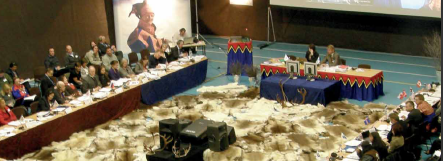
    During this week 27th of April – 1st of May, Tromsø in Northern Norway will be the capital of the Arctic as the city is the venue for The Arctic Councils biennial Ministerial Meeting. Besides this event the Norwegian minister of Foreign Affairs, Mr. Jonas Gahr Støre, together with former US Vice-president, Mr. Al Gore, have called several of the worlds foreign ministers to a conference about the global warming. The conference entitled “Melting Ice: Regional Dramas, Global Wake-Up Call” takes place.

    The two meetings will gather around 400 of the worlds leading experts and politicians on Arctic matters. In addition round 80 journalists and photographers have announced their participation.

    At the end of the ministerial meeting the Chairmanship will be handed over to the Danish delegation. The new chair of the Arctic Council will be MFA Per Stig Møller

    Parts of the “Melting Ice” Conference are broadcasted live at the Arctic Portal Webcast, along with parts of the Arctic Council´s Ministerial Meeting. All videos presented will be archived at the Webcast Archive.

    About the Arctic Council

    Starting in the late 1980s, international cooperation in the Arctic has increased to the extent that a new regional identity is emerging, with numerous political initiatives and new fora.
    The so-called Murmansk Speech by President Mikhail Gorbachev of the Soviet Union is often regarded as the initiating event for current regional cooperation in the Arctic. It had still the Soviet rhetoric on peace but reflected more the processes of glasnost and perestroika in the Soviet Union through its six proposals. The first two were about establishing a nuclear-weapon-free zone in northern Europe and reducing military activities. The others discussed confidence-building measures in northern seas, civilian cooperation in developing natural resources, coordination of scientific research, cooperation in environmental protection, and opening the Northern Sea Route to foreign ships.

    SAO meeting in Kautokeino

    SAO Meeting, Kautokeino, Norway, November 19. – 20. 2008

    Intergovernmental Arctic cooperation officially started in 1989 with the Rovaniemi process in the wake of Mikhail Gorbachev’s Murmansk speech. At the first ministerial meeting in Rovaniemi, Finland, of the eight Arctic states, which also included three northern indigenous peoples organizations, the Arctic Environmental Protection Strategy (AEPS) was signed in June 1991. The initial focus on environmental protection gradually expanded to related fields, notably sustainable development. In 1996, the Arctic states replaced the AEPS with the Arctic Council as a high-level intergovernmental forum for Arctic international cooperation that would include as Permanent Participants a certain number of transnational northern indigenous peoples organisations. Therefore the Arctic Council was established as a high level intergovernmental forum to provide a means for promoting cooperation, coordination and interaction among the Arctic States. The Arctic Council deals with common Arctic issues, with the involvement of the Arctic Indigenous communities and other Arctic inhabitants. These issues are, in particular, sustainable development and environmental protection in the Arctic.

    For further information, please visit the Arctic Council homepage and Melting Ice: Regional Dramas, Global Wake-Up Call Conference homepage.

    Reference

    Arctic Human Development Report
    The Arctic Council

  • Online Whale Watching: Valuable information for fishermen

    Online Whale Watching: Valuable information for fishermen

    Last autumn the Marine Research Institute of Iceland started an experimentation of marking whales with satellite senders that send signals of their route around Iceland. The aim of the experiment is to map their migration route around the island and map their departing points of Icelandic waters.

    From 4th to 7th of November, four of those satellite senders were pinned to two humpback whales and two minke whales just north of Iceland. To mark the whales, a special air gun was used and a small research boat. Usable signals were received from both of the humpback whales, but none from the minke whales.

    Below you can see a map with the migration of one of the humpback whales. Its journey starts in the North of Iceland and the last signals received by the whale were at the south coast of Iceland, a trip that the whale made in a week or so.

    Humpback whale migration pattern around Iceland - map

    The interesting thing is that the whale stayed for a while in a location south-west of Iceland. Therefore some speculations were made that the whale had found some kind of feed. Based on those speculations, some herring fishing vessels went to the same location as the whale and gave the area a try. After some few tosses of the fishing equipment they found considerable amount of herring. So by observing the behavior of the whale, the fishing vessels were able to locate their catch.

    satellite sender device

    In a capelin research expedition by the Marine Research Institute of Iceland that is now going on, two humpback whales were pinned with two satellites senders at the east coast of Iceland. Already some signals have been received by one of those humpback whales that were marked 1st of February this year. It is possible to follow the migration of one of the humpback whale at the Marine Research Institute of Iceland website, to see the whale´s migration pattern

    whale

    Who knows if those two humpback whales that were marked in the capelin research expedition will lead the way to large shoal of capelin for Icelandic fishermen to catch?

    All information and photos are from the the Marine Research Institute of Iceland website, www.hafro.is

  • University Centre of the Westfjords

    University Centre of the Westfjords

    University center of the westfjords logo

    In the small village of Ísafjörður in the rural area of the Westfjords in Iceland, is a small but ambitiuos University centre. The University Centre of the Westfjords is a non-profit organisation established in March 2005. It has 40 founding members, including all of the country’s institutions of higher education. The Centre began operations in Vestrahús in Ísafjörður in January 2006. The same building houses offices of the Marine Research Institute, the Icelandic Fisheries Laboratories, and the Icelandic Snow Avalanche Research Centre, among others. The Westfjords Regional Development Centre is also located there, and all of the organizations represented in the building share common reception facilities.

    IsafjordurThe University Centre acts as a contact between Westfjords residents and institutions of higher education. The most important aspect of this work is the University Centre’s function as the West Fjord’s distance-learning institute. Seven universities in Iceland offer distance learning courses and distance learning instruction takes place at the Centre, variously through the Internet or with the help of remote conference technology.

    The Centre also assists university students and teachers from outside the area in establishing contacts in the Westfjords. The Centre provides information on the region as an interesting option and area for research and assists students and scholars in their work on research projects in the Westfjords. The University Centre makes its facilities available to all university-level students who are studying or carrying out research in the Westfjords.

    Preparatory program for university entrance

    The School of Science and Engineering at Reykjavík University offers a preparatory program for students who do not yet qualify for university entrance. The goal of the program is primarily to prepare students for further studies within the School of Science and Engineering. However, the program offers good general preparation for all kinds of university-level studies, and students who complete the preparatory program have a good chance of being accepted to other university programs in Iceland. A special support system is planned for those whose mother tongue is not Icelandic but who have a good command of the language.

    Continuing Education

    the town IsafjordurThe University Centre of the Westfjords offers exciting continuing education opportunities in the field of environmental and resource management, in connection with its cross-disciplinary program in Coastal and Marine Management.

    The master’s courses will be open for external participants, who must, however, fulfill the program’s admission requirements and be approved by the master’s program committee. The courses are particularly useful for those working professionally in research, planning, resource management, environmental assessment, and related areas.

    Coastal and Marine Management Masters Program

    The University Centre of the Westfjords offers a Masters program in environmental and resource management. Coastal and Marine Management is a demanding and ambitious master’s program in environmental and resource management. The program is cross-disciplinary and prepares students for diverse and exciting positions in both the public and private sectors. It is offered in cooperation with the University of Akureyri, one of Iceland´s state-run universities, which has specialized in fisheries science and related matters for many years. Among the fields which the master’s program in Coastal and Marine Management prepares students to work in are resource and land use planning, environmental impact assessment, consulting work, teaching and research. The program is internationally oriented and taught in English, and both students and instructors come from a diverse range of countries. The master’s program in Coastal and Marine Management brings together people of different backgrounds who share their experience, knowledge, and ideas in a small-scale, creative and fertile intellectual environment, with the goal of finding ways of using natural resources in a sustainable way. The University Centre of the Westfjords welcome new faces to join our exciting group of natural resource management specialists. The application deadline for the autumn semester 2009 for Non EU/EEA citizens is February 15th and for EU/EEA Citizens is April 15th. Residents in Iceland can apply for the spring semester 2009, the deadline is December 15th.

    Isafjordur

    For more information about the University Centre of the Westfjords of Iceland, please visit the Centre´s website.

    Coastal and Marine Management Brochure

  • Students on Ice

    Students on Ice

    Students on ice banner

    The Feature of the Week at the Arctic Portal is ambitious program “Students on Ice”.

    Students on Ice Expeditions (SOI) organize annual educational expeditions to the Arctic and the Antarctic. Its mandate is to provide students, educators and scientists from around the world with inspiring educational opportunities at the ends of the Earth, and in doing so, help them foster a new understanding and respect for the planet and for each other. To date in just over 8 years, over 1,000 students, educators, experts, and scientists from 32 countries have participated in this unique program.

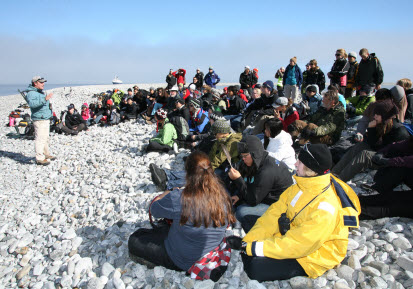
    Students on ice, lectureSOI was founded by adventurer, environmentalist and educator, Geoff Green – a veteran expedition leader of 74 Antarctic expeditions and 31 Arctic expeditions. In 2004, Outpost Magazine chose Geoff as one of the “Top 5 Explorers to Watch”. Over the past fifteen years, Geoff and SOI have worked directly with many IAATO Members, including Quark Expeditions, Polar Star Expeditions, Peregrine Expeditions, Hapag Lloyd, ResidenSea, and Antarpply Expeditions.
    Most recently SOI was endorsed as the official youth expeditions for the International Polar Year (IPY) 2007-2009. The IPY marks a critical opportunity for the world to turn its attention to the state of our Polar Regions, to better understand the global implications, and to seek the necessary actions and solutions required by all of us. This remarkable event offers a timely and exciting opportunity to mentor and inspire the next generations of scientists, researchers and young leaders.

    In between expeditions Students on Ice continues to raise awareness about the global issues that need to be addressed individually and collectively by being part of inspiring outreach activities, such as conferences and speaking engagements. In the context of IPY 2007-2009, Alliance of Natural History Museums of Canada in partnership with Students on Ice is organizing and delivering the Polar Perspectives 2008 Speakers Series and Youth Forums. The goal is to raise awareness about Arctic issues such as the impacts of climate change on the environment, health, culture, sovereignty and indigenous rights. The International Polar Year (IPY) is the largest-ever scientific research program directed at the Polar Regions.

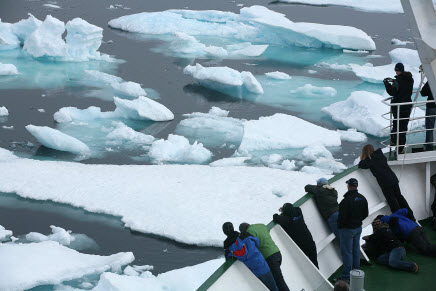
    Students looking at sea-ice from a shipThe aim of Students on Ice is not to simply provide students with a “trip” to a unique destination but rather to give students an opportunity to have an aesthetic experience in some of the most wild and awe-inspiring ecosystems in the world. The objective is not to let students to just pass through a place with camera in hand, but rather to listen to the land; to ‘feel’ these natural places and in turn, explore how humans feel when immersed in such places. The goal of SOI is that students experience a transformative connection with Nature – a connection that changes the way they understand and act in this world.
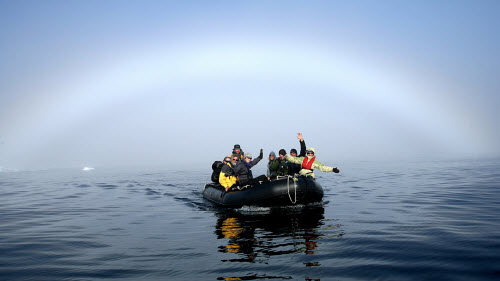
    On expeditions, several different learning formats are used depending on the topic being explored, location, weather conditions, and the skills and experiences of the education team members in which is assembled each time. These learning formats include: lectures, workshops and hands-on activities that are shore, zodiac, and ship-based in setting. There is an environmental focus on the SOI expeditions’ lectures discussions and activities on current environmental issues facing the regions travelled are implemented through. Climate change is a particular focus on all of Students on Ice expeditions.

    fogbow - Rainbow in a fogStudents on Ice program, has received numerous awards and citations for its work with young people, education, the environment and polar conservation. Recently, it received the prestigious 2007 Citation of Merit Award from the Explorers Club in New York City. It has also received the Michael Smith Award for Science Promotion in Canada, as well as a special Citation of Merit from the United States Congress.
    The Students on Ice offers a interesting website with comprehensive information about upcoming and previous expeditions which date back to the year 2000. At the website, it is also possible to view unique videos from previous expeditions. Those videos include e.g. “Visit to Walrus Island”, “A Hundred Whales and Two Bears” and “Going Into the Fog”. The site offers information about the Students on Ice staff, with practical background information about each and one of the SOI team. In addition to all that, Students on Ice have a blog with news from Student on Ice Activities.

    The Students on Ice Webpage

  • Icelandic Fisheries Portal

    Icelandic Fisheries Portal

    Icelandic Fisheries Portal

    The Feature of the week is the newly opened Icelandic Fisheries Portal. The Portal is a project worked jointly by the Ministry of Fisheries and Agriculture in Iceland, Directorate of Fisheries, Icelandic Marine Research Institute, University of Akureyri and Matís – Icelandic Food Research.

    General Information

    fishermanThe Icelandic fisheries portal is a gateway to information on the marine ecosystem around Iceland and on Icelandic fisheries. On the Fisheries Portal, you will be able to find information on everything from the ecosystem to the economy.

    The objective of the new and improved Icelandic fisheries portal is to provide easy access to reliable information on the ecosystem and ocean environment around Iceland, on sustainable utilization of the country’s resources, and on the nutrients and healthiness of seafood in general. Statistical information is also available on fisheries and on the importance of utilizing marine resources for the Icelandic economy. All the information is in English.

    The portal is intended to serve as a comprehensive information source for experts and laymen, wanting information on Iceland’s offshore waters and their utilization, as well as on Icelandic fisheries. This could include, for instance, buyers and marketers of Icelandic seafood’s, students both in Iceland and abroad, fisheries professionals and experts as well as environmental groups and the general public.

    Contents of the Fisheries Portal

    The database will include information on the marine ecosystem, its resources and the principal marine products, markets and resource management. Historical overview is also provided along with general information about Iceland, such as geography, the society, infrastructure and politics. As such, the database, will serve as a sort of information display window for fisheries and related issues in Iceland for use by corporations, journalists, scientists, students and the public. The portal will contain general textual information, simple graphs and illustration, as well as more detailed data of use to scientists, for instance

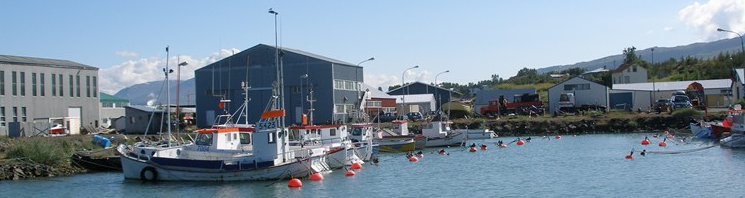
    small harbour

    The URL of the website, operated by the Ministry of Fisheries and Agriculture in Iceland, is http://fisheries.is/