Blog

  • CAFF presents Biodiversity Assessment

    CAFF presents Biodiversity Assessment

    the Arctic Council ministerial

    Today, 14th of May 2013, Ministers gathered in northern Sweden welcomed the Arctic Biodiversity Assessment, prepared by CAFF (Conservation of Arctic Flora and Fauna) one´s of the Arctic Council six working groups.

    The Arctic Biodiversity Assessment is expected to be the best available science informed source on traditional ecological knowledge and status and trends of Arctic biodiversity. It also contains policy recommendations for biodiversity conservation.

    Tomorrow, on 15 May 2013 the Arctic Council will hold its biennial Ministerial Meeting in Kiruna in the north of Sweden. Approximately 300 people – ministers, delegates from the eight Arctic states (Canada, Denmark, Finland, Iceland, Norway, Russia, Sweden, and the United States), representatives of indigenous peoples, scientists and observers – will gather in to mark the end of the two-year Swedish chairmanship and the beginning of the Canadian chairmanship of the Arctic Council.

    The Arctic Council is a high level intergovernmental forum to provide a means for promoting cooperation, coordination and interaction among the Arctic States, with the involvement of the Arctic issues, in particular issues of sustainable development and environmental protection in the Arctic. The scientific work of the Arctic Council is carried out in six expert working groups.

    Source

    CAFF

  • Future Directions in Antarctic Science

    Future Directions in Antarctic Science

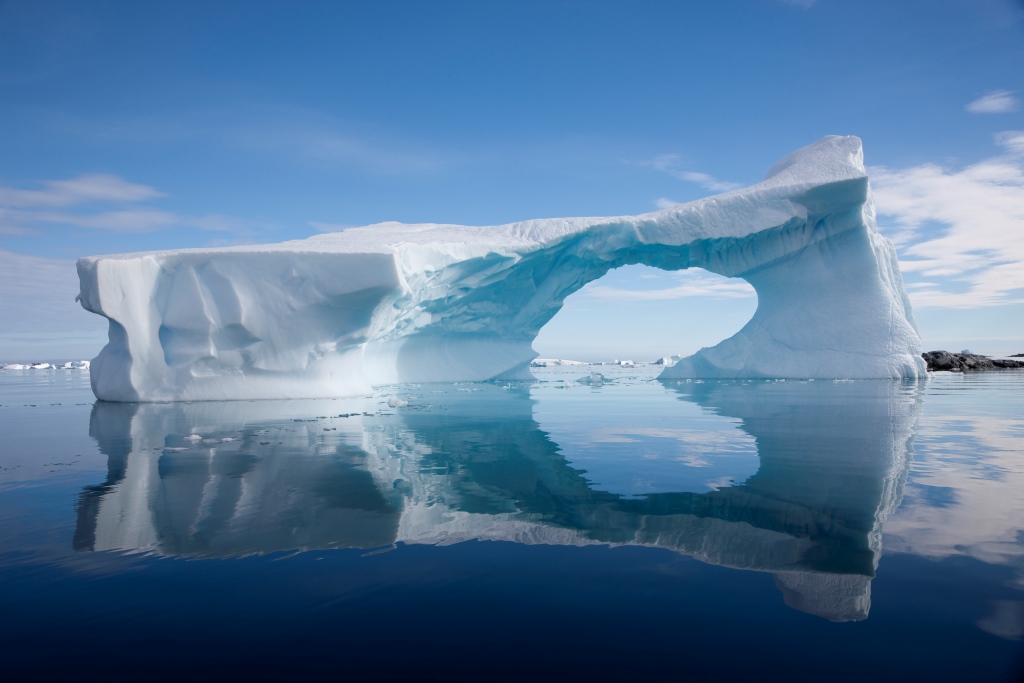
    Penguins

    IASC´s southern hemisphere partner, the Scientific Committee on Antarctic Research (SCAR), is embarking on a unique and exciting project to identify the most important and compelling questions in Antarctic and Southern Ocean science over the next two decades.

    A collective, community-based vision of the 100 highest priority scientific questions will be developed to assist in strategic planning; influence future directions in Antarctic research; highlight opportunities for collaborations and synergies; identify future critical infrastructure, logistical, and technological needs; and inform international decisions about investments in the Antarctic scientific enterprise.

    For this project to be successful organizers need the opinions and insights on what are or will be THE scientific questions that once answered, will measurably improve our understanding of Antarctica and the Southern Ocean and its connections to the Earth and climate systems and beyond.

    Outputs will include a high-profile, summary paper published in a leading journal and various other documents and products that will be widely disseminated to the community. Public responses will be the “raw material’ to identify the most compelling and timely questions for Antarctic and Southern Ocean science in the future.

    This project will only be successful if the communities and individuals choose to participate!

    Please encourage your colleagues to submit questions as well. The first round solicitation will close on 15 June 2013.

    For more detailed information and to submit your questions, please visit SCAR Website.

    Source

    Scientific Committee on Antarctic Research

  • French Arctic Initiative conference

    French Arctic Initiative conference

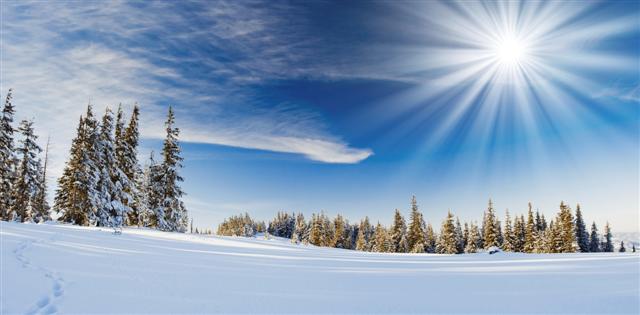
    The Arctic landscape

    The French Arctic Initiative’s inaugural symposium entitled “Arctic: the Major Scientific Issues” will be held June 3-5, 2013 at College de France, in Paris. It will be followed, on June 6, 2013, by a day of reflection on future prospects for the Arctic and, in the evening, public event at l’Institut Océanographique.

    The objectives of the symposium are: to address the major scientific issues and recent developments with regard to the Arctic, to mobilize the scientific community, from multiple disciplines, around these issues and to highlight the most promising avenues for improving our understanding of this complex system.

    This symposium will lead to the production of a white paper on future research priorities confronting the French scientific community.

    The organizers of the symposium hope to attract the attention of the best researchers in the country, including those who have never worked on scientific problems in the Arctic.

    It is important to note that researchers with leading-edge expertise that is not necessarily focused on a particular environment may contribute to the development of innovative research in the Arctic. We will address the Arctic in a broad context in terms of discipline and temporal (past, present future) or spatial (polar, global) dimension.

    The symposium is organized in the framework of a partnership between the French Arctic Initiative and la Chaire de l’Evolution du Climat et de l’Océan du Collège de France.

    Source

    French Arctic Initiative

  • Research opportunity with INTERACT

    Research opportunity with INTERACT

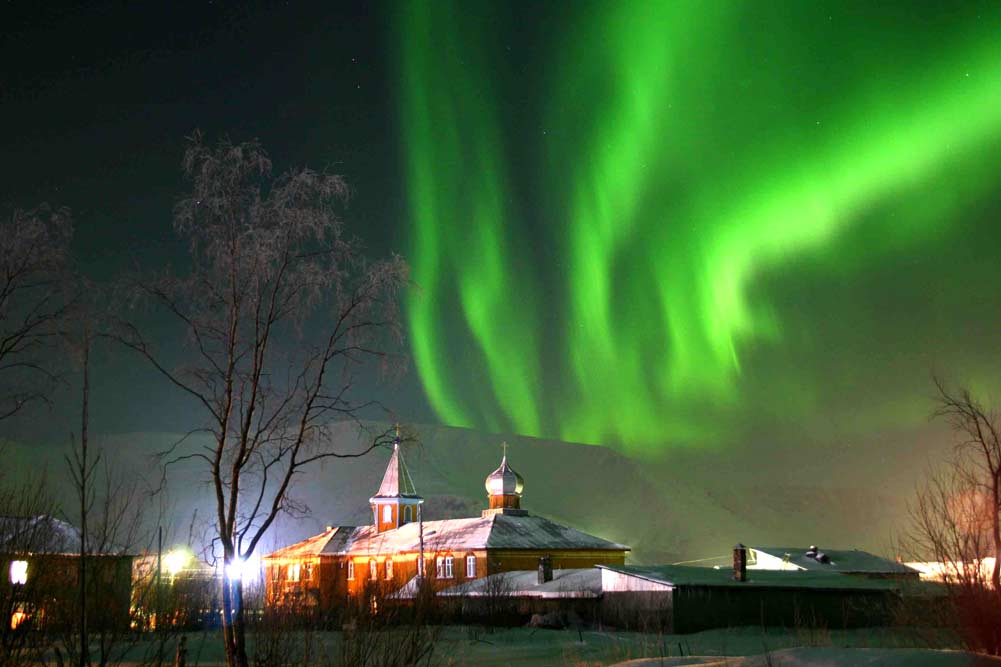
    Khibibny station during the winter

    Register to the on-line application system already now, and apply INTERACT Transnational Access to conduct research at the coolest places of the North!

    The INTERACT project under EU FP7 has a Transnational Access program that offers access to 20 research stations in the northernmost Europe and Russian Federation. The sites represent a variety of glacier, mountain, tundra, boreal forest, peatland and freshwater ecosystems, providing opportunities for researchers from natural sciences to human dimension.

    Transnational Access includes:

    Free access for user groups/users to research facilities and field sites, including support for travel and logistic costs

    Free access to information and data in the public domain held at the infrastructures

    The call for proposals will be open at the INTERACT website on 1st August – 30th September 2013 for Transnational Access visits taking place between October 2013 and October 2014.

    Transnational Access is available to user groups, where the group leader and majority of group members work in an institution established in a EU Member State or Associated State. The maximum amount of access per user group is 90 person-days, including previously granted INTERACT Transnational Access.

    You can find the eligibility rules and application instructions, stations available for Transnational Access, descriptions of stations and their facilities, and registration to the on-line application system from the INTERACT website.

    For additional information, visit the INTERACT website or contact WP4 coordinator Hannele Savela, hannele.savela(at)oulu.fi, or WP4 leader Kirsi Latola, kirsi.latola(at)oulu.fi

    Source

    INTERACT

  • Growth of Icelandic – Arctic network

    Growth of Icelandic – Arctic network

    University of Akureyri, Iceland

    Today, 7th of May the representatives from newly established Icelandic – Arctic Chamber of Commerce: Haraldur Ingi Birgisson and Ragnar Þorvarðarson will be present at the University of Akureyri in order to discuss important Arctic – related matters.

    The representatives will establish network connection with Arctic – related organizations from northern part of Iceland in order to better fulfil the role of newly established Icelandic – Arctic Chamber of Commerce.

    A Memorandum of Understanding on the establishment of an Icelandic-Arctic Chamber of Commerce (IACC) was signed Wednesday, 24 April, by the Icelandic Chamber of Commerce (ICC), the Icelandic Arctic Cooperation Network and the Icelandic Ministry for Foreign Affairs.

    The establishment of the IACC presents a milestone in the implementation of Iceland’s Arctic Policy, the goal of the present project being to develop and strengthen economic cooperation within the Arctic region, endeavoring to secure Icelandic competitiveness with regard to business opportunities emerging with increased economic activity in the Arctic.

    The Icelandic-Arctic Chamber of Commerce will operate similarly to bilateral Chambers of Commerce already active under ICC’s wing, creating a platform for connections between enterprises and companies all over Iceland, stakeholders in the increased economic activities in the Arctic region, as well as serving as an information center for arctic issues.

    The IACC will furthermore work closely with Icelandic authorities, Universities and research forums as well as other interested parties, to encourage lucrative, yet responsible harnessing of business opportunities in the Arctic, for the long term benefit of the Icelandic economy as well as for the Icelandic society in general.

    The present initiative creates an important venue for cooperation between Icelandic businesses and parties specialized in Arctic affairs, and not least an international cooperation network. The Icelandic-Arctic Chamber of Commerce will be formally launched at a meeting mid-May, where a board of directors will be chosen to further the project.

    Source

    Icelandic Ministry for Foreign Affairs

  • White House worried about Arctic ice

    White House worried about Arctic ice

    Arctic landscape

    Before the weekend, the White House warned on imminent Arctic ice death spiral.

    National security officials are worried by the rapid, progressive loss of the Arctic ice as it might cause permanent global food shortages.

    Senior US government officials are to be briefed at the White House this week on the danger of an ice-free Arctic in the summer within two years.

    The meeting is bringing together Nasa’s acting chief scientist, Gale Allen, the director of the US National Science Foundation, Cora Marett, as well as representatives from the US Department of Homeland Security and the Pentagon.

    This is the latest indication that US officials are increasingly concerned about the international and domestic security implications of climate change.

    Senior scientists advising the US government at the meeting include 10 Arctic specialists, including marine scientist Prof Carlos Duarte, director of the Oceans Institute at the University of Western Australia.

    This time scientists and policy makers will work together to bring the solutions for not only the Arctic nations but also, the rest of the world that might be effected by the melt.

    Source

    The Guardian

  • Students welcome for Nansen´s School

    Students welcome for Nansen´s School

    University of the Arctic

    The NVP-Nansen summer school 2013 “Shipping in Arctic Water: The interaction of sea ice, ship technology, climate change, economy and other operational conditions” will be organized in Longyearbyen on Svalbard from 18th to 25th August. Graduate & postgraduate students are invited to submit applications for participation by 31 May 2013.

    Participation is based on individual applications from Ph.D. students and Post-docs in the fields of Arctic Climate, Arctic Resources, Maritime Transport and Geopolitics. Up to 30 graduate and post-graduate students from different countries and research topics will be selected based on an evaluation of their applications.

    Click here to download the program.

    The application deadline is 31 May 3013. Applications should be sent to admin@nersc.no with the subject: “Application summer school 2013”. The selected candidates will be notified by mid-May.

    Source

    UArctic

  • Icelandic-Arctic Chamber of Commerce

    Icelandic-Arctic Chamber of Commerce

    The world globe

    A Memorandum of Understanding on the establishment of an Icelandic-Arctic Chamber of Commerce (IACC) was signed Wednesday, 24th April, by the Icelandic Chamber of Commerce (ICC), the Icelandic Arctic Cooperation Network and the Icelandic Ministry for Foreign Affairs.

    The establishment of the IACC presents a milestone in the implementation of Iceland’s Arctic Policy, the goal of the present project being to develop and strengthen economic cooperation within the Arctic region, endeavoring to secure Icelandic competitiveness with regard to business opportunities emerging with increased economic activity in the Arctic.

    The Icelandic-Arctic Chamber of Commerce will operate similarly to bilateral Chambers of Commerce already active under ICC’s wing, creating a platform for connections between enterprises and companies all over Iceland, stakeholders in the increased economic activities in the Arctic region, as well as serving as an information center for arctic issues.

    The IACC will furthermore work closely with Icelandic authorities, Universities and research forums as well as other interested parties, to encourage lucrative, yet responsible harnessing of business opportunities in the Arctic, for the long term benefit of the Icelandic economy as well as for the Icelandic society in general.

    The present initiative creates an important venue for cooperation between Icelandic businesses and parties specialized in Arctic affairs, and not least an international cooperation network. The Icelandic-Arctic Chamber of Commerce will be formally launched at a meeting mid-May, where a board of directors will be chosen to further the project.

    Source

    Icelandic Ministry for Foreign Affairs

  • May Day in the Arctic

    May Day in the Arctic

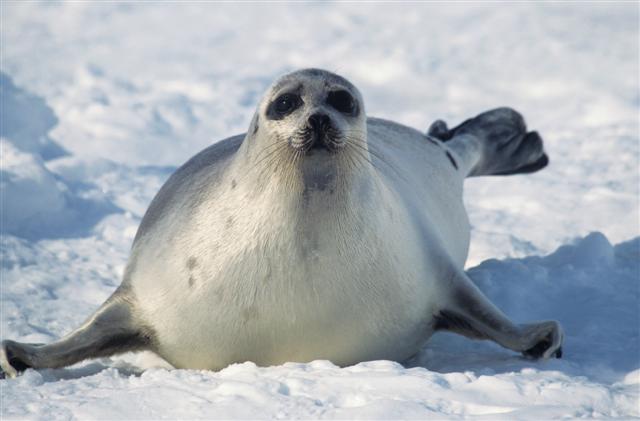
    Seal in the arctic

    International Workers’ Day (also known as May Day) is a celebration of the international labour movement. May the 1st is a national holiday in more than 80 countries and celebrated unofficially in many other countries.

    All of the eight Arctic states celebrate the International Workers´Day. Icelandic Labour Day – Frídagur Verkalýðsins and Norwegian – Arbeidernes Dag – is a national holiday.

    In Sweden, it has been very important part of the history since the 19th century. Today The May Day demonstrations are still an important part of Swedish politics for the social democrats, left-wing parties and unions who use May Day to discuss their politics.

    In Finland, International Workers´ Day is celebrated as a feast of students, and spring.

    In Russia, the 1st of May was celebrated secretly until the February Revolution that enabled the first legal celebration in 1917. Today May Day is officially called “The Day of Spring and Labor”, and remains a major holiday in present-day Russia.

    For Denmark United State and Canada the 1st of May has not become official yet. In 2012 tens of thousands marched together in a number of cities in the United States and Canada, to commemorate May Day.

    The Arctic Portal wishes all its readers Happy International Workers´ Day!

  • Call for SCF applications

    Call for SCF applications

    Earth globe, polar view

    Science Cooperation Fund – the Agreement between Iceland and Norway to promote the Arctic studies and help with students and staff mobility between those two Arctic countries, encourages to apply for exchange scholarships and staff mobility grants before tomorrow´s deadline.

    The purpose of the fund is to encourage scientific cooperation between higher education institutions, research organizations and research groups in Norway and Iceland in the field of Arctic science or other activities as decided by the joint Icelandic-Norwegian Committee.

    Grants are awarded for travel and accommodation cost in relation to the participation of individuals or groups in scientific conferences and/or joint meetings in Norway and Iceland.

    In this context Arctic science encompasses research, monitoring, education and dissemination of knowledge that relate to both distinctive and common denominators of nature, culture, economy and history of the Arctic region with a bilateral and/or international perspective.

    Grants will be awarded according to lump sums for travel and subsistence costs.

    For more information, please visit the Science Cooperation Fund website.