Blog

  • Arctic Observing Summit starts tomorrow

    Arctic Observing Summit starts tomorrow

    Arctic Observing Summit

    Arctic Observing Summit 2013 will be held 30 April – 2 May 2013 at Hyatt Regency, Vancouver.

    The Arctic Observing Summit 2013 is still open for participation.

    The Arctic Observing Summit (AOS) is a high-level, biennial summit that aims to provide community-driven, science-based guidance for the design, implementation, coordination and sustained long-term (decades) operation of an international network of arctic observing systems.

    The AOS will provide a platform to address urgent and broadly recognized needs of arctic observing across all components of the arctic system, including the human component. It will foster international communication and coordination of long-term observations aimed at improving understanding and responding to system-scale arctic change. The AOS will be an international forum for optimizing resource allocation through coordination and exchange among researchers, funding agencies, and others involved or interested in long-term observing activities, while minimizing duplication and gaps. The AOS is a contribution to the Sustaining Arctic Observing Network (SAON) initiative.

    The AOS 2013 primarily is a forum for exchange and discussion of information critical to building and sustaining an integrated, multi-domain observing system of pan-Arctic scale.

    The key topics are introduced by presentations but the emphasis of the AOS is first and foremost on discussion and interaction between participants, with the goal of reaching consensus and drafting agreements and plans for specific actions that foster coordination of observing activities and help implement coordinated collaborative networking of arctic observing system efforts.

    The format of the AOS does not follow that of a conventional conference or symposium where the emphasis is on the presentation of scientific results. White papers submitted and discussed prior to the summit will inform discussion and form the basis for concluding statements and papers that support summit goals.

    More information about the Summit.

    Source

    Lögfræðingur 2013

  • Interview with Ólafur Ragnar Grímsson

    Interview with Ólafur Ragnar Grímsson

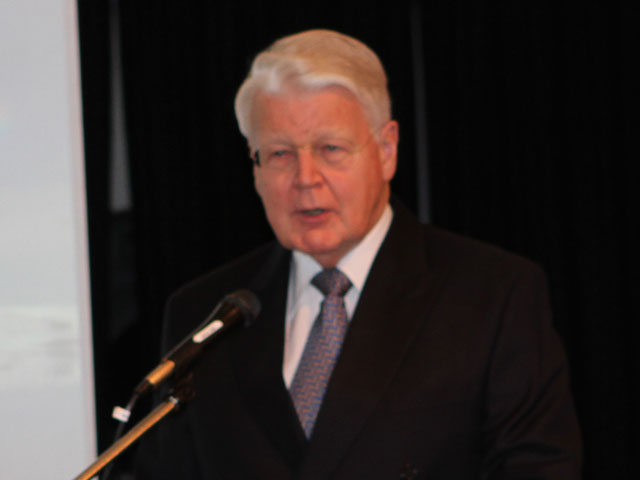
    Ólafur Ragnar Grímsson, the President of Iceland

    Yesterday, 23rd of April 2013, Lögfræðingur, a peer-reviewed law journal of the University of Akureyri, published the interview with the President of Iceland – Ólafur Ragnar Grímsson.

    Ólafur has been a vigorous advocate for peaceful and democratic evolution in the Arctic. He maintains that Iceland has a critical role within the cooperation of nations in the Arctic.

    Ólafur emphasizes that the evolution of the Arctic must be fundamentally based on science.

    Lögfræðingur met the President on 7 February 2013 at his residence Bessastaðir to discuss Arctic issues, Arctic development and the nature of the management and legal framework that is the key to cooperation between the Arctic countries.

    Click here to download the article.

    Source

    Lögfræðingur 2013

  • Why´s this year´s spring so cold?

    Why´s this year´s spring so cold?

    The warming Arctic is give Europe and North America cold springs.

    Most of the Arctic states have already welcomed spring. Majority of them, have only seen it on the calendar as temperatures have been staying on the negative side of a meter. Why hasn´t a spring truly arrived yet?

    Climatologists blame an unprecedented melting of Arctic sea ice. According to their research it is the reason for this year’s extraordinary cold spring weather in northern Europe and North America.

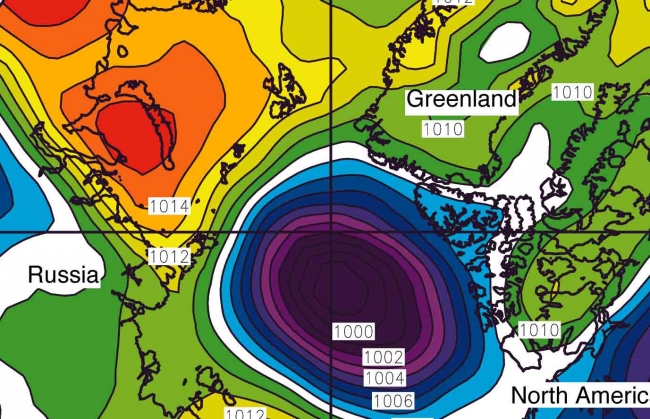
    A massive high pressure has been stable over major parts of the northern hemisphere weeks longer than normal, while the traditional warm winds from the Atlantic Sea have been absent. The consequence has been temperatures far below the seasonal average.

    The reason for the trend is the powerful warming and subsequent ice melting in the Arctic, researchers believe.

    While northern Europe this spring has experienced cold and dry weather, North America has had low temperatures and late snow. Figures from the Norwegian Meteological Institute show that southern Norway in the period January-March had average temperatures between 2-4 degrees below normal. Northern Norway, meanwhile, had temperatures significantly above the average and snow and rain in abundance.

    Data from National Snow and Ice Database suggest that the Arctic sea ice extent in March 2013 averaged 15.04 million square kilometers (5.81 million square miles). This is 710,000 kilometers (274,000 square miles) below the 1979 to 2000 average extent, and 610,000 square kilometers (236,000 square miles) above the record low for the month, which happened in 2006. Continuing a trend in recent winters, ice extent was near or below average levels throughout most of the Arctic, with the exception of higher extent in the Bering Sea.

    Sources

    Barents Observer

    Climate Change and Sea Ice Portlet

  • China plans to invest in Russia

    China plans to invest in Russia

    Russian harbor

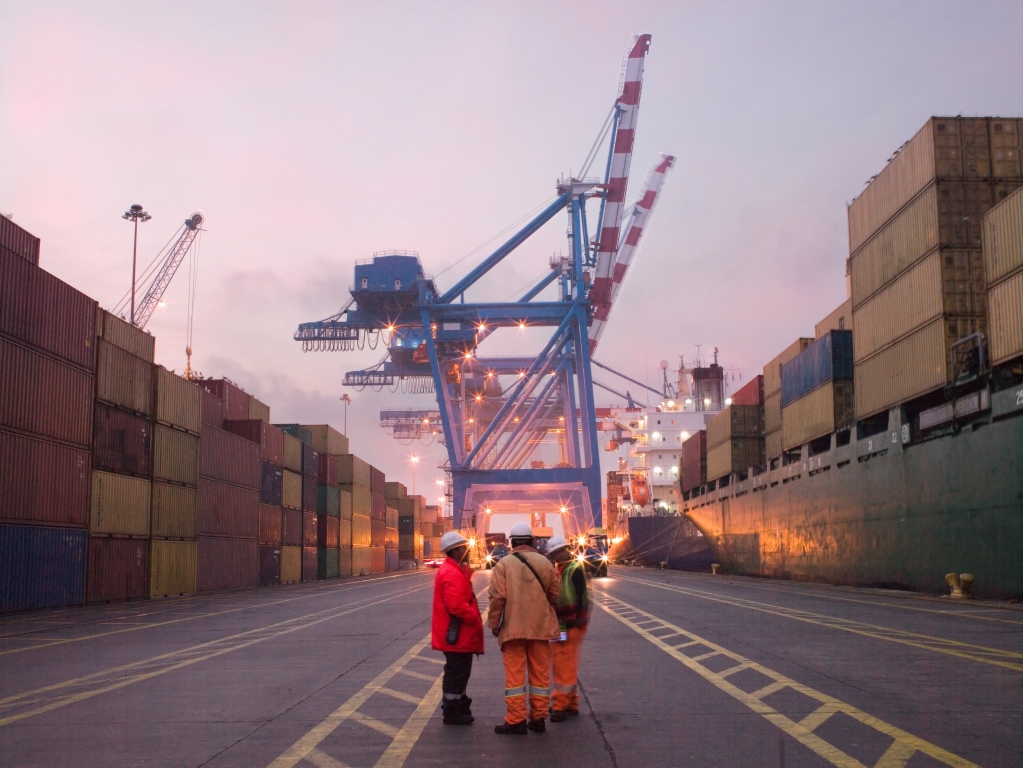
    Chinese investors are interested in building deep water harbor in Arkhangelsk Oblast, according to Deputy Governor of the region. It is believed that a new deep water harbor is the natural ending point of the infrastructure development around the area.

    Alsufyev and Dmitry Deart, who is Head of the Department for Transport, have just returned from China, where they took part in the third meeting in the joint Russian-Chinese working group on the Belkomur project.

    They presented the deep-water harbor project to Chinese investors, who showed “principal interest” in developing the port of Arkhangelsk, the regional administration’s web site reads.

    The planned deep-water port in Arkhangelsk, which is included in Russia’s transport strategy for the period to 2030, will have an annual capacity of 30 million tons.

    Source

    Barents Observer

  • April Arctic sea ice below average

    April Arctic sea ice below average

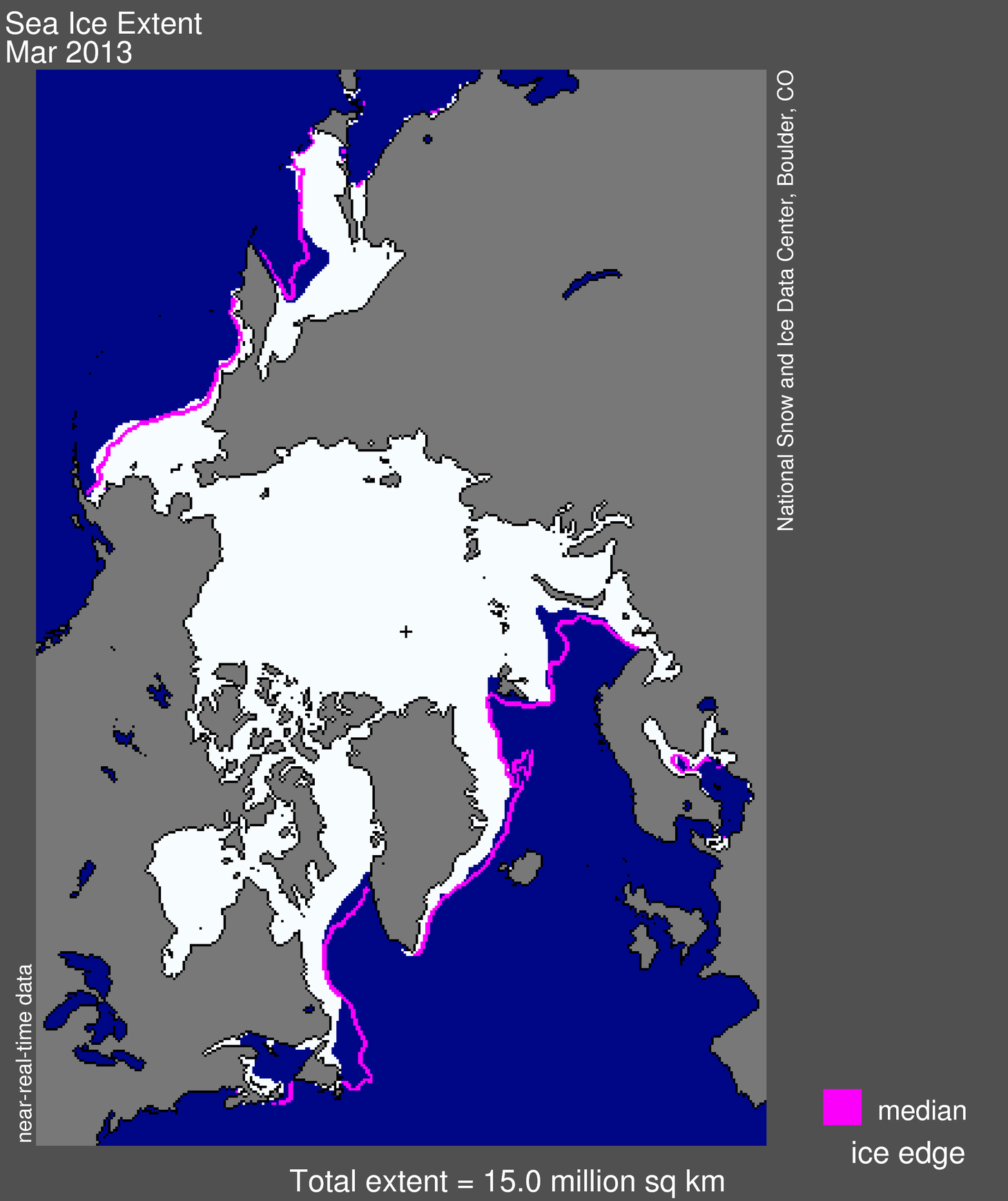
    Arctic sea ice extent for March 2013

    Arctic sea ice extent in March 2013 averaged 15.04 million square kilometers (5.81 million square miles). This is 710,000 kilometers (274,000 square miles) below the 1979 to 2000 average extent, and 610,000 square kilometers (236,000 square miles) above the record low for the month, which happened in 2006.

    Continuing a trend in recent winters, ice extent was near or below average levels throughout most of the Arctic, with the exception of higher extent in the Bering Sea.

    The Arcic sea ice is one of the key symbols of the cold and barren Arctic Region. It affects lives of both, Arctic and non – Arctic residents.

    The Arctic sea ice significantly contributes to the world weather patterns and it helps to keep the globes temperatures down.

    The measurements that have been conducted for the past six years show that the Arctic sea ice has been decreasing. Scientists predict that this pattern will lead to the ice – free Arctic before 2050.

    Click here to find daily reports on Arctic sea ice. To read more about the Arctic sea ice, climate change and more, please access the Arctic Portal Climate Change & Sea Ice Portlet.

    Source

    National Snow and Ice Data Center

  • Treaty for the Arctic?

    Treaty for the Arctic?

    The sea divided into east and west.

    Diplomats and fisheries officials from five Arctic states will meet in Washington later this month to discuss regulations on commercial fishing near the North Pole.

    Government representatives from five Arctic states, i.e. Norway, Denmark, Canada, United States and Russia, agreed yesterday to meet later this month in order to discuss the laws that will apply to commercial fishing within the Arctic Circle.

    About 70 percent of the world’s total white fish supply comes from Arctic waters. This marine resource is extremely significant to Arctic regional and coastal communities.

    Fishing in the Circumpolar North has been and is a significant economic resource. Fishing is also rooted in the culture of many of the Arctic nations.

    World catch in numbers

    Now Exclusive Economic Zones divide where nations can catch fish but this economic activity has shaped the cultural values in the Arctic and is an important factor in the daily life of the coastal residents.

    If an agreement is made, it will represent the third such accord struck by countries in the far north to manage the commercial development and industrialization of the region, which is expected to increase with global warming. The other two agreements reached so far regulate oil spill response and search and rescue.

    The 12th Conference on Polar Meteorology and Oceanography that will take place in Seattle, Washington on 29th of April, is sponsored by the American Meteorological Society and organized by the AMS Polar Meteorology and Oceanography Committee.

    This year it will treat not only about natural science but also serve as a place to discuss legal and political issues between Arctic stakeholders.

    Source

    Barents Observer

    Fishing Portlet

  • Anthony Speca gives a lecture in Akureyri

    Anthony Speca gives a lecture in Akureyri

    Antony Speca

    Today, 18th of April at the University of Akureyri in northern Iceland, Anthony Speca gave speech on Nunavut, Greenland and politics of resource revenues. Another lecture from The Arctic Lecture series, organised by the University of Akureyri, touched upon economic situation in Canadian North and Greenland. Mr Speca highlighted that the idea that Nunavut could one day put more into Confederation than it takes out is not a flight of fancy.

    Nunavut’s entire 2011-12 territorial formula financing grant of about $1.2 billion is less than half of the resource income that Newfoundland and Labrador, the newest net-contributing of “have” province, is projected to collect the same year.

    If self-reliance is truly Nunavut’s aim in negotiatingdevolution, then it seems sensible for Nunavut to align. Co nceptually the fiscal self-reliance it will gain from a share of resource revenues with the political self-reliance it will gain from more province-like power over resource development.

    Anthony Speca is founder and Managing Principal of Polar Aspect, a Nunavut-based consultancy dedicated to public policy, government strategy and economic negotiation in the Canadian and circumpolar North.

    Borgir Research Center in Akureyri

    He has advised government on fiscal policy and the devolution of lands and resources, particularly fiscal federalism and resource-revenue sharing.

    As a columnist for Northern Public Affairs magazine, Anthony also writes on international politics and economics in the Arctic, and its implications for Canada. Anthony is a trained negotiator and accredited mediator, with a special focus on negotiations and disputes involving government, indigenous peoples, or rural or resource-based business.

    Anthony trained as a negotiator at the London School of Economics and Political Science and was accredited as a mediator in both the UK and USA in 2013. Anthony obtained a Ph.D. in philosophy from the University of Toronto in 1999.

    His research culminated in his book, Hypothetical Syllogistic and Stoic Logic (Brill 2001).

    For more detailed information about the politics of resource revenues of these northern terretories, plese see the Speca’s report here.

    Source

    UNAK

  • Sabetta port becomes a reality

    Sabetta port becomes a reality

    Computer image of future Sabetta port

    Construction of Sabetta port, a key component in the huge Yamal LNG project, is now planned to start this summer.

    It is predicted that the Sabetta port will become one of the biggest in the Russian Arctic. Located in the Yamal Peninsula, it will boost shipping in the icy waters of the Ob Bay and the Northern Sea Route.

    Project Manager – Maksim Minin officially announced that the project has been delivered to the contractor and is ready to be reviewed by the state expert panel.

    The new port, a joint initiative of the Novatek company and Russian federal authorities, will be a key component in the development of the gas-rich Yamal Penisula. Linked with the South Tambey field and a major projected LNG plant, the port will be built to handle more than 30 million tons of goods per year.

    Sabetta port is planned to be operational all-year-round, despite the highly complex ice conditions of the Ob Bay.

    The total investments in the Sabetta port project amount to 75 billion RUB (€1,82 billion). The Russian government is investing 49 billion RUB (€1,19 billion) while private investments amount to 25 billion RUB (€607 million).

    The Yamal LNG project is developed by the JSC Yamal LNG, a joint venture of Novatek (80%) and Total (20%), and in close cooperation with the Federal Agency of Sea and River Transport and the Rosmorport state enterprise.

    Source

    Barents Observer

  • AES abstract deadline extended

    AES abstract deadline extended

    Arctic Energy Summit 2013

    The deadline to submit an abstract for the 2013 Arctic Energy Summit has been extended to April 30th.

    Submissions can include proposals for papers, workshops, and panels.

    The 2013 Arctic Energy Summit is a multi-disciplinary event that will bring several hundred industry officials, scientists, academics, policy makers, energy professionals, and community leaders together to collaborate and share leading approaches on Arctic energy issues.

    The 2013 Arctic Energy Summit will address energy extraction, production, and transmission in the Arctic as it relates to the theme of “Richness, Resilience & Responsibility: The Arctic as a Lasting Frontier.”

    The Summit will take place October 8-10 in Akureyri, Iceland. More information is available on the conference´s website or by e – mail: aen@institutenorth.org. 

    Source

    Arctic Circle

  • Arctic Circle now official

    Arctic Circle now official

    President of Iceland, Ólafur Ragnar Grímsson

    Yesterday, Iceland’s President – Ólafur Ragnar Grímsson announced establishment of a new assembly for international cooperation on Arctic issues that can give non-Arctic countries like China, India and Singapore a forum for influence in the region.

    The assembly, called the Arctic Circle, will have its inaugural gathering in Reykjavik, Iceland in October. The formation of the Arctic Circle was announced by Iceland’s President Ólafur Ragnar Grímsson in Washington, D.C. on Monday.

    The organization has been registered as a 501(c) 3 non-profit and is supported by private donations. The board of directors is led by Alice Rogoff, founder of the Alaska Dispatch and the Arctic Imperative Summit.

    The mission of the Arctic Circle is to facilitate dialogue and build relationships to confront the Arctic’s greatest challenges. The organization aims to strengthen the decision-making process by bringing together as many Arctic and international partners as possible under one large “open tent.”

    By facilitating circumpolar meetings of leaders across disciplines, the organization will identify truly sustainable development practices for the Arctic, the world’s last pristine environment.

    The Arctic Circle is nonprofit and nonpartisan. Organizations, forums, think tanks, corporations and public associations around the world are invited to hold meetings within the Arctic Circle platform without surrendering their institu¬tional independence.

    Please, click here to read more about the Arctic Circle.

    Source

    Arctic Circle