Blog

  • 2013 meeting of the Council of UArctic

    2013 meeting of the Council of UArctic

    UAF campus

    The 16th meeting of the Council of University of the Arctic will take place at the University of Alaska, Firebanks (UAF), June 3-5th, 2013.

    Hosted by the University of Alaska Fairbanks, this year’s Council meeting will run from Monday, June 3rd through to Wednesday, June 5th, with an optional day trip to Denali National Park on June 6th (see Council 2013 – Preliminary program).

    Besides regular Council business, the 2013 Council meeting program will include a “UArctic Today – Introduction to UArctic” session which should be of particular interest to new members and new delegates; a couple of sessions to review and discuss the draft UArctic Strategic Plan 2020; side-meetings for Council Committees and Program Teams, as well as for North2north coordinators and partners (these meetings are by invitation only); and a members Networking session.

    To complete registration, access the UAF’s website. The information on the meeting venue, accommodation, travel arrangements and ideas for the things to do in interior Alaska are all available here.

    Fairbanks serves as the hub city for Alaska’s interior and a gateway to Arctic Alaska. Home to approximately 100,000 residents, Fairbanks has a diverse economy that includes mining, military, tourism, the University of Alaska Fairbanks and regional offices for state and federal agencies. The people of Fairbanks are known for their friendliness, self-sufficiency, dedication to community and pride in Alaska.

    Please, consult the Council’s website for more information.

    Source
    University of teh Arctic

  • Illegal trade on increase in Russia

    Illegal trade on increase in Russia

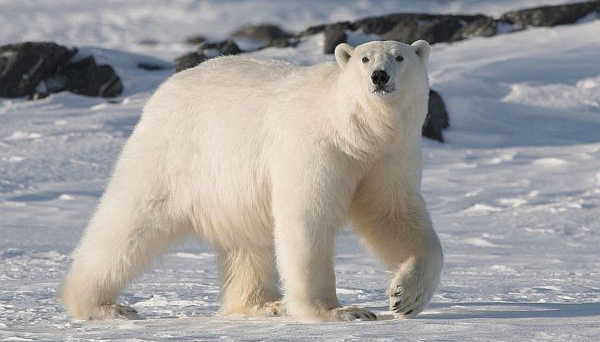
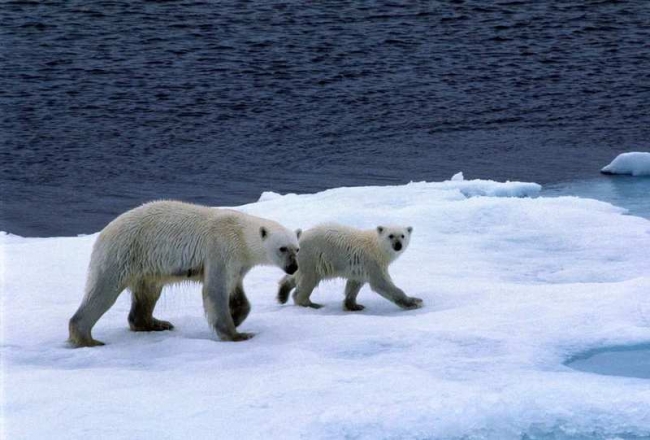
    Polar bear with cub

    Illegal trade of polar bears products is on the increase in Russia.

    Last month, WWF Russia presented study showing that illegal trade in polar bear products had been booming. Skins are for sale at 600,000 rubbles, mostly in Moscow, but internet ads also come from Murmansk.

    The environmental group in Moscow has monitored the internet over the last 20 months searching for ads selling or buying polar bear skins. 47 skins for sale have been discovered, some ads offering more than 3 skins, according to the study.

    Soviet Union outlawed polar bear hunting in 1957. Most of the skins where put up for illegal sale in Moscow, but WWF has also found skins for sale in Murmansk, St. Petersburg, Chelyabinsk, Kirov, Izhevsk, Dnepropetrovsk and Irkutsk.

    The study says the average price for a polar bear skin is 600,000 rubbles (€14,940), sharply up compared with black-market prices ten years ago.

    There are between 5,000 and 7,000 polar bears in Russia. Those in the Barents Region are partly migrating between the Norwegian archipelago of Svalbard and the Russian islands of Franz Josef Land and Novaya Zemlya.

    Source

    Barents Observer

  • ASSW 2013 coming soon

    ASSW 2013 coming soon

    Polar bear

    This year’s Arctic Science Summit Week will take place in Krakow, Poland. The ASSW will be held during the second week of April, 13th – 19th.

    The ASSW is the annual gathering of international organizations engaged in supporting and facilitating Arctic research. Its purpose is to provide opportunities for international coordination, collaboration and cooperation in all fields of Arctic science and to combine science and management meetings. Side meetings organized by groups with interest in the Arctic science and policy will also be held within the week.

    One of them is already planned: The Association of Polar Early Career Scientists (APECS) will offer a one-day career development workshop during the ASSW 2013.

    The ASSW in 2013 will include a three-day Science Symposium entitled: The Arctic Hub – Regional and Global Perspectives.

    Arctic Portal will participate in the symposium with the presentation titled: Communication and structure of scientific data in order to support regional and global sustainability of the Arctic Region.

    More information and registration chart for the ASSW 2013 can be found here.

    Source

    ASSW 2013

  • Nature Gate app now launched

    Nature Gate app now launched

    Nature Gate

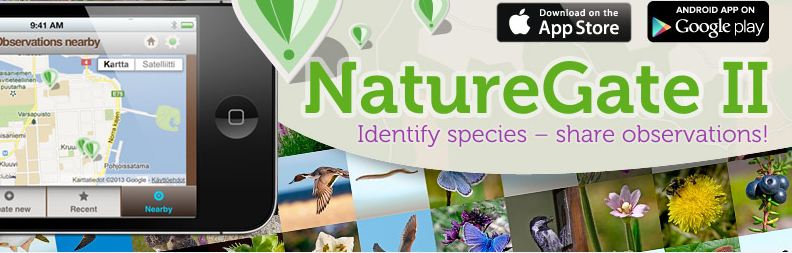
    NatureGate mobile app version 2 has been launched and is now available now for iOS and Android devices.

    NatureGate service is based on a worldwide patented species identification tool, enabling you to find fascinating information about hundreds of wild species together with thousands of superb images captured by top photographers. You can view and search for species in various ways – for instance using their English names, their scientific names, or by genus or family.

    Their unique identification tools also help you to get to know new species. They make the task of discovering new species easy, fast and fun. Try one of these tools right now! Choose a species group, and find out how to identify unfamiliar flowers, trees and shrubs, birds, butterflies or fish.

    NatureGate is a global gate to the nature. The web and mobile services are already available in eight languages. Educational material including interactive games tailored for different age groups from elementary school children to academic students is in the pilot phase. NatureGate mainly works in eight languages. Many of our featured species can be found right around the world. Our multilingual web services can benefit millions of people interested in nature, wherever they happen to be.

    To read more about Nature Gate project click here.

  • Young researchers gathered in Reykjavik

    Young researchers gathered in Reykjavik

    Young researchers gathered yesterday at the University of Iceland

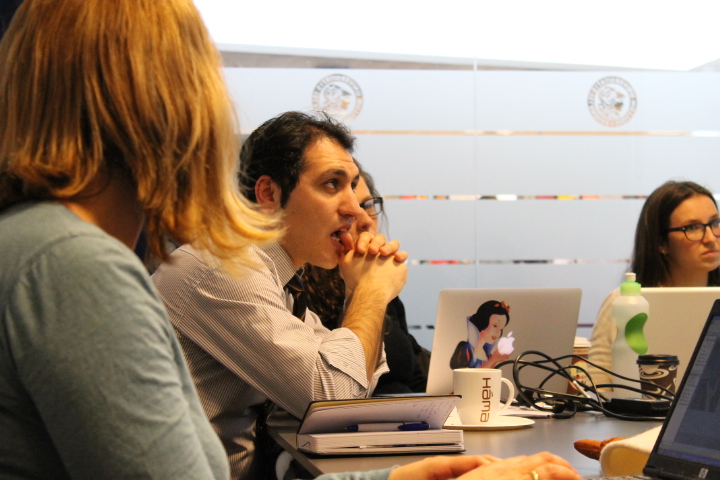
    Yesterday, 20th of March, young researchers met at the University of Iceland in order to discuss and present their on-going research work. Friendly and informal meeting involved young engineers, natural and social scientists.

    Ph.D and Master students from various parts of the world, to include Italy and Iran got a chance to present their high quality research, carried out at various highly recognized universities, to include University of Akureyri, Iceland, Tromso University in northern Norway and many others.

    Research topics were greatly focused around the Arctic issues and touched upon biosciences, fisheries, law, politics and international affairs. The meeting created the platform for information, knowledge and experience exchange and allowed the development of new ideas and further interaction between representatives of various disciplines.

    The meeting was chaired by Margaret Cela, the Project Manager of new Centre for Arctic Policy Studies, University of Iceland. The Centre which was formally opened on Tuesday, during the international meeting: ”Trans – Arctic Agenda” will be the forum for interdisciplinary collaboration in the field of Arctic research with emphasis on the role and policies of states and institutions, non – state and corporate actors, and broader aspects of governance, culture and society in the High North.

    Click here to read more about the new Centre for Arctic Policy Studies.

    Source

    Center for Arctic Policy Studies, University of Iceland

  • Why is this a global issue?

    Why is this a global issue?

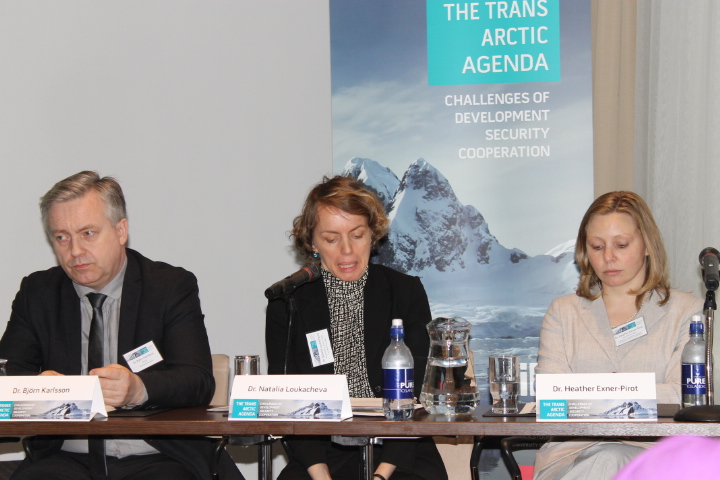
    Dr. B. Karlsson, Dr. H. Exner - Pirot and Dr. N. Loukacheva during the first session of Systems and Societies workshop.

    Second day of ”The Trans – Arctic Agenda: Challenges of Development, Security and Cooperation” has divided participants into three parallel sessions i.e. environment, economy, systems and societies.

    Although the Arctic is remote and lacks dense populations, it is under threat from environmental stresses largely originating in distant regions. The physical constitution of the Arctic dictates how the region reacts to environmental changes. With water occupying about two fifths of the area north of the 60th parallel, the region is essentially an ocean surrounded by land.

    Three main issues regarding the Arctic environment are climate change, changes in biological diversity, and the use of toxic substances. The effects of these changes are becoming increasingly evident in the North, affecting largely the people in the northern territories.

    Economic development and transfer of political power to the indigenous communities, establishing their fundamental rights to sovereignty was the matter for the dispute during the event as well as the risk managment and the international capability to face security challenges.

    The conference will continue until 18.00. After the closing remarks, participants will be hosted by the President of Iceland in his residence in Reykjavik.

    Please, click here to see the detailed schedule of the ”Trans – Arctic Agenda”.

    Source

    Institute of International Affairs – University of Iceland

  • NRF calls for papers!

    NRF calls for papers!

    Northern Research Forum

    The global climate change is by scientists predicted to have great environmental and socio-economic impacts in the whole Arctic as well as in northern Europe. There will be direct and indirect impacts on nature and on communities as well as uncertainties. In addition, global warming is predicted to accelerate off-shore oil and gas drilling in the Northern icy seas and open a new (global) sailing route from the North Atlantic Ocean through the Arctic Ocean to the eastern parts of the globe.

    Northern Research Forum in cooperation with the ESPON-ENECON project organizes international conference: „Climate Change in Northern Territories” that will take place in Akureyri 22 – 23 of August 2013.

    The event will bring early career researchers together for an open dialogue on issues of Northern and global relevance, to work with senior mentors, and to develop international and interdisciplinary collaborations.

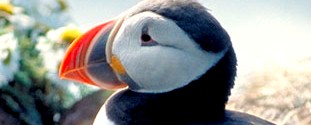
    Puffin

    All NRF Young Researchers (YR) are required to participate in the Open Assembly from August 21st – 23rd. Each YR will make a presentation and provide a written final version (word document) of the presentation to the NRF for publication in the conference proceedings.

    Each YR is required to electronically submit his/her paper by the 15th of April 2013 as well as publishing permissions for the NRF if selected as a YR (each selected YR will be provided the opportunity to finalize their papers after the Assembly if they prefer a different version be published in the conference proceedings). Each YR will write and orally present session summaries and actively participate in the assembly open dialogue and the post assembly evaluation.

    Please, access the NRF website for more information and to register for the event. The registration deadline is 1st of April.

    Source

    Northern Research Forum

  • Trans – Arctic Agenda starts today!

    Trans – Arctic Agenda starts today!

    Nexus

    Today, 18th of March 2013 a high-level seminar hosted by the Institute for International Affairs and Centre for Arctic Policy Studies, University of Iceland (IIA/CAPS), and the Stockholm International Peace Research Institute (SIPRI) – in cooperation with the Swedish and Icelandic Ministries for Foreign Affairs, starts in Reykjavik. The event will be held at Radisson Blu Hotel Saga.

    Keynote addresses by HE Mr. Carl Bildt, Minister for Foreign Affairs of Sweden and HE Mr. Össur Skarphéðinsson, Minister for Foreign Affairs of Iceland will be given at 18.00 in Radisson Blu Hotel Saga in Katla Conference Room.

    ”Nexus” Association invites to join their ”101 Arctic” a tech – in event on basic Arctic issues. This part of the event will take place at 14.00 in the conference hall of Icelandic National Museum. The event is open for the public.

    For more information, please visit the website of the Institute of International Affairs – University of Iceland.

    Source

    Institute of International Affairs Centre for Small State Studies – University of Iceland

  • Trans Arctic Agenda: Challenges of Development, Security, Cooperation

    Trans Arctic Agenda: Challenges of Development, Security, Cooperation

    University of Iceland

    On Monday, 18-19 March 2013 a high-level seminar hosted by the Institute for International Affairs and Centre for Arctic Policy Studies, University of Iceland (IIA/CAPS), and the Stockholm International Peace Research Institute (SIPRI) – in cooperation with the Swedish and Icelandic Ministries for Foreign Affairs. The event will be held at Radisson Blu Hotel Saga.

    Keynote addresses by HE Mr. Carl Bildt, Minister for Foreign Affairs of Sweden and

    HE Mr. Össur Skarphéðinsson, Minister for Foreign Affairs of Iceland

    The Arctic, where ice has so far been a barrier, could become an open bridge in the future between widely separated and different nations. Ice melting at sea and on land will open up new trans-Arctic transport routes and give access to new mineral and fishery resources, even while it disrupts traditional habitats.

    Whether fast or slow, these changes will affect first and foremost the countries around the North Pole who already cooperate through the Arctic Council. Yet the Arctic is also part of the wider world. New transport routes and tourism will attract both suppliers and customers from outside the region. Possible new Arctic energy production will affect the global energy balance and be affected by it. A badly managed Arctic would be a legitimate concern for the whole international community.

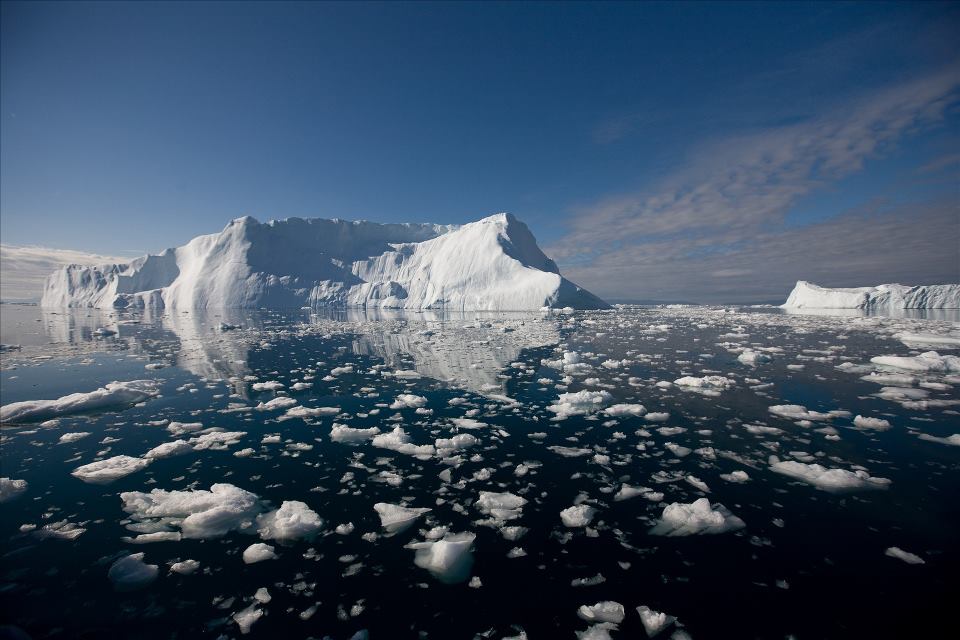
    Arctic coast and sea ice

    The Trans-Arctic conference will bring together experts and policy-formers from all the large and small nations most interested in Arctic developments. It will not look for national differences but for common agendas. It will ask if current governance methods are coping with the growing agenda or if not, what more could be done to ease cooperation at the state, business, and popular levels. It will end with special emphasis on the roles of the small Nordic states, and of Iceland itself – the only sovereign nation to lie entirely within the Arctic.

    Further information and a conference programme is available on the website of the Institute of International Affairs at: www.ams.hi.is

    The conference is open to all but we kindly ask you to register your attendance for planning purposes by sending us an email at ams@hi.is. no later than March 15.

    Sources

    Institute of International Affairs
    Centre for Small State Studies

    University of Iceland

  • Apply today and get a scholarship!

    Apply today and get a scholarship!

    The national flag of Iceland

    Cooperation in a field of Arctic Studies between Iceland and Norway

    Today, 15th of March 2013, there is a deadline for those who wish to apply for a Icelandic – Norwegian exchange scholarship.

    Exchange scholarships for Icelandic and Norwegian Students in Arctic Studies are one of the key activities in this co-operation. The purpose of the exchange scholarship program is to encourage the exchange of students between higher education institutions in Norway and Iceland in the field of Arctic science.

    National flag of Norway

    Students from all levels (bachelor, master, doctoral) enrolled at Icelandic and Norwegian higher educational institutions are encouraged to send an application before midnight today!

    All detailed information on how to apply for the scholarship are available here.

    Source

    Cooperation in a field of Arctic Studies between Iceland and Norway