Blog

  • Arctic brings cold weather to China

    Arctic brings cold weather to China

    A man works in a frozen river in Taiyuan, Shanxi province

    The year 2012 was unusually cold in China, which may be a result of the record loss of Arctic sea ice. “Observation and data analysis showed that Arctic sea ice loss may cause cold and snowy winters in parts of Asia,” Chen Yu, senior engineer of the National Climate Center in China states.

    The Arctic sea ice saw it record low extent on September 16th 2012.

    The China Daily reports and Chen explains that when sea ice melts in the Arctic, the water temperature increases. When that happens, the air becomes moister and is more likely to form cold fronts.

    According to the China Meteorological Administration, in December most of China suffered colder weather than usual. On Dec 24, frequent cold fronts led to temperatures in 21 monitoring stations hitting record lows.

    And the cold weather continued and the weather has been cold since late December.

    Kang Zhiming, weather forecaster of the National Meteorological Center, said weather models showed the temperature will not rise until late January.

    “The weather authorities will keep a close eye on any changes in the weather, especially before Spring Festival, in order to give timely information to transport and related departments, particularly in the event of extreme weather,” Kang said.

    China has a research station in Ny Alesund, on Svalbard, and among other projects is monitoring weather and sea ice from the station.

    Source

    China Daily

  • Arctic Science Summit Week deadline

    Arctic Science Summit Week deadline

     arctic researchers at work

    The Arctic Science Summit Week will be held in April in Poland. The call for participation and abstract submission is close.

    The deadline for abstract submission is the 16th of January and they can be sent through the conference website.

    The week will include disciplinary sessions on Atmosphere Processes and Global Climate Connections, Cryospheric Changes: Drivers and Consequences, Marine Processes and Variability, Terrestrial Ecosystem Responses to Environmental Stressors and Impact of Global Changes on Arctic Societies.

    It will also have cross-cutting sessions on Arctic People and Resources: Opportunities, Challenges and Risks, Applying Local and Traditional Knowledge to Better Understanding of the Changing Arctic, Arctic System Science for Regional and Global Sustainability and Changing North: Predictions and Scenarios.

    The ASSW is the annual gathering of international organizations engaged in supporting and facilitating Arctic research. Its purpose is to provide opportunities for international coordination, collaboration and cooperation in all fields of Arctic science and to combine science and management meetings.

    Source

    ASSW 2013

  • The Icelandic oil adventure has begun

    The Icelandic oil adventure has begun

    Icelandic oil adventure signing

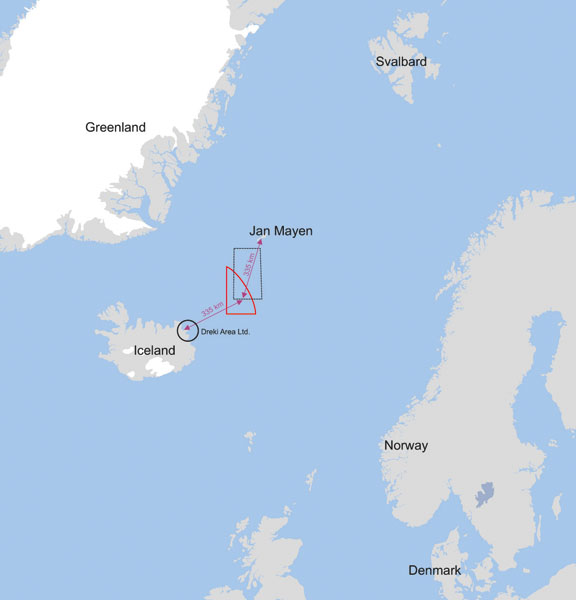
    “Today is the beginning of oil adventures in Iceland” was said on the day the National Energy Authority of Iceland signed the first licenses for exploration and production of hydrocarbons Icelandic waters, more specific in the Dreki Area.

    Two licenses were granted, to Faroe Petroleum Norge AS, Branch in Iceland, Iceland Petroleum ehf. and Petoro Iceland AS, on the one hand, and Valiant Petroleum ehf., Kolvetni ehf. and Petoro Iceland AS on the other.

    The Norwegian Parliament approved the decision on the participation by the Kingdom of Norway through the State-owned oil company Petoro AS in accordance with the agreement between Norway and Iceland from 1981.

    There is one license to Faroe Petroleum Norge AS as an operator with 67,5% share, Íslenskt Kolvetni with 7,5% share and Petoro Iceland with 25% share. The other license is to Valiant Petroleum ehf. as an operator with

    The Dreki area map

    56,25 % share, Kolvetni ehf. with 18,75 % share og Petoro Iceland AS with 25 % share.

    The Norwegian Minister of Petroleum and Energy, Mr. Ola Borten Moe, was present at the signing of the licenses as the state oil company of Norway, Petoro, will participate in both licenses.

    “All leads to Iceland becoming an oil nation,” says chief of exploration Terje Hagevang, Norwegian working at the British company Valiant Petroleum. Hagevang researched the area for his master’s program and for a long time has been suggestion the Jan Mayen ridge is rich in oil reserves.

    This will be the first oil exploration in Icelandic waters. The Dreki-Area is shown on the map here on the right local communities in North-East of Iceland have already started on preparations to service the exploration.

    „This is very important, just like when the oil adventures began in Norway in 1695-1966. The adventure is here and it has a future for petroleum activities in Icelandic waters. This is the start of it, ” Hagevang said to Stöð 2 in

    Iceland.

    Hagevang has reported that the Jan Mayen ridge, which includes the Dreki-Area, is as rich in petroleum as the Norwegian sea. „New research has strengthened this belief. It shows that the area has everything to produce petroleum.”

    The first rig in the area is expected in 2017 or 2018, likely to be deployed in the Norwegian side at first.

    Steingrímur J. Sigfússon, minister of Industry and Innovation in Iceland, welcomed the Norwegian knowledge of oil exploration and said that this was a landmark for the country.

    The two licenses are valid from today through 4.1.2020.

    Blue: Valiant Petroleum ehf. and Kolvetni ehf.  Red: Faroe Petroleum Norge AS, Branch in Iceland and Iceland Petroleum ehf. Click to enlarge. Photo by NEA.

    The License for Valiant Petroleum ehf, Kolvetni ehf, Petoro Iceland AS

    Letter of Agreement
    The License for Faroe Petroleum Norge AS, Íslenskt Kolvetni ehf. Petoro Iceland AS.
    Letter of Agreement

    Sources

    NEA
    Stöð 2

    Map of potential oil and gas areas

  • Moscow chosen over NSR-cities

    Moscow chosen over NSR-cities

    The Northern Sea Route.

    Russia has decided to host the administration for the Northern Sea Route in its capital, Moscow. The new headquarters will open late January this year.

    The Deputy Transport Minister of Russia, Viktor Olersky, said to RIA Novosti that a draft of the resolution has been made and it is being coordinated by federal agencies. The BarentsObserver states that both Murmansk and Arkhangelsk lost the fight for hosting the administration, after looking for having it in its respective cities for years.

    The reason given for choosing Moscow, instead of either of the two harbor cities in the route is “in order not to offend anyone”. Olersky also said that a branch could be opened later in Arkhangelsk.

    He said that although concerns may rise that Moscow is not at the sea route that it was a good location as the Emergency Situations Ministry was in Moscow, as well as other big companies and organizations who work and employ in the areas.

    The state owned enterprise will have a budget of 35 million Rubles. Only for days prior to the decision by Olersky, the Governor of Arkhangelsk Igor Orlov said that Arkhangelsk was ready to open a NSR office that would handle all practical tasks connected to traffic on the route – applications to use the route, coordination with the Agency on Hydrometeorology and Environmental Monitoring, use of Arctic aviation and so on.

    In 2012 total cargo transported through the Northern Sea Route was 1.261.545 tons, an increase of over 50 percent from 2011. The total number of ships also increased from 34 in 2011 to 46 in 2012, compared to only 4 in 2010.

    Sources

    RIA Novosti

    Barents Observer

  • No oil leak from stranded rig

    No oil leak from stranded rig

    Stranded oil rig

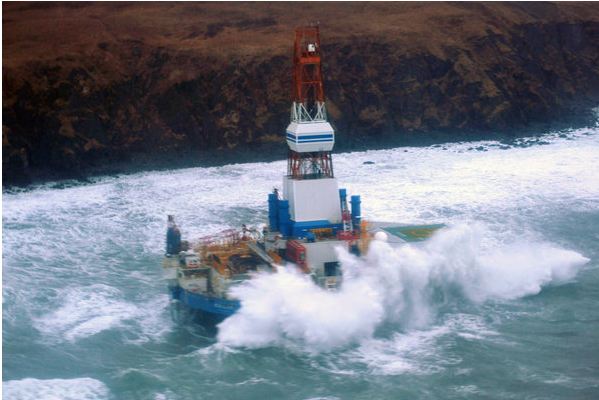
    An oil rig stranded in severe storms near the island Kodiak in Anchorage, Canada. No oil is leaking from the rig.

    The drillship is called Kulluk, owned by Royal Dutch Shell. The US coastguard was concerned about any leak but overflights confirmed that no leak has occurred.

    Coast Guard Captain Paul Mehler said the Kulluk had 143,000 gallons of ultra-low-sulfur diesel and 12,000 gallons of other oil products on board.

    The grounding of the drillship, weighing nearly 28,000 gross tons and operated by Noble Corp, is a blow to Shell’s $4.5 billion offshore program in Alaska.

    The rig had been headed to Puget Sound for maintenance and upgrades when it broke away from one of its tow lines on Monday afternoon and was driven to rocks just off Kodiak Island that night. The 18-member crew had already been evacuated by the Coast Guard on Saturday because of risks from the storm.

    With winds reported at up to 60 miles (100 km) an hour and Gulf of Alaska seas of up to 35 feet (11 m), responders were unable to keep the ship from grounding, the Coast Guard said.

    Sean Churchfield, operations manager for Shell Alaska, could not explain why the Kulluk had been caught in the weather. “I can’t give you a specific answer, but I do not believe we would want to tow it in these sorts of conditions.”

    Susan Childs, emergency incident commander for Shell, believed that a significant spill was unlikely because of the Kulluk’s design, with diesel fuel tanks isolated in the center of the vessel and encased in very heavy steel.

    Shell is waiting for weather to moderate to begin a complete assessment of the Kulluk.

    Sources

    Independent

    Reuters

  • Environmental concerns for caribou

    Environmental concerns for caribou

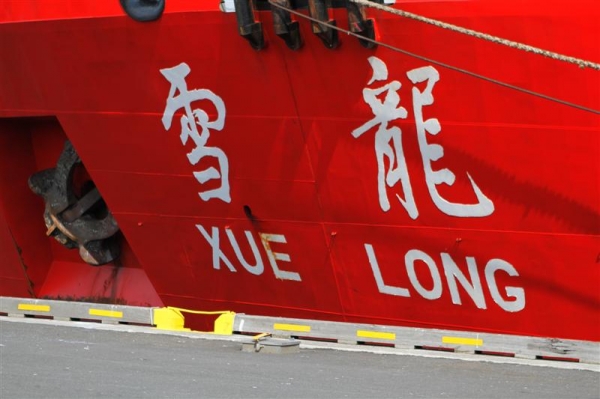
    Chinese icebreaker Xuelong.

    Canada is set to look into a mining project to be funded by China. Four federal ministers will come together to decide how to conduct an environmental review for the Izok Corridor proposal.

    It could bring many billions of dollars into the Arctic but would also see development of open-pit mines, roads, ports and other facilities in the centre of calving grounds for the fragile Bathurst caribou herd.

    “This is going to be the biggest issue,” said Sally Fox, a spokesperson for proponent MMG Minerals, a subsidiary of the Chinese state-owned Minmetals Resources Ltd.

    It would be hard to exaggerate the proposal’s scope. Centred at Izok Lake, about 260 kilometres southeast of Kugluktuk, the project would stretch throughout a vast swath of western Nunavut.

    Izok Lake would have five separate underground and open-pit mines producing lead, zinc and copper. Another site at High Lake, 300 kilometres to the northeast, would have another three mines.

    MMG also wants a processing plant that could handle 6,000 tonnes of ore a day, tank farms for 35 million litres of diesel, two permanent camps totalling 1,000 beds, airstrips and a 350-kilometre all-weather road with 70 bridges that would stretch from Izok Lake to Grays Bay on the central Arctic coast.

    MMG plans a port there that could accommodate ships of up to 50,000 tonnes that would make 16 round trips a year — both east and west — through the Northwest Passage.

    Izok Lake would be drained, the water dammed and diverted to a nearby lake. Three smaller lakes at High Lake would also be drained. Grays Bay would be substantially filled in.

    The result would be a project producing 180,000 tonnes of zinc and another 50,000 tonnes of copper a year.

    The four ministers, of Northern Development, Transport, Natural Resources and Fisheries and Oceans — have three choices. They can send the project back to MMG and ask for changes, they can choose to let the board run hearings itself or they can decide the project’s effects would be broad enough to require the involvement of other governments in hearings.

    Source

    The Record

  • Canadian sea bed camera

    Canadian sea bed camera

    Sea bed camera

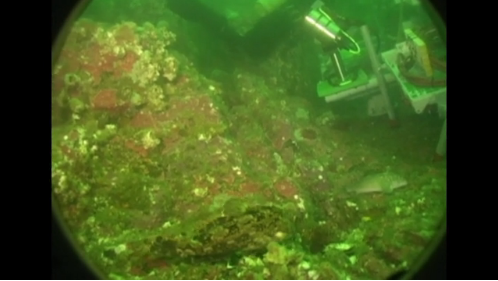
    An underwater monitor station has been installed on the Canadian Arctic sea floor, near Cambridge Bay in Nunavut. It allows for live views of the sea bed. Installation was in the hands of Ocean Networks Canada, based at the University of Victoria.

    Dr. Kim Juniper said the observatory is already generating interest among scientists who want to use the site for their own work.

    “Essentially using what we’ve put in there as a basis to provide some background for some other research,” he said.

    Juniper said it’s a preview to the kind of work expected at the High Arctic Research Station, which is expected to open in 2017.

    So far, the mini-observatory has caught shrimp and fish on camera, and has recorded ice thickening at the rate of one centimetre a day.

    Beth Sampson, a science teacher at Kiilnik High School in Cambridge Bay, said it’s the kind of real-life science that appeals to her as a teacher.

    “It also has a video camera on it, so it’s live-streaming data, and you’ll be able to see things that live in the water that might be swimming past or crawling past on the ocean floor. So it’s exciting to be able to see a side of the ocean that we don’t see from the surface.”

    Sampson’s Grade 11 biology students got the see the apparatus before it went under water. She is now working on a plan to use the data in science projects next school term.

    The underwater observatory is a scaled-down version of similar observatories in seafloor networks off the coast of Vancouver Island.

    Source

    Alaska Dispatch

  • Amazing Mt. Everest photo

    Amazing Mt. Everest photo

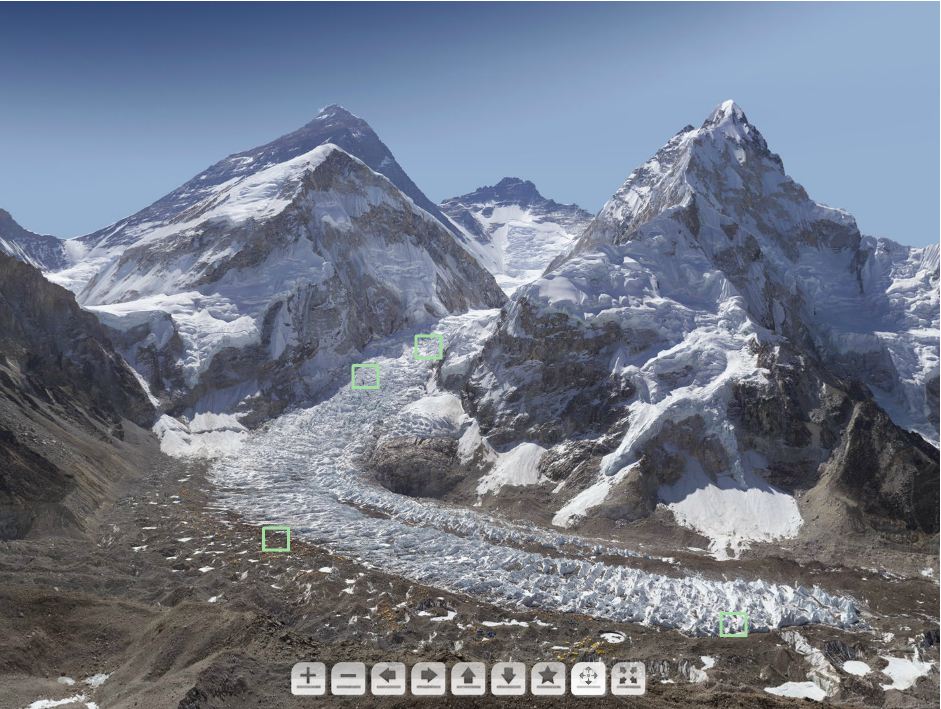
    The Mt. Everest

    David Breashears has released a stunning picture of Mount Everest to show effect of climate change on the world’s highest peak. It is over 3,8 million pixels and stitched together from 477 photographs.

    The photo can bee seen below and is also available here.

    Filmmaker David Breashears and nonprofit organization GlacierWorks worked on the project together and he is now working with Microsoft on an even more detailed version.

    This version allows users to zoom in and also show before and after pictures from the area since 1921.

    “It’s just extraordinary and we’re so excited by that image, and people love clicking on things and zooming in,” he said.

    “We want to tell the bigger story of climate change in the area, and we are working with Microsoft and the Royal Geographical Society on this.”

    The team eventually hope to develop a far larger version of the image so detailed users can actually zoom inside tents at base camp.

    “Just 1/100th of our imagery is on the site, and the storytelling possibilities are incredible – people love to move things,” said Breashears, who has climbed Everest five times.

    “It started out as a simple concept, and every time we visit we find out more – this is not even the tip of the iceberg, we want to take people all over the mountain with 120,000 pictures from a helicopter in the region. We are building this with Microsoft, and we could soon be able to combine the old and new pictures so people can virtually ‘swipe’ images to see how they looked in the past.”

    Source

    Daily Mail

  • Russian 100 million icebreaker to Finland

    Russian 100 million icebreaker to Finland

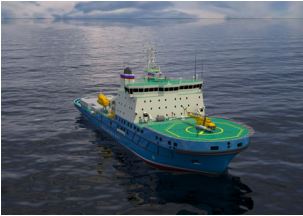
    Russian icebreaker

    Russia is building a new icebreaker in Finland, to be ready in 2015. The vessel is planned to be used in year-round operation in the Baltic Sea and in summer season in the Arctic seas. The vessel is able to operate in temperatures as cold as -40°С and the maximum icebreaking capability is 1.5 m.

    Arctech Helsinki Shipyard will build the 16 MW icebreaker with a total worth of the vessel about 100 million EUR. The contract has been awarded together with OJCS Vyborg Shipyard.

    The main tasks of the vessel are icebreaking and assisting of heavy-tonnage vessels in ice, towing of vessels and other floating structures in ice and open water. The vessel will also be used for fire fighting on floating objects and other facilities, assisting vessels in distress in ice and open water and also for cargo transportation.

    The vessel will measure 119.8 m in length and 27.5 m in breadth. The four main diesel generator sets have the total power of 27 MW. The total propulsion power is 18 MW consisting of two full-circle azimuth thrusters.

    Arctech Helsinki Shipyard Inc. specializes in arctic shipbuilding technology, e.g. building icebreakers and other Arctic offshore and special vessels. Arctech is a joint-venture, which is 50/50 owned by STX Finland Oy and Russian United Shipbuilding Corporation. The joint venture agreement was signed in December 2010. Arctech is located in Helsinki and has approximately 400 employees.

    Source

    Arctech

  • Huge interest in east-Greenland oil

    Huge interest in east-Greenland oil

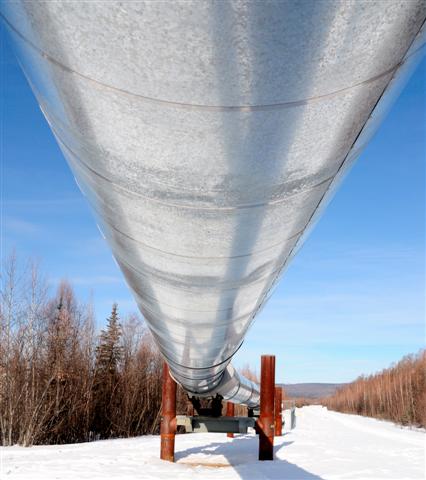
    Arctic Oil Pipeline

    Companies are queuing up to get a part of a potential oil boom in the waters off East Greenland.

    There is great interest in extracting oil off the coast as interest in the first preliminary round of tendering for the area shows.

    The Energy Ministry in Nuuk received 11 applications for exploration and exploitation of oil and gas in the Greenland Sea, according to Greenland self-government, Naalakkersuisut, in a press release. The deadline was December 15th.

    The number of applicants shows that there is competition for several license blocks that were offered. Forthcoming is an extensive evaluation and negotiation process before the best applications are selected.

    “The result of the licensing round is an important milestone in achieving a long-term and sustainable economy for Greenland,” says Ove Karl Bertelsen, a member of Naalakkersuisut.

    The area in the Greenland Sea covers 50,000 square kilometers. A total of 19 blocks were offered, ranging in size from 1752 to 3306 square kilometers.

    The offering process is divided into two rounds. The first is the so-called Kanumas-Group consisting of Statoil-Hydro, BP, ExxonMobil, Chevron, Japan Oil, Gas and Minerals National Corporation – and the state oil company Nunaoil.

    The second round is an open round where all companies are allowed to apply. The same terms and conditions apply for the two blocks.

    Source

    Jyllands Posten