Blog

  • Arctic wonders discovered in Greenland

    Arctic wonders discovered in Greenland

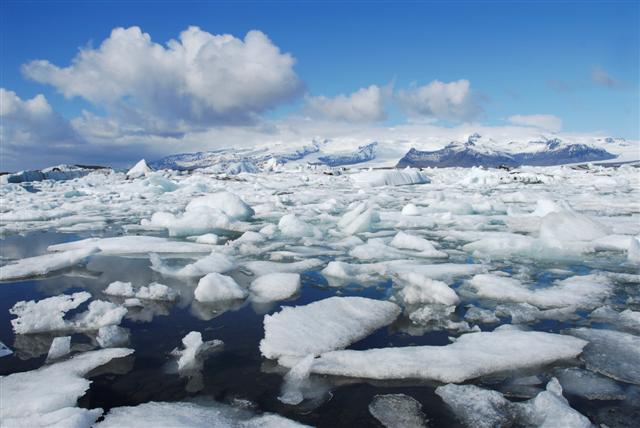
    Greenland´s ice cap melts rapidly during extended summer period.

    For the first time ever, lakes have been discovered beneath the ice sheets of Greenland, following a discovery from researchers from Cambridge University. “Our results show that sub glacial lakes exist in Greenland, and that they form an important part of the ice sheet’s plumbing system,” says, Steven Palme from the team.

    There have been hundreds of lakes discovered beneath the Arctic Ice sheets, but this is a first for Greenland, with two roughly 10 kilometers square located by airborne radar. They are believed to be formed by different processes however.

    Greenland comprises a thinner ice sheet and proper land mass, and has surface lakes in the summer which are likely to feed these subterranean reservoirs. Previously it was thought that the steeper ices surface of Greenland would make this unlikely.It’s very possible that more lakes exist.

    “Because the way in which water moves beneath ice sheets strongly affects ice flow speeds, improved understanding of these lakes will allow us to predict more accurately how the ice sheet will respond to anticipated future warming,” Palme said.

    Source: IceNews
  • Arctic Circle to be held again in Reykjavik

    Arctic Circle to be held again in Reykjavik

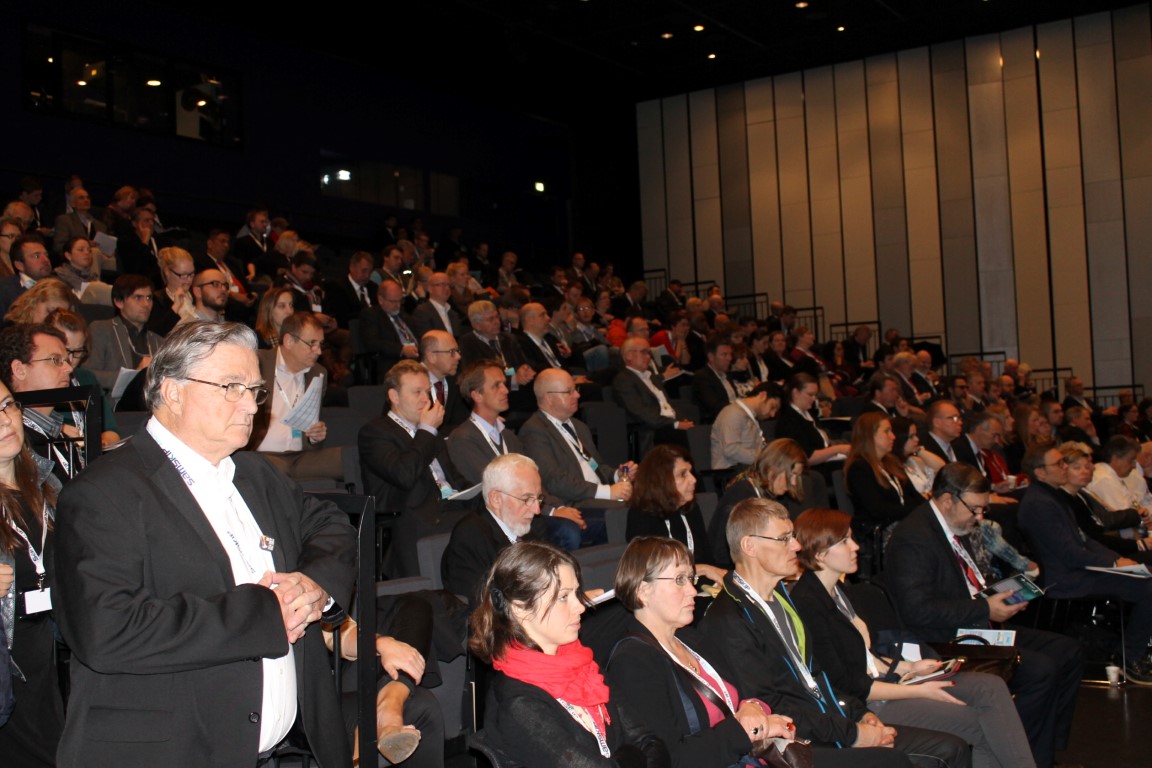
    The audience at Arctic Circle

    Second Annual Arctic Circle Assembly to be held September 5-7, 2014, in Reykjavík, Iceland

    On behalf of President Ólafur Ragnar Grímsson of Iceland, Parliament of Greenland Member Kuupik Kleist, Alaska Dispatch Publisher Alice Rogoff and distinguished partners, the Arctic Circle Team would like to thank everyone for participating in the inaugural Arctic Circle assembly.

    This new open assembly drew more than 1,200 participants from over 40 nations, bringing together both individuals and organizations for a series of meetings and presentations addressing the challenges and opportunities of the changing Arctic.
    The Arctic Circle will reconvene September 5-7, 2014, in Reykjavík, Iceland, and will move to Anchorage, Alaska, in the fall of 2015.

    The Arctic Circle is non-profit and nonpartisan. Organizations, forums, think tanks, corporations and public associations around the world are invited to hold meetings within the Arctic Circle platform to advance their own missions and the broader goal of increasing collaborative decision-making without surrendering their institutional independence.

    The Arctic Circle is designed to increase participation in Arctic dialogue and strengthen the international focus on the future of the Arctic. Participating organizations will maintain their full institutional independence, identity and decision-making abilities.

    To this end, the Arctic Circle aims to create opportunities for everyone to attend different meetings, conduct their own networking and engage in one-on-one informal discussions. Organizations will be able to decide their own agendas and convene their own meetings.

  • Call for papers in Sámi archaeology

    Call for papers in Sámi archaeology

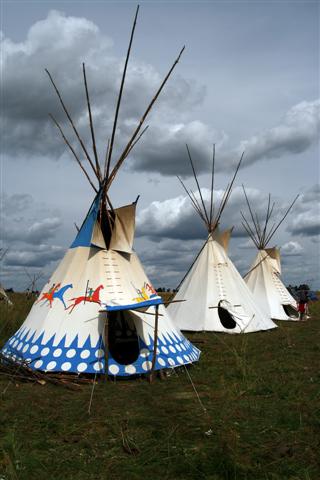
    homes of the Indigenous people

    Call for papers: Sámi archaeology and postcolonial theory session at Nordic TAG 2014

    The fourteenth Nordic Theoretical Archaeology Group conference (Nordic TAG) will be held at Stockholm University on April 22-26, 2014. Organizers wish to invite intrested individuals to submit paper abstracts for their session “Sámi archaeology and postcolonial theory”.

    The session concerns the use, lack of use, and possible value of postcolonial theory in Sámi archaeology, as well as what Sámi archaeology can contribute to the development of theory.

    The conference organizers welcome papers that discuss this subject both on general level and based on case studies. They would also welcome papers that discuss alternative theoretical frameworks and why these are preferred.

    Paper abstracts may be sent by e-mail to Marte Spangen at marte.spangen@ark.su.se by December 15, 2013. The abstracts should be limited to 150 words.

    The conference opens on 22 April 2014 with a keynote lecture by Professor Gavin Lucas, University of Iceland. During 23-25 April, parallel sessions are held at the Aula Magna.

    On 26 April three different excursions in the Stockholm region are offered. Several social events will take place during the conference, including a reception at Stockholm City Hall and a conference dinner at the Swedish History Museum.

  • Polar bears strive for survival

    Polar bears strive for survival

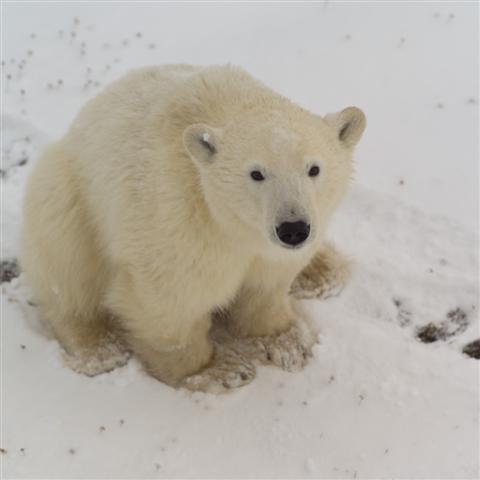
    Polar bear

    Citizens of Churchill in Northern Manitoba, Canada, had to learn how to scare polar bears away from their home town.

    Polar bears researchers found out that because of melting Arctic ice and longer summer season, polar bears are being exposed to hunger and above average temperatures in the northern hemisphere.

    Churchill in northern Manitoba bills itself as the polar bear capital of the world and its tourism-based economy depends on it. But as climate change forces the polar bears inland in search of food, attacks on humans are increasing.

    Can this small community continue to co-exist with the world’s largest land predator? Suzanne Goldenberg reports from Churchill where its bear alert programme uses guns, helicopters and a polar bear jail to manage the creatures.

    This trip was supported by Explore.org, Frontiers North and Polar bears International

    Video Source: The Guardian
  • AC will collaborate on climate change

    AC will collaborate on climate change

    UN FCCC

    Recent statement issued by the Arctic Council during the UN Climate Change Conference that took place in Warsaw, assured collaboration against the climate change.

    Issued on behalf of all of the group’s members – Denmark, Finland, Iceland, Norway, Russian, Sweden and the United States, and six indigenous permanent participant organisations – the council said it remains committed to working with other countries under the auspices of the UN to reduce global greenhouse gas emissions.

    The Arctic Council recognized the need to reduce carbon dioxide emissions, minimize emissions of short live climate pollutants, particularly black carbon, methane and hydroflurocarbons, which are contributing significantly to near – term impacts in the Arctic.

    To read more about key decisions of Warsaw Climate Change Conference 2013, please access the conference website.

  • Murmansk – the gateway to the Arctic

    Murmansk – the gateway to the Arctic

    shipping in arctic waters

    Northern Russia has decided to open a new terminal for cruise liners at the central port of Murmansk.

    The terminal will be located a few minutes’ walk from the railway station, also supposed to be totally renovated before Murmansk celebrates 100-years anniversary in 2016.

    Murmansk will also serve the tourist traffic through the new walkways, new railway station and other facilities with the easy access to the seaside.

    Cruise traffic in the Arctic has been growing rapidly in recent years. Aside from potential dangers associated with cruise activities, tourism in the Arctic brings opportunities for development of Northern remote communities.

    Source: Barents Observer
  • Travel support available form MobilityDK

    Travel support available form MobilityDK

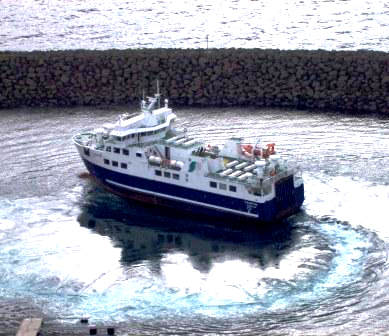
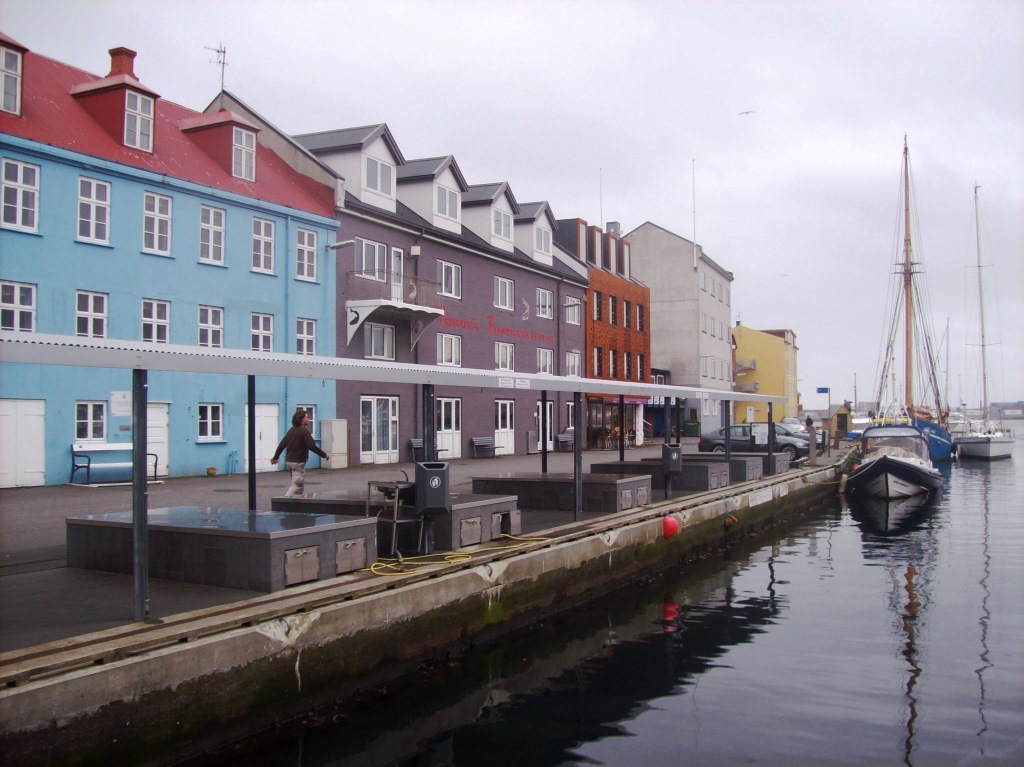
    Thorshaven, capital city of Faroe Islands

    The second application round from MobilityDK has now been open for students, teachers and researchers.

    The MobilityDK pilot model provides travel support for students, staff and researchers from UArctic member institutions, and it is available for Arctic-relevant mobility to and from Danish, Greenlandic and Faroese institutions.

    The deadline for applications is January 31st, 2014. Click here for more information or to apply for a travel funding.

    MobilityDK is a pilot model for providing financial support for teacher, researcher and student exchange.

    MobilityDK is a part of the UArctic Danish Mobility Project, the goal of which is to support mobility for the Kingdom of Denmark’s Arctic education activities, and mobility from the Kingdom of Denmark to Arctic educational activities in different areas of the Arctic through the UArctic network.

    The program is supported by the Danish Agency for Science, Technology and Innovation.

  • New series of PAGE21 winter blogs

    New series of PAGE21 winter blogs

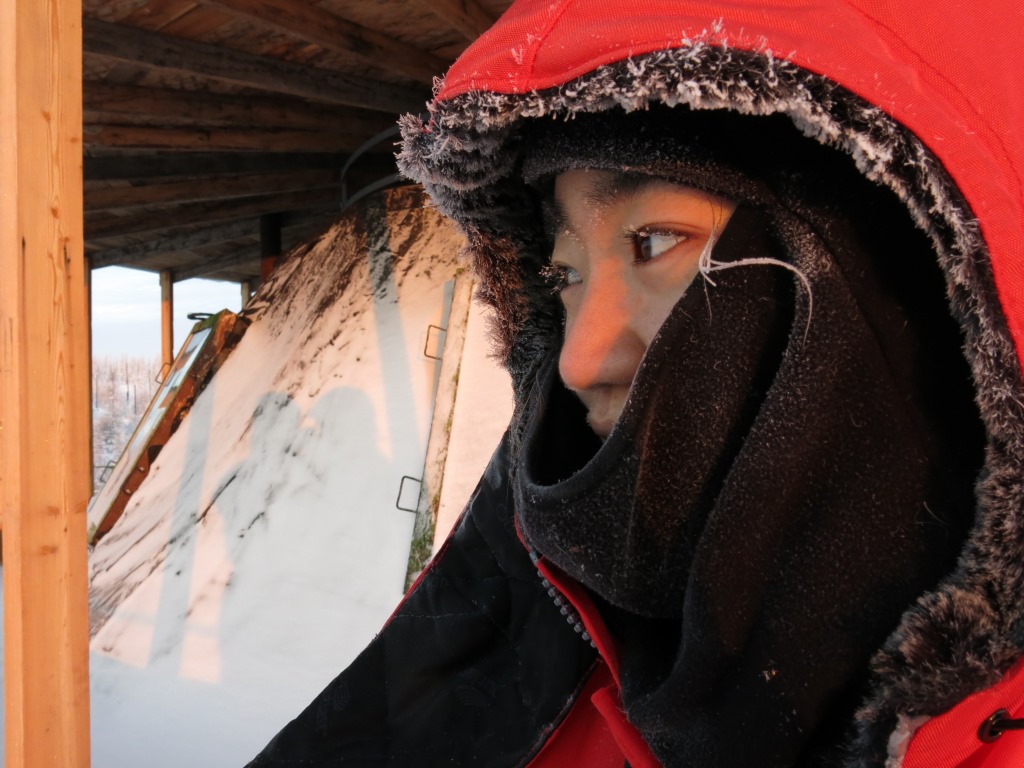
    Min Jung Kwon, young researcher from PAGE21 project in Cherskii, northern Russia.

    Some of the PAGE21 young researchers have departed to remote Arctic areas to gather winter flux measurements.

    Findings from their expeditions will be published weekly through the PAGE21 winter blogs. There you can learn about temperatures in the Arctic during harsh winter season, weather conditions and difficulties it can cause for humans ‘activities.

    What is more, you can learn the basics about the Arctic permafrost and get the insight into the real work of researchers.

    PAGE21 blogs have been published since summer 2012. They have gotten great recognition from scientists, general public and policy makers. For last two years they have been visited over 300 000 times.

    Follow PAGE21 winter blog here! Give us your recognition on Twitter and Facebook.

    PAGE21 project aims to understand and quantify the vulnerability of permafrost environments to a changing global climate, and to investigate the feedback mechanisms associated with increasing greenhouse gas emissions from permafrost zones.

    This research will make use of a unique set of Arctic permafrost investigations performed at stations that span the full range of Arctic bioclimatic zones. The project will bring together the best European permafrost researchers and eminent scientists from Canada, Russia, the USA, and Japan.

    The PAGE21 is a Large-scale integrating collaborative project under the ENV call topic “Vulnerability of Arctic permafrost to climate change and implications for global GHG emissions and future climate” (ENV.2011.1.1.3-1) coordinated by Professor Hans-Wolfgang Hubberten from AWI.

  • Website for the ASSW 2015 is now open

    Website for the ASSW 2015 is now open

    Arctic Science Summit Week 2015 will take place in Japan.

    The website for the Arctic Science Summit Week (ASSW) 2015 in Toyama (Japan) is now available.

    The ASSW 2015 will be held on 23-30, April 2015 and include the final event of the 3rd International Conference on Arctic Research Planning (ICARP III).

    For more information please see the enclosed first circular or visit the website

    First Circular is now available.

    Click here to visit new ICARP III website.

  • Norwegian new oil province now official

    Norwegian new oil province now official

    Oil barrels

    The new report, prepared by Rystad Energy, the independent oil and gas consulting services, suggests that Norwegian Arctic waters will be more important with regards to energy resources, than the North Sea after 2030.

    The research done by Rystad Energy envisions the development of eight field centers in the region. One of the biggest centers will be located in the south – eastern part of Norway’s Barents Sea, near the marine border of Russia.

    The report titled “North Norwegian Oil and Gas Activity Level” suggests that up to €25 billion will be invested in the Norwegian Sea and the Barents Sea by year 2030 and that the area by 2040 will be Norway’s biggest oil producing region.

    The analysis, which is commissioned by the organizations PetroArctic, ProBarents, Knowledge Park North and Innovation Norway, estimates the resource potential of the waters off northern Norway to 27 billion barrels of oil equivalents.

    For more information about the report and Rystad Energy consulting services, please visit the website.