Blog

  • Chasing Ice premiers

    Chasing Ice premiers

    Melting ice in GreenlandChasing Ice, a film by Jeff Orlowski, was premiered on December 14th. The movie follows photographer James Balog through his journey in the Arctic and his Extreme Ice Survey.

    Once a skeptic about Climate Change, Balog went on a mission to record climate change first hand. By deploying revolutionary time-lapse cameras to capture a multi-year record of the world’s changing glaciers, he managed to put together amazing videos of climates effect in the Arctic.

    Orlowski followed Balog around the world and the result is the film, which has been shown on film festivals since this fall.

    The films website states: “Traveling with a team of young adventurers across the brutal Arctic, Balog risks his career and his well-being in pursuit of the biggest story facing humanity. As the debate polarizes America, and the intensity of natural disasters ramps up globally, Chasing Ice depicts a heroic photojournalist on a mission to deliver fragile hope to our carbon-powered planet.”

    Filming took place in various locations, not only in the Arctic. They include Greenland, Iceland, Alaska, Glacier National Park in Montana, the Alps, Bolivia and Canada.

    Speaking in a Q&A, director Orlowski described the biggest challenges of the shooting. “The biggest challenge was the harsh environments. We had weather as low as negative 30 degrees. One winter night in Greenland, I thought I was going to freeze to death in our cabin. Our heater was leaking gas so we decided to go to sleep without it. I woke up in the middle of the night from my own teeth chattering. I rubbed my body to stay warm, and suffered until sunrise. But as cold as it was, and as difficult as it may seem, that was all the fun stuff. I’d do it all again in a heartbeat. I’d much rather be out shooting than editing!”

    Sources

    Chasing Ice

    See also:
  • Canada meets Sweden for Arctic Council

    Canada meets Sweden for Arctic Council

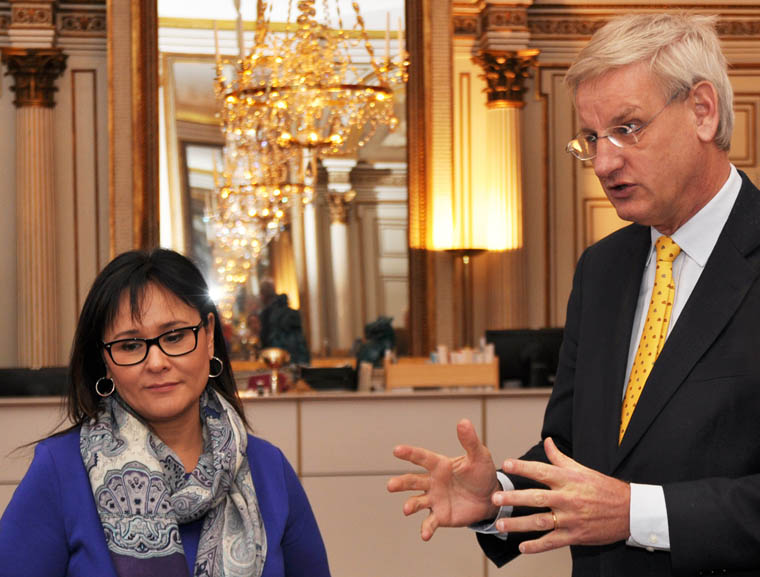
    Leona Aglukkaq and Carl Bildt at the press conference

    Canada will take over chairmanship in the Arctic Council in May 2013 from Sweden. The two countries have close cooperation for a smooth process when Canada takes its second chair of the council.

    Established in 1996, all eight Arctic States have held the Chair for the Arctic Council, with Sweden now completing the round.

    Sweden Minister for Foreign Affairs Carl Bildt met Canada’s Minister for the Arctic Council Leona Aglukkaq last week. Canada will serve as chair under Ms. Aglukkaq’s leadership, for the period 2013–2015. The work of the Arctic Council to protect the environment from oil spills, and Canada’s plans for its upcoming Chairmanship, were discussed at the meeting.

    Ms. Aglukkaq is now visiting the member states to introduce herself as the person who will lead Canada’s two-year chairmanship period. Tuesday it was the turn of Sweden and Minister for Foreign Affairs Mr. Carl Bildt.

    “We have worked to become more visible globally with regard to climate change, and to draw attention to the fact that climate change is occurring twice as fast in the Arctic than in the rest of the world. Awareness of this is now much greater in the global debate. This must be translated into political action, which takes a little longer. But I think we have made progress, for example on the issue of black carbon in the Arctic.” said Mr. Bildt.

    “Our priorities focus on development for people in the north: responsible resource development, safe shipping and sustainable circumpolar communities. The final priorities will be finalised when consensus has been reached in the Arctic Council at the Ministerial Meeting in Kiruna in May,” said Ms. Aglukkaq.

    During its chairmanship of the Arctic Council in 2011–2013, Sweden has worked to strengthen environmental protection during oil exploration in the Arctic. This has been achieved by developing safety standards based on best practice in the industry and negotiating an international agreement on cooperation in the event of oil spills. Sweden has also led efforts to establish the new permanent secretariat of the Arctic Council in Tromsø, Norway, which will open in May 2013, the Arctic Council website says.

    Sources

    Arctic Council

    Swedish Chairmanship

  • Iceland to establish a national oil fund

    Iceland to establish a national oil fund

    President Grímsson has been instrumental in Iceland's Arctic development

    The president of Iceland has announced that the country plans to set up a national wealth fund to safeguard revenue from potential oil discoveries as it opens up to exploration.

    The Dreki area will be explored further next year and high hopes are that reserves will be found in the area.

    Iceland has no history of oil exploration and no national oil wealth exists.

    Faroe Petroleum Plc (FPM), Valiant Petroleum Plc (VPP) and Petoro AS will be the first foreign explorers to search Icelandic waters for oil and gas. They are betting that the geology matches that of the Shetland Islands, where BP Plc and Total SA are drilling, according to Faroe.

    “Since we look at this resource as a national wealth, there will be a national wealth fund that would be established, but this is more of a general policy at this time,” Grimsson said in an interview with Bloomberg in London this week. Explorers “have to do their work. It will take some years.”

    Icelandis already working with the member states of the Arctic Council to prevent oil spills in the North Atlantic and share equipment and technology for search and rescue operations.

    Future oil industry regulations will be “within the framework of the Nordic as well as European cooperation,” Grimsson said. They will be modeled on Iceland’s geothermal and hydropower industry, he said.

    Source

    Bloomberg

  • Electronic Memories in St. Petersburg

    Electronic Memories in St. Petersburg

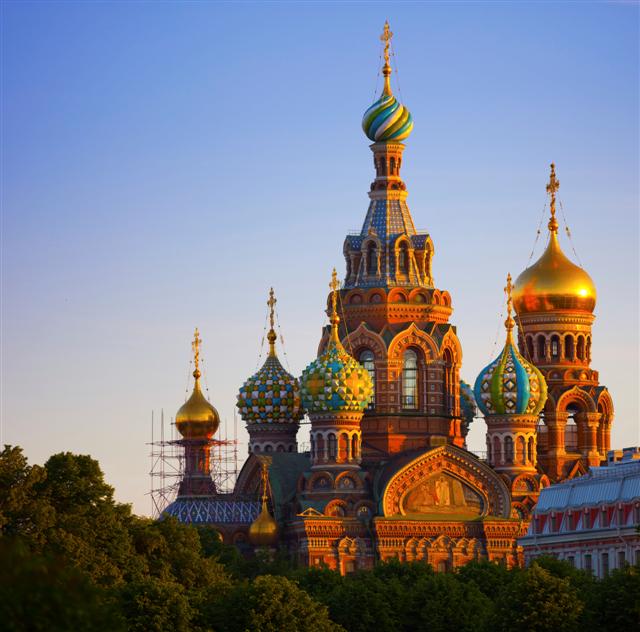
    The Church of the Resurrection of Jesus Christ

    St. Petersburg in Russia celebrates Arctic Days in December where the highlight is the conference “Electronic Memory of the Arctic – cultural communications of the circumpolar world”.

    The Conference has been organized by the joint effort of the National Library of Russia (NLR), Nonprofit partnership Center for the Preservation of Cultural and Historical Heritage “Electronic Memory of the Arctic” (NPP EMA), Center of International and Inter-regional Collaboration and is an important step towards creation of the “International Scientific Multifunctional Arctic Center in Salekhard.”

    December 12-15th are the Arctic Days, under support of the Arctic Council, RF Ministry of Foreign Affairs, RF Ministry of Culture and the Russian Geographical Society.

    The major event is the First international scientific and practical conference “Electronic Memory of the Arctic” taking place now on the premises of the National Library of Russia.

    The event is marked by the presence of the leading establishments of the world-wide Arctic community, including Arctic Council Secretariat, University of the Arctic (Norway-Russia), Arcticportal.org (Iceland), Arctic Centre (University of Lapland), The Academy of Finland, Foundation for Siberian Cultures, Scott Polar Research Institute (University of Cambridge), as well as of the representatives of the national libraries and archives of the Arctic Council countries, inter alia The National Library of Norway, The Sámi Archives (Norway), The Yukon Archives (Canada) and others.

    The Russian scientific community is to be represented by more than 20 institutions, among which there are The Library of the Russian Academy of Sciences, The Russian State Historical Archives, The Institute of the Peoples of the North (Herzen University), MGU, StPGU and other large specialised organisations.

    The Arctic days will see many interesting presentations and working sessions, click here to see the conference program.

    Sources

    Website of EMA

    Conference program

    Press release Electronic Memory of the Arctic

    Press release Arctic Days

  • Arctic Report Card 2012 is out

    Arctic Report Card 2012 is out

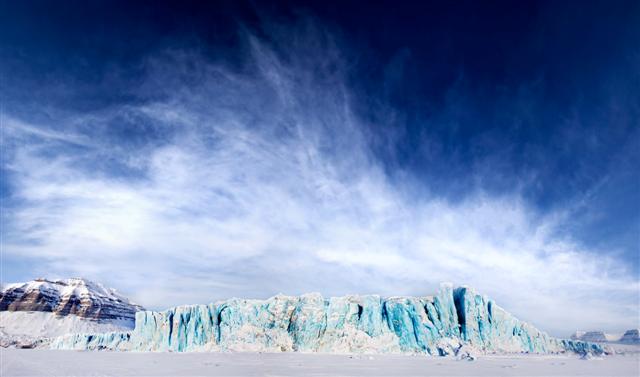
    arctic landscape

    The Arctic Report Cards produced by the National Oceanic and Atmospheric Administration (NOAA) are a source of reliable and brief information on the current state of the Arctic environment. The Arctic Council working groups CAFF and AMAP supported work on the 2012 Report Cards, which detail dramatic changes in the Arctic with record losses of sea ice and late spring snow.

    The Arctic Council, through the Arctic Monitoring and Assessment Programme (AMAP) and the Conservation of Arctic Flora and Fauna’s (CAFF) Circumpolar Biodiversity Monitoring Programme (CBMP), has contributed to the Arctic Report Card, an annual report released today by NOAA that monitors the often-quickly changing conditions in the Arctic.
    Click here to go to the Reports website.

    Full report is available here.
    The peer-reviewed report contains contributions from 141 authors from 15 countries. For this year’s issue CAFF’s CBMP developed and edited the terrestrial and marine ecosystem chapters in cooperation with others, while AMAP organized an independent peer-review process involving international experts.

    The Arctic region continued to break records in 2012—among them the loss of summer sea ice, spring snow cover, and melting of the Greenland ice sheet. This was true even though air temperatures in the Arctic were unremarkable relative to the last decade, according to the report.

    Major findings include:

    Snow cover: A new record low snow extent for the Northern Hemisphere was set in June 2012, and a new record low was reached in May over Eurasia.

    Sea ice: Minimum Arctic sea ice extent in September 2012 set a new all-time record low, as measured by satellite since 1979.

    Greenland ice sheet: There was a rare, nearly ice sheet-wide melt event on the Greenland ice sheet in July, covering about 97 percent of the ice sheet on a single day.

    Vegetation: The tundra is getting greener and there’s more above-ground growth. During the period of 2003-2010, the length of the growing season increased through much of the Arctic.

    Wildlife and food chain: In northernmost Europe, the Arctic fox is close to extinction and vulnerable to the encroaching Red fox. Additionally, massive phytoplankton blooms below the summer sea ice suggest estimates of biological production at the bottom of the marine food chain may be ten times too low.

    Ocean: Sea surface temperatures in summer continue to be warmer than the long-term average at the growing ice-free margins, while upper ocean temperature and salinity show significant interannual variability with no clear trends.

    Weather: Most of the notable weather activity in fall and winter occurred in the sub-Arctic due to a strong positive North Atlantic Oscillation. There were three extreme weather events including an unusual cold spell in late January to early February 2012 across Eurasia, and two record storms characterized by very low central pressures and strong winds near western Alaska in November 2011 and north of Alaska in August 2012.

    Sources

    Arctic Report Card

    Report video

    SWIPA

    Full report is available here.

  • Svalbard for petroleum activities?

    Svalbard for petroleum activities?

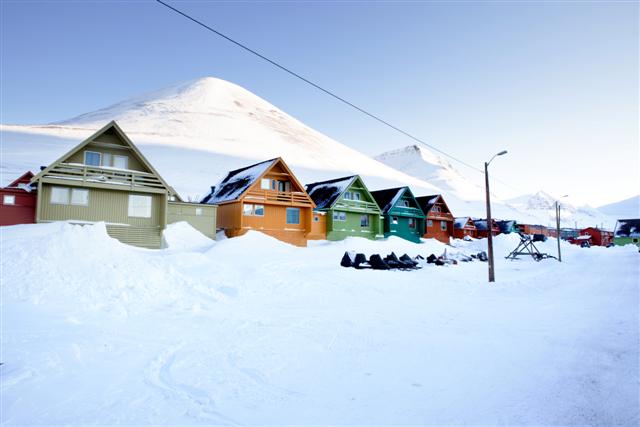
    Longyearbyen, Svalbard

    The Norwegian government is looking into the possibility of using Svalbard for oil and gas infrastructure. The unique nature of Svalbard has until now been thought to fragile for any kind of petroleum work.

    The increased petroleum activities in the northern seas are reaching Svalbard but it is said to be influenced heavily by geopolitics, politics, commercial interests and environmental protection.

    The Norwegian Ministry of Environment has asked for Svalbard to be evaluated as a world heritage site by UNESCO.

    In relation to that work, it will be assessed what impacts it would have on Svalbard to be any kind of use for petroleum activities in the northern Barents sea, these include logistics, supply, and land bases, says Eldbjørg Waage Melberg from the oil ministry.

    Oil analyst and former Secretary of State for Petroleum and Energy, Hans Henrik Ramm, believes it will be a huge mistake to look away from new business opportunities on Svalbard.

    „You must use balance different interests, including industrial opportunities. It is not reasonable to adopt protective measures to limit future choices, especially if it involves the transfer of decision making from Norway, as one does by seeking World Heritage status,” says Ramm.

    Norway produces coal in Svalbard but tourism and research are high on the agenda on the archipelago, as well as the Svalbard University Center.

    Sources

    Tekniske Ukeblad

    UNESCO

  • Next step in response to climate change

    Next step in response to climate change

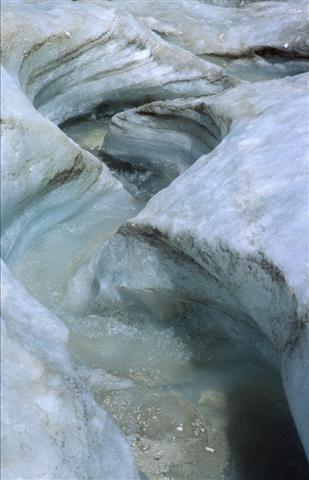
    Melting glacier in Greenland

    At the UN Climate Change Conference in Doha, Qatar (COP18/CMP8), governments have taken the next essential step in the global response to climate change.

    Countries have successfully launched a new commitment period under the Kyoto Protocol, agreed a firm timetable to adopt a universal climate agreement by 2015 and agreed a path to raise necessary ambition to respond to climate change. They also endorsed the completion of new institutions and agreed ways and means to deliver scaled-up climate finance and technology to developing countries.

    “Doha has opened up a new gateway to bigger ambition and to greater action – the Doha Climate Gateway. Qatar is proud to have been able to bring governments here to achieve this historic task. I thank all governments and ministers for their work to achieve this success.

    Now governments must move quickly through the Doha Climate Gateway to push forward with the solutions to climate change,” said COP President Abdullah bin Hamad Al-Attiyah.

    The Executive Secretary of the UN Framework Convention on Climate Change (UNFCCC), Christiana Figueres, called on countries to swiftly implement what has been agreed in Doha so that the world can stay below the internationally agreed maximum two degrees Celsius temperature rise.

    “I congratulate the Qatar Presidency for managing a complex and challenging conference. Now, there is much work to do. Doha is another step in the right direction, but we still have a long road ahead. The door to stay below two degrees remains barely open. The science shows it, the data proves it,” said Ms Figueres.

    “The UN Climate Change negotiations must now focus on the concrete ways and means to accelerate action and ambition. The world has the money and technology to stay below two degrees. After Doha, it is a matter of scale, speed, determination and sticking to the timetable,” she said.

    In Doha, governments also successfully concluded work under the Convention that began in Bali in 2007 and ensured that remaining elements of this work will be continued under the UN Climate Change process.

    The next major UN Climate Change Conference – COP19/ CMP9 – will take place in Warsaw, Poland, at the end of 2013.

    Sources

    COP18

  • Final remarks and project’s next steps

    Final remarks and project’s next steps

    AMATII logo

    Today, 6th of December 2012, the AMATII workshop (Arctic Transportation Infrastructure Response and Capacity and Sustainable Development in the Arctic) that for the past week has been taking place in the capital city of Iceland, comes to an end.

    The dialogue that has been taking place between representatives of public and private sector, policy makers and scientists, provided with better understanding of Arctic region and development of its maritime and aviation infrastructure.

    The matter of advanced economic development in the remote region in order to finance the development of Arctic infrastructure was highlighted. Funding infrastructure development in the High North has been recognized as a major issue for today’s policy makers.

    Gaps in knowledge were addressed by scientists from all of the Arctic states and future of the AMATII database as the main source of aviation and maritime information has been discussed. International instruments that are already in place should be used and employed by the project.

    The conference treated not only the current but also future activities in the Arctic in relation to maritime an aviation transportation sector.

    The Arctic Maritime and Aviation Transportation Infrastructure Initiative (AMATII) was a platform for addressing critical needs in the Arctic’s aviation and maritime environment.

    The Initiative approached Arctic air and maritime transportation policy, education, and research from various vantage points and facilitated on going and increased communication and collaboration throughout the Arctic.

    It was agreed that in the future, today’s initiative will serve as a coordination point for research and it will facilitate technology transfer within and between Arctic nations.

  • Marine disaster incident under AAMSR

    Marine disaster incident under AAMSR

    Walter & Duncan Gordon Foundation

    The third day of AMATII workshop takes place today in capital city of Iceland, Reykjavik. After small – group meetings that have been going on since Monday afternoon, specialists were able to define the lacking infrastructure among the Arctic states.

    Wednesday’s opened with the speech given by Liane Benoit and Sara French from Munk-Gordon Arctic Security Program.

    The speaker stressed out that the tragic events that took place in the Arctic have highlighted the desperate need for the knowledge and tools necessary to address emergency scenarios and adaptation plans.

    The Gordon Foundation was established to ensure northern voices were heard while leveraging this topic as a focus of research and as a tool for promoting research skills with the youth. The traditional knowledge participatory model will be central to bridging age-old methods of surviving on the land with the new realities of a North in transformation.

    The Walter and Duncan Gordon Foundation is a private, philanthropic foundation based in Toronto, Canada. The Foundation undertakes research, leadership development and public dialogue so that public policies in Canada reflect a commitment to collaborative stewardship of our freshwater resources and to a people-driven, equitable and evolving North. Over the past quarter century the Gordon Foundation has invested over $27 million in a wide variety of Northern community initiatives and freshwater protection initiatives.

  • Perspectives on public Arctic policies

    Perspectives on public Arctic policies

    The Arctic sea ice

    The first International Conference on Public Policy will be held in France in the summer of 2013. It is calling for abstracts for this interesting conference entitled Perspectives on public policies in the Arctic region.

    The conference website states that “developments in the Arctic have mostly been studied through defense studies, international relations, geopolitics, and to a lesser extent, economics. Public policies of Arctic states in the High North have attracted far less attention, with the exception of indigenous peoples rights.”
    The conference will run from the 26th of June until the 28th in Grenoble, France.
    The conference will see a panel analyzing and discussing these topics:

    1. To what extent climate change and the economic prospects in the Arctic have changed public policies
    2. To what extent public policies are limiting or motivating economic development, through legislation, infrastructure development, direct or indirect subsidization, particularly in the mining and hydrocarbon sector and in transport (shipping)
    3. The capacity to act by the elected representatives at the local level, and to analyze to what extent citizens and communities are engaged in the development of public policies
    4. How conflicting interests between economic sectors are considered (e.g. tourism versus mining, petroleum activities versus fisheries and traditional subsistence)
    5. How social cohesion between various categories of the population (indigenous/non indigenous, permanent/transient) appears as an issue in current public policies
    6. If public policies are shaped by regional frameworks of cooperation and international agreements and norms
    7. How Arctic policy making can be seen as an imaginary and symbolic construction.

    The abstracts are to be delivered by the 1st of February 2013. Comparative approaches of public policies in the Arctic are particularly welcome. To propose a paper an abstract of approximately 300 word should be sent directly to the chair of the panel, Cécile Pelaudeix (e-mail: cecile.pelaudeix@sciencespo-lyon.fr).

    Website of the conference.