Blog

  • Live from Arctic Resilience workshop

    Live from Arctic Resilience workshop

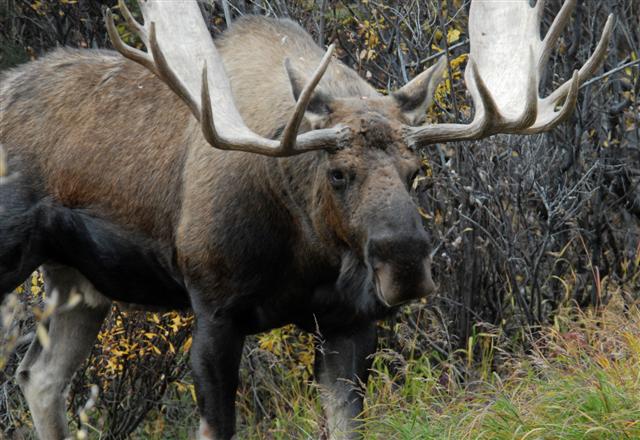
    Reindeer in the wild

    Arctic Portal is broadcasting live from the Arctic Resilience Report (ARR) workshop in Kautokeino, Norway, this week. The ARR is an Arctic Council project led by Stockholm Environment Institute and the Stockholm Resilience Centre.

    We will broadcast the sessions today after broadcastin live yesterday. The sessions will also be available on the Arctic Portal website later.

    The schedule for today is as follows: (all times on Norwegian time)

    09:00 – 10:30 Case study: Reindeer herding

    Chairs: Svein D. Mathiesen (ICR) and Cathy Wilkinson (SRC)

    Short presentations:

    • Nils Henrik Sara, President, Norwegian Sami Reindeer Herders Association (NRL), Resilience and Sami reindeer husbandry
    • Svein D. Mathiesen, Professor, International Centre for Reindeer Husbandry, Vulnerability in Reindeer Husbandry
    • Marie Roué, Director of Research, National Centre of Scientific Research, France, Reindeer management plans or how to answer questions poorly worded
    • Ellen Inga Turi, PhD student, Umeå University and Sámi University College, Resilience in Sami Reindeer husbandry governance
    • Erik Reinert, UArctic EALAT Institute at International Centre for Reindeer Husbandry, Destabilizing stability? Comparing Shocks and Crises in FinancialMarkets and Reindeer Herding

    12:30 – 13:30 Lunch

    13:30 – 14:05 Adaptive and transformative capacity

    Chairs: Annika E. Nilsson, SEI and Sarah Cornell, SRC

    Presentations:

    – Douglas Clark, PhD, University of Saskachewan: Adaptive and transformative capacity in the Arctic. Lessons from the literature (video link)

    14.05-15:00 Presentations

    • Allyson Quinlan, PhD, Resilience Alliance: Introduction to ARR case studies and their potential in the assessment
    • Douglas Clark, PhD, University of Saskachewan: Lessons from the Yukon case study (video link)
    • Martin Robards, PhD, Wildlife Conservation Society and University of Alaska Fairbanks: Lessons from the Bering Strait case study (video link)

    15:30 – 16:30 Closing session

    Chair: Gunn-Britt Retter, Saami Council – Panel discussion moderator: Johan Kuylenstierna, SEI

    Workshop conclusions – Panel discussion

    • Reflection on integration of Traditional Knowledge in the ARR – process (Colleen Henry)
    • New insights from reindeer herding case (Svein D. Mathiesen)
    • Emerging key insights ARR Part 1 (Tatiana Vlasova)
    • Emerging key insights ARR Part 2 (Sarah Cornell)
    • Overall reflections on workshop results in relation to current understanding of resilience in the Arctic (Bruce Forbes)
    • Open discussion with audience
  • Live from Arctic Resilience workshop

    Live from Arctic Resilience workshop

    Reindeer in the wild

    Arctic Portal is broadcasting live from the Arctic Resilience Report (ARR) workshop in Kautokeino, Norway, this week. The ARR is an Arctic Council project led by Stockholm Environment Institute and the Stockholm Resilience Centre.

    We will broadcast the sessions today and tomorrow live and the sessions will also be available on the Arctic Portal website later.

    The schedule for today is as follows: (all times on Norwegian time)
     

    09:00 – 09:20 Welcome address

    – Niko Valkeapää, Vice President, Saami Council

    Johan Mathis Turi, General Secretary, Association of World Reindeer Herders (WRH)

    09:20 – 10:40 Key note presentations

    Johan Rockström, Professor, Stockholm Resilience Center, Arctic resilience in a global perspective

    Inger Marie Gaup Eira, Associate Professor, Sámi University College: Sami language as the source of traditional knowledge in resilience research

    – b, Associate Professor, Sámi University College: Siida and traditional knowlegde

    10:40 – 11:10 Coffee break

    11:10 – 12:00 Arctic Resilience Report Project overview and methodology

    Chair: Johan Rockström and Anders Oskal

    Presentations:

    Annika E. Nilsson, PhD, Stockholm Environment Institute: Arctic Resilience Report. Background and project overview

    Martin Sommerkorn; WWF – Global Arctic Program: Conceptual overview of the ARR methodology

    Sarah Cornell, PhD Stockholm Resilience Center: The ARR approach to assessing thresholds in the Arctic

    12:00 – 13:00 Lunch

    13:00 – 15:00 Thresholds in the Arctic

    Chairs: Johan Rockström and Anders Oskal

    Presentations:

    Robert Corell, PhD, Climate change and critical thresholds in Arctic societies and resilience assessments?

    Paul Overduin, PhD, Alfred Wegener Institute: Thresholds in coastal systems

    Mark Nuttall, Professor, University of Alberta/University of Greenland: Thresholds in social systems – some reflections (video link)

  • Russia opens second largest gas field

    Russia opens second largest gas field

    Russian oil pipeline

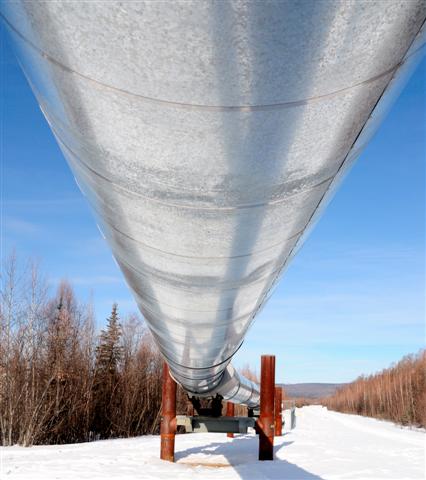
    Russia opened its latest gas production site this week. President Vladimir Putin formally opened the commercial production at the Bovanenkovo field on the Yamal peninsula in extreme northwestern Siberia.

    The discovery of the site by the Soviets in the early 1970s created excitement and frustration in equal measure. The excitement was because of the huge potential, the frustration because of the severe ice conditions, permafrost and remoteness.

    Now the site has opened up and Russian energy giant Gazprom estimates to be 4.9 trillion cubic meters (177 trillion cubic feet) of natural gas in the field – making it one of the world’s three largest deposits.

    “The field will produce 115 billion cubic meters (4,060 billion cubic feet) of gas and that will go up to nearly 140 billion,” Putin told the field’s workers by live video.

    “This is nearly the equivalent of how much we export to Europe,” Putin stressed.

    The giant field is second in size in Russia only to Gazprom’s Urengoi deposit to the south. It is a part of an Arctic project that Gazprom has been pinning its hopes on as older wells run dry.
    Source:
    AFP
    See also:
    Gas in the Arctic

    Arctic Energy Portlet

  • Antarctica airstrip melting fast

    Antarctica airstrip melting fast

    Australian plane in Antarctica

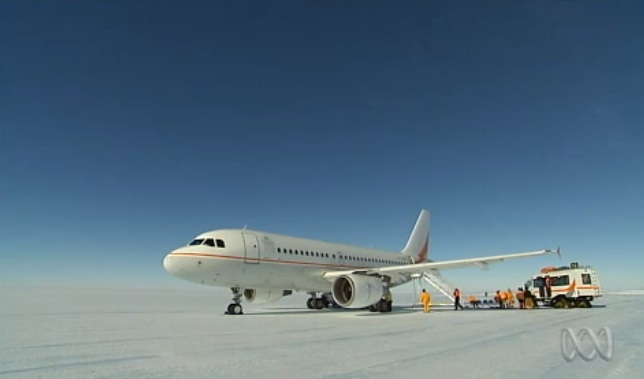
    The Australian runway on Antarctica is melting fast. The melting is causing problems in transport and there will be no flights from Australia to January.

    Australia will seek help from China with transport if needed.

    It is possible that a new airstrip of gravel will be made in the future.

    The $46 million Antarctic air link opened four years ago with the expectation of 20 flights to the Wilkins runway near Casey Station each season.

    Antarctic flights in 2009-2010 were supposed to be 20 for each season, but were 14 in the earlier season and only two in the latter. In 2011-2012 season all four planned flights were achieved and now for 2012-2013 there are six flights scheduled.

    Australian Antarctic Division chief Tony Fleming says that safety issues are very strict. “Once it gets to above minus five degrees in the ice, then there are safety parameters which mean we can’t [land] aircraft on that. Some way down in the ice, if it becomes above that temperature, we can’t guarantee the structural integrity of the surface.”

    The Wilkins runway is used to get vital equipment, medical supplies, people and food to the continent.

    Source:
    ABC

    See also:
    Video about the story

  • Bear and her cub came to close

    Bear and her cub came to close

    The bear and her cub shot in Greenland

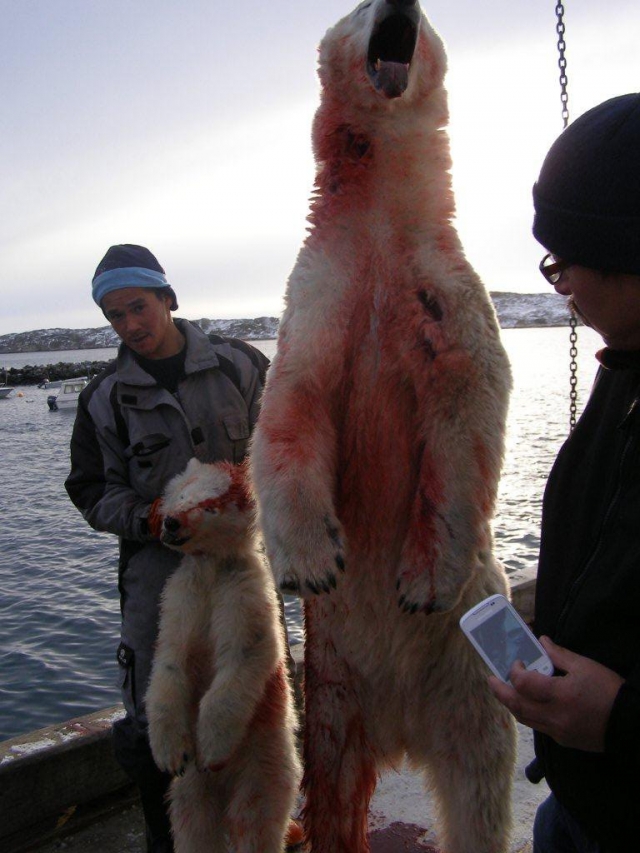
    A polar bear and a cub were shot in the town of Kangaatsiaq in Greenland yesterday. The pair had been circling the town for a few days.

    The people had tried to drive them away but when they came close to the town they saw no other option but to shoot.

    The mother had been swimming in the fjord with her cub on the back, like this video shows.

    After the pair went in the town shots were fired in the air but unfortunately that did not scare them away.

    “We had to shoot them both. The cub would not have survived without his mother,” Peter Løvstrøm from the department of hunting and fishing in Greenland said.

    “The meat will be distributed to the community’s institutions but the skin and everything else will be analyzed by the government,” Løvstrøm said. Those means are typical for such circumstances.

    Source:

    KNR

  • One of the biggest energy deals ever

    One of the biggest energy deals ever

    Oil tanker

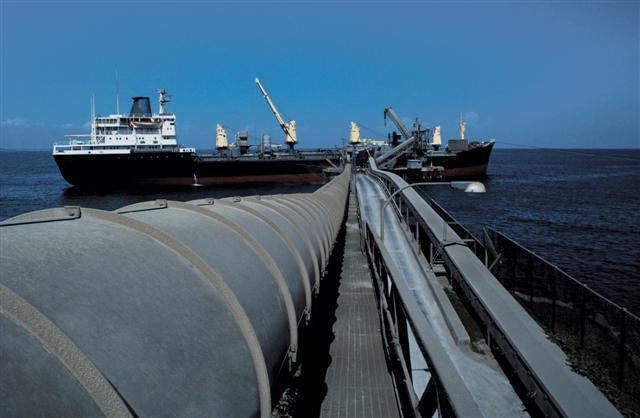
    One of the biggest oil deals in history was concluded this week. The Russian state-run company Rosneft is now on par with energy giant Exxon Mobil.

    The deal concluded this week is worth around $55 billion USD.

    The deal works like this: Rosneft will buy TNK-BP which is Russia’s third largest oil company (after Rosneft and Lukoil ). Half of that is BP share. BP (British Petroleum) will in exchange get $12.3 billion of cash and 18.5 percent of Rosneft, raising its holding to 19.75 percent.

    BP will have two seats in the board of the new mega giant which Reuters says will be pumping more oil and gas than Exxon Mobil after the deal.

    Rosneft will also buy the other half of TNK-BP for $28 billion in cash from A.A.R., the consortium formed by the Russian oligarchs to manage their half of the venture.

    “This is a very good signal for the Russian market. It is a good, large deal. I would like to thank you for this work,” Russian President Vladimir Putin told powerful chief executive Igor Sechin at a meeting on Monday.

    “This deal is in line with the Russian government’s strategy of reversing the privatization of oil and gas resources that took place in the 1990s,” said Andrey Golubov, a finance lecturer at Cass Business School in London.

    BP is now betting that a relationship with the Russian state company will be a better route to the deals it wants to drill offshore in the Arctic Ocean. Exxon Mobil, Eni of Italy and Statoil of Norway already have such deals.

    The acquisition, subject to Russian government approvals, will give Rosneft extra output and cash flow to finance exploration of Russia’s vast reserves to replace ageing and depleting fields.

    The only oil and gas acquisitions that have been bigger than today’s deal are Exxon’s merger with Mobil Corp., an all- stock deal valued at $80 billion when it was announced in 1998, and BP’s $56 billion purchase of Amoco Corp. the same year.

    Source:

    BBC

    Reuters

    Bloomberg

    NY Times

  • Polar bear extinction in 20 years?

    Polar bear extinction in 20 years?

    Polar bears feasting on a seal

    Arctic animals are under severe threat because of warming climate and there might be no polar bears in the Russian wild in 20-25 years. This is the prediction of leading polar bear specialist, Nikita Ovsyannikov, deputy director of Russia’s polar bear reserve on Wrangel Island in the Chukchi Sea to the northwest of Alaska.

    The Edmonton Journal reports that calculations are predicting that only around 1700 polar bears live around the Chukchi Sea, and that it had dropped from 4000 the last three decades.

    „It is worse for Russian polar bears than the bears in Canada or Greenland because the pack ice is retreating much faster in our waters,” said Ovsyannikov. „The best habitat is quickly disappearing. It is extreme. What we are seeing right now is very late freezing. Our polar bear population is obviously declining. It used to be that new ice was thick enough for them to walk on in late October. It now will happen much later.”

    With no drifting pack ice near the shore to hunt from, Russia’s polar bears have faced a stark choice. They either must go far out to sea on pack ice that has been drifting away from the coast in the late spring, or forage for food as best they can on Russia’s few Arctic islands or along the coast.

    However, venturing far from land presents special problems for female bears who traditionally build their hibernation and birthing dens on land.

    “Making a den on drifting ice is much more difficult,” Ovsyannikov said. “One reason is that there is a greater chance that other bears will disturb them there. “But some females are den-ning on the drifting ice because the ice is freezing up again so late in the fall that they cannot get back to land. We have evidence of this.”

    There will be no polar bears anywhere in the wild within 20 to 25 years, Ovsyannikov predicted.

    However, it is wrong to think that their “extermination” is only happening because of global warming, he said. Another key factor is that warmer air and sea temperatures have forced polar bears to spend more time on land where “too many of them were being shot and poached.”

    Other species under threat include seals, walrus, Arctic fox and snowy owls, he said.

    The big cargo ships transiting to Asia using the Northeast Passage pose another potential danger. Any spill will cause great harm across the north because oil dissolves slowly in cold water and is notoriously difficult to clean up if it comes into contact with drifting ice or ice that is attached to land.

    “It is inevitable that economic development will continue,” Ovsyannikov said. “So it is up to us to take as many precautions as possible because a shipping accident in the Arctic would be an absolute disaster for the entire ecosystem.”

    Source:

    The Edmonton Journal

  • INTERACT call for proposals will close in one week

    INTERACT call for proposals will close in one week

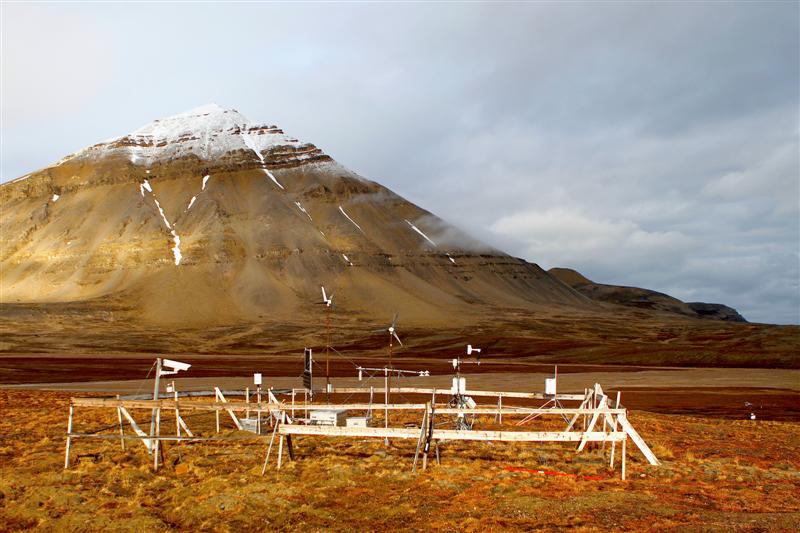
     Permafrost research site in Ny Alesund, Svalbard

    The INTERACT call for summer 2013 and winter 2013/2014 will be open for one more week or until 31st of October.

    The INTERACT project under EU FP7 has a Transnational Access program that offers access to 20 research stations in northernmost Europe and Russian Federation.
    The sites represent a variety of glacier, mountain, tundra, boreal forest, peatland and freshwater ecosystems, providing opportunities for researchers from natural sciences to human dimension.

    Transnational Access includes:

    • Free access for user groups/users to research facilities and field sites, including support for travel and logistics
    • Free access to information and data in the public domain held at the infrastructures

    The call for proposals for summer 2013 and winter 2013/2014 field seasons is open on the INTERACT website until 31st October, 2012.

    For additional information, visit the INTERACT website or contact WP4 coordinator Hannele Savela,  hannele.savela(at)oulu.fi, or WP4 leader Kirsi Latola, kirsi.latola(at)oulu.fi.

  • Fourteen polar bears in one town in Nunavut

    Fourteen polar bears in one town in Nunavut

    Polar bears in the arctic

    A total of 14 polar bears were seen last week in the small town of Igloolik, in Canada’s eastern Arctic territory of Nunavut.

    The town is now en route to make a long term plan because of the unusual high number of sightings of bears.

    The town has met with the Hunters and Trappers Association, the Department of Environment and the Royal Canadian Mounted Police last week to coordinate their response. There is now a list of three experienced people on call to respond if a polar bear is spotted near town.

    Regular patrols are also in effect in the town, by snowmobile, all-terrain vehicles and trucks.

    “Early in the morning, right at lunch, when everybody’s returning after lunch, and then when the kids are being let out after school – there’s good coverage of people patrolling the community to make sure there’s no bears,” Conservation Officer Jimmy Kennedy said.

    Of the 14 bears, four were killed and one shot and wounded.

    Many communities in the Canadian Arctic have plans because of polar bears seeking in towns and Igloolik plans to seek help from towns in their planning.

    Source

    Alaska Dispatch

  • Two Russian nuclear submarines lifted from the Arctic Ocean

    Two Russian nuclear submarines lifted from the Arctic Ocean

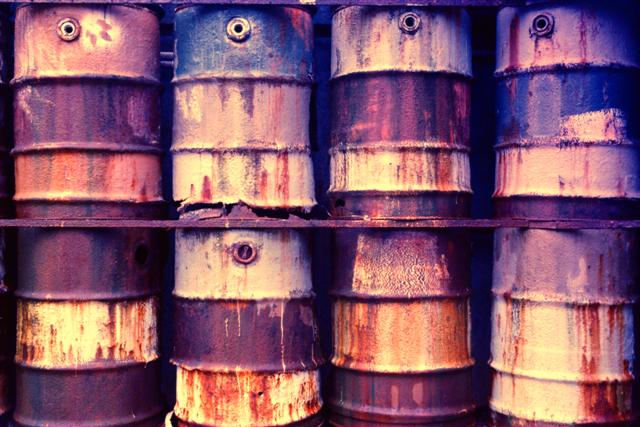
    rusted old oil barrels

    Russia intents to lift up two nuclear submarines who sunk in the Arctic. The submarines are the nuclear powered K-27 and K-159, who sunk in the Kara Sea and the Barents Sea.

    Click here to see a map of sunken nuclear submarines in the Arctic.

    The release of the strategic development of Russia’s Arctic zone saw this proposal, but according to the draft several measurements are included to clean the Arctic waters of pollution.

    There will also be action to remove dangerous waste left behind after the military units on Franz Josef Land, New Siberian Islands and Bely Island.

    The K-27 submarine was dumped in the Kara Sea in 1980 and is lying on 75 meters depth. K-159 sank in the Barents Sea during towing in 2003 and could be laying up to 250 meters under the surface of the sea.

    A joint Russian-Norwegian expedition to the K-27 earlier this autumn concluded that the submarine is not yet leaking radioactivity but that it is urgent to lift it for safe decommissioning.

    International assistance will be needed since Russia does not the capacity to complete the operation on its own. When Kursk was raised in 2001 Dutch companies lifted the submarine.

    Source:

    Barents Observer

    Izvestia