Blog

  • Recordings from the China-Iceland symposium

    Recordings from the China-Iceland symposium

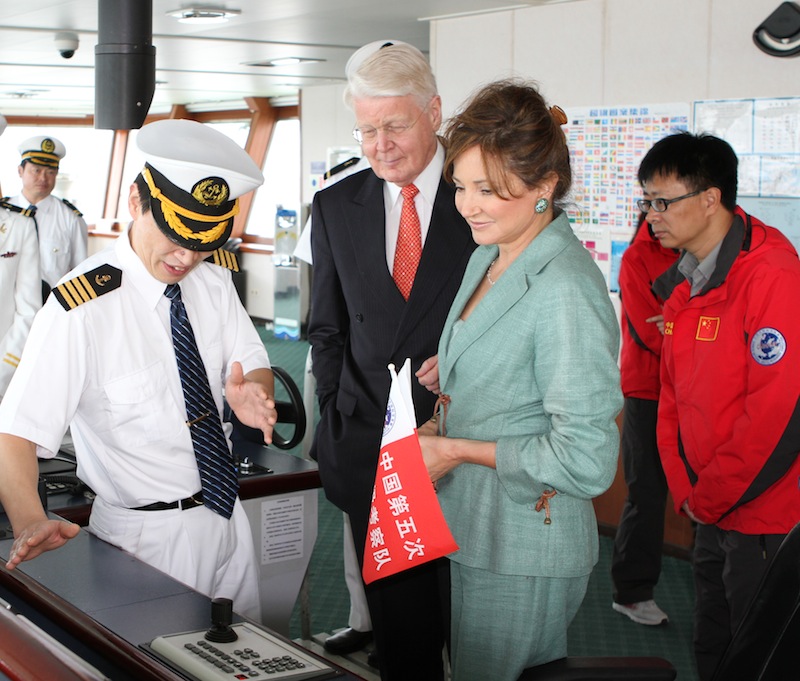
    Dr. Ólafur Ragnar Grímsson, president of Iceland, visits Xuelong with his wife, Dorrit Moussief

    In relation to Xuelongs visit in Iceland, the second China-Iceland symposium was held this morning. The venue was the University of Iceland were speakers from both countries exchanged views and information.

    President Ólafur Ragnar Grímsson attended the symposium and held the closing remarks. Amongst other he said the CHINARE5 expedition was of global significance, one who would go into the history books.
    Click on the names to watch the presentations.

    Agenda:

    8:30 – Opening by Iceland’s Senior Arctic Official, Hjálmar W. Hannesson and the Chinese Ambassador to Iceland, H.E. Su Ge.

    8:50 – 9:40 Dr. Huigen Yang, Polar Research Institute in China and Prof. Deyi Ma, Director of the First Institute of Oceanography, State Oceanic Administration
    8:50 – 9:40 Dr. Huigen Yang, Polar Research Institute in China and Prof. Deyi Ma, Director of the First Institute of Oceanography, State Oceanic Administration “An Overview of Chinese Arctic Research”.

    Dr. Þorsteinn Gunnarsson, the Icelandic Centre for Research.

    “Iceland’s Arctic Policy and International Research Cooperation”.

    9:40 – 10:30 Dr. Ruibo Lei, Polar Research Institute of China.

    “Interactions among Arctic Atmosphere, Sea Ice and Ocean and their Links to the Climate in China”.

    Associate professor, Ingibjörg Jónsdóttir, University of Iceland, Science Institute.

    “Remote Sensing of Sea Ice, Observations and Measurements during the CHINARE5 Expedition”.
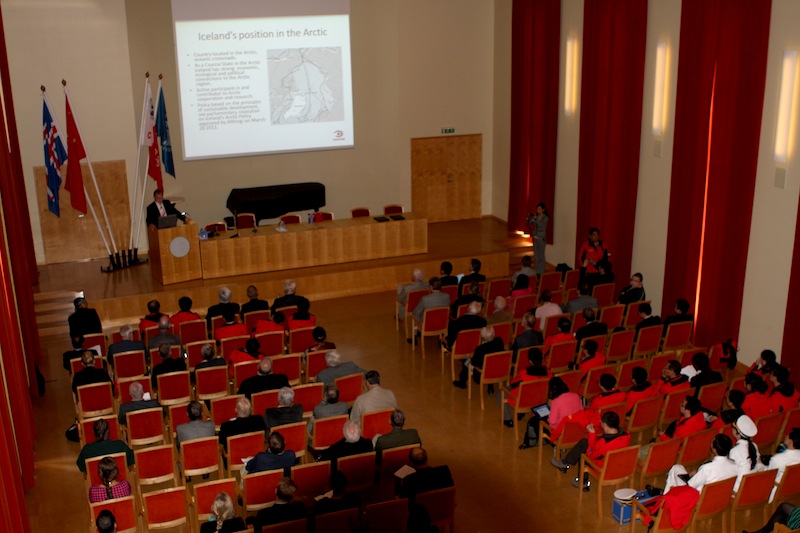
    From the symposium

    10:30 – Coffee break

    10:50 –11:40 Dr. Yanguang Liu, the First Institute of Oceanography, State Oceanic Administration.

    “Reviewing and Proceedings of Marine Geological Survey during the Chinese Arctic Expedition”.

    Dr. Ármann Höskuldsson, University of Iceland, Institute of Earth Sciences

    “Volcanic and tectonic evolution of the Reykjanesridge”.

    Dr. Jón Eiríksson, University of Iceland, Institute of Earth Sciences.

    “Geological Record of Oceanographic Variability at the Arctic Front”.

    11:40 – 12:30 Dr. Minggang Cai, Xiamen University.

    “Fate of Some Persistent Toxic Substances from the Northern Pacific to the Adjacent Arctic”.

    Dr. Helgi Jensson, the Environment Agency of Iceland.

    “Monitoring of Pollutants in the Marine Environment around Iceland”.

    12:30 – 12:40 Signing Ceremony.

    12:40 – 13:00 Closing remarks by the president of Iceland, Dr. Ólafur Ragnar Grímsson.

  • Towards the North – Xuelong to reach Akureyri on Monday the 20th

    Towards the North – Xuelong to reach Akureyri on Monday the 20th

    Xuelong statistics

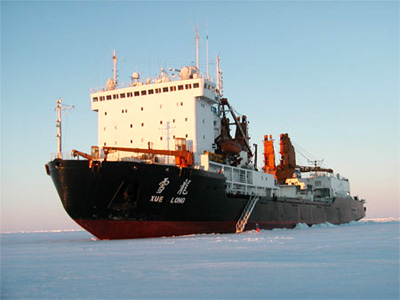
    On Monday, 20th of August 2012, the Snow Dragon, research ice – breaker from Polar Research Institute of China, is expected to anchorage in Akureyri in the northern part of Iceland.

    The venue will open for participants at 9.00 (Icelandic local time) with the speech given by the Chairman of Akureyri Town Council Geir Kristinn Aðalsteinsson and the Chinese Ambassador to Iceland – Su Ge.

    Recently, China has achieved dimensional developments of Arctic linkage, especially in understanding of the earth system and global climate change. To raise public and governmental awareness and interests Dr. Huigen Yang and Prof. Deyi Ma will give a presentation on “Chinese Polar Research and CHINARE 5” to highlight the main features of Chinese contribution to the Arctic science and promote international cooperation with regards to science and technology of polar research activities.

    The Icelandic Chinese science cooperation will be further discussed under the chairmanship of Dr. Thorsteinn Gunnarsson from Icelandic Centre for Research (RANNIS).

    China makes big efforts to understand Arctic environmental changes and nature´s evolution, therefore conjugate observation of dayside aurora and new Icelandic – Chinese Joint Aurora Observatory project will be presented and explained by Dr. Hu and Dr. Björnsson to encourage the exploration of unknown frontiers in the deep universe.

    The Snow Dragon on the way to Iceland

    New perspectives on Arctic shipping cooperation will be given by Mr. Egill Nielsson and Prof. Zhang Xia from Polar Research Institute of China jointly with Ms. Embla Oddsdottir from Stefansson Arctic Institute who will introduce the harmonious culture of sustainable Arctic Shipping.

    The rector of the University of Akureyri – Dr. Stefán B. Sigurðsson will be given his closing remarks before whole group will participate the working lunch hosted by the Town of Akureyri.

    The Xuelong will be open for external visitors on Monday, 20th of August from 12.00 – 16.00 p.m. Introduction to the open day will be conducted by the mayor of Akureyri and Chinese ambassador. The visitors will get a chance to meet the staff from Akureyri town council, University of Akureyri,Stefansson Arctic Institute, Arctic Portal and Icelandic Arctic Cooperation Network.

    CHINARE 5 will leave northern Iceland on Monday´s evening, turning its rudder towards Shanghai.

    Please, see the full schedule of Chinare5 Open Day.

    Source

    Chinare5

  • Monster turbine dwarfs Airbus A380

    Monster turbine dwarfs Airbus A380

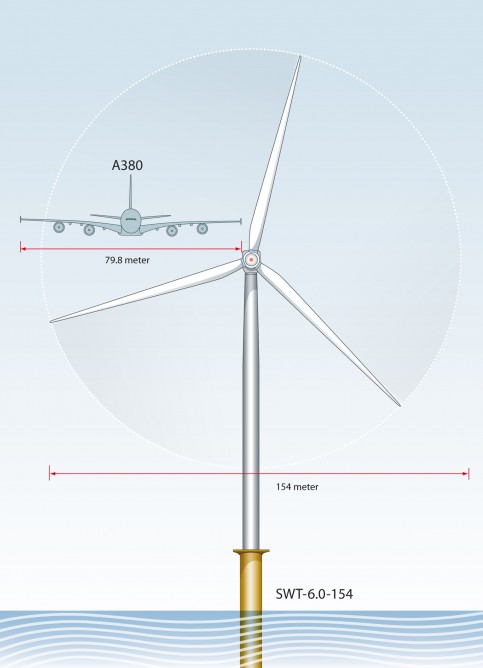
    The turbina dwarfs the Airbus A380.

    The world’s largest wind turbine will soon be but to the test. Siemens is the manufacturer of the mega turbine, which has three 75 meter long rotor blades. Siemens will be manufacturing the 300 monster turbines, which have a 154-metre wingspan and a capacity of 6 megawatts.

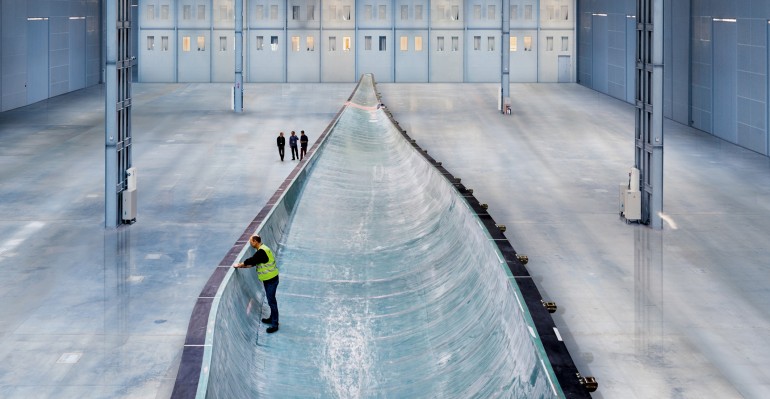
    The size is similar to the size of the enormous aircraft Airbus A380. The blades are made in a single component made from epoxy resin and balsa, reinforced with glass fiber, cast in one gigantic mold.

    One such monster turbine can supply enough electricity to 1,150 households. In two years, Dong Energy will be building the first 300-strong giant turbine “monster mill park” off the coast of Britain.

    Norway’s Ministry of Oil and Energy is open to placing the giant turbines in the Norwegian Sea as well. The wind power facility in British seas with the 300 giant windmills will be completed in 2017. It is estimated this will cost NOK 6.6 billion (about USD 1.1 billion), including installation.

    “300 wind turbines of this type will provide enough electricity for 345,000 average Norwegian households at normal wind power production levels,” says Christian Jahr, head of information at Siemens.

    Initially, three B75 blades will be put to use in a prototype 6-MW offshore turbine at Denmark’s national test center at Østerild. The sweep of the completed turbine will cover 18,600 sq m (200,200 sq ft) and the tips of the blades will move at 290 km/h (180 mph) at full speed.

    The mold the blades are made inAt a wind speed of 10 m/s (19.4 knots), the turbine will be hit by 200 tons (181 metric tonnes) of air every second.
    Siemens has already seen 6-MW turbines installed at the UK’s Gunfleet Sands wind farm, albeit with 60-m (197-ft) blades. Thanks to a process Siemens has branded “QuantumBlade,” it claims the B75s weigh four fifths of conventional blades.

    “The weight reduction is achieved by using specially designed blade profiles that are also shaped in a way that delivers maximum rotor performance at a range of different wind speeds,” the company says.

    Source

    Aftenbladed

    Gizmag

  • Russian megaport in the making

    Russian megaport in the making

    Arctic shipping

    A new port in the Yamal Peninsula will be on of the biggest Arctic ports when ready. Russia is building the Sabetta port and are hopeful it will boost Arctic shipping, especially in the Northern Sea Route.

    The new port, a joint initiative of the Novatek company and Russian federal authorities, will be a key component in the development of the gas-rich Yamal Penisula. Linked with the South Tambey field and a major projected LNG plant, the port will be built to handle more than 30 million tons of goods per year.
    The new port is planned to be operational all-year-round, despite the highly complex ice conditions of the Ob Bay.

    In a first phase, the port will by summer 2014 be developed to handle the deliveries of modules to the LNG plant. In the second phase, the port will be developed as a terminal handing LNG tankers, Novatek informs.

    The construction of the port was officially marked in a ceremony attended by Novatek Board Chairman Leonid Mikhelson, Russian Minister of Transport Maksim Sokolov and other prominent guests. In his speech, Minister Sokolov maintained that the construction of the Sabetta port marks the start of a new period in Russian Arctic shipping, one which “by year 2030 could lead to the boost of hydrocarbon shipments to 50 million tons per year from the Ob Bay alone”, a press release from the ministry reads.

    Source

    Barents Observer

  • New research project in the Barents region

    New research project in the Barents region

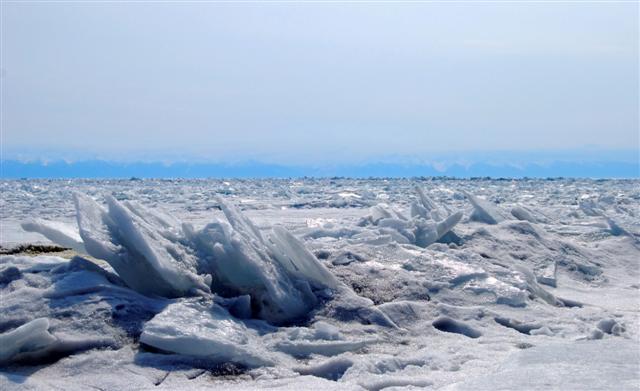
    frozen arctic landscape

    The Barents International Political Economy (BIPE) researcher network has received funding to start a two-year joint research project in the Barents region. The aim of the new project is to study the role of states in advancing sustainable development focusing on local communities perspectives in different parts of the Barents region.

    The Nordic Council of Ministers’ Arctic cooperation program funds the project.

    The new research project strengthens the Nordic and Russian research collaboration and networking concucted since 2010. The researcher network and new project is led by research professor Monica Tennberg from the Arctic Centre (University of Lapland) and the partners in the new project are Barents Institute (Norway), Kola Science Centre and Syktyvkar State University (Russia) and Umeå University (Sweden).

    The researcher network coordinated by Tennberg convenes in Rovaniemi, 29–30 August, 2012, in Arktikum, to discuss recent social, political and economic developments in the Barents Region. The presentations include topics such as natural resource extraction and local communities, adaptation to climate change, regional energy politics and social development in the region.

    The book produced by the researcher network “Politics of Development in the Barents Region” will be published later during this fall by Lapland University Press.

    Sources

    University of the Arctic

  • Final order in Kolskaya case

    Final order in Kolskaya case

    Kolskoya Oil rig

    Yesterday the High Court of Murmansk declared the 24 missing Kolskaya workers, dead.

    On the 18th of December 2011, newspapers from all over the world announced 53 victims after an oil rig overturned in the Sea of Okhotsk in the Russian Far East. National and international search and rescue services were called the same night to conduct one of the most difficult rescue actions in the world´s history.

    Yesterday, 1st of August 2012, a bit more than half a year after the tragedy occurred, the court of Murmansk declared last crew members whose bodies have never been found, dead.

    The decision was valuable for families of the missing ones, who will now receive the compensation from AMNGR Company.

    In March 2012, the director of AMNGR was fired, after the investigation proved that several mistakes were made during the towing operation. According to the reports, AMNGR failed to evacuate ´non – essential´ member of the rig before towing. What is more, it was found out that the distress signal was sent out far too late for the rescue ice – breaker to come in time.

    The Kolskaya tragedy was without a doubt, the largest accident in the Russian history of oil and gas sector.

    Source

    AMNGR Press Centre

  • Denmark to claim the North Pole

    Denmark to claim the North Pole

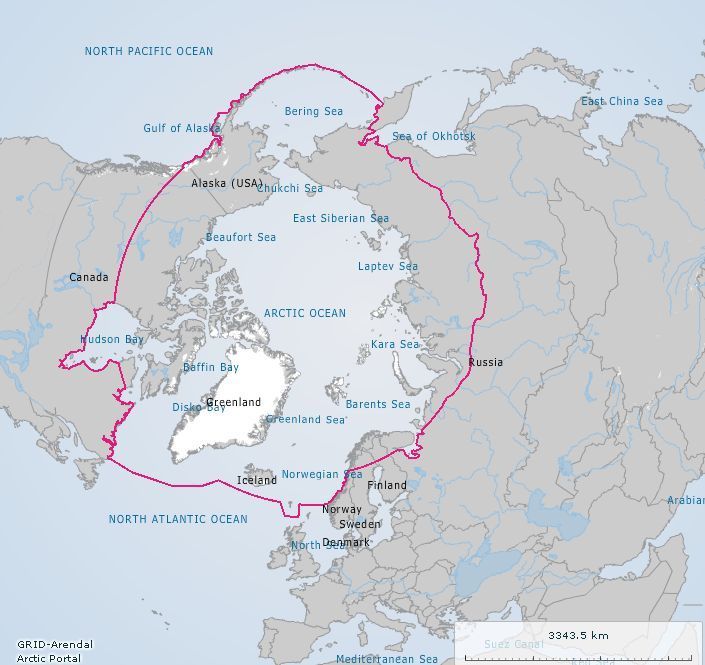
    Arctic Boundaries map

    Today, 31st of July 2012, Denmark dispatches the official expedition from Svalbard off northern Norway, in order to gather seismic and depth data to substantiate a future possible claim on the North Pole.

    Before 2014, Kingdom of Denmark will make an official claim to the North Pole possibly setting a tug – of – war with Russia and Canada over the seabed resources lying on the top of the world.

    Danish claim would be made under the United Nations Convention of the Law of the Sea (UNCLOS). It would map five sections of continental shelf to include four of them around Faroe Islands and one around Greenland with the area reaching the North Pole. Both, Greenland and Faroe Islands are self – governing territories under the Kingdom of Denmark.

    It is a fact, that melting Arctic sea ice will in very near future greatly open the door for inexpensive exploitation of northern oil and gas resources.

    The Danish claim is to include the area of roughly 150.000 sq km north of Greenland. However, to be able to proceed with the statement, Denmark will have to prove by providing scientific data, that the Lomonosov Ridge which lies across the North Poole, is the extention of Greenlandic land mass.

    Up until now, Denmark managed to identify five potential claim areas around the southern part of Greenland and south of Faroe Islands.

    It is the Commission on the Limits of the Continental Shelf that is eligible to assess the validity of those claims.

    United Nation Convention on Law of the Sea entered into force and by the year of 1998 was accepted by 127 states. Few governments, which did not ratify the Convention, in between United States, Belgium and Canada, have already signed the Implementation Agreement, what surly shows that even when not ratified, the Convention with its universal approach, contributes with a great impact, to domestic rules of various countries.

    The map on the right presents the current Arctic boundaries. Please, click here to access more Arctic – related interactive maps.

    Source

    The Moscow Times

  • Beyond Moscow: Syktyvkar success story

    Beyond Moscow: Syktyvkar success story

    Variety of flola makes Syktyvkar unique among Russian northern cities

    All across its length, Russia´s territory reaches up toward the Pole, giving it the broad belt of land being situated within the Arctic Circle.

    In the north – east part of the East European Plain, where forests cover over 70% of the territory, Komi Republic is located. It is a federal subject of Russia with the population a little bit over 900.000 inhabitants.

    There are representatives of close to 130 different nationalities live in the Republic of Komi. The duty to regulate the republic´s international relations is endowed with the Ministry of National Policy of the Republic of Komi.

    It aims to unite efforts of various state players and bring together political, social and cultural movements in order to preserve and promote national culture, language and traditions.

    There are close to 400.000 aboriginal, Komi people. Approximately 125.000 live in the Komi Republic itself. The population is however not recognized as indigenous as the Russian law only allows this status for groups which are not larger than 50.000.

    It is a shame to admit that the Komi language is no longer used in schools or any of the public – government institutions and very few local Russian can speak it.

    The changing world and developing global concepts create more and more challenges for the local government to establish strategies and targets in order to maintain the traditional knowledge of the first settlers.

    The Republic´s most valuable natural resources are to include coal, oil, natural gas, gold, diamonds and timber. The volume of reserves and production of fossil fuels in the area makes it the main fuel supply region for the European North of Russia.

    With the large water resources, Komi Republic is a zone of extreme moisture. A significant predominance of atmospheric precipitation over evaporation, the topography and geological structure, determine the higher waterlogged and well – developed drainage network.

    With the area, being almost totally covered with trees, the Republic of Komi is one of the forestry leading regions in Russia.

    There are more than 4.000 different animal species to be found all around the Republic of Komi.

    There are more than 100 of them, being highly protected. The most valuable economically animals are to include salmon, elk, bear, whitefish, beaver and many more.

    The capital city of Komi Republic – Syktyvkar

    The capital city of Komi Republic – Syktyvkar derives its name from the indigenous name for the river by which the town is situated – Syktyv (today Sysola), plus ´kar´ what in Komi language simply means ´city´.

    The city, with its highly educated inhabitants, is a center of the cultural life in the Republic of Komi and a location of Syktyvkar State University with both international and national students from all over Russia.

    However, most of the Syktyvkar´s inhabitants derive from 19th century exiles and prisoners, including anti – monarchists, kulaks and German soldiers, who were forced to move closer to the Arctic Circle by the Russian government. Nowadays, more than 70 different nationalities live in Syktyvkar and those who were born there, surly have some foreign ancestors.

    This northern city with quickly developing economy is the main Russia´s supplier of paper and pulp products. The biggest paper and wood processing companies are located in Syktyvkar.

    Without a doubt, the city has a favorable economic climate. In recent years it attracted more than 500 million Euros in foreign investments.

    The strategy for rapid socio – economic development has been adapted by the local government. It is expected to last until 2025 and stimulate even more of the investments activities. With the good support from federal government and local community, Syktyvkar slowly becomes the Russian success story.

    Nowadays, when travelling to remote and undiscovered places, rather than to the sunny coasts of the South Europe becomes more and more popular, Russia is being seen as the one of the most favored destination. Inspiring landscapes of the far North give an opportunity to discover Russia being more evocative of Jack London rather than of Catherine the Great even though it was the empress who granted Syktyvkar its status.

    The video presents the town of Syktyvkar in its cultural beauty. It was shot by Olga Alekseevich, Director of Euro – Arctic Center for International Initiatives at Syktyvkar State University.

    Source: Republic of Komi – Official Portal

    See Also:

  • Nobel Discoverer drifts away from the Alaskan shore

    Nobel Discoverer drifts away from the Alaskan shore

    Nobel Discoverer, Shell's drilling vessel

    On Saturday evening, 14th of July, the Shell´s drilling vessel, Noble Discoverer dragged anchor in a stiff breeze and the stern of the ship bumped into the beach in front of Dutch Harbor´s Grand Aleutian Hotel. It was stuck for an hour until pulled free by the American tugboat.

    In the end of June, U.S branch of Shell announced that the Noble Discoverer and the Kulluk conical drilling unit departed from Seattle to reach the Alaskan coast from where the drilling operations were about to start in Beaufort and Chukchi Seas.

    The journey was about to be a beginning of Shell´s long term plan for offshore exploration program in the northern waters.

    The Noble Discoverer was found by the U.S coast guard approximately 175 yards from the shore in Unalaska Bay. There were no signs of injuries, pollution or any sort of damage to the ship itself.

    However, the incident raised concerns about future, possible grounding in the Dutch Harbor as well as Shell´s drilling operation in the Arctic.

    Proponents admit that Shell´s exploration of Arctic oil could create hundreds of jobs and develop the infrastructure of remote northern communities.

    Environmentalists and indigenous representatives argue the opposite: the oil spill or any other marine accident could seriously pollute the Arctic fragile ecosystem what would cause the total collapse of struggling economy.

    The U.S coastguard will spend next days on inspecting the ship to define the principal cause of Saturday’s incident. The precautionary approach will be takes, so the situation does not occur in the future.

    Source

    The Washington Post

  • The 5th Chinese National Arctic Research Expedition

    The 5th Chinese National Arctic Research Expedition

    The departure ceremonyIn beginning July of 2012 the Snow Dragon started its expedition to the Arctic. The voyage was launched from Qingdao in China. The 5th Chinese National Arctic Research Expedition (CHINARE 5) will sail for around 6 weeks before reaching Iceland in August.

    The voyage to Iceland will strengthen the two countries Arctic research cooperation further and during its stay in Iceland the public will have an opportunity visit the Snow Dragon.

    Xuelong, the Snow Dragon, is the icebreaker of the Polar Research Institute of China (PRIC). It is the largest non-nuclear powered icebreaker in the world. It was built as an ice-strengthened cargo ship, in Ukraine in 1993 but is now a floating laboratory with state of the art facilities and equipment for polar research. It was modified in 1994. The Xuelong is 167m long, almost 23 meters wide and the ice class is B1 level, it can break through 1.1m of ice, including 20cm of snow by 1,5 knots continuously.

    It is both a supply vessel for the four research stations PRIC has, one in Svalbard and three in Antarctica, and a scientific research platform in both Poles.

    This will be the fifth expedition of the icebreaker in the Arctic; the others took place in 1999, 2003, 2008 and 2010. Although CHINARE 1 and 2 were only one-year projects they provided a framework for comparative research in the future within the investigated areas. CHINARE 3 and 4 were conducted under the International Polar Year (IPY) and raised the knowledge level in China about the Arctic’s rapid changes.

    The Xuelong, research vessel for the 5th Chinese expedition, is equipped with advanced systems for self-contained navigation and for weather observation, both extremely important qualities for polar expeditions. There are also excellent facilities for the scientist.

    The icebreaker has a data processing center and seven laboratories with over 500sq meters of working space, it has operational equipment, a freezer to store samples, a low temperature cultivation room, a clean laboratory, a marine biological laboratory, a marine chemical laboratory, a geological laboratory, and a CTD winch, a biological winch, a geological laboratory, and a hallow-section device of EK-500 model.

    (Map: Arctic Portal) The Snow Dragon´s expected route.

    Furthermore it contains three operating boats and a helicopter for the transportation and research purposes in the Arctic and Antarctic regions.

    China is now designing a new research icebreaker, to be launched in 2014. It will be equipped with the most advanced appliances for marine, polar and astronomical research. The icebreaker will be stronger then the Xuelong, able to sail through rougher ice conditions.

    The scientists and staff on board the Snow Dragon work in several fields of research. The field work area is very broad and covers Bering Sea, Chukchi Sea, Chukchi Plateau, Canada Basin and the High sea of Norwegian Sea.

    Several research points will be re-visited, from the other four Chinese National Arctic Research Expeditions. Most of them are located in the Bering Sea, the Chukchi area and the Canada basin.

    However, the High Norwegian Sea will be explored by CHINARE for the first time. China is famous from their research stations in Ny Alesund and Svalbard. The opportunity to explore the Norwegian High Sea greatly contributes to the stations ‘scientific research.

    The main subjects of research in the expedition are divided into four fields: physical oceanography and sea ice, marine meteorology, marine geology, marine chemistry and atmospheric chemistry, marine biology and ecosystem research.

    The research´s main objectives are to include the survey of the marine environment and sea – ice – air system, geologic record of rapid changes in the marine environment and the research on the carbon flux, nutrients and bio geochemical cycle in the Arctic.

    (Photo: Getty Images) The Snow DragonHowever, what is more important, during the expedition, the scientists try to study the impact of Arctic changes on Chinese climate and investigate the Arctic ecosystem response to global change.

    Click here to read more about the research fields during the 5th Chinese Arctic expedition.

    The expedition is jointly organized by the Chinese Arctic and Antarctic Administration (CAA) and the State Oceanic Administration of China (SOA). The Polar Research Institution of China (PRIC) is the research body of CAA.

    Please, be referred to CHINARE Portal to find out more about the expedition. To read more about the Arctic shipping, please access the Shipping Portlet and visit Interactive Mapping System.

    Source: Chinare Portal

    Source:

    Chinare Portal

    See also:

    Click here to enter the Arctic Portal News Portlet