Blog

  • China´s 5th Arctic Expedition heads to Iceland

    China´s 5th Arctic Expedition heads to Iceland

    The estimated route of the Snow Dragon

    China´s fifth Arctic expedition is en route to the Arctic. The Snow Dragon, Xuelong, left Qingdao in China on the 2nd of July.

    It will sail through the Northern Sea rout, carrying out various ressearch objectives in four fields. The fields are Physical Oceanography and Sea Ice, Marine Geology research, Chemistry and Atmospheric Chemistry and Biology and ecolosystem research.

    Arctic Portal is a cooperative partner in the project and a website about the expedition has opened at Chinare5.

    The Snow Dragon’s expedition to Iceland is an important token of the two countries Arctic research collaboration for years to come. Its arrival comes in light of the parties increased cooperation in Arctic affairs during recent years, which recently saw a framework agreement signed by the two governments. The Snow Dragon’s arrival in Iceland will further strengthen these ties and make way for mutually beneficial research for both sides.

    During its stay in Iceland the public will have an opportunity visit the Snow Dragon.

    This will be the first time that a Chinese Arctic expedition will sail through the Northern Sea Route.
    It is estimated that the 15.000km voyage will land in Reykjavík in the middle of August, before visiting Akureyri and then heading back to China.
    Please visit Chinare5 for more information.

  • The EU outlines its policy for the Arctic

    The EU outlines its policy for the Arctic

    The arctic

    The European Commission and the EU High Representative for Foreign Affairs and Security Policy have today outlined the way forward for the EU’s constructive engagement in the Arctic.

    A press release reads that “the Arctic region is a vital component of the Earth’s environment. Climate change in the Arctic is advancing dramatically, with change visible on a yearly basis, impacting significantly on its ecosystem and the livelihood of its inhabitants. At the same time, rapidly retreating sea ice alongside technological progress are opening up new economic opportunities in the region such as shipping, mining, energy extraction and fishing. While beneficial for the global economy, these activities also call for a prudent and sustainable approach: further repercussions for the fragile Arctic can be expected if top environmental standards are not met.”

    Summarized in three words, ”knowledge, responsibility, engagement”, the strategy adopted today contains a set of tangible actions that contribute to research and sustainable development in the region and promote environmentally friendly technologies that could be used for sustainable shipping and mining. It also underlines the EU’s activities in the Arctic since 2008. For example, the EU has made a contribution of 20 million EUR per year in Arctic research over the last decade and has invested more than 1.14 billion EUR in the sustainable development of the region since 2007.

    Catherine Ashton, the EU’s High Representative and Vice-President of the Commission stated: “With the actions presented today, we want to show the world that the EU is serious about its commitments towards the Arctic region. Developments in the Arctic add further urgency to our work to combat global climate change, and are of increasing strategic, economic and environmental importance to the European Union. The EU wants to make a positive contribution to the cooperation between the Arctic states and take into account the needs of indigenous and local communities inhabiting Arctic areas”.

    Commissioner for Maritime Affairs and Fisheries Maria Damanaki said: “The Arctic is rapidly going through important changes, allowing for new economic activity in a fragile part of the world. There are environmental challenges and opportunities that require global attention and the EU can help substantially: in research, funding, combating global warming and developing greener technologies. This is what the EU’s Integrated Maritime Policy is all about, to contribute to common solutions for the sustainable management of the seas.”

    The Communication contains a series of measures to support the effective stewardship of the Arctic. They include:

    • Support of Arctic research under the Commission’s proposed 80 billion EUR Horizon 2020 research and innovation programme (see IP/11/1475);
    • Contribution to search and rescue in the Arctic through the launch of the next-generation observation satellites (see IP/11/1477);
    • Stepping up of actions to combat climate change;
    • Use of EU’s funding opportunities to maximize sustainable development in the Arctic for the benefit of local and indigenous communities;
    • Promotion and development of environmentally friendly technologies that could be used by extractive industries in the Arctic;
    • Enhancing of bilateral dialogue on Arctic issues with Canada, Iceland, Norway, the Russian Federation and the United States, including by applying for permanent observer status in the Arctic Council;
    • Stepping up of efforts to hold regular dialogue with representatives of indigenous peoples organizations on EU policies and programmes;

    In total, the Communication contains 28 action points, the highlights are:

    • Climate change: the EU, on track to meet its Kyoto target, has incorporated its 20% greenhouse gas reduction commitment into law and remains committed to the long-term target of 80-95% reduction of its emissions by 2050.
    • Sustainable development: for the 2007 – 2013 financial period, the EU provides over €1.14 billion to develop the economic, social and environmental potential of the Arctic regions of the EU and neighbouring areas.
    • Research: The EU has made a leading contribution on Arctic research over the last ten years, contributing around 200 million EUR of EU funds to international research activities in the Arctic.

    The European Parliament and the EU Member States are now invited to submit their views on the proposed actions. The Communication also kick-starts a dialogue and consultation process with the Arctic countries, indigenous peoples and other interested parties to further refine the EU’s policy towards the Arctic.

    Source

    European Commission

  • South-Atlantic not declared a whale sanctuary

    South-Atlantic not declared a whale sanctuary

    Whale watching

    A proposal to declare a whale sanctuary in the South Atlantic Ocean has been declined at the International Whaling Commission (IWC) annual meeting.

    The meeting takes place in Panama and Latin American countries argued that declaring a sanctuary would help whale conservation and whale-watching.

    The South Atlantic Ocean, spanning a vast area, extends from South America’s East Coast to Africa’s West Coast. The Buenos Aires Group, a coalition of 14 pro whale countries, had hoped to add the Ocean to two sanctuaries already approved by the IWC, the Indian Ocean Sanctuary and the Southern Whale Sanctuary.

    A total of 33 nations supported the petition and 21 were against it, but 75% of the votes are needed for new petitions to take place. Observers noted that the vote was orderly and without rancour, in marked contrast with previous years which saw representatives walk out of the meeting to stop the meeting from being legal.

    Marcos Pinta Gama, Brazil’s commissioner to the IWC, said he was disappointed by the result, but pleased that the vote had happened.

    “We believe that the sanctuary is a very important initiative in order to ensure the protection of whales within the whole South Atlantic, to promote the non-lethal use of cetaceans and and benign research that’s important for conserving whales,” he told BBC News.

    Whale-watching and ecotourism, he said, were becoming important industries for coastal communities.

    “In many countries including Brazil, those activities are bringing in financial resources to local communities, it’s really expanding, and we think the sanctuary would very much strengthen this kind of activity in the region.”

    The legalities of Whaling today:

    Objection: A country formally objects to the International Whaling Commission (IWC) moratorium, declaring itself exempt. Example: Norway and Iceland

    Scientific: A nation issues unilateral “scientific permits”; any IWC member can do this. Example: Japan

    Indigenous (aka Aboriginal subsistence): IWC grants permits to indigenous groups for subsistence food. Example: Greenland

    Sources

    BBC

    Mbl.is

  • Greenland controversially seeks whaling increase

    Greenland controversially seeks whaling increase

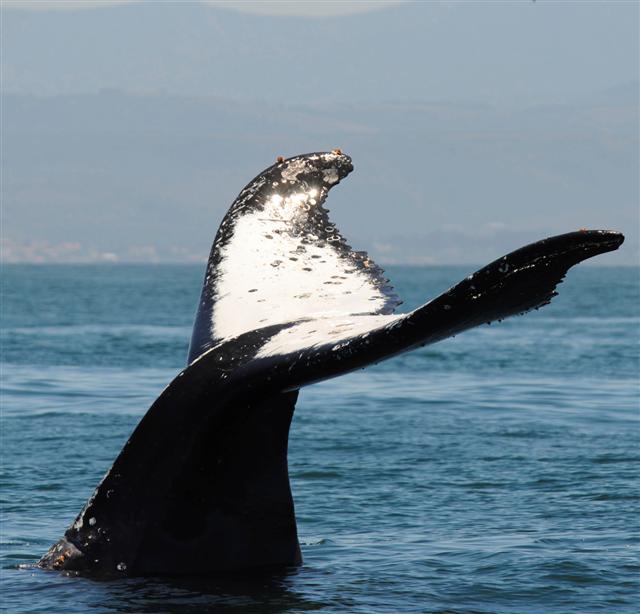
    Whale tail

    Greenland seeks more quotas for whale hunting in the next five-yearly quotas. An agreement with the International Whaling Commission (IWC) will be discussed soon.

    The 64th Annual Meeting of the International Whaling Commission and the associated meetings of its Scientific Committee and other sub-groups will take place in Panama City, Panama from 11 June – 6 July 2012.

    The annual IWC meeting will open with a discussion on whaling by indigenous people in the Arctic. The five-yearly quotas are up for renewal.

    Voting on several issues will be discussed, amongst them is to declare the South Atlantic a whale sanctuary and to ask the UN to take charge of whale conservation.

    For a number of countries, like the USA, renewing quotas for their indigenous peoples under Aboriginal Subsistence Whaling (ASW) rules is the top priority, according to the BBC.

    “We distinguish between commercial whaling, which we oppose, and ASW which we strongly support,” said Doug DeMaster, acting US commissioner to the IWC. “The cultural needs, the recognized tradition – we support the aboriginal use of large whales if they meet a ‘needs’ criteria that’s established by the IWC, and if the removal levels are considered sustainable by the scientific committee of the IWC.”

    Anti-whaling groups have questioned Greenland’s needs for whaling under ASW, saying that Greenland sold some of their meet commercially. A study in Greenland found whaling meat on the menu in many restaurants and also for sale in supermarkets.

    The criticism states that whaling is not meant for commercial sale, one can give it away in your home but not sell it to tourists.

    At this year’s IWC meeting, the Danish government – which represents Greenland – is asking for an increased quota for fin and humpback whales on the basis that the indigenous peoples’ need is not being met.

    The meeting in Panama is likely to be lively, but governments have promised not to repeat walkouts as happened in the last meeting.

    The legalities of Whaling today:

    Objection: A country formally objects to the International Whaling Commission (IWC) moratorium, declaring itself exempt. Example: Norway and Iceland

    Scientific: A nation issues unilateral “scientific permits”; any IWC member can do this. Example: Japan

    Indigenous (aka Aboriginal subsistence): IWC grants permits to indigenous groups for subsistence food. Example: Greenland

    Sources

    BBC

  • Norway to drill near the North Pole

    Norway to drill near the North Pole

    Oil working station

    Norway is taking deep sea drilling a step further. The country is ready to take its drills as close to the North Pole as it possibly can, near the 84th latitude.

    The 22nd License Round announced this week by Minister of Petroluem and Energy Ola Borten Moe includes as many as 72 blocks in the Barents Sea, several of them near the polar ice ridge.

    “These areas are just as Norwegian as the Trondheim Fjord”, Borten Moe stressed, adding that his political party, the agrarian Center Party, in its work promotes the slogan “take the whole country in use”, thus signaling that also the northernmost Arctic waters will be exploited. “We are not going to the 84th latitude tomorrow […] the development I am describing has a 25-30 year time frame”, he said, Norwegian newspaper VG reports.

    The news are already troubling environmentalist that see the act as “depressive”.

    Not all Norwegians agree that this would be effective. A recent report from the Norwegian Institute Marine Research state that as many as 74 of the 86 blocks included in the 22nd License Round should not be opened because of environmental concerns.

    The Norwegian Climate and Pollution Agency warns against the drilling, which it fears will reach a magnitude way beyond the capacity of current safety and preparedness systems. The Directorate for Nature Management warns against drilling near the ice edge and in areas with sea bird colonies.

    But Norway has already mapped enormous areas in the Arctic waters, with data collected from an area up to the 85th latitude.

    Source

    BarentsObserver

    Verdens Gang

  • Live blog from research fields

    Live blog from research fields

    researchers at the railway station in Kuopio in Finland

    The PAGE21 permafrost project has set up an interesting feature on its website. It is a live blog from research fields in the Arctic.

    PAGE21 carries out extensive research this summer and this is a unique way to get a peak inside the researchers, their work, facilities and life outside the research.

    There are already a few blog articles on the website, which can be accessed here.

    Alfred Wegener Institute in Germany will be blogging from Samoylov in german, there will be blog from Herschel Island in English and a group of five reserachers from the University of Eastern Finland has already begun their expedition to Seida in North-West Russia.

    Click here to go to the website.

    Source

    Fox

  • Google helps preserve dying languages

    Google helps preserve dying languages

    Kid outside during winter

    Computer giant Google has launched a project to preserve over 3000 dying languages. The Endangered Languages Project is backed by a coalition of international scholars and linguists.

    Many of the languages are in the Arctic.

    “Of the 7,000 languages currently spoken, it is expected that 50 percent will not survive the turn of the century. And when the last fluent speaker of a language dies, that unique language could be lost forever. Google hopes to change that with this latest initiative,” read a statement.

    Users are encouraged to upload video, audio, or text files of rare dialects at the main website EndangeredLanguages.com. “Once they sign up they will be able to customize their profile page, upload material and add comments to the site,” according to Jason Rissman from Google.

    “The main goal of the site is language preservation; average citizens can help this cause by raising awareness in their local communities.”

    The project is supported by Google’s philanthropic arm, Google.org, but is a collaboration with the First People’s Cultural Council and the Institute for Language Information and Technology at Eastern Michigan University, who will takeover the project in the coming months.

    Click here to go to the website.

    Sources

    Fox

  • Greenpeace petitions to “save the Arctic”

    Greenpeace petitions to “save the Arctic”

    Oil drilling in the Arctic

    Environmental activists Greenpeace have launched a campaign aimed to “save the Arctic. “Greenpeace is campaigning for the United Nations to declare the Arctic ocean a sanctuary, much like the Antarctic.

    Over 50.000 had signed the petition on Friday.

    Although the Arctic is an ocean, surrounded by countries, the opposite of the Antarctic which is a continent surrounded by oceans, Greenpeace is adamant the Arctic needs to be saved.

    “The Arctic is under threat. As you read this, oil companies and politicians are plotting to carve up the icy north, extending their national territories and searching for drill sites. But with your help, we can draw a line in the ice and put the Arctic out of the polluters’ reach – forever,” the Greenpeace website reads.

    Greenpeace is aiming for a million signatures on their website and already have the backing of several famous people, among them Paul McCartney, Penelope Cruz and Robert Redford.

    Before Greenpeace has criticized the ongoing Rio+20 summit as an “epic failure”.

    “The fightback starts here,” said Kumi Naidoo, executive director of Greenpeace International to the BBC. “The Arctic is coming under assault, and needs people from around the world to stand up and demand action to protect it. A ban on offshore oil drilling and unsustainable fishing would be a huge victory against the forces ranged against this precious region and the four million people who live there.”

    This is not the first petition to “save the Arctic,” proposals date back to the 1970s, but have never gained political traction.

    In 2007, acting under instruction from Moscow, explorer Artur Chilingarov planted a Russian flag on the seabed beneath the pole, laying claim to the area.

    The Greenpeace action aims to counteract that by planting a scroll signed by at least a million people in the same place, claiming it as a sanctuary.

    Source

    Greenpeace

    BBC

  • Debate goes on in Rio

    Debate goes on in Rio

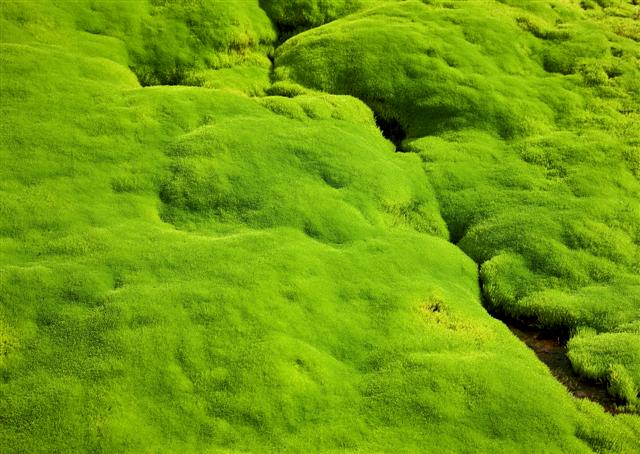
    Moss

    Debates on a new agreement in the Rio+20 conference continue. Negotiators have agreed a text to be approved this week “to put society on a more sustainable path”.

    Environment groups and charities working on poverty issues believe the agreement is far too weak.

    “We have reached the best possible equilibrium at this point; I think we have a very good outcome,” said Brazilian Foreign Minister Antonio Patriota to the BBC.

    Denmark leads the EU and both are unhappy with “the level of ambition” in the text. BUt the Danish environmental minister believes it will be signed off anyway.

    “The EU would have liked to see a much more concrete and ambitious outcome, so in that respect I’m not happy with it,” she said.

    “However we managed to get the green economy on the agenda, and so I think we have a strong foundation for this vision that can drive civil society and the private sector to work in the same direction, to understand that environment and the social side must be integrated into the heart of the economy.”

    The lad negotiatior for the USA called the draft “a good step forward” and admitted it would not be re-opened for discussions.

    More than 100 world leaders are expected in Rio from Wednesday to attend the summit.

    Source

    BBC

  • Nansen-position in Akureyri advertised

    Nansen-position in Akureyri advertised

    Nansen position advertisment

    The University of Akureyri has advertised a new guest professor position according a memorandum of understanding signed last year.

    The MoU was signed by foreign ministers Össur Skarphéðinsson of Iceland and Jonas Gahr Støre of Norway concerning co-operation in the field of Arctic scientific research, including the establishment of a Nansen Professorship in Arctic Studies at the University of Akureyri.

    The Professorship is named after the famous Norwegian polar scientist and humanist Fridtjof Nansen and is awarded each year for twelve months period to a world leading scientist working with issues that bear on the legal, economic, social and natural circumstances in Arctic studies.

    “The successful candidate should have a PhD (or equivalent experience) with a strong academic background in Arctic studies relevant to legal issues as well as sustainable human development in the Arctic regions. The Candidate should be experienced in working across disciplines with complex human-environmental-social issues and should have strong communicative and social/interpersonal skills. Research experience relating to the Arctic and a track of participation in international research networks will be necessary as well as a proven ability to obtain research grants,” the UNAK website reads.

    Primary responsibilities will be:

    • To contribute to the research, teaching and further development of relevant programs at the University of Akureyri
    • to work closely with other researchers in furthering the Northern research and teaching milieu at the University of Akureyri and contribute to the development of the University of the Arctic
    • to give public lectures on Arctic Issues in local, national and international forum and to participate in the contemporary debate on changes in the arctic.

    Applications are open until 15th of August.

    Sources

    Fréttablaðið newspaper

    UNAK website