Blog

  • Cod growing due to global warming

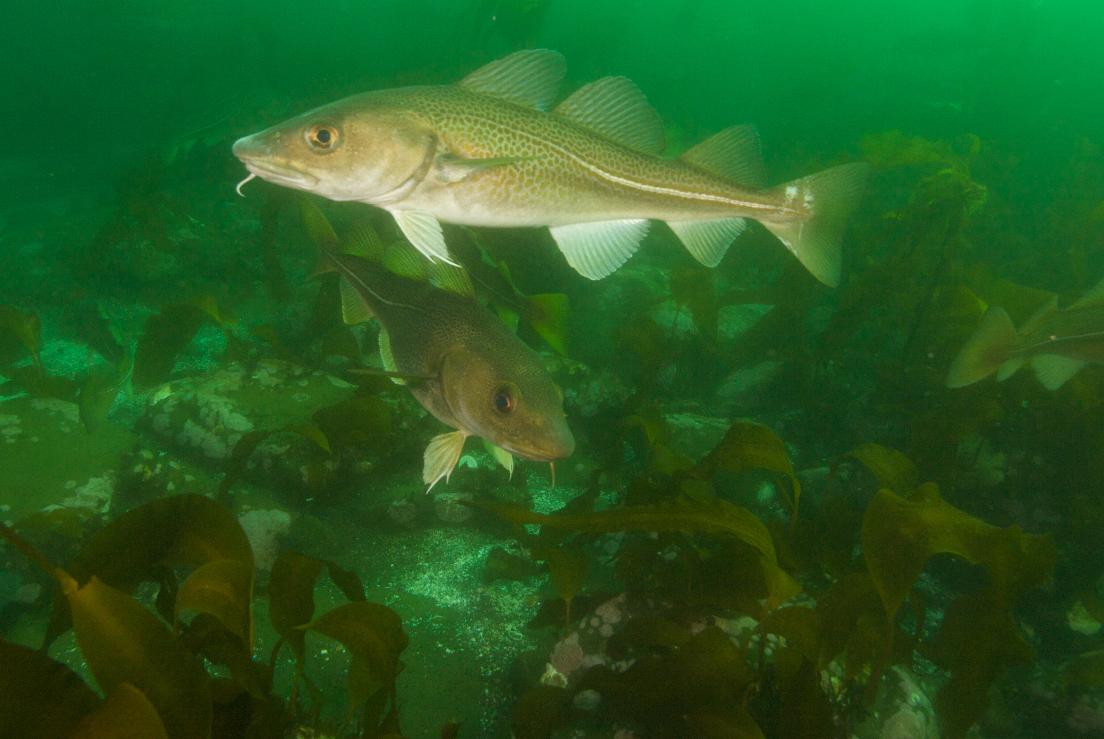
    Cod growing due to global warming

    Cod in Icelandic waters

    Researchers in agriculture had anticipated the North Sea cod to get smaller over time due to global warming. A new study shows quite the opposite, they are actually growing due to global warming.

    The study was introduced in Global Change Biology, an international journal.

    “When the seawater gets warmer, all life processes in the cod speed up,” says Peter Grønkjær, an associate professor of marine ecology at the Department of Biological Sciences at Aarhus university, who headed the study. “This causes the cod to digest their food faster and makes them convert it into extra muscle tissue,” he added.

    Overfishing has started a process in which the cod spend their energy on reproducing themselves rather than on growing bigger.

    “But over the past 30 years the increased ocean temperatures have compensated for the anticipated decrease in cod size,” says Grønkjær.

    He also states that global warming seldom has positive effects on the cod, but this change is the odd point. “But this doesn’t mean that the warming of the North Sea is generally good for the cod. The higher temperatures alter the ecosystem, which causes the composition of the crustaceans that the cod feed on to change too. And that makes it harder for the fry to survive.”

    The researchers made the discovery by reviewing figures from the International Council for the Exploration of the Sea (ICES).

    These figures showed that the ocean temperatures at various times that the average sizes of the fish at various times, that the location of the fish at various times and that when the fish became sexually mature at various times.

    “By linking all this data together, we can conclude that the weight change is caused by changes in the temperature,” says Grønkjær.

    The new findings will be used for developing strategies for how cod stocks in the North Sea can be preserved.

    Sources

    Science Nordic
    Videnskab

  • Lack of information on Arctic oil spill

    Lack of information on Arctic oil spill

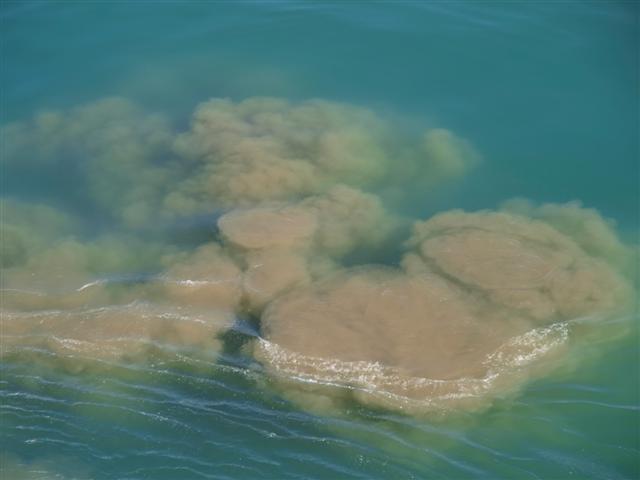
    Oil spill in an ocean

    Too little information about damage from the Trebs oil field spill is being criticized by environmentalists. The spill happened in April but little information has been released about its extent.

    According to some sources a total of 400 cubic meters of oil, or some 800-900 tonnes, leaked daily for more than two days. The field holds about 153 million tons of oil.

    The information is lacking from the oil companies in question, and the lack of an independent observation of the cleanup efforts, according to Barents Observer.

    According to Vadim Krasnopolsky, who works at the WWF’s Barents Sea regional office in Murmansk, that the spill covers more than 40.000 square meters. However information recognized from satellite images of the field was not passed directly to public.

    Krasnopolsky states that the companies which cause the damage do not have an obligation to inform the community how big is the spill, if it does not affect people directly.

    Lack of communication with the oil, gas and shipping companies does not allow to estimate how long the cleanup will take or how big the pollution extent is.

    Much of the oil has been absorbed by snow, and that has helped to minimize the ecological damage. However, the snow needs to be removed from the area before it melts with the spring thaw, which usually begins around the end of May. Krasnopolsky said to Barents Observer that the snow removal is “quite difficult work” and most of it needs to be done by hand.

    The Russian oil companies, Lukoil and Bashneft, have put out boons to encircle the spill and are making efforts to clean the site, Krasnopolsky explained. The WWF did propose that an independent representative would have a look at the area, once the cleanup was completed. But the problem is that there is no possible way to check the quality of the cleanup job, because independent observers have not been allowed to check the rural site so far.

    “Accidents will happen. No technology is 100 per cent safe,” Krasnopolsky says. “But we always have to be sure the companies have the necessary capacity to deal with the spills.”

    Source

    Barents Observer

    Oil voice

  • Read about IPY 2012 in Montreal

    Read about IPY 2012 in Montreal

    From the Arctic Portal side event

    The IPY 2012 conference in Montréal, Canada, was a fitting end to the International Polar Year. Around 3000 people attended the conference in the Palais de Congrés.

    Arctic Portal had four representatives in the conference, where our work was presented at various locations.

    We also took over 100 photos in Montréal.

    Click here to read about the conference and IPY.

  • Greatest warming in Scandinavia

    Greatest warming in Scandinavia

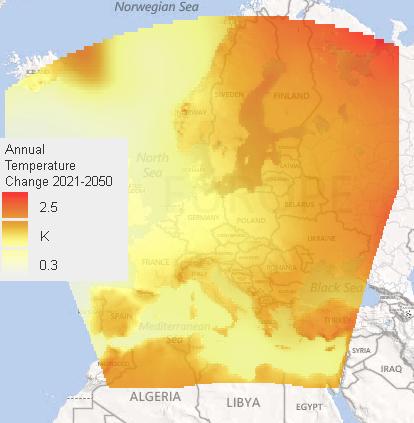
    Annual Temperature Change 2021 - 2050

    Predictions of the European Environmental Agency of global warming have been released. Records have already confirmed a warmer Europe and the future predictions say that Europe will be on average 1.5° C warmer in the period 2021-2050 than the period 1960-1990.

    According to the EEA, higher temperatures lead to an increase in number of heat waves and droughts, which have great impact on water supply, agriculture production and human health.

    The highest warming is projected over the eastern Scandinavia, and southern and south-eastern Europe. All areas of the continent will warm by a minimum of approximately 0.4° C and a maximum of 2.5° C, the projections indicate.

    Looking further ahead to the period 2071-2100, the models predict that Europe will be on average 3 °C warmer than 1960-1990. In north eastern Scandinavia the temperature change could be up to 6° C higher than the reference period, while the Mediterranean basin and parts of Eastern Europe will also see much bigger changes than elsewhere. All areas are expected to see average annual temperatures at least 1.5° C warmer than the reference period.

    Interestingly, there are great differences between summer and winter – the maps show the winters will see the greatest change in Scandinavia and Eastern Europe, while the biggest temperature increases in the summer will be around the Mediterranean.

    The website also states that while a few degrees increase may not seem significant, it is important to note that these are average annual temperatures, potentially masking large extremes. For example, during the period 2021 – 2050 summer in some parts of the Mediterranean is expected to be upto 2.5° C warmer than 1961-1990.

    Source

    EEA

  • Polar bear shot near Nuuk

    Polar bear shot near Nuuk

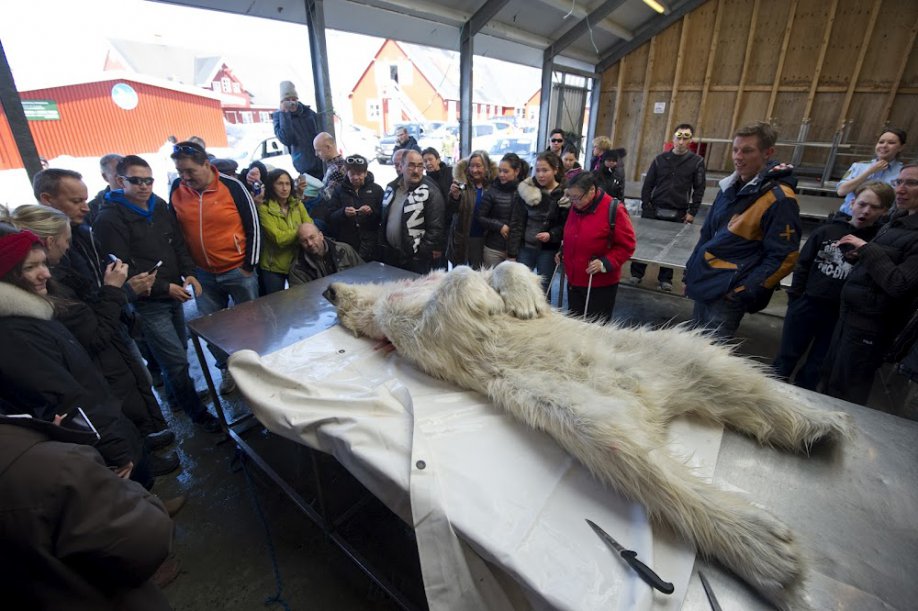
    The polar bear shot caught the attention of the people in Nuuk

    A polar bear was shot near Nuuk in Greenland this week. It is rare that polar bear come this close to the capital.

    Two brothers spotted the bear, at first they thought it was a huge dog. A closer look identified the bear.

    The male polar bear smelled the brothers who ran to safety. The bear clawed the house but then moved away, and approached Nuuk.

    He was shot due to safety of the inhabitants.

    Many people have looked at the bear since it was shot, as can be seen on the pictures with the story below.

    Sources

    Sermitsiaq

  • International Polar Year 2012

    International Polar Year 2012

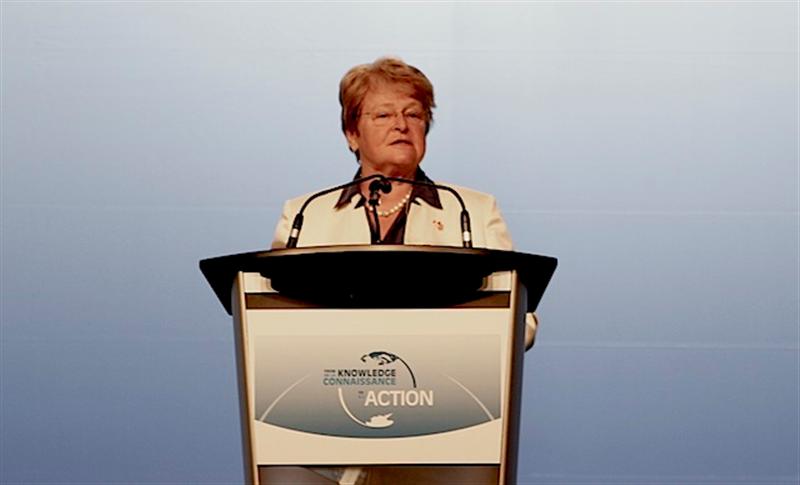
    Gro Harlem Brundtland giving her keynote speech at IPYUnder the auspices of International Polar Year, co – sponsored by the International Council for Science and the World Meteorological Organization, more than 3,000 scientists from all over the world came together during the IPY 2012 ´”From Knowledge to Action” Conference, to greatly contribute to this knowledge sharing and current Arctic problems solving initiative.

    International Polar Year (IPY) was initiated as international cooperative research dynamism and first introduced in 1882-1883. Its main objective was and still is, to provide scientific information about the fundamentals of meteorology and geophysics as well as to enhance all people’s knowledge and awareness about Polar Regions and associated, ongoing changes in both, opposite poles.

    The initial idea of international cooperative polar research came from an Austro-Hungarian explorer and naval officer Lt. Karl Weyprecht who was a scientist and co-commander of the Austro-Hungarian Polar Expedition of 1872-74. Many of the earth’s unique phenomena, such as circulatory systems for air and water and the Earth’s magnetic field lines reach the surface in the polar areas. In addition, thick glaciers have trapped air and water from ancient times, which makes it easiest to observe these phenomena near the poles.

    IPY 2012 Delegates gathered at the Conference HallWeyprecht realized that a comprehensive polar research could not be a task of a one nation only, but should involve a coordinated international effort. He recognized that a time of mere geographical discovery had past and a series of coordinated expeditions dedicated to scientific research should be undertaken to further peoples understanding on fundamentals of meteorology and geophysics.

    Unfortunately, he died before the international research became a reality, but his inspiration led to an establishment of the largest coordinated series of scientific expeditions ever undertaken in the Arctic during the 19th century, or to what is now known as the First International Polar Year.

    The first IPY was announced between the years of 1881 – 1883, where eleven nations came together to establish fourteen principal research stations across the Polar Regions.

    The Second IPY, which took place in 1932 – 1933, was both proposed and promoted by the International Meteorological Committee. The main objective of the second research initiative was to investigate the global implications of the newly discovered “Jet Stream” and to conduct magnetic, aurora and meteorological observations at a network of research stations in the Arctic and Antarctic. It gathered researchers from more than forty different countries and came out as a great success in terms of scientific contribution.
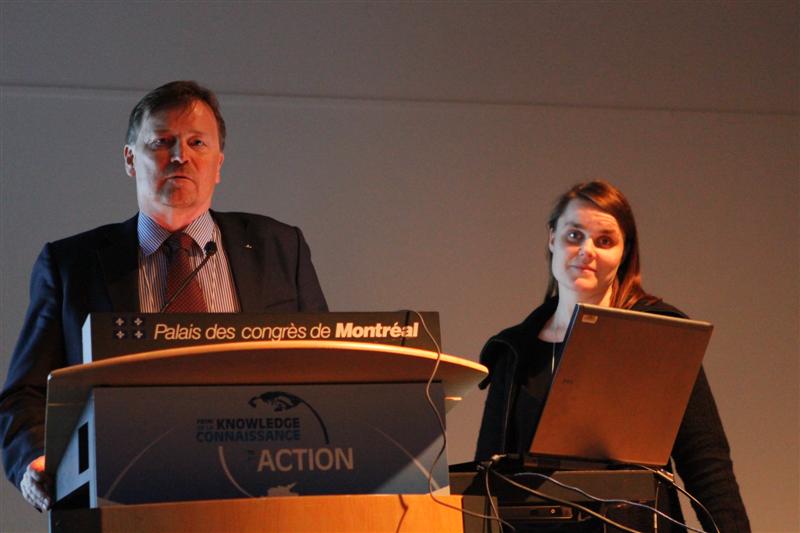
    Halldór Jóhannsson and Leena-Kaisa Viitanen from Arctic Portal introducing the Arctic Data SquareThe third IPY was dedicated to the research on technology and science in the upper atmosphere and it was finally renamed to become International Geophysical Year (IGY).

    The fourth IPY took place in 2007 – 2008 and happened to become the gigantic international scientific project with close to 10 000 scientists and 50 000 other participants from over 60 countries. The aim was to significantly increase the scientific knowledge and understanding of the polar areas and to conduct research projects beyond the resources of individual countries.

    This year´s event took place in Montreal, Canada between 22nd and 27th of April. Main objective of the initiative was bringing the knowledge from former gatherings into action, as suggested by the conference’s theme. IPY 2012 drew attention of more than 3,000 international scientists to the Polar Regions, related ongoing challenges of globalization and climate change plus social and economical issues. Participants included Arctic and Antarctic researchers from all over the world and various fields of expertise such as policy and decision making, law, academia, industry and environment, representatives of non – governmental and non – profit organizations and circumpolar communities, including indigenous peoples from Russia and Northern Canada.
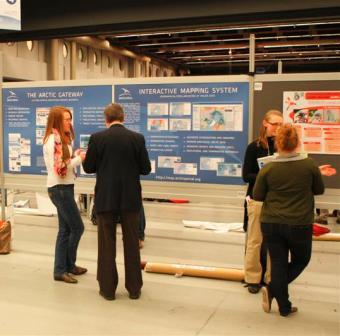
    Poster sessions attracted many of the IPY 2012 participants.The conference welcomed speakers from various Arctic related disciplines, including experienced professionals, early career scientists and graduate students. They had a chance to perform during parallel sessions and feature presentations on the latest results from the natural, social, indigenous and health research.

    Each day of the conference began with a keynote session and the plenary panel discussion. Matters generally touched on current environmental and political changes in the Polar Regions. They were addressed by experienced Polar officials from eight Arctic states and led to promotion of science based decision making process for the Polar Regions as well as cooperation and partnership with international industries, particularly focused on oil and gas exploitation. In addition, keynote sessions succeeded on bringing indigenous matters to the public awareness with the specific focus on environmental, health and social problems.

    The integration of scientific research with the indigenous knowledge was the important aspect of this year´s conference. Representatives of the communities from Russia and Northern Canada shared the extensive intimate knowledge about the Arctic ecosystems in which they have lived for millennia. The deep understanding of the indigenous relationship with unique Arctic ecosystem, fate control, culture and spiritualism, greatly contributed to the holistic understanding of the Arctic.

    The IPY 2012 invited participants for indigenous knowledge exchange panels as well as offered a space for action forums which brought up interactive discussions on current issues facing the Polar Regions. Discussions combined the knowledge from various disciplines and sectors including industry, policy, civil society, academics and indigenous representatives.

    Cirque du Soleil performs at the closing ceremony.Verity of workshops was available to all participants, concentrating on introducing science to policy makers and vice versa. Implementing current scientific knowledge and adjusting to ongoing changes was the main objective for the workshops organizers. Stimulating talks from Arctic Community members encouraged academics from educational institutions to try new spectrum of activities, experiments and lessons that would be possible to be adapted in their own classrooms. Association of Polar Early Career Scientists held the workshop on career development during the first two days of IPY 2012.

    Conference delegates had a chance to complement their active participation in the sessions with a number of different tours, including technical and cultural tours, which were being offered through the whole week and were organized by local, polar – related facilities such as Canadian Space Agency, Ouranos Climate Change Research Consortium, Effigis, and Canadian Meteorological Center. Participants could visit the old port in Montreal, where CCGS Amundsen research icebreaker is currently based and opened for public visitors.
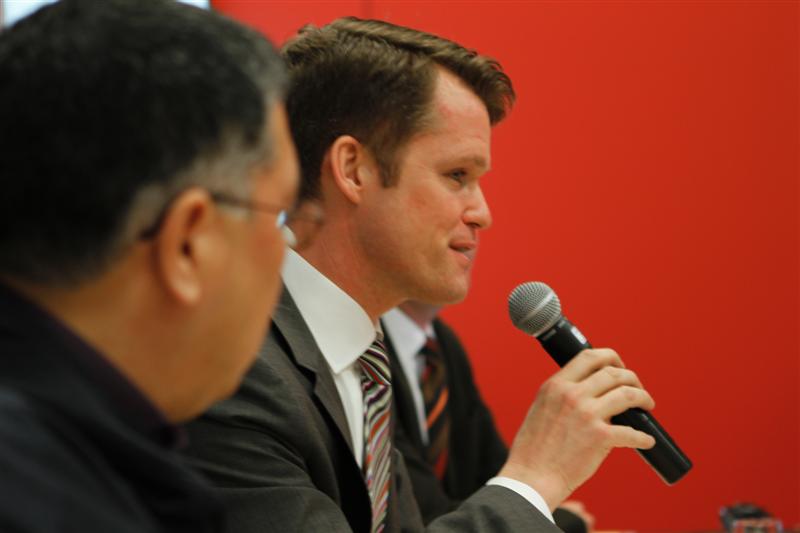
    Arctic Council secreteriat Gustaf Lind in a press conference in IPYThe experience of Inuit culture could be accomplished at the Avataq Museum Reserve, where the collection of close to 2000 Inuit works is placed. McCord Museum, which since 1967 has been promoting the works of artistes from Nunavik in Northern Quebec, presented the Modern Inuit Exhibition.

    The IPY 2012 ´´From Knowledge to Action´´ was one of these year´s most important scientific gatherings for polar science and governance, climate change impacts and adaptation. More than 3,000 participants attended the conference which was more that pre – registered.

    Please, visit our online gallery to see more pictures from IPY 2012 “From Knowledge to Action”.

    Text: Arctic Portal
  • Long swim ahead for polar bears

    Long swim ahead for polar bears

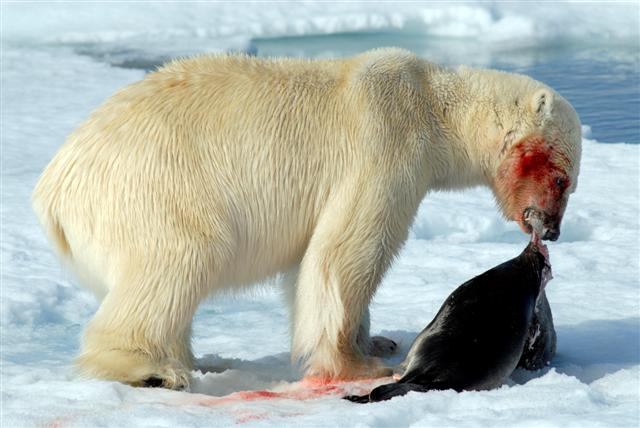
    Polar bear that caught a seal

    The summer is near and the Arctic sea ice has started its retreat. This means hard work for the polar bears in the Arctic.

    Their hunts for food has begun after the winter exile and are now swimming more than ever to eat.

    A research conducted for five years, between 2004 and 2009, shows that the average distance they swam was 154 kilometers.

    Scientist used GPS technology to track 52 adult female polar bears in the Beufort Sea near Alaska. They managed to track 50 swims in total.

    One case studied by the researchers tracked a female polar bear as she swam continuously for more than nine days, covering a distance of more than 687 kilometers. The bear lost 22 per cent of her body mass during the trip. Her cub died during the journey.

    However, many cubs do survive the long swims, says Anthony Pagano, a lead author of the study. He told the Barents Observer:

    “We were able to recapture or observe 10 of these females within a year of collaring, and six of these females still had their cubs,” Pagano said in a press release. “These observations suggest that some cubs are also capable of swimming long distances. For the other four females with cubs, we don’t know if they lost their cubs before, during, or at some point after their long swims.”

    The study, published in the latest issue of the Canadian Journal of Zoology, is the first to use GPS to track polar bears’ long-distance swims. With declining levels of Arctic ice, these long swims could become more and more common.

    There are about 25,000 polar bears in the Arctic. A 2004 survey of the Barents Sea polar bear population found about 3,000 polar bears in the region.

    Source

    Barents Observer

  • New APECS director appointed

    New APECS director appointed

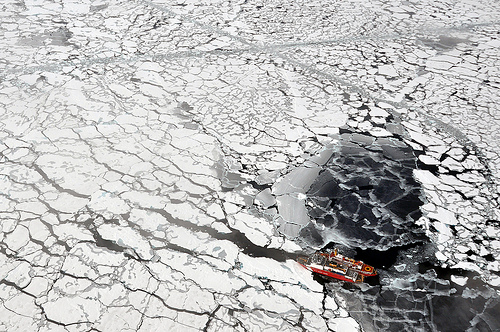
    arctic sea ice

    APECS, the association of polar early career scientists, has appointed a new director, Alexey Pavlov.

    Alexey will be in charge of guiding the development and administration of the organization, along with overseeing and managing all APECS activities, finances and events, recruitment of volunteers and members, and interacting with APECS mentors, advisors, and supporters.

    Alexey highlights international & interdisciplinary collaboration as a key reason he is looking forward to taking on the role of APECS Director. “Collaboration with many interdisciplinary groups has brought me the opportunity to feel the environment of Polar Regions and to better understand current and upcoming challenges facing Polar research,” he said.

    “I’m looking forward to spending the next years of my life above the Arctic Circle and to ‘Shaping the Future of Polar Research’ with even more APECS members and mentors.”

  • J.C. Gascard talks about new EU project

    J.C. Gascard talks about new EU project

    J.C. Gascard gives the speech on new EU Arctic - related  project

    J.C Gascard, representative from the LOCEAN in Paris, France, gives the speech on new EU project for Climate Change, Economy and Society (ACCESS) which is a joined call from different departments of European Commission.

    Under The University Pierre et Marie Curie coordination and involving 27 partners from 10 countries, the 4 years ACCESS project (Arctic Climate Change, Economy and Society 2011-2015) was selected in response to the first call ‘the Ocean of Tomorrow’ of the EU 7th Research and Development Framework Program (FP7-Ocean-2010) under Transport, Food, Agriculture and Fisheries, Energy, Environment, Socio-economic sciences and Humanities supervision.

    The main objective of ACCESS is to build the knowledge for a sustainable growth of sea-based activities in the Arctic a) by improving understanding of Arctic marine ecosystems’ response to a combination of natural and anthropogenic factors and b) by providing a scientific foundation for feasible, sustainable management measures supporting policies and related technologies.

    ACCESS will evaluate the latest Arctic climate change scenarios and establish their impacts on marine transportation (including tourism), fisheries, marine mammals and the extraction of hydrocarbons in the Arctic for the next three decades with particular attention to environmental sensitivities and sustainability.

    Understanding the socio-economic impacts of these changes on markets, economies and on European policy objectives along with their influence on Arctic governance, are key areas of research within ACCESS. An open and inclusive forum will give the opportunity to all stakeholders interested in the ACCESS consortium activities and cross-cutting research to interact with ACCESS.

  • Future for Arctic marine use

    Future for Arctic marine use

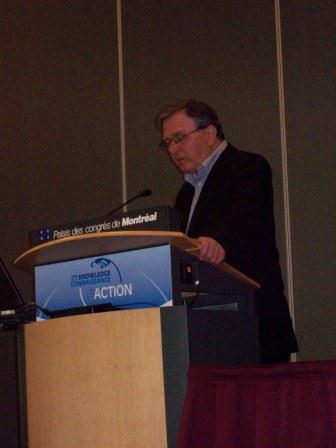
    L. W. Brigham gives the speech on outcomes from AMSA report

    On Wednesday, 25th of April 2012, during the IPY Conference prof. Brigham gave a speech on key drivers and futures for Arctic Marine use.

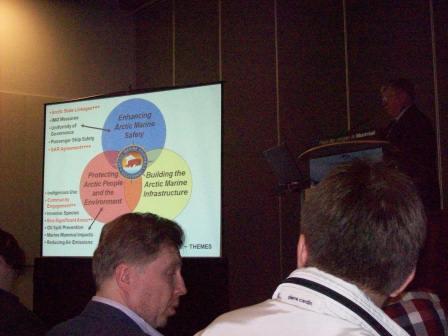
    He stressed globalization, climate change and geopolitics as key drivers of the profound change in the Arctic. For the Arctic Ocean and marine traffic, this change is driven primarily by Arctic natural resource development and marine tourism. This was one of the key findings of work done by the Arctic Marine Shipping Assessment (AMSA) of the Arctic Council during 2005-09. The scenarios creation effort in AMSA indicated that the two most important (and uncertain) drivers, of many, were (A) the level of natural resource development and trade, and (B) governance (the degree of stability of rules and regulations for Arctic marine navigation).

    Mr Brigham highlighted, that nowadays we see expanded Arctic marine transport systems evolving in offshore Russia, Norway, Greenland, and potentially in the U.S. maritime Arctic in summer 2012. Existing year-round marine transport to the world’s largest nickel mine (Norilsk Nickel) in Northwest Russia, and seasonally to the world’s largest zinc mine in northwest Alaska (Red Dog) are well established. Plans are being made to link a large, high grade iron ore mine on Baffin Island in Canada to European steel producers. All of these marine systems indicate much greater links of the Arctic to the global economy.

    Recent experimental voyages across the Russian maritime Arctic by tankers and bulk carriers confirm plausible, summer marine routes eastbound from northern Norway and the Russian Arctic to markets in China. Cruise ship traffic by medium and large ships continues to increase in western Greenland. Importantly, continued Arctic sea ice retreat creates greater marine access throughout the Arctic Ocean for science and commercial marine operations; longer navigation seasons during the summer are a reality today.

    One of the key factors that must be kept in mind is, despite the extraordinary changes in Arctic sea ice thickness, extent and character (moving to a future Arctic Ocean without multi-year ice), the Arctic Ocean will remain fully or partially ice-covered during the winter and much of the spring and autumn. Polar class ships will be required for future operations once a mandatory Polar Code of Navigation is promulgated by the International Maritime Organization.

    Action is also being taken by the Arctic Council and the Arctic states to address future Arctic marine use: a new binding Arctic Search and Rescue Agreement gained approval in 2011, and a new Arctic Oil Spill Task Force is developing a second instrument to address this critical issue. There is little doubt globalization of the Arctic and regional climate change are closely coupled, and they will have immense influence over future marine use and the strategies developed to protect Arctic people and the marine environment.