Blog

  • Glaciers in Asia to expand

    Glaciers in Asia to expand

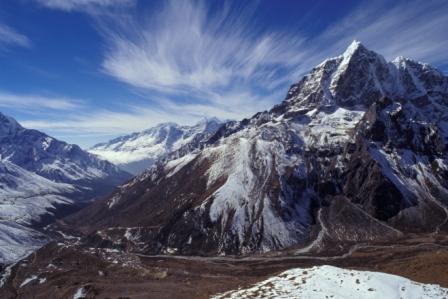
    Snowy mountains

    French scientists report that glaciers in the Karakoram Mountain Range in Asia are growing, not shrinking as previously suspected.

    Karakoram Range is a great mountains system, extending close to 500 km from the eastern part of Afghanistan in a southeasterly direction along the watershed between Central and South Asia. The area was recognized as one with a great concentration of highest mountains in the world and the longest glaciers outside the high latitudes.

    General research indicated that glaciers in the Himalayas were decreasing and in fact they could be gone before the year of 2035. However, the French suggested that ice sheet in Karakoram became thicker in the last few years, but the credible explanation for this statement could not be yet provided due to little knowledge about the glaciers in this region.

    Nevertheless, it is the fact that the Himalaya’s glaciers are the main source of water for over billion people who live in the region. The need for further research has been stressed by the French scientists.

    Source: Morgunbladið
  • IPY 2012 – From Knowledge to Action

    IPY 2012 – From Knowledge to Action

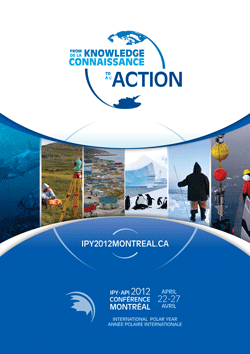
    IPY 2012 poster

    The International Polar Year – IPY 2007-2008 will be wrapped up for the final time next week 22-27 April in Montréal in the “From Knowledge to Action – IPY 2012 Conference”. The conference will bring together nearly 2300 participants in 4 plenary panels, 156 parallel sessions and 12 high-level action forums on Polar research engaging Arctic and Antarctic researchers, policy- and decision-makers, and a broad range of interested parties from academia, industry, non-government, education and circumpolar communities including indigenous peoples.

    International Polar Year (IPY) is an international cooperative research initiative with an objective to provide scientific information about the fundamentals of meteorology and geophysics as well as further people’s knowledge on the Polar Regions.

    The First International Polar Year was held between 1881-1883. Eleven nations took part in establishing fourteen principal research stations across the Polar Regions. Twelve research stations were located in the Arctic, along with at least 13 auxiliary stations, and two in the Antarctic. A vast amount of information was gathered between 1881 and 1884, but in the lack of a centralized coordination of analysis and publication of the results, no fundamental discoveries were made as a result of the first IPY. Each state published their observations independently and the International Polar Commission dissolved in the aftermath of the project.

    The Second International Polar Year was both proposed and promoted by the International Meteorological Committee. The main objective of the second research initiative was to investigate the global implications of the newly discovered “Jet Stream” and to conduct magnetic, auroral and meteorological observations at a network of research stations in the Arctic and Antarctic. Some 40 countries participated in the establishment of 40 permanent observation stations in both Arctic and Antarctic. Following, the data collected during the two-year period became the foundation of the International Meteorological Organization and promoted further research, such as the International Geophysical Year (IGY), 1957-1958, often called the third International Polar Year, which celebrated the 75th and 25th anniversaries of the First and Second IPYs.

    International Polar Year logoThe latest International Polar Year 2007-2008, the one celebrated at the Montréal Conference, was organized through the International Council for Science (ICSU) and the World Meteorological Organization (WMO). It was gigantic international multidisciplinary collaborative with around 10 000 scientists and 50 000 other participants from over 60 countries. Main objectives of this megaproject were to significantly increase the scientific knowledge and understanding of the polar areas, especially the wide-ranging and significant impacts of climate warming in the Arctic and Antarctic, and to conduct research projects beyond the resources of individual countries.

    In addition, the Polar Year 2007-2008 aimed at educating a new generation of polar scientists and engineers and raise awareness of the public and policymakers of the importance of the polar areas for the entire planet. The disciplinary breadth of the third IPY far exceeded the previous Polar Years of 1882, 1932 and the 1957 IGY providing more comprehensive picture of the polar areas.

    The “IPY 2012 – From Knowledge to Action” Conference will contribute to the translation of new polar scientific findings into an evidence-based agenda for action that will influence global decisions, policies and outcomes over the coming years.

    To learn more about the IPY 2007-2008, please page through the ICSU/WMO IPY Joint Committee summary “Understanding Earth’s Polar Challenges: International Polar Year 2007-2008”. The comprehensive, 720p. summary of IPY activities covers the development of IPY 2007–2008 for almost a decade, from 2001 till summer 2010 and demonstrates the extensive and essential contribution made by participating nations and organizations, and provides a prospective blueprint for future polar research.
  • Activities in Dreki in 2-3 years

    Activities in Dreki in 2-3 years

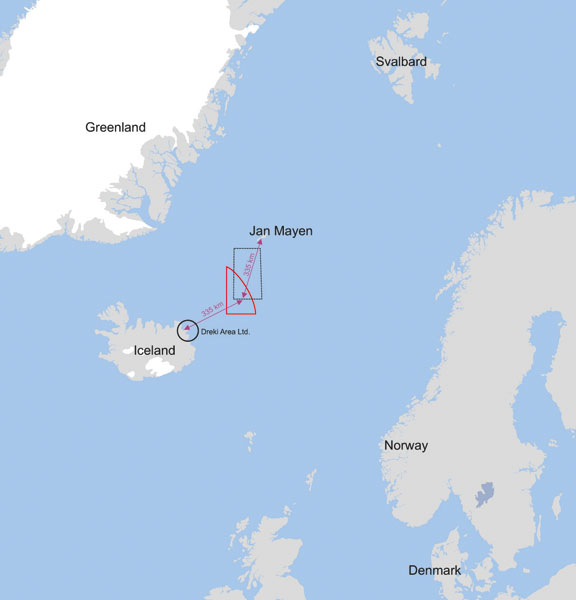
    Map of the Dreki area

    Iceland is excited as the first hints of oil discovery have been confirmed in the Dreki area, north of Iceland. One aspect for local communities is the service for the station.

    A service station would mean jobs for the people in the communities, many desperate for employment after the crisis in Iceland. Municipalities in the northern part of Iceland have been exploring the possibilities of a service station for some time.

    Icelandic company ODR has been working with service suppliers Asco in the search for the best area.

    The role of ODR is storing and distributing petroleum products for the owners and operation of specialized maintenance for service stations and own equipment.

    Asco runs sixteen service stations in five continents.

    They found out that three areas are most prominent, in Akureyri, Húsavík and Reyðarfjörður. Vopnafjörður and Þórshöfn are also in consideration. An intention letter has been signed with the first three municipalities.

    The service station would also service oil search in eastern Greenland, as well as the Dreki area.

    It is thought that the first activities in the area will be in 1-3 years, when an oil rig would be positioned in the area.

    The two Asco representitives have also looked at the infrastructure in the communities. “All these places are under consideration,” Hörður Gunnarsson from ODR said.

    “It is also possible to service the search from Greenland, from other service stations in Iceland because of the distances and the infrastructure in Iceland,” Runar Hatletvedt from Asco in North Europe said.

    Hörður added: “It is important not to get ahead of yourself now and not over invest. But the possibilities are there,” he said.

    Runar said that “based on past experience that we might see the first activities in 1-3 years, probably 2-3 years. It is realistic.”

    Hörður noted that it could also take up to 10 years for some activities, but it is clear that Iceland has great interests in the area and monitors the activities very closely.

    Sources

    Channel 2

  • New Arctic brigades in the making

    Helicopter and a vessel in the Arctic ocean

    Norway and Russia are strengthening their cooperation in the Arctic. The two states already have an extensive cooperation, but are strengthening with military relations and multi-branch exercises with common strategic and environment-based programs.

    The countries recently held talks about the strengthening of political and military operations. Russian Deputy Defense Minister Anatoly Antonov and Norwegian Defense Minister Espen Barth Eide with Roger Ingebrigtsen, state secretary for defense, attended the meetings.

    Both countries are reorganizing their naval, air and land forces in the strategic High North. Both countries are planning Arctic brigades, Russia in the Kola Peninsula and Norway in Skjold, in the High North’s Troms county. The countries also discussed NATO’s missile defense plan for Europe, which Russia is robustly opposed to.

    “Our relations with Russia have never been better than they are now,” Ingebrigtsen said. “We want to deepen the good relationship that we have even further. Among other things, we would like to hold more joint training exercises, both on land and at sea, probably in 2013.”

    The strengthened relationship, Antonov said, is reflected in the fact that the two militaries will participate in 24 joint exercises and events over the next 12 months. “The goal for both sides is increased security in the High North, which can only benefit our countries,” Antonov said.

    The annual naval exercise POMOR-2012, which takes place in May, will be the next major demonstration of stronger bilateral military collaboration between Norway and Russia. The exercise will involve Norwegian and Russian naval and air assets, including frigates, destroyers, helicopter support and combat aircraft.

    The range of joint tasks will include boarding operations, search and rescue, air defense, navigation and interoperability of communication procedures and systems.

    Source: Defensenews

  • Three offers for the Dreki Area

    Three offers for the Dreki Area

    Map of the Dreki area

    Three offers were submitted for search of oil in the Dreki Area. Icelanders are part of them all.

    There are high hopes for the Dreki Area and all points to oil being in the Jan Mayen ridge. A part of the area is in Icelandic waters.
    The first invitation to bid in the search was three years ago. Two offers were submitted now. Icelanders are happy three offers were submitted midst in the crisis.
    The offers are from Eykon, an unregistered company in Iceland. It looks at the project as one for the future. “We have international sponsors with us but we are doing the ground work. These partners are experienced in searching for oil in similar circumstances as in Jan Mayen,” Heiðar Már Guðjónsson from Eykon said.

    The next offer is from Faroe Petroleum and Íslenskt Kolvetni ehf. Faroe is a 15 year old company based in Scotland, with a staff of 50. It explores the British, Norwegian and the Faroese waters.

    The last one is from Valiant Petroleum og Kolvetni ehf. “Valiant, and Faroe Petroleum, are big companies so this is very positive,” Gunnlaugur Jónsson from Kolvetni ehf. said.

    The chief of the National Energy Authority in Iceland was excited about the result. “These are three companies with knowledge in the area. This is a very good result and goes beyond our biggest expectations,” Jóhannesson said.

    The minister of energy in Iceland said that the best possible result of the oil search would that very high income would be a reality in Iceland, for a short time, in about 10 years’ time.
    The National Energy Authority will answer the bidders before the end of November.

    Source

  • Exhibition and science lab in Lenin

    Exhibition and science lab in Lenin

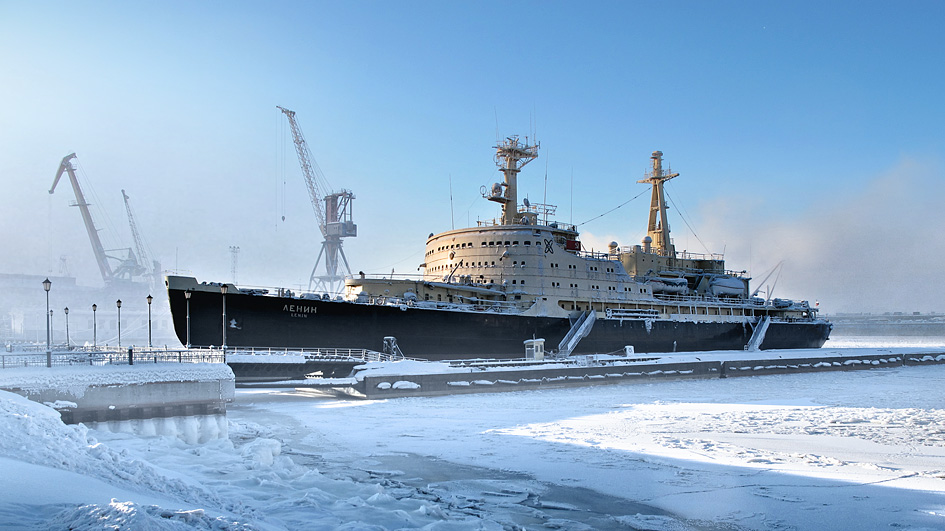
    The Lenin icebreaker.

    A Russian icebreaker will be modified into a floating museum. The icebreaker Lenin will serve the purpose of being a science and historical exhibition.

    The Arctic Centre of the University of Lapland, Polaria in Tromsö and Atomflot in Murmansk have been granted 1.2 million euros by Kolarctic ENPI CBC program for the project.

    The Arctic Centre will be the lead partner and act as the main exhibition producer in the project Arctic Expo Centre – Nuclear-Powered Icebreaker Lenin – ICE.

    The aim of the project is to develop new exhibitions and innovative communication tools as a means to improve the information on local and cross-borders concerns. This will help to facilitate a mutual understanding among neighboring people about common issues and the Arctic. As the exhibition is planned on board Icebreaker Lenin, the goal is also to tell about the technology and history of icebreaking.

    “Through exchange of expertise and share of experiences each member will increase the opportunities to develop its own exhibition and activities such as education package for teachers and pupils on certain issues, special tours for tourists”, says chief executive producer Nicolas Gunslay, Arctic Centre.

    “The goal is to raise awareness on topics related to the Arctic marine environment, climate change, and globalization,” he added.

    The icebreaker Lenin was launched in 1957 and is the world’s first nuclear powered surface ship and the first nuclear powered civilian vessel. It had a crew of 240 persons while in operation.

    He left service in Russia in 1989.

  • Abnormal heat in Svalbard

    Abnormal heat in Svalbard

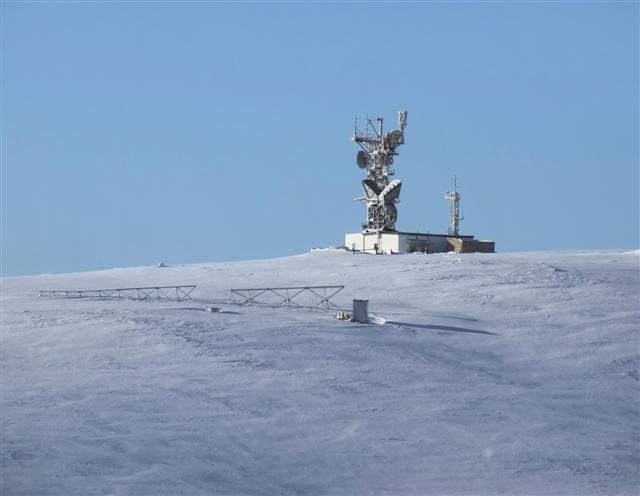
    Polar station in Svalbard

    The temperatures in Svalbard this year have been abnormal. The average temperature in the first three months of the year is around -13°.

    Now it has been around -2°, 11° above the normal number. But the inhabitants have also experienced record heat, avalanches, rain and ice-free fjords.

    The warmest day so far this year was February 8, with +7°C. Longyearbyen has had 90 millimeters of precipitation so far this year, nearly twice the normal.

    But this is nothing compared to Ny-Ålesund, where 97 percent of the normal annual precipitation came during the first 80 days of the year.

  • Over 600 Anglers rescued in Russia

    Over 600 Anglers rescued in Russia

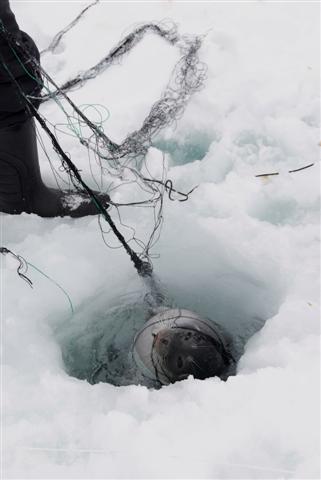
    fishing through ice

    Over 600 anglers, fisherman who were angling through the ice, have been rescued after an ice sheet broke off. The Russians were not harmed.

    The emergencies ministry said that 48 people were involved in the rescue operation, two helicopters and 11 ships weere used to fetch the people of the moving ice sheet.

    Fishing through bore-holes on ice-bound waters is a popular winter pastime in Russia.

    Taymuraz Kasayev, of the emergencies ministry, said the area’s residents had been told to stay away from the ice.

    “We warned people through the media that going out on to the ice on this stretch of the coastline is extremely dangerous and is not allowed,” he told the NTV television channel.

    One of the rescued anglers, Vladimir Vasilenko, said he had ventured on to the ice floe knowing that the windy conditions might pose a risk.

    “The wind was blowing from the shore, and it was clear that something might happen, but people were still going out, so we did too,” he said.

    “It was the excitement, of course. We also heard on the radio that it would be the last chance for fishing on the ice. And so we rushed out to go fishing.”

  • NASA research plane in the Arctic

    NASA research plane in the Arctic

    NASA research plane in the arctic

    NASA has sent an Earth Resources (ER-2) high-altitude science aircraft to Iceland to study the Greenlandic ice-sheet.

    The specially designed aircraft will carry out research for about 4 weeks in the high North. It will be based in Keflavík International Airport in Iceland.

    A statement from the US embassy of Iceland details the purpose of its mission:
    “The mission will assist global warming research by developing better methods to measure the melting of the ice in Polar regions. The ER-2 aircraft will fly high-altitude missions over Greenland in April to test the accuracy of a newly developed laser, the Multiple Altimeter Beam Experiment Lidar, or MABEL. The laser simulates a similar instrument planned for NASA’s IceSat-2 environmental satellite scheduled for launch in 2016.”
    According to NASA, this is a part of a much larger mission called Operation IceBridge. Conducted in the Arctic in March and April and the Antarctic during October and November, NASA says, the mission is “the largest survey of Earth’s polar ice ever flown.”

    The plane is a science laboratory in the air. It routinely flies around 70.000 feet and above, twice the height of a regular commercial airplane.

    NASA ER-2s have played an important role in Earth science research because of their ability to fly into the lower stratosphere at subsonic speeds, enabling direct stratospheric sampling as well as virtual satellite simulation missions. The aircraft’s unique capabilities enable studies such as stratospheric ozone concentrations over Antarctica and the Arctic.

  • U.S interest in Icelandic energy

    U.S interest in Icelandic energy

    University of Akureyri seen from the sky

    The University of Akureyri hosted a Law Forum today, open for the public. Eric Green, Deputy Chief of Mission at the U.S Embassy in Reykjavik and Gregory P. Sims, Regional Political Officer at the U.S Embassy in Oslo, discussed the U.S foreign policy with regards to Iceland and the Arctic region.

    Eric Green has held the position of the Deputy since August 2011. Before coming to Iceland, he specialized as Minister Counselor for Political Affairs at the U.S Embassy in Moscow. Gregory P. Sims is regional political officer at the U.S. Embassy on Oslo. He joined the State Department in 1988 and has specialized in Russian politics and transnational issues.

    The U.S representatives addressed the issue of U.S interest in Arctic natural resources, but did not clearly stated names of the companies which might be interested in possible oil and gas drilling around the Jan Mayen archipelago. They stated that the planned exploration in the area would cause no significant impacts on the Arctic fish and other wildlife as all current operations around the Arctic are being conducted in environment friendly manner.

    The floor was opened for the discussion to all participants and the proposal for establishing the human rights working group within the Arctic Council was made.

    Participants also discussed the U.S policy with regards to Icelandic domestic affairs. The impact of U.S military base on Iceland´s community was recalled and challenges for new business opportunities on the south cost were mentioned. It was stated that the U.S companies are highly interested in Iceland´s inexpensive, renewable energy and are ready to conduct the business to support the Icelandic economy.

    The U.S representatives made a clear statement that they would be greatly engaged in current Arctic issues and they will consider to take part in on coming 5th Polar Law Symposium which will be held at the Arctic Center in Rovaniemi, Finland, in September 2012.