Blog

  • Huge unused energy resource in Iceland

    Huge unused energy resource in Iceland

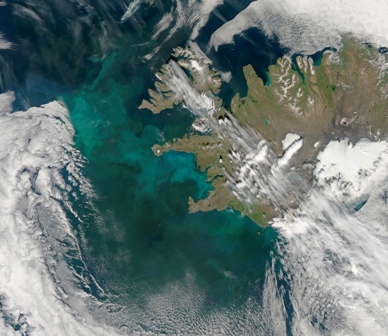
    Satellite image of Iceland

    Iceland is falling behind when it comes to usage of tidal power. The small nation in the Northern Atlantic is surrounded by ocean, yet it has failed to use its forces for energy.

    Research on tidal power has been miniature in Iceland. Geothermal energy has been the focal point.

    A total of 21 members out of 63 in the Parliament in Iceland have put forward a suggestion of more research and more money looks likely to be put in the research.

    A database of information will be set up in Iceland on the usage, which is long overdue. An expert thinks that this is one of the biggest unused energy resources in Iceland.

    Icelandic company Valorka has been granted the IIA 2011 awards for its invention, the Valorka turbine.  IFIA (International Federation of Inventors) grants this awards and the company has high hopes for the turbine.

    Valdimar Össurason is the inventor and owner of Valorka. “The Irish have researched their potential energy efficiency from tidal power to around 240tw hours per year. If we localize that to Iceland, it would be 330tw hours per year. That is 20 times the energy usage in Iceland, per year,” he said.

    A prototype for testing underwater will be made is his research is successful.

    Sources

    Fréttablaðið

  • Relation between weather and sea ice

    Relation between weather and sea ice

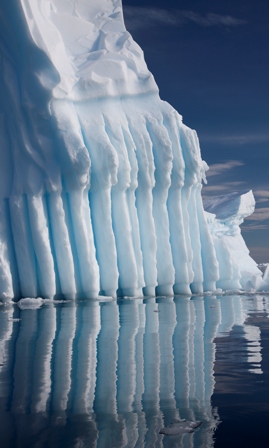
    Iceberg in the arctic

    The probability of snowy cold winters in Central Europe rises when the Arctic is covered by less sea ice in summer. Scientists of the Research Unit Potsdam of the Alfred Wegener Institute for Polar and Marine Research in the Helmholtz Association have made this discovery.

    The scientist have decrypted a mechanism in which a shrinking summertime sea ice cover changes the air pressure zones in the Arctic atmosphere and impacts our European winter weather. If there is a larce scale melt in the summer, like in recent years, two important effects are intensified.

    Firstly, the retreat of the light ice surface reveals the darker ocean, causing it to warm up more in summer from the solar radiation.

    Secondly, the diminished ice cover can no longer prevent the heat stored in the ocean being released into the atmosphere (lid effect). As a result of the decreased sea ice cover the air is warmed more greatly than it used to be particularly in autumn and winter because during this period the ocean is warmer than the atmosphere.

    “These higher temperatures can be proven by current measurements from the Arctic regions,” reports Ralf Jaiser, lead author of the publication from the Research Unit Potsdam of the Alfred Wegener Institute. The warming of the air near to the ground leads to rising movements and the atmosphere becomes less stable.

    “We have analysed the complex non-linear processes behind this destabilisation and have shown how these altered conditions in the Arctic influence the typical circulation and air pressure patterns,” explains Jaiser.

    Sources

    Alfred Wegener Institute

  • ACI’s 3rd Polar Shipping Summit

    ACI’s 3rd Polar Shipping Summit

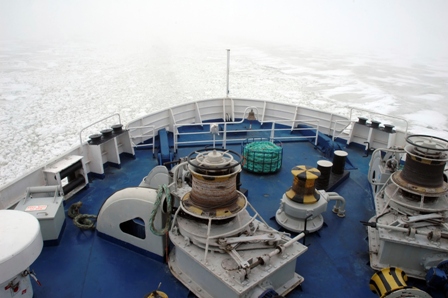
    Ship

    ACI’s 3rd Polar Shipping event will discuss in depth the business developments in the Arctic and the opportunities created for the shipping industry. The summit will be held in London, England, on the 30th of May, running until the 31

    .Providing a platform for networking and exchanging ideas on operational efficiency, safety, insurance and risk-management in  the Arctic, the summit’s aim is to offer delegates a tool for business development and improvement of their bottom line.

    Exploring new opportunities and rising to their challenge through the industry’s best practices whilst achieving financial targets is the ultimate goal of this event

    Tero Vauraste from Arctica Shipping will host the keynote address, representitives from Maersk and other big shipping companies will also post their addresses.

    Interactive roundtable discussion will also be held.

    Click here for the full agenda and contacts.

  • Little Ice Age caused by volcanic eruptions

    Little Ice Age caused by volcanic eruptions

    University of Colorado Boulder Professor Gifford Miller

    The Little Ice Age is a cold period that scientist have debated when begun, and how it started. New research sheds new light on this important time in question.

    A new study published in the Geophysical Research Letters, states that the Little Ice Age was caused by the cooling effect of several volcanic eruptions and sustained by changes in the Arctic ice cover.

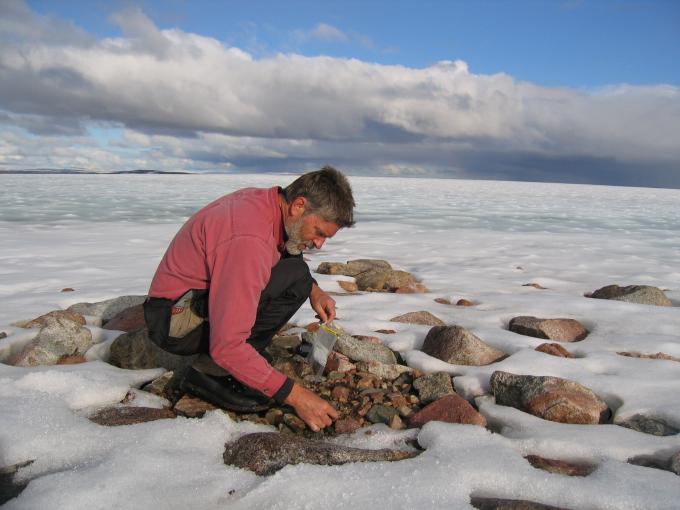
    The research team conducted its work in Iceland and Canada, both in and near glaciers, and in ancient plants.

    The eruptions happened earlier then many have predicted the ice age began, just before 1300. Nasa for example says that it happened around 1550.

    This resulted in the Earth getting colder for centuries. The global dip was around 1°C, but parts of Europe cooled even more. The Thames River in London even froze.

    Disputes have arisen over what caused the cooling, but the new study concludes it was the volcanic eruptions. The four eruptions between 1250 and 1300 blasted huge clouds of sulphate particles into the upper atmosphere which cooled the Earth, because the sun´s beamc was reflected back into space.

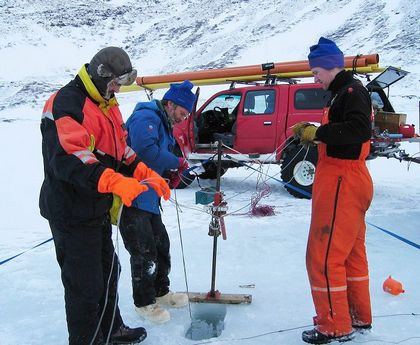
    Researchers in Hvítárvatn Iceland

    “This is the first time we can put an almost specific dates to the Little Ice Age,” Icelandic researcher Áslaug Geirsdóttir said. She was one of the partners in the project.

    “Key elements were the cores taken from the bottom of Hvítárvatn lake,” she said. The lake is near Langjökull in Iceland.

    The scientists studied several sites in north-eastern Canada and in Iceland where small icecaps have expanded and contracted over the centuries. When the ice spreads, plants underneath are killed and “entombed” in the ice. Carbon-dating can determine how long ago this happened, according to the BBC.

    These plants provide a record of the icecaps’ sizes at various times – and therefore, indirectly, of the local temperature.

    An additional site at Hvítarvatn in Iceland yielded records of how much sediment was carried by a glacier in different decades, indicating changes in its thickness.

    When the researchers plugged in the sequence of eruptions into a computer model of climate, they found that the short but intense burst of cooling was enough to initiate growth of summer ice sheets around the Arctic Ocean, as well as glaciers.

    The extra ice in turn reflected more solar radiation back into space, and weakened the Atlantic Ocean circulation commonly known as the Gulf Stream.

    The eruptions are known to cool the earth for a short period of time, not 8000 years, but the scientists have discovered how this happened.

    Sources

    Geophysical Research Letters

    BBC

    NASA

    Fréttablaðið


    The tags below provide an opportunity to view previously posted related news within the selected category

  • Gateway to renewable energy activities

    Alaska Center for Energy and Power (ACEP) is seeking renewable energy science specialists for their post doctoral positions in Fairbanks, Alaska. The position is in cooperation with the University of Alaska.

    ACEP is an applied research program currently working under a private sector business model within the University of Alaska, in partnership with Alaska Energy Authority, National Renewable Energy Laboratory and others partner institutions. It was established in January 2008 as a gateway for renewable energy related activities.

    Through the years, the Center has been developing various research projects. They include diesel efficiency, energy economics, energy storage, geothermal, biomass, methane capture, alternative fuels, in-river hydro, tidal energy, and wind power. Please, click here for the full list of available projects.

    The Alaska Center for Energy and Power aims to meet international and domestic demands for applied energy research in order to increase a possibility of lowering the cost of energy for state’s industries and private individuals what would equal an increase of economy development. ACEP focuses on world class energy resources as oil, gas and coal, which Alaska is wealthy of.

    The Center strives to be agile, demands – driven and interdisciplinary within their field of expertise, in the middle of global opportunities associated with large, undeveloped areas in the northern hemisphere, rural villages and remote industrial sites. It also seeks to increase educational opportunities for both, young researchers and experienced professionals in order to ensure that the global research is conducted in relevant way on world class level.

    ACEP, through the Institute of Northern Engineering (INE) at the University of Alaska Fairbanks (UAF), invites applications for a post-doctoral positions in data management, acquisition, and analysis related to hybrid power and energy systems to be filled immediately. Successful applicants will be expected to have a strong commitment to aid in the creative development of research programs to support development of next generation energy systems for rural Alaska and other islanded grid networks.

    ACEP seeks qualified applied research faculty in our multi-disciplinary research organization who are interested in pursuing an exciting, fast paced position. Researchers will have experience in energy related fields and an interest in developing pragmatic solutions for fossil or renewable energy production in the unique Alaskan energy environment. Appointments will generally be made at the assistant research professor level, though higher ranks will be considered.

    The Center is particularly interested in faculty that matches well with its growth areas, energy and natural resources, and climate and the environment. Research faculty positions in INE are grant funded, though ACEP will provide 3 months of salary support when warranted. Although an earned doctorate is not mandatory, it is highly recommended. Successful applicants will have a demonstrated success record in research, including publications and outreach.

    ACEP is based at the University of Alaska Fairbanks, and the projects and research partners are located through out the state. The mission of ACEP is to meet state and local needs for applied energy research by working toward developing, refining, demonstrating, and ultimately helping commercialize marketable technologies. ACEP is a leader in Alaska-specific energy solutions and strives to exceed expectations by offering dynamic, timely projects responsive to public and private sector needs.

    The Alaskan beauty which is considered to be one of the most amazing places on earth, offers the opportunities to interact with the wildlife, unique landscape and small communities.

    For more information with regards to current projects and career opportunities, please visit the homepage of Alaska Center for Energy and Power, contact Gwen Holdmann at gwen.holdmann@alaska.edu.
  • LNG tankers put to the test in ice

    LNG tankers put to the test in ice

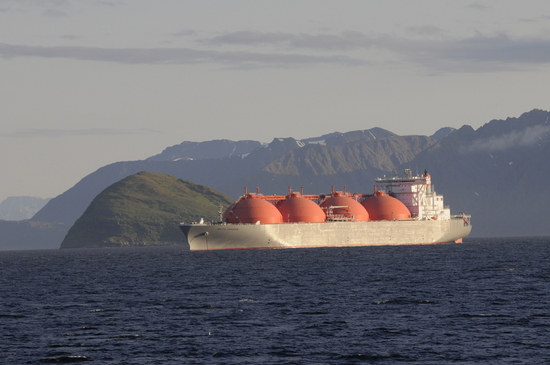
    An LNG tanker

    Many large vessels have to be strengthened to be able to sail in ice. Large companies are testing their fleets in order to be able to sail through the northern sea route.

    Gazprom is one of them which is working with Sovcomflot to carry out test for LNG tankers in ice.

    Gazprom director Aleksei Miller and Sovcomflot´s General Director Sergei Frank met last week and concluded in a press release:

    “The relevance of LNG shipping along the Northern Sea Route to the Asian-Pacific region in growing quickly. With regard to gas exports to the region, the development of LNG production is an absolute priority in comparison with pipeline deliveries. Consequently, the deliveries of Russian LNG through the Northern Sea Route allows us to significantly reduce transportation costs, thus making the LNG highly competitive.”

    Gazprom is considering to sail from the Shtokman area to Japan with gas. Statoil is thinking the same.

    Source: BarentsObserver

  • Warm in Svalbard

    Warm in Svalbard

    Longyearbyen, Svalbard

    Svalbard is heating up, fast. Last week the heat was 1 °C, highly unusual for this time of year.

    Some call it a “strange winter” but the Average temperature over the last 30 days was minus 5,8 °C, in tial 9,3 °C above the normal.

    This is according to the weather data statistics for Longyearbyen made by the Norwegian Metrological Institute.

    Sea ice around Svalbard has also been unusually low.

    This corresponds to news saying that 2011 was a record in Arctic temperature.

    Sources

    BarentsObserver

    Norwegian Metrological Institute

  • Gore invites president to Antarctica

    Gore invites president to Antarctica

    Ólafur Ragnar Grímsson, the president of Iceland

    Ólafur Ragnar Grímsson, the President of Iceland, is in Antarctica with Al Gore and a host of scientists. The exploration also includes director James Cameron, and billionaires Richard Branson and Ted Turner.

    The goal of the exploration is to explore the melting ice cap in Antarctica and discuss how the nations of the world can unite in realistic action against Climate change.

    The Climate Reality Project, Gore´s company, is planning the trip with National Geographic.

    Amongst other in the exploration is James Hansen from NASA, Yao Tandong from China, Christiana Figueres form UNFCCC and scientist from Harvard and leading universities in Europe.

    The exploration is actually sailing in the National Geographic vessel.

    The exploration started yesterday and will end on February 6th.

    Sources

    Vísir.is

  • Russia boost coal production

    Russia boost coal production

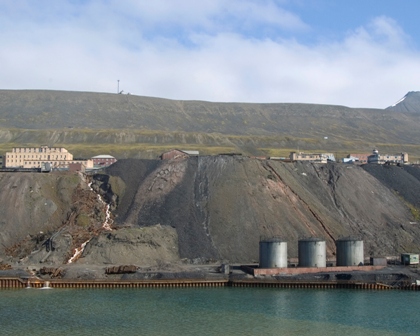
    Coal site in Barentsburg, Svalbard

    Russia will increase its coal production significantly over the next years. Russia produces around 330 million tons of coal each year but it will be increased to 440 million tons.

    A new development program was introduced by Prime minister Vladimir Putin yesterday. He said that 3,7 trillion rubles will be spent on the program, over the next 18 years.

    Most of the money will be spent on investment in private companies. Putin also said that infrastructure of transportation of coal needed to be looked at closely.

    Russia is the 6th largest coal producer in the world, producing around 5% of the worlds production. More than one third of it is exported.

    Coal production sites in Kusbass will be strenthened, as well as in Vorkuta.

    Source: BarentsObserver

  • UArctic´s Thematic Network

    UArctic´s Thematic Network

     UArctic´s network (Photo: UArctic)“In the North, for the North, by the North” – the motto of the University of the Arctic. It was founded in 2001 and is an international cooperative network consisting of universities, colleges and other organizations with an interest in promoting education and research in the Arctic.

    The overall goal of the University of the Arctic is to create a strong, sustainable circumpolar region by empowering indigenous peoples and other northerners through education, mobility and shared knowledge.

    One aspect of UArctic is it´s Thematic Networks. That increases cooperation between the member institutions on specific topics. Among the topics are Arctic Coastal and Marine Issues, Arctic Medicine, Energy in New Time, Global Change, Northern Agriculture, Northern Tourism and others.

    Each network has a leader and these leaders meet regularly to discuss what they have done, what they want to do and to get ideas and thoughts from their colleagues.

    The last meeting was in Akureyri, Iceland, late in January of 2012. Arctic Portal was there and captured videos of the meetings. Here are interviews with various people around the meeting.


    Lars Kullerud, president of UArctic, talks about the school, the thematic network and the meeting in Akureyri:
    http://www.youtube.com/watch?v=ouylRLLW_E0

    Kirsi Latola, director of Thematic Networks:
    http://www.youtube.com/watch?v=AjP33oblHYI

    Professor Karen Tanino, Dept. Plant Sciences, College of Agriculture and Bioresources, University of Saskatchewan , talks about Northern Agriculture Thematic Network.
    http://www.youtube.com/watch?v=fbY7-W91GOI

    Peter Weiss, Director of the University Center of the Westfjords, talks about the Arctic Coastal and Marine Themtic Network.
    http://www.youtube.com/watch?v=2ieCJU4Ro88

    Tomi Knuutila, University of Lapland, Finland, talks about Thematic Network Digital Media and Media Arts.
    http://www.youtube.com/watch?v=TtR0_yNm4pM