Blog

  • Vaygach breaks off as fire kills two

    Vaygach breaks off as fire kills two

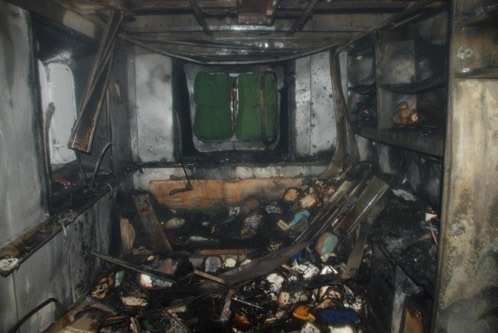
    Vaygach Fire

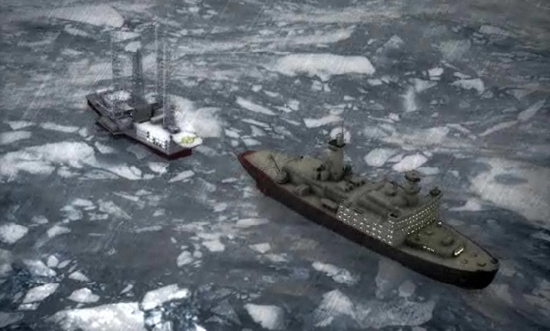
    The Russian nuclear powered icebreaker Vaygach is up and sailing again after a fire last week. The tragic accident cost two lives.

    It was the night of 15th of December that the fire broke out in the living compartments of the icebreaker. Two people could not be saved which is another tragic accident in Russian waters after an oil rig sank earlier in the week, costing many people their lives.

    Vaygach went through inspection in Dudinka and then kept breaking ice like usually, in the Northern Sea Route.

    It took two hours for the crew to get the fire under control. The fire did not reach the reactor compartment so a nuclear accident was not a threat.

    The source of the fire is thought to be a short-circuit.

    Sources
    BarentsObserver

    Rosatomflot

    Blogger51

  • Climate research in Norway at final stage

    Climate research in Norway at final stage

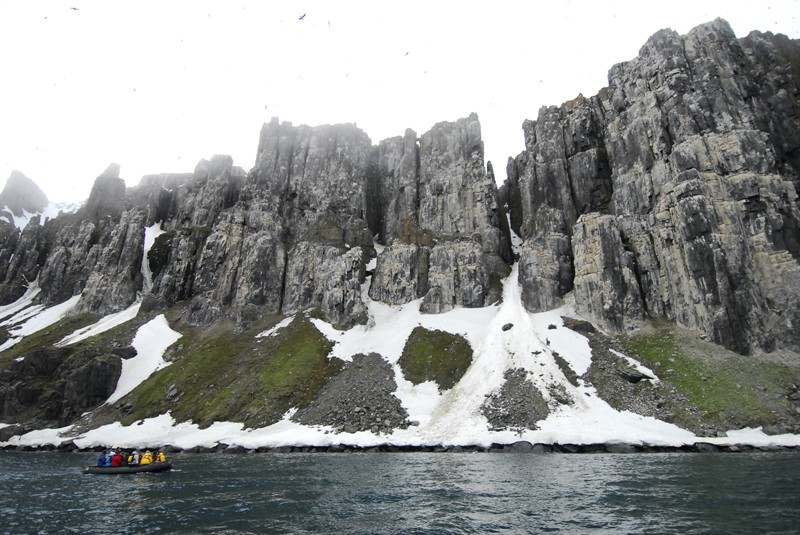
    A rocky coast in Svalbard

    A huge project in Norway enters its final year in January. The NORKLIMA project, The Research Council of Norway’s 10-year Large-scale programme on Climate Change and its Impacts in Norway, is entering its final stages.

    Continued activities for climate change research in Norway are under way.

    “Now we want to hear the thoughts of the various national and international stakeholders regarding future needs for knowledge about climate issues,” says Camilla Schreiner, Director of the Department for Climate and Polar Research at the Research Council.

    In cooperation with Norway’s universities, the Research Council is hosting dialogue meetings around the country to gather input and viewpoints from research institutions and trade and industry. In addition, a separate dialogue meeting with relevant ministries, agencies and administrative bodies will be held.

    The institute wants to do a thorough overview of the situation before it released its final report in 2013.

    Although this seems to be political rather then scientific, a host of research programs will go on until the summer of 2012.

    “We don’t yet know the future model for Norwegian climate research in the post-NORKLIMA era,” continues Dr Schreiner. “But the objective is clear: its targets and structure will enable Norwegian researchers to make a significant contribution to dealing with climate change effectively – at both the national and the global level.”

    Source: The Research Council of Norway

  • Tragedy after oil rig sinks

    Tragedy after oil rig sinks

    The tug boat and the Kolskoya before the accident

    An oil rig sunk yesterday in the Sea of Okhotsk where 14 people lost their lives. Many are still missing but 67 were on the rig.

    The wind was blowing at 25 m/s and the waves were 5 to 6 metres high. The rig overturned and started taking in water. It sank in only 20 minutes and the temperature of the ocean was around 1°.

    14 people were rescued. They were on duty on deck during the towing and were wearing survival suits and life-jackets.

    The Russian Media is criticising rescue operators because the whole crew was in the oil rig when it was being towed.

    According to Russian instructions for safety at sea, only a required minimum of personnel should be onboard a vessel that is being towed. The Russian Agency for Transport Supervision has started investigation of the accident.

    “Kolskaya” belongs to the Murmansk-based company Arktikmorneftegazrazvedka and had just finished work under a contract with energy giant Gazprom in the Sea of Okhotsk.

    The weather conditions are thought to be the reason for the accident, not any other problems have been found.

    Source: Barents Observer

  • Fishermen stuck in ice in danger

    Fishermen stuck in ice in danger

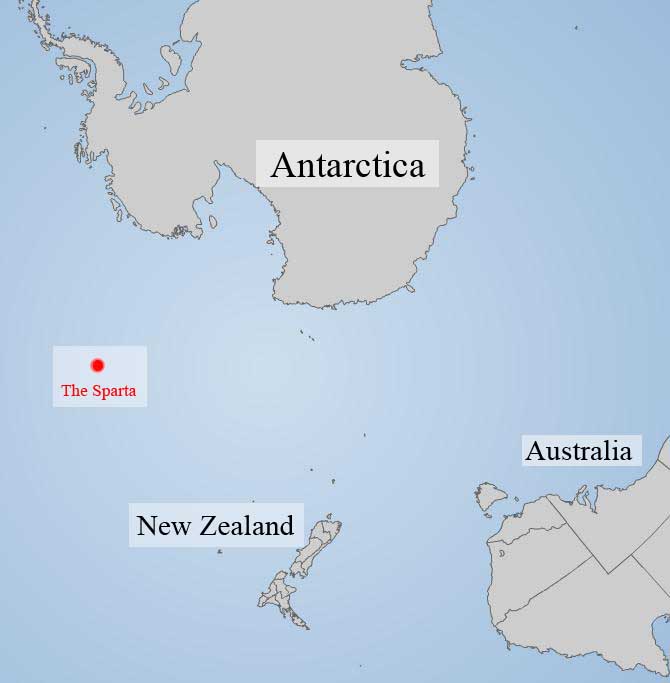
    Approximite destination of Sparta.

    A Russian fishing boat is trapped in heavy sea ice near Antarctica and its crew has moved to lifeboats. The ship is in danger of cracking and sinking so the crew evacuated the ship. It has reported a hole in its hull beneath the water line.

    The next icebreaker is days away and no helicopters are near the ship. A number of ships are on their way to rescue the ship.

    “However, the closest ones are hampered by heavy ice, making vessel movement very difficult. The closest vessel which can cut through the ice is several days away,” Rescue co-ordinator Tracy Brickles said.

    The Sparta is holed beneath the waterline and stuck in heavy sea ice, about 2,000 nautical miles (3,704km) south-east of New Zealand.

    A military plane spent about an hour above the ship but could not land to rescue the crew.

    The crew of 32 has immersion suits on. The crew comprises 15 Russians (including the captain), 16 Indonesians and a Ukrainian, AFP news agency reported.

    They were throwing cargo overboard to lighten the ship, and some had boarded lifeboats as a precaution, the RCCNZ said.

    Remaining crew are pumping water out of the ship and had attached a tarpaulin over the outside of the hole in an attempt to keep the water out, it said. They had requested that additional pumps be sent to help.

    The ice surrounding the ship is estimated to be up to 1.5m thick.

    Click here to see images of the ship from BBC.

    Sources: BBC, AFP, UPI, ITAR-Tass, RCCNZ.

  • Russias claim submitted next year

    Russias claim submitted next year

    artic-skipting2

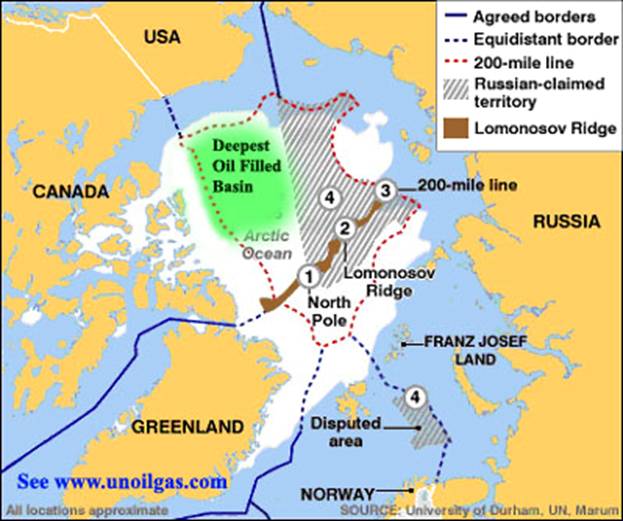
    Russia’s revised submission for their claim of the Arctic shelf boarders is almost complete. Russia was rejected earlier this year after submitting a claim for expanding its shelf borders to the UN commission, because of lack of information.

    The United Nations Convention on the Law of the Sea allows the coastal states in the Arctic to submit their claims for the continental shelf, outside their Exclusive Economic Zones.

    The potential resources in these areas are huge, so a competition between the states has begun. Russia is for example both claiming some of the same areas as Canada and Denmark (through Greenland).

    Norway is the only country who has gotten its claim approved, but the other claims are more complicated.

    “We have done a great deal of work, with the submission 90 percent complete, Russian Deputy Prime Minister Sergei Ivanov told at a press conference.

    The deputy prime minister said that Russian specialists are preparing a claim to be submitted to the UN Commission on the Limits of the Continental Shelf in 2012.

    Source: Barents Observer via RIA Novosti

  • Beluga whales trapped in ice

    Beluga whales trapped in ice

    Beluga Whale in ice

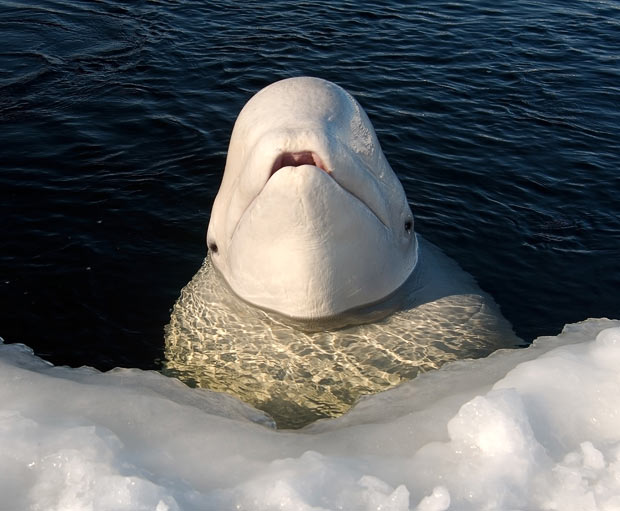
    Around 100 Beluga whales are trapped in sea ice in the Bering Sea. They await rescue or face death.

    The Beluga whale can weigh 2 tons at six meters long.

    They lie outside the town Janrakynot in east Russia. They can’t feed but authorities in Chukotcha are hoping for an icebreaker to break the whales free.

    Prime Minister Vladimir Putin is a known admirer of the Beluga whale and the authorities are hopeful it will help them in the cause for the icebreaker. The icebreaker is around the area but it would take around two days to reach the animals.

    Below is a video of trapped Beluga whales, escaping an attack from a polar bear.

    Source: Vísir.is

  • Surprising amount of methane found

    Surprising amount of methane found

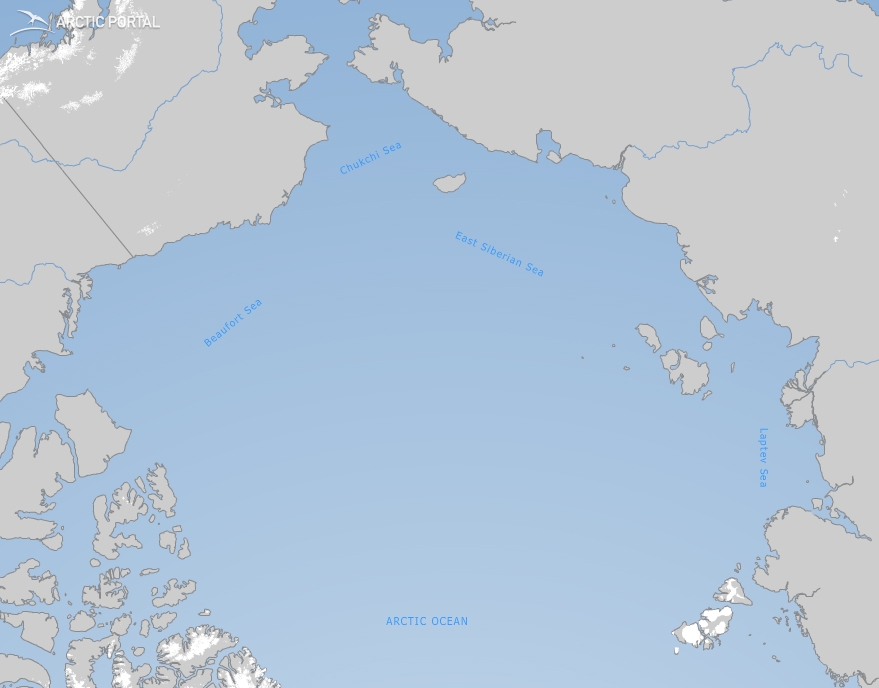
    Map of The Laptev Sea

    Russian scientists are baffled after finding plumes of methane in the Arctic Ocean. The scale and volume of the methane was a huge surprise to the researchers.

    The team was doing research in the East Siberian Arctic Shelf, in the Laptev Sea. The methane, a greenhouse gas 20 times more potent than carbon dioxide, was released from the Arctic seabed.

    Igor Semiletov, of the Far Eastern branch of the Russian Academy of Sciences, said that he has never before witnessed the scale and force of the methane.

    “Earlier we found torch-like structures like this but they were only tens of metres in diameter. This is the first time that we’ve found continuous, powerful and impressive seeping structures, more than 1000 metres in diameter. It’s amazing,” Dr Semiletov said in the Independent.

    “I was most impressed by the sheer scale and high density of the plumes. Over a relatively small area we found more than 100, but over a wider area there should be thousands of them.”

    Source: The Independent

  • Antarctica research proposals requested

    Antarctica research proposals requested

     InBev-Baillet Latour

    Doctoral and post-doctoral researcher anywhere in the world (under 35 years old) are invited to propose research project to the InBev-Baillet Latour Fund, which will we granting 150.000 Euros to the projects.

    Call for Proposals has the deadline of 1st of March in 2012.

    This year’s Call for Proposals is restricted to the following disciplines: glaciology, microbiology (excluding marine microbiology), and geology.

    The research activities are to be carried out at, or in the vicinity of, the Princess Elisabeth Antarctica research station located in the Sør Rondane Mountain Range, Dronning Maud Land, East Antarctica.

    International Polar Foundation

  • Amazing 100 year old photos from Antarctica

    Amazing 100 year old photos from Antarctica

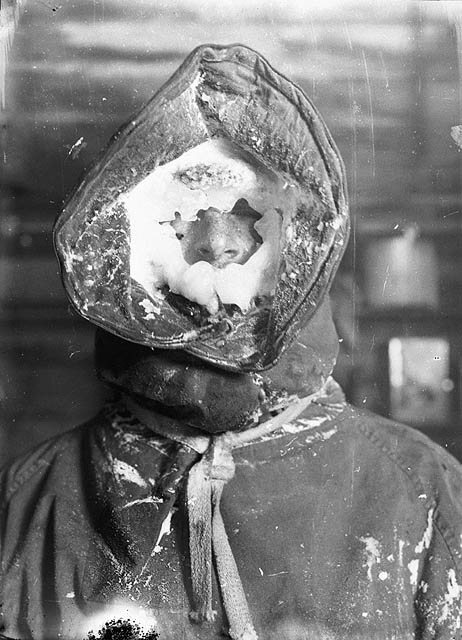
    A man with an ice mask

    As reported here on Arctic Portal today is 100 years since Roald Amundsen step foot on the South Pole, the first person to do so.

    At the State Library of South Wales amazing photographs from Antarctica, 100 years old, are stored.

    The pictures were taken by Frank Hurley in an Australian expedition in 1911. The pictures are diverse and range from landscape photos to pictures of humans. The expedition spent three years at the South Pole but did not go to the Pole itself.

    Its only around 200 years since Antarctica was first seen by humans and thr Australian expedition was one of the first to really explore the region.

    The photos are a unique source from the time  and can be seen here on this website.

    Radio operator Arthur Sawyer

  • 100 years from Amundsens South Pole trip

    100 years from Amundsens South Pole trip

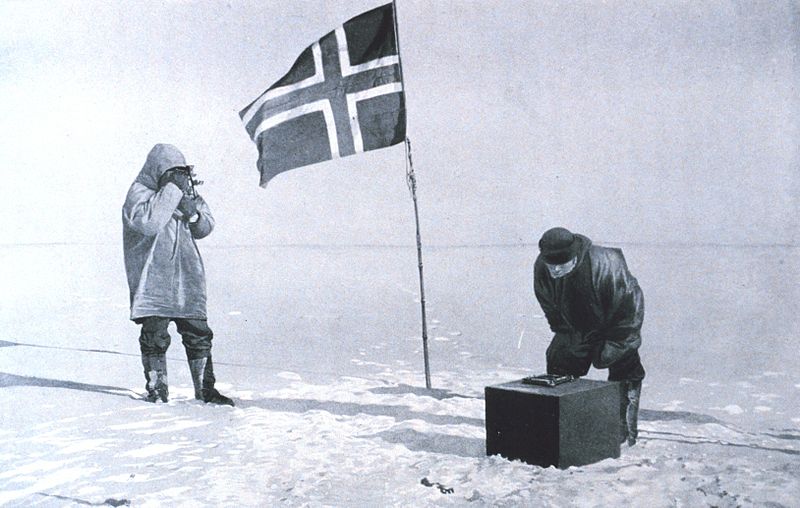
    Amundsen on the Pole

    Today marks the 100 year anniversary of Norwegian explorer Roald Amundsen being the first person to reach the South Pole. Celebrations in Antarctica will last over a month.

    Norways foreign minister Jens Stoltenberg has travelled to Antarctica because of this occasion and has spent his time skiing around the pole and talking to people working on site.

    He also unveiled an ice sculpture of Amundsen. “This is one of the biggest achivements of mankind,” Stoltenberg stated.

    The plan is to welcome an expedition led by Vegard Ulvang, a six time Olympic medalist for cross country skiing which travelled the same route as Amundsen. The group has had a rough time and it is unclear if they will reach the south pole today.

    Amundsen famously beat Robert Scott to the pole by a few weeks, and the celebrations at Antarctica will continue until January, the date Scott reached the pole.

    With amundsen were Helmer Hanssen, Sverre Hassel, Olav Bjaaland og Oscar Wisting. They reached Antarctica in January, the same time as Scott. But their expedition was thought to be better organized, and they used dogsleds whilst Scott used horses.

    Click here to read about Amundsens trip.

    Source: Reuters