Blog

  • Arctic Report Card 2011 released

    Arctic Report Card 2011 released

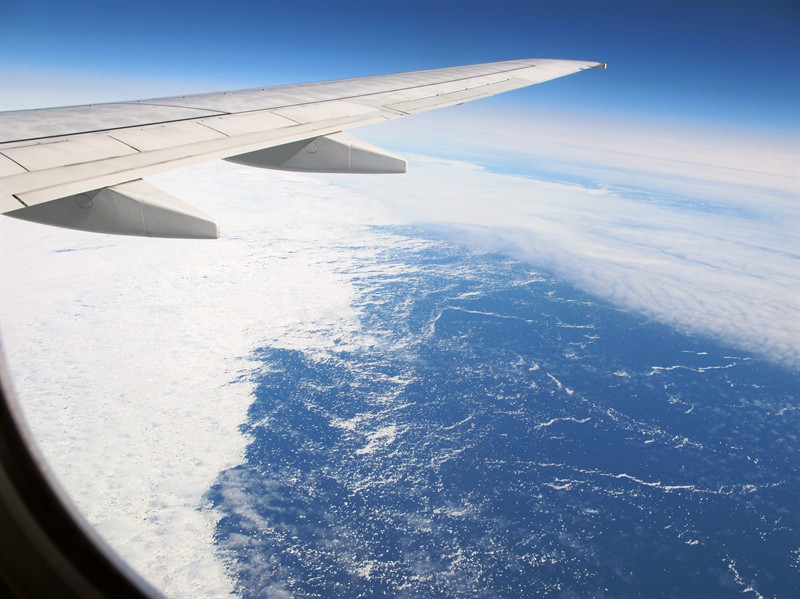
    Dissolving Sea Ice, South of Svalbard

    The 2011 Arctic Report Card has been published. Amongst the results are significant changes in the atmosphere and the sea ice and the ocean.

    The NOAA (National Oceanic and Atmospheric Administration) issues the Arctic Report Card annually The Arctic Report Card is a timely source for clear, reliable and concise environmental information on the state of the Arctic, relative to historical time series records.

    Among the 2011 highlights are:

    Atmosphere: In 2011, the average annual near-surface air temperatures over much of the Arctic Ocean were approximately 2.5° F (1.5° C) greater than the 1981-2010 baseline period.

    Sea ice: Minimum Arctic sea ice area in September 2011 was the second lowest recorded by satellite since 1979.

    Ocean: Arctic Ocean temperature and salinity may be stabilizing after a period of warming and freshening. Acidification of sea water (“ocean acidification”) as a result of carbon dioxide absorption has also been documented in the Beaufort and Chukchi seas.

    Land: Arctic tundra vegetation continues to increase and is associated with higher air temperatures over most of the Arctic land mass.

    Source: NOAA

  • Danish oil and gas until 2050?

    Danish oil and gas until 2050?

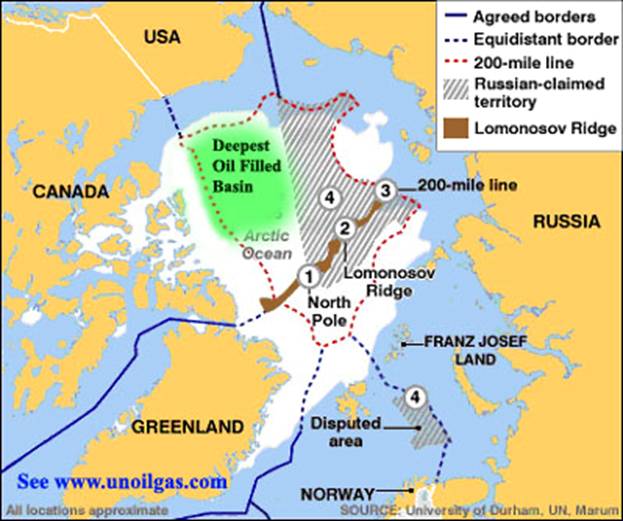
    EEZ of the Arctic Ocean

    Denmark will be self-sufficient with oil and gas, at least until 2050. These new numbers are much higher then anticipated.

    This is the view of Peter Helmer Steen, director of the state oil company Nordsøenheden.

    The Danish Energy Organization had already predicted that Denmark would be self sufficient until 2020, so if true this news is fantastic for the energy conscious country.

    Steen states that with better technology this is possible and because new oil reserves are in Danish territory in the Arctic.

    Denmark has great belief for oil in the Greenlandic ocean, and other areas as well.

    Source: DRK

  • Greenpeace fools oil company executives

    Greenpeace fools oil company executives

    Greenpeace meeting

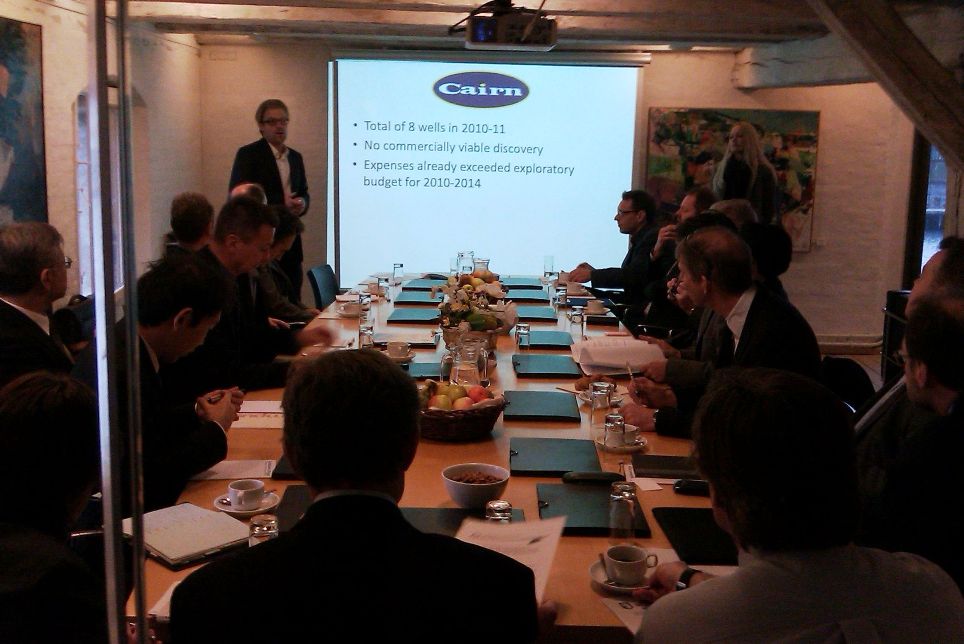
    Greenpeace fooled oil company executives into a meeting to lecture them about exploration. A real meeting was held, but the executives were directed to another location.

    Hoping to hear about oil exploration in Greenland in a seminar held by Greenland’s Raw Materials Directorate, 18 executives were fooled.

    As they entered an elevator to go to the correct Directorate meeting on the fifth floor, friendly (Greenpeace) assistants advised them that the meeting had been moved to another room on the fourth floor – which Greenpeace had hired for the occasion.

    For 15 minutes the executives listened to a Power-Point presentation on why environmental organisations are against exploration and extraction in Greenland.

    Greenpeace even provided coffee, tea and croissants.

    It was not until the final slide of the show that those listening became aware of the fact they had been duped by Greenpeace which also had activist outside the building protesting.

    After the presentation, activists thanked the oil companies and left the building.

    Oil companies attending the initial Greenland Raw Materials Directorate meeting were Shell, BP, Nuna Oil, GreenPex, Kogas, DCE, TBS, ComcaPhilips, Wintershell, Apwadarko and Statoil.

    Source: Politiken
    Greenpeace fooled oil company executives into a meeting to lecture them about exploration. A real meeting was held, but the executives were directed to another location.

    Hoping to hear about oil exploration in Greenland in a seminar held by Greenland’s Raw Materials Directorate, 18 executives were fooled.

    As they entered an elevator to go to the correct Directorate meeting on the fifth floor, friendly (Greenpeace) assistants advised them that the meeting had been moved to another room on the fourth floor – which Greenpeace had hired for the occasion.

    For 15 minutes the executives listened to a Power-Point presentation on why environmental organisations are against exploration and extraction in Greenland.

    Greenpeace even provided coffee, tea and croissants.

    It was not until the final slide of the show that those listening became aware of the fact they had been duped by Greenpeace which also had activist outside the building protesting.

    After the presentation, activists thanked the oil companies and left the building.

    Oil companies attending the initial Greenland Raw Materials Directorate meeting were Shell, BP, Nuna Oil, GreenPex, Kogas, DCE, TBS, ComcaPhilips, Wintershell, Apwadarko and Statoil.

    Source: Politiken
  • New website launched for PAGE21

    New website launched for PAGE21

    PAGE 21

    A new website was launched today, PAGE21.eu. The EU funded project brings leading scientists together studying permafrost.

    Permafrost is defined as ground that remains continuously at or below 0°C or at least two consecutive years; some 24% of the land surface in the northern Hemisphere is classified as permafrost.

    The main research question is: What happens when the vast amounts of carbon in Arctic soils are released to the atmosphere?

    Fieldresearchers, operators of long term observatories and modellers from 18 partner institutions in the EU intend to answer this question within the PAGE21 project.

    By pooling expertise from various subjects, the scientists aim to deliver a valuable foundation for the United Nations 5th World Climate Report.

    Arctic Portal designed, programed and hosts the website, which is indeed inspired by permafrost. Arctic Portal also works on data managment for the project.

    Click here to visit the website.

  • A 750% increased shipping traffic in NSR

    A 750% increased shipping traffic in NSR

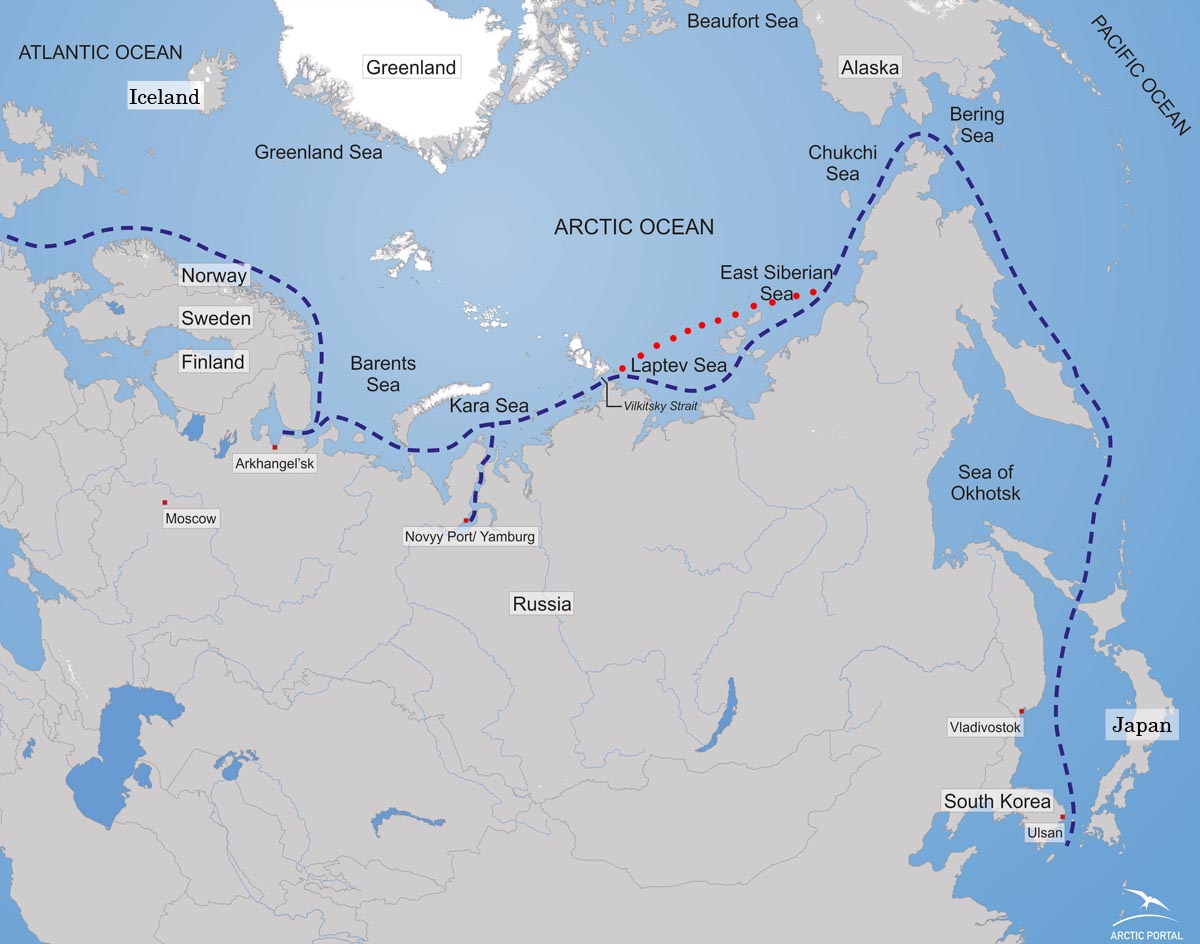
    Map of the Northern Sea Route

    The Northern Sea Route was busier then ever this year. In total, 34 vessels used the route, a significant increase from only 4 in 2010.

    The route was open for one month longer than last year, but this still shows that the route is becoming more feasible and more popular.

    The number is for ships that sailed from Murmansk to another country, Russians being the leading shipping operators in the NRS.

    The cargo in 2010 was 111.000 tons but in 2011 it went to 820.000.

    15 of the 34 vessels transported liquid cargo (682.000 tons), three carried bulk (110.000 tons), four refrigerator ships transported salmon (27.500), two vessels transported general cargo and ten vessels sailed in ballast, according to the Barents Observer.

    This year also saw the largest super tanker and the largest bulk carrier to go through the route.

    The map illustrates a new route, which opened up in the summer.

    Sources: Rosatomflot, RIA Novosti and BarentsObserver.

  • Antarctica day tomorrow – Online webinar

    Antarctica day tomorrow – Online webinar

    Antarctica Day 2011

    1. December is the Antarctica Day, a young tradition only first celebrated last year. It celebrates the signature of the Antarctic Treaty on 1 December 1959 and the worldwide significance of this landmark.

    The Association of Polar Early Career Scientists (APECS), the International Arctic Science Committee (IASC) and the Scientific Committee on Antarctic Research (SCAR) are contributing to the celebrations with an Antarctica Day Webinar.

    The online session, addressing both the Antarctic and Arctic Science Community and reflecting on past, present and future of polar science, will take place 1. December at 16 GMT.

    The speakers and presentations will be:

    • Jenny Baeseman (APECS), Volker Rachold (IASC), Mike Sparrow (SCAR) on “*Polar Science in a global context*”
    • Allen Pope (APECS) on “*Antarctica Day and where it came from*”
    • Tosca Ballerini (APECS) on “*Southern Ocean Marine food webs: engaging early carrier scientists in an international collaborative modeling community*”?
    • Daniela Liggett (APECS) on “*Adding ‘value’ to Antarctic social science research*”

    An open discussion will follow the presentations

    The session will be conducted through an online meeting system (Adobe Acrobat Connect) hosted by the University of Canterbury.

    Antarctica Day was initiated by the Foundation for the Good Governance of International Spaces as an annual event to build global awareness of this important institution, celebrating this milestone of peace in our civilization with hope and inspiration for future generations. The Antarctic Treaty was adopted “with the interests of science and the progress of all mankind” so that today there is a variety of activities around Antarctica Day such as the Virtual  Peace’ Balloon Launch, classroom activities, life events and much more.

    See more here on the Apecs website.

  • New Icelandic guard ship celebrated

    New Icelandic guard ship celebrated

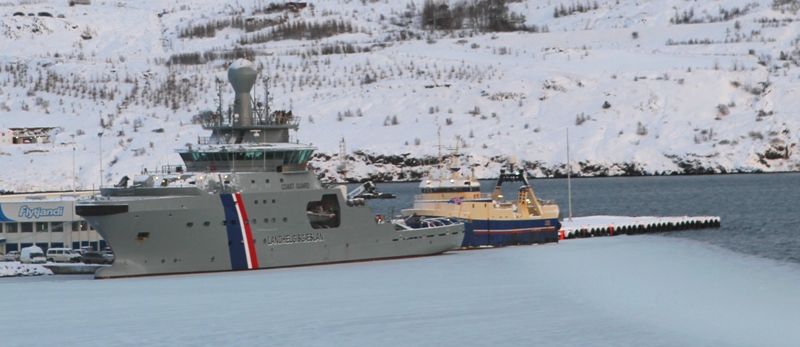
    Thor in the port of Akureyri.

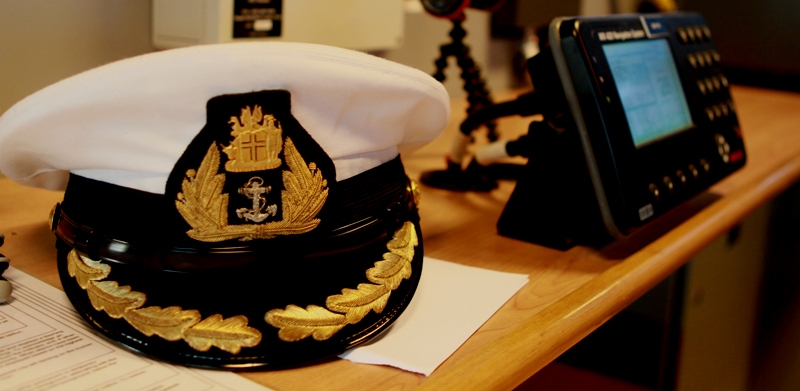
    “No, congratulations to you!” one of the crew in new Icelandic guard ship Þór (named after the God of Thunder) told me as I walked aboard to have a look around. “This belongs to all Icelanders, and they should all be proud if it,” he said and smiled.

    And what a revolution it is!

    The ship is designed to be efficient in a number of challenging circumstances. It can serve as headquarters for national emergencies, it has an oil rinsing system built to prevent oil spills to disperse, it has a powerful system to fight fires and countless other activities.

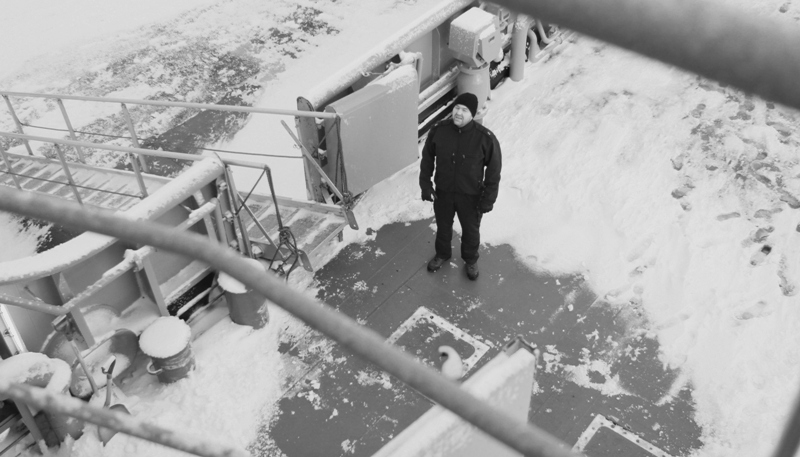
    Crew member on board

    It can give helicopters fuel; it can measure depth and search underwater, can carry up to six containers, cars and provide electricity to land if needed.

    “Yeah, its taken a while to learn all of the things we need to learn on a new ship,” a crew member admitted.

    It also has a gun, but as the captain said, “it’s mostly for decoration. I think it is from World War 2!” The cannon is active, but its role is more symbolist than for usage. The guard ship is therefore mostly unarmed.

    Property of the Captain

    The shape is a tow boat, and the impressive thickness of the tow wires is actually built to tow up to 250 tons. The complex system also allows the ship to GPS-lock in a position with another ship, for example staying North-East and 70 meters from another ship.

    The ship is 93.80 meters long, 16 meters wide, 32 meters high and 3920 tons. Its maximum speed is 19.5 knots.

    It is specially built for sailing in ice covered waters, the strength is 1B (1A Super is for 1.0 m thick ice, 1A for 0.8m and 1B: 0.6 m. thick ice.

    Chief engineer at the coast guard ship Thor

    Increased shipping around Iceland meant that a new ship was a necessity. With the Northern Sea Route increased traffic, this is a great addition to the Icelandic fleet.

    It can help monitoring and with search and rescue in the Arctic Ocean. With Iceland also drilling for oil in the Dreki Area, a guard ship is essential, especially if production will begin in the area.

    The multi-tasking ship brings a smile to the Icelandic coast guard, and the celebration by going around Iceland, opening it up for the people, shows their pride.

    “This ship is truly a revolution,” the captain proudly states. And rightly so.

  • Climate change leads to starving dogs

    Climate change leads to starving dogs

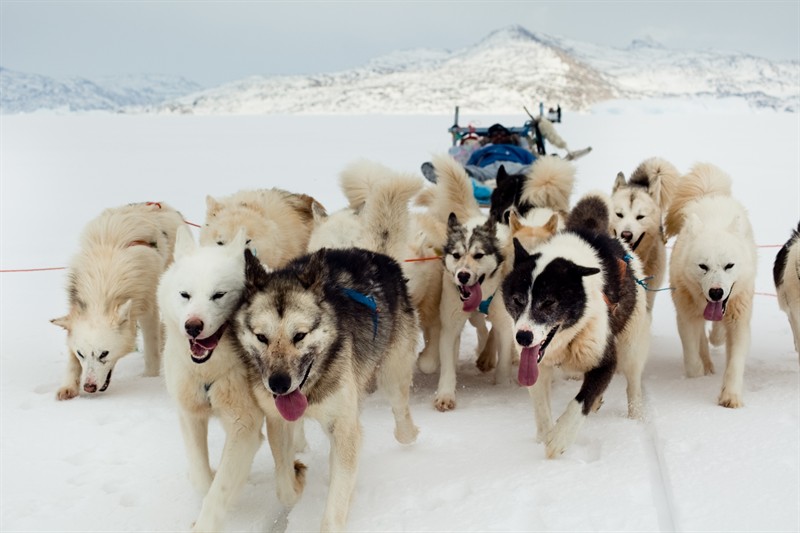
    Sled Dogs in Greenland

    Lack of ice is hindering hunting in Greenland. Humans are not the only one who rely on hunting in, the dogs in Qaanaaq are starving.

    This led to animal friends all over Greenland sending dog food for up to 500 dogs in Qaanaq.

    “We are doing this to help animals in need, weather it is in Nuuk or in Qaanaaq,” Susanne A. Markdal, president of Animal Friends of Greenland, told the Greenlandic Radio.

    She also hopes that more organizations will join in for the cause.

    “We expect this to feed the dogs for a few days but that is not enough. We hope more will join us,” she said.

    The weather and climate change are causing problems in Greenland. Five years ago the sea ice had frozen in early november, making hunting for dog food easy, hunting both seals and fish.

    This year it is unforseen when the ice will freeze.

    The people of Qaanaaq are hoping for a bigger quota of walrus in order to help them solve the problem. The annual quota of 64 animals is almost over.

    Source: Mbl.is and KNR.

  • New laws on the Northern Sea Route

    New laws on the Northern Sea Route

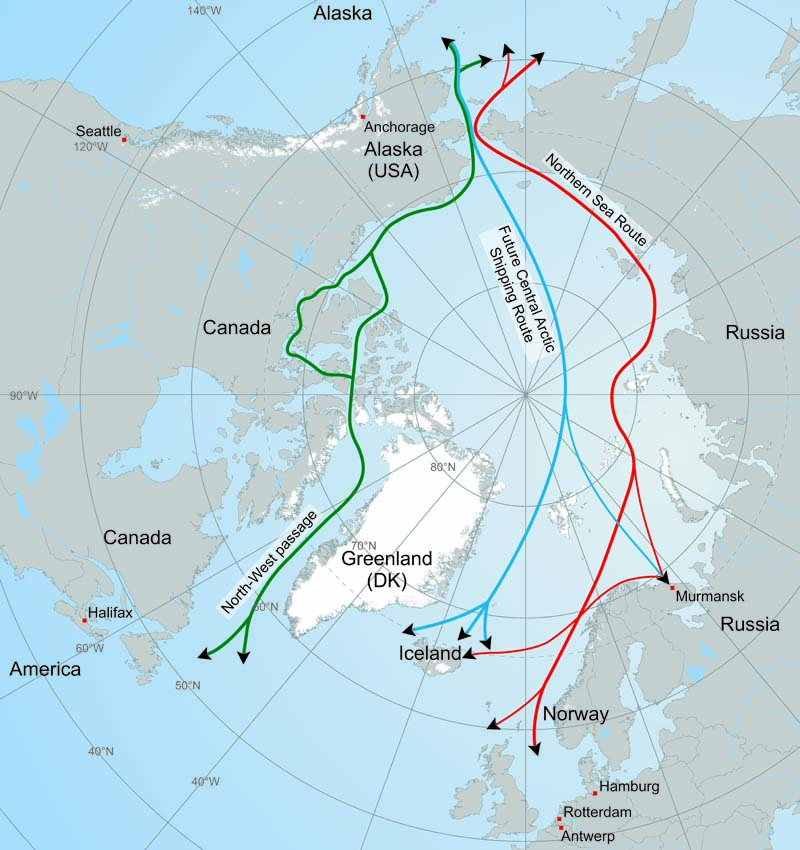
    Map of the Arctic Shipping Routes

    The Ministry Transport in Russia has introduced a new bill regarding “state regulation of merchant shipping in the waters of the Northern Sea Route. The website of the Ministry reads that Minister of Transport, Sergey Aristov, introduced the bill in Duma.

    This will be the first law on the sea route, adding to international law like UNCLOS. Read more about shipping governance here and see the UNCLOS agreement here.

    Russia plans to introduce new specialized organizations for this purpose. Transport operators will have the same access to the Northern Sea Route according to the bill which has articles on navigation, environmental protection and icebreaker assistance.

    This will ensure modern infrastructure that provides safe navigation of vessels in the Arctic seas.

    The bill has not been passed yet but the laws will take effect as soon as possible.

    The Northern Sea Route is in Russian waters, all the way from Murmansk to the Bering Strait.

    Sources: BarentsObserver and Ministry of Transport website.

  • Big hope for oil in Dreki Area

    Big hope for oil in Dreki Area

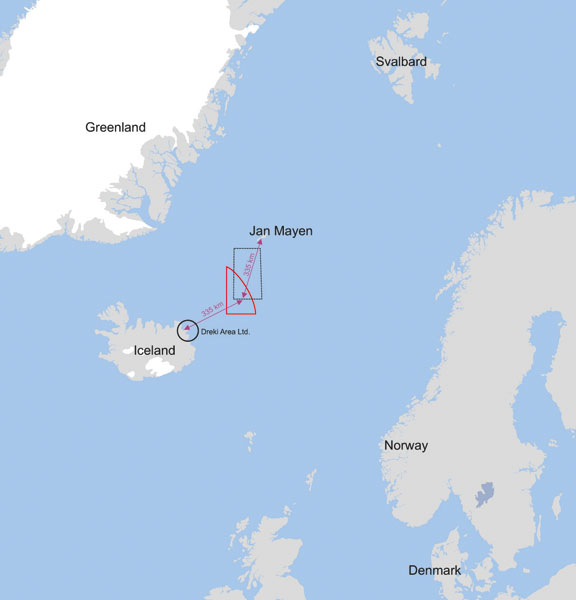
    Map of the dreki area

    New research strengthens the belief that there is oil in the seabed around Jan Mayen.

    Jan Mayen is a Norwegian archipelago north of Iceland. The Map shows the EEZ around Jan Mayen, which Norway is entitled to. However, the Dreki Area is also within Iceland’s jurisdiction so the country could benefit if oil is found.

    “The samples from the seabed around Jan Mayen is stunning, the oldest bedrocks are 260 million years old. The analysis of the material is surprising,” Sissel Eriksen, exploration director of Norwegian Petroleum Directorate told Geo365.no.

    “We had hoped, but not expected, to find so ancient sedimentary rocks around Jan Mayen. The influence of volcanic rocks in the area is less than we previously thought – volcanic rocks generally have no potential for oil and gas. But this means we have rocks that may contain material that forms the oil and gas. Two important prerequisites for potential petroleum deposits are thus met,” says Eriksen.

    The expedition was in July this year with agreement with Icelandic authorities. The samples were taken from both the Icelandic and Norwegian side of the Jan Mayen ridge.

    Environmental impact assessment will be next in line for the oil research in the Dreki area.

    Source: Geo365.on