Blog

  • Denmark wants China near AC

    Denmark wants China near AC

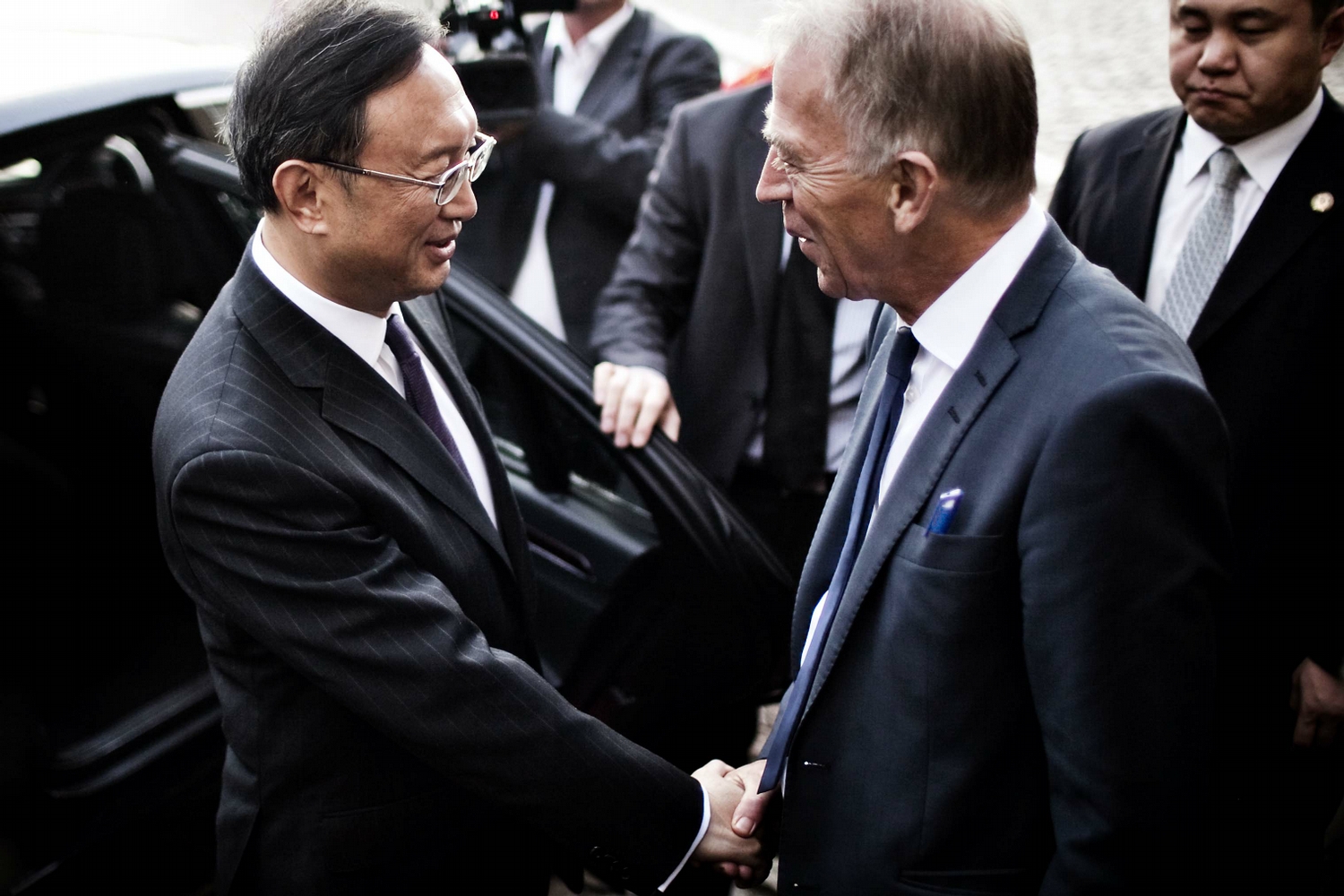
    Foreign Minister Yang Jiechi amd Villy Søvndal

    Denmark is looking to pave the way for China to the Arctic Council. Denmark wants China to become a permanent observer state in the organization.

    China has a temporary hearing to the Council today. Denmark stood down from its role as Chair at the ministerial meeting in Nuuk in May this year, and Sweden took over.

    “It is in the best interest for Denmark to help China to come closer to all the decision making in the Arctic,” Villy Søvndal, Minister of Foreign Affairs in Denmark said to Danish newspaper Berlinske Tidene.

    “It’s not only in the interest of Denmark, but the whole Council, that nations with great interest in the Arctic can follow what happens there,” he said.

    Denmark (including Faroe Islands and Greenland), Iceland, Finland, Sweden, Norway, Russia, Canada and USA are members of the Council.

    Six working groups of indigenous people have permanent participant status but Denmark wants China to be on par with permanent observer states. They are six and are France, Germany, The Netherlands, Poland, Spain and the United Kingdom.

    Søvndal says that China can’t be ignored because of the size and importance of the country.

    Søvndal also states that this will not lead to Denmark’s position weakening. “Definitely not, this is not a hug change, but an important one.”

    China has applied for the position which has not been given to the country, yet. Mixed feelings surround big players like China and the European Union getting the Permanent Observer status, especially amongst the indigenous people.

    Søvndal predecessor, Per Stig Møller, agrees with the Minister. “We are interested in that more countries understand the difficulties around the Arctic. It is positive that more countries want to observe the decisions made in the Council.”

    The decision will be made in the next ministerial meeting, in Sweden in 2013.

    Source: Berlinske Tidene

  • Two PhD student positions available

    Stockholm university

    Stockholm University has two vacancies for PhD students for the PAGE 21 project. Both positions are in Physical Geography at the Department of Physical Geography and Quaternary Geology.

    • The first position is within the topic “Age, net accumulation and degree of decomposition of the Eurasian permafrost carbon pool.”
    • The second one is within the topic “High-resolution mapping of soil organic matter storage and remobilization potential in periglacial landscapes.”

    Deadline for both positions is November 20th.

    PAGE21 will aim to understand and quantify the vulnerability of permafrost environments to a changing global climate, and to investigate the feedback mechanisms associated with increasing greenhouse gas emissions from permafrost zones. This research will make use of a unique set of Arctic permafrost investigations performed at stations that span the full range of Arctic bioclimatic zones. The project will bring together the best European permafrost researchers and eminent scientists
    from Canada, Russia, the USA, and Japan.

  • UArctic regrets Canada decision

    University of the Arctic 10 Years

    The University of the Arctic has released a statement following the decision by the government of Canada to cut its funding.

    The detailed statement quotes its president Lars Kullerud, stating the decision is regrettable, and it means that “at least two of UArctic’s signature programs – the Circumpolar Studies undergraduate program and the north2north student mobility program – now face significant challenges.”

    As already reported, The Canadian government cut the annual UArctic budget from $700,000 down to about $150,000.

    Here is a statement, in full, from the University of the Arctic:

    The recent decision by the Government of Canada to dramatically cut funding to the University of the Arctic will have a impact on not only  the ability of Canadian students to participate in UArctic programs,  but also thousands of other students around the circumpolar world who  benefited from them. UArctic has already taken steps, however, to  ensure the continuity of service of programs like Circumpolar Studies. The undergraduate program Circumpolar Studies has a unique history, in  which Canadians and Canadian institutions have played a key role.

    The curriculum was developed through the collective efforts of scientists, indigenous experts, and academics from across the circumpolar region who shared a vision that northerners should have a common understanding of the region that derives from their own perspectives, rather than from southern capitals. Much of this work to first develop, and later collective efforts to ensure update and further strengthen local input and quality, has been supported by the Government of Canada, and led by the University of Saskatchewan for UArctic members.

    The value of the work done in Canada can be seen clearly across the  pole in places like Bodø, Norway, Fairbanks, Alaska, Prince George, Thunder Bay and Nunavut in Canada, Rovaniemi, Finland and Yakutsk,  Russia where students who live and study in the North are taught the same Circumpolar Studies Program. At the Northeastern Federal University in Yakutsk, Russia, for example, every first year student  takes BCS100 – Introduction to the Circumpolar World – which resulted  in over 3000 students there learning from the same material as their  colleagues in Canada, Alaska, and the Nordic countries.

    The main impact of this cut in funding is that the University of  Saskatchewan, which has provided tremendous support to UArctic by hosting the Undergraduate Office first under Dean Greg Poelzer and most recently under Hayley Hesseln, is no longer financially able to  continue in that role. With USask’s assistance, UArctic is now transitioning the significant work done by the Undergraduate Office to the Northeastern Federal University (NEFU) in Yakutsk, which will take over the hosting of the Undergraduate Office with Claudia Fedorova being named the new dean.

    According to Hesseln, the root of the funding decision does not lie in any ill will on the part of the federal or territorial governments, nor certainly from any of the participating institutions, but rather from differing visions of how higher education in Canada’s territorial North should be developed. UArctic President Lars Kullerud agrees, stating that “Canada should pursue a physical university north of 60° – as exists in every other circumpolar country. The experience in other Arctic countries has shown that the best way for northern universities to demonstrate their value and deliver quality and relevant education is through cooperation in the University of the Arctic network. The vast majority of UArctic activities are led by institutions north of 60°. That some in Canada see these options as mutually exclusive has had the unfortunate effect of disrupting agreement between the territorial and federal governments that was the key to ongoing financial support for UArctic in Canada.”

    The UArctic International Academic Office (IAO) at Northlands College in LaRonge, Saskatchewan has worked closely with the Undergraduate Office to track students who complete the necessary requirements to earn a ‘Confirmation of Completion’ in Circumpolar Studies. To date, 174 students have graduated with a completion document, including fourteen from Northlands College itself.  Glenys Plunz, Director of IAO, has seen the impact of these graduates up close in her own community in northern Saskatchewan. Plunz notes that, “the significance of the Circumpolar Studies to a student from a small northern community is immeasurable, not only because of the academic achievement, but because the program has special relevance to them as northerners. Such offerings are equally relevant to the provincial North as for the territories.”

    Key to the success of these ‘circumpolar classrooms’ is the north2north mobility program. Lakehead University in Thunder Bay, Canada has helped coordinate Canadian students to go on student exchanges through north2north to Russia and the Nordic countries.  Lakehead professor Chris Southcott explains, “Canadian participation in north2north is key to the whole program, as it is based on exchanges between different regions of the Circumpolar North. Without  the resources to send a Canadian student to Iceland or Russia, it  becomes difficult for Canadian institutions to accept reciprocal exchanges from partners in those countries.”

    Figures from north2north exchanges back Southcott’s assessment, with Canada being the destination of choice for a quarter of all north2north students in 2010.  The elimination of mobility funding in Canada is especially unfortunate when many of Canada’s fellow member-states in the Arctic Council are making student and faculty exchanges an important part of their respective Arctic strategies. A Canadian student who has participated in both programs directly attributes his UArctic experience to his ability to secure his current job as a research analyst in the Canadian North. Harry Borlase, originally from Labrador, explains, “UArctic programs like BCS and north2north combine classroom learning with real life northern living.

    It’s exactly that combination that paints the big picture and prepares  you for your working career in the North.” UArctic President Lars Kullerud concludes, “The funding decision from Canada is regrettable, and means that at least two of UArctic’s signature programs – the Circumpolar Studies undergraduate program and the north2north student mobility program – now face significant challenges. However, UArctic is a circumpolar community of institutions  committed to cooperation in northern higher education, and will do all it can to support education opportunities in the North. Our Canadian members remain committed with their own resources to continue to be strong partners in this work while we wait for a resolution of the funding impasse in Canada.”

    The University of the Arctic is a cooperative network of over 130 universities, colleges, and other organizations committed to higher education and research in the North. Our members share resources, facilities, and expertise to build post-secondary education programs that are relevant and accessible to northern students. Our overall goal is to create a strong, sustainable circumpolar region by empowering northerners and northern communities through education and shared knowledge.
  • 1.8 billion for Russian icebreakers

    1.8 billion for Russian icebreakers

    Russian Icebreaker

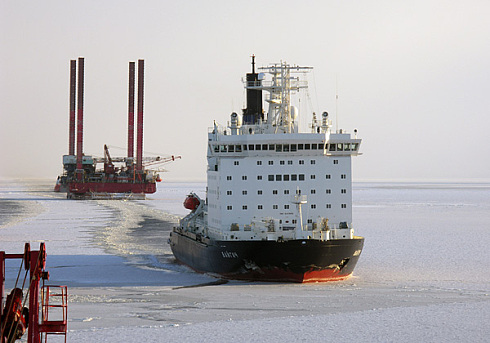
    Russia will spend 1,8 billion Euros on four state of the art icebreakers.

    The United Shipbuilding Corporation will oversee the build and construction will start next year, in 2012.

    The four new icebreakers will be added to another two already in place. A total of six new icebreakers will be in Russian waters in the next years.

    Three of the new vessels are to be nuclear powered, the others will have diesel engines.

    That is in line with more recent activity in Arctic shipping.

    Source: BarentsObserver

  • The Cod Wars – Iceland vs. Britain

    Icelandic patrol ships nears an English trawler

    The cod wars were political disputes between the governments of Iceland and Britain over fisheries management in the Icelandic maritime waters. The disputes were numerous between the years 1948 and 1976 and are called the Cod wars. The cod wars were numerous; they can be counted as three or even four.

    The first dispute was in 1950. The territorial waters were moved up to 4 miles much to Britain’s annoyance since they utilized the Icelandic fisheries. Because of the four mile limit, they could not fish as much as before. This decision created a lot of conflict and Icelandic fish was banned from England, up until 1956 when the dispute ended.

    The second dispute was in 1958. The territorial waters were moved to 12 miles according to the United Nations Geneva Convention on Law of the Sea. Britain was again furious, sending the vessel HMS Russell to Iceland.

    It’s captain accused the captain of Icelandic coastal guard vessel Ægir of trying to sink the vessel. Protests were held in Reykjavik against Britain were held but the dispute ended in 1961.

    The third dispute was in 1972. Iceland would yet again move its territorial waters, not up to 50 miles. And again the Brits were unhappy, sending army vessels to Iceland to protect the British boats, who were fishing within the 50 mile territorial zone.

    For the first time the Icelanders used a new weapon they invented themselves.

    On September 5th 1972 the Icelanders encountered an unmarked trawler fishing northeast of Iceland. The captain of the trawler refused to divulge the trawler’s name and number, and, after being warned to follow the Coast Guard’s orders, played Rule Britannia over the radio.

    The net cutters

    That resulted in Iceland deploying the net cutter into the water for the first time and Ægir sailed along the trawler’s port side. The fishermen tossed a thick nylon rope into the water as the patrol ship closed in, attempting to disable its propeller. After passing the trawler, Ægir veered to the trawler’s starboard side.

    The net cutter, 290 meters in length, went behind the patrol vessel, sliced one of the trawling wires. As Ægir came about to circle the unidentified trawler, its angry crew threw coal as well as garbage and a large fire axe at the Coast Guard vessel.
    A truce was made in 1973.

    The fourth dispute was in 1975 when Iceland moved its territorial waters up to 200 miles. Britain refused to oblige and kept fishing in Icelandic waters. Only 24 hours after the law passed Iceland used the wire cutters again, now on Primella trawler from Hull.

    The disputes were getting dangerous and Britain kept sending navy vessels to Iceland which instead used their wire cutters.

    After the nations met in Oslo in 1976 the disputes finally ended.

    Iceland had many good weapons which led to them winning all the battles.

    Firstly they could point out that if Britain would break any laws Iceland would resign from NATO and therefore dismiss the US Army from Iceland. That was a strong weapon.

    Secondly the laws were in favour of Iceland and many supported the small nation against the big old empire.

    And lastly it was clear that Britain could not use army vessels to protect their trawlers when fishing forever.

    Source: The Cod Wars

  • Russia and Iceland sign agreement

    Iceland and Russia have signed a cooperation agenda regarding geothermal energy.

    The agreement was signed yesterday by Icelandic Minister of Industry Energy and Tourism, Katrín Júlíusdóttir, and Sergey Shmatko, the Minister of Energy in Russia.

    Russia wants to utilize geothermal energy better and Iceland seeks new ways to utilize the vast geothermal resources in the country.

    Both countries believe they will gain significantly from the cooperation.

    An energy summit in Moscow this week saw Ms. Júlíusdóttir address geothermal matters in Iceland and the forthcoming cooperation with Russia.

    As Arctic Portal has reported, Iceland has looked to Russia for more cooperation and the agreement signed this week was a step in that direction.
    Source: Ministry of Foreign Affairs in Iceland

  • Disputes and the agreement of High Seas Fishing

    In the decade following the adoption of the 1982 United Nations Convention on the Law of the Sea, fishing on the high seas became a major international problem.

    The Convention gave all States the freedom to fish without regulations on the high seas, but coastal States, to which the Law of the Sea conferred exclusive economic rights, including the right to fish within 200 miles off their shores, began to complain that fleets fishing on the high seas were reducing catches in their domestic waters.

    The problem centred on fish populations that “straddle” the boundaries of countries’ 200-mile exclusive economic zones (EEZs), such as cod off Canada’s eastern coast and pollack in the Bering Sea, and highly migratory species like tuna and swordfish, which move between EEZs and the high seas.

    By the early 1990s, most stocks of commercially valued fish were running low, according to the Food and Agriculture Organization of the United Nations (FAO). As catches became smaller, coastal States complained that the industrial-scale fishing operations of the so-called “distant-water” States on the high seas were undermining their efforts to conserve and revitalize fish stocks within the EEZs.

    Reports of violence between fishing vessels from coastal and distant-water States became increasingly frequent, especially during the “cod wars” of the 1970s. Several countries, including Britain and Norway, sent naval ships to protect fishing fleets on the high seas. Spanish fishers clashed with British and French driftnetters in what came to be known as the “tuna wars”.

    Before the UN Agreement on Straddling and Highly Migratory Fish Stocks was finalized in October 1995, several coastal States had fired shots at foreign fleets. In the northern Atlantic, Canada seized and confiscated a Spanish boat and crew fishing in international waters just beyond the Canadian 200-mile limit.

    The coastal States most concerned during the negotiations about the impact of high seas fishing on their domestic harvest include Argentina, Australia, Canada, Chile, Iceland and New Zealand.
    Six countries are responsible for 90 per cent of “distant-water” fishing: Russia, Japan, Spain, Poland, the Republic of Korea, and Taiwan province of China. The United States also does a significant amount of high-seas fishing, especially for tuna, and in recent years China has become a major fishing nation.

    At the Earth Summit — the UN Conference on Environment and Development, held in Rio de Janeiro in June 1992–Governments called on the United Nations to find ways to conserve fish stocks and prevent international conflicts over fishing on the high seas. The UN

    Conference on Straddling and Highly Migratory Fish Stocks held its first full meeting in July 1993. After six negotiating sessions, a legally binding Agreement was opened for signing on 4 December 1995.

    “This Agreement gives us a tool for winning the battle to save the world’s fish”, Ambassador Satya N. Nandan of Fiji, the Conference Chairman, said at the close of the talks. “It confers on States both the right to fish and the obligation to manage fish stocks sustainably.”

    The treaty

    • Establishes the basis for the sustainable management and conservation of the world’s fisheries;
    • Addresses the problem of inadequate data on fish stocks;
    • Provides for the establishment of quotas;
    • Calls for the setting up of regional fishing organizations where none exist;
    • Tackles problems caused by the persistence of unauthorized fishing;
    • Sets out procedures for ensuring compliance with its provisions, including the right to board and inspect vessels belonging to other States; and
    • Prescribes options for the compulsory and binding peaceful settlement of disputes between States.

    Source: United Nations website

  • Management of Arctic Fisheries

    EEZ-zones

    Coastal states have their maritime zones where they have exclusive access to all resources. The map on the right shows these zones.

    The zone stretches from the seaward edge of the state’s territorial sea out to 200 nautical miles from its coast (370,4 km). The states have the rights to fish in the EEZ, but also many duties, like preventing overfishing and pollution.

    Fisheries conservation and management authorities, most frequently a Ministry of Fisheries, often make use of the following substantive standards:

    1. Restrictions on catch and effort, for instance by setting the total allowable catch (TAC) and allocating the TAC by means of national quotas.
    2. Minimum size limits for target species.
    3. Maximum by-catch limits, for instance in terms of the number of individuals (e.g. in relation to marine turtles and marine mammals) or as a percentage of the target catch.
    4. Technical measures, for instance minimum mesh sizes,  by-catch mitigation techniques (e.g. turtle excluder devices, bird-scaring lines).
    5. Spatial measures (e.g. closed areas) aimed at avoiding catch of target species (e.g. nursing and spawning areas) or non-target species (e.g. important feedings areas) or avoiding impact on sensitive habitat (e.g. cold water coral reefs).

    There are numbers of intergovernmental bodies who are relevant to fisheries in the Arctic.

    The two biggest ones are perhaps the Food and Agriculture Organization of the United Nations (FAO) and the United Nations General Assembly (UNGA).

    The Fisheries and Aquaculture Department of FAO has the vision of “a world in which responsible and sustainable use of fisheries and aquaculture resources makes an appreciable contribution to human well-being, food security and poverty alleviation.”

    It´s mission is “to strengthen global governance and the managerial and technical capacities of members and to lead consensus-building towards improved conservation and utilization of aquatic resources.”

    The UNGA has many agreements related to the oceans, like the United Nations Convention on Law of the Sea and the Agreement on High Seas Fishing, relating to the conservation and management of straddling fish stocks and highly migratory fish stocks.

    Read more about the agreement here on the Arctic Portal website.

    At the regional level, there are a number of RFMO´s and bilateral or regional organizations/arrangements whose spatial scope overlaps to some extent with the Arctic marine area.

  • Climate change and Fisheries

    Dried fish, traditional produce in Lofoten, Norway

    The relationship between the physical effects of climate change and effects on the ecosystem is complex. It is impossible to tell what climate change will to do biological resources in the Arctic.

    Many ideas have been set forward in the main consequences of climate change to the Arctic marine area.

    This highlights some of these thoughts:

    1. Climate change is a much more rapid warming of the Arctic surface temperatures in comparison with the rest of the world. As a consequence, Arctic waters will warm more rapidly as well.
    2. Climate change will lead to substantial reductions of Arctic sea ice coverage and thickness.
    3. Reduced salinity due to influx of fresh water as a consequence of melting sea ice (which is essentially salt free) and glacial ice.
    4. Other oceanographic and meteorological  changes (e.g. more storms and waves) in particular due to changes in air and water temperature and sea ice coverage.
    5. Increasing acidification of the world’s oceans due to increasing uptake of CO2 (which is not just relevant to the Arctic marine area).

    One general conclusion to what climate change will do is that “moderate warming will improve the conditions for some of the most important commercial fish stocks, as well as for aquaculture. This is most likely to be due to enhanced levels of primary and secondary production resulting from reduced sea-ice cover and more extensive habitat areas for subarctic species such as cod and herring. Global warming is also likely to induce an ecosystem regime shift in some areas, resulting in a very different species composition.”

    The composition of Arctic marine ecosystems will undoubtedly change, both qualitatively and quantitatively. Some species will at some stage disappear and others (e.g. due to northward migration) will be added and the relative importance of species in abundance will change as well. These changes will of course be spatially and temporally differentiated. Where new fishing opportunities will occur (on the high seas or within coastal state maritime zones) and with respect to which species or categories of species (e.g. shared, anadromous, straddling or highly migratory) is also difficult to predict.

    Similarly which states – Arctic Ocean coastal states or other states – will benefit or suffer and how subsistence fishing will be affected, among other things by competition with commercial fisheries. Finally, as reduced ice overage and thickness will also enable other human activities – most importantly shipping and offshore hydrocarbon activities – these activities may compete with fishing in a spatial sense or affect them by pollution and other impacts.
    The impact of current and future Arctic fisheries on the marine environment and marine biodiversity in the Arctic is not likely to be fundamentally different from impacts to the marine environment and biodiversity in other parts of the globe. Arctic fisheries could lead to overexploitation of target species and a variety of impacts on non-target species, for instance on dependent species due to predator-prey relationships, on associated species due to by-catch and on benthic species due to bottom fishing techniques.

    Fishing nets

    In view of the broad spatial scope of the Arctic marine area, such undesirable effects are without doubt already occurring, even though not necessarily on a very serious scale.

    The effects of a temperature rise on the production by the stocks of fish and marine mammals presently inhabiting the area are more uncertain. These depend on how a temperature increase is accompanied by changes in ocean circulation patterns and thus plankton transport and production. In the past, recruitment to several fish stocks in the area, cod and herring in particular, has shown a positive correlation with increasing temperature.

    This was due to higher survival rates of larvae and fry, which in turn resulted from increased food availability. Food is transported into the area via inflows of Atlantic water, which have also caused the ocean temperature to increase. Hence, high recruitment in fish is associated with higher water temperature but is not caused by the higher water temperature itself.

    Provided that the fluctuations in Atlantic inflows to the area are maintained along with a general warming of the North Atlantic waters, it is likely that annual average recruitment of herring and cod will be at about the long-term average until around 2020 to 2030.This projection is also based on the assumption that harvest rates are kept at levels that maintain spawning stocks well above the level at which recruitment is impaired.
    How production will change further into the future is impossible to guess, since the projected temperatures, particularly for some of the global models, are so high that species composition and thus

    the interactions in the ecosystem may change completely.

    Conclusion:

    • Climate change will affect fisheries
    • The extent is impossible to predict
    • Already happening, but not on a serious scale
    • Some species might dissapear and other might migrate to the Arctic
    • The effect on marine mammals is unknown

    Source: Arctic Transform & ACIA report

  • New oil state program in Russia

    Energy pipes

    The government of Russia has finalized a state program for oil and gas exploration. The project is worth around 225-250 billion USD, the government putting in around 40 billion USD.

    The program is scheduled to run to 2030 and aims to provide an “energetically safe development of the national economy” through production of 40-80 million tons of oil and 190-210 billion cubic meters of gas per year.

    That counts for 8-16% of the current level of oil production and 32-35% of gas production in Russia, according to the Barents Observer.

    The state program is yet to be recognized by the president of Russia but a decision is to be made in November.

    Interest in exploration in the Russian waters is huge but according to the ministry, development of most projects is “economically inefficient” under the current legislation.

    The main causes that are hampering development are lack of funding for exploration, poor infrastructure development and presence of administrative barriers.

    The new state program is set to change that.