Blog

  • Friends with a leopard seal

    Friends with a leopard seal

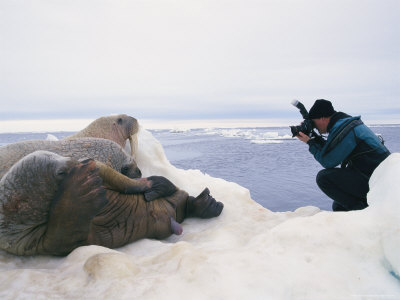
    Paul Nicklen photographing three Atlantic walrusesPaul Nicklen uses his camera to reveal the nature of a world melting away under human-induced global warming. He works for National Geographic magazine.

    “I call myself an interpreter and a translator,” says Nicklen. “I translate what the scientists are telling me. If we lose ice, we stand to lose an entire ecosystem. I hope we can realize through my photography how interconnected these species are to ice. It just takes one image to get someone’s attention.”

    On the website Ted.com he shared some of his amazing stories from the Arctic and Antarctic. He lived with the Inuit for several years as a child, falling in love with the Arctic, and subsequently the Antarctic.

    His pictures are taken both underwater and above water.

    One is particularly amazing, his encounter with a leopard seal where he faced sudden death, but in the end portrayed photos of the seal eating penguins. He formed a friendship with the leopard seal in the ice-cold water.

    Here is Paul’s story and his photos.

  • Oil benefits for Iceland and Faroes

    Oil benefits for Iceland and Faroes

    Oil in the southern part of the Arctic

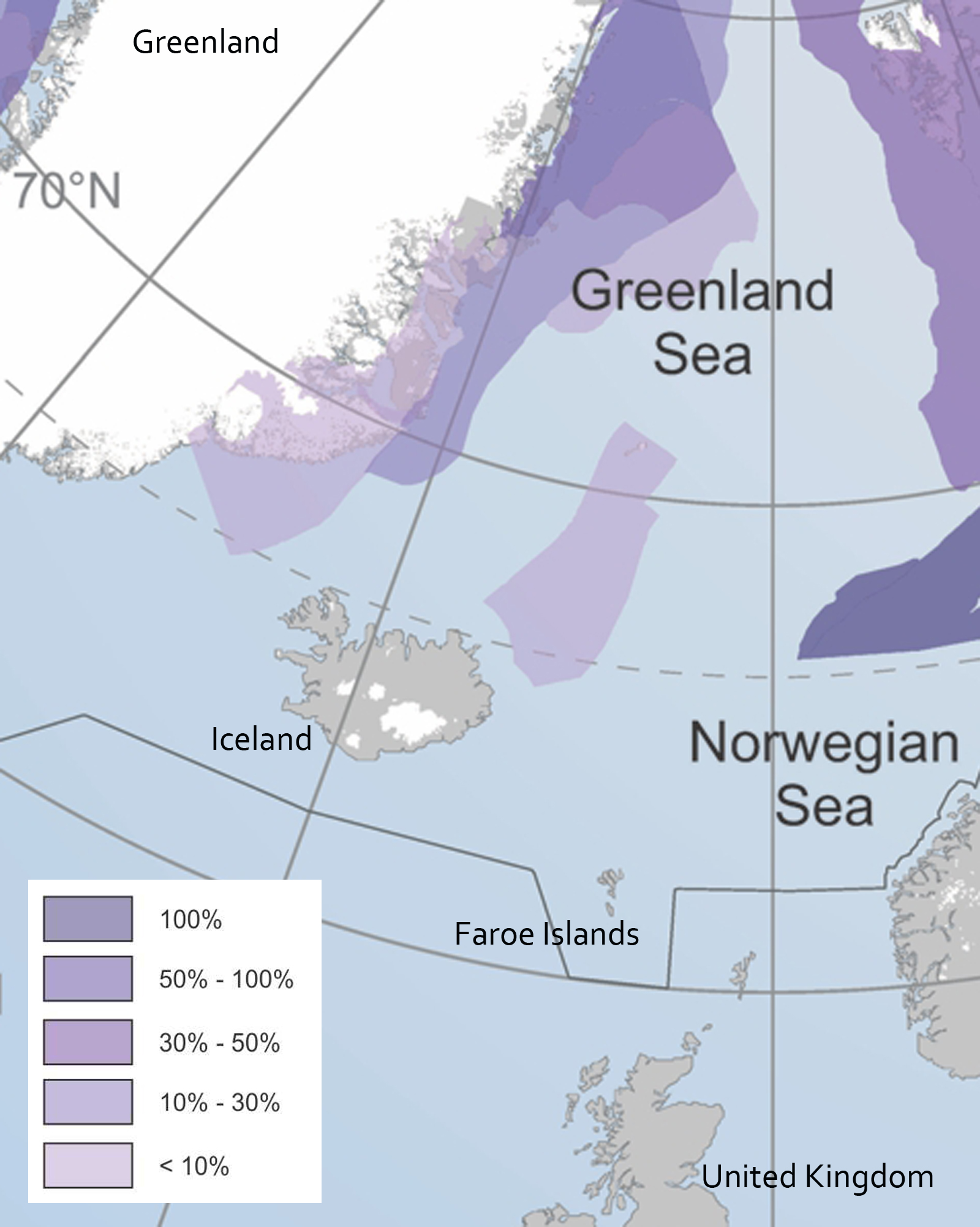
    In the southern part of the Arctic the dream of oil is still alive. Iceland is hoping to find oil in the Dreki area but the crisis hit country could benefit by other means.

    In the eastern part of Greenland lie vast resources of oil.

    Greenlands problem is the countries infrastructure. With scarce population, long distances and gruesome transport, Iceland could be the perfect partner in Greenlands oil adventure.

    The western part of Iceland could use a boost like an oil adventure. Icelandic oil from the Dreki area would also be sent to the Westfjords, if found.

    Greenland is hopeful that oil can be utilized around the year 2020.

    But near the Faroe Islands there is also some hope for oil. South of the Faroes, around the EEZ-lines of Faroes and the UK, utilizing of oil could start as soon as next year.

    With new technology British scientist have reduced the cost of oil utilization of around 30%, making the project feasible, and profitable for UK.

    This could mean the Faroes would get a slice of the oil cake, boosting the small nation’s economy significantly.

    Source: BBC

  • Sea Ice drift

    Map - Sea Ice Drift

    Blocks of sea ice break annually from large ice caps in the Arctic. These blocks of ice can be up to kilometers in width.

    The ice blocks cause problems where they go.

    As the map shows, the largest blocks break off Greenland.

    This causes problems for shipping, especially for smaller ships.

    Blocks of ice melt in time but they have on a few occastions brought polar bears to Iceland, for example. They come from Svalbard and Greenland for the most part.

    In 2008 two polar bears drifted to Iceland, one in 2010 and one in 2011. They were all shot consequenly.

  • Fastest journey to Antarctica confirmed

    Fastest journey to Antarctica confirmed

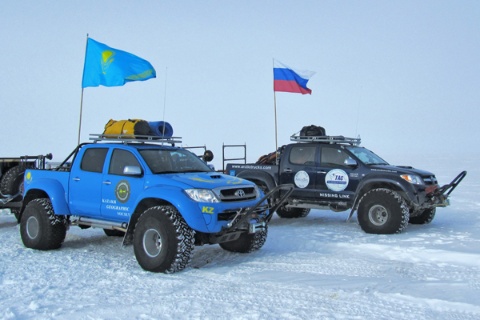
    Antarctic arctic trucks

    Icelandic company Arctic Trucks announced today that a new world record of the fastest overland journey to the South Pole has been officially recognized by Guinness World Records.

    In December 2010 two Arctic Trucks vehicles crossed 2308km of the Antarctica High Plateau from Novolazarevskaya station (Novo) to the South Pole in 108 hours (4.5 days). The purpose-built AT Expedition vehicles, based around a Toyota Hilux platform, traveled at an average speed to South Pole of 21.4km/h and average fuel efficiency of 2.2km/per liter, with only a single refueling stop on the way.

    An unofficial improvement on the record itself was achieved for the return journey, which was faster still at only 3.5 days, averaging 27.5km/h. No comparable speed or fuel efficiency has ever been recorded for high plateau expeditions in Antarctica. Arctic Trucks built vehicles have now clocked over eighty thousand kilometers on the plateau, proving new benchmarks for speed, range, reliability and fuel efficiency for overland travel in this area.

    “This route to the South Pole is extremely challenging. Our vehicles are operating at altitudes up to almost 3500m, in ultra-low temperatures and in very difficult snow conditions. The vast distance is a challenge in itself, with up to 1500km between fuel depots. We are delighted to celebrate this new world record with the team, which also marks a growing recognition of the power of Arctic Trucks solutions for expedition use,” commented Emil Grímsson, Executive Chairman of Arctic Trucks.

    “There is a fast growing interest from customers who are looking to supplement slower, less fuel-efficient tracked vehicles with faster, lighter and cleaner vehicles. We have great respect for the fragility of Antarctica and our vehicles have opened up new possibilities for scientific research programs to operate more efficiently in this environment.”

    The two Arctic Trucks vehicles used for this round trip were both Arctic Trucks Expedition AT44 models. Arctic Trucks designs and builds these vehicles based around the Toyota Hilux 3.0 liter turbo diesel.

    The expedition was organized by the Kazakhstan National Geographic Society (KNGS) and The Antarctica Company (TAC). The core expedition team consisted of Konstantin Orlov and Stanislav Makarenko from KNGS, Andrey Myller from TAC and Hlynur Sigurðsson from Arctic Trucks.

    Four further expeditions to the South Pole using Arctic Trucks vehicles are planned for the season of 2011, three starting from Novo and one from Patriot Hills.

    Source: ArcticTrucks and Guiness World Records.
  • British to melt Antarctica

    British to melt Antarctica

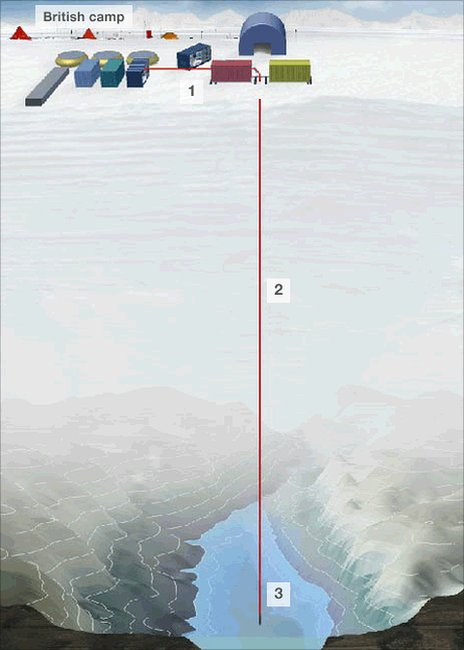
    A hot water drill will melt through the frozen ice sheet

    British expedition is going to Antarctica to search for life. Their plan is to dig, with hot water, three kilometers down the ice.

    The plan is to sample a lake under the ice with hopes to find forms of life, unknown today.

    A bonus is finding clues to future climate change impacts.

    The BBC reports the team is the first to sample a sub-glacial Antarctic lake.

    “Our project will look for life in Lake Ellsworth, and look for the climate record of the West Antarctic Ice Sheet,” said the project’s principal investigator Professor Martin Siegert from Edinburgh University.

    “If we’re successful, we’ll make profound discoveries on both the limits to life on Earth and the history of West Antarctica,” he told BBC News.

    The picture on the right explains how this will be done. The unique equipment is specially made for the assignment, which received 7 million pounds by the UK’s Natural Environment Research Council.

    “This is an unknown environment – we don’t know for example whether there will be dissolved gases in the water,” Matt Mowlem, the designer of the equipment said.

    “So the water at its pressure of 300 atmospheres will be sampled. But when we pull the probe up and the flasks hit the cold air in the borehole, the water will try to freeze; the pressure then increases to around 2,700 atmospheres, and that’s greater than anything experienced in ocean engineering.”

    Once the probe has been hauled up, a coring device will be lowered down the borehole to take samples of the lake floor sediment.

    Click here to see a video of the story by BBC.

  • New truck for Antarctica

    New truck for Antarctica

    Arctic Trucks

    Icelandic company Arctic Trucks has finished building a new six wheeler truck, specially made to drive in the Antarctic. The foundations are a Toyota Hilux.

    The car has enormous amounts of carrying capacity, a unique torqueand exstensive mileage but still spends less fuel then compatible vehicles.

    This is not the first time the Icelanders have made a car for the Antarctic, by no means. They have already led successful expeditions to the South Pole.

    Arctic Trucks has also been in Greenland, in Dubai and even drove to the Magnetic North Pole with famous British TV show Top Gear.

    Arctic Trucks

  • Russia puts €10 million in clean up

    Russia puts €10 million in clean up

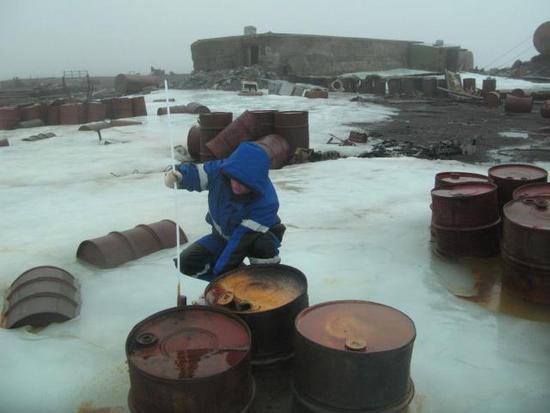
    Hundres of thousands of old barrels with waste-oil on Franz Josef Land

    Russia has put 10 million Euros into a project aiming at cleaning the Arctic. Environmental issues are high on the Russian Arctic agenda.

    “We want the Arctic to be clean,” says Yuri Trutnev, the Minister of Natural Resources and Environment in Russia.

    The Arctic Council has priority project regarding the Arctic environment and the 10 million Euros go into that pot, especially projects which concern pollution prevention.

    NEFCO (Nordic Environment Finance Corporation) will manage the funds and Magnus Rystedt, the Managing Director, was very pleased with Russia’s contribution.

    “We are extremely delighted with the fact that the Russian government is taking an active role in supporting environmental protection in the Arctic region. The financial boost provided under this agreement will enable us to finance a wide range of environmental projects in the Russian
    Arctic within the near future,” Rystedt said.
    Source: BarentsObserver

  • No tourism at the North Pole 2012?

    Yamal icebreaker at the North Pole

    Lack of icebreakers will most likely halt any tourism activity by cruise ships on the North Pole next year. Because of increased traffic by Russian vessels in the Northern Sea Route the icebreakers have enough to do.

    Director for Fleet Operations in Atomflot, Andrey Smirnov, has confirmed this in the Russian media.

    Russia wants to increase its traffic even more next year but lack of icebreakers and ships who are specially strengthened for sailing in ice covered waters will hinder traffic to the North Pole.

    According to Prime Minister Vladimir Putin, Russia plans to spend RUB 20 billion for the construction of a new nuclear-powered icebreaker in the near future. Funds have also been allocated for the construction of three shallow-draft diesel-powered icebreakers which, because they are part of a newer and more advanced class, will be able to replace five old vessels.

    According to Smirnov tourist cruises in the Arctic are only profitable if there are no less than two-three cruises per season: – One single cruise does not pay off.

    Cargo transport through the Northern Sea Route is expected to skyrocket in course of the next decade. Russia’s Ministry of Transport believes cargo transport through NSR will increase from last year’s 1.8 million tons to 64 million tons by 2020.

    Russian icebreakers have been transporting tourists to the North Pole for 20 years. The agency selling trips to the North Pole has already scheduled a trip with the largest of the Murmansk-based icebreakers, 50 Years of Victory,
    for the summer of 2012, the Barents Observer reports.

  • Cod expands and heads north

    Cod expands and heads north

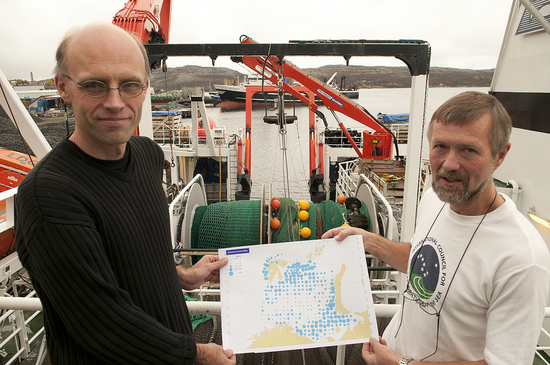
    Marine researchers Bjarte Bogstad and Harald Gjøsæter show map of cod stock dissemination in the Barents Sea

    The cod is moving further north then ever before. Huge amounts of cod have been found northerly in the Barents Sea, as far north as 82 degrees much to researcher’s surprise.

    Russian and Norwegian cooperation in the Barents Sea continues and their newest found is surprising to them.

    “We have never before seen such large amounts of cod so far north in the Barents Sea as this year,” they said according to the Barents Observer.

    The two researchers Bjarte Bogstad and Harald Gjøsæter from Norway completed a survey for 2011 recently.

    The comprehensive research in the Barents Sea found more cod then normal and that it also spread over larger areas.

    The reason is connected to a record high stock of capelin in the northern Barents Sea as well as higher sea temperatures.

    “Sea temperature this autumn is considerable colder than last summer, but still way higher than the average over the last 40 years, explains expedition leader Gjøsæter

    But will this result to higher quotas of cod? “Huge cod stock and widely dissemination all round the Barents Sea does not necessarily mean that we will recommend higher quotas next year,” says Gjøsæter.

  • Arctic ozone hole confirmed

    Arctic ozone hole confirmed

    arctic ozone

    An ozone hole has formed over the Arctic. Like in the Antarctic so much ozone has dissolved it can now be called an “ozone hole”.

    The BBC reports that scientist have calculated that at 20 kilometers above ground a total of 80% of the ozone is lost.

    The cause was an unusually long spell of cold weather at altitude. In cold conditions, the chlorine chemicals that destroy ozone are at their most active.

    “Winter in the Arctic stratosphere is highly variable – some are warm, some are cold,” said Michelle Santee from Nasa’s Jet Propulsion Laboratory (JPL).

    “But over the last few decades, the winters that are cold have been getting colder.

    “So given that trend and the high variability, we’d anticipate that we’ll have other cold ones, and if that happens while chlorine levels are high, we’d anticipate that we’d have severe ozone loss,” Santee said.

    Read more on Nature website here.