Blog

  • Dreki area exploration offers opened

    Dreki area exploration offers opened

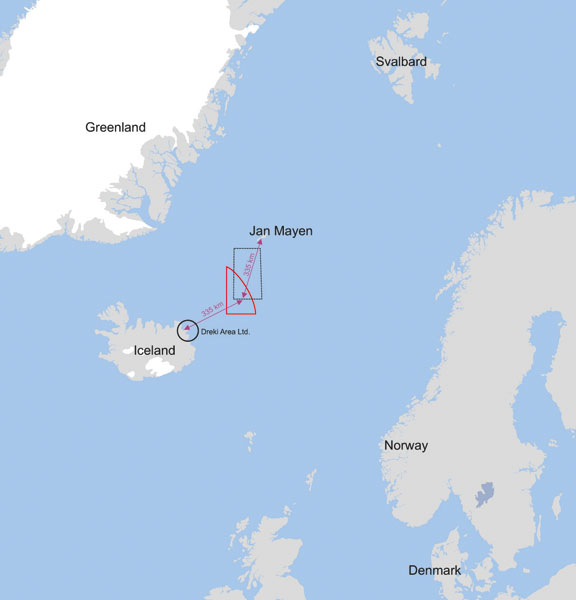
    Dreki Area map

    The National Energy Authority of Iceland (NEA), has today, announced the second Licensing Round for hydrocarbon exploration and production licences on the Icelandic Continental Shelf. The offer will be open from October 3, 2011 until April 2, 2011.

    The blocks on offer in the Second Licensing Round are located in the Dreki Area, northeast of Iceland. The area covers 42,700 square kilometers. Water depths range mostly from 800-2000 meters, which is well within the reach of currently available and tested technology for undersea oil drilling.

    Seismic surveys and other geophysical measurements indicate that oil and gas could be found in the Dreki Area as they have been in adjacent and geologically similar areas. Further research, including exploratory drilling, is necessary to verify whether oil or gas exists in the Dreki Area.

    There will be stringent requirements on security and work safety as well as on environmental protection similar to the requirements in the neighbouring countries. Use of the best available technology will be demanded to reduce the environmental impact and risk of accidents and mishaps.

    A Strategic Environmental Assessment has been completed for the Dreki Area and considerable research has been done on the marine biosphere, climate and sea conditions in the area. There is no danger of sea ice under present climatic conditions and the wave heights are lower than off the west-coast of Norway. This research is important in evaluating the impact of oil exploration. No major obstacles were found to oil exploration.
    Source: NEA

  • ICC sues the United States

    The Inuit Circumpolar Conference

    The Inuit Circumpolar Conference (ICC) provides a major international collective voice for more than 155.000 Inuit from Alaska, Canada, Greenland and the Chukotka Peninsula. On behalf of people in Alaska the ICC in 2005 filed a legal petition against the government of the United States of America, saying its climate change policies violate human rights.

    The ICC claimed the USA failed to control emissions of greenhouse gases, which damaged the livelihood in the Arctic. It demanded that the US limited its emission

    The lawsuit was against the USA because it is the largest emitter of greenhouse gasses in the world, and it has refused to sign and ratify the Kyoto protocol. When filing the petition Ms. Sheila Watt-Cloutier, then the elected Chair of the ICC said this:

    “We submit this petition not in a spirit of confrontation—that is not the Inuit way—but as a means of inviting and promoting dialogue with the United States of America within the context of the climate change convention. Our purpose is to educate not criticize, and to inform not condemn. I invite the United States of America to respond positively to our petition. As well, I invite governments and non-governmental
    organizations worldwide to support our petition and to never forget that,
    ultimately, climate change is a matter of human rights.”

    As she said, the purpose is to educate, and that is exactly what the lawsuit did. The ICC lost but it gained huge reaction from the public about climate change and what it was doing to the lifestyles of indigenous peoples.

  • The Cree in James Bay

    Map of James Bay and Cree communities

    The Cree just make it into the Arctic; they are on the border of the line made in the Arctic Human Development Report. They live in James Bay, which is a region of northern Quebec, in the northeastern part of Canada.  Its area is a vast wilderness area and can only be reached by a single road. The remoteness is immense.

    The James Bay Cree count around 12.000 people who live in nine communities from 550 in population to around 3300, the Chisasibi. The fewest live in Nemaska, 560 in total.  Much like in the Arctic region as a whole, the population has been growing.

    This has resulted in a change for the Cree, especially regarding food. With more population they have adjusted by importing more food so they would not harm the environment and endanger stocks of species they hunt.

    The Cree have lived off their land for 9000 years for food and resources. Among other they hunt geese, ducks, moose’s, beavers, otters, lynxes, fish, beavers, muskrats and waterfowls.

    They speak their own dialect but have learned English in schools. Their dialect is only one of few indigenous people’s languages in Canada which is not in endangerment due to few speakers. The majority of the Cree are Christian and they emphasize egalitarianism.

    They respect the competence and needs of the individuals and in their world humans and their societies are a part of the universe. It is made up of social beings. Animals are willful beings and phenomena and objects as well.

    For the Cree their main problems are regarding forestry clear-cutting, pollution of the land, the movement to declare the province of Canada a country separate to Canada and the one that made the Cree famous amongst indigenous peoples around the world, and a true example for them, the hydro projects.

    The shock of one of the biggest hydropower projects in the backyard of the Cree must have came as a shock to the people, learning from it in newspapers in 1971. “I feel like I have been punched,” one of them said about the decision.

    They started a campaign against the project but it was too little and too late. A court case in the years 1972-1973 stopped work on the hydro project for a short time but in the end the project started again and was completed. In 1975 the Cree signed a treaty, the James Bay and Northern Quebec Agreement,  giving the Cree ownership rights to areas around their communities, exclusive hunting and fishing rights over a large territory, regional self-government powers, cash compensation and other privileges, in exchange for allowing Hydro-Quebec, the power company, to proceed with development.

    The Cree benefitted from the project in other ways. Hydro-Quebec invested heavily in infrastructure in the area so the Cree gained more social welfare and health care for example.

    They were pioneers in seeking their rights for the land they have lived on for thousands of year as indigenous people. They became leaders in the struggle to gain international rights and an example for others. As well as gaining symphony from the rest of Canada and people all over the world because their land was being destroyed for electricity, the Cree raised awareness in nature and the roles of humans in the environment. The Cree raised discussions by the public and gained much attention and raised questions about large development projects.

    Change in the Arctic has been and remains constant. Not only are there changes in the nature but for the people in the Arctic as well. Often these go together as earlier stated about Greenland. The culture and society of the Cree has been changing like most indigenous societies in the north. I think they adapted to circumstances, learning how to live of the land as it changed. It a species came in, they learned how to hunt if they could and would, with Moose for example.  Because of that, as I states in the text, change itself is not a threat to Cree. They have adopted very well, for example with the growing population and import of food.  Some indigenous people have died out because of changes, the Arctic Human Development Report (AHDR) states.

    The Arctic Human Development Report says that human colonization in the Arctic is comparatively recent; it started at least fifteen millennia ago. From what I have learned, there are two major changing points for the Cree. First was the introduction of colonization of Europeans in the 17th century. The Europeans wanted fur and the Cree became dependant on the Europeans for steel tools, cloth, guns and powder which they used for hunting for the fur and later food like tea, flour and.  The World War II changed many things in the Arctic and for many cultures; totally new living habitants and concepts were introduced. That was the case with the Cree. After the Second World War, fur prices fell. That meant dramatic transformation in the social-economic organization of the Cree.

    Decreasing fur prices altered the function of the posts and the Cree had to settle in the government sponsored communities. They became the centers for schools, medical aid, family-allowance cheques, and subsidized housing. This further increased the number of Cree living near the posts. The villages, however, lacked a Cree identity. This is very much in line what happened elsewhere in the Arctic. The AHDR states that mandatory school education was introduced after the war and many children had to move to border schools to get education. The Cree were the same, they were unhappy about letting the children go and minimizing the use of their lands, but in the same time they did want their children to go to school. The Cree learned English in schools, which they gained very much from. The AHDR also states that health care vastly improved in the Arctic, which was the case with the Cree, and the same with wage employment and cash economy.

    As mentioned earlier, the villages lacked a Cree identity, but the Cree always stood by their use of the land, even when the government told them that hunting was a dying way of life. The government stated that energy resource industries, mining and forestry were the future. The Cree disagreed. They did not want that, unlike Greenlanders for example who rely heavily on hydropower. The government has failed miserably and the Cree are many unemployed. Only five members of the Cree wanted to work for the Hydro power project in their own land. The AHDR states that it was common in the Arctic that symbolic values were being maintained or even increased after WWII, which is exactly what happened with the Cree. They never stopped hunting, even if it was not theyr sole living bread.

    The trading posts created a new generation of Cree´s, based on the young generations who went to school together. New communication was introduced, joint decision making with the establishment of the Grand Council of the Cree and new regional leadership.

    The second thing as a major change for the Cree was the signing of the James Bay and Northern Quebec Agreement in 1975. That gave the Cree money which they used to change. They used some of the compensation fund for agreeing to the Hydro project to be completed to purchase several businesses. That included a regional airline, a construction company, community buildings and food and dry good distributor. That led to a new society that changed and suddenly restaurants were opening, taxi services, gas stations and even hardware stores. I think this is a key in the history of the Cree, how they used the government money.

    Drivers for social and cultural change are amongst others technological innovations, and contacts with other populations, according to the AHDR. This is what happened for the Cree after the agreement was signed. They gained more technological awareness and because the constructor of the hydro project had to build, on demand from the Cree, new roads, that led to more contact with other populations.

    The Cree felt autonomous when they could use their land. That was under threat in the Hydro projects.

    They value their autonomy and have shown how they have taken steps toward even more autonomy with the changes in their culture. To be autonomous you have to be self-sufficient, and the Cree are making their way.
  • Deadline for IPY 2012 abstracts has been extended to October 7, 2011

    International Polar Year 2012 Conference

    The IPY 2012 From Knowledge to Action Conference abstracts deadline was initially today September 30, but has been extended to October 7, 2011 11:59 PM, EST. To submit your abstract, please go to the IPY 2012 Montréal homepage.

    Students and early career scientists note also, that the deadline for student and early career scientist travel support applications is still September 30, 2011. So, to apply for travel support to the conference, please hurry up!

  • Norwegian professor position in Akureyri

    Norwegian professor position in Akureyri

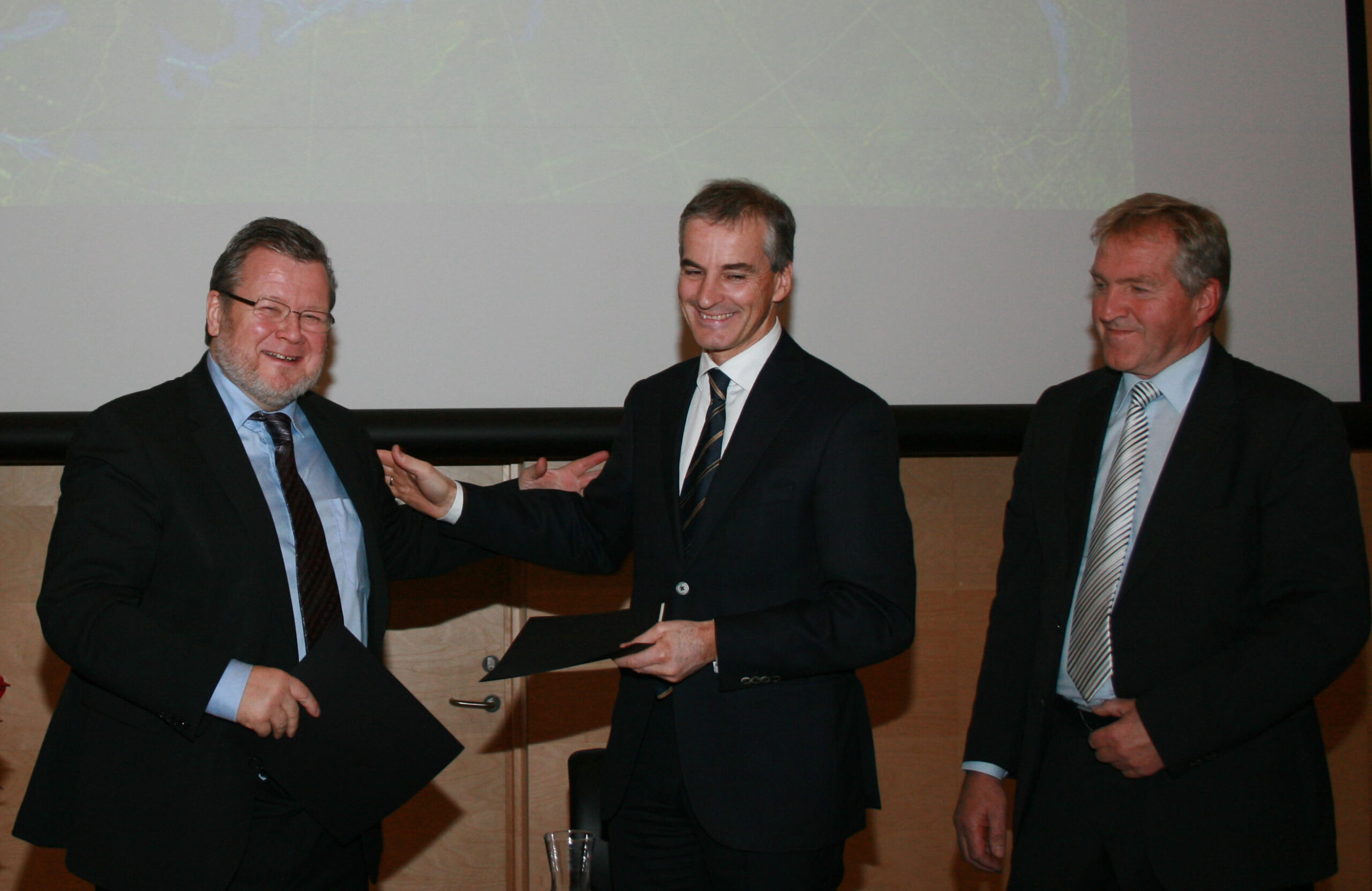
    Össur Skarphéðinsson, Mr. Jonas Gahr Störe and Mr. Stefán B. Sigurðsson, rector of the University of Akureyri

    Ministers of foreign affairs from Norway, Mr. Jonas Gahr Støre, and of Iceland Mr. Össur Skarphéðinsson, signed a memorandum yesterday about increased cooperation in Arctic issues between the two states.

    The ministers stressed the importance of cooperation between the two states, which have a rich history already. 

    The memorandum was signed yesterday afternoon in Hof cultural house in Akureyri. The University of Akureyri hosted the event along with the ministry of foreign affairs in Iceland.

    The memorandum includes a new professor position at the University of Akureyri, entitled the Nansen  position, named after famous explorer Fridtjof Nansen.

    Norway will finance the position which is yet to be advertised.

    The memorandum also includes more student exchange between UNAK and the University of Svalbard.

    Mr. Støre stressed that Norway hoped for a closer cooperation with Iceland, and this was a good step towards that.

    “We are both Arctic states by the Atlantic Ocean and are responsible for a correct development in the Arctic. The history of the countries is closely tied together and this encourages us to step together into the future together,” Mr. Støre said.

  • Open meeting in Akureyri

    Open meeting in Akureyri

    Jonas Gahr Støre and Mr. Össur Skarphéðinsson

    Ministers of Foreign Affairs of Norway and Iceland will meet together in Akureyri this week.

    Mr. Jonas Gahr Støre and Mr. Össur Skarphéðinsson will attend an open meeting in Akureyri on Thursday 29th of September.

    Thee meeting is at Hof cultural house and starts at 15.

    It is in the honour of the science cooperation in Arctic issues which the ministers will sign.

    After the meeting an exhibit on Arctic explorer Friðþjóf Nansen will be opened.

  • Arctic Fishing Library

    Fin Whale decomposing on an island off Nuuk, Greenland

    Here is extensive data about Arctic fishing. Below is a list of documents of high importance and easy access to the Arctic Portal Data Library gives an even broader dimension to search for more fishing data.

    Important document:

    FAO: The State of World Fisheries and Aquaculture

    E. U Common Fisheries Policy


    United Nations Convention on the Law of the Sea of 10 December 1982


    1995 United Nations Fish Stocks Agreement


    Background Paper – Arctic Fisheries
    from Arctic Transform

    Arctic Portal library

    The Arctic Portal Data Library
    The objective of the Arctic Portal Library is to maintain a comprehensive collection of Arctic relevant scientific and educational material. Click here for more data about Arctic fisheries.

  • Case Study: Phytoplankton causes overgrazing of kelp

    Sea urchin

    The delicate web of the Arctic biosphere is complex and one small change can have big affect.

    One of the main effects of the warmer sea surface temperatures was a suppression of phytoplankton productivity, which led to reductions in shrimp, crab, and populations of smelt fish, such as capelin.

    Other fish populations, particularly cod and pollock, increased at the same time.) The reduced numbers of smelt may have led to declines in the numbers of Steller’s sea lions and harbor seals, which were one of the main food items for killer whales.

    The declining numbers of sea lions and seals apparently led to increased predation on sea otters by killer whales, resulting in a drastic reduction in the population of Alaskan sea otters of more than 70%. These low sea otter numbers allowed sea urchins (a major part of the sea otter diet) to proliferate.

    Sea urchins feed on kelp, so the kelp forests in the Gulf of Alaska and the Bering Sea were overgrazed, which affected all of the organisms associated with the kelp, including seabirds like puffins and kittiwakes.

    Note: The Gulf of Alaska and Bering Sea fisheries are the largest in the United States, and some researchers also blame overfishing for the decline in marine mammal populations. Because of the climatic regime shift, it is difficult to conclusively determine the primary cause.

    One small change can have effects to the largest of creatures and those again can have affect on the smallest of creatures. This causes failure in harvesting of one species, but can have positive affect to another. Valuable commercial fish like Cod and Pollock lose their juvenile habitats due to increase in Sea urchins, but again, harvesting of Sea urchin roe might become a substitute economical activity.

    Source: NASA

  • UArctic to produce next generation of polar researchers

    UArctic to produce next generation of polar researchers

    Lars Kullerud and Yelena Kudryashova

    The University of the Arctic’s research Office will be the place to find the next generation’s polar researchers, famous polar researcher Artur Chilingarov has stated. The formal opening of the office was at the International Arctic Forum in Arkhangelsk.

    Chilingarov is the Russian President’s special aide on Arctic and Antarctic affairs is appointed scientific leader of the University of the Arctic’s first research office.

    UArctic President Lars Kullerud sees the establishment of a research office as a critical step in creating a collective capacity for UArctic members to coordinate northern research.

    “Our goal is to educate students from northern universities for future positions in the Arctic Council and other international institutions,” said UArctic President Lars Kullerud at the opening.

    UArctic is a cooperative network of universities, colleges, and other organizations committed to higher education and research in the North. UArctic has members more than 140 member institutions in all eight Arctic states.

    The members share resources, facilities, and expertise to build post-secondary education programs that are relevant and accessible to northern students.

    UArctic is a decentralized organization, with offices, programs and other functions hosted at member institutions in the Circumpolar North. The administration is located at the University of Lapland in Rovaniemi, Finland. But until now the network has not had its own office for research.

    The University of the Arctic and Arctic Portal work close together on numerous projects.

  • Rabies intrudes Svalbard

    Rabies intrudes Svalbard

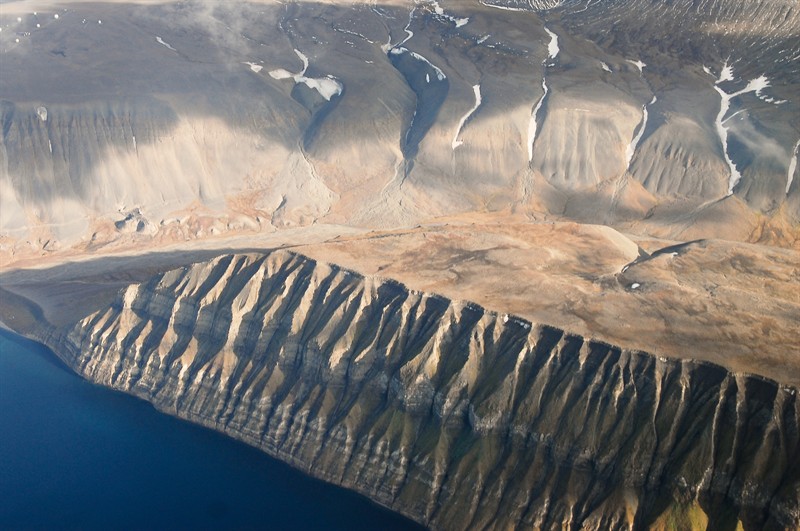
    Svalbard

    Rabies has been found in a polar fox and two reindeer in Svalbard. The archipelago has never before seen the disease which can be deadly for humans if infected.

    The disease can be infected by bite or other means and therefore the Governor of Svalbard has urged the public to avoid contact with dead animals or any animals that are behaving abnormally.

    At present, seven people have been administrated post-exposure prophylaxis. No human cases of rabies have ever been diagnosed in the area. The hospital in Longyearbyen offers rabies vaccination to the population

    Svalbard has a population of 2.700 people of which 2.200 are in Longyearbyen and some 500 in the Russian settlement of Barentsburg.