Blog

  • President of Iceland opens the Summit

    President of Iceland opens the Summit

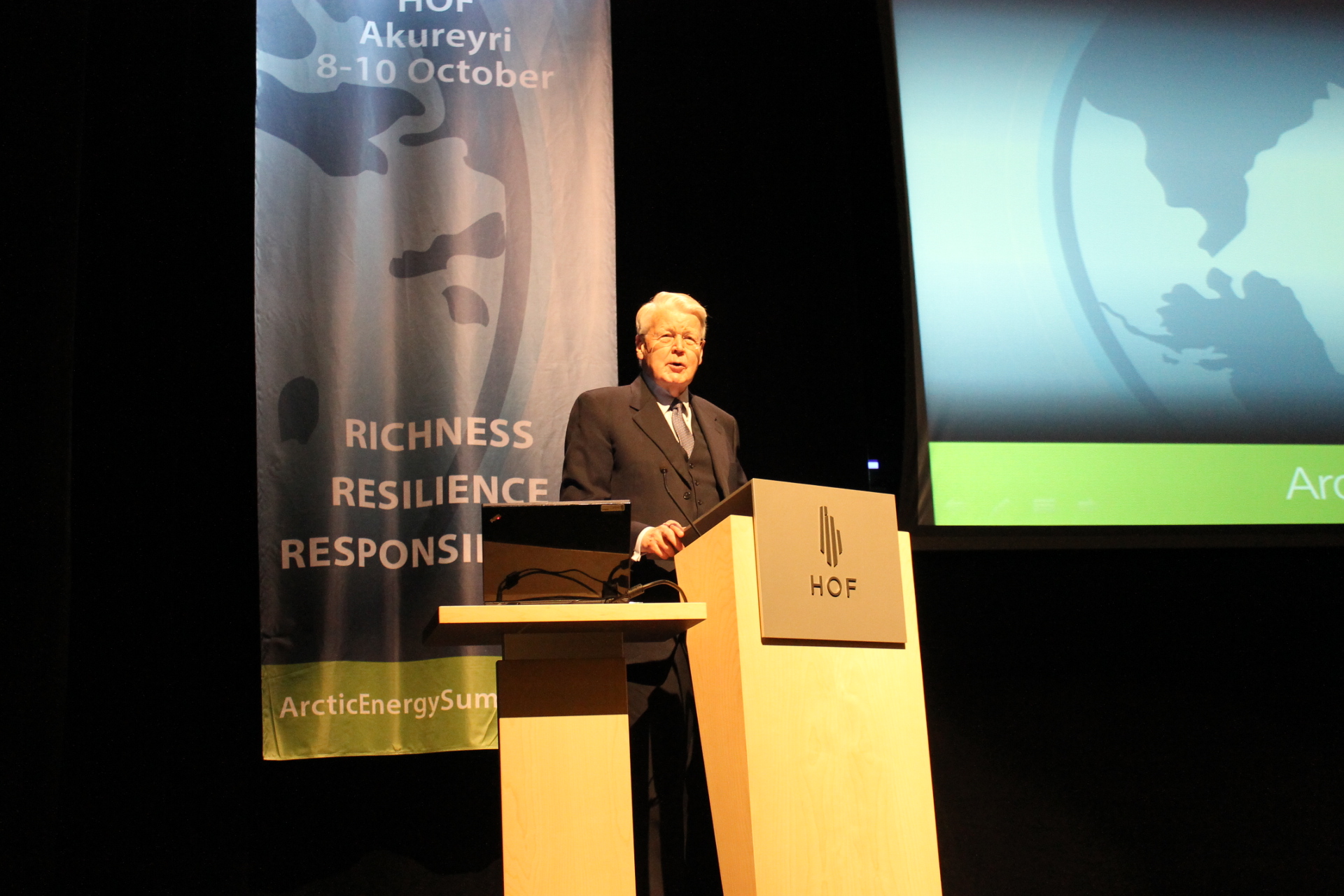
    President of Iceland, Ólafur R. Grimsson at the Arctic Energy Summit

    Participants of the Arctic Energy Summit have arrived in Akureyri to participate in the long expected Arctic Energy Summit.

    President of Iceland, Mr Ólafur Ragnar Grimsson has honored the event with his presence and the excellent speech.

    Mr Grimsson highlighted the need for international cooperation and development of green energy policy in the Arctic states.

    President of Iceland invited participants to join the annual Polar Law Symposium that starts on Friday at the University of Akureyri and the Arctic Circle, where conclusions from Arctic Energy Summit will be presented at the opening session.

    The Arctic Energy Summit is being live streamed from the conference venue.

  • Pre – conference events start today

    Pre – conference events start today

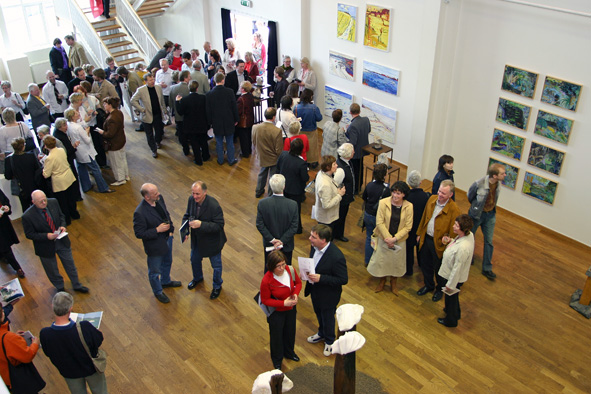
    Ketilhús in Akureyri

    The Arctic Energy Summit is about to start. Participants from all over the world are arriving to Akureyri in order to participate in an international Arctic energy conference.

    Conference guests will be offered local food and beverages along with renowned Icelandic music. Local companies and organizations will be in place to introduce their Arctic – related activities. Held in a local art exhibition Ketlihús, Icelandic art will also be presented.

    The event is open and free of charge for all conference guests.

    The Arctic is sometimes described as the last frontier in the development of energy resources. The Institute of the North’s Arctic Energy Summit will explore energy as a fundamental element of the sustainable development of the Arctic as a lasting frontier.

    Central to this concept is how a focus on richness, resilience and responsibility will provide a pathway for sustainable energy development in the Arctic and for Arctic communities.

    The 2013 Arctic Energy Summit is a multi-disciplinary event expected to draw several hundred industry officials, scientists, academics, policy makers, energy professionals and community leaders together to collaborate and share leading approaches on Arctic energy issues.

  • N4 streams live from Energy Summit

    N4 streams live from Energy Summit

    Arctic Energy Summit

    The Arctic Energy Summit is just few days away. Organizers realize that some of you who have interest in Arctic energy issues will not be able to participate in the event.

    Thanks to N4, all three conference rooms will be streamed live. Live picture for the event will be available on the conference website. Click on the link on Tuesday the 8th of October to watch it live.

    The Arctic Energy Summit that will take place in Akureyri, northern Iceland aims to be an interactive and meaningful exchange of knowledge and experience between the participants that will result in practical recommendations for Arctic Council´s Sustainable Development Working Group for whom the project is endorsed.

  • 6th Polar Law Symposium starts soon

    6th Polar Law Symposium starts soon

    Participants of the 5th Polar Law Symposium

    6th Polar Law Symposium will start on Friday, 11th of October at the University of Akureyri, northern Iceland.

    This year´s agenda will include sessions on Arctic politics and law. It will concentrate on new opportunities and the role of the Arctic Council in governance of the Arctic Region.

    The panel on management of Arctic natural resources will concentrate on current situation in Greenland as well as indigenous knowledge of wilderness protection and management in the High North.

    For the first time Polar Law Symposium will tough upon the topic of civil – military operations in the Region.

    Lot of time will be dedicated into human rights and rights of indigenous people as well as the law of the sea.

    Since September 2008, Symposiums dealing with the emerging legal issues regarding the Polar areas have been held annually.

    The former Symposiums gave important inputs to the discussions regarding the issues of the Polar areas. An overview of the former Symposiums can be accessed below where topics, speeches and speakers are enumerated.

    View detailed agenda of 6th Polar Law Symposium.

  • Arctic Futures Symposium coming soon

    Arctic Futures Symposium coming soon

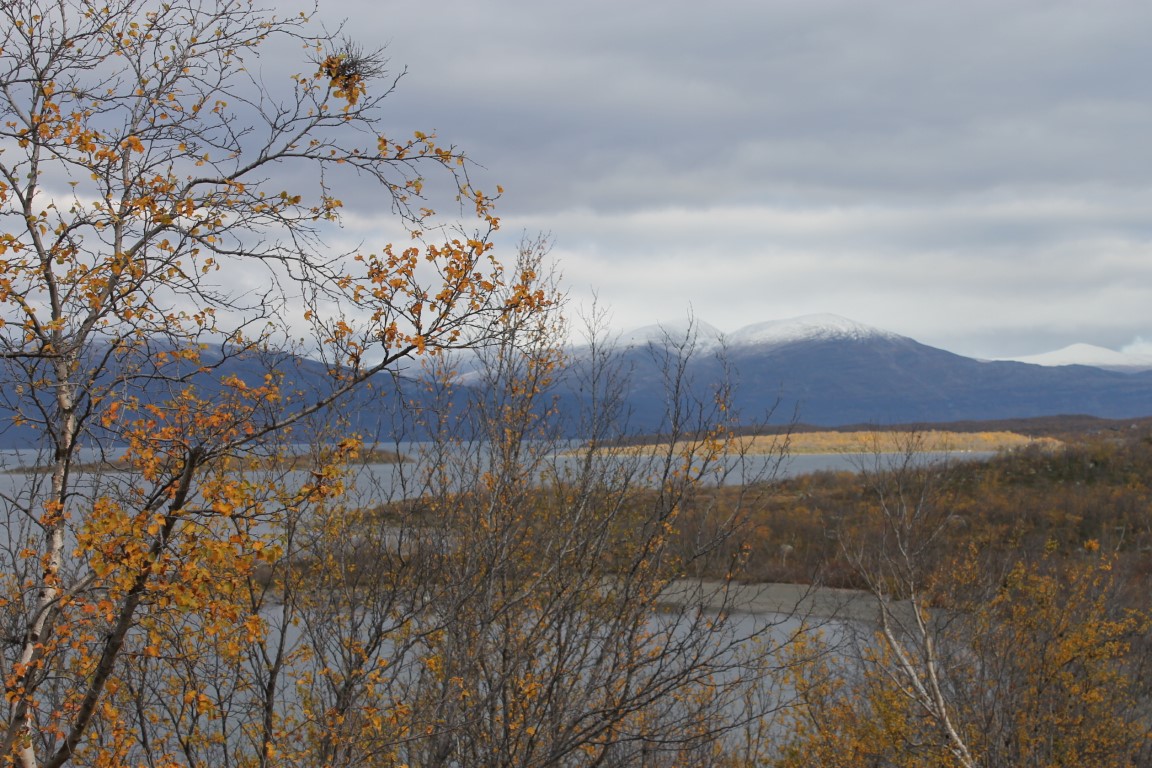
    Autumn in the Arctic. Abisko, northern Sweden

    Following three highly successful editions, this year´s Arctic Futures Symposium will take place in Brussels on 16th – 17th October.

    The event will be held over two days and it will focus on responsible Arctic resource development. The conference will tough upon safe Arctic shipping, sustainable Arctic communities and communication of scientific research to politicians and policy makers.

    Symposium´s themes reflect Canadian Arctic Council chairmanship priorities: ´´Development for the People of the North´´.

    Established in 2010 to raise public awareness of important developments in the Arctic Region, the annual Arctic Futures Symposium has become an essential venue for promoting ongoing dialogue between Arctic stakeholders and the empowerment of inhabitants of the Circumpolar North.

    To read more about the event, please follow the link.

    Arctic Futures Symposium from International Polar Foundation on Vimeo.

  • Arctic Frontiers 2014 Call for papers

    Arctic Frontiers 2014 Call for papers

    Hunter in the arctic

    Arctic Frontiers holds its 8th annual conference in Tromsø, Norway, from 19-24 January 2014, with the title: Humans in the Arctic.

    The Arctic Frontiers conference is a central arena for discussions of Arctic issues. The conference brings together representatives from science, politics, and civil society to share perspectives on how upcoming challenges in the Arctic may be addressed to ensure sustainable development.

    Arctic Frontiers 2014 will address two main themes: I) Health, Environment and Society, and II) Offshore Maritime Challenges.

    Health, society and environment

    The environment of the Arctic is changing, and this affects the conditions for humans living in the Arctic for better and for worse. Climate change will lead to less ice and permafrost and thus, increased tourism, fishing, petroleum activities and mining.

    These activities in the High North will give opportunities and impact socio-economy, demography and traditional lifestyle as well as increase contamination and disturb the natural environment. The cumulative impact may affect life, wellbeing, culture and ultimately the health of people living in the region. Healthy adaption to the changes must be planned.

    The latest advances in technology and innovative communication are potentially very effective tools with which to reduce risk related to living and working in the Arctic and also maximize the benefits, thus ensuring sustainable development. How can this be done? Arctic Frontiers 2014 will address the scientific challenges ahead.

    Offshore Maritime Challenges

    The growth in offshore petroleum activities in the Arctic and the renewed interest in cargo transport north of the American and Eurasian continents require improved or new logistic and transport solutions, better guidance to ships and an extended emergency response service including Search and Rescue (SAR).

    This is also the case for increasing tourism and fishery activities in the Arctic. A wide range of challenges are facing the operations due to the extreme distances, climatic and weather conditions, as well as winter darkness. Low temperatures, summer fog, long distances to shore-based resources require a robust communication infrastructure, new warning systems, survival kits, lifesaving equipment, rescue units and operating procedures. The aim of the conference is to discuss these arctic challenges, and to present innovative and viable solutions in order to reduce risk, build resilience and secure commercial operations.

    We invite you to submit an abstract within any of these four parts. All abstracts will be reviewed by members of the four scientific committees for rating of abstract quality and presentation content.

    Four parallel parts will be discussed:

    Health, society and environment

    Live, work and stay healthy in the Arctic

    Health & Environment in the Arctic

    Offshore Maritime Challenges

    Shipping & Offshore in the Arctic

    Arctic Search and Rescue (SAR)

    Interested scientists are invited to submit abstracts to one of these four sessions for both oral and poster presentations.

    Arctic Frontiers is composed of a policy section and a scientific section. This call for papers addresses only the scientific section from 22 January to 24 January 2014.

    The Call for Papers closes on 21 October 2013.

    For more information and online registration, download the complete Call for Papers on the Arctic Frontiers homepage


  • Poles Apart to take place in London

    Poles Apart to take place in London

    Melting Arctic ice

    “Poles Apart” – the one day conference will take place on Tuesday, October 29th 2013 in London, United Kingdom.

    The resource rich Arctic has been changing faster than any other region on Earth. Due to climate change, melting Arctic sea ice brings summer floats and sets alarm bells for environmentalists but opens doors of possibilities for investors in trade and development.

    Poles Apart, one – day international conference was designed to bring together representatives of various types of industries and scientists – polar researchers.

    The event will take place in the heart of Europe – London, United Kingdom at The Royal United Services Institute.

    Conference is free of charge for all participants however it requires earlier registration due to limited space at the conference venue.

  • Polar Law Textbook II

    Polar Law Textbook II

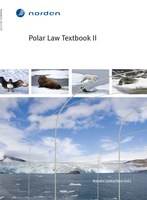
    Polar Law Textbook

    Polar Law Textbook II
    Natalia Loukacheva (ed.), Copenhagen: Nordic Council of Ministers

    Publication date
    May 27, 2013

    ISBN
    978-92-893-2550-9

    Language
    English

    Number of pages
    303

    Publication number
    TemaNord 2013:535

    This pioneering educational material deals with various legal and political developments in relation to the Arctic and Antarctica.

    This new textbook reflects on changes that have taken place since 2010 in Polar law and focuses on actual questions of: major trends in polar law, geo-politics, security, climate change, marine biodiversity, polar bears agreement, continental shelf, energy, indigenous peoples, search and rescue agreement, devolution in the North, self-determination of small nations (e.g., Faroe Islands), good governance and tourism.

    Polar Law Textbook II can be downloaded at NORDEN website or purchased from the NCM.

    This publication is endorsed by the Arctic Cooperation Program of the NCM and Polar Law Program, University of Akureyri, Iceland www.polarlaw.is For further info pls. contact: Dr. Natalia Loukacheva, the First Visiting Nansen Professor of Arctic Studies, University of Akureyri, Iceland n.loukacheva@utoronto.ca

    (written by: N. Loukacheva)

  • Putin speaks at the Arctic Forum

    Putin speaks at the Arctic Forum

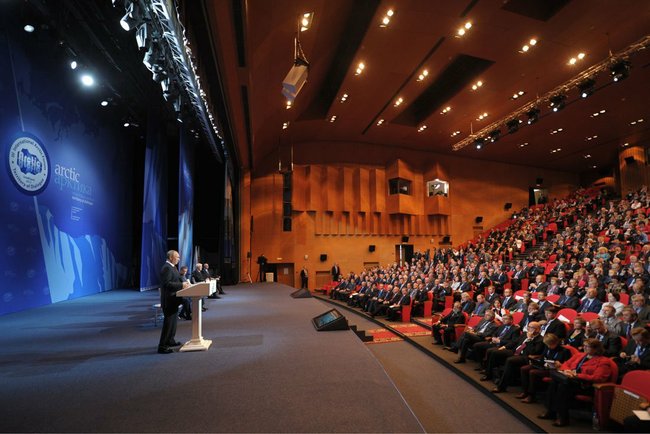
    Putin during his speech.

    President of Russia, Vladimir Putin, held a speech at the third international Arctic Forum, in Salekhard. The first such forum was held in Moscow in September 2010, the second – in Arkhangelsk in 2011.

    Click here for the Arctic Portal mapping system

    The main theme of the current forum is environmental security. The forum participants will discuss possible scenarios of climate change in the Arctic, the current level of pollution, the impact of its industrial development on indigenous peoples and a number of other issues.

    Taking part in the third international Arctic forum will also be President of Finland Sauli Niinist, President of Iceland Olafur Ragnar Grimsson, Russian Defence Minister Sergei Shoigu and many others.

    “Today more than ever, the Arctic needs particular care and attention. Russia, where the Far North regions make up almost a third of the country’s territory, is conscious of its responsibility for preserving the Arctic’s environmental stability,” Putin said in his speech.

    “Many of you here today know that we have adopted the Arctic Environmental Protection Strategy. We are using it as the base for drafting our State Programme for the Russian Arctic’s Social and Economic Development until 2020.”

    President Putin also underlined Russis intentions to clean up the Arctic, and said that the federal budget allocated 45 million US dollars to the cleanup.

    “I also note that we plan to extend considerably the network of nature conservation areas in the Arctic region. These specially protected natural areas currently make up around 6% of the Russian Arctic, nearly 322,000 square kilometres. Our plan is to increase this area several-fold.”

    Putin also stressed that coperation is high on the Russian agenda: “I want to reaffirm today Russia’s commitment to this declaration’s principles, and also to our desire to do everything possible to make the Arctic in practice a territory of partnership, cooperation and dialogue between countries and between the public at the broadest level.”

    Read Presidents Putin speech here.

  • Sixth lowest sea ice extent

    Sixth lowest sea ice extent

    Melting Sea Ice in the arctic

    After an unusually cold summer in the northernmost latitudes, Arctic sea ice appears to have reached its annual minimum summer extent for 2013 on Sept. 13, the NASA-supported National Snow and Ice Data Center (NSIDC) at the University of Colorado in Boulder has reported. Analysis of satellite data by NSIDC and NASA showed that the sea ice extent shrunk to 1.97 million square miles (5.10 million square kilometers).

    Click here for the Arctic Portal Mapping system on Sea Ice Extent

    This year’s sea ice extent is substantially higher than last year’s record low minimum. On Sept.16, 2012, Arctic sea ice reached its smallest extent ever recorded by satellites at 1.32 million square miles (3.41 million square kilometers). That is about half the size of the average minimum extent from 1981 to 2010.

    This summer’s minimum is still the sixth lowest extent of the satellite record and is 432,000 square miles (1.12 million square kilometers) lower than the 1981-2010 average, roughly the size of Texas and California combined.

    The 2013 summertime minimum extent is in line with the long-term downward trend of about 12 percent per decade since the late 1970s, a decline that has accelerated after 2007. This year’s rebound from 2012 does not disagree with this downward trend and is not a surprise to scientists.

    “I was expecting that this year would be higher than last year,” said Walt Meier, a glaciologist at NASA’s Goddard Space Flight Center in Greenbelt, Md. “There is always a tendency to have an uptick after an extreme low; in our satellite data, the Arctic sea ice has never set record low minimums in consecutive years.”

    The ice cap covering the Arctic Ocean shrinks and expands with the passing of the seasons, melting in the summer and refreezing during the long, frigid Arctic winter. This year, cooler weather in the spring and summer led to a late start of the melt season and overall less melt.

    This year, Arctic temperatures were 1.8 to 4.5 degrees Fahrenheit (1 to 2.5 degrees Celsius) lower than average, according to NASA’s Modern Era Retrospective analysis for Research and Applications, a merging of observations and a modeled forecast. The colder temperatures were in part due to a series of summer cyclones. In August 2012, a big storm caused havoc on the Arctic Ocean’s icy cover, but this summer’s cyclones have had the opposite effect: under cloudier conditions, surface winds spread the ice over a larger area.

    “The trend with decreasing sea ice is having a high-pressure area in the center of the Arctic, which compresses the ice pack into a smaller area and also results in clear skies, which enhances melting due to the sun,” said Richard Cullather, an atmospheric scientist at Goddard and at the Earth System Science Interdisciplinary Center of the University of Maryland, College Park, Md. “This year, there was low pressure, so the cloudiness and the winds associated with the cyclones expanded the ice.”

    The remaining Arctic sea ice cover is much thinner on average than it was years ago. Satellite imagery, submarine sonar measurements, and data collected from NASA’s Operation IceBridge, an airborne survey of polar ice, indicate that the Arctic sea ice thickness is as much as 50 percent thinner than it was in previous decades, going from an average thickness of 12.5 feet (3.8 meters) in 1980 to 6.2 feet (1.9 meters) in recent years. The thinning is due to the loss of older, thicker ice, which is being replaced by thinner seasonal ice.

    Most of the Arctic Ocean used to be covered by multiyear ice, or ice that has survived at least two summers and is typically 10 to 13 feet (3 to 4 meters) thick. This older ice has declined at an even faster rate than younger ice and is now largely relegated to a strip along the northern coast of Greenland. The rest of the Arctic Ocean is dominated by first year ice, or ice that formed over the previous winter and is only 3 to 7 feet (1 to 2 meters) thick.

    “Thinner ice melts completely at a faster rate than thicker ice does, so if the average thickness of Arctic sea ice goes down, it’s more likely that the extent of the summer ice will go down as well,” said Joey Comiso, senior scientist at Goddard and coordinating lead author of the Cryosphere Observations chapter of the upcoming report of the Intergovernmental Panel on Climate Change. “At the rate we’re observing this decline, it’s very likely that the Arctic’s summer sea ice will completely disappear within this century.”

    Comiso added that the slight rebound in the 2013 sea ice minimum extent is consistent with a rebound in the multiyear ice cover observed last winter.

    “The character of the ice is fundamentally different: It’s thinner, more broken up, and thus more susceptible to melt completely,” Meier said. “This year, the cool temperatures saved more of the ice. However, the fact that as much of the ice melted as it did is an indication of how much the ice cover had changed. If we had this weather with the sea ice of 20 years ago, we would have had an above-normal extent this year.”

    The sea ice minimum extent analysis produced at NASA Goddard – one of many satellite-based scientific analyses of sea ice cover – is compiled from passive microwave data from NASA’s Nimbus 7 satellite, which operated from late October 1978 to August 1987, and the U.S. Department of Defense’s Defense Meteorological Satellite Program, which has been used to extend the Nimbus 7 sea ice record onwards from August 1987. The record began in October 1978.

    Source:NASA