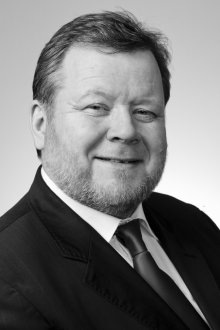
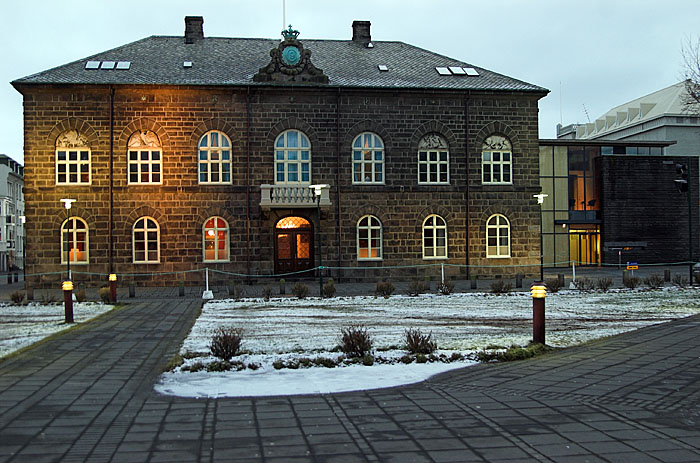
 Althing, the Icelandic parliament is now developing an Arctic policy for the Icelandic government. The work is being conducted under the management of the Icelandic foreign minister Össur Skarphéðinsson. Icelandic authorities are becoming aware of the state’s significant status within the Arctic and regional cooperation and have thus decided that a declared policy is needed for the Icelandic state to have impact on future developments in the area. The main aim of the policy is to secure Icelandic interests within the region and strengthen relations with other Arctic states and various stakeholders.
One significant political aspect can be found in the proposed policy, namely to make sure Iceland is considered to be an Arctic coastal state. This is thought to be important in order to reverse the recent development of the Arctic five meetings. Icelandic authorities do not welcome any deliberate undermining of the Arctic Council as the forum for regional cooperation on Arctic matters and would rather want the Council to be strengthened. In addition to this political view, the Icelandic government wants international obligations and agreements to be observed in decision-making and settlements of disputes.
In discussions on the proposed Arctic policy in the Althing, some concerns have been raised regarding the Arctic five meetings and there does seem to be a general view within the parliament that this development should be obstructed as possible. However, the clear will of the Icelandic government to secure the state’s spot as an Arctic coastal state seems to imply that such “Arctic six” meetings could be more welcomed with Iceland on board. In reality, this deliberation is rather improbable as the Icelandic government is keen on prevent the exile of small state actors such as the Faroe Islands and the non-Arctic coastal states within the Arctic Council, Finland and Sweden.
 Another significant aspect of the proposed Icelandic Arctic policy is react against armament in the Arctic region has been raised in the parliament. This point has been discussed to a certain degree in the Althing, where the foreign minister has tried to water down the concerns of direct military confrontation or severe armament. The third significant political aspect of the discussions in the Althing about the policy is the EU negotiation phase and the outcome in Arctic matters for the European Union. Some concerns have been raised that the argument for Iceland as an Arctic coastal state is meant to secure the interests of the EU instead those of Iceland specifically. Even though this concern might be a bit farfetched, it was officially declared by the EU that Arctic matters were the primary gain for the EU with the membership of Iceland.
The Icelandic Arctic policy will consist of eleven general elements that together represent the main concerns of Icelandic authorities, in addition to interests that will be pursued. There are no big surprises in the proposed policy, with the development of Iceland’s status as an Arctic costal state as the exception. The focus of Icelandic government on the rights of indigenous peoples and other inhabitants of the Arctic is, however, also a significant attribute that could be seen as unusual.
The eleven elements of the proposed Arctic policy of the Icelandic government are as follows:
- Secure the status of Iceland as an Arctic coastal state regarding decisions on Arctic issues. This will be based on the geographical, economic and ecological reasons.
- Increase global understanding on that the Arctic region is not restricted to the area north of the Arctic Circle, but other areas based on various ecological, economic and geopolitical reasons.
- Strengthen the Arctic Council as the main cooperative body on Arctic issues and press for decisions to be made within the Council.
- Build on the United Nations Convention on the Law of the Sea which sets out the universal principles of marine governance.
- Strengthen and increase cooperation with the Faroe Islands and Greenland with the aim of increasing the economic and political status of the three states.
- Secure and support the rights of indigenous peoples in the Arctic and secure their involvement in decision making.
- Build on international agreements and encourage cooperation with other states and stakeholders on Arctic issues regarding Icelandic interests in the Arctic.
- Safeguard civil security interest in the Arctic and react against armament in the area. Increase cooperation with other states on preservation of wildlife, research, and preparedness in surveillance, search and rescue and pollution prevention in order to secure environmental, communal and sustainable development interests.
- Develop commercial cooperation between Arctic states and secure Icelandic opportunities in economic development within the region.
- Increase national knowledge on Arctic issues and introduce Iceland as a forum for conferences, meetings and discussions on Arctic issues. Effort shall be made to establish centers, research institutes and educational institutions on Arctic affairs in cooperation with other states and international institutions.
- Increase national consultation and cooperation on Arctic issues to secure increased knowledge on the status of the Arctic, democratic dialogue and solidarity on the implementation of the official Arctic policy. The foreign minister shall develop and implement the Arctic policy in consultation with the Althing’s committees on foreign affairs and environment.
No major changes are expected to be made on the eleven elements mentioned above. A few might, however, become more precise in order to make implementation easier. The implementation of the policy and the making of an Arctic strategy will be initiated after the proposed Arctic Policy has been developed. The proposed Arctic strategy will most likely be finalized in early summer of 2011.






 The report presents the Commission’s recommendations, foremost of which is that governance in the Arctic marine environment, which is determined by domestic and international laws and agreements, including the Law of the Sea, should be sustained and strengthen by a new conservation and sustainable development plan using an ecosystem-based management approach. The Commission believes marine spatial planning provides a workable method or approach to begin implementation of ecosystem-based management. According to the Commission, Arctic governance can and should be strengthened through an inclusive and cooperative international approach that allows greater participation in information gathering and sharing, and decision-making, leading to better informed policy choices and outcomes.
 The Commission recognizes that this Aspen Dialogue has been a preliminary step toward a fuller discussion on the future of the Arctic marine environment. Its major discovery is that a more modern, holistic and integrating international plan is needed to sustainably steward and govern the Arctic marine environment. The Commission has made significant progress in understanding the needs and requirements for action to sustain the Arctic and realizes that in order to implement its recommendations the entire Arctic community must be engaged.
 The Aspen Institute Commission on Arctic Climate Change believes that existing frameworks can be enhanced and new frameworks can be established to improve governance and strengthen resilience in the Arctic marine environment in response to climate change impacts and the need for adaptation readiness. The Commission developed its recommendations against the backdrop of at least three observable strategies currently discussed internationally to strengthen the Arctic Council; expand and strengthen the existing system of bilateral and multilateral agreements; and/or establish a new Framework Convention for Arctic governance.