Blog

  • Tourists encouraged boycotting Iceland due to its whaling policy.

    Tourists encouraged boycotting Iceland due to its whaling policy.

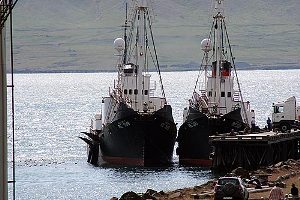
    Icelandic whaling boats

    A website has been launched where tourists are encouraged to boycott Iceland as their vacation destination due to the country’s whaling policy.

    Iceland is among other nations, such as Canada, Norway, Japan and the United States that carry out whaling. The website “rescuethewhales.org” maintains that Iceland is whaling endangered species. The misunderstanding might arrive from the hunt of fin whales in Icelandic and adjacent waters. According to the International Whaling Commission (IWC) fin whales are endangered in the Southern Hemisphere but not in the North Atlantic Ocean. Assessments of the population status in the central North Atlantic and off West Greenland have shown populations to be in a healthy state.

    The aim of the group behind the website, rescuethewhales.org is to damage Icelandic economy by appealing to the public not to visit the country and therefore try to undermine its tourism. It is stated in the website that Iceland is a small country where the economy is small and dependent on few large industries, such as tourism. Icelandic economy is similar to other small economies within the Arctic region, being dependent on natural resources and increasingly on tourism. Actions based in many occasions on emotions, as mentioned at the website, rescuethewhales.org could therefore have severe consequences to economies such as Iceland.

    Further information and resources in the Feature of the week “Anti whaling campaign against Iceland

  • A change in climate means a change in diet

    A change in climate means a change in diet

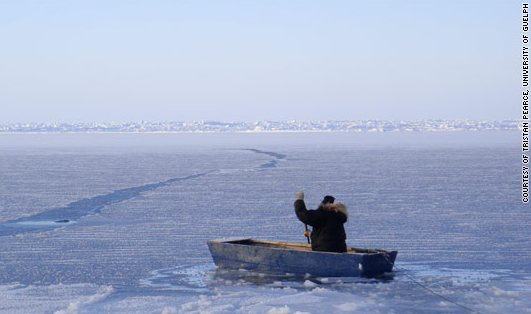
    Inuit sailing in arctic waters

    Climate change is altering people’s diet, according to Professor Barry Smit at the University Of Guelph, Canada. Professor Smit has conducted a research for the past five years on how melting ice and change in climate is affecting northern communities in Canada.

    One of his findings is a change in those communities diet. Loss of hunting grounds and changes in ice patterns are affecting the people in such way that they need to find a substitute nourishment for their diet, which usually consists of high carbon, easily transportable and storable food. Inevitable, this change in their diet has lead to some health problems, where high carbon food is not on their usual menu. A loss of identity is also mentioned as a concern where younger generations do not participate in traditional hunts. This is reported at the CNN website as an Earths Frontiers feature that was published on December 30th 2011

    Unfortunately, this problem has been known for some time where loss of traditional hunting grounds are affecting northern communities, where loss of identify and traditional nutrition is changing theirs way of life. Pollutants have also been identified as a major problem since traditional food becomes inedible due to persistent toxics in the Arctic, which has lead to change in traditional diet in northerners lives. This has for example been identified in the Arctic Human Development report, which was published in 2004.

    However there is no doubt that the Arctic is facing a major transformation, where people and animals need to adapt. Some of those changes are socio-economically positive, whilst other is not. Therefore there is a need to further identify those changes and measures need to be adopted in order to reduce the negative impact of changing climate.

  • Vacancy for the post of General Secretary at the International Council for the Exploration of the Sea (ICES)

    Vacancy for the post of General Secretary at the International Council for the Exploration of the Sea (ICES)

    International Council for the Exploration of the Sea

    Applications are invited for the post of General Secretary of the International Council for the Exploration of the Sea (ICES). The post, which will become vacant on 31 January 2012, is based at the Council’s headquarters in Copenhagen, Denmark.

    ICES, the world’s oldest intergovernmental scientific organisation, promotes and co-ordinates marine research pertaining to living resources and their environment, publishes the results of this research, and provides scientific information and advice for the management of fisheries and the marine environment.

    While ICES is proud of its rich tradition of excellence in marine science, it is continuously changing to keep pace with modern needs. These changes involve broadening participation in ICES activities, developing new scientific programmes, tailoring scientific advice to meet changing user needs, and modernising infrastructure that supports the ICES scientific community. The General Secretary needs to be a dynamic leader of such changes.

    E-mail applications, including curriculum vitae and references, should be submitted to gerd.hubold@ices.dk no later than Thursday 31 March 2011. Additional information about the post may be obtained from the General Secretary Gerd Hubold at gerd.hubold@ices.dk.

  • High Temperature in the North – Cold in the south

    High Temperature in the North – Cold in the south

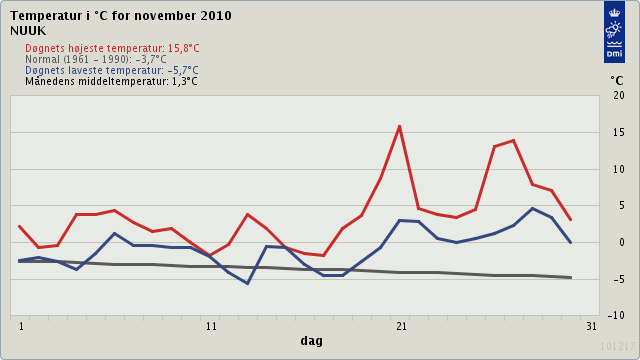
    temperature in Nuuk

    During November and the beginning of December, there has been unusual weather phenomenon over Greenland and Iceland causing unusual high temperature in the area. It is reported on the 29th of November that in the capital of Greenland, Nuuk, that the temperature was as high as 16° C (61°). According to the Danish Meteorological office, the mean temperature in November 2010 in Nuuk was 1,6° C (36° F), while the annual mean temperature in November is -3,7°C (25° F). So far in December, the mean temperature has been 1° C (34° F), which is seven degrees over the annual mean temperature, which is -6,2°C (21° F). This unusual high temperature has though not occurred in Iceland were the mean temperature was close to the annual mean. Still, the temperature went as high as 12, 4°C (11 °F) along the south coast. In December, the temperature at the south coast of the island went as high as 15° C (59 °F). Such high numbers in Iceland are not common in Iceland even though for the mean temperature is quite high, due to the Gulf Stream. However, this is unusual in Greenland.

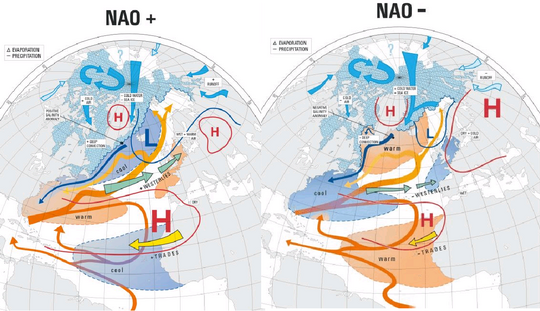
    This unusual weather conditions might be explained with the so called North Atlantic Oscillation (NAO). This weather phenomenon in the North Atlantic Ocean is fluctuation in the difference of atmospheric pressure at sea level between Iceland in the north and the Azores in the south. There is a correlation between those two areas, meaning that when there is a high pressure over Iceland, there is a low pressure over the Azores and vice versa. The east-west oscillation motion of this pressure difference then controls the strength of the direction of the westerly winds which are the main cause for abnormal weather activity in the North Atlantic region and in Central Europe.

    NAO positive/negative effects on the weather

    In November till April, the NAO is responsible for much of the variability of weather in the North Atlantic region, causing wind speed and direction to change, which further cause changes in temperature and moisture. When the NAO is positive it causes mild temperature in West and Central Europe and cool climate in Greenland and Labrador. When the NAO is negative it causes a shift, meaning that West and Central Europe becomes colder when it warms up in Greenland, Labrador and Iceland.

    The winter of 2009-10 in Europe was unusually cold, especially during December, January and February and caused many inconveniences in the continent. It is theorized that this may be due to solar activity but this cold winter is also coincided with an exceptionally negative phase of the NAO.

    Sea ice

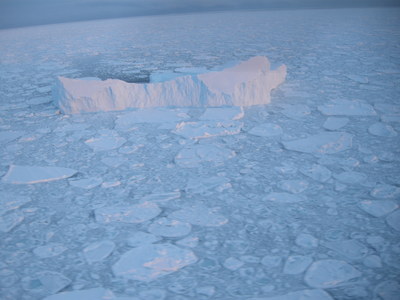
    The NAO also causes changes in sea ice distribution at the east coast of Greenland. The NAO is in negative position, causing more westerly wind to blow. Also, the NAO generates better conditions for the sea is to formulate at the north east coast of Greenland. Du to this, a sea ice warning has been issued by the Icelandic Metrological Office in Iceland. According to surveillance of the Icelandic Coast Guard on the 9th of December the sea ice edge was around 20 nautical miles from the North west coast of Iceland. A day later, on the 10th of December, the sea ice edge was only 10 nautical miles from the shore. This is caused by a strong westerly wind, caused by the NAO, which blows sea ice into Icelandic waters. The sea ice has drifted further west into Icelandic waters but away from shore. However, with strong northern winds, the ice might reach shore at some northern peninsulas. This can cause inconvenience for sea-farers and fishermen since the sea ice can block the sea route North West of Iceland. Due to this, transportation of fish needs to be on land since vessels can be shut from the home harbour. The Ice is however sparse with denser ice in between. Five large icebergs have been also spotted and is the highest one estimated to be around 110 meters (360 feet). Such large icebergs are as not usual in this area. A reason for increased icebergs might be due to warmer climate. Warmer climate causes the ice-shelf around Greenland to weaken and break up, causing increased icebergs in adjunct waters.

    The NAO phenomenon is negative position now, causing unusual weather in Greenland and somewhat in Iceland. However, the most of the inconvenience caused by the NAO occurs in Central Europe. The winter in Europe has been very cold so far in 2010 and is predicted to stay so until the beginning of the new year of 2011. This has been linked to the NAO, however, there might be another reason. For example, the Icelandic low pressure – which normally sits between to the west of Iceland and Greenland – has appeared regularly to the east of Iceland and so allowed exceptionally cold air into Europe from the Arctic. Together those two form a unusual weather conditions in the area. However, there is no doubt of an unusual and or a changing climate.

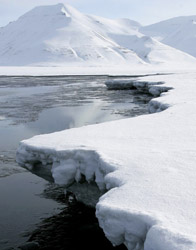
    Iceberg in Icelandic waters

    Sources:

    Icelandic Meteorological Office
    Danish Meteorological Institute
    The Icelandic Coastguard

  • New Cooperation Agreement on Search and Rescue in the Arctic

    New Cooperation Agreement on Search and Rescue in the Arctic

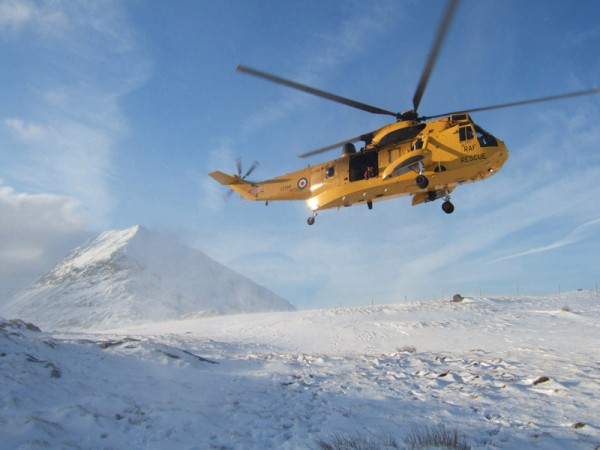
    Helicopter in the air

    Member states of the Arctic Council, Canada, Denmark on behalf f the Faroe islands and Greenland, Finland, Iceland, Norway, Sweden, Russia and The US have finished drafting a cooperation agreement on search and rescue in the Arctic in a meeting held in Reykjavík 14.-16.

    December. In addition to state representatives, around 50 academics and experts from the respective states and International Civil Aviation Organization participated in the meeting, which is a final part of a year long work process.

    The agreement targets the changed reality in the Arctic where due to the climate change increasing transportation opportunities have emerged in recent years and are only to increase in coming years. Until now, there have lacked a coordinated emergency response scheme for the Arctic ocean and airspace. The new agreement will divide the Arctic into specific search and rescue areas, each Arctic state being liable for specific territory.

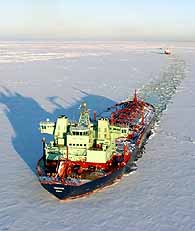
    jaanmurtaja

    The agreement is historical also in political sense, since it is the first international agreement between the eight Arctic states brought about under the auspices of the Arctic Council.  It is anticipated that this new agreement will follow other agreements targeting issues as important for the Arctic region, such as pollution and renewable natural resources.

    The agreement on search and rescue will have its final seal in the Arctic Council Ministerial Meeting in May 2011 in Nuuk, Greenland, where it will be signed by the eight Arctic States.

    Source: Icelandic Foreign Ministry

  • New Saami Parliament in Murmansk Oblast

    New Saami Parliament in Murmansk Oblast

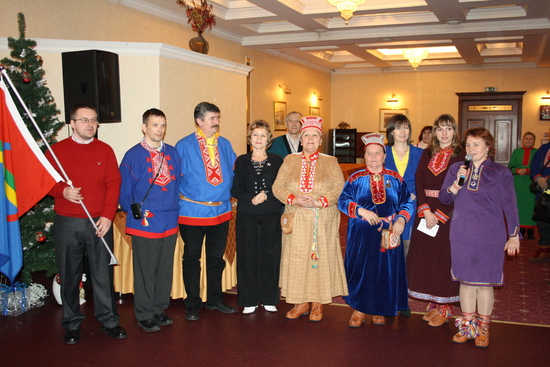
    Russian Saami in Kola peninsula

    Barents Observer / Barents Indigenous Peoples’ Office – The Russian Saami in Kola peninsula have founded a first democratically elected representative organ by establishing the Saami Parliament of Murmansk Oblast or Kuelnegk Soamet Sobbar, as the Parliament is called in original language.

    The Kola peninsula Parliament, which is one of now four Saami Parliaments, was established on December 12th 2010 by the 2nd Congress of the Saami people of Murmansk Oblast, which has until now been the main representative organ of the some 2,000 Saami people living on the Kola Peninsula in Russia. The new parliament will have 9 representatives elected by delegates representing Saami communities in Murmansk Oblast and will be chaired by Valentina V. Sovkina.

  • The many faces of snow

    The many faces of snow

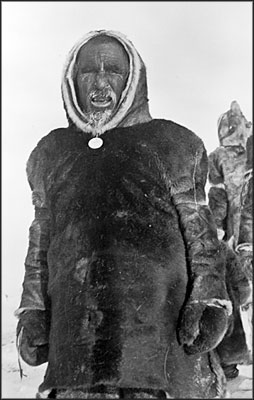
    Ice in the arcticNow that the holiday season is approaching most of us wish it would snow, at least a little. White Christmas is at the top of the list for most kids and even we adults would not mind sliding a sledge down some nice hill every once in a while. For Arctic indigenous peoples snow is almost an all year round experience and throughout the centuries snow has played an important role in their way of life. However, for Arctic residents snow is not just snow. In most Arctic indigenous languages can be found various expressions for different types of snow and for example in Icelandic there can be found at least 10 different words for snow of which many are also popular names, such as Fönn, Fannar, Mjöll and Snær.

    The Icelandic repertoire is though nothing compared to the Inuktitut one, which has more than 200 different words for snow depending on the type of snow as well as the surrounding conditions. Qanniq means falling snow, maujaq deep, soft snow, kinirtaq wet, compact snow, katakartanaq crusty snow marked by footprints, uangniut snowdrift made by northwest wind and munnguqtuq compressed snow softening in spring.

    shamanThe Saami languages also categorize snow according to texture and context. For example, words used in connection with skiing and reindeer husbandry are different, even though the snow would be the same. It is also interesting to notice that even though Saami and Finnish are related languages and many of the words for snow in Saami sound familiar to Finnish speakers, the Finnish language itself only has three different official words for snow.  The Saami word vahtsa means one or two inches of new snow on top of old snow. New wet snow is called slahtte and falling rain mixed snow slabttse. Falling wet snow lying on the ground is called släbtsádahka or släbsát. Skilltje, bulltje and tjilvve are words for snow and ice that fall on objects, reindeer moss and trees. Large lumps of snow hanging on the ridge are nearly always called bulltje. Åppås on the other hand is virgin, clear snow.

  • EU-ARCTIC-Forum debate on EP Report A Sustainable EU Policy for the High North

    EU-ARCTIC-Forum debate on EP Report A Sustainable EU Policy for the High North

    EU Arctic Policy

    EU-ARCTIC-Forum will be hosting a debate with Arctic Stakeholders on the European Parliaments Report “A Sustainable EU policy for the High North” on 8. December 2010 in Brussels.

    Birgit Schnieber-Jastram, Chair of the EU-ARCTIC-Forum will host the meeting with the rapporteur Michael Gahler MEP and the shadow rapporteurs Anneli Jäätteenmäki MEP, Liisa Jaakonsaari MEP, Indrek Tarand MEP and Konrad Szymanski MEP before the December 9 vote of the Report in the Committee on Foreign Affairs.

    With the debate the EU-ARCTIC-Forum in the European Parliament wants to ensure a proper involvement of stakeholders facilitating thus well informed discourse in Brussels on Energy, Environment and Climate Change, Resources, World Trade Routes, Security, Sustainable Development etc, that are important subjects in the Arctic context.

    Those who want to participate and do not have an access badge to the EP yet, please send your details for registration (name, surname, date of birth, address) asap to Michael Gahler MEP. (michael.gahler(at)europarl.europa.eu)

    8. December at 17.15

    in Room ASP 3 H 1

    in the European Parliament in Brussels.


    Presentation and Consideration of the Draft Report on “A sustainable EU Policy for the High North” in the last meetings of the European Parliaments Committee on Foreign Affairs

    Summary

    Overall the Draft Report seems to be well perceived, both in the EU and in the Arctic. Thus there is justified hope that the Report will not only contribute to outline the EU’s Arctic policy, but also to contribute to confidence building with the Arctic stakeholders. The Draft Report undertakes to asses the existing legal and political framework in the Arctic as well as to establish a clear set of priorities of the European Union with regard to the Arctic. In the last part the Report is formulating suggestions and request to the European Commission and the Council and offering close cooperation to the Arctic states and stakeholders.

    The Draft Report is clearly stating that the Arctic Region is not a legal vacuum, but has a developed set of rules which nevertheless need to be further developed due to changing circumstances.

    Main priorities of the EU in the Arctic set out are:

    • The road to a sustainable socio-economic development and environmental protection
    • The potential of new world transport routes and their vital importance to the EU member’s states
    • The potential of developing resources like Hydrocarbons, Minerals, fish and biogenetic resources

    With regard to a sustainable socio-economic development the Eco-System based management approach as applied in the Barents today is recognized. The Report makes a clear statement as to the responsibility of the EU as one of the main contributors to pollution and climate change.

    In its conclusion the Report requests the Commission to set up a permanent Inter service on the Arctic and likewise in the future EEAS.
    Requests and suggestions are made as to a new circumpolar co-funding and co-programming research programme.
    Finally the importance of EU engagement in the further development of Northern Sea Routes is highlighted and suggestions as to the Galileo project are made.


    After an intense period of organized hearings, meetings and preparations on Tuesday, 9. November, the Draft of the European Parliaments Report on “A sustainable EU Policy for the High North” was presented and debated by the Parliaments Rapporteur Michael Gahler MEP.

    Draft Report

    List of Amendments


    About the EU-ARCTIC-Forum in the European Parliament

    Function

    The EU-Arctic-Forum was constructed to provide the European Institutions with a cross-party platform to foster a better understanding of changes in the Arctic Region and its implication for Europeans citizens politics and businesses, to facilitate a well informed and balanced debate, as well as to bolster the development of a coherent European Policy with regard to the Arctic Region.

    The EU-ARCTIC-Forum is the European Parliament’s platform working on all Issues with regard to the Arctic, providing not only for exchange and input of information but to interlink the so far too often fragmented debates on the Arctic.

    Participants

    The EU-ARCTIC-Forum is involving a number of MEP’s from all major political groups and several committees, Delegations and Intergroup’s such as the Committees on Foreign Affairs, Environment, Transport, Industry, Research and Energy, Development and Transport.

    Thus the EU-ARCTIC-Forum works as the European Parliaments platform interlinking all issues regarding the Arctic Region.

    It invites on a regular basis speakers from the scientific community, business, NGOs, and international institutions in the format of breakfast briefings, seminars or dinner speeches.

    Future Meetings are already organized and interest to participate was already expressed by several Commissioners and other High Officials, Foreign Ministers and Ambassadors of several Arctic States, as well as high profile leaders of the international or European Institutions such as the European Environmental Agency, the International Maritime Organization and the Nordic Council of Ministers, but also from Civil society, NGO’ s and the energy, fishing and shipping industry as well by leading academics in the field.

    Contributions

    In light of the ambition to stimulate and contribute to an informed debate, we call for contributions to the EU-ARCTIC-Newsletter by all interested participants and readers. We want to invite you to share your insights and opinions with the politicians, experts and stakeholders whose work will be addressed by this newsletter.

    The editor of the EU-Arctic-Newsletter and the organizers of the EU-ARCTIC-Forum look forward to your valuable comments and contributions and would like to draw your attention in particular to the forthcoming activities on the European Parliaments Report on “A sustainable EU Policy for the High North” in November and December in Brussels!
  • Russian Sovcomflot Group and China National Petroleum Corporation sign a strategic cooperation agreement

    Russian Sovcomflot Group and China National Petroleum Corporation sign a strategic cooperation agreement

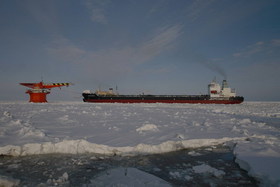
    Cargo ship in the arctic

    Barents Observer – The Sovcomflot Group (SCF), Russia’s largest shipping company and one of the world’s leading energy transporters, and China National Petroleum Corporation (CNPC), one of the largest oil and gas companies in the world, signed a strategic cooperation agreement in the energy transportation.

    The agreement is founded on the Sovcomflot’s experience in trans-Arctic shipping and will utilize the transportation potential of the Northern Sea Route, shipping hydrocarbons and transporting oil and gas extracted at Russian northern coast.

    Both China and Russia have showed increasing interest in cooperation in the Arctic waters. Just lately, the Russians signed a treaty on maritime delimitation and cooperation in the Barents Sea and the Arctic Ocean with Norway. China on the other hand has actively discussed various aspects of Arctic shipping with, at least, Norway, Russia and Iceland.

  • The Arctic in the new millennium:

    Nexus

    Confrontation or cooperation
    November 25th, the University of Akureyri
    NEXUS, research forum for security and defense
    UNAK, Polar Law Institute
    Northern Research Forum

    On 25 November, the University of Akureyri, NEXUS: a Research Forum on Security and Defence), and the Northern Research Forum – in cooperation with the Icelandic Foreign Ministry – are co-organizing a Conference on Arctic matters. The Conference will be held at the University of Akureyri from 9:00 to 17:00 hours.

    Before noon there will be lectures on traditional security, societal security and human rights, as well as environmental security in the Arctic. After lunch, working groups will be formed on these same themes, and will then present their findings in plenary at the end of the day.

    The conference will be WebCasted on the Arctic Portal

    Program

    9.00

    • Welcoming speech by Stefán B. Sigurðsson, Rector of University of Akureyri

    9.10

    • Jónas Gunnar Allansson, Senior Arctic Official, Ministry of Foreign Affairs.
      – Setting the agenda

    9.25

    States, citizens and security – chaired by Auður Ingólfsdóttir

    • Jennifer Rhemann, Polar Law MA Candidate, University of Akureyri, Association of Polar Early Career Scientists (APECS) Discipline Coordinator for Polar Law and Policy and Council Co-Chair
      – Security Benefits of International Collaboration in Scientific Endeavours and Conservation Efforts
    • Gústav Pétursson, MA in International Relations
      – The High North: A Multidimensional Security Approach
    • Ágúst Þór Árnason, Director of Polar Law Institute
      – Citizenship in a Global Context: Future Perspectives for the 21st Century

    10.15 – 10.25
    Coffee break

    10.25
    Traditional- and political security – chaired by Alyson Bailes

    • Björn Bjarnason, Former minister of Justice and chair of Varðberg and Samtök um vestræna samvinnu
      – Arctic Security: An Icelandic Perspective
    • Jakob Þór Kristjánsson, PhD student at the University of Iceland
      – Security Dilemma in the High North, is a Resource War Looming?
    • Margrét Cela, PhD student at the University of Lapland
      – Traditional security in the official policies of the Arctic eight

    11.15 -11.20
    Coffee break

    11.20
    Environmental- and energy security – chaired by Jennifer Rhemann

    • Auður Ingólfsdóttir, Assistant professor, Bifröst University
      – Climate Change and Environmental Security in the Arctic: Links between geopolitical concerns and local challenges
    • Húni Hallsson, Project Manager, Polar law Institute
      – Arctic shipping: Evaluation of risks and benefits
    • Guðmundur Egill Erlendsson, ML and LL.M in Polar Law, Associate at Lögmannsstofa Akureyrar, and Freelance scholar
      – Energy Security Issues in the North: Viable Alternatives and Extreme Measures
    • Soffia Guðmundsdóttir, Pame
      – To be announced
    • Tom Barry, Executive Director of CAFF (Concervation of Arctic Flaura and Fauna) & Eydís Líndal Finnbogadóttir, Manager of Geographic Information Systems at the National Land Survey of Iceland
      – Monitoring in the Arctic and the Arctic Spatial Data Infrastructure project

    13.00-13.45
    Lunch break

    13.45
    Working groups begin

    • Working group 1 – States, citizens and security:
      chaired by Jóhanna Þórdísardóttir, MA in International Relations
    • Working group 2 – Geopolitics and traditional security:
      chaired by Gústav Pétursson
    • Working group 3 – Environmental and energy security:
      chaired by Jennifer Rhemann

    15.00 – 15.20:
    Coffee break

    15.20 – 16.40
    Group presentations. Each presentation should take 10-15 minutes followed by
    10 – 15 minutes discussion. Chaired by Margrét Cela

    16.45
    Alyson Bailes, Adjunct Professor, University of Iceland
    – Closing remarks

    17.00
    Closing and thank you remarks from NEXUS (Margrét Cela Chair of NEXUS), UNAK, NRF and MFA Followed by reception


    nexus_sponsors