Blog

  • Arctic Council – the venue for Arctic decision making

    Arctic Council – the venue for Arctic decision making

    Short history of the Arctic Council

    Through times the unknown has always fascinated people. New cultures and undiscovered lands have allured adventurers of all sorts and great stories are told about people who have courageously travelled through landscapes that traditionally have been thought inaccessible. For many centuries, the Arctic was remote and pristine region left outside of scientific exploration as well as world politics. It was not before after second world war with technical advancement and ever increasing need for resources and space that world’s eyes turned to the Arctic. But instead of becoming a new scientific playground furthering our understanding on world’s ecology, the Arctic became militarized region of both the east and the west for four long decades or until the emergence of the perestroika in the Soviet Union which gradually brought the cold war enemies closer and eventually to the same table in 1989.

    The first purely Arctic oriented meeting of the eight Arctic countries – Canada, Denmark, Finland, Iceland, Norway, Sweden, Russia and the U.S. – took place in Rovaniemi Finland in September 1989. The topic of the meeting was the fragile Arctic environment and a potential for joint effort in tackling the very delicate but urgent issue. After intensive cooperation for the next two years, the Arctic Environmental Protection Strategy was initiated in 1991. The AEPS concentrated on cooperation in scientific research and sharing of data on effects of pollution as well as assessing the potential environmental impacts of development activities in the Arctic through its four specific measures, namely Arctic Monitoring and Assessment Programme, Protection of the Marine Environment in the Arctic, Emergency Prevention, Preparedness and Response in the Arctic and Conservation of Arctic Flora and Fauna. The cooperation around the AEPS was quite untraditional for many reasons. First, it was one of the first venues where the cold war parties cooperated together to reach a common goal and secondly it became one of the very few inter-governmental institutions including indigenous peoples of the region in the work from the beginning.

    Arctic sea ice polar bearsIt became, however, soon clear that the Arctic issues and the change happening in the Arctic environment would have such an immense impact globally that it was decided that the AEPS would step aside and new inter-governmental high level forum would be created to deal Arctic environmental issues. In 1996, the Arctic Council, with membership of all eight Arctic states and permanent participation of regional indigenous peoples associations, was established to promote cooperation, coordination and interaction in issues of sustainable development and environmental protection.

    Arctic Council and its Working Groups

    The Arctic Council consists of eight Arctic states; Canada, Denmark, Finland, Iceland, Norway, Sweden, Russia and the U.S and six permanent participants; Aleut International Association, Arctic Athabaskan Council (AAC), Gwich’in Council International (GCI), Inuit Circumpolar Council (ICC), Russian Arctic Indigenous Peoples of the North (RAIPON) and Saami Council. The Arctic Council is governed by Senior Arctic Official (SAO) meetings, which are held twice a year and biennial Ministerial meetings. The chairmanship of the Council rotates between the eights states, each state holding the position for two years at a time. The chair state establishes a secretariat for the period to deal with administrative matters.

    During the past fourteen years the Arctic Council has advanced knowledge about the Arctic environment through its working groups CAFF, PAME, EPPR, SDWG, AMAP and ACAP. In 2009, PAME published a comprehensive assessment on Arctic Marine Shipping pointing out both possibilities as well as downsides of Arctic shipping. CAFF has conducted various large researches and reviews on Arctic biodiversity, latest being the Arctic Biodiversity Trends 2010. ACAP, EPPR and SDWG have as well all introduced valuable material concerning various urgent issues facing the Arctic and AMAP releases regularly assessments on various issues relating to contaminants.

    Contemporary challenges of the Arctic Council
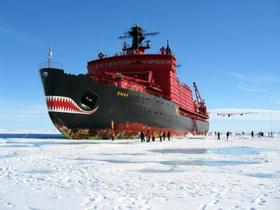
    Icebreaker in the arcticSince the end of the cold war the Arctic has been changing in ever increasing speed. Not only does the international community face immense environmental challenges that will influence every part of the world, but also will the Arctic states face territorial claims, issues concerning maritime transportation and infrastructure, natural resource exploitation and a whole new political setting. The Arctic is becoming a lively international region rich of natural resources and high economic potential. The fact is, however, that there is lacking a common political agenda for the future in the Arctic and a legal framework for the emerging maritime activities. Infrastructure on the Arctic coastline is not ready to welcome the incipient economical activities and the participation procedure of the indigenous peoples in developing the area has not yet been fully established. Most of these activities must be undertaken jointly by all the Arctic nations for them to have real impact. The shortage of the Arctic Council mandate to deal with issues other than environment has led to a situation where decisions are made in isolation creating thus incomplete and fragmented framework for the Arctic region.

    This situation has been understood in the Arctic states and in every established national Arctic Policy the need for stronger Arctic Council is recognized. In the next few years then, the states have a challenge of reforming the Arctic Council to better correspond to the contemporary challenges. The mandate must be broadened to cover issues other than environment as well and the restructured Council must be presented with a higher level image to equal other international actors in the Arctic region.
  • Arctic Side event by CAFF at COP10, Nagoya, Japan

    Arctic Side event by CAFF at COP10, Nagoya, Japan

    Arctic Biodiversity Trends 2010

    Unique Arctic habitats for flora and fauna, including sea ice, tundra, lakes, and peatlands have been disappearing over recent decades, and some characteristic Arctic species have shown a decline. The changes in Arctic Biodiversity have global repercussions and are further creating challenges for people living in the Arctic.

    The above statements are examples on the key findings describing changes in Arctic biodiversity that is presented in ‘The Arctic Biodiversity Trends – 2010: Selected Indicators of Change’, a new report synthesizing scientific findings on the status and trends for selected biodiversity in the Arctic issued by the Conservation of Arctic Flora and Fauna (CAFF) Working Group under the Arctic Council.

    CAFF as the biodiversity working group of the Arctic Council will be holding a side event at the tenth meeting of the Conference of the Parties (COP 10) which is being held in Nagoya, Aichi Prefecture, Japan this October 28th. The CAFF event held during the high level segment of the talks will focus on the challenges and changes facing Arctic Biodiversity and their global significance.

    The event will be held on October 28th at 13:15 – 14:45, Room 234C – Bldg 2 – 3rd Floor

  • New mapping commission being founded in the Arctic

    New mapping commission being founded in the Arctic

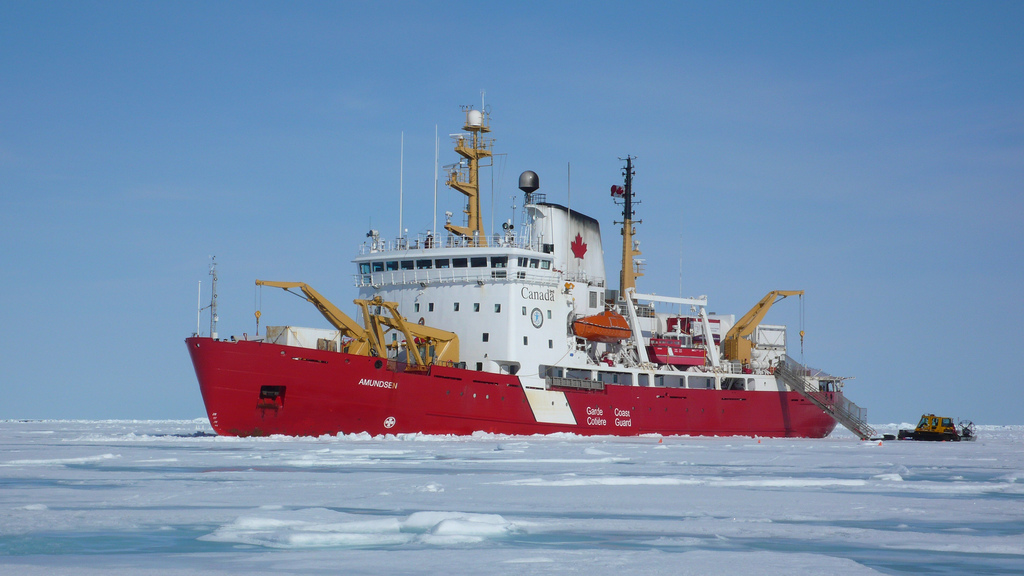
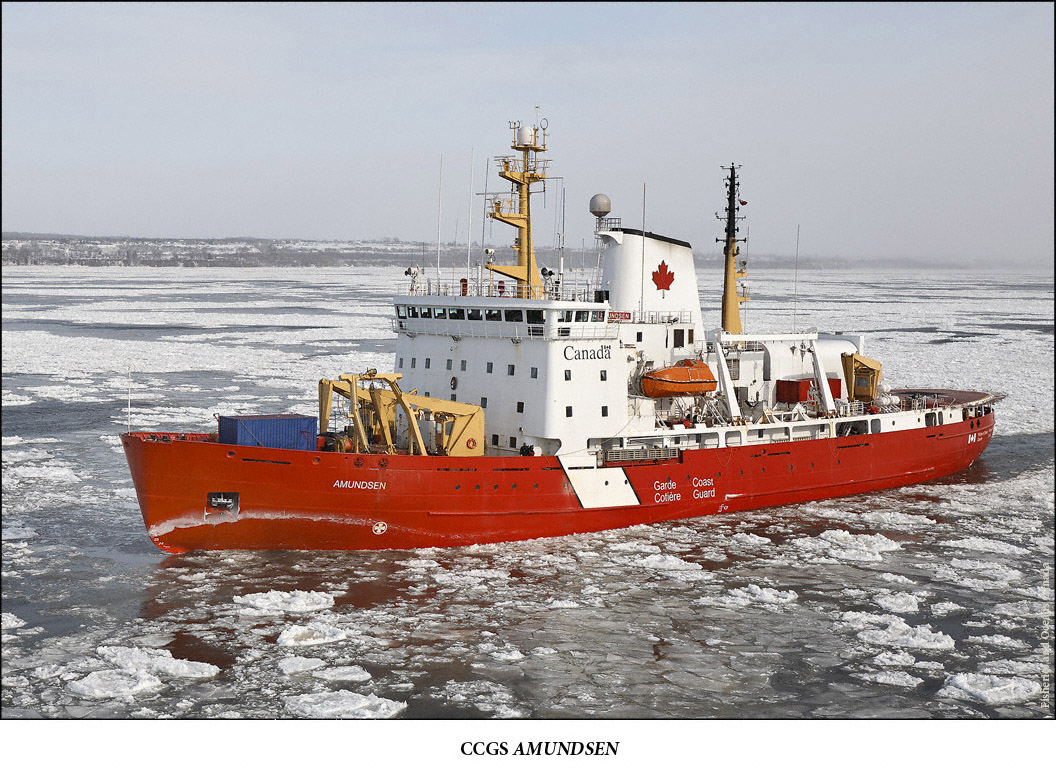
    CCGS Amundsen

    Due to the increased marine traffic in Arctic waters representatives from Denmark, Norway, Canada, Russia and the United States have set up a new Arctic Regional Hydrographic Commission.

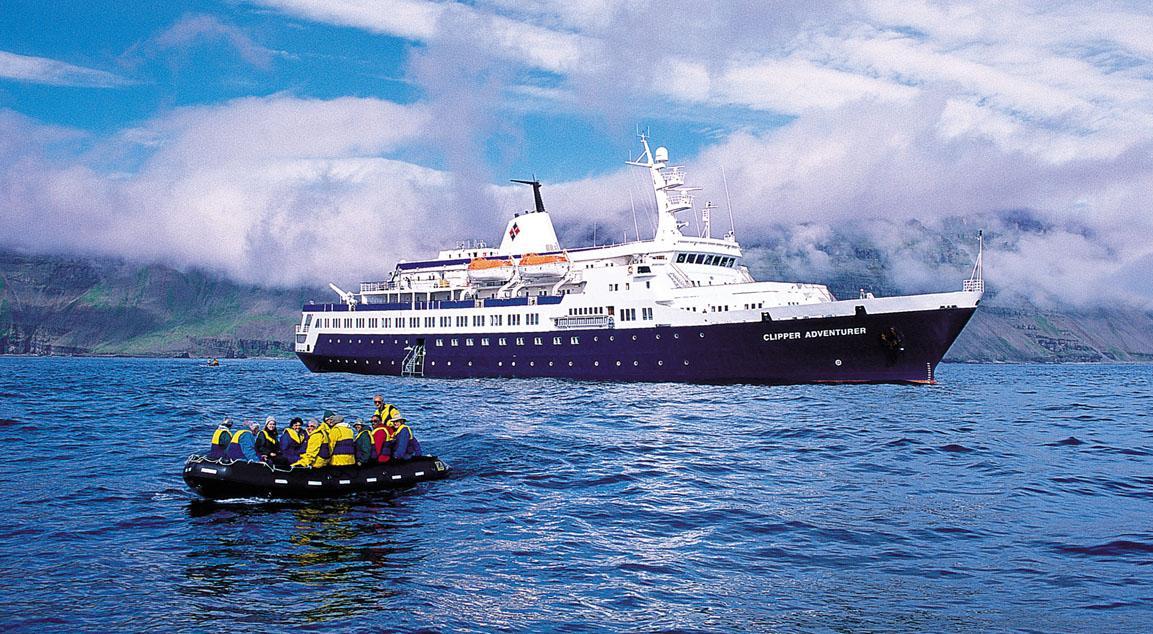
    The commission is intended to increase safety in Arctic waters by producing better nautical charts. During this summer several ships had problems while navigating in Arctic waters. The Clipper Adventurer hit a rock near Kugluktuk, the Nanny grounded on shoals near Gjoa Haven and a specially designed rowboat  ran into quite a bit of problems as well. It is estimated that a dozen shops and smaller boats anchored outside Cambridge bay at the height of the season.

    With the current decline in sea ice it is clear that traffic in the region will continue to increase and simultaneously the need for precise maps increases as the current lack of adequate charts may pose a significant risk for marine safety, potentially leading to loss of life or environmental disaster. Canadian ice specialists have said only about 10% of Arctic waters of Canada have been charted properly. The process of creating better maps have already started with the Icebreaker Amundsen using echo-sounding technologies to chart amongst other areas lancaster sound in the beginning of august.

  • Oil discovery of the Coast of Greenland

    Oil discovery of the Coast of Greenland

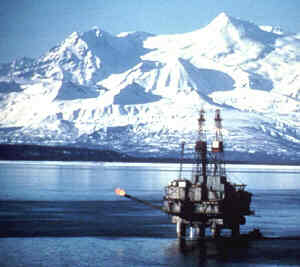
    Offshore oil platform

    Cairn Energy, a oil and gas exploration company based in Ireland has reported the first oil discovery in Greenland. Previously the company had discovered natural gas. In the companies statement Chief Executive Bill Gammel says that “The presence of both oil and gas confirms an active, working petroleum system in the basin and is extremely encouraging at this very early stage of our exploration campaign for the Sigguk block and the entire area”.

    The two types of oil which have been found are being chemically analysed. The oil was retrieved at depths of between 300m and 500m and a third prospect is at an earlier stage of drilling.

    The territory’s waters may hold 50 billion barrels of crude and gas, according to the U.S Geological Survey. Additionally to Cairn Energy, Exxon Mobil Corp and Chevron Corp also own rights in Greenland.

    The drilling has met quite a bit of protest from Greenpeace activists, which boarded the Greenland drilling rig last month to protest about deep drilling. Four people were arrested after giving up their occupation of the rig when weather conditions worsened.

  • Historical border deal between Russia and Norway

    Historical border deal between Russia and Norway

    Stoltenberg and Medvedjev shake hands

    A historical deal between Russia and Norway was signed yesterday by president of  Medvedev of Russia and Norwegian Prime minister Stoltenberg.

    The treaty resolves what has been for several decades the most important outstanding issue betweem Norway and Russia. The disagreement was about the maritime boundary between Norway and Russia in the Barents Sea and the Arctic Ocean and has largely kept the two nations from utilizing natural resources in the area, and both nations can be expected to start looking into oil and gas exploration within the area now once the deal has been signed.

    The agreement signifies the strengthening cooperation between the two nations which have gradually increasing over the last 20 years. Prime minister Stoltenberg said in an interview with the Barrentsobserver that ” Norway and Russia have developed a broad cooperation in the north consisting of organization, cultural workers, businesses, educational- and research institutions etc.” and he higlighted the importance of every-day contact over the borders.

    After the signing of the agreement the two heads of state continued discussing the possible within the energy sphere. Were both parties have aspirations for future co-operation

  • Ice Strenghtened Passenger ship Clipper Adventurer hits Uncharted Rock in the Arctic Ocean

    Ice Strenghtened Passenger ship Clipper Adventurer hits Uncharted Rock in the Arctic Ocean

    Clipper Adventurer

    The ice strengthened passenger ship Clipper Adventurer( formally ALLA TARASOVA) ran aground on the 27. of August on a uncharted rock in the Arctic Ocean. The ship which is a 330 foot vessel equipped with an A-1 Ice class and was currently on a cruise with 128 passengers and 69 crew members.

    Several attempts where maid to free the ship, with the passengers on board, with little or nor result. Yesterday the passengers where transported on board the icebreaker AMUNDSEN and transported to Kugluktuk in the Kitikmeot Region of Nunavut, Canada- From there the passengers will be flown to Edmonton in Canada.

    CCGS Amundsen

    Efforts to free the ship which remains upright will continue, the wheather is reported calm at the moment so it should offer good condition’s for such an activity

    Source: Maritimematters.com

  • Historic voyage as the first non-russian bulk carrier to take the northern sea-route

    Historic voyage as the first non-russian bulk carrier to take the northern sea-route

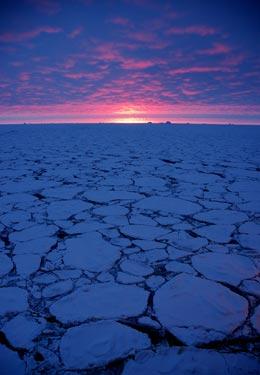
    arctic sea ice during the night

    During this summer there have been quite some news in connection to the northern sea-route, and it seems that even the most optimistic of projections will reveal themselves to be to modest- Recently the Arctic Portal published news on the first high capacity oil tanker going through the Northeast passage and now the first non-Russian bulk carrier to go through the Arctic.

    The bulk carrier MV Nordic Barents, what is especially noteworthy of this trip is that it is the first time that a non-Russian cargo vessel sails this route- which is partially through Russian waters. The Northern Sea Route Administration under the Ministry of Transportation and Rosatomflot, which operate the Russian national ice-breaking fleet, have given the project approval.

    The planning of the trip has demanded close cooperation between Russian, Norwegian and Danish parties and will hopefully be the first of many such ventures.

    The vessel will start it’s journey from Kirkenes Norway, carrying approximately 41.000 tons of Iron ore concentrate headed for China and is estimated to shorten the distance by 1/3, compared to taking the more traditional southern route- The MV Nordic Barents is well equipped for such a journey and is categorized as an ice-class 1a ship- which is the highest conventional ice-class- additionally Russian Icebreakers will escort the shop as it makes it’s way through the North East Passage

    Source: The Barentsobserver

  • Twentieth Anniversary of IASSA

    Twentieth Anniversary of IASSA

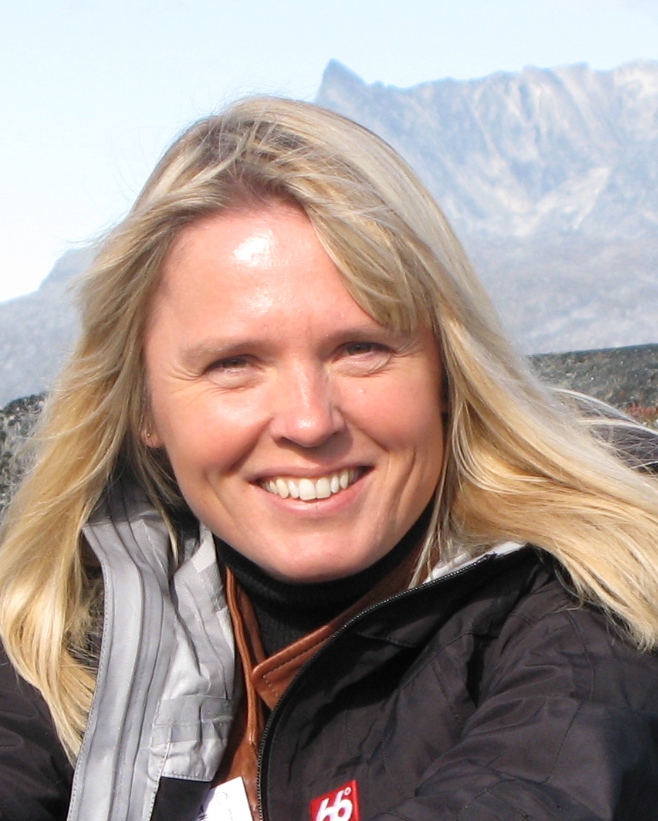
    Joan Nymand Larsen

    The Arctic Portal staff is pleased to post news of the twentieth anniversary of the International Social Sciences Association (IASSA) and wishes to extend it’s congratulation to the organization and it’s members. May the future of IASSA be as fruitful as it’s past and may it continue to contribute to our understanding of our surroundings, the Arctic.

    The text below is the announcement from president of IASSA, Joan Nymand Larsen

    From the President

    On the Occasion of the Twentieth Anniversary of IASSA – August 23, 2010
    Please join me and our membership in celebrating the 20th Anniversary of IASSA. On behalf of IASSA, I wish to extend to the membership and the Arctic social science community my warmest greetings on this important occasion of the Association´s Twentieth Anniversary.
    The International Arctic Social Sciences Association (IASSA) had its early beginnings in 1990 – twenty years ago today. IASSA was founded in 1990 in Fairbanks, Alaska, at a meeting held in conjunction with the 7th Inuit Studies Conference on August 23, 1990. The creation of IASSA follows the suggestion, made at the Conference on Coordination of Research in the Arctic held in Leningrad in 1988, to establish an international association to represent Arctic social scientists. On this special occasion, I would like to salute our founders, our true visionaries – who were the pioneers of this undertaking. Among the early founders of IASSA who were instrumental in the IASSA creation and who did the important preparatory work are Ludger Müller-Wille, our first IASSA president, Noel Broadbent who worked on the by-laws and founding documents, and Igor Krupnik who served on the first IASSA council, and others.

    On this occasion of the 20th anniversary of IASSA, I also wish to extend my congratulations and respect to our members, both past and present, whose dedication and continuous efforts have led to the present profile, growth and recognition of the Association that we now enjoy. On this occasion, it is a time to reflect, remember the achievements, take stock, and to look to the future. This reflection cannot be done in this relatively brief message from me today. Rather, you will learn more about our early beginnings in a special anniversary issue of Northern Notes which we are now preparing for publication early this fall.
    Our past presidents, our many IASSA council members over the past two decades, and our numerous dedicated members have done an invaluable job for our association, working to raise the reputation, recognition and visibility of IASSA and the Arctic social sciences in the North and beyond. Much effort has been put into promoting and stimulating national and international cooperation, to increase the participation of social scientists in national and international arctic research, and to furthering our communication and coordination with other related organizations.

    From our relatively short history, we can, I think, derive confidence. This is a memorable day, when we should not only look to the past, but also and above all re-commit our strength to the growth of the Arctic social sciences and to international and multi-disciplinary scientific cooperation. The growth and visibility of our association bears witness to its success. Our membership has grown to between 500-600 members, residing in more than 20 countries. The Association has reached a phase of critical reflection, the object of which is to ensure its continued growth, the increased recognition of Arctic social sciences and a growing participation in social science research in the Arctic. The past twenty years have seen great advances towards the continued growth of the Arctic social sciences and humanities, and in this IASSA has played a notable part thanks to the dedication of our membership.
    In celebrating the 20th anniversary, it is my sincere hope that our Association may continue to grow and realize its objectives to stimulate and promote our science, to increase public awareness of circumpolar issues and research results, and to promote mutual respect, communication, and collaboration between social scientists and peoples of the north. On this day of reflection, the important and in many respects pivotal role played by the 2007-2008 IPY cannot be ignored – but must be reiterated and celebrated. As we assess the outcome and achievements of the IPY it is clear that the Arctic social sciences have moved far to gain recognition and equal partner status in international forums and research policy circles. Looking back, it is evident that the collaborative work of IASSA and its membership has been an important contributing factor in facilitating the broader inclusion of the Arctic social sciences, and the improved access to funding and research opportunities.

    Indeed, in the course of the past years, IASSA has played a vital role through a variety of exchanges, international committee work and science collaborations, which has helped accelerate the growth and profile of our science. The Association, I believe, has therefore good reason to feel confident. It knows better what it wants and has a better idea of what it can do. The triannual ICASS events – and now the 7th ICASS coming up in June 2011 – bear witness to our growing and vibrant science community.

    As we celebrate this day, this is a good time to look back at some of our accomplishments and activities. It has been a busy past two decades for the Arctic social sciences and IASSA. No
    doubt, social science participation in the IPY was instrumental in making the IPY more inclusive and cross-disciplinary. The IPY created the momentum to advance collaborative international research in social/human sciences to a new level. It also advanced the participation of Arctic residents, and particularly indigenous people – in science, research planning, data collection, and data management. On this note, I would like to acknowledge also the invaluable work of our social science representatives on the IPY Joint Committee; Igor Krupnik and Grete K. Hovelsrud. Since the onset of planning for IPY we have witnessed a remarkable turn-around in the standing of social and human research in Arctic science. The contribution made by indigenous peoples represents a major IPY legacy. Advances in the inclusion of indigenous people and local communities in research has also meant that many of the IPY projects and research since the IPY are relevant to indigenous people and local communities and that they address issues of importance to them.
    But even as we remember and reflect, IASSA must review its present and meditate on its future. The official closure to the IPY has not meant a slowdown for the Arctic social science community; on the contrary, this continues to be a busy time for the Arctic social sciences and our association. In light of the scale and importance of the IPY and the large volume of Arctic social science research coming out of the IPY, the 2011 ICASS will provide once more an important forum for presenting and sharing our social science research including the extensive research produced during the IPY.

    The Seventh Congress of the International Arctic Social Sciences (ICASS VII), entitled Circumpolar Perspectives in Global Dialogue: Social Sciences beyond the IPY will be held in Akureyri, Iceland, on June 22-26, 2011 (www.iassa.org). On this Anniversary Day, please think about how you might contribute to this upcoming ICASS event. IASSA invites ideas and thoughts about themes of special interest for sessions and workshops at ICASS VII. Please submit your session proposals by September 15, 2010 to IASSA secretary Lára Olafsdottir at larao@svs.is. The ICASS is a key venue for celebrating and advancing our science. As in the past, the Congress will offer various venues to share Arctic social science research and to analyse the outcome of IPY in social, human, and related fields. This includes special project sessions, discussion panels, plenary presentations, and invited talks. This will be the second IASSA Congress to celebrate the large volume of research produced during the IPY and beyond. The success of ICASS VII will be a significant testimony to the wealth of research that went on or was initiated during the IPY process.
    The IASSA secretariat is putting together a special Anniversary Issue of Northern Notes which will be ready for distribution this early fall. To help celebrate the 20th Anniversary of IASSA, please consider sharing any thoughts, reflections, or accounts of interesting moments in our association´s history (including photos) by sending your written contribution to the IASSA secretariat at larao@svs.is for consideration in the upcoming special issue of IASSA´s Northern Notes.

    Once again, my best wishes on the occasion of the 20th anniversary of the foundation of IASSA as well as the hope that its future may be marked by further great achievements to the benefit of our science and growing research collaboration in the North. In welcoming with confidence IASSA´s entry into its third decade, we can look forward to working together to continue the tasks that our early pioneers began long ago and to continue the work to strengthen Arctic social sciences.

    Joan Nymand Larsen
    IASSA President
    Stefansson Arctic Institute
    Akureyri, Iceland, August 23, 2010

  • First high capacity oil tanker throug the Northeast passage

    First high capacity oil tanker throug the Northeast passage

    Oil tanker

    On the 14 of August the ice-class tanker SCF Baltica began it’s voyage through the Northern sea-route. The tanker will be accompanied by three nuclear powered ice breakers during the two week sail. For the duration of the trip the crew till gather information on ice conditions in the area and the data used to estimate the commercial benefit of choosing the Northern sea-route vs. traditional routes in the south.

    What makes this trip special is the fact that it is the first time that a Aframax tanker of more than 100,00 dwt is navigating along the Northern sea route. The journey will cover 7,000 nautical miles where 3,000 are along the Northern sea route. The traditional southern shipping route connecting these two areas is around 12,000 nautical mile.  The ship started it’s voyage from the port of Murmansk, while the port of discharge in China is yet to be determined. The tanker is transporting gas condensate for Novatek, Russia’s largest independent gas producer. The voyage has been prepared by the ship’s technical manager, SCF Unicom and specialists from SCF’s head office in Moscow to make the voyage as safe as possible.

    The three nuclear icebreakers assisting the ship are the “Rossiya”, “Taymyr” and “50 years of Victory” the last one mentioned will be equipped with divers, equipment and specialists in dealing with oil spills and leakages.

    The northern sea route is open for less than two months in the late summer when the sea ice is at its minimum. The period can however be expected to lengthen gradually as sea ice continues to decline.

    Source: Barrentsobserver & MIC

  • Largest Iceberg to Break of the Greenland Glacier in 50 years

    Largest Iceberg to Break of the Greenland Glacier in 50 years

    Nares overview

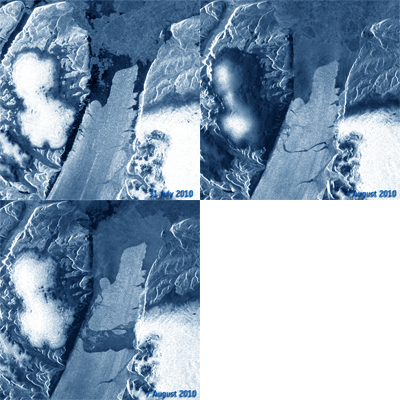
    The largest Iceberg since 1962 has broken of the Greenlandic Ice sheet. The Iceberg comes from the Petermann glacier in North-West Greenland which is one of the largest glaciers connecting the Greenland Inland ice sheet with the Arctic Ocean.

    As the glacier reaches out into the ocean a tongue of ice is formed, which moves annually about one km. The Ice tongue of the Peterman glacier was the largest one in Greenland, with an extension of about 70km into the sea until now when this massive Iceberg has broken free.

    Petermann glacier

    The ice island has a surface area of about 161 square kilometers or 100 square miles and a thickness of about a 190 meters high. These astonishing numbers can be put in perspective by saying that it’s four times larger than Manhattan and it’s height approximately half of the empire state building- the freshwater stored in the ice island could keep all U.S. public tap water flowing for 120 days.

    it can be estimated that this event was hastened by rising sea and air temperatures in the Arctic but perhaps not a direct consequence of the warming. In 1962 a 370 square kilometer iceberg broke of from the nearby Ward Hunt Ice Shelf.

    There is some fear that the Ice island may travel down into the Baffin bay area, where there is a lot it could crash against. Further more it could over a number of years reach as far as into the North Atlantic either as still rather large ice island or it could brake up into smaller parts which in both event could pose a threat to infrastructure and shipping lanes.

    [http://www.youtube.com/watch?v=5G7L6T_rYcY]