Blog

  • Protecting the sacred in the Arctic

    Protecting the sacred in the Arctic

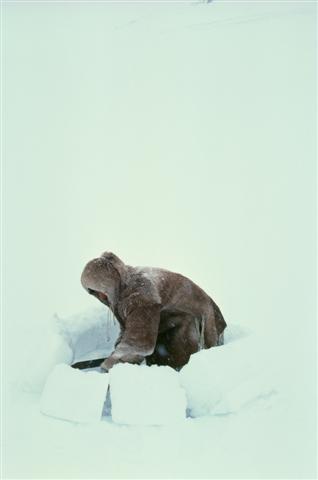
    Indigenous lifestyle

    Conference recognition of Sacred Sites of Indigenous Peoples for Sustaining Nature and Culture in Northern and Arctic Regions, will take place 11 – 13 September 2013 in Rovaniemi and Pyhä, Finland.

    The conference brings together scientists, sacred natural sites custodians, Indigenous Peoples’ Organizations, policy makers, conservation and civil society leaders, to evaluate options for international and national law, policy and practice in order to better recognize, safeguard, conserve and manage Sacred Natural Sites (SNS) of Indigenous Peoples in Northern and Arctic regions.

    SNS are being increasingly recognized as an important means for the conservation of biological and cultural diversity, and the transmission of culture and identity.

    Yet, legal protection of SNS and related policies are still often insufficient or absent. It becomes increasingly difficult for custodians in the North to protect these ancient sites, due to economic developments (tourism, mining, forestry) and infrastructural development (roads, dams, mega projects).

    At the same time the need for protection may be challenged by some protection measures (identifying of location, mapping) and may raise the question of keeping intimacy and sensitivity of these places.

    At international level, SNS have been receiving increasing legal attention; they are now mentioned in several international legal instruments (e.g., CBD, UNDRIP). Yet, effective and culturally appropriate implementation is often still lacking.

    The Conference is co-organized by the Arctic Centre (University of Lapland), University of Montreal and the University of the Arctic Thematic Network on Arctic Law.

    In order to attend the conference, please complete and submit the registration form by 8th of August. Click here for more information about the event.

    Source

    Arctic Centre

  • New laws for the Russian Arctic

    New laws for the Russian Arctic

    Arctic Territory, including Russian Arctic - Map Arctic Portal

    A new Russian law is about to deprive significant areas in the northern part of the country their Arctic status. New rules of demarcation are being introduced for the region.

    The Russian Law on Arctic Territories is expected to considerably shrink the extension of Russian Arctic land territories and lay down new rules both for the ones living and working in the area.

    According to a draft version of the legislative document, the Komi Republic will be among the areas, which are to be redefined, Rossiiskaya Gazeta reports.

    Also parts of Murmansk and Arkhangelsk Oblasts might be affected. According to Murmansk Senator Igor Chernishenko, only the areas which have direct access to the Arctic coast will be defined as Arctic in the new legislation.

    The draft legislation proposes number of rules for infrastructure development in the region that will be defined as Russian Arctic. Development will include aviation transportation infrastructure that will become state´s priority. Privatization of aviation sector that serves the Russian Arctic will be forbidden by new law.

    The adoption of the new Arctic Law will subsequently be followed up with the elaboration of an Arctic Development Programme, which is to outline priorities as well as propose the necessary financial instruments.

    The Russian government has earlier confirmed that the new law will be adopted in the course of 2013. The Ministry of Regional Development is leading the process.

    As previously reported, the ministry in a tender announcement last year offered bidding consultancy companies five million RUB for the first drafting of the legislative document.

    Source: Barents Observer

  • Students that clean the Arctic

    River in the arctic

    The initiative to clean Russian part of the Arctic, organized by the Northern (Arctic) Federal University, continues this month.

    On June 18th five students from student squad “Gandvik” of the North-West Federal District left to the Hooker Island (Federal Reserve “Franz-Josef Land”). The second group of 20 students will go on the expedition in July 20. Their destination point is the island of Alexandra Land.

    “We will fly by plane; this will save a lot of time. We will arrive at the place after a few hours, not days,” – said a member of the construction team “Gandvik” Alexey Klimov. He is Deputy Director of the Integrated Safery Institute.

    Preparatory works are carried out at the moment: checking necessary machinery, transport, other equipment. Each group of the student squad will carry out certain tasks. For example, the group on Hooker Island will reconstruct buildings.

    Students from the second group will take part in cleaning territories of the island Alexandra land.

    The island is littered with debris, such as barrels, parts and mechanisms of the abandoned equipment. The members of the expedition plan to make the island absolutely clean till September, it has to look as if it had been untouched by modern civilization. The work is simple: students will just collect debris and put it in special containers. The only difficulty lies in monotony of such work.

    The return of both groups is scheduled for September 1. It is planned that the students will collect totally six tons of rubbish.

    The initiative and support for students come from the Northern (Arctic) Federal University. The action is planned to be repeated next year.

    To read more about the Northern (Arctic) Federal University, please click here.

    Source

    Northern (Arctic) Federal University

  • Tara Oceans Polar Circle expedition

    Tara Oceans Polar Circle expedition

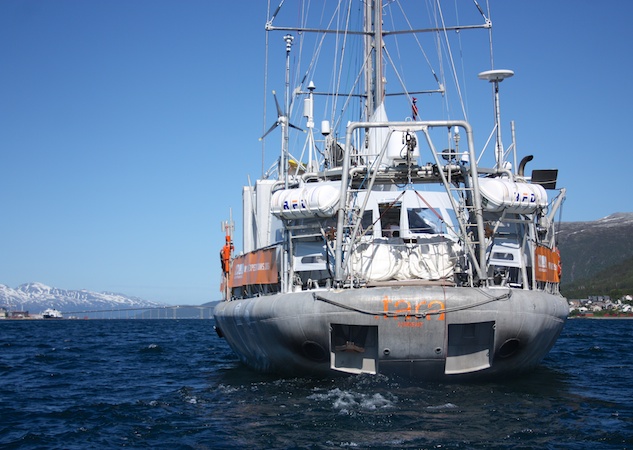
    TARA research schooner

    The Tara research schooner is now in the High North for a new scientific adventure. Over the next seven months, it will travel 25 000 km around the Arctic Ocean via the Northeast and Northwest passages to collect data on polar marine ecosystems and biodiversity and their vulnerability to global change and human activities.

    The Tara Oceans Polar Circle expedition will serve to complete the objective of the Tara Oceans Expedition (2009-2012): to collect plankton in all the oceans of the world. These tiny organisms form the base of the marine food chain, store CO2 and use their photosynthetic activity to act as an immense oxygen pump.

    However, their ecosystems remain one of the least explored fields of oceanography. Biologists and oceanographers will focus their research on the edge of the ice pack, where plankton is most abundant.

    Other issues will also be explored, including the assessment of mercury levels in the atmosphere and in the sea, and the concentration of plastic particles

    Such unprecedented measurements will facilitate our understanding of their impact on the arctic ecosystem.

    Click here to follow the TARA expedition on the internet. Click here to download the information brochure on the expedition.

    Source

    Tara Oceans Polar Circle

  • UArctic Forum took place in Arkhangelsk

    UArctic Forum took place in Arkhangelsk

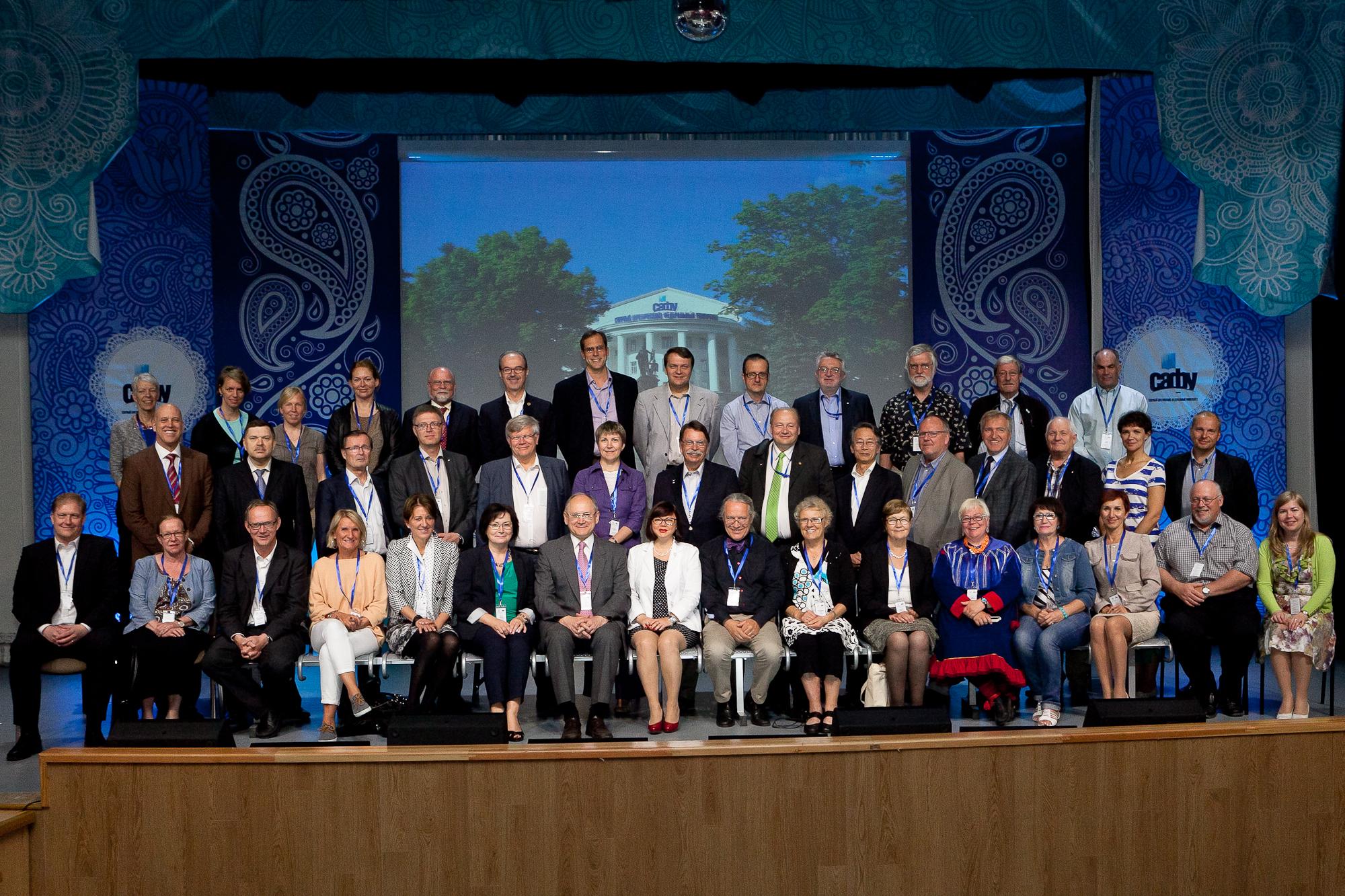
    Participants of UArctic Forum 2013

    26-30 June the 7th UArctic Rectors’ Forum took place in the Northern (Arctic) Federal University, Russia; Arkhangelsk hosted this Forum for the first time. Heads of universities, remarkable experts and students from eight countries discussed the development of the Arctic Region.

    The University of Arctic is a network of Arctic universities from different countries, not only northern ones. For example, there are Arctic universities in Japan and China. This proves the highest international interest to the Arctic and its resource potential.

    The Forum stressed such issues as logistics, development of infrastructure and transport system in high latitudes. The main task of the Forum was to discuss how the universities from different countries meet the “Arctic challenges”.

    The Forum was attended by 30 educational institutions involved in consortium of the University of Arctic. Representatives of foreign scientific foundations (such as NordForsk, program Fulbright etc.) contributed in the discussion about scientific cooperation and Arctic research.

    The participants shared views on international cooperation in the Arctic. They noted that northern territories have become an example of successful international cooperation for less stable regions. Russia gradually develops bilateral relations with traditional partners: Norway, Canada, and Finland. There are prospects for project development together with the USA, Denmark, Iceland, and Sweden. These prospects are connected to such issues as development of continental shelf, hydrography, and societal security.

    An important part of the Forum was devoted to environmental problems and climate change in the Arctic. For example, the effects of global warming make special requirements for certain types of work on the Arctic shelf and for hydro – meteorological support of navigation along the Northern Sea Route.

    Climate change will have both negative and positive impacts on the environment, economics and population of the Arctic region. Negative consequences of human activity change the environment, affect health and traditional way of life of local population. Positive effects of climate change also exist: heating costs reduce, and opportunities for agriculture, forestry navigation on the Northern Sea Route and extraction of mineral resources increase.

    There was a clear consensus among participants that universities should become regional research centers and formulate an Arctic agenda: initiate research and infrastructure projects in collaboration with business and government, train professional personnel for work in the Arctic. Joint research projects are also important since they give an opportunity to unite efforts of all UArctic member institutions.

    Source

    University of the Arctic

  • Nansen scholarship deadline extended

    Nansen scholarship deadline extended

    University of Akureyri

    Nansen Visiting Professorship in Arctic Studies extended application deadline to the 15th July.

    The University of Akureyri in Iceland is now seeking candidates for the 2nd appointment for the Nansen Visiting Professorship in Arctic Studies.

    The Ministers of Foreign Affairs of Iceland and Norway signed a Memorandum of Understanding in Akureyri in September 2011 for the purpose of strengthening cooperation between Iceland and Norway in the field of Arctic scientific research, including the establishment of a Nansen Professorship in Arctic studies at the University of Akureyri, named after the Norwegian polar scientist Fridtjof Nansen.

    The post of visiting professorship in Arctic studies at the University of Akureyri is available for application. It is awarded for a twelve months period to a leading scientist – each year to candidates from different fields of studies – working with issues that bear on legal, economic, social and natural circumstances in the Arctic.

    Application deadline has now been extended to the 15th of July 2013. For more information about the scholarship, click here.

    Source

    University of Akureyri

  • Knight’s Cross awarded to Dr.L. Heininen

    Knight’s Cross awarded to Dr.L. Heininen

    Lassi Heininen

    Professor Lassi Heininen was awarded Knight’s Cross of the Icelandic Order of the Falcon by Dr. Olafur Ragnar Grimsson, the President of the Republic of Iceland due to his contributions for Iceland and the Finnish-Icelandic relations.

    Dr. Heininen is Professor of Arctic Studies and Adjunct professor (Docent) of International Relations at the Faculty of Social Sciences, the University of Lapland (Finland), Visiting Professor at University of Akureyri (Iceland), and Adjunct Faculty at Frost Center for Canadian Studies, Trent University (Canada).

    He has been the chairman of the Steering Committee for the Northern Research Forum (NRF) – an innovative, joint Icelandic-Finnish activity to implement the interplay between science and politics – from the beginning in 1999.

    He is actively involved in speaking at international scientific conferences, and organizing international academic seminars, workshops and other gatherings, such as NRF’s Open Assemblies and the annual Calotte Academies.

    He is also the Editor of the Arctic Yearbook, and the leader of the University of the Arctic Thematic Network on Geopolitics and Security (studies).

    The Icelandic Order of the Falcon is to be “conferred on Icelandic or foreign individuals for achievements to the benefit of the Icelandic peoples, specific sections of the community or parts of the country, or to the benefit of important and worthy causes in Iceland or in the international arena”. The Order was established in 1921.

    Source

    University of the Arctic

  • PAGE21 field season has now begun

    PAGE21 field season has now begun

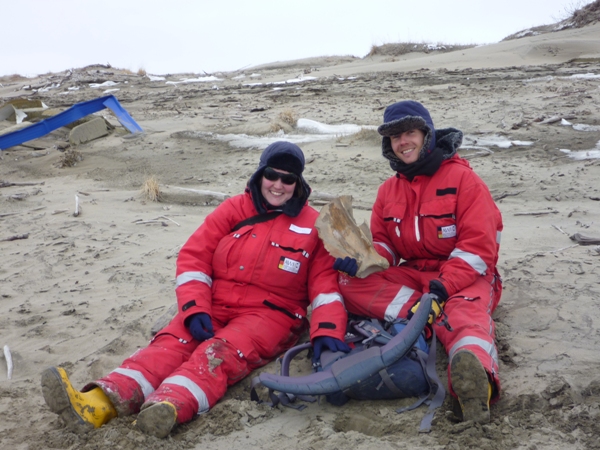
    Researchers from the University of Hamburg in Samoylov Island

    PAGE21 young researchers have just started their season of permafrost investigation in remote areas, located in the northern hemisphere. First groups took off to Kytalyk and Herschel Island earlier this month. Researchers will come back to their home institutions at the beginning of September.

    While collecting data on permafrost temperature, CO2 and CH4 fluxes, delegates from all the research stations, explain the particularity of the research done at each site. What is more they describe adventures, dangers and exciting daily life in remote tundra locations.

    PAGE21 Blogs are available for the public.

    PAGE21 project aims to understand and quantify the vulnerability of permafrost environments to a changing global climate, and to investigate the feedback mechanisms associated with increasing greenhouse gas emissions from permafrost zones. This research will make use of a unique set of Arctic permafrost investigations performed at stations that span the full range of Arctic bioclimatic zones. The project will bring together the best European permafrost researchers and eminent scientists from Canada, Russia, the USA, and Japan.

    The PAGE21 is a Large-scale integrating collaborative project under the ENV call topic “Vulnerability of Arctic permafrost to climate change and implications for global GHG emissions and future climate” (ENV.2011.1.1.3-1) coordinated by Professor Hans-Wolfgang Hubberten from AWI.

    Sources

    PAGE21

    PAGE21 Blogs

  • Award – winning CAFF film now available

    Award – winning CAFF film now available

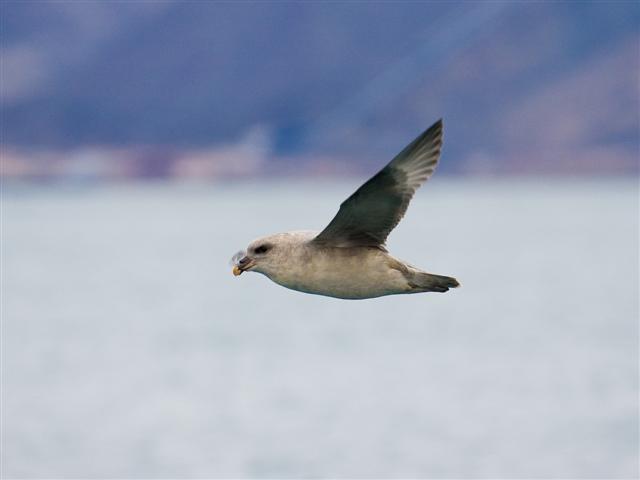
    Bird flying over water

    The film “Status and Trends in Arctic Biodiversity” addresses current biodiversity issues in the Arctic, and ongoing pressures on its ecosystems. It highlights key issues that surfaced in the Arctic Biodiversity Assessment. The film is a collaborative work of the Conservation of Arctic Flora and Fauna (CAFF) working group and UNEP GRID-Arendal.

    Emphasis is placed on the new set of challenges and stressors brought about by climate change and the increase of industrial activities in the region. In view of these challenges, CAFF has set out to provide policymakers and conservation managers with the best available scientific knowledge informed by traditional knowledge on Arctic biodiversity.

    The film was approved by Arctic Council Senior Arctic Officials’ at their meeting in Haparanda in November 2012. Further the film was presented to the eight Arctic Ministers and six Indigenous Peoples representatives at the Ministerial Meeting in Kiruna 15 May 2013.

    “Status and Trends in Arctic Biodiversity” was also awarded first place in the documentary category at the Green Lens Environmental Film Festival which is an annual environmental film competition sponsored by the Northern Illinois University´s Institute for the Study of the Environment, Sustainability and Energy.

    The film is available for the public and can be viewed here.

    Sources

    CAFF

    Arctic Council

  • The Day of the Arctic to be held in Iceland

    The Day of the Arctic to be held in Iceland

    Icelandic landscape

    The Day of the Arctic will be held by the Icelandic – Arctic organizations on 14th of November 2013. The event will promote environmental, international research, political, legal and economic cooperation between Iceland and the Arctic nations.

    The event will also create the platform for the discussion about problems and prospects of current development of the Arctic Region.

    Alongside lectures and panel discussions, the Day of the Arctic will open a large scale platform for Arctic related commercial companies to present their northern operations.

    The Day of the Arctic will be organized jointly by the Icelandic – Arctic Cooperation Network,Stefansson Arctic Institute and RANNIS.

    Those to wish to contribute to the panel discussion or the poster session are requested to sumbit their abstracts until 12th of July 2013 to Embla Eir Oddsottir.

    More information about the event is available in Icelandic on the webpage. For any specific inquiries, please contact Thorsteinn Gunnarsson on e – mail or tel: 00354 515 5800.

    Source

    Icelandic Arctic Cooperation Network