Tag: Antarctic

  • Future Directions in Antarctic Science

    Future Directions in Antarctic Science

    Penguins

    IASC´s southern hemisphere partner, the Scientific Committee on Antarctic Research (SCAR), is embarking on a unique and exciting project to identify the most important and compelling questions in Antarctic and Southern Ocean science over the next two decades.

    A collective, community-based vision of the 100 highest priority scientific questions will be developed to assist in strategic planning; influence future directions in Antarctic research; highlight opportunities for collaborations and synergies; identify future critical infrastructure, logistical, and technological needs; and inform international decisions about investments in the Antarctic scientific enterprise.

    For this project to be successful organizers need the opinions and insights on what are or will be THE scientific questions that once answered, will measurably improve our understanding of Antarctica and the Southern Ocean and its connections to the Earth and climate systems and beyond.

    Outputs will include a high-profile, summary paper published in a leading journal and various other documents and products that will be widely disseminated to the community. Public responses will be the “raw material’ to identify the most compelling and timely questions for Antarctic and Southern Ocean science in the future.

    This project will only be successful if the communities and individuals choose to participate!

    Please encourage your colleagues to submit questions as well. The first round solicitation will close on 15 June 2013.

    For more detailed information and to submit your questions, please visit SCAR Website.

    Source
    Scientific Committee on Antarctic Research

  • Framing China and Australia in the Antarctic

    Framing China and Australia in the Antarctic

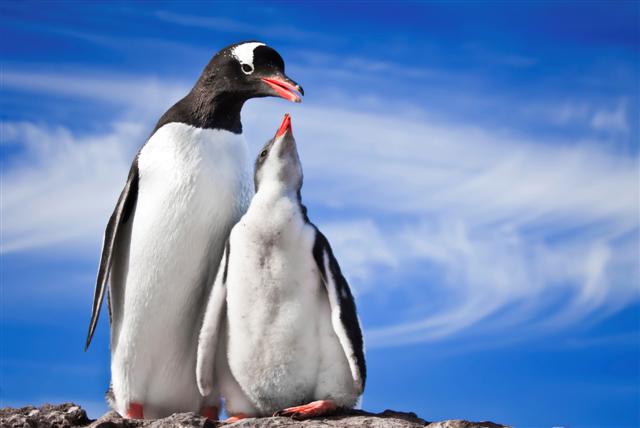
    Penguins in Antarctica

    Framing of the Antarctic is different between states. In a new interview with Anne-Mary Brady, we look at the framing theory, identifying two prominent Antarctic players, Australia and China.

    Australia claims 42% of Antarctic territory, while China has three bases in Antarctica (two of them on the Australian claim) and is rapidly expanding its operations there.

    Official framing is an important tool by which Antarctic players can boost the legitimacy of their right to engage in Antarctica. State’s utilise official frames when there is a perceived legitimacy deficit that must be addressed and as part of an ongoing process of legitimation of their interests, according to Brady.

    Here is the interview:

    Sources

    IPY Interview

  • Polar Graduate Programmes

    Polar Graduate Programmes

    Foreign students at the University of AkureyriAre you interested in learning more about the Arctic, Antarctic or the cryosphere in general? Thinking of going to graduate school or gaining extra credibility through a certificate programme or another degree?

    APECS has gathered information to help prospective students finding their way in Arctic studies.

    On APECS.is you can find a searchable database which includes graduate programmes that have a focus or specialty in any field of Arctic, Antarctic, Alpine or other areas within the cryosphere – ranging from social sciences and law to ecology, geology, physics and more.

    The purpose is to provide prospective students with information on those programmes, such as disciplinary focus areas, website links, typical program duration, application deadlines, costs and, where available, financial support.

    APECS encourages universities and individuals to enter programme information to the database, as well as posting current openings for graduate research and teaching assistantships on the APECS jobs page.

    APECS, the University of the Arctic, and the International Antarctic Institute are working collaboratively to compile this inventory of programmes worldwide.

    Click here to access the database.

  • The International Polar Year

    The International Polar Year

    Arctic Portal news

    The International Polar Year is a large scientific programme focused on the Arctic and the Antarctic. The program officially ran from March 2007 to March 2009 but was closed in September 2011. IPY was organized through the International Council for Science (ICSU) and the World Meteorological Organization (WMO). It was actually the fourth polar year, following those in 1882-3, 1932-3, and 1957-8.

    IPY involved over 200 projects from around the world on Arctic and Antarctic issues. Thousands of scientists from over 60 nations examined a wide range of physical, biological and social research topics. It was also an unprecedented opportunity to demonstrate, follow, and get involved with, cutting edge science in real-time.

    Arctic Portal is a good example of a project which started out as an IPY project.