Tag: antarctica

  • Nominations for Antarctica prize open

    Nominations for Antarctica prize open

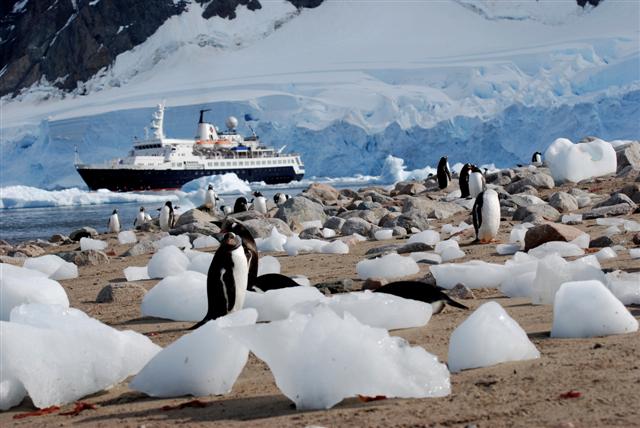
    Penguins in Antarctica

    Nominations for a prestigious prize for Science and Policy in Antarctica are now open.

    The “Martha T. Muse Prize for Science and Policy in Antarctica” is a US$ 100,000 unrestricted award presented to an individual in the fields of Antarctic science or policy who has demonstrated potential for sustained and significant contributions that will enhance the understanding and/or preservation of Antarctica.

    The Prize is inspired by Martha T. Muse’s passion for Antarctica and is intended to be a legacy of the International Polar Year 2007-2008.

    The prize-winner can be from any country and work in any field of Antarctic science or policy. The goal is to provide recognition of the important work being done by the individual and to call attention to the significance of understanding Antarctica in a time of change.

    A website with further details, including the process of nomination, closing date and selection of the Prize recipients is available at www.museprize.org.

    The Prize is awarded by the Tinker Foundation and administered by the Scientific Committee on Antarctic Research (SCAR).

    Source

    Muse Prize

  • Antarctica airstrip melting fast

    Antarctica airstrip melting fast

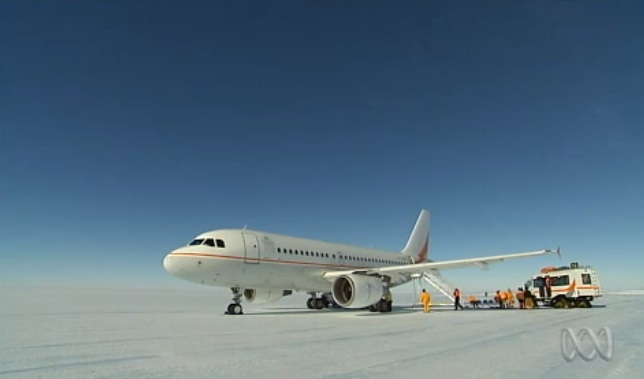
    Australian plane in Antarctica

    The Australian runway on Antarctica is melting fast. The melting is causing problems in transport and there will be no flights from Australia to January.

    Australia will seek help from China with transport if needed.

    It is possible that a new airstrip of gravel will be made in the future.

    The $46 million Antarctic air link opened four years ago with the expectation of 20 flights to the Wilkins runway near Casey Station each season.

    Antarctic flights in 2009-2010 were supposed to be 20 for each season, but were 14 in the earlier season and only two in the latter. In 2011-2012 season all four planned flights were achieved and now for 2012-2013 there are six flights scheduled.

    Australian Antarctic Division chief Tony Fleming says that safety issues are very strict. “Once it gets to above minus five degrees in the ice, then there are safety parameters which mean we can’t [land] aircraft on that. Some way down in the ice, if it becomes above that temperature, we can’t guarantee the structural integrity of the surface.”

    The Wilkins runway is used to get vital equipment, medical supplies, people and food to the continent.

    Source:
    ABC

    See also:
    Video about the story

  • Architecture in Antarctica

    Architecture in Antarctica

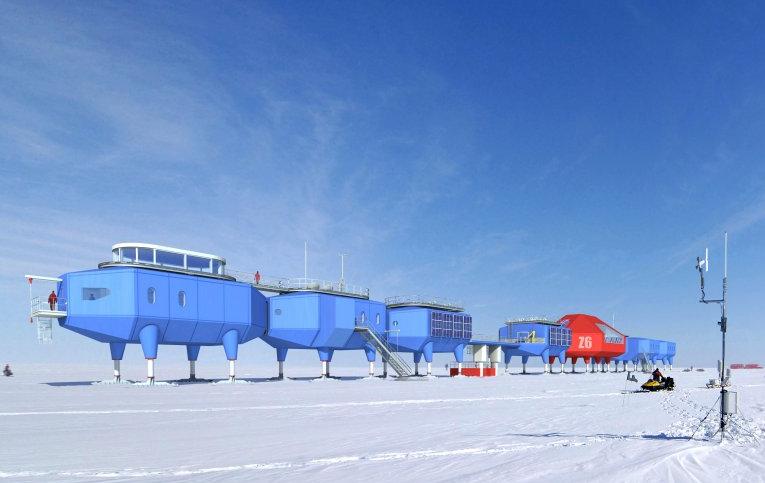
    Halley station in Antarctica

    It was down to faith. That is the reason Hugh Broughton, architect, started designing buildings for the extreme conditions in Antarctica.

    Blistering wind and temperatures below 0 every day of the year calls for unique designs. BUt there are more concerns. Moving ice and long distances do not make the designing any easier.

    In a fascinating interview with the Arctic Portal, Hugh described the design of infrastructure in the South Pole. He gave us an insight to the British Station, Halley, he designed.

    He has also looked at other projects in Antarctica and even considers the designs usable in other locations.

  • King Penguins recovered fully

    King Penguins in Antarctica

    The King Penguin has recovered from near extinction some 80 years ago. They are over 500.000 in Antarctica, again. It was in 1919 one of the first wildlife campaign started.

    It was triggered when only around 4000 animals were left after gruesome slaughtering. The ban of hunting them and reduced fishing in the area allowed them to recover.

    New Zealand blubber merchant Joseph Hatch made his fortune by boiling 3 million penguins to extract oil for lamps. This was around 100 years ago.

    The penguins were caught at Macquarie Island, a remote island between Antarctica and New Zealand.

    DNA analysts report that the genetic diversity of the population is close to pre slaughter levels.

    “It is remarkable that a nearly extinct population has recovered levels of past genetic diversity in only 80 years,” says Tim Heupink of Griffith University in Nathan, Australia.

    Heaupink studied 17 king penguins which he caught alive. He took flesh from their feet and released. He then compared their DNA to bones found in a former colony of Penguins around 1000 year old.

    It brings hope that properly protected, other beleaguered populations of birds and mammals can swiftly regain not just their numbers but also their genetic diversity – which is vital to long-term survival.

    Sources

    New Scientist

  • Great melt – But not in the Himalayas

    A melting glacier in the Himalayas.

    A new study led by a research team from the University of Colorado Boulder shows that glaciers and ice caps in the world, outside Greenland and Antarctica, are shedding roughly 150 billion tons of ice annually.

    This is the first comprehensive satellite study of the contribution of the world’s melting glaciers and ice caps to global sea level rise. The result indicates they are adding roughly 0.4 millimeters annually according to physics Professor John Wahr who led the study. Melting sea ice contributes to global rise in sea levels, which could lead to significant threats in the future.

    The team used satellite images to conduct the study and the annual shed between the years 2003-2010 was enormous. The total does not count the mass from individual glacier and ice caps on the fringes of the Greenland and Antarctic ice sheets — roughly an additional 80 billion tons.

    Launched in 2002, two GRACE satellites whip around Earth in tandem 16 times a day at an altitude of about 300 miles, sensing subtle variations in Earth’s mass and gravitational pull. Separated by roughly 135 miles, the satellites measure changes in Earth’s gravity field caused by regional changes in the planet’s mass, including ice sheets, oceans and water stored in the soil and in underground aquifers.

    One unexpected study result from GRACE was that the estimated ice loss from high Asia Mountains — including ranges like the Himalaya, the Pamir and the Tien Shan — was only about 4 billion tons of ice annually. Some previous ground-based estimates of ice loss in the high Asia Mountains have ranged up to 50 billion tons annually, Wahr said.

    A leading glacier expert in Iceland, confirms that the melt in the Himalayas is not as great as many have thought. He says that it is a misunderstanding that millions of people will be without water if the glaciers melt. Even if they melt, it would continue to snow in the Himalayas and it would be sufficient for the water supply.

    He also concluded that the total loss in the Himalayas was not sufficient, as the cap near the top in the Himalayas was getting thicker, while the outsides were shrinking.

    Tómas also point out that the great gap in between studies of the Himalayas shows that the measurements are not as accurate as many think. A study from a few years back showed great melt in the Himalayas, much greater then this study.

    Source: Colorado Boulder

  • Gore invites president to Antarctica

    Gore invites president to Antarctica

    Ólafur Ragnar Grímsson, the president of Iceland

    Ólafur Ragnar Grímsson, the President of Iceland, is in Antarctica with Al Gore and a host of scientists. The exploration also includes director James Cameron, and billionaires Richard Branson and Ted Turner.

    The goal of the exploration is to explore the melting ice cap in Antarctica and discuss how the nations of the world can unite in realistic action against Climate change.

    The Climate Reality Project, Gore´s company, is planning the trip with National Geographic.

    Amongst other in the exploration is James Hansen from NASA, Yao Tandong from China, Christiana Figueres form UNFCCC and scientist from Harvard and leading universities in Europe.

    The exploration is actually sailing in the National Geographic vessel.

    The exploration started yesterday and will end on February 6th.

    Sources

    Vísir.is

  • Fishermen stuck in ice in danger

    Fishermen stuck in ice in danger

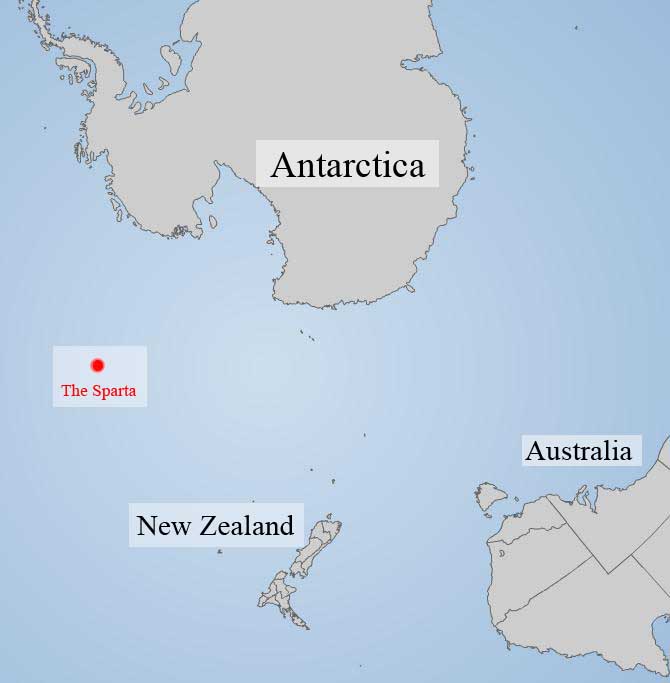
    Approximite destination of Sparta.

    A Russian fishing boat is trapped in heavy sea ice near Antarctica and its crew has moved to lifeboats. The ship is in danger of cracking and sinking so the crew evacuated the ship. It has reported a hole in its hull beneath the water line.

    The next icebreaker is days away and no helicopters are near the ship. A number of ships are on their way to rescue the ship.

    “However, the closest ones are hampered by heavy ice, making vessel movement very difficult. The closest vessel which can cut through the ice is several days away,” Rescue co-ordinator Tracy Brickles said.

    The Sparta is holed beneath the waterline and stuck in heavy sea ice, about 2,000 nautical miles (3,704km) south-east of New Zealand.

    A military plane spent about an hour above the ship but could not land to rescue the crew.

    The crew of 32 has immersion suits on. The crew comprises 15 Russians (including the captain), 16 Indonesians and a Ukrainian, AFP news agency reported.

    They were throwing cargo overboard to lighten the ship, and some had boarded lifeboats as a precaution, the RCCNZ said.

    Remaining crew are pumping water out of the ship and had attached a tarpaulin over the outside of the hole in an attempt to keep the water out, it said. They had requested that additional pumps be sent to help.

    The ice surrounding the ship is estimated to be up to 1.5m thick.

    Click here to see images of the ship from BBC.

    Sources: BBC, AFP, UPI, ITAR-Tass, RCCNZ.

  • Amazing 100 year old photos from Antarctica

    Amazing 100 year old photos from Antarctica

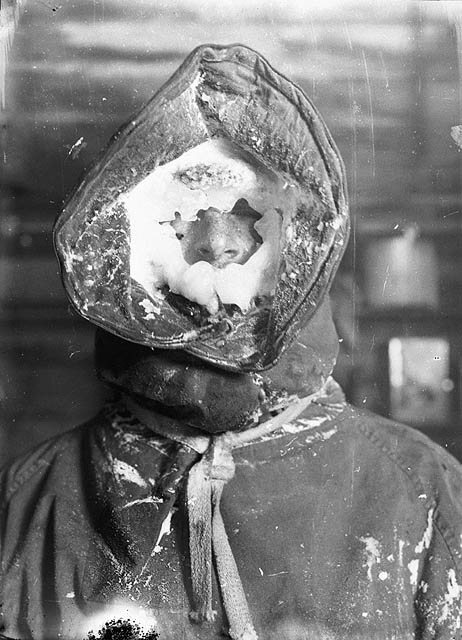
    A man with an ice mask

    As reported here on Arctic Portal today is 100 years since Roald Amundsen step foot on the South Pole, the first person to do so.

    At the State Library of South Wales amazing photographs from Antarctica, 100 years old, are stored.

    The pictures were taken by Frank Hurley in an Australian expedition in 1911. The pictures are diverse and range from landscape photos to pictures of humans. The expedition spent three years at the South Pole but did not go to the Pole itself.

    Its only around 200 years since Antarctica was first seen by humans and thr Australian expedition was one of the first to really explore the region.

    The photos are a unique source from the time  and can be seen here on this website.

    Radio operator Arthur Sawyer

  • Enourmous iceberg breaking off

    Enourmous iceberg breaking off

    Antarctica crack

    A huge rift has been discovered in the West Antarctica icesheet, forming a new gigantic iceberg.

    The crack is around 30km (20 miles) wide and 60m (200ft) deep. The crack keeps growing every day.

    NASA expect the iceberg to break off early next year and that it will be around 880 sq km. Its about the size of German city Berlin.

    The area, called Pine Island Glacier, has been thinning for the last few years so the breakup is not a huge surprise.

    The enormous iceberg could be dangerous to shipping but it will be monitored closely, when it finally breaks off.

    Source: BBC

  • Rock and roll satellite

    Rock and roll satellite

    ice saltellite

    ESA’s ice satellite is collecting data in the two poles, and the project is going well. The satellite is to give precise measurements of the vast ice sheets that blanket Greenland and Antarctica.

    Since its launch 18 months ago, CryoSat-2 has been collecting data to improve our understanding of the relationship between ice and climate, according to ESA website.

    For the first time a map of the Arctic sea-ice thickness was released, by ESA. The ice-satellite is to thank for that map and it is still colleting data.

    To ensure the precision of the measurements, an operation is under way to roll the satellite from side to side as it flies over the flat oceans. This maneuver is to calibrate CryoSat’s radar altimeter for measuring ice thickness, especially over the margins of ice sheets.

    The altimeter has two antennas mounted on a bench about a meter apart. When it is working in the ‘SARIn’ mode, both antennas are used in parallel: one emits a signal and both receive the signals that bounce back.  

    Normally, this bench is parallel to Earth’s surface. But at the edges of the ice sheets, the ice surface is not always flat and the slopes affect the return signals.

    Harsh conditions in space – with huge temperature differences between Sun and shade – can lead to the deterioration of CryoSat’s instruments, which can also lead to measurement errors.

    ice satellite

    In order to quantify these errors, ESA ground controllers are working to recalibrate the altimeter.

    They are rolling the satellite to simulate the ice slopes and holding it in this position for several minutes. This must be done while CryoSat is over large, flat surfaces. For satellite altimeters, oceans are Earth’s largest flat surfaces.

    It will also check whether errors are related to CryoSat’s varying thermal conditions – like when exposed to the Sun or in the shade.

    “With the results from the different sets of rolls over different ocean surfaces and at different ambient conditions, we are aiming to characterize the instrument to a precision better than we thought we could make at the time of the launch,” said Tommaso Parrinello, CryoSat mission manager.

    During several maneuvers on Monday and Tuesday, the satellite is rolling 0.4º to both sides while over the Indian and Pacific oceans, before returning to its original position.

    “The preparations for the roll activities have been quite challenging,” explained Nic Mardle, spacecraft operations manager.

    “Although we had experience of these activities from the commissioning phase, we had to iterate a few more times with the planning and mission control teams so that we could support exactly what was required.”

    Satellites have already shown that the extent of sea ice in the Arctic is diminishing. In fact, this year’s minimum has set a new record low.