Tag: APECS

  • APECS Nordic Webinars start tomorrow!

    APECS Nordic Webinars start tomorrow!

    Norden poster

    The APECS Norden Project “Bridging Early Career Researchers and Indigenous Peoples in Nordic Countries” will feature a series of 6 webinars.

    The webinar series will identify current research challenges from the perspective of ECRs and Indigenous peoples and will aim to define potential solutions to overcome these existing challenges to communication and other research issues.

    The topics of the 6 webinars will be posted here once the schedule and program has been finalized. Speakers will include leading experts, Early Career Researchers, Indigenous youth and Indigenous researchers from Nordic regions as well as others. Tentative subjects include the following:

    • History, culture and overview of Nordic Indigenous peoples
    • Indigenous peoples’ perspectives on climate change issues, and related scientific and research activities
    • Developing confidence in researching at the local level
    • Improving communication and Incorporating Traditional Knowledge and local experts into research projects
    • Strategies to engage youth indigenous peoples in education and outreach
    • Strategies to create important sustainable research with support from local indigenous people.

    Webinars will be held weekly in October & November 2013. The schedule including dates, times, registration information and webinar topics will be posted here soon.

    General information and other activities within the APECS Norden Project.

  • Elections for APECS Executive Committee

    Elections for APECS Executive Committee

    APECS

    Association of Early Career Scientists (APECS) encourages their members to apply for next elections to APECS Executive Committee that will be held in September 2013.

    APECS is now an internationally respected association and is recognized as one of the major legacies of the 4th International Polar Year.

    APECS members, particularly those of our past APECS Executive Committees and Councils have largely contributed to this through their excellent and hard work. To maintain this high level of success, and bring new vision and ideas to APECS, it is truly important for potential participants to be active in this election.

    To read more about the function of APECS Executive Committee, please access the organization´s website.

    Application deadline is 8th of September. All applications should be sent directly to Allan Pope allen.pope@nsidc.org

    For more information on how to apply, please visit APECS website.

    Source

    IceNews

  • Yacht sail and research this summer

    Yacht sail and research this summer

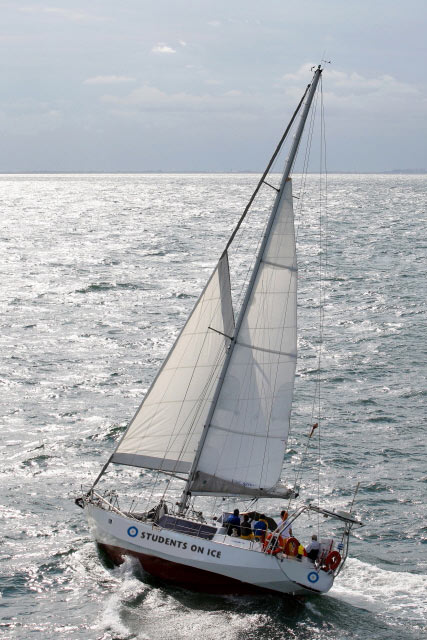
    The Arctic Tern

    Researchers have a unique opportunity to travel around the Arctic this summer. The Association of Polar Early Career Scientists invites researchers to join WWF and the Students on Ice Foundation on a summer expedition to the high latitudes of Greenland and the Canadian Arctic.

    The mean of travel is the expedition sailboat Arctic Tern, which will sail between communities whilst researchers can do their research on land, the sea or in the communities themselves.

    The Arctic Tern is a 50 ft. expedition sailing yacht with a retractable keel to meet the risks of sailing in ice-bound areas which also enables it to sail onto a beach.

    The journey will include experiences polar sailors. It was acquired by Students on Ice in September 2009 to serve as a platform for education, science research, film and media.

    Research areas will include ecosystem productivity, sea ice, flora and fauna, permafrost, ocean currents and cultural adaptations. Application deadline is May 21st and only seven places are available.

    Sources

    APECS

  • New APECS director appointed

    New APECS director appointed

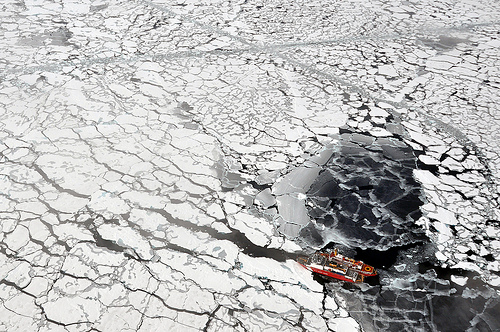
    arctic sea ice

    APECS, the association of polar early career scientists, has appointed a new director, Alexey Pavlov.

    Alexey will be in charge of guiding the development and administration of the organization, along with overseeing and managing all APECS activities, finances and events, recruitment of volunteers and members, and interacting with APECS mentors, advisors, and supporters.

    Alexey highlights international & interdisciplinary collaboration as a key reason he is looking forward to taking on the role of APECS Director. “Collaboration with many interdisciplinary groups has brought me the opportunity to feel the environment of Polar Regions and to better understand current and upcoming challenges facing Polar research,” he said.

    “I’m looking forward to spending the next years of my life above the Arctic Circle and to ‘Shaping the Future of Polar Research’ with even more APECS members and mentors.”

  • CAFF signs Memorandum of Understanding with APECS

    CAFF signs Memorandum of Understanding with APECS

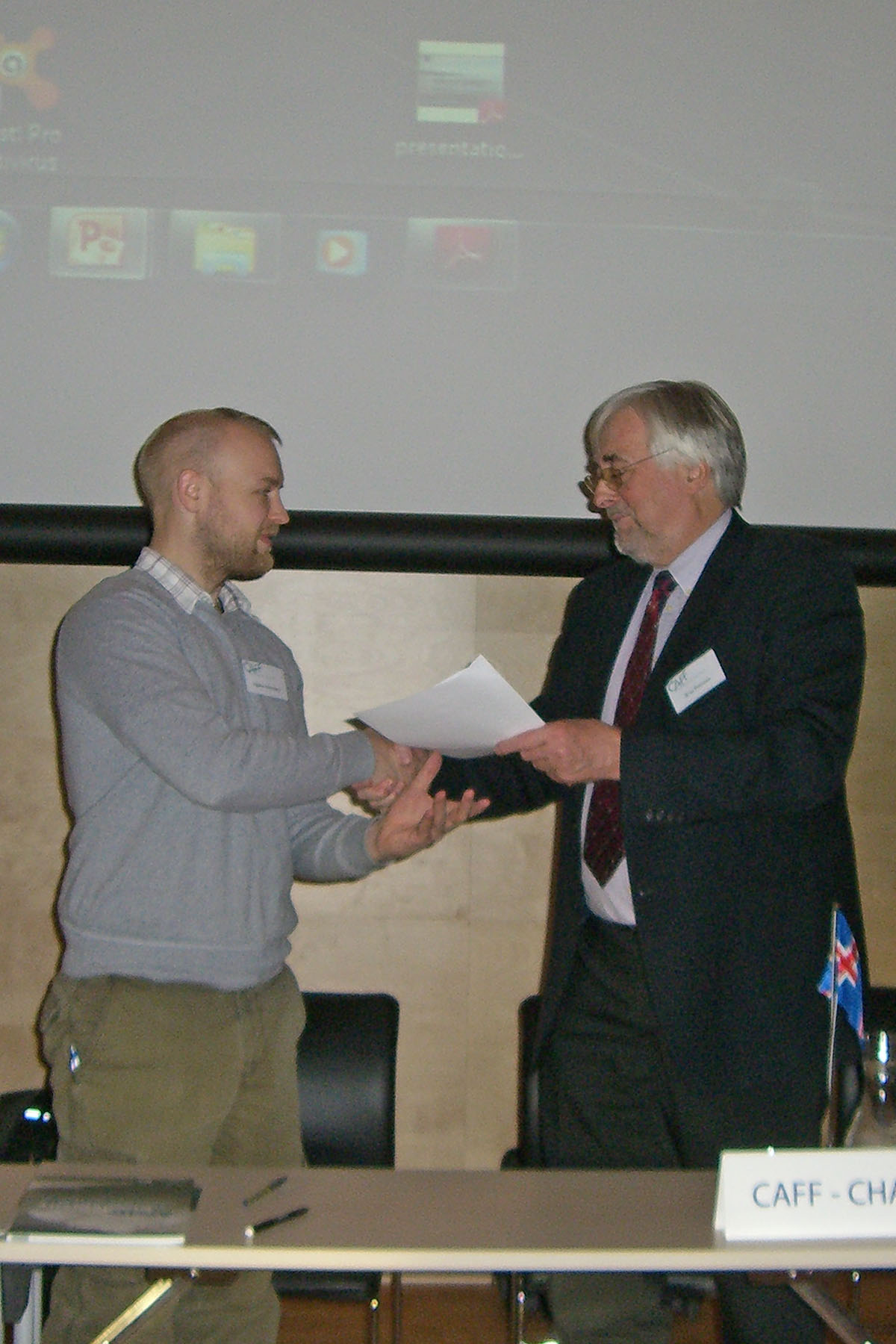
    Memorandum of Understanding signed between CAFF and APECS

    The Arctic Council recognizes in the Tromso declaration that education, outreach, scientific research and capacity building are major tools via which to address challenges in the Arctic.

    And on the third of February, during the XIII CAFF Biennial meeting in Akureyri Iceland, a Memorandum of Understanding was signed to strengthen cooperation between the Conservation of Arctic Flora and Fauna (CAFF) working group of the Arctic Council and the Association of Early Polar Career Scientists  (APECS). The memorandum was signed by Aevar Petersen CAFF Chair and Sigmar Arnarsson on behalf of APECS Chair Allen Pope.

    The objectives and activities of both APECS and CAFF complement one another in that CAFF as a Working Group of the Arctic Council provides a vehicle for knowledge and action in the Arctic region while APECS seeks opportunities for early career researchers to learn from and become engaged in international science and policy projects and programmes. Both parties will benefit from the participation of APECS members in CAFF policy and expert meetings on Arctic biodiversity. APECS members will gain valuable experience while also contributing scientific, innovative, and fresh perspectives to CAFF initiatives.

    The aim is to create a means via which early career scientists can have the opportunity to participate in and gain experience in the circumpolar initiatives undertaken by CAFF as it works towards a more comprehensive understanding of Arctic biodiversity and its status and trends.  Within CAFF activities, emphasis is placed upon regional cooperation that is based upon cooperation between all the Arctic countries and indigenous organizations as well as with international conventions and organizations. CAFF will at the same time benefit from the input of new ideas and participation by young scientists and help to attract and stimulate interest in Arctic biodiversity and help stimulate outreach/communication with the education sector.

    APECS will help to inform its members and partner organizations about the activities of CAFF and its associated partners to help broaden the understanding, representation, and input into CAFF activities through participation of APECS members in CAFF projects including policy and expert meetings. CAFF welcomes this new partnership and foresees a fruitful cooperation with APECS as a representative of the next generation of polar scientists.

  • New APECS Website

    New APECS Website

    Association of Polar Early Career Scientists

    Recently the Association of Early Career Polar Scientists launched a new website.The outlook of the website has been changed and some new features have been added. The new site features a fully searchable membership directory to find colleagues and for prospective employers to search for new hires. There is also a new and improved discussion board that is refered to as the APECS Student Lounge.

    APECS is an international and interdisciplinary organization for undergraduate and graduate students, postdoctoral researchers, early faculty members, educators and others with interests in Polar Regions and the wider cryosphere. Our aims are to stimulate interdisciplinary and international research collaborations, and develop effective future leaders in polar research, education and outreach.

    APECS’ goals include creating opportunities for the development of innovative, international, and interdisciplinary collaborations among current early career polar researchers as well as recruiting, retaining and promoting the next generation of polar enthusiasts.

    To learn more about APECS, please visit their website www.apecs.is

  • The ACUNS-APECS: Communities of Change – Building an IPY Legacy, Call for abstracts

    The ACUNS-APECS: Communities of Change – Building an IPY Legacy, Call for abstracts

    Communities of Change

    The ACUNS-APECS: Communities of Change – Building an IPY Legacy

    9th Annual ACUNS International Student Conference on Northern Studies
    October 2 to 5, 2009,Yukon College – Whitehorse, Yukon, Canada

    Call for Abstracts

    ACUNS and APECS, in partnership with Yukon College, are soliciting Abstracts that encompass the following areas:

    • The impact of sustainable development, economic activity and polar law on communities, governance and natural habitats.
    • The use of natural, physical and social sciences to help understand the causes and effects of the changing polar climate.
    • Changes to polar marine and terrestrial communities over the short and long term.
    • Changes in research communities and how research is undertaken in the Polar Regions.

    The ACUNS-APECS: Communities of Change – Building an IPY Legacy Conference will highlight research occurring at both poles, including interactions between the cryosphere, hydrosphere, biosphere, atmosphere and society. Inter-disciplinary sessions will be arranged based on the number and breadth of Abstracts submitted.

    Submission Deadline: April 15, 2009

  • Various IPY Projects

    Various IPY Projects

    Arctic Portal news

    International Polar Year projects summary.

    Arctic HYDRA

    The Arctic System and its hydrology play a central role in regulating Earth´s climate and the impacts of a warming Arctic are already raising serious concerns about the stability of the sensitive balance between climate conditions, freshwater input, oceanic circulation and the state of cryospheric components. The Arctic-HYDRA project consists of a core network for the observation of the Arctic Hydrological Cycle.
    Arctic Hydra Project Website

    Arctic Observing

    The purpose of the Sustained Arctic Observing Network (SAON) is to develop a set of recommendations on how to achieve long-term Arctic-wide observing activities that provide free, open and timely access to high quality data (obtained at the Earth’s surface and from space) that will realise pan-Arctic and global value-added services and provide societal. The SAON promotes coordination, collaboration and communication to develop the recommendations and achieve a lasting legacy of International Polar Year 2007-2009.
    SAON Website

    AMSA

    The Arctic Marine Shipping Assessment (AMSA) is circumpolar in focus and promotes cooperation and collaboration with a wide range of stakeholders and relevant organizations. It recognizes the importance of contributions from the broader maritime community. The assessment should cover all ship based activities and ship types in the Arctic. Also the assessment should cover the geographical area which is defined by the member states.

    AMSA Website

    APECS

    The Association of Polar Early Career Scientists (APECS) is an international and interdisciplinary organization for undergraduate and graduate students, postdoctoral researchers, early faculty members, educators and others with interests in Polar Regions and the wider cryosphere. Their aims are to stimulate interdisciplinary and international research collaborations, and develop effective future leaders in polar research, education and outreach.
    APECS Website

    CBMP

    The purpose of the Circumpolar Biodiversity Monitoring Program (CBMP) is to strive for the conservation of biological diversity in the Arctic, to halt or significantly reduce the loss of this biodiversity, and to provide information to the indigenous peoples of the Arctic, other Arctic residents, and stakeholders inside and outside the region on the sustainable use of the region’s living resources.
    CBMP Website

    Kuuvik River Expedition

    The main objective of the International Polar Year 2007 Kuuvik River Expedition was to canoe the Kuuvik River in northern Quebec, traversing a remote Arctic territory between Hudson Bay and Ungava Bay, as an expedition of four paddlers using two wood-canvas heritage canoes, along a classic Canadian Crown geographical exploration route that was mapped in 1896 by the geoscientist A.P. Low. The International Polar Year themes addressed by the project included: “the current state of the polar environment”, “change in the polar regions”, and “the polar regions as vantage points”.

    More International Polar Year Projects at the IPY Project Database.