Tag: Arctic Circle

  • Arctic Circle to be held again in Reykjavik

    Arctic Circle to be held again in Reykjavik

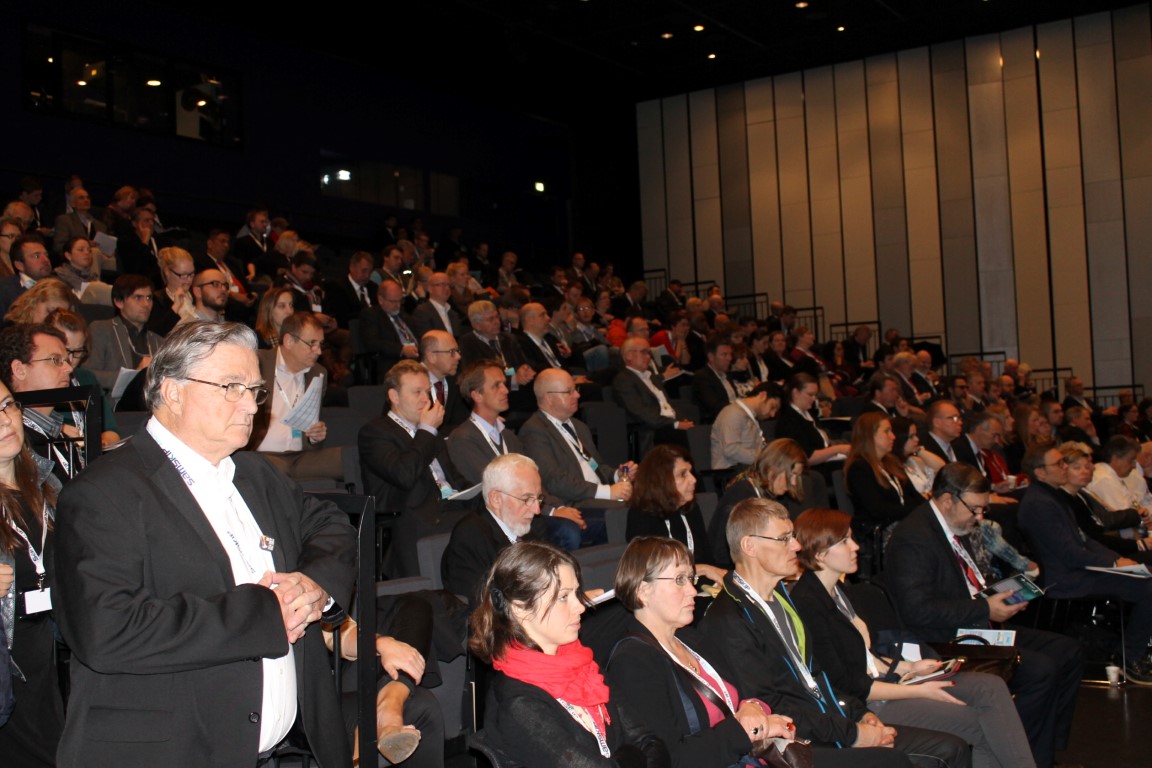
    The audience at Arctic Circle

    Second Annual Arctic Circle Assembly to be held September 5-7, 2014, in Reykjavík, Iceland

    On behalf of President Ólafur Ragnar Grímsson of Iceland, Parliament of Greenland Member Kuupik Kleist, Alaska Dispatch Publisher Alice Rogoff and distinguished partners, the Arctic Circle Team would like to thank everyone for participating in the inaugural Arctic Circle assembly.

    This new open assembly drew more than 1,200 participants from over 40 nations, bringing together both individuals and organizations for a series of meetings and presentations addressing the challenges and opportunities of the changing Arctic.
    The Arctic Circle will reconvene September 5-7, 2014, in Reykjavík, Iceland, and will move to Anchorage, Alaska, in the fall of 2015.

    The Arctic Circle is non-profit and nonpartisan. Organizations, forums, think tanks, corporations and public associations around the world are invited to hold meetings within the Arctic Circle platform to advance their own missions and the broader goal of increasing collaborative decision-making without surrendering their institutional independence.

    The Arctic Circle is designed to increase participation in Arctic dialogue and strengthen the international focus on the future of the Arctic. Participating organizations will maintain their full institutional independence, identity and decision-making abilities.

    To this end, the Arctic Circle aims to create opportunities for everyone to attend different meetings, conduct their own networking and engage in one-on-one informal discussions. Organizations will be able to decide their own agendas and convene their own meetings.

  • Heiðar Guðjónsson about Arctic Circle

    Heiðar Guðjónsson about Arctic Circle

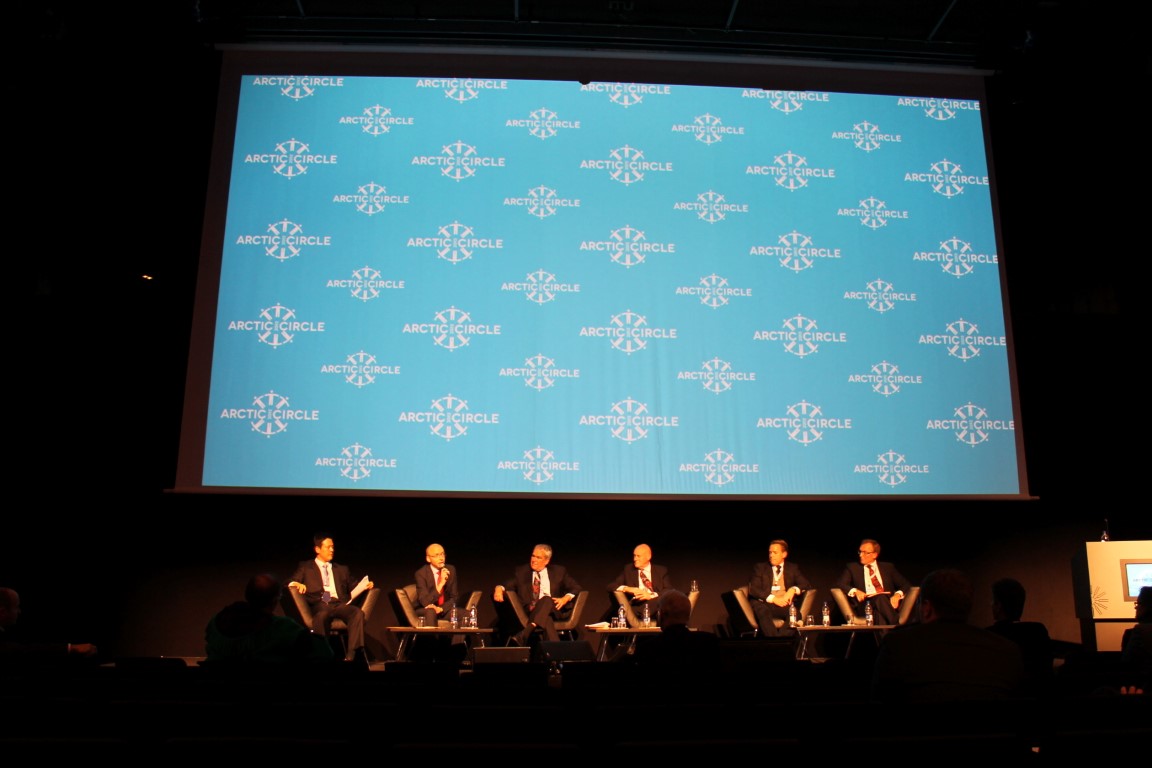
    Arctic Circle plenary session, Harpa, Reykjavik, Iceland

    Today, 16th of October, Heiðar Guðjónsson, the Icelandic economist and business specialist, gave a speech in Icelandic radio station Bylgian on outcomes from the Arctic Circle.

    He highlighted the opportunities that arise from melting Arctic sea ice not only for Iceland but also for other states to include Asian – Arctic partners such as China, Singapore and Korea.

    He stressed a need for economic cooperation between Arctic states with regards to Arctic natural resources exploration and exploitation.

    Arctic Circle took place in Reykjavik, the capital city of Iceland 12th – 14th of October 2013. It was established to facilitate dialogue and build relationships to address rapid changes in the Arctic.

    Participants in the Arctic Circle included a range of global decision-makers from all sectors, including political and business leaders, indigenous representatives, nongovernmental and environmental representatives, policy and thought leaders, scientists, experts, activists, students and media.

    Conference aims to strengthen the decision making process by bringing together as many international partners as possible to interact under one large “open tent”.

    The interview with Heiðar Guðjónsson can be accessed here (in Icelandic). To find out more about the Arctic Circle, please follow the link.

  • Arctic Yearbook is now launched

    Arctic Yearbook is now launched

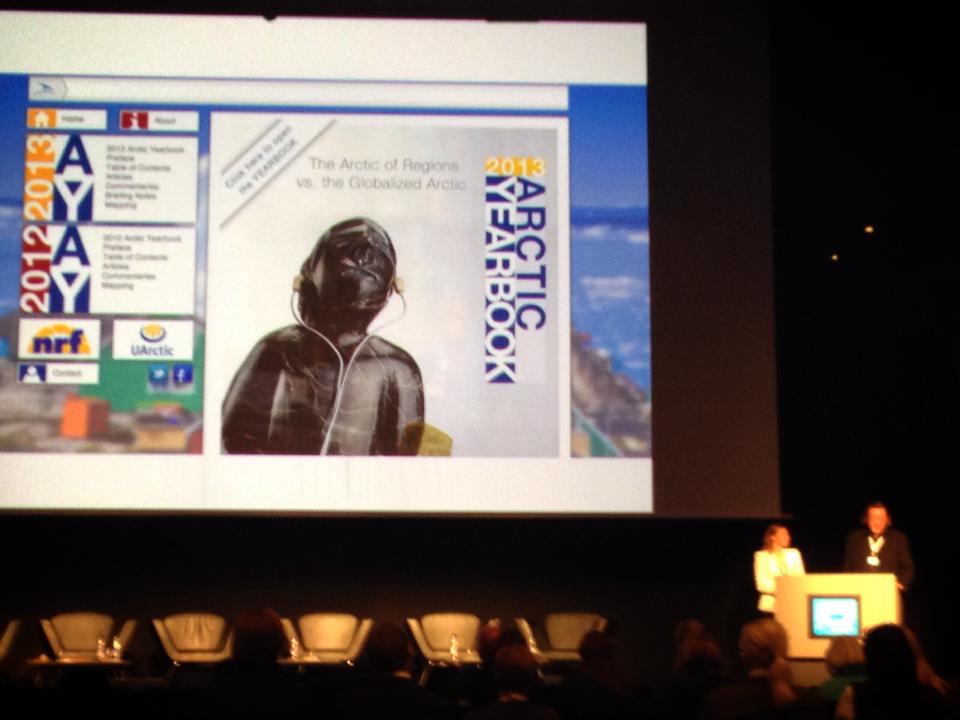
    Lassi Heininen and Heather Exner-Pirot present the Arctic Yearbook 2013 during the Arctic Circle.

    On Saturday, 12th of October 2013, The Arctic Yearbook 2013 has been spectacularly launched during the Arctic Circle.

    The Yearbook, which is this year devoted to how the Arctic of Regions meets the Globalized Arctic, examines the nature of this historic crossroads from different angles.

    It thus contributes in significant ways to the most important transformation the Arctic has ever encountered, demonstrating how science and scholarly dialogue are, and must be, guiding principles of Arctic cooperation and introduce our new partners to an important tradition, the foundation of successful Arctic cooperation.

    The Arctic Yearbook has been the outcome of international cooperation between Northern Research Forum and University of the Arctic.

    The Arctic Yearbook is available under limited copyright protection agreement. The publication is available for download, distribution or photocopy. Citation or excerption of this document must be provided properly, giving full credit to an author and editor of a text. Publication shall not be used for commercial purposes.

    The Arctic Yearbook is being hosted and designed by the Arctic Portal. 

    Click here to read more and download your copy of the Arctic Yearbook 2013.

  • Arctic Circle now FREE of charge

    Arctic Circle now FREE of charge

    Arctic Circle

    We are pleased to announce further collaboration between the Arctic Energy Summit and the Arctic Circle. Anyone that is registered for the 2013 Arctic Energy Summit will also be able to attend the inaugural Arctic Circle that will be held 12-14 October in Reykjavik, Iceland FREE OF CHARGE.

    To find out more about the Arctic Circle, explore their website at www.ArcticCircle.org and watch the promotional video at http://vimeo.com/72587962.

    If you are interested in attending the Arctic Circle, please email or call Geoff Cooper at gcooper@institutenorth.org or 1(907) 786-4663 so that we can let the Arctic Circle organizers know.

    If you have already paid to attend the Arctic Circle, please contact the event organizers by email at info@ArcticCircle.org. If you have not yet registered for the Arctic Energy Summit, you can register now and check the box for free registration to the Arctic Circle.

    We also want to remind you about the optional energy tour that will take place on 11 October. This exciting tour will visit several of Iceland’s remarkable energy developments while traveling from the site of the Arctic Energy Summit in Akureyri to Reykjavik where the Arctic Circle will begin the following day. For more information, please see the details and online registration here.

    SOURCES

    Arctic Circle

    Arctic Energy Summit

  • Arctic Circle now official

    Arctic Circle now official

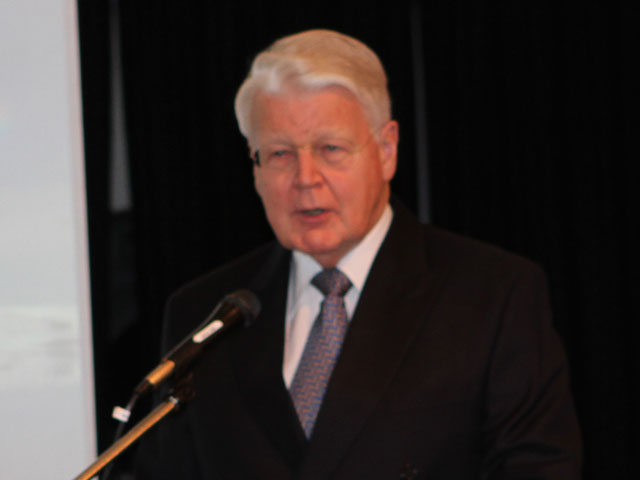
    President of Iceland, Ólafur Ragnar Grímsson

    Yesterday, Iceland’s President – Ólafur Ragnar Grímsson announced establishment of a new assembly for international cooperation on Arctic issues that can give non-Arctic countries like China, India and Singapore a forum for influence in the region.

    The assembly, called the Arctic Circle, will have its inaugural gathering in Reykjavik, Iceland in October. The formation of the Arctic Circle was announced by Iceland’s President Ólafur Ragnar Grímsson in Washington, D.C. on Monday.

    The organization has been registered as a 501(c) 3 non-profit and is supported by private donations. The board of directors is led by Alice Rogoff, founder of the Alaska Dispatch and the Arctic Imperative Summit.

    The mission of the Arctic Circle is to facilitate dialogue and build relationships to confront the Arctic’s greatest challenges. The organization aims to strengthen the decision-making process by bringing together as many Arctic and international partners as possible under one large “open tent.”

    By facilitating circumpolar meetings of leaders across disciplines, the organization will identify truly sustainable development practices for the Arctic, the world’s last pristine environment.

    The Arctic Circle is nonprofit and nonpartisan. Organizations, forums, think tanks, corporations and public associations around the world are invited to hold meetings within the Arctic Circle platform without surrendering their institu¬tional independence.

    Please, click here to read more about the Arctic Circle.

    Source

    Arctic Circle

  • New wind park opened in Norway

    New wind park opened in Norway

    Chairman of the municipal government Svein Ludvigsen opens the wind park

    One of the biggest wind parks inside the Arctic Circle was opened yesterday in Northern Norway. It is located in Vannøya, near Tromsø. The park can produce energy for around 7000 households.

    The wind park can produce around 138 GWh per year. It includes 18 wind power generators and a new 34 km long power line. The project was produced by the company Troms Kraft.

    The mills are 125m high and have taken 10 years to build.

    „Today is a historical day, not only for Troms Kraft but for the owners, Karlsoy and the whole region, company director Anna Maria Aursund said at the opening ceremony on Tuesday. The cost is around 750 million NOK (€100 million).

    Troms Kraft also plans to extend the wind park with offshore turbines placed in the nearby waters.

    Several wind projects are on the drawing board in neighboring countries Sweden and Finland, including a megaproject in Sweden which will be one of the biggest on-shore wind power parks in all of Europe.

    Source:

    Nordlys

  • Beyond Moscow: Syktyvkar success story

    Beyond Moscow: Syktyvkar success story

    Variety of flola makes Syktyvkar unique among Russian northern cities

    All across its length, Russia´s territory reaches up toward the Pole, giving it the broad belt of land being situated within the Arctic Circle.

    In the north – east part of the East European Plain, where forests cover over 70% of the territory, Komi Republic is located. It is a federal subject of Russia with the population a little bit over 900.000 inhabitants.

    There are representatives of close to 130 different nationalities live in the Republic of Komi. The duty to regulate the republic´s international relations is endowed with the Ministry of National Policy of the Republic of Komi.

    It aims to unite efforts of various state players and bring together political, social and cultural movements in order to preserve and promote national culture, language and traditions.

    There are close to 400.000 aboriginal, Komi people. Approximately 125.000 live in the Komi Republic itself. The population is however not recognized as indigenous as the Russian law only allows this status for groups which are not larger than 50.000.

    It is a shame to admit that the Komi language is no longer used in schools or any of the public – government institutions and very few local Russian can speak it.

    The changing world and developing global concepts create more and more challenges for the local government to establish strategies and targets in order to maintain the traditional knowledge of the first settlers.

    The Republic´s most valuable natural resources are to include coal, oil, natural gas, gold, diamonds and timber. The volume of reserves and production of fossil fuels in the area makes it the main fuel supply region for the European North of Russia.

    With the large water resources, Komi Republic is a zone of extreme moisture. A significant predominance of atmospheric precipitation over evaporation, the topography and geological structure, determine the higher waterlogged and well – developed drainage network.

    With the area, being almost totally covered with trees, the Republic of Komi is one of the forestry leading regions in Russia.

    There are more than 4.000 different animal species to be found all around the Republic of Komi.

    There are more than 100 of them, being highly protected. The most valuable economically animals are to include salmon, elk, bear, whitefish, beaver and many more.

    The capital city of Komi Republic – Syktyvkar

    The capital city of Komi Republic – Syktyvkar derives its name from the indigenous name for the river by which the town is situated – Syktyv (today Sysola), plus ´kar´ what in Komi language simply means ´city´.

    The city, with its highly educated inhabitants, is a center of the cultural life in the Republic of Komi and a location of Syktyvkar State University with both international and national students from all over Russia.

    However, most of the Syktyvkar´s inhabitants derive from 19th century exiles and prisoners, including anti – monarchists, kulaks and German soldiers, who were forced to move closer to the Arctic Circle by the Russian government. Nowadays, more than 70 different nationalities live in Syktyvkar and those who were born there, surly have some foreign ancestors.

    This northern city with quickly developing economy is the main Russia´s supplier of paper and pulp products. The biggest paper and wood processing companies are located in Syktyvkar.

    Without a doubt, the city has a favorable economic climate. In recent years it attracted more than 500 million Euros in foreign investments.

    The strategy for rapid socio – economic development has been adapted by the local government. It is expected to last until 2025 and stimulate even more of the investments activities. With the good support from federal government and local community, Syktyvkar slowly becomes the Russian success story.

    Nowadays, when travelling to remote and undiscovered places, rather than to the sunny coasts of the South Europe becomes more and more popular, Russia is being seen as the one of the most favored destination. Inspiring landscapes of the far North give an opportunity to discover Russia being more evocative of Jack London rather than of Catherine the Great even though it was the empress who granted Syktyvkar its status.

    The video presents the town of Syktyvkar in its cultural beauty. It was shot by Olga Alekseevich, Director of Euro – Arctic Center for International Initiatives at Syktyvkar State University.

    Source: Republic of Komi – Official Portal

    See Also: