Tag: arctic fisheries

  • Management of Arctic Fisheries

    EEZ-zones

    Coastal states have their maritime zones where they have exclusive access to all resources. The map on the right shows these zones.

    The zone stretches from the seaward edge of the state’s territorial sea out to 200 nautical miles from its coast (370,4 km). The states have the rights to fish in the EEZ, but also many duties, like preventing overfishing and pollution.

    Fisheries conservation and management authorities, most frequently a Ministry of Fisheries, often make use of the following substantive standards:

    1. Restrictions on catch and effort, for instance by setting the total allowable catch (TAC) and allocating the TAC by means of national quotas.
    2. Minimum size limits for target species.
    3. Maximum by-catch limits, for instance in terms of the number of individuals (e.g. in relation to marine turtles and marine mammals) or as a percentage of the target catch.
    4. Technical measures, for instance minimum mesh sizes,  by-catch mitigation techniques (e.g. turtle excluder devices, bird-scaring lines).
    5. Spatial measures (e.g. closed areas) aimed at avoiding catch of target species (e.g. nursing and spawning areas) or non-target species (e.g. important feedings areas) or avoiding impact on sensitive habitat (e.g. cold water coral reefs).

    There are numbers of intergovernmental bodies who are relevant to fisheries in the Arctic.

    The two biggest ones are perhaps the Food and Agriculture Organization of the United Nations (FAO) and the United Nations General Assembly (UNGA).

    The Fisheries and Aquaculture Department of FAO has the vision of “a world in which responsible and sustainable use of fisheries and aquaculture resources makes an appreciable contribution to human well-being, food security and poverty alleviation.”

    It´s mission is “to strengthen global governance and the managerial and technical capacities of members and to lead consensus-building towards improved conservation and utilization of aquatic resources.”

    The UNGA has many agreements related to the oceans, like the United Nations Convention on Law of the Sea and the Agreement on High Seas Fishing, relating to the conservation and management of straddling fish stocks and highly migratory fish stocks.

    Read more about the agreement here on the Arctic Portal website.

    At the regional level, there are a number of RFMO´s and bilateral or regional organizations/arrangements whose spatial scope overlaps to some extent with the Arctic marine area.
  • Arctic fisheries catches 75 times higher than reports

    Arctic fisheries catches 75 times higher than reports

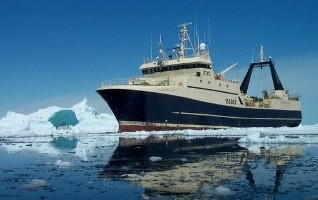
    Arctic Trawler

    According to University of British Columbia researchers, it is estimated that fisheries catches in the Arctic totaled 950,000 tons from 1950 to 2006, almost 75 times the amount reported to the United Nations Food and Agriculture Organization (FAO) during this period.

    The study, Led by Prof. Daniel Pauly, a research team from UBC’s Fisheries Centre and Dept. of Earth and Ocean Sciences reconstructed fisheries catch data from various sources – including limited governmental reports and anthropological records of indigenous population activities – for FAO’s Fisheries Statistical Area 18 , which covers arctic coastal areas in northern Siberia (Russia), Arctic Alaska (the U.S.) and the Canadian Arctic.

    It is reported in the study that the Arctic is one of the last and most extensive ocean wilderness areas in the world. The extent of the sea ice in the region has declined in recent years due to climate change, raising concerns over loss of biodiversity as well as the expansion of industrial fisheries into this area.

    Fishing Area

    “Ineffective reporting, due to governance issues and a lack of credible data on small-scale fisheries, has given us a false sense of comfort that the Arctic is still a pristine frontier when it comes to fisheries,” says lead author Dirk Zeller, a senior research fellow at UBC’s Fisheries Centre. “We now offer a more accurate baseline against which we can monitor changes in fish catches and to inform policy and conservation efforts.”

    Official FAO data on fish catches in Area 18 from 1950 to 2006 were based solely on statistics supplied by Russia and amounted to 12,700 tons. The UBC team performed a detailed analysis and found that it’s only the tip of iceberg. According to the study, Russia’s total catch was actually a staggering 770,000 tons from 1950 to 2006, or nearly 12,000 tons per year.

    The team shows that while the U.S. National Marine Fisheries Service’s Alaska branch currently reports zero catches to FAO for the Arctic area, the state agency, the Alaska Department of Fish and Game has collected commercial data and undertaken studies on 15 coastal communities in the Alaskan Arctic that rely on fisheries for subsistence. The estimated fish catch during this period in Alaska alone totaled 89,000 tons. While no catches were reported to FAO by Canada, the research team shows commercial and small-scale fisheries actually amounted to 94,000 tons in catches in the same time span.

    “Our work shows a lack of care by the Canadian, U.S. and Russian governments in trying to understand the food needs and fish catches of northern communities,” says Pauly, who leads the Sea Around Us Project at UBC.
    Trawler fishing

    Researchers from the Sea Around Us Project have previously shown a trend of fish stocks moving towards polar regions due to the effects of climate change. This, coupled with increased accessibility of the Arctic areas due to melting sea ice, will place immense pressure on the region for future large-scale fisheries.

    “This research confirms that there is already fishing pressure in this region,” says Pauly. “The question now is whether we should allow the further expansion of fisheries into the Arctic.”

    “Conservation efforts in the Arctic have so far focused on the exploitation of marine mammals – seals and polar bears are frankly easy on the eye and plain to see,” says Zeller. “None of them would survive, however, if we allow over-exploitation of fish in this delicate but so-far neglected ecosystem.”

    Source: UBC