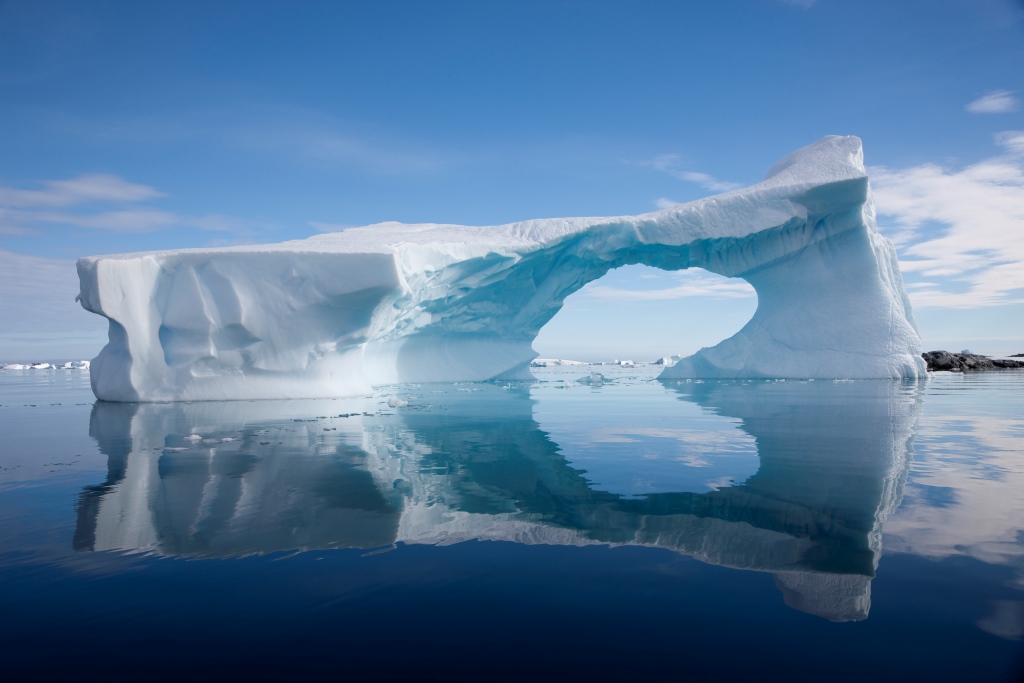
Although most scientists agree on that the globe is becoming warmer, predictions on how rapidly Arctic ice will retreat often varies greatly amongst them.
The schedule is however not as important as the results of this development and the possibility of the ice-free Arctic to become a lucrative shipping route. For oil and gas, climate change will challenge the petroleum sector in many ways.
Offshore oil exploration and production is likely to benefit from less extensive and thinner sea ice, although equipment will likely be costlier as it will be required to withstand increased wave forces and ice movement. Within the region, a number of innovative political and legal arrangements have been developed, while certain devolution of power has also taken place.
Due to the fact that climate change has influenced greatly the northernmost coastal regions of the globe, the Arctic has become one of the frontiers of climate change.
Climate change is expected to increase marine access to the Arctic regions, especially with the possible opening of once completely closed passages such as the Northwest Passage and the Northeast Passage (Northern Sea Route). Increasing shipping activity in the Arctic raises questions of maritime law that will need to be resolved soon.
These issues include accident and collision insurance, authority for regulation, enforcement and cleanup in management of natural resources and environment. These questions are important because sovereignty over Arctic waters is still not firmly settled among Polar nations, and increased ship access could raise many destabilizing international issues.
The Arctic region is categorized by extreme weather conditions. The increase in temperature and melting sea ice will open new sea routes, but will increase the frequency of icebergs, which may damage sub-sea pipelines and offshore petroleum production facilities. Being the most unpredictable factor in this discussion, climate change really is a dominant force in allowing for exploitation of oil and gas in the Arctic on one hand and shipping on the other.
This being said, more predictable factors are also important to establish massive expansion on exploitation of non-renewables, e.g. changes in technology, costs, and transportation availability.
Greenhouse gas emissions restrictions
If the global society can agree to take effective measures to reduce emissions of Greenhouse Gases, it would certainly lead to more energy efficient transport of goods. The shipping of goods from Asia to Europe is in fact relatively shorter trough the Arctic, than through the Suez-Canal or the Panama-Canal.
Transportation itself can therefore be affected by climate change and similarly itself poses challenges in terms of environmental management and international institutions.
Greenhouse gas emission restrictions can be the most determinative factor in encouraging Trans-Arctic shipping because it is subject to universal agreement[1] that has already been elaborated with the Kyoto Protocol.
Further individual states might need, due to pressure from NGO’s and other environmentally friendly stakeholders, implement some measures to reduce emissions, yet, facing similar pressure to the contrary from other stakeholders.
Although no legally binding agreement has been reached, it must be kept in mind that the issue is still under consideration of the global politics. Therefore, it might be thought of as a development waiting to happen rather than mere expectation.
It should be added that such development does not necessarily mean that ships of various kind would be subject to such restrictions. If an industrial state would only need to restrict emissions of 5-10%, burdensome gas emissions would first be tackled in areas where new technology exists and is relatively cheap. On the other hand, Trans-Arctic shipping seems to need both new technologies and the impetus of governments for the shipping industry to use new shipping routes.