The first Young Earth Scientist conference will be conducted in Beijing China 25-28 October. The Arctic Portal will monitor this event closely and repost videos within this page. which will be recorded at the Congress roundtable sessions. The recordings should start appearing Monday the 26. October and keep coming until the end of the week.
The conference will focus on global climate, environmental and geological challenges facing today’s society, and aims to establish an interdisciplinary global network of individuals committed to solving these challenges.
The United Nations General Assembly has proclaimed January 2007 to December 2009 as the International Year of Planet Earth (IYPE). This supports UN sustainable development targets by promoting wise and sustainable use of Earth materials and encouraging better planning and management to reduce risks for the world’s inhabitants. Making Earth Science knowledge available for the society and promoting proper education and commitment to young generations of earth-system scientists are the two key focus points of IYPE.
The Y.E.S. Committee aims to organize the First World Congress aimed at young (up to 35yrs) scientists and professionals working in the field of Earth sciences. The congress also will involve young political leaders, representatives of civil society and worldwide organizations. The Congress was first proposed by members of the Italian Geological Society and is strongly supported by the IYPE Committee-Italy, Italian Geological Survey, IYPE Corporation and IUGS.
The recordings have been posted and can be seen here.
Climate Change in the Polar Regions and its Global Impact
- Dr. Liz Thomas, British Antarctic Survey, Association of Polar Early Career Scientists (APECS), U.K.
- Mr. Ragnar Baldursson, Department of Natural Resources and Environment, Iceland
- Dr. Dave Schneider, National Center for Atmospheric Research, U.S.A.
- Dr. Hamish Pritchard, British Antarctic Survey, U.K.
- Dr. Hughes Lantuit, International Permafrost Association, Alfred Wegener Institute for Polar and Marine Research, Germany
- (no ppt available)Dr. Jianping Li, Deputy Director and Professor, National Key Laboratory of Atmospheric Sciences and Geophysical Fluid Dynamics, China
Natural Resources and Energy Sustainability
- Prof. Ochir Gerel, Mongolian University of Science & Technology, Mongolia
- Dr. Ian Duncan, Bureau of Economic Geology, University of Texas, U.S.A.
- Dr. Yutaek Seo, CSIRO Petroleum Resources, Australia
- Dr. Gavin Mudd, Department of Civil Engineering, Monash University, Australia
Natural Hazards
- Dr. Yi Wang, Institute for Sustainability and Peace, United Nations University, Japan
- Mr. Rudy Montero Mata, Risk Assessment Group Environmental Agency, Cuba
- Mr. R. Krishna Kumar, National Geophysical Research Institute, India
- Dr. Maria G. Honeycutt, Geological Society of America
Industry-Academic Linkages
- Dr. P. Patrick Leahy, American Geological Institute, U.S.A.
- Dr. Bernard J. Pierson, Universiti Teknologi PETRONAS, Malaysia
- Mr. Anthony L. Cortis, Shell Upstream International Exploration, China
- Dr. Diane Doser, University of Texas, El Paso, U.S.A.
Issues Facing Global Geoscience Education and Research
- Dr. Jacques Varet, BGRM, French Geologic Survey, France
- Dr. G. Randy Keller, University of Oklahoma, U.S.A.
- Mr. Edmund Nickless, The Geological Society of London, U.K.
- Dr. Robert Ridky, U.S. Geological Survey, U.S.A.
- Ms. Sarah Gaines, UNESCO, France
Transfer of Credentials / International Licensure
- Mr. Andrew Waltho, Vice President, Australian Institute of Geoscientists, Australia
- Mr. Oliver Bonham, Canadian Council of Professional Geoscientists, Canada
- Dr. Manuel Regueiro, Geological Survey of Spain, Spain
- Dr. Robert A. Stewart, LFR/Arcadis, U.S.A.
- Mr. Stephen M. Testa, California State Mining and Geology Board, U.S.A.
Women in the Geoscience Workforce
- Prof. Ezzoura Errami, African Association of Women in Geoscience, Morocco
- Prof. Ochir Gerel, Mongolian University of Science & Technology, Mongolia
- Ms. Soumaya Ayadi, African Association of Women in Geoscience, Tunisia
- Ms. Laurie Scheuing, Association for Women Geoscientists, U.S.A. (VIRTUAL SPEAKER)
- Mrs. Juliette Tea-Yassi, African Association of Women in Geoscience-Cote d’Ivoire, Cote d’Ivoire
 Expedition of 1872-74. Weyprecht realised that a comprehensive polar research could not be a task of one nation only, but should involve a coordinated international effort. He recognized that a time of mere geographical discovery had past and a series of coordinated expeditions dedicated to scientific research should be undertaken to further peoples understanding on fundamentals of meteorology and geophysics. Unfortunately, he died before the international research became a reality, but his inspiration led to an establishment of the largest coordinated series of scientific expeditions ever undertaken in the Arctic during the 19th century, or to what is now known as the First International Polar Year.
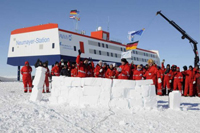 The latest International Polar Year, organized through the International Council for Science (ICSU) and the World Meteorological Organization (WMO), took place in 2007-2008. It was gigantic international multidisciplinary collaborative with around 10 000 scientists and 50 000 other participants from over 60 countries. Main objectives of this megaproject were to significantly increase the scientific knowledge and understanding of the polar areas, especially the wide-ranging and significant impacts of climate warming in the Arctic and Antarctic, and to conduct research projects beyond the resources of individual countries. In addition, the Polar Year aimed at educating a new generation of polar scientists and engineers and raise awareness of the public and policymakers of the importance of the polar areas for the entire planet. The disciplinary breadth of the third IPY far exceeded the previous Polar Years of 1882, 1932 and the 1957 IGY providing more comprehensive picture of the polar areas.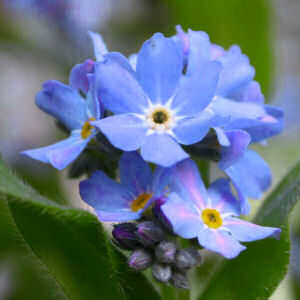
 With the creation of the CAFF Flora Group (CFG) within the Conservation of Arctic Flora and Fauna (CAFF) of the Arctic Council, it is ensured that scientists, conservationists, and managers interested in arctic flora and vegetation have a forum to promote, facilitate, and coordinate conservation, management, and research activities of mutual concern. Conservation of rare and endemic arctic plants is one of the roles of Caff Flora Group. Adequate knowledge of all plants present in the Arctic and their distribution within the Arctic is a prerequisite for satisfactory preservation of arctic diversity.