Tag: Arctic Report Card

  • Arctic Report Card 2012 is out

    Arctic Report Card 2012 is out

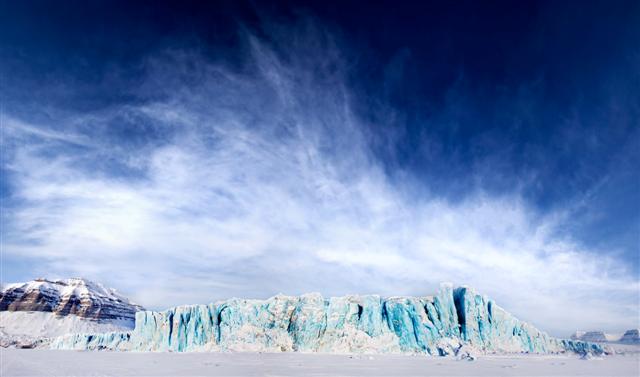
    arctic landscape

    The Arctic Report Cards produced by the National Oceanic and Atmospheric Administration (NOAA) are a source of reliable and brief information on the current state of the Arctic environment. The Arctic Council working groups CAFF and AMAP supported work on the 2012 Report Cards, which detail dramatic changes in the Arctic with record losses of sea ice and late spring snow.

    The Arctic Council, through the Arctic Monitoring and Assessment Programme (AMAP) and the Conservation of Arctic Flora and Fauna’s (CAFF) Circumpolar Biodiversity Monitoring Programme (CBMP), has contributed to the Arctic Report Card, an annual report released today by NOAA that monitors the often-quickly changing conditions in the Arctic.
    Click here to go to the Reports website.

    Full report is available here.
    The peer-reviewed report contains contributions from 141 authors from 15 countries. For this year’s issue CAFF’s CBMP developed and edited the terrestrial and marine ecosystem chapters in cooperation with others, while AMAP organized an independent peer-review process involving international experts.

    The Arctic region continued to break records in 2012—among them the loss of summer sea ice, spring snow cover, and melting of the Greenland ice sheet. This was true even though air temperatures in the Arctic were unremarkable relative to the last decade, according to the report.

    Major findings include:

    Snow cover: A new record low snow extent for the Northern Hemisphere was set in June 2012, and a new record low was reached in May over Eurasia.

    Sea ice: Minimum Arctic sea ice extent in September 2012 set a new all-time record low, as measured by satellite since 1979.

    Greenland ice sheet: There was a rare, nearly ice sheet-wide melt event on the Greenland ice sheet in July, covering about 97 percent of the ice sheet on a single day.

    Vegetation: The tundra is getting greener and there’s more above-ground growth. During the period of 2003-2010, the length of the growing season increased through much of the Arctic.

    Wildlife and food chain: In northernmost Europe, the Arctic fox is close to extinction and vulnerable to the encroaching Red fox. Additionally, massive phytoplankton blooms below the summer sea ice suggest estimates of biological production at the bottom of the marine food chain may be ten times too low.

    Ocean: Sea surface temperatures in summer continue to be warmer than the long-term average at the growing ice-free margins, while upper ocean temperature and salinity show significant interannual variability with no clear trends.

    Weather: Most of the notable weather activity in fall and winter occurred in the sub-Arctic due to a strong positive North Atlantic Oscillation. There were three extreme weather events including an unusual cold spell in late January to early February 2012 across Eurasia, and two record storms characterized by very low central pressures and strong winds near western Alaska in November 2011 and north of Alaska in August 2012.

    Sources
    Arctic Report Card

    Report video

    SWIPA

    Full report is available here.

  • Arctic Report Card 2011 released

    Arctic Report Card 2011 released

    Dissolving Sea Ice, South of Svalbard

    The 2011 Arctic Report Card has been published. Amongst the results are significant changes in the atmosphere and the sea ice and the ocean.

    The NOAA (National Oceanic and Atmospheric Administration) issues the Arctic Report Card annually The Arctic Report Card is a timely source for clear, reliable and concise environmental information on the state of the Arctic, relative to historical time series records.

    Among the 2011 highlights are:

    Atmosphere: In 2011, the average annual near-surface air temperatures over much of the Arctic Ocean were approximately 2.5° F (1.5° C) greater than the 1981-2010 baseline period.

    Sea ice: Minimum Arctic sea ice area in September 2011 was the second lowest recorded by satellite since 1979.

    Ocean: Arctic Ocean temperature and salinity may be stabilizing after a period of warming and freshening. Acidification of sea water (“ocean acidification”) as a result of carbon dioxide absorption has also been documented in the Beaufort and Chukchi seas.

    Land: Arctic tundra vegetation continues to increase and is associated with higher air temperatures over most of the Arctic land mass.

    Source: NOAA

  • Arctic Report Card

    Arctic Report Card

    Dissolving Sea Ice, South of Svalbard

    Issued annually, the Arctic Report Card is a timely source for clear, reliable and concise environmental information on the state of the Arctic, relative to historical time series records.

    Material presented in the Report Card is prepared by an international team of scientists. The Arctic Report Card is collaboratively supported by the international Arctic Council.

    The Conservation of Arctic Flora and Fauna (CAFF) Circumpolar Biodiversity Monitoring Program (CBMP) provides collaborative support through the delivery and editing of the biological elements of the Report Card.

    The 2011 Arctic Report Card has been published. Amongst the results are significant changes in the atmosphere and the sea ice and the ocean.

    The NOAA (National Oceanic and Atmospheric Administration) issues the Arctic Report Card annually The Arctic Report Card is a timely source for clear, reliable and concise environmental information on the state of the Arctic, relative to historical time series records.

    Among the 2011 highlights are:

    Atmosphere: In 2011, the average annual near-surface air temperatures over much of the Arctic Ocean were approximately 2.5° F (1.5° C) greater than the 1981-2010 baseline period.

    Sea ice: Minimum Arctic sea ice area in September 2011 was the second lowest recorded by satellite since 1979.

    Ocean: Arctic Ocean temperature and salinity may be stabilizing after a period of warming and freshening. Acidification of sea water (“ocean acidification”) as a result of carbon dioxide absorption has also been documented in the Beaufort and Chukchi seas.

    Land: Arctic tundra vegetation continues to increase and is associated with higher air temperatures over most of the Arctic land mass.


    Here is a video from NOAA about the report.


    2010 Report card:

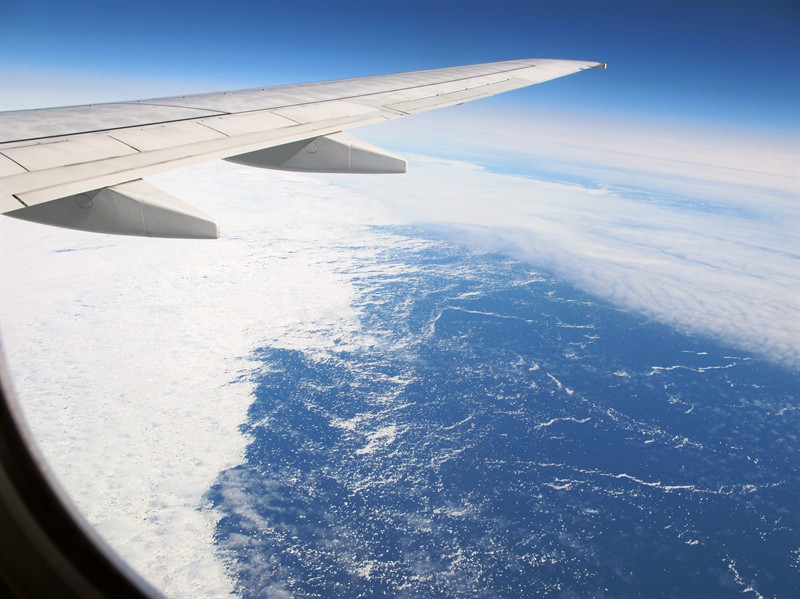
    ice glacier from above

    Highlights of the 2010 report card is:

    • Four years of record minimum sea ice extents
    • Record temperatures and ice loss in Greenland
    • Strong links between the Arctic and mid-latitude weather in winter 2009-2010

    Below is a video about the 2010 report card.

    [http://www.youtube.com/watch?v=NjmHMSv2Amk]