Tag: call for abstracts

  • Climate conference seeks abstracts

    Climate conference seeks abstracts

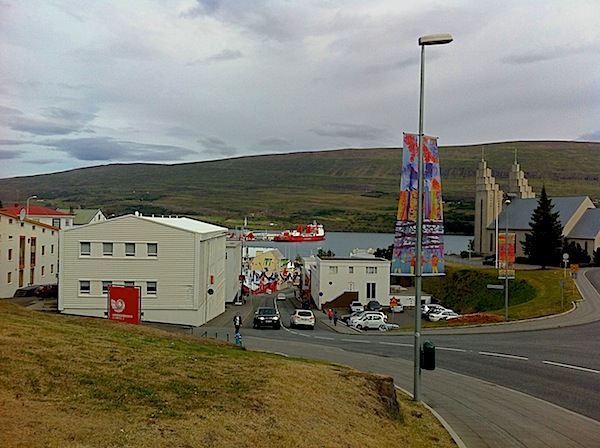
    Downtown Akureyri

    The conference Climate Change in Northern Territories is calling for abstracts. The conference is held in Akureyri, Iceland, in august. The ESPON/ENECON and NRF Open Assembly organize the conference, hosted by the University of Akureyri.

    This is the 2nd call for abstracts for general participation and young researchers. The deadline for submission is the 28th of February, but for young researchers the deadline is 15th of March. The abstracts are to be submitted to nrf@unak.is.

    Further information for young researchers.

    The idea is that this conference will bring together researchers which have similar background but have been focusing on different problems and situations and applied different methodological approaches. Regional and local stakeholders as well as state politicians and policymakers are also target groups for the conference.

    Subthemes are:

    • Territorial socio – economic impacts of climate change
    • Methodologies for assessing socio-economic impact
    • Adaptation to climate change in regions and local communities – examining methods and sharing knowledge

    You will find more information concerning the central theme here.

    Source

    NRF

  • Arctic Science Summit Week deadline

    Arctic Science Summit Week deadline

     arctic researchers at work

    The Arctic Science Summit Week will be held in April in Poland. The call for participation and abstract submission is close.

    The deadline for abstract submission is the 16th of January and they can be sent through the conference website.

    The week will include disciplinary sessions on Atmosphere Processes and Global Climate Connections, Cryospheric Changes: Drivers and Consequences, Marine Processes and Variability, Terrestrial Ecosystem Responses to Environmental Stressors and Impact of Global Changes on Arctic Societies.

    It will also have cross-cutting sessions on Arctic People and Resources: Opportunities, Challenges and Risks, Applying Local and Traditional Knowledge to Better Understanding of the Changing Arctic, Arctic System Science for Regional and Global Sustainability and Changing North: Predictions and Scenarios.

    The ASSW is the annual gathering of international organizations engaged in supporting and facilitating Arctic research. Its purpose is to provide opportunities for international coordination, collaboration and cooperation in all fields of Arctic science and to combine science and management meetings.

    Source

    ASSW 2013

  • Perspectives on public Arctic policies

    Perspectives on public Arctic policies

    The Arctic sea ice

    The first International Conference on Public Policy will be held in France in the summer of 2013. It is calling for abstracts for this interesting conference entitled Perspectives on public policies in the Arctic region.

    The conference website states that “developments in the Arctic have mostly been studied through defense studies, international relations, geopolitics, and to a lesser extent, economics. Public policies of Arctic states in the High North have attracted far less attention, with the exception of indigenous peoples rights.”
    The conference will run from the 26th of June until the 28th in Grenoble, France.
    The conference will see a panel analyzing and discussing these topics:

    1. To what extent climate change and the economic prospects in the Arctic have changed public policies
    2. To what extent public policies are limiting or motivating economic development, through legislation, infrastructure development, direct or indirect subsidization, particularly in the mining and hydrocarbon sector and in transport (shipping)
    3. The capacity to act by the elected representatives at the local level, and to analyze to what extent citizens and communities are engaged in the development of public policies
    4. How conflicting interests between economic sectors are considered (e.g. tourism versus mining, petroleum activities versus fisheries and traditional subsistence)
    5. How social cohesion between various categories of the population (indigenous/non indigenous, permanent/transient) appears as an issue in current public policies
    6. If public policies are shaped by regional frameworks of cooperation and international agreements and norms
    7. How Arctic policy making can be seen as an imaginary and symbolic construction.

    The abstracts are to be delivered by the 1st of February 2013. Comparative approaches of public policies in the Arctic are particularly welcome. To propose a paper an abstract of approximately 300 word should be sent directly to the chair of the panel, Cécile Pelaudeix (e-mail: cecile.pelaudeix@sciencespo-lyon.fr).

    Website of the conference.

  • Symposium in Rovaniemi calls for abstracts

    Symposium in Rovaniemi calls for abstracts

    Rovaniemi, Finland

    The venue for the 5th Polar Law symposium will be Rovaniemi in Finland. The symposium is held in September 2012.

    The Symposium – the home which is in Akureyri Iceland – brings together internationally renowned scholars, partaking in both Antarctic and Arctic research, from different parts of the globe.

    Previous symposia have proven to be extremely successful in promoting both scholarship and understanding of polar issues. Their outcomes were beneficial to scholars, students and academicians, government agencies, policy makers, jurists and various stakeholders alike.

    The last symposium was hosted by the University of Greenland and held in Nuuk, Greenland, where, among others, the honorable President of the Republic of Iceland and the Premiere of Greenland participated in thelively discussions.

    The theme for the symposium is quite open. It covers a wide variety of topics relating to the Arctic and the Antarctic.

    These include:

    • Human rights issues, such as autonomy and self-government vs self-determination, the rights of indigenous peoples to land and natural resources and cultural rights and cultural heritage, indigenous traditional knowledge.
    • Local and national governance issues.
    • Environmental law, climate change,security and environment implications of climate change, protected areas and species.
    • Regulatory, governance and management agreements and arrangements for marine environments, marine mammals, fisheries conservation and other biological/mineral/oil resources.
    • Law of the sea, the retreating sea ice, continental shelf claims.
    • Territorial claims and border disputes on both land and at sea.
    • Peace and security, dispute settlement.
    • Jurisdictional and other issues re the exploration, exploitation and shipping of oil, gas and minerals, bioprospecting.
    • Trade law, potential shipping lines through the northwest and northeast passages, maritime law and transportation law.
    • The roles and actual involvement of international organizations in the Polar regions, such as the Arctic Council, the European Union, the International Whaling Commission, the Nordic Council, the North Atlantic Treaty Organization, and the United Nations, as well as NGOs.

    Researchers, faculty members, young scholars, jurists, post-graduate research students, policy makers, stakeholders and others interested to submit abstracts within the scope of the above mentioned theme. The abstract should contain no more than 200 words and should be sent to Kamrul Hossain (khossain@ulapland.fi) by 31. March 2012.

    The symposium will be held in the Arctic Centre, University of Lapland, Rovaniemi, Finland from 6th to 8th of September.

    Participants’ registration is from June 15th – August 15th, 2012. Registrations are sent to Raija Kivilahti
    (raija.kivilahti@ulapland.fi).